Tag: Vietnam

  • Vietnam’s budget airline VietJet seeks overseas listing

    Vietnam’s budget airline VietJet seeks overseas listing

    The plan comes amid the government’s easing of rules to potentially allow more foreign investment in the aviation market. VietJet Aviation Joint Stock Co., which controls almost half of Vietnam’s domestic airline market, is in talks to become the first company in the Southeast Asian nation to list its shares in an overseas stock exchange, Bloomberg reported.

    “We’ve been approached by some foreign stock exchanges including London, Hong Kong and Singapore, which expressed their interest in our stock,” Nguyen Thi Phuong Thao, VietJet’s founder and chief executive officer, was quoted as saying on Sunday. She added that she will meet exchange officials in New York later this week.

    Hanoi-based VietJet reportedly received shareholder approval in April to boost its foreign ownership limit to 49 percent from 30 percent.

    The increase will need to be approved by the government because foreign ownership in the industry is currently capped at 30 percent.

    “We don’t want to hide our hope to become the first Vietnamese company to list shares overseas,” Thao reportedly said.

    Her “bikini” airline, nicknamed after its unique yet controversial promotional campaign for depicting a female crew in bikinis, now rivals national carrier Vietnam Airlines in the local market.

    It went public in Vietnam in late February in a move deemed successful by local media.

    Thao, Vietnam’s richest woman, said publicly in April that her carrier was not competing directly with Vietnam Arlines. “We create our own customers. We do not take them from others.”

  • Finance Ministry updates registration fees for autos, motorbikes

    Finance Ministry updates registration fees for autos, motorbikes

    The Ministry of Finance has recently updated the list of registration fees for automobiles and mortobikes, which has increased the price of many luxury models.

    In Vietnam, the registration fee is between 10 per cent and 12 per cent of the car value in different cities and provinces.

    According to the revised Decision 942/QĐ-BTC issued on May 24, the ministry has added the registration fees for 135 types of imported auto with nine seats and less, 19 types of locally-assembled cars with nine seats and less, two kinds of imported electric cars, 29 types of imported motorbikes and 127 kinds of locally-assembled motorbikes.

    Topping the list are luxury imported cars, which have high engine displacement.

    McLaren 650S Spider, with an engine displacement of 3,800cc, is priced at VNĐ22.02 billion (US$966,637); 6,000cc Bentley Flying Spur is priced at VNĐ19.5 billion; and 3,800cc McLaren 570S is priced at VNĐ12.57 billion. With a registration fee of 12 per cent in Hanoi, customers will have to pay VNĐ2.64 billion, VNĐ2.34 billion and VNĐ1.5 billion more to own these cars, respectively.

    The ministry added in the list imported Audi models and BMW models of X4 and X6, with prices ranging from VNĐ850 million to VNĐ3.4 billion and from VNĐ2.3 billion to VNĐ3.4 billion, respectively.

    The ministry also updated the prices of locally assembled models with nine seats and less into the list, including 2,400cc Toyota Hiace, which is priced at VNĐ802 million, Mercedes-Benz C200K, E250, E200 and E300 with prices ranging from VNĐ1.08 billion to VNĐ2.77 billion, 2,000cc Mazda CX5 AT-2WD at more than VNĐ1 billion and 2,400cc Ford Transit at VNĐ1.25 billion.

    Insiders said that the increase in registration fees was foreseen because it had been adjusted according to the market prices, as proposed by auto businesses.

    The ministry also added several imported motorbike types, including Harley-Davidson Cvo Limited, Harley-Davidson Ultra Limited Low, Harley-Davidson Street Glide Special and Honda CB1100 EX, which is priced between VNĐ455 million and VNĐ1.86 billion.

    The registration fee is being applied at 2 per cent of the motorbike value in cities and provinces nationwide, excluding two major cities of Hanoi and HCM City, where customers have to pay 5 per cent.

  • Vietnam ranks 8th among world’s top gold consumers

    Vietnam ranks 8th among world’s top gold consumers

    Vietnam ranks eighth among the countries in the world with the highest gold consumption in the first quarter of 2017, shows a recent report by the World Gold Council.

    Vietnam ranks eighth among the countries in the world with the highest gold consumption in the first quarter of 2017.

    As per the report, the demand for gold in Vietnam in Q1 was close to 17 tonnes, a slight rise compared to last year.

    In the first quarter, China topped the list, with a total demand of 280 tonnes of gold, an increase of 8 per cent compared to the same period last year. India came second with 123 tonnes.

    Overall, the total global demand for gold touched 1,035 tonnes in the first quarter of this year, an 18 per cent drop against the same period in 2016.

    Vietnam’s gold consumption has declined over the years, from nearly 100 tonnes in 2013 to 58 tonnes in 2016.

  • Vietnam’s May coffee exports extend downtrend to finish at 6-month low

    Vietnam’s May coffee exports extend downtrend to finish at 6-month low

    Coffee exports for the 2016/2017 season have already fallen nearly 7 percent, based on government data. Vietnam, the world’s largest exporter of robusta coffee, will ship an estimated 120,000 tons (2 million bags) of coffee this month, the lowest volume in six months and a drop of around a quarter from a year earlier, the government said on Monday.

    This figure would bring the accumulated volume since October 2016 at the start of the current 2016/2017 crop year to 1.09 million tons, down nearly 7 percent from the previous season, based on data from the General Statistics Office’s monthly report.

    The forecast for May, which is down 25.5 percent from the same month last year, is the lowest since November 2016 when the country exported 114,600 tons.

    Falling shipments from Vietnam, the world’s second largest coffee producer after Brazil, suggest dwindling stocks. Last month’s shipments hit a five-month low of 134,800 tons, based on government data.

    Strong exports in the first months of 2017 have left foreign buyers with adequate stocks and Vietnam with less coffee beans.

    In March, a senior executive from Vietnam’s top coffee export firm Intimex warned the country could fall short of the bitter beans in May or June due to rising shipments and dwindling domestic stocks.

    The country’s stocks at the end of the 2016/2017 crop year are forecast to plunge 64 percent from the previous season to 1.38 million bags, the U.S. Department of Agriculture said in its May report released last week.

    Vietnam’s coffee crop year lasts between October and September.

  • Vietnam’s online gaming firm VNG eyes IPO in US

    Vietnam’s online gaming firm VNG eyes IPO in US

    It is now in a race with budget carrier VietJet to become the first Vietnamese company to list abroad. Vietnamese online gaming and messaging firm VNG Corp said Tuesday that it has signed a preliminary agreement with U.S. bourse operator Nasdaq Inc to explore an initial public offering, a move that could make it the first Southeast Asian firm to be listed overseas.

    The agreement, which could see Nasdaq help VNG prepare for the listing, was signed on the sidelines of Vietnam Prime Minister Nguyen Xuan Phuc’s visit to the U.S.

    Founded in 2004, VNG provides online games, music streaming and messaging applications. Its statement did not disclose details about the IPO plans.

    The company was not immediately available for comment.

    In his Tuesday meeting with Robert H. McCooey Jr, vice president of Nasdaq, PM Phuc hailed the agreement between Nasdag and VNG. According to a government report, he said that Vietnam’s government always encourages the cooperation between local firms and U.S. partners.

    In a report on Sunday, VietJet Aviation Joint Stock, which controls almost half of Vietnam’s domestic airline market, is in talks to become the first company in the Southeast Asian nation to list its shares in an overseas stock exchange.

    “We’ve been approached by some foreign stock exchanges including London, Hong Kong and Singapore, which expressed their interest in our stock,” Nguyen Thi Phuong Thao, VietJet’s founder and chief executive officer, was quoted as saying. She added that she will meet exchange officials in New York later this week.

    VietJet reportedly received shareholder approval in April to boost its foreign ownership limit to 49 percent from 30 percent. The increase will need to be approved by the government because foreign ownership in the industry is currently capped at 30 percent.

    “We don’t want to hide our hope to become the first Vietnamese company to list shares overseas,” Thao reportedly said.

  • Vietnam wood firms to refuse contraband

    Vietnam wood firms to refuse contraband

    Vietnamese wood companies will not exploit, transport, process, produce or trade in illegal wood and wooden products, according to the Viet Nam Wood and Forest Association (VIFORES).

    With a view to achieve sustainable development of its exports, the wood industry has committed to refrain from illegal trading at a conference in Ha Noi late Friday, VIFORES chairman Nguyen Ton Quyen said.

    Member companies of the VIFORES, Handicraft and Wood Industry Association of HCM City (HAWA), Forest Products Association of Binh Dinh (FPA Binh Dinh) and Binh Duong Forest Products Association of Binh Duong (BFPA) have all agreed to support the Government and management offices of the central and local administration in building, completing and implementing suitable policies and mechanism, in accordance with the Voluntary Partnership Agreement on Forest Law Enforcement, Governance and Trade (VPA/FLEGT) signed between Viet Nam and the European Union (EU).

    This action aims to promote competition of Vietnam’s wood and wooden products enterprises in the world market, developing a mechanism to manage wood in natural forests, and encourage sustainable development of planted forests.

    The enterprises will promote the use, processing and trading of wood and wooden products that are made from trees of planted forests in Vietnam and from legally-imported wooden material.

    They will also commit to co-operation in building and developing comprehensive and transparent information system and database on local wood processing industry, Quyen said.

    These commitments will encourage local enterprises, organisations and individuals to produce, process and trade only legal wood and wooden products, and promote plantation of forests in the nation to create active and legal wood material for local wood processing industry, he said.

    The commitments will also provide solutions to building a brand for Vietnam’s wooden products, and developing legal wood trading relationships with countries supplying wood material to Vietnam and countries importing Vietnamese wooden products.

    To Xuan Phuc, an expert from NGO Forest Trends, said wood material imported to Viet Nam has played an important role in the production and processing of Vietnam’s wooden products for export and the home market.

    Viet Nam has annually exported four million to 4.5 million cubic metres of wood, earning US$1.8 to $2 billion, so there are risks of illegal wood being exported, he said.

    Quyen said the United States, European Union and Australia have strict rules to regulate imported wood material. Thus, it is difficult for local enterprises to export their wooden products to these markets.

    The Ministry of Agriculture and Rural Development said that in the first four months, Viet Nam had earned $2.4 billion, a year-on-year increase of 12.7 per cent in the export value of wood and wooden products. The US, China and Japan were the three largest export markets for local wooden products.

  • Money market changes course unexpectedly

    Money market changes course unexpectedly

    The money market has been seeing unexpected happenings in the last two weeks. Until two weeks ago, the liquidity of the banking system had been in a state of tension because lending was higher than mobilized capital. According to the National Finance Supervision Council, while lending increased by 5.2 percent, mobilized capital increased by 3.7 percent only in the first four months of the year.

    However, the money market has unexpectedly reversed with liquidity considerably improved. The interest rate performance in the interbank market last week was different from the weeks before when it decreased sharply from 4.7-4.9 percent to 3.9-4.1 percent for overnight loans (O/N).

    In OMO (Open Market Operations), no commercial bank registered to borrow capital from the State Bank on May 19, which was the first time since the beginning of the year. The average balance in OMO, which was always over VND35 trillion, has dropped to VND4 trillion.

    A BVSC report shows that the banking system’s liquidity has returned to a surplus state.

    Where’s the cash flow coming from?

    In theory, the sudden reverse in the two markets would occurs only if the State Bank (SBV) pumps capital into the market, and the quickest way for SBV to support liquidity is pumping capital through OMO.

    However, the scenario did not occur as the outstanding balance of the banks on OMO is on the decrease and is nearing zero next week.

    In the second scenario, SBV might have bought a big volume of foreign currencies from the market. This could be the foreign direct investment (FDI) flow, foreign portfolio investment (FPI), or foreign currency capital from domestic commercial banks.

    However, analysts don’t think this could happen because it was nearly impossible for foreign investors to disburse more than $1 billion within one week.

    Meanwhile, the foreign currency buy price quoted by SBV is now at VND22,675 per dollar, far lower than the prices in transactions made at commercial banks, at VND22,700 per dollar.

    The third scenario is the most likely one at this moment. SBV might have refinanced commercial banks through VAMC special bond discounts. And the VAMC special bond discount rate must be lower than the interest rate on OMO.

    With the total VAMC bond balance of up to VND280 trillion, the discount of VND35-40 trillion, or 13 percent, will not be a concern for the system.

    If the third scenario is true, many questions will be raised. How much has SBV pumped into the market, to which banks and at what interest rates? Will SBV continue pumping more capital? Which criteria do banks need to have to be refinanced?

  • Vietnam’s pepper farmers urged to keep calm and carry on

    Vietnam’s pepper farmers urged to keep calm and carry on

    Industry leaders have called on distraught and anxious pepper farmers to remain calm and refrain from selling their produce at low prices, saying the current price plunge is most likely a fleeting phenomenon.

    Do Ha Nam, Chairman of the Vietnam Pepper Association, said farmers should break their impulse to “mass sell” their produce immediately after harvest.

    “Vietnamese pepper exports now account for nearly 50% of global output, so we are actually in a position to control the market. Farmers should be calm and not sell at lower price, and the market will revert to its equilibrium,” Nam said.

    In the Central Highlands, the price for whole peppercorns on the domestic market has dropped from VND180,000 (US$8.04) since last August to around VND80,000 (US$3.57) per kilogramme as of May 28 to reach the lowest point in seven years, and many pepper farmers are in dire straits, with some pushed to the point of having to sell their land to settle debts.

    Authorities, meanwhile, are struggling to manage what they say is the consequence of unplanned farming and poor quality crops, which is dragging the whole industry down.

    According to the Standing Committee of the Tay Nguyen Steering Board, farmers were “misled” by pepper price surges in recent years to plant the crop on a large scale, ignoring warnings from local authorities. Subsequently, gluts have led to the sharp decline in prices, the committee has said.

    Nguyen Thi Do, a pepper farmer in Dak Nong Province, said her family had taken a bank loan of VND4 billion (US$178,770) to plant pepper on a 10ha plot. At her initial calculation of VND200,000 (US$8.93) per kilogramme of whole pepper, profits were certain, but the drastic drop in prices could force her to sell her land to repay the bank.

    Pepper rush

    Originally, Central Highlands provinces like Dak Lak, Dak Nong and Gia Lai had planned to expand the farming area for pepper to a maximum of 6,000ha by 2020. But all these provinces have surpassed this limit by far. Dak Lak has nearly 28,000ha of pepper farms, Dak Nong, 25,000ha, and Gia Lai, over 15,000ha.

    The national total is about 150,000ha, set to produce about 300,000 tonnes of pepper in the next two to three years, so, going by supply and demand function alone, prices could drop as long as supply exceeds demand, said Hoang Phuoc Binh, Deputy Chairman of the Chu Se District Pepper Growers’ Association in Gia Lai Province.

    To compound matters, even with farming on such a large scale, many farmers have experienced crop failures due to poor preparation and misuse of chemical inputs.

    Huynh Van Lan of Gia Lai Province, along with his peers, is increasingly worried about drops in both production and prices as his crop nears harvesting. Of more than 2,000 vines on his farm, 250 have died while the rest are producing just half their normal yield.

    Bad habits

    Tay Nguyen authorities have recorded a common practice among local pepper farmers of planting a new crop directly on malnourished, acidic and depressed soil without taking any step to replenish the soil with nutrients. This is causing slow growth and increased vulnerability to diseases.

    To make matters worse, a number of farmers have been using seeds of dubious quality, affecting the rest of the harvest. The use of toxic pesticides and growth accelerators has further exacerbated the situation.

    As if all this weren’t enough, the irregular drizzling since February 2017 has continued to dampen the pepper vines’ roots, exposing them to pests and affecting production.

    Experts say that the combination of market glut and poor quality crop threatens sustainable development of the domestic pepper industry, most particularly its export potential.

    High non tariff barriers are another challenge for Vietnamese pepper, which has to contend with markets already familiar with exports from Indonesia, Malaysia and India, they say.

    Sustainable solutions                                

    To prevent “spontaneous” and inefficient farming, the Tay Nguyen Steering Board has asked provincial authorities to adjust and firmly implement their provincial pepper cultivation plans.

    They should also organise comprehensive training programmes for local farmers in order to synchronise production in the region, the board has said.

    It has noted that the need for sustainability stretches across all crops and agricultural products, requiring farmers to work closely with other stakeholders in the supply chain to obtain technical support and suitable farming inputs.

    In Chu Puh District, Gia Lai Province, a key pepper producing area, a farming model that saves water, uses organic fertilisers and pesticides is showing encouraging results.

    More importantly, farmers are being advised to plant exclusively on suitable soils with high drainage to allow maximum growth and minimum soil damage.

    So far, the district has implemented this model on more than 100ha, and aim to expand this to 500ha by 2020.

    The Steering Board also advised local governments to focus on brand building and vertical integration to promote exports.  Clean, ecologically sound cropping is the ideal long term solution to the problems faced by the domestic pepper industry, experts agree.

    The rosier side

    Do Huong Duong, vice chairman of the Phu Nhuan Service Joint Stock, notes that despite the ongoing problems in quality, output and prices, export turnover has continued to rise.

    According to the Ministry of Agricultural and Rural Development, Vietnam exported about 75,000 tonnes of pepper worth US$456 million in the first four months of 2017.

    Vietnamese pepper has been a stable import in the US, United Arab Emirates, Pakistan, Indian and German markets in the first three months. There are signs of improvement in other markets like Thailand, where import of Vietnamese pepper has registered a year-on-year increase of 49.6%.

    These numbers prove that Vietnamese pepper is able to meet quality criteria in the strictest markets in the world, Nam said. Farmers have to be encouraged and helped to focus on improving their produce while the Government keeps an eye on mass production and quality control, he said, adding that that this would ensure market stability as well as sustained profits from this key crop.

  • Central Bank of Vietnam maintains flexible forex regime

    Central Bank of Vietnam maintains flexible forex regime

    According to the National Finance Supervision Committee, the deficit is likely to be 3.5% of exports. The trade deficit with China rose from US$3.7 billion in 2013 to US$28 billion last year. The US Federal Reserve (FED) is expected to increase the interest rate in June and continue to do so through 2019 to take the rate to 3 per cent.

    Analysts said this is causing downward pressure on the value of the đồng against the dollar.

    In mid-May, the US Dollar Index (DXY) rose significantly to 99.60.

    The State Bank of Vietnam (SBV) recently increased the đồng reference rate by VND9 after the greenback appreciated strongly to avoid possible shocks.

    SBV Governor Le Minh Hung said the international markets remain volatile due to the UK vote to leave the EU, US President Donald Trump’s policies and the US rate hikes.

    The volatility has had an impact on the đồng exchange rate and made it harder for the Government to keep things smooth on the forex front. Since the beginning of the year, the central bank has been very cautious. As a result, the đồng has only lost 1.1% against the dollar.

    The National Financial Supervisory Committee (NFSC) officials said the central bank is flexible and keeps a close eye on the exchange rate, regulating it on a daily basis.

    Analysts said Vietnam should not pay too much attention to the US interest rate hikes since they do not always affect the đồng.

    They pointed to the rate hike in March when the dollar actually declined against the đồng.

    One of the reasons for this is that foreign direct investment has been pouring into the country.

    In the first four months of the year, US$10.95 billion flowed in, representing a year-on-year increase of 40.5%.

    Though the big trade deficit with China is a factor in the đồng’s value, the Chinese Government is unlikely to depreciate the renminbi.

    This is because its policy is to develop the economy based on the domestic market in future instead of exports as the case used to be.

    Hung said since the Government would continue to pursue its de-dollarisation policy, the central bank would remain flexible with its exchange rate regulations to ensure exporters, importers, the Government and enterprises borrowing overseas and repaying foreign loans all benefit.

    Many analysts estimate the greenback will rise 2-3% against the đồng this year, saying the economy can easily absorb this.

    Foreign retailers crowd VN market

    Koji Takayanagi, president of Japan’s second largest convenience store chain FamilyMart, said the company is reviewing its loss-making operations in Indonesia, Thailand and Vietnam.

    “If we can get them to rally we will, but we cannot continue to pour in resources,” he told Reuters.

    The Japanese franchise has forecast operating profit to more than double to 1 trillion yen (US$8.79 billion) in four years from 412 billion yen in the current fiscal year.

    But while the business is profitable in China and Taiwan, it is not doing well elsewhere.

    FamilyMart came to Vietnam in 2010 and expected to open 300 stores in collaboration with local distributor Phu Thai Group, according to online newspaper VnExpress.

    But the partnership ended in 2013, with the distributor taking over 42 stores and turning them into B’s Mart in collaboration with Thailand’s Beri Jucker Plc.

    The brand made a comeback in July 2013 and now has 130 stores in HCM City, the nearby resort town of Vung Tau and Binh Duong Province, and aims to expand to 150 by the end of this year.

    Last December, Parkson, owned by Malaysian conglomerate Lion Group, closed its second store in Hanoi after eight years of operations, citing unsatisfactory results.

    The move marks the closure of the last store in Hanoi and third in Vietnam. In May 2016, Parkson Paragon in HCM City’s upscale Phu My Hung urban area closed after five years of operations, and in January 2015, Parkson Landmark 72 in Hanoi closed.

    The management had stuck a notice on the door of the latter store that it would only close for a few days “to take inventory”, but never opened again.

    Parkson’s recent results in the third quarter of 2016-17 showed its business in Vietnam remained mired in difficulties because the retail market was getting “more and more cramped”.

    Market observers offered explanations for the failure of some foreign retailers in Vietnam, with the decisive factor being the growing presence of giant global retailers, which is making competition in the sector fiercer.

    According to a report from the Ministry of Industry and Trade earlier this year, foreign enterprises now hold a 17% market share in the shopping centre and supermarket segment, 70% in convenience stores, 15% in minimarts and around 50% in online, TV and phone shopping.

    The percentages may not be too high but the looming presence of foreign retailers can be seen in many major cities.

    For instance, Thailand’s Central Group has bought the entire stake of France’s Casino Group in Big C Vietnam, while another Thai conglomerate, TCC Holding, has acquired Metro Cash and Carry Vietnam.

    Other foreign groups such as the Republic of Korea’s Lotte and Japan’s Aeon have been steadily expanding, and have plans to double or triple the number of stores in Vietnam in the coming years.

    In terms of growth, Vietnam’s retail market is among the top five in Southeast Asia and 11th globally, according to A.T. Kearney’s 2016 Global Retail Development Index.

    The trade ministry said retail sales of goods and services rose 10.2% to VND3,530 trillion (US$156.7 billion) last year.

    It has projected the market to hit US$179 billion by 2020.

    There is indeed a lot room for the retail sector to grow in Vietnam, where more than half the population of nearly 92 million is young and incomes are rising very fast, it said.

    Business-to-customer transactions are expected to double in value from the US$2.2 billion recorded in 2013.

    The ministry also expects the country to have 1,200-1,300 supermarket outlets by 2020, up 650 from 2011. The number of trade centres and malls are projected to increase to 180 and 175, respectively.

    Thời Báo Kinh Doanh newspaper (Business Times newspaper) quoted Akiihiko Maeda, CEO of Japan’s  Ministop 24-hour convenience store chain in Vietnam as saying competition is now the biggest challenge for his company.

    Ministop would need five to six years to break even, he said.

    But to achieve that, it would have to increase the number of stores by 80-100 a year and reach around 300.

    Analysts pointed out that this means Ministop — and other foreign retailers – would have to bring in lots of money.

    Where do domestic retailers stand?

    The swift expansion of foreign firms has also piled pressure on local retailers. Domestic goods suppliers are feeling the pinch as foreign retailers are developing their own brands for selling through their stores.

    Local retailers, at least many of them, cannot take on their foreign rivals, analysts fear.

    To compete, they need good management in all areas from brand building, ensuring product quality and marketing to human resources, training and establishing distribution networks, they said.

    But most are too weak and need to be immediately restructured, they said.

    Technology is also a problem for many Vietnamese retailers in a sector that is highly technology-intensive, they said.

  • Incurring big losses, fast food giants open fewer shops

    Incurring big losses, fast food giants open fewer shops

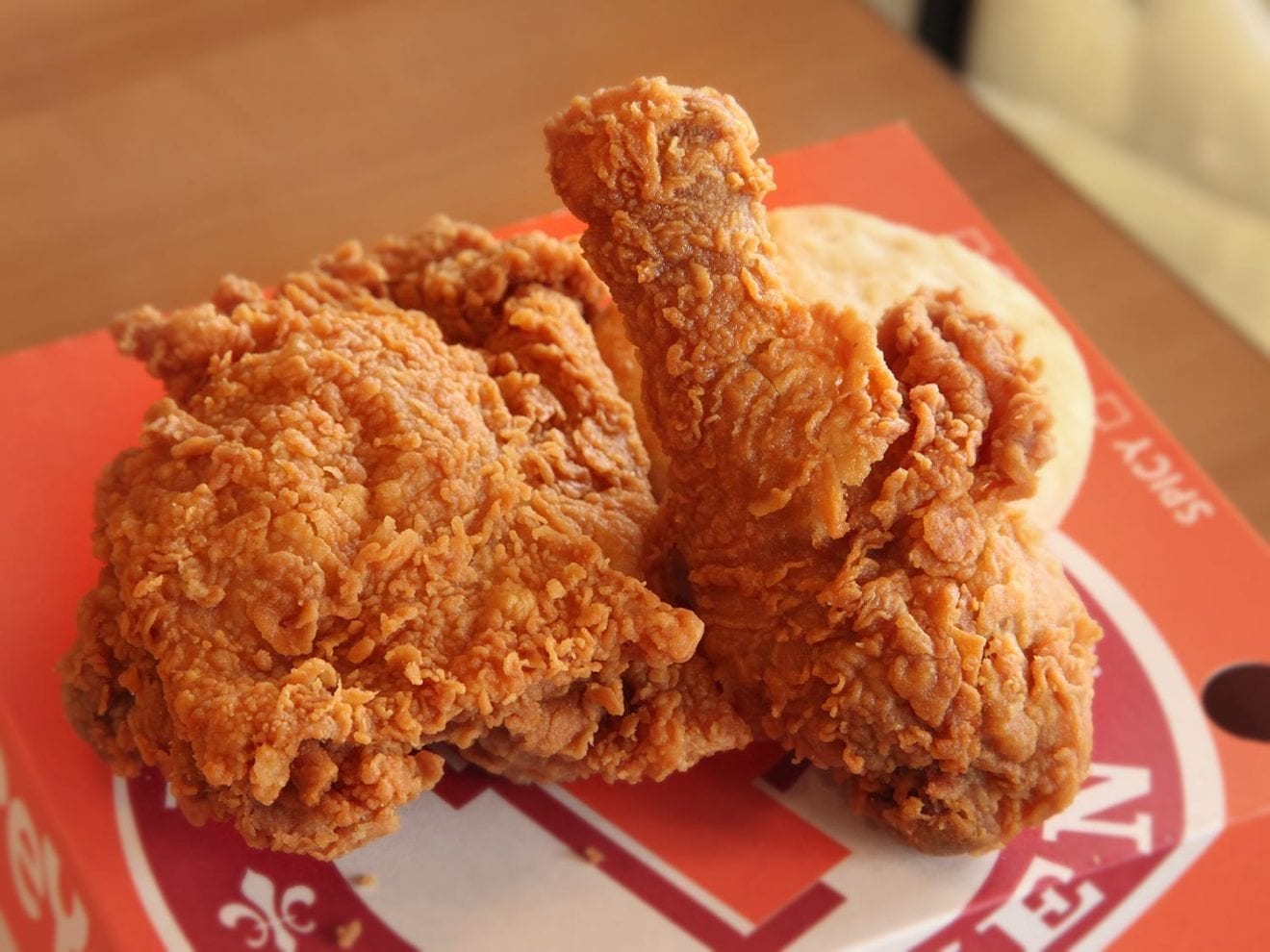
    The heyday of fast food chains seems to be over in Vietnam. The number of fast food shops has been decreasing in an era when people are trying to ‘live slowly’.

    Ten years ago, Hanoians and Saigonese could easily find fried chicken shops along main streets. At that time, eating fried chicken at fast food shops was in fashion. More and more fast food shops opened, not only in large cities, but also in small cities and provinces.

    In 2012, Burger King, encouraged by the fast growing market of Vietnam, announced a plan to spend $40 million to develop a chain with shops located in advantageous positions in many cities and provinces throughout Vietnam.

    A representative of Burger King once stated that Vietnam was one of its key markets.

    Nguyen Bao Hoang, who brought McDonald’s to Vietnam, said he would open about 100 shops in Vietnam within one decade, and employ hundreds of workers. Lotteria and KFC are believed to be the brands with the highest number of fast food shops in Vietnam.

    Analysts once believed that the potential of the Vietnamese market was great with the Vietnamese income on a rapid rise. Fast food chains targeted the Vietnamese middle class with average household income of $500-1,000.

    MOIT has granted licenses to 148 foreign brands to enter the Vietnamese market in the last eight years.

    This includes 42 fast food, bakery, coffee, beverage and restaurant brands, accounting for 43.7 percent of the total.

    Some fast food shops have shut down quietly after the boom. The number of shops of each fast food chain is on the decrease.

    In mid-February 2016, a Burger King shop at No 1B-1B1 on Cong Hoa street in HCMC announced its closure. One month before, another shop at the Dien Bien Phu – Cao Thang crossroads in district 3 also shut down.

    In 2015, two Burger King shops at No 26-28 Pham Hong Thai street in HCMC and 125 Lo Duc street in Hanoi stopped operation. In mid-2014, a shop closed in Da Nang.

    McDonald’s, a well known brand from the US, has set up several shops in HCMC but still hasn’t opened a restaurant in Hanoi.

    A branding expert commented that food chains can develop only if their products fit locals’ taste.

    This explains why fast food chain development has slowed down, while banh my (Vietnamese sandwich) chains have been prospering.

  • Vietnam e-commerce developing quickly

    Vietnam e-commerce developing quickly

    E-commerce in Viet Nam is more developed than some Southeast Asian countries and is poised to expand in coming years, according to a market research company.

    Ashish Kanchan, managing director of Kantar TNS Vietnam, said e-commerce is growing quite positively in Vietnam.

    He classified e-commerce development into three groups — developing customer education for e-commerce, widely prevalent e-commerce, and e-commerce as default purchase channel.

    Currently, Viet Nam is in the fledgling group together with Egypt, Turkey, Thailand, the Philippines, Greece and others. Meanwhile, in some European countries such as the UK, Germany, Demark, Sweden and Norway, and also Singapore, going online and buying online have become a default option.

    Viet Nam is already ahead of some of neighbouring countries like the Philippines, Thailand, and Indonesia and will likely join the next group within the next three years, he said.

    The United States, China, Italy, Hong Kong and Malaysia are among countries in the second group.

    Unlike countries such as Thailand, Indonesia, and India, Viet Nam is not only a mobile phone market, but tablets and laptops are still very prevalent in Viet Nam, he said. Thus, e-commerce companies must develop e-commerce platforms for multiple devices in Viet Nam.

    He urged companies to focus more on brand building as it is extremely important to gain more trust from shoppers.

    Understanding the e-commerce shopper is also very important so that businesses can provide the convenient experience for shoppers.

    Technology changes have ushered in a new era in commerce and digital branding as well as a new set of customer expectations, delegates at a recent Creative Commerce Workshop said.

    Denise Thi, managing director of Isobar Vietnam, said the customer journey has changed a lot over time.

    In the traditional marketing form, the consumer’s buying process was from attention to interest-desire to action. The process now goes from consideration to evaluate, buy, experience, advocate and bond.

    Consumers expect a lot of things, especially memorable experiences.

    To succeed in this new world, the first thing firms need to think of is to repurpose their marketing plan or sale plan to turn any point of contact into a shoppable experience, she said.

    Next, “we need to redesign, not only our campaign engagement but also our brand offerings and points of intervene”.

    The last thing is reposition. “We need to reposition what is the right thing to do first throughout the experience we want to deliver to our customers.”

    Sandipan Roy, chief strategy officer at Isobar in Asia-Pacific region, said: “People will forget what you said, people will forget what you did, but people will never forget how you made them feel.”

    Every shopping moment is an opportunity to tell a story, and every story is an opportunity to sell something, he added.

    It is key for brands to create inspirational stories and experiences through the creative use of digital and technologies, which ultimately lead to a transaction, he said.

  • Google promises to work with Vietnam to remove ‘bad’ content

    Google promises to work with Vietnam to remove ‘bad’ content

    The tech giant has been asked to open a representative office and coordinate with Vietnamese authorities. Prime Minister Nguyen Xuan Phuc has asked that Google open a representative office in Vietnam to better manage its increasingly popular services in Vietnam, including preventing bad content on YouTube, according to a report on the government’s website.

    Phuc said during a meeting with Eric Schmidt, executive chairman of Google’s parent company Alphabet, in Hanoi on Friday that many of Google’s services are widely used by Vietnamese businesses and people.

    He reportedly asked for more cooperation from Google to prevent and remove bad information on its video site YouTube.

    According to the report, Schmidt has pledged to work with Vietnam government to filter its content, and said he will consider opening the Vietnam office.

    Vietnam has the second largest number of YouTube users in the world, he was quoted as saying.

    Major market

    Nearly 49 million people in Vietnam, or more than half of the country’s population, are online.

    A report from Think With Google, the research arm of the tech giant, last month said many Vietnamese spend their summer on searching on Google and watching YouTube.

    Trailers on the site got more than 500 million views in summer 2016, up a staggering 136 percent from previous year.

    Data from the company shows that last summer, YouTube views in Vietnam doubled compared to spring, with more than 60 percent from mobile.

    Every day during that summer, 100 million mobile searches were made on Google – that’s even more than the population.


    ‘Toxic’ content

    In March, Google Europe had to apologize for allowing ads to appear alongside offensive videos on YouTube, after big companies either pulled ads or threatened to do so.

    A month later, Vietnam’s government called on all companies doing business in the country to stop advertising on YouTube, Facebook and other social media until they could find a way to end the publication of “toxic” anti-government information.

    The information ministry in April confirmed that it had asked Google to block and remove 2,200 videos on YouTube that had “defamatory” content against Vietnamese leaders.

    Facebook, the most popular social network in Vietnam, last month also pledged to cooperate with the Vietnamese government to block “bad” and “toxic” content.

    Google CEO Sundar Pichai visited Vietnam in December 2015, joining a talk with Vietnamese businesspeople and startup community.

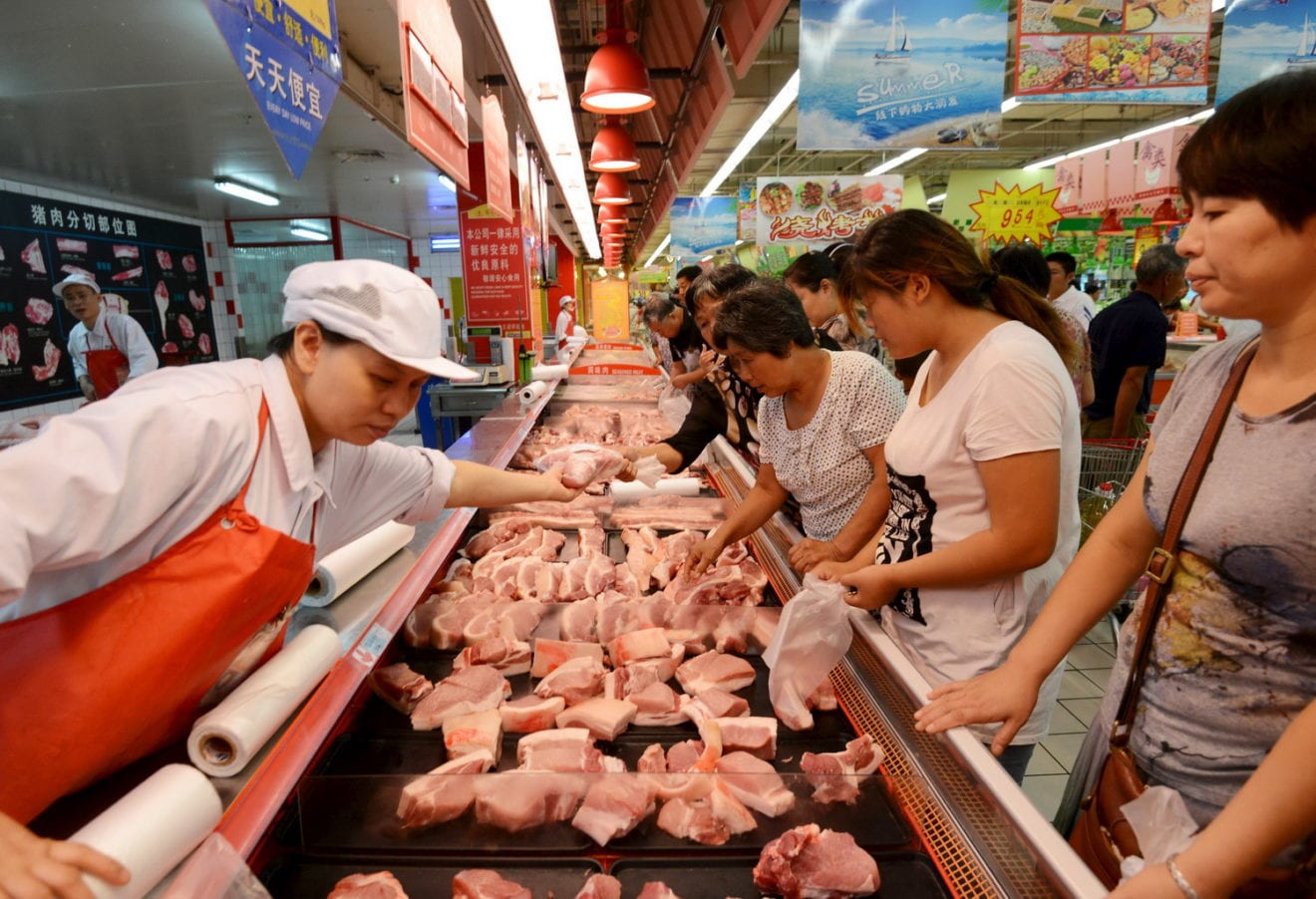
  • Vietnam to export pork to China amid supply glut

    Vietnam to export pork to China amid supply glut

    Local farmers have seen prices fallen sharply as a surplus of 200,000 tons of pork is expected this year. Vietnam is working to export some of its pork to China soon, a deal that could help many farmers stricken by an oversupply and massive price drops.

    Necessary procedures are being finalized and China will only import pork, instead of live pigs, said Nguyen Xuan Duong, deputy head of the husbandry department under the agriculture ministry.

    China, the world’s biggest pork consumer, wanted to officially open its market for Vietnamese pork years ago, but in 2012, the foot-and-mouth disease made headlines in Vietnam, prompting the northern neighbor to halt the plan.

    As for now, China has asked Vietnam’s authorities to control diseases in animal farms and monitor the quality of pork.

    Chinese officials will come to Vietnam to check the production process before working on related procedures, Duong.

    He said China has not decided on how much it will import, but it is likely that Chinese consumers will need around one million tons of Vietnamese pork a year.

    Chinese buyers currently pay VND40,000-42,000 ($1.70-1.80) per kilogram of pork. Prices of pork have fallen sharply in Vietnam this year, currently hovering around VND23,000-25,000 per kilo.

    Vietnamese small traders used to be able to sell live pigs across the border, but China has recently ended this practice.

    In May 2016, the agriculture ministry started warning traders of a possible glut.

    Farmers have been expanding their herds hoping to increase exports to China despite warnings from the ministry, and “this has caused the pork supplies to exceed domestic demand,” the ministry said in a statement on April 28.

    Vietnam’s pig herd expanded by nearly 5 percent to more than 29 million heads last year. By the end of March this year the number had edged up by at least 1.5 percent, according to official data.

    The agriculture ministry estimated that Vietnam will face a surplus of 200,000 tons of pork this year. It is trying to also export live pigs and pork to the Philippines and Singapore.

  • Vietnamese students turn to Japan in hope of getting good jobs

    Vietnamese students turn to Japan in hope of getting good jobs

    It seems like a win-win situation for Japanese companies looking for skilled employees in Vietnam. The number of Vietnamese studying in Japan grew more than 12-fold from 2010-2016 to around 54,000.

    They now account for nearly a quarter of international students in Japan, behind only Chinese students, who make up 41 percent but whose numbers have leveled off in recent year, citing the Japan Student Services Organization (JASSO) as saying in a Thursday report.

    The growing presence of Japanese companies in Vietnam has students and their parents thinking about studying in Japan in the hope of landing a well-paid job with a Japanese company, Itsuro Tsutsumi, director at JASSO’s student-exchange department.

    “I chose Japan for my children because it costs less than other countries and has a good education system, instilling good discipline in students,” the newswire quoted Tran Thi Quynh My, an official at the State Bank of Vietnam, as saying.

    “After studying in Japan my children will have a better chance of finding a good job when they get back to work in Vietnam since there are more and more Japanese companies investing in our country,” she said.

    Vietnam’s economy expanded by more than 6 percent for a second consecutive year in 2016, making it one of the world’s fastest-growing economies. Japanese companies are increasingly looking to Southeast Asia where incomes and consumption are likely to keep growing for years, quoting Shinobu Kikuchi, senior economist at Mizuho Research Institute in Tokyo, as saying.

    Japan is aggressively recruiting students from the region in the hope they will help enhance economic ties with their home countries in the future.

  • Sugar inventory hits record high

    Sugar inventory hits record high

    Sugar plants have reported their highest ever inventory level, nearing 750,000 tons, accounting for 50 percent of their processing output. Explaining reasons for the high inventory yesterday, chairman of Vietnam Sugar and Sugarcane Association (VSSA) Pham Quoc Doanh said that unusual weather has caused material shortage at the beginning of this year processing crop. Sugarcane harvest has concentrated at the end of the crop.

    Sugar import quotas, as per WTO commitments, left  from last year has contributed to the inventory this year.  Illicit sugar import has reached 400,000 tons now accounting for one third of the total processing output.

    Mr. Nguyen Hoang Ngoan, deputy director general of Can Tho Sugar Company, said that Thai sugar has illegally imported into the Mekong Delta, the central region and the Central Highlands and been sold at lower than domestic prices.

    A kilogram of domestic sugar is priced as low as VND16,000-16,500 a kilogram but it is still unsalable. The company alone has over 20,000 tons in stock.

    Stating at a conference seeking  sugar consumption solutions recently, deputy Minister of Agriculture and Rural Development Tran Thanh Nam said that the ministry had proposed the Ministry of Industry and Trade to lengthen sugar import under quotas to the third and fourth quarter.

    The Ministry of Industry and Trade and the Ministry of Finance should rectify long lasting sugar auction to prevent loopholes for invoice fraudulence.

    In long term, the ministry proposed to increase sugarcane productivity and commercial cane sugar (CCS), representing the sugar content of cane, and regulate sugar volume in production and consumption.