Tag: Vietnam

  • Vietnam’s 2017/2018 coffee output to rise 10 pct on good weather, prices

    Vietnam’s 2017/2018 coffee output to rise 10 pct on good weather, prices

    Good news for exporters with the 2016/2017 crop likely to fall short of expectations. Vietnam, the world’s largest robusta producer, is forecast to harvest 28.6 million bags (1.72 million tons) of coffee from its next 2017/2018 crop, a rise of 10 percent from the current season, thanks to favorable weather conditions and higher domestic prices, a U.S. Department of Agriculture attache said.

    Higher output from Vietnam, which stands only behind Brazil in terms of global coffee production, supports an industry view which envisages stable global supply in the next crop year.

    “Adequate rains starting in January through March helped coffee trees trigger more branches and early flowering,” the USDA attache said in a May 17 report.

    High domestic prices have also helped farmers purchase sufficient fertilizer, triggering higher yields even though the total planting area remains unchanged, the report said.

    Vietnam’s coffee crop year lasts between October and September, starting with the harvest in the Central Highlands region that accounts for around 90 percent of the country’s output.

    While it is still too early to forecast the size of the next harvest, Vietnam’s coffee belt has seen favorable weather for production  in recent months, said Bach Thanh Tuan, head of the Community Development Center, a state-backed facility in Dak Lak Province. The center is tasked with ensuring sustainable production in the province as well as the entire region.

    “The supply outlook for 2017/18 seems increasingly positive,” the London-based International Coffee Organization said in its April report, adding that initial concerns about frost in Brazil and a shortage of rainfall in Vietnam have eased.

    Coffee prices on the domestic market rose to VND47,500 ($2.1) per kilogram on March 21, the highest since September 2011. The price hike coincided with the coffee watering period, during which Vietnamese growers feed fertilizer to their trees.

    Smaller 2016/2017 crop

    The USDA report has revised down its output forecast for the ongoing 2016/2017 crop year by 2.6 percent to 26 million bags, saying extended rain in October-November 2016 had damaged cherries and reduced the quality of beans.

    Vietnam’s coffee exports in the next 2017/2018 crop year are forecast to edge up 0.4 percent to 26.65 million bags, the report said. The export volume includes green beans, soluble and roasted coffee.

    Consumption of roasted, ground and soluble coffee in Vietnam in the next 2017/2018 season is projected to rise 2 percent to 2.93 million bags, the report said.

    It cited the continuing growth of coffee shops, saying domestic market competition remains fierce due to the arrival of foreign brands.

    Even though Vietnam’s coffee exports fell to 2.25 million bags last month, a five-month low, based on Vietnam Customs data, the shipments still helped extend Vietnam’s position as the world’s biggest coffee exporter, which the Southeast Asian nation seized from Brazil in March.

    Robusta beans account for most of Vietnam’s exports and are used mainly for making soluble coffee.

    Top producer Brazil shipped a combined 2.13 million bags of arabica, conillon (a variety of robusta), soluble coffee and roasted beans in April, down 13.5 percent from a year ago, the Brazilian Coffee Exporters Council said in a report released earlier this month.

  • Vietnam state investment arm SCIC partners Thai Kasikornbank

    Vietnam state investment arm SCIC partners Thai Kasikornbank

    Vietnam’s government investment arm SCIC, the state investor in the country’s biggest firm Vinamilk, has inked a deal with Thai Kasikorn Bank to unlock more investment opportunities in Vietnam. SCIC, or the State Capital Investment Corporation, said the collaboration will help woo foreign investors into the country as well as improve its investment climate through the exchange of expertise.

    Thailand has accounted for significant investments into Vietnam, notably in the retail sector. TCC Holding and Central Group put a war chest to acquire retail assets in Vietnam over the past two years to secure top positions in this $118 billion market. SCIC last year sold 5.4 per cent of Vinamilk to Thai beverage firm F&N in a $500 million deal. F&N had been already a major shareholder at the dairy company with an 11 per cent interest.

    Thai brewer Singha also played big with a $1.1 billion infusion into Masan Group’s units. Thai investors are also beefing up their direct investments. Direct investment and M&A capital from Thailand in Q1, 2017 were valued at $168 million, a surge of 20 times compared to the same period in 2016. Vietnam has been seen as a magnate for foreign investors thanks to its stable economic annual growth of some 6.5 per cent, blended with a rising middle class and improving infrastructure.

    The total new committed FDI and M&A capital into the country in the first four month of this year reached $10.6 billion, in which share purchases accounted for $1.36 billion, according to the General Statistics Office. The SCIC represents the State ownership in shares of major local businesses, including Vinamilk, Hau Giang Pharmaceutical, Vietnam Construction and Import-Export JSC, tech firm FPT, insurer Bao Viet and Traphaco. In March, the sovereign wealth fund had also signed a similar agreement with Singapore property developer Keppel Land to promote investment opportunity in Vietnam.

  • Vietnam plans to open ‘outstanding’ special economic zones

    Vietnam plans to open ‘outstanding’ special economic zones

    The country is becoming more selective in the kind of investment it seeks, giving greater priority to high-tech and green sectors. Vietnam plans to open three special economic zones that offer investors greater incentives and fewer restrictions than available to date in the country, the investment minister said.

    Foreign direct investment, largely in manufacturing, has been key to Vietnam’s growth. It hit a record of $15.8 billion last year and has risen 6 percent in the first five months of 2017 from a year earlier.

    The new economic zones will be in the north, center and south of the 1,650-km (1,000 mile) long country, Planning and Investment Minister Nguyen Chi Dung told in an interview on Tuesday.

    The ministry is drafting a law for the zones in northern Quang Ninh province, central Khanh Hoa province and southern Phu Quoc province. Approval from lawmakers is expected by the end of 2017.

    Dung said the zones would be free from local regulations to make them competitive internationally.

    “It will be a massive attraction to investment and investment will boom next year,” Dung said. “It will be outstanding in everything: free and favourable in every aspect.”

    Vietnam currently has 18 economic zones, offering incentives for investors from free tariffs in selected items to lower personal income tax or reduced rent and fees. There are another 325 state-supported industrial parks, which have fewer incentives.

    Broadly positive investors

    A survey by ANZ Research last year said investors were broadly positive about the industrial parks because of tax incentives and the ease of customs clearance. Occupancy in operating industrial parks is more than 70 percent.

    Vietnam’s government this week reiterated its annual economic growth target at 6.7 percent, despite a drop to a three-year low of 5.1 percent in the first quarter. The government blamed the low rate on drought, salination issues and a temporary drop in production for Samsung Electronics due to its Note 7 battery woes.

    Dung said the government was confident of meeting its 2017 growth target given factors including improved weather, solid loan growth, a rise in tourism and rising numbers of new businesses.

    He expected Vietnam to continue drawing at least $10 billion a year in foreign direct investment for each of the next five years, while adding it was becoming more selective in the kind of investment sought. High tech and clean sectors are now a greater priority than low-cost industries, he said.

    “It’s no longer about quantity but more about quality,” Dung said.

  • Techcombank to mobilize $220mn from shareholders

    Techcombank to mobilize $220mn from shareholders

    The content of its plan to does not, in general, differ from the previous version submitted to the annual general meeting (AGM), but the offering period is expected to be extended to all of 2017, from only the second and third quarters.

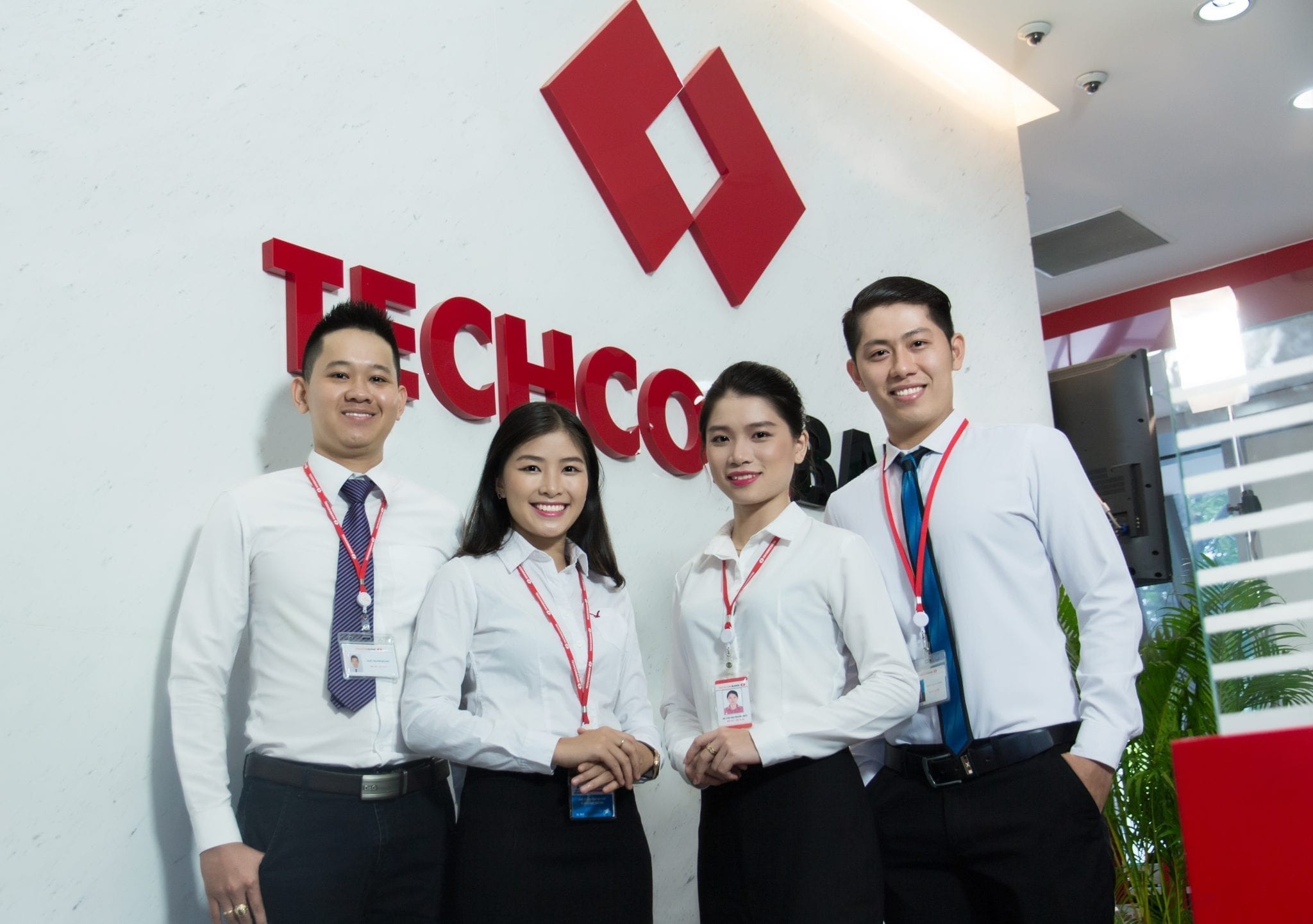
    500 million shares are to be issued at a minimum price of VND10,000 ($0.44) per share. If the deal is successful, Techcombank’s charter capital will increase from VND8.8 trillion ($387.69 million) to VND13.8 trillion ($607.96 million).

    This is the largest capital increase Techcombank has made since 2008. From 2008 to 2012 its charter capital increased regularly, from VND4.7 trillion ($207.07 million) to VND8.8 trillion ($387.69 million).

    All proceeds from the share offer are expected to be invested in the VND916 billion ($40.35 million) expansion of its head office and fixed assets. It will also spend VND1.6 trillion ($70.5 million) on technology and equipment.

    The bank will also increase its capital for credit activities and investment in government bonds, to some VND2.4 trillion ($105.76 million).

    Techcombank’s pre-tax profit was VND1.3 trillion ($57.29 million) in the first quarter of this year, up 130 per cent year-on-year and representing 26.3 per cent of the 2017 plan.

  • Vietnam sees rise in mobile e-commerce

    Vietnam sees rise in mobile e-commerce

    By January 2017, Vietnam was home to almost 47.2 million mobile internet users, half of the country’s population, according to the report “Vietnam Digital Landscape 2017” by We Are Social.

    Some 39 percent of the population have purchased products or services online, of them 29 percent have placed at least one online order via a mobile device.

    The total value of the country’s e-commerce market was estimated at about 1.8 billion USD in 2016, the report said.

    The 2017 Vietnam e-Business Index by the Vietnam e-Commerce Association (VECOM) shows that the internet has been a great tool for local enterprises in cross-border trade.

    They can communicate with overseas partners via the internet and can access online public services, for example, e-customs and e-certificate of origin.

    It also found that 45 percent of domestic enterprises own a website but only 19 percent of the websites are compatible with mobile devices, down from 26 percent in 2015.

    To succeed, domestic firms must catch up with mobile e-commerce trends to maintain a competitive edge over the others, said VECOM Vice President Nguyen Ngoc Dung at the Vietnam Mobile Day last weekend.

    Dung suggested that selecting a suitable domain name should be the first step in building a reliable online presence for a business as a domain name is not simply an address on the internet but is closely attached to the enterprise’s operations and branding.

    A mobile-friendly website will draw more customers to the brand name and improve its competitiveness, he added.

    For those who wish to reach out to the global markets, the domain name “.com” indicates credibility thanks to its popularity and stability over the past 18 years, said Executive Director of Mat Bao Corporation Huynh Ngoc Duy at the event.

    Sharing this view, Nguyen Tu Hong Quan, Director of the Nhan Hoa software company, noted that many international companies, including those listed in the Fortune 500, use “.com” for their website, aiming to reach new customers outside their regions.

  • Big money flowing into Vietnam stock market

    Big money flowing into Vietnam stock market

    The liquidity has improved considerably with trading value of VND4.5 trillion in each trading session. One month ago, Nguyen Huu, an investor, decided to buy Sacombank shares (STB). “If I make a bank deposit, I would get an interest rate of a maximum 7 percent for six months. Meanwhile, with the investment in STB, I expect profit at 15-20 percent at minimum,” he said.

    Huu bought STB when the share price was at VND9,500 per share. And if he had sold the shares some days later, he would have made a profit of 10 percent.

    According to Nguyen Duc Hung Linh from the Saigon Securities Incorporated (SSI), the cash flow to the stock market mostly comed from big investors who prepare in financial capability and have big targets.

    The VN Index has for the first time in the last nine years has regained the 700 point threshold, while the trading value has reached VND4.5 trillion per daily trading session and foreign investors’ portfolio value has reached the highest peak.

    On May 15 morning, the stock market witnessed a record morning trading session with VND3.1 trillion worth of shares were traded. Investors were excited when seeing 56 shares hitting the ceiling price level.

    On May 16, the trading volume increased to VND3.659 trillion, an increase of 18 percent, the highest trading volume in the history of the Vietnamese market.

    “There is so much money from new sources and new investors who are more hot-headed than old investors,” the representative of a closed-end fund said.

    Nguyen Tri Hieu, a renowned banking expert, at a workshop on the stock market held some days ago, commented that this was good news for Vietnam, but investors have been advised to be cautious.

    “The index has been escalating rapidly. If the trend continues, I think the VN Index would reach the 740 point threshold or even higher,” Hieu said.

    Tong Minh Tuan from VCB Securities commented that the most important thing is that the stock market has more good commodities this year to offer.

    “Foreign funds are very excited and they have taken action. I think the market would be even more busy towards the end of the year,” Tuan said.

    Other analysts also commented that they were optimistic about the market in 2017-2018, because there would be more good shares on the market once the state divests from several profitable companies.

  • Vietnamese footwear manufacturers ignore local market

    Vietnamese footwear manufacturers ignore local market

    Doan Ngoc Hieu, managing director of Leedo, confirmed that foreign countries were the target markets for most companies. Very few companies try to exploit the domestic market because they think big Vietnamese footwear manufacturers such as Asia and Biti’s hold much of the market share.

    However, there is still large room for Vietnamese manufacturers in the home market, as there is high demand for footwear makers.

    Hieu noted that the majority of Vietnamese footwear companies are household-run ones which follow old management ways. However, the companies need new management technologies to do business more effectively.

    Doan Ngoc Hai, the father of Hieu, established Le Doan Company in 1990, the predecessor of Leedo. By the end of 2015, Leedo had 300 workers and two workshops, one in Long An province and the other in Binh Chanh district of HCMC.

    Leedo provides 40 percent of PU soles in HCM City, churning out 4 million soles and 1 million pairs of footwear products a year.

    Hieu noted that with the old management method, companies didn’t pay much importance to marketing or sales. They just focused on wholesaling, supplying products to wholesalers at markets.

    However, he believes that companies need to change, because it is now the digital era, when Facebook and internet are popular.

    Hieu and his father argue about whether to bring Leedo’s products to international trade fairs to promote the brand. He also thinks that it is necessary to spend money on ISO and other certificates.

    “One cannot go far in the world market if he does not have certificates,” he commented, adding that footwear companies need to reform management to catch up with the times.

    According to the Taiwan Footwear Manufacturers Association, Vietnam’s footwear exports will increase by 20 percent this year thanks to free trade agreements, including TPP.

    Its shoe and handbag exports increased by 16 percent in 2015 with turnover of $15 billion in 2015, including $12 billion from footwear and $3 billion from handbags.

    Vietnam is the world’s third-largest shoe manufacturer, after China and India, and is the third largest exporter, after China and Italy.

    Vietnam expects a 20 percent growth rate in footwear exports in 2016 due to a number of new free trade agreements including the Transpacific Partnership (TPP).

  • Vietnam’s candy market experiences shakeup

    Vietnam’s candy market experiences shakeup

    In late March, four individual investors spent tens of millions of dollars acquiring major stakes Huu Nghi and Hai Ha. This comes after their parent company, the state-owned Vietnam Tobacco Corporation (Vinataba), registered to exit from the firms.

    Two individual investors, Vu Hai and Nguyen Thi Duyen, became the new major shareholders of Hai Ha Confectionery JSC, with respective ownership stakes of 23.7% and 50.9%. Meanwhile two others, Nguyen Van Dung and Luu Thanh Tam, acquired a 20% and 10% stake in Huu Nghi Food JSC. The participation of individual shareholders could now create favourable conditions for the two firms.

    Sweeping changes on the horizon

    In 2014, Kinh Do JSC, a major player in the domestic food scene, was acquired by US-based Mondelez International. The duration of the power transfer process was considered an opportunity for smaller local players such as Huu Nghi, Hai Ha, Bibica, Trang An, or Pham Nguyen to take their chance in the market.

    As state-owned enterprises, these firms were given an opportunity to shorten the development gap with market number one, Kinh Do. However, none of them were able to, least of all Hai Ha and Huu Nghi.

    When Vinataba unveiled its plan to fully divest from the two confectionery producers, local giants such as Vingroup, Masan, and Hoa Phat expressed interest. They later withdrew interest however, opening the door for individual private investors to take on the major share.

    Huu Nghi Food chairman, Trinh Trung Hieu recalls that rigid state mechanisms had hindered the company’s operation. “If owned by a private investor, Huu Nghi could have capital to invest in brand building to reach a higher market position,” Hieu told his employees.

    With the recent move, Huu Nghi is now completely in the hands of individual investors. A company representative said, “We had to set out year-by-year growth, following the state mechanism. The company paid taxes and contributed to the state budget every year, leaving little money for reinvestment. The space is now wide open. There will surely be changes in our growth strategy in the future, focusing on market expansion.”

    “The participation of private investors is important to make use of new development opportunities after the state capital divestment. We are eager to take on the opportunity and have made preparations for future changes,” the source unveiled.

    Present in the market for more than two decades, Huu Nghi is well known for its assortment of quality confectionery products, including mid-autumn cakes.

    In terms of revenue, the company lies just behind Kinh Do, with revenue reaching VND1.44 trillion (US$65.7 million) in 2016. After Mondelez International bought Kinh Do, Huu Nghi took the lead in revenue among domestic firms, claiming an 8% market share.

    The company’s goal is to solidify its position in the local confectionery market behind Kinh Do, and maintain pole position among local firms.

    A disadvantage is that Huu Nghi has, until now, mainly served the southern market. A company representative recently admitted that winning the northern market has been very challenging due to a different consumption culture. However, it invested in building a modern confectionery plant in the southern province of Binh Duong several years ago.

    Huu Nghi is also reported to be making sauces (fish sauce, soy sauce and chilli sauce) now. The company has built a sauce production plant in the northern province of Bac Ninh.

    Huu Nghi is also accelerating exports to China, which generates VND300 billion (US$13.6 million) in annual revenue for the company. The firm is also looking to expand to other ASEAN countries, the Republic of Korea, Japan, the US, and India.

    Meanwhile, Hai Ha enjoys strong brand recognition and boasts a 60-year track record. Having been on the verge of going bankrupt several times in its history, the company is now operating well, particularly in the northern market.

    Despite having established branch offices in the central and southern regions, the company’s key market is the north, and some candy products, such as Jelly and Chewy candies have witnessed fast growth rates and become the company’s major income earners.

    To its rivals, Hai Ha is a confectionary heavyweight. However, the company has lagged behind in recent years because it lacked a strong sales network and the human resources required to work towards market expansion.

    Market analyses also show that Hai Ha has applied copying tactics in the past, trying to make its own versions of successful products. After time, these products disappeared from the market as it reached saturation however.

    The company is now working to improve its product lines, focusing on high-grade products to boost its market share. Last year, pie products made up 48.7% of production and the candy line consumed the remaining 51.3%. The company plans to balance these products out in upcoming years.

    Hai Ha also produces food supplements, teaming up with several large pharmaceutical firms.

    Growing pressure from imports

    Vietnam is now home to about 20 large-scale confectionery businesses, and several hundred small enterprises, with some major importers and distribution companies also joining the market.

    Established brands such as Mondelez, Kinh Do, Bibica, Hai Ha, Huu Nghi, Trang An, Hanobaco, and Pham Nguyen currently hold a 60-65% market share.

    There are also several foreign businesses operating in the field, such as Kraft, Meiji, Glico, Orion, and Lotte.

    Since January 1, 2015, imported confectionery from ASEAN countries enjoyed a zero percent tax rate in the Vietnamese market, under the ASEAN-India Free Trade Agreement (AIFTA). The products from Thailand, Indonesia, Malaysia, and Singapore have therefore inundated the domestic market.

    According to the market observers, Vietnam’s confectionery market still remains very lucrative to foreign players. Mergers and acquisitions (M&A) are expected to take place more frequently in the future, putting significant pressure on local firms like Hai Ha and Huu Nghi.

  • Vietnam’s retail market is promising, but there are pitfalls

    Vietnam’s retail market is promising, but there are pitfalls

    Family Mart has had losses in Vietnam, Thailand and Indonesia. Reuters quoted Koji Takayanag, president of FamilyMart UNY, which now owns the second largest convenience store chain in Japan, as saying that the chain has decided to stop injecting more money into Family Marts in Vietnam.

    According to Tri Thuc Tre, Parkson reported another loss of VND20 billion in Vietnam in the first quarter of the year, which means a total loss of VND50 billion in the last nine months of the fiscal year.

    Parkson Retail Asia has two subsidiaries in Vietnam – Parkson Hai Phong Co Ltd and Parkson Vietnam Company Ltd. The latter has two subsidiaries – Parson Vietnam Service Management Company Ltd and Parkson Hanoi Company Ltd.

    Parkson Hanoi which manages two buildings Parkson Keangnam and Parkson Viet Tower. Both shopping malls have shut down (the former in January 2015 and Viet Tower in mid-December 2016). Also in 2016, Parkson Paragon in HCMC also stopped operation.

    Though FamilyMart has taken a big loss, it will stay in Vietnam. While some retailers have left, others have arrived. Aeon Mall has announced the construction of a second mall in Hanoi.The Malaysian retailer’s fiscal year will end in three months, but analysts don’t think the business performance of the year will be satisfactory. Parkson’s managers have admitted that it is more and more difficult to do business in Vietnam as the market is getting more crowded.

    Other retailers have left, including Metro Cash & Carry, Best Carings, Wonderbuy, HomeOne and Sapomart.

    Meanwhile, market analysis firms, in their latest reports, say that Vietnam is a lucrative market.

    Phap Luat quoted Pham Thanh Cong from Nielsen Vietnam as saying that it is among the top three markets of investors.

    David Tan, CEO of Abeo Vietnam, said the Vietnamese retail market in 2016 was valued at $118 billion with the 10 percent growth rate. Of this, revenue from food service reached acrecord high of $41 billion.

    In fact, though the Vietnamese market is attractive, it has become ‘cramped’ with the presence of many retailers, both foreign and Vietnamese.

    According to Cong, there are 20 supermarket brands in Vietnam, while other countries have only five.

    A report of the Ministry of Industry and Trade shows that Vietnam has more than 700 supermarkets, 132 shopping malls and hundreds of convenience stores. By 2020, Vietnam is expected to have 1,200-1,500 supermarkets and 180 shopping malls, while traditional markets still exist.

  • Foreign cafes’ struggle in Vietnam

    Foreign cafes’ struggle in Vietnam

    Australian-owned Gloria Jean’s Coffees recently decided to close its last store in Vietnam, ending a 10-year stint in Hồ Chí Minh City and Hà Nội due to slow expansion, high rents and an unsuitable business model.

    Gloria Jean’s Coffees arrived in the country in 2006 after a local firm signed a franchise contract with it expecting the business would develop well like it did in Thailand and Malaysia.

    This was based on the fact that the chain served Arabica coffee, a relative novelty in Việt Nam where the robusta bean rules.

    Việt Nam, the world’s number two coffee producer after Brazil, is known to have one of the fastest growing coffee retail markets, along with Indonesia, Turkey and India.

    However, the Australian coffeehouse chain was only able to open six outlets in Hồ Chí Minh and one in Hà Nội in the first six years.

    Nguyễn Phi Vân, the first franchisee of Gloria Jean’s Coffee in Việt Nam, told that the demise was due to the adoption of a business model that had been developed in Australia for the local and regional markets.

    Later on, even after Gloria Jean’s Coffees International allowed its franchise in Việt Nam to make some changes to its products to adapt to local people’s tastes, the going remained really tough due to many reasons including fiercer competition from both foreign and domestic rivals like Starbucks, The Coffee House, Phúc Long, Urban Station, and Trung Nguyên.

    Gloria Jean’s Coffees is not the only foreign cafe whose business has failed in Việt Nam.

    Last year New York Dessert Café (NYDC) said goodbye to its customers in Việt Nam via its Facebook page, promising to “return someday.”

    Brought to Việt Nam in 2009 by a Singapore Group, NYDC used to be one of the most popular foreign coffee chains in HCM City. It had expected to open 20 outlets in Việt Nam.

    What when wrong for the foreign cafés?

    Many coffee industry insiders said in the food and drink sector, the coffee area in particular, it is not easy for foreign players in Việt Nam even if when they have famous brands.

    Some foreign coffee chains serve normal customers in their native countries but only affluent ones in Việt Nam.

    Because of this they often choose prime locations in major cities for their shops, meaning very high rents and skyrocketing overheads.

    Not surprisingly, their prices are often two or three times the prices at local cafes.

    The attractiveness of foreign coffee products is also affected by their localisation: some beverages are made under foreign formulas but with domestic materials, meaning they do not seem “authentic” and put off foreign customers in Việt Nam.

    However, locals too do not enjoy coffee made using foreign formulas and prefer local cafes.

    The increasingly fiercer competition is another important factor contributing to the foreign coffee chains’ failure.

    Market observers pointed to the increasing dominance of affordable local coffee chains like Passio Coffee, The Coffee House, Phúc Long, Highlands Coffee, Urban Station, and Trung Nguyên.

    These have also intensified investment in design and décor to give foreign cafes a run for their money in terms of looks.

    Besides, customers there can get comfort foods that foreign cafes do not have such as phở (phở), bún (vermicelli soup), bread, hủ tiếu (rice noodle soup), and rice.

    But according to analysts, international coffee brands continue to be interested in the Vietnamese market.

    US chain PJ’s Coffee opened its first outlet in HCM City recently and a second within two months. It hopes to have at least 10 additional stores in the next five years.

    A spokesperson for TRG International, the franchisee of PJ’s in Việt Nam, said each shop would be different and are based on lessons from the former.

    This is also seen at Starbucks, where each shop has its own style with a specific group of customers in mind.

    Banks await debt trading market

    Banks’ bad debts now seem to be lower than in previous years. But the total amount remains high, affecting the lenders’ business as well as their goal of reducing interest rates.

    An analyst at a securities company said that as of March 31 Sacombank had the highest bad debts rate, an estimated 4.89 per cent, followed by Eximbank with 3 per cent, BIDV with 2.14 per cent, and MB with 1.35 per cent.

    Data from the State Bank of Việt Nam (SBV) indicates that the banking sector’s bad debt rate as reflected in balance sheets is under 3 per cent.

    Some banks may however have significant amounts of off-balance sheet assets and liabilities.

    In December 2016 the bad debts reported in balance sheets, bad debts managed by the Việt Nam Asset Management Company (VAMC), and latent bad debts was around 8.86 per cent of total outstanding loans, according to the SBV data.

    The VAMC’s handling of bad debts is too slow, according to banks and many of them are looking for ways to buy back the bad debts they had earlier sold to it, hoping to settle them by themselves.

    Some of them even plan to trade bad debts.

    At shareholders meeting this year, the bosses of many lenders like VIB, OCB, VietinBank, Techcombank, MB, SCB, ACB and VPBank proposed plans to buy back most of their bad debts from the VAMC.

    Vietcombank has already bought back all its bad debts totally worth VNĐ4.3 trillion (US$184.43 million).

    Analysts said the reason for this is that sooner or later the Government would force the banks to put all their bad debts in the balance sheet instead of allowing some to be off it.

    So buying back the bad debts from the VAMC makes sense since they can keep it all in one place to make things less unwieldy.

    So why did they not take this route in the first place instead of selling to the VAMC?

    The chief of a bank admitted that the VAMC had come to the rescue of the banks in their darkest hour.

    Analysts said thanks to consigning their bad debts to the VAMC for a few years, the banks have had the time and conditions to recover enough to handle their bad debts by themselves.

    Besides, most lenders had expected the VAMC to miraculously fix their bad debts, and this had not happened, they said.

    But not all banks are capable of buying back their bad debts, only those that have low bad debt rates of under 1.5 per cent and abundant resources.

    Some also plan to participate in the debt selling and buying market.

    At its recent shareholders meeting, Vietcombank tabled a proposal to set up a debt selling and buying company for approval.

    Last week the bank got a licence from the SBV for debt trading.

    VIB shareholders also approved a plan to buy debts estimated at VNĐ6 trillion (US$264.32 trillion) from credit institutions.

    Market observers see a trend, saying many banks are keenly awaiting a debt market, which is expected to take shape soon.

    Another encouraging sign for banks is that their bad debts are becoming attractive to investors since more than 70 per cent have properties as collateral and the real estate market is recovering strongly.


  • Vietnamese-French entrepreneur interested in local tourism startups

    Vietnamese-French entrepreneur interested in local tourism startups

    Vietnamese-French businessman Pascal Pham said he plans to invest in tourism startups in Vietnam. Club director of leading French communications group Skyboard, Pham said the first element that alerted him to Vietnam was the extraordinary Vietnamese diaspora in Silicon Valley and Europe.

    “We live in a global world, in France for example, a Vietnamese was the co-founder of Sparrow which was bought by Google for $25 million. We need to be connected to be successful, from Europe to the U.S., from the U.S. to Southeast Asia.”

    The second element was the excellent training computer scientists receive here in Vietnam, making it “a strong international culture and an interesting territory to audit.”

    The local culture in Vietnam is unchanged but opportunities are growing while risks remain unchanged. Young people are better trained, the economy is part of a growing region, and the appetite for success is confirmed by major groups such as tech giant FPT motivating interest in Vietnam, Pham told.

    “I want to invest in innovative tourism because it is the DNA of our start-up incubator in Paris,” said Pham.

    He is also interested in the Vietnam Innovative Startup Accelerator (VIISA), a mechanism that gave him the opportunity to discover the first steps of the innovation ecosystem and create an incubator in Europe a few years ago.

    Asked for advice about raising funds for Vietnamese startups, the lecturer from the Sorbonne University said they need a balanced team of expert marketers, good engineers and an international vision from the beginning.

    In order to go globally, Vietnamese startups should prepare a tested and effective economic model that does not follow existing models, and make good use of their resources and technology.

    A co-founder of the Paris-based T3 Business Forum, which represents tourism, transport and technology startups, Pham said Vietnamese startups can benefit indirectly from a new inflow of capital under new French President Emmanuel Macron’s plan to create a huge sovereign fund for startups with Germany.

    Southeast Asia has to convert its appeal into success stories in new technologies, and FPT has been leading the way.

    “With a strong common goal, Vietnam can become a powerful leader in this exciting quest. Networks are the most underestimated asset. I’m here to bring my network,” he said.

  • Petrol prices continue to decrease

    Petrol prices continue to decrease

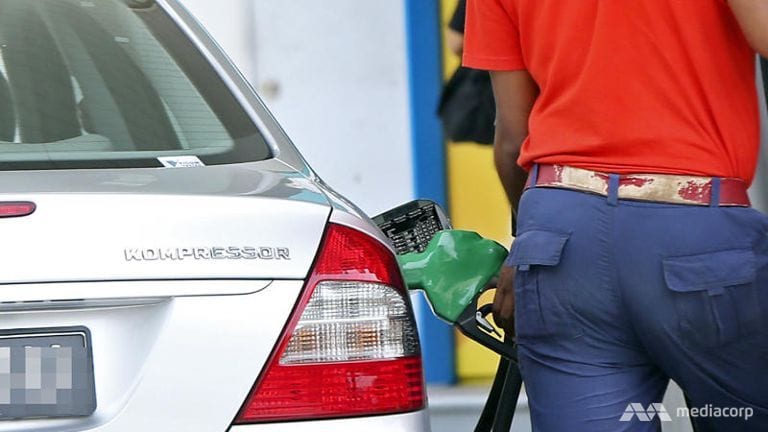
    Prices of oil and petrol products continued to decrease from 3pm on Saturday, following the latest price adjustment by the Ministry of Industry and Trade and the Ministry of Finance.

    The prices of RON 92 gasoline slightly dropped by VNĐ211 per litre, while that of E5 bio-petrol and diesel oil declined by VNĐ197 and VNĐ343 per litre, respectively.

    Following a joint decision by the ministries, RON 92 and E5 bio-petrol will be sold at a maximum price of VNĐ17,063 (US$0.75) and VNĐ16,871 per litre, respectively.

    Meanwhile, the new ceiling prices of diesel 0.05S and kerosene are VNĐ13,260 ($0.58) and VNĐ11,792 ($0.52) per litre.

    The average global price of RON 92 during the last 15 days until May 20 was $61,084 per barrel, down $1 compared with the previous price adjustment.

    The prices of petrol and oil are adjusted every 15 days by the two ministries depending on the changes in the world market.

  • CMC launches anti-malware software

    CMC launches anti-malware software

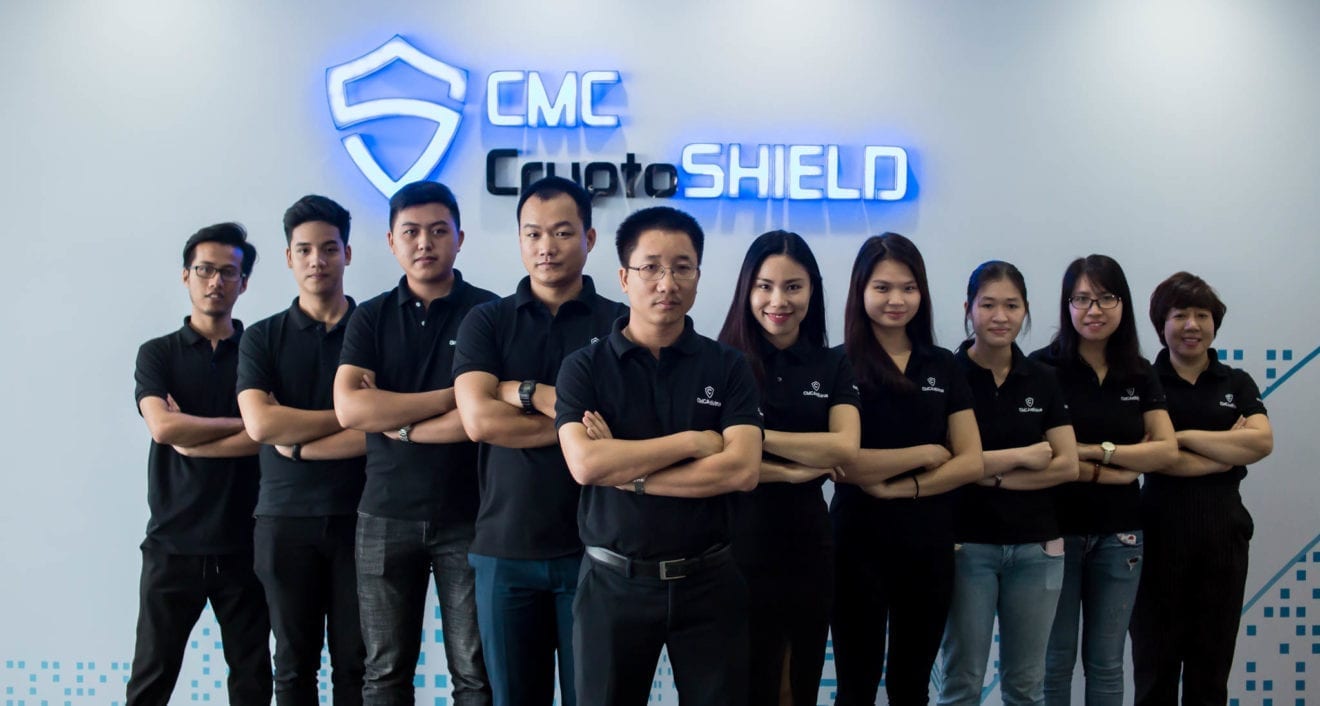
    Vietnam-based technology corporation CMC on May 19 released its anti-data encryption software CMC CryptoShield, which offers protection from ransomware.

    Ransomware is software that blocks access to a computer system until the hackers behind the attack are paid.

    CMC CryptoShield is designed to prevent all forms of malicious code by applying artificial intelligence. The artificial intelligence system integrated in CMC CryptoShield can recognise all micro-encoded data and block it.

    Ransomware has become a new global threat and profitable business and with the boom of difficult to trace cryptocurrencies in recent years, most notably Bitcoin, hackers can get ransom without being traced.

    CMC CryptoShield ensures that all user data will be put into a secure and inviolable area right before it is encrypted, said Vũ Lâm Bằng, Director of CMC’s Research and Development Centre at the launch ceremony of CMC CryptoShield.

    Artificial intelligence is a weapon in the fight against hackers and malicious code. It has been integrated in CMC CryptoShield and users just need to turn it on so that all the data on their computer is safe, said Triệu Trần Đức, General Director of CMC InfoSec under CMC corporation at the launch.

  • Habeco targets 9 per cent increase in revenue

    Habeco targets 9 per cent increase in revenue

    Hà Nội Beer Alcohol and Beverage Joint Stock Corporation (Habeco) targets total revenue of over VNĐ8.8 trillion (US$390 million) in 2017, up 9.1 per cent year-on-year.

    The brewer plans to earn pre-tax profit of VNĐ1 trillion this year, up slightly from 2016, and dividends are projected at 20 per cent.

    The company’s revenue in 2016 grew by 8 per cent to reach VNĐ8.1 trillion. Pre-tax profit reached VNĐ997.3 billion, up 0.6 per cent year-on-year.

    With this result, the dividend rate was adjusted upwards to 18 per cent, equivalent to VNĐ417 billion. The company paid 10 per cent dividend in 2015.

    The Ministry of Industry and Trade (MOIT), Habeco’s biggest stakeholder with 81.79 per cent capital, is expected to collect VNĐ341 billion.

    At its 2017 annual general meeting of shareholders held last week, two members of the board of directors were dismissed, including Nguyễn Thị Nga representing the Ministry of Industry and Trade and Tayfun Uner, CEO of Carlsberg Việt Nam, which currently holds a 17.08 percent stake of Habeco.

    Đỗ Xuân Hạ was appointed to replace Nguyễn Thị Nga from May 11 until the Ministry of Industry and Trade has made a decision on personnel.

    Habeco only elected one new member to the board, namely Soren Ravn, Business Development Manager of the Carlsberg Group. With this change, Habeco temporarily has just four board members.

    Headquartered in Hà Nội, Habeco is the largest beer producer in the North and the third-largest beer company in Việt Nam, with popular brands such as Hà Nội Beer and Trúc Bạch Beer. It owns 17 subsidiaries and nine affiliated companies.

  • Philippines likely to import more rice from Vietnam

    Philippines likely to import more rice from Vietnam

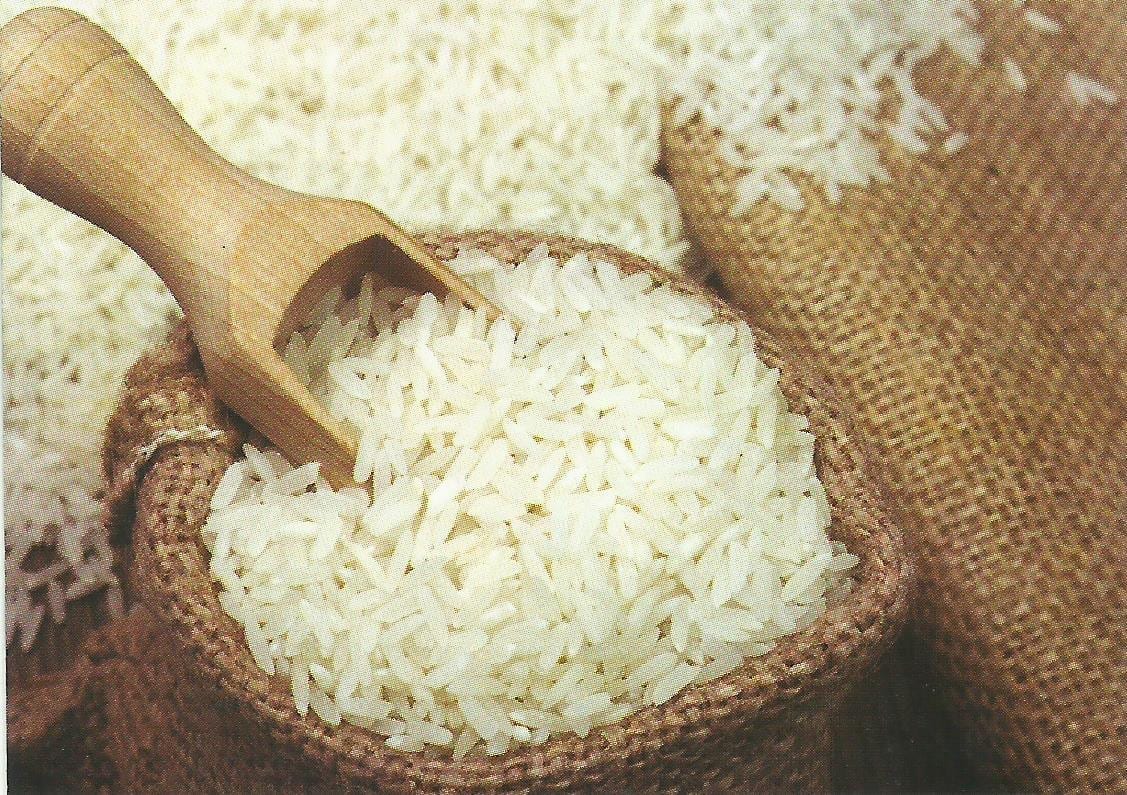
    The Philippines is likely to import an additional 250,000 tonnes of rice from Vietnam and Thailand. The Philippines government on Tuesday said the country would import more rice to boost its stocks ahead of the lean harvest season.

    The National Food Authority Council did not specify the quantity, but demand from the Philippines, one of the world’s largest rice importers, could underpin prices in Thailand and Vietnam — its main suppliers and major exporters.

    The National Food Authority had been seeking the council’s approval to import 250,000 tonnes under government-to-government schemes with Vietnam and Thailand. The committee that decides on the quantity to be imported will meet on Thursday.

    The NFA also announced it would shift from government-to-government importation to government-to-private importation to make the bidding more competitive, transparent and less corrupt.

    Rice inventory in the Philippines is running low, with government stockpiles shrinking to the least in more than three years in April, just enough to cover 10 days of the national requirement.