Tag: Vietnam

  • ANZ plans to sell VN banking retail business

    ANZ plans to sell VN banking retail business

    The Australia and New Zealand Banking Group (ANZ) plans to sell its Việt Nam retail business, a source close to the matter has told the Saigon Times Online.

    According to the source, three foreign and two local banks are hoping to acquire ANZ’s retail business unit in Việt Nam.

    The Việt Nam retail business will not be sold to Singapore-based DBS Bank Ltd, the source said. DBS is not on the list of five potential buyers for the deal.

    In late October 2016, DBS purchased ANZ’s retail banking and wealth management units in five Asia markets for some S$110 million in book value, according to international media.

    The deals were based on business performance, profitability and strategy, and would limit ANZ’s activities in some segments for Asian clients. The bank would, instead, focus on its core businesses for the Asia region such as capital market, bond market, cash-flow management, corporate banking and investment banking.

    The value of retail banking business units transferred in the Asia region is small in comparison with ANZ’s total scale value.

    Việt Nam News tried to contact ANZ for more details, however, the Melbourne-based bank declined to comment.

    ANZ expanded strongly in Asia prior to 2013 and purchased stake in local commercial banks, including HCM City-based Sacombank. Since October 2015, ANZ has divested from its earlier small-scale investments and focused on its core businesses.

    Other Australian banks have also offloaded stake in investments and closed their representative branches outside the New Zealand and Australia markets. They have planned not to expand further in the Southeast Asia region after the Australian government made changes in its banking policies regarding class-one capital, lending and banking retail activities such as real estate trading.

  • Million-dollar Sakura Park in Phu My Hung Midtown

    Million-dollar Sakura Park in Phu My Hung Midtown

    Sakura Park is part of the Phu My Hung Midtown complex, Phu My Hung’s first development in cooperation with leading Japanese real estate companies.

    Designed by Bangkok-based Land Sculptor Studio, Sakura Park is a perfect combination of Japanese and Vietnamese culture and architecture.

    The park introduces a wide range of community spaces suitable for all ages featuring kid’s corner with sand playground; fountain plaza; a quiet area for book lovers and picnic lawns for families. Paths running through the park will be ideal for jogging, while a multi-functional sports zone is perfect for those work-out enthusiasts.

    Sakura Park will retain the natural boundary of the waterfront with a garden of aquatic plants for environment preservation and youth education. A riverside path will also include a modern pavilion and stone steps for people to sit on and enjoy the beautiful scenery.


    There are two walking paths in Sakura Park with one running along the river displaying serene scenery of the waterfront. Another path under the beautiful Singapore sakura canopy is expected to be the best blossoms viewing place in town.

    Sakura Plaza, at the center of the park, is built in the shape of a flower blossom. The plaza features a fountain with beautiful jets dotted like flying petals. The outstanding part at the heart of the plaza is an eight-meter high Sakura statue that can swirl in the wind.

    Sakura Park is part of the Phu My Hung Midtown complex, Phu My Hung’s first development in cooperation with leading Japanese real estate companies Daiwa House Group, Nomura Real Estate Group and Sumitomo Forestry Group.


    This project is the South Saigon real estate giant’s biggest investment in the past three years. Construction materials were carefully selected and imported from Europe.

    After the success of the first phase, with 100 percent of apartments at The Grande sold out, at the end of May, Phu My Hung Midtown will launch its second residential project – The Symphony at the center of the complex and adjacent to Sakura Park.


    High-end facilities will be featured on the top floor to maximize views over the river and Sakura Park to give residents a truly amazing experience at Phu My Hung Midtown. The project is expected to be completed in 2019.
  • Vietnam finishes third in Southeast Asia race for tourist dollars

    Vietnam finishes third in Southeast Asia race for tourist dollars

    Thailand is way ahead of the game, but Vietnam welcomed record tourism revenue in 2016. Tourists arrivals in Vietnam past the 10 million mark last year, and the $18 billion in revenue collected by the sector contributed around 7.5 percent to the country’s economy.

    According to tourism data, Vietnam fell far short of Southeast Asia’s most popular destination,Thailand, which received over 30 million international arrivals and bagged nearly $46 billion from tourists.

    The entire region, excluding Myanmar and Brunei, raked in an estimated $120 billion from tourism. However, the figure was just half that earned by the United States alone.

    On average, each visitor to the U.S. spent approximately $3,000, while in Asia, their spending was three times less.

    However, Vietnam made significant progress by rising eight places in a global tourism competitiveness index compiled by the World Economic Forum. It also said the country could take better advantage of this momentum by focusing more on sustainable environment policies.

    Tourists are mostly lured by Vietnam’s rich natural and cultural resources.

    By 2020, the sector is expected to contribute 10 percent to Vietnam’s gross domestic product and is set to welcome 17-20 million foreign visitors per year.

    By 2030, it is aiming to become the leading destination in Southeast Asia.

  • Samsung targets 33 pct sales growth in Vietnam as phone business thrives

    Samsung targets 33 pct sales growth in Vietnam as phone business thrives

    Samsung Electronics and three other units of the tech giant in Vietnam target combined sales of $60 billion this year. South Korean conglomerate Samsung expects that its strong smartphone business will boost sales in Vietnam by 33 percent this year.

    Four subsidiaries of the tech giant, Samsung Electronics, Samsung Display Co., Samsung Electro-Mechanics Co. and Samsung SDI Co. which is a battery producer, are targeting combined sales of $60 billion this year, up 33 percent from 2016.

    The units also aim to raise their export value by 25 percent to $50 billion, Samsung Vietnam General Director Han Myoung-sup told Vietnamese Prime Minister Nguyen Xuan Phuc at a Tuesday meeting.

    Samsung, the world’s largest cellphone maker, last month posted its biggest quarterly net profit in more than three years after shrugging off the debacle over exploding Galaxy Note 7 batteries. A company statement said its January-March net profit jumped 46 percent from a year ago to $6.7 billion.


    Its business in Vietnam has been driven by robust sales of its latest flagship phones Galaxy S8 and Galaxy S8 Plus, which sales have reached five million units worldwide in less than a month.

    Samsung Electronics operates two cellphone plants in the northern provinces of Bac Ninh and Thai Nguyen, which produce around half of all cellphones that Samsung supplies to the global market.

    Cellphones contribute to more than 80 percent of exports by the Samsung units in Vietnam, which accounted for 23 percent of Vietnam’s total overseas shipments last year, making it the dominant exporter from the Southeast Asian country.

  • Vietnam logistics firms increase cross-border transport

    Vietnam logistics firms increase cross-border transport

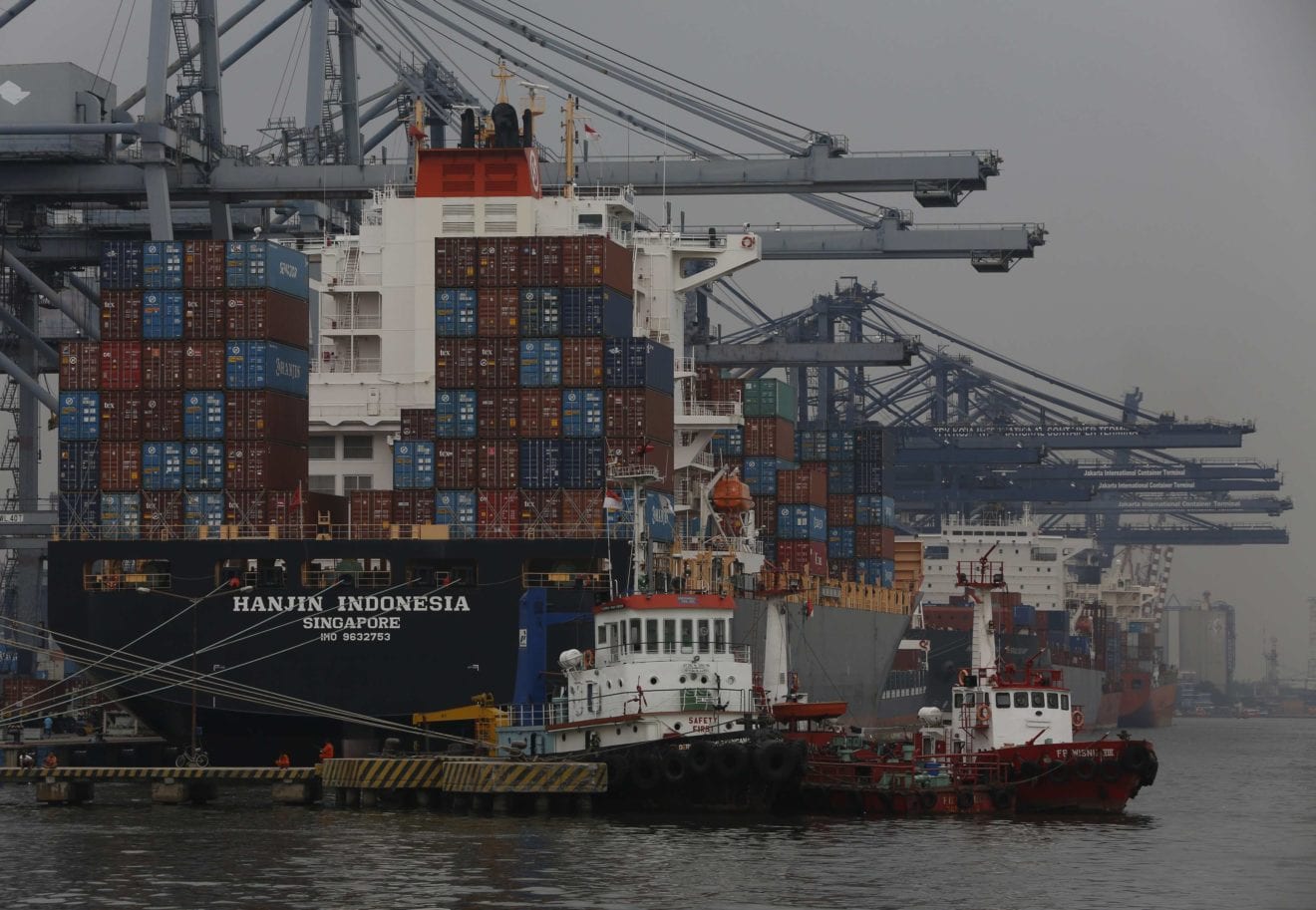
    Amid a growing interest in Vietnam from global garment and technology companies, foreign logistics firms are expanding cross-border transport services between Vietnam, China, and other countries in the region to meet the growing demand.

    Dao Trong Khoa, head of the Vietnam Logistics Business Association’s (VLA) transport division, said at last week’s international seminar on cross-border transport (CBT) between Vietnam and China that CBT has great opportunities to develop.

    Khoa said these opportunities will be driven by the development of regional cross-border e-commerce and transport networks.

    Attention is focused on the development of Shenzhen-Hanoi-Bangkok, and Kunming-Lao Cai-Haiphong networks, which have promising full truckload (FTL) and less truckload (LTL) potential.

    So far, the Chinese-invested ZhenYang Logistics Group (ZYL), which focuses on the ZhenYang-Nanning-Hanoi route and routes between southern China and northern Vietnam, has opened offices in Hanoi and Lang Son province.

    ZYL is the first Chinese logistics firm that has been permitted to cross the border directly without any trans-load at the border.

    “We focus on electronics and high-tech products. Our customers are mainly foreign-invested firms such as Samsung, Foxconn, and global forwarders. We have witnessed the volume of containers grow from 70-80 containers a month in 2013 to 400 containers currently,” Nguyen Quang Tung, branch manager of ZhenYang Logistics Group, said.

    “As the demand continues to increase, ZhenYang is planning to develop LTL services to Vietnam in the third quarter of 2017, while also developing additional multimodal transportation hubs that link Vietnam, China and Europe,” Tung said.

    In another significant move to develop regional CBT routes, Malaysian-invested Overland Total Logistics Services Vietnam JSC (OTL)-which focuses on the Singapore-Malaysia-Thailand-Laos-Vietnam-China route-has partnered with Japan’s Yamato Transport to strengthen its market position.

    Trinh Manh Cuong, general manager at OTL, said “our volume of CBT goods has grown significantly, reaching 700-800 containers per month. We will invest in more facilities, open more hubs, and develop multi-model sea, rail, and cross-border road services in the future.”

    CBT between Vietnam and China is becoming increasingly more popular among international groups and Vietnamese firms alike. The popularity of this market is being driven by the expensive cost of air transport, and the huge risks inherent in sea-based routes.

    According to VLA’s statistics, in 2016, cargo shipped by land transit in Vietnam totalled 19,475 vehicle loads. Cargo shipments between China and Vietnam reached 107,600 loads. The shipping amount between China and Laos, China and Thailand, and China and others is estimated at 2,020, 128,000, and 1,076 loads respectively.

    Notably, cargo throughput at PingXiang and Huu Nghi rose from 1.1 million tonnes in 2013, to 1.5 million tonnes in 2015. At the same time, throughput at HeKou and Lao Cai rose from 650,000 tonnes in 2013, to 1.1 million in 2015.

    As Vietnam is now considered the destination for technology and garments by many multinationals, developing new transport routes has become a lucrative endeavour for CBT firms.

    Multinationals that are currently heavy users of CBT services are the electronics manufacturers Samsung Electronics, LG Electronics and its subsidiaries, Foxconn, Canon, and Foster and its subsidiaries.

    Heavy CBT players in the garment sector include Lear, Adidas, Nike, and Levis, while in the automotive sector Honda, Toyota, Yamaha, and GMV are the primary users of CBT.

    These groups have been expanding their investment in Vietnam, which has led to an exponential increase in their CBT usage.

  • Vietnam urged to reduce power losses

    Vietnam urged to reduce power losses

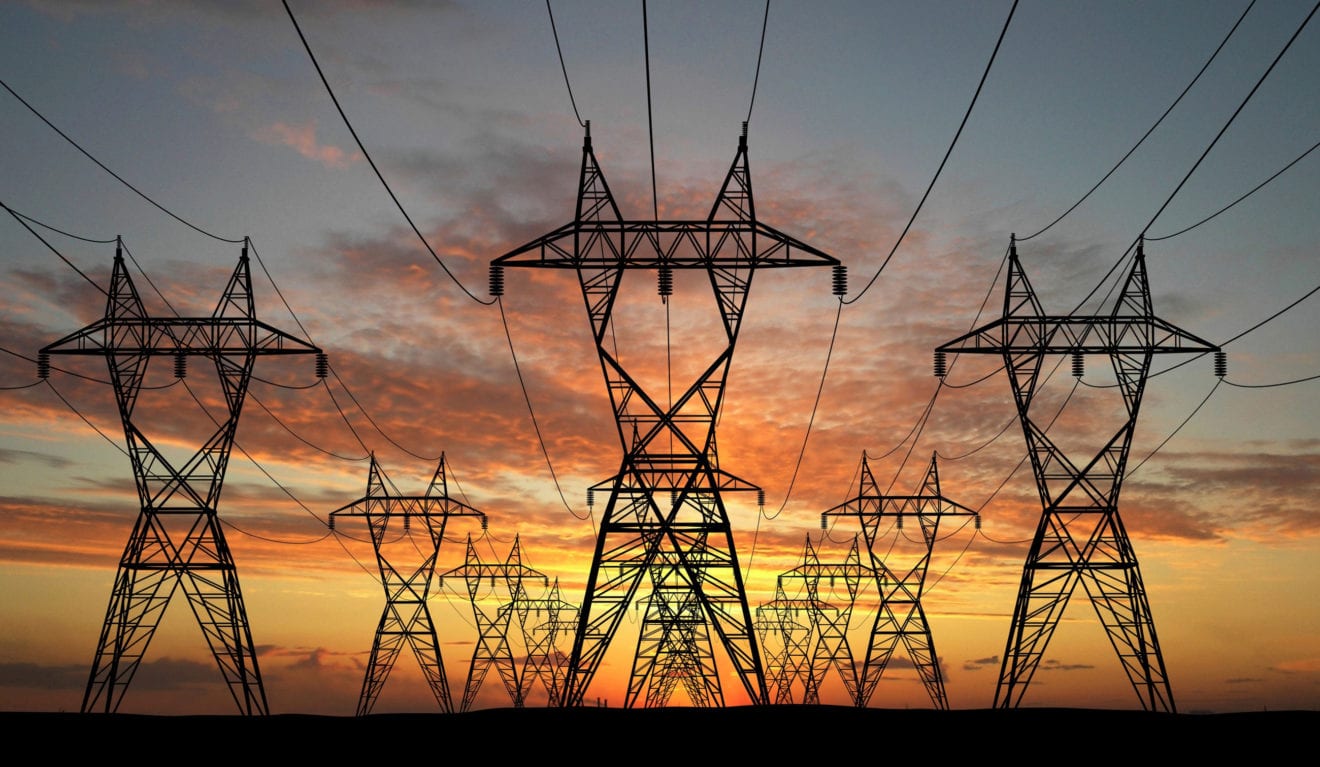
    The electricity industry must improve its management and technology to reduce losses in the transmission grid as well as eradicate power stealing, which are very serious in rural and remote areas, delegates heard at a seminar in Con Dao Island in the southern province of Ba Ria – Vung Tau.

    Viet Nam is ranked 88th of 137 nations for power loss, with 8.95 per cent of power lost in the transmission process, according to the International Energy Agency.

    “Upgrading technology for the transmission grid and increasing awareness in rural and remote residents about power stealing are two urgent jobs,” Nguyen Tan Nghiep from the Southern Power Association told the Sai Gon Giai Phong (Liberated Sai Gon) newspaper.

    The Viet Nam Electricity Group (EVN) has set the goal to reduce power loss from 8.95 per cent to 6.5 per cent by 2020 by applying new technical and operational solutions as well as building new electricity plants and transmission grids.

    During 2016-20, EVN has invested in 13 electricity projects with total capacity of 6,989 MW.

    By ensuring electricity supply, power won’t need to be transmitted far distances and it will help reduce losses.

    For the transmission grid, a 500kV and 220kV grid in Ha Noi, HCM City and other big and industrial cities and provinces will be developed with modern technology to limit power loss.

    Lack of supply

    By 2020, hydropower, renewable and thermal power by gas will only provide 48.3 per cent of power demand and fall to 39.9 per cent by 2030, but power demand is expected to increase 9 – 10 per cent each year during 2016 -2030.

    Furthermore, a nuclear power plant in the central province of Ninh Thuan has been stopped by the Government, therefore, coal thermal power must be considered for economic efficiency and environmental pollution.

    “In the context of a 50 per cent shortage of power, proper power supply must be carefully chosen,” Dr Tran Trong Quyet, vice chairman of the Southern Power Association, said.

    He pointed out that renewable power would ensure environmental protection, but it would require a huge initial investment.

    “Coal thermal power will require a lot of land, is a big problem for environmental pollution and is a large expenditure, but it still plays a very important role in ensuring national power security,” he added.

    To limit the impact of coal thermal power, Quyet warned that modern technology to deal with coal slag and ensure coal supply must be done carefully.

  • Wind projects offer promising future

    Wind projects offer promising future

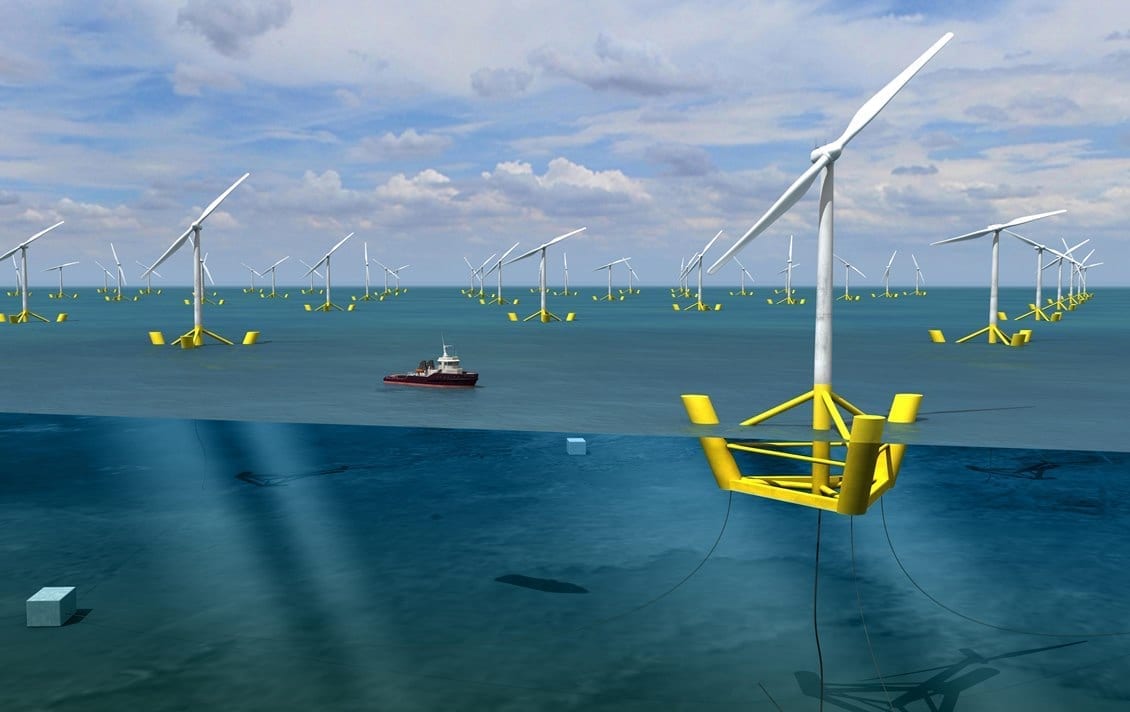
    With growing innovation in the sector, experts and investors note that wind power projects in Vietnam will be feasible with an 8-9 US cent per kWh feed-in-tariff.

    Vu Chi Mai, senior project officer at Geman Technical Cooperation (GIZ), highlighted at a wind power forum hosted by the Asia Wind Energy Association last week that experts are now more optimistic regarding the foreseeable cost reductions in the industry.

    The newfound optimism, Mai noted, may be coming as a result of technological advancements that have yet to be implemented.

    The forthcoming advances suggest that wind energy is not as mature a technology as was previously thought, Mai added.

    “Wind power technology and its advancing development is cutting costs and time for developers,” Mai said, highlighting that developers see a 9 US cent feed-in-tariff (FiT) as bankable.

    Late last year, GIZ sent a proposal to the government stating that the best way to make projects feasible is to offer a FiT of 10.4 US cents.

    Mai explained that per request from the Ministry of Industry and Trade (MoIT) to get the real cost of wind production in Vietnam, GIZ has conducted a study which has been based on the operational costs of the three existing wind farms in Vietnam (the first wind farm has been operational since 2011).

    A bankable FIT of 10.4 US cents per kWh has been then suggested so that the government target of 800 megawatts by 2020 could be reached.

    William Gaillard, regional sales director at Gamesa Siemens – the exclusive supplier for the 40MW Dam Nai  project in the central province of Ninh Thuan, said that “Now you can have profitable wind projects that few years before was not possible, thanks to larger rotor size and bigger generator, but also larger volumes and economies of scale from our side.

    Also other suppliers need to make some efforts. Balance of plant like civil and electrical works also need to drive cost down.” Gaillard added that even current of 7.8 cents can make projects bankable.

    He pointed out that in Vietnam there is very little experience and so risks are high and contractors expect high margins. But the key issues is to get a bankable power purchase agreement (PPA), according to international standards.

    Olivier Duguet, CEO of The Blue Circle – developer of the Dam Nai project, and the first foreign-backed wind power project in Vietnam – told VIR that “the current FiT is perfectly suitable for 2,000MW wind projects in Vietnam.”

    Duguet said focusing on the FiT is the wrong approach. Investors should instead be focusing on conditions that attract long-term debt financing for projects in Vietnam, as this is the only way to develop wind power within the country. Only the very best projects in terms of wind resources and installation costs will be financially viable in the current environment, he added.

    A representative of NRG Systems GmbH noted the wind power industry in Asia is experiencing strong growth, and emerging economies in the region continue to invest heavily in it.

    According to MoIT, Vietnam’s power industry has been facing many challenges around the shortage of energy sources.

    The Vietnamese government has approved several programmes to encourage the development of renewable energy in the country, including the Renewable Energy Development Strategy to 2030, with a vision to 2050.

    The strategy aims to increase the production of electricity from wind sources to 2.5 billion kilowatts by 2020, 16 billion kilowatts by 2030.

  • Amazon, channel for Vietnam’s apparel to enter EU

    Amazon, channel for Vietnam’s apparel to enter EU

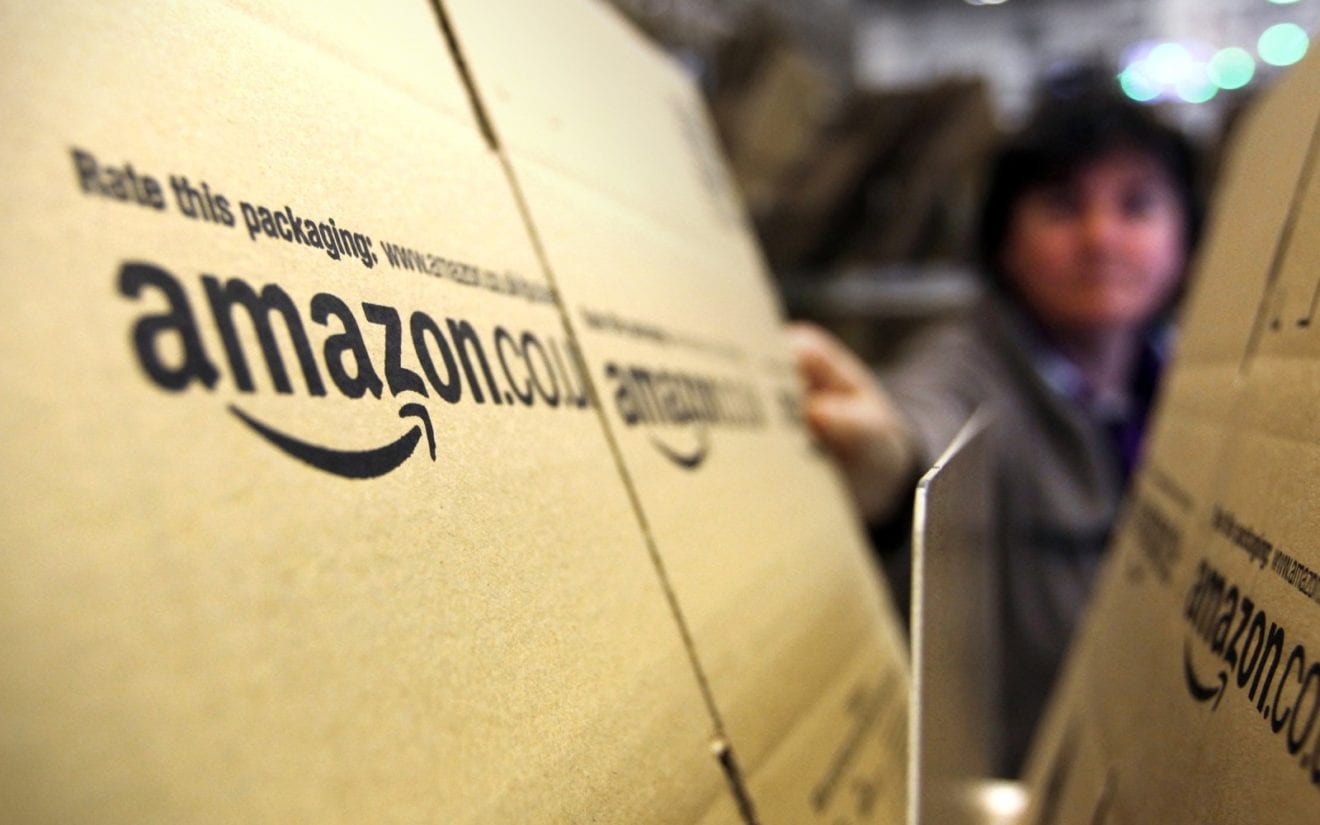
    Amazon, leading online shopping channel, has the potential to become a window for Vietnamese textile and garment products to gain access to European Union market. This was stated in Hanoi at a seminar, organised by Vietnam Textile and Apparel Association. Vietnamese businesses got advice on e-commerce by experts from Germany’s Vorwarts company at the event.

    Vorwarts CEO André M. Åslund said the quality of Vietnam’s garment products satisfied EU consumers. Many enterprises in Vietnam and Asia were selling their products to the EU via intermediaries or outlets. However, if products are sold on Amazon, intermediaries will not be needed, leading to reduction in cost and improvement in Vietnamese apparel’s competitiveness in EU markets, according to Vietnamese media reports.

    Up to 76 per cent of consumers use mobile phones to shop online, and 50 per cent of mobile phone users shop via Amazon, Åslund said.

    Noting that consumers’ behaviours were changing, he said instead of solely depending on products’ prestige, their interest and trust were now also framed by other factors such as product review and description, and other consumers’ assessment, the reports said.

    Therefore, businesses should pay more attention to quality information provision and product quality to get good assessments. Those evaluations will encourage EU consumers to buy Vietnamese products, Åslund said.

    However, businesses must comply with regulations of EU markets and improve product design to meet consumers’ taste. Once consumers are satisfied, they will introduce products to others, he said.

  • Pork prices plummet again, testing farmers

    Pork prices plummet again, testing farmers

    Farmers need to be rescued again as prices of yet another item collapses. In recent days pork prices have dipped to a record low and also the lowest in the world. Pig on the hoof is sold at VND25,000-VND28,000 (US$1.11-1.24) per kilogramme.

    The situation is blamed by market observers on oversupply of pork. The Ministry of Industry and Trade estimates the country will have a surplus of 200,000 tonnes of pork this year. If the glut is not addressed, many pig breeders, including large farms, are likely to go bankrupt, and animal feed, veterinary care, and slaughter and pork trading businesses will suffer badly.

    The Ministry of Agriculture and Rural Development (MARD) has sent officials to China to solicit buying.

    Some food processing firms have already suspended imports and increased local purchases to aid pig farmers.

    Cau Tre Export Goods Processing Joint Stock Company, for instance, normally processes both local and imported pork, but it has temporarily stopped imports. The company plans to buy and stockpile 200-250 tonnes, which is equivalent to three months’ requirement.

    Vissan has also stopped pork imports and increased its local purchase from 1,500 pigs a day to 1,800.

    Retailers are also pitching in to help rescue pig farmers by rolling out several promotions to stimulate pork demand.

    Saigon Co.op has been offering 10-20 per cent discounts on pork prices since April 25, and sales has increased by 20-30 per cent.

    Lotte Mart supermarket is also offering discounts of 10-20 per cent.

    Soldiers, police officers and the public have been urged to consume more pork in their daily food.

    This year alone this is the third time that the country has had to scramble to settle agriculture-related problems by oversupply.

    In February banana farmers in several provinces were hit as prices plummeted from VND14,000-17,000 per kilogramme to VND1,000-3,000.

    In April several campaigns were launched to rescue watermelon farmers in the south-central province of Quang Ngai, who suffered severe losses after being unable to sell their harvests.

    Analysts said Vietnamese farmers often suffer despite bumper crops since prices collapse.

    The rescue measures are only band-aid solutions and do not address the oversupply problem basically, and so the problem is repeated year after year.

    What causes these periodic gluts?

    MARD blames it on difficulties in exporting to China, which is by far the biggest importer of Vietnamese farm produce.

    In fact, in the first nine months of last year, at nearly $4.9 billion, China’s imports accounted for around 20 per cent of Viet Nam’s total agricultural exports.

    An expert from the Institute of Policy and Strategy for Agriculture and Rural Development said, thus, any changes in that market affect consumption of Vietnamese farm products.

    Many analysts also blamed the glut on unplanned cultivation by farmers, saying many rush to grow items that fetched high prices the previous season, without considering if the prices would remain high.

    Most have little or no knowledge of the local market or global demand and price trends.

    Product quality is another big problem.

    According to deputy agriculture minister Vu Van Tam, demand for farm produce like bananas, watermelon and pork is very high both in the domestic and overseas markets.

    But because the quality and productivity of local produce are not good enough, many consumers turn to imported products, he added.

    Some analysts blamed the agriculture and trade ministries for not providing farmers with enough information about the market to enable them to make timely adjustments, ensuring supply and demand are balanced.

    They admitted, however, that only macro solutions outlined and implemented by the Government would help settle the problem.

    The solutions must include changing the entire agricultural process from market forecast and production planning to harvesting and consumption.

    A system to forecast demand for and prices of farm produces in the domestic and overseas markets is an imperative for the ministries to help localities regulate their production plans.

    The Government should have policies to encourage businesses to apply modern agricultural technologies to improve the quality of agricultural products and cut costs.

    Back to the pork story, which seems headed for a happy ending for the farmers. Prices are recovering as many farmers have reduced their stocks of sows and piglets.

    But we have to wait and see if farmers refrain from rearing pigs again if pork prices reach a certain level.

    Otherwise, and if no sensible measures are taken in time, the story will only be repeated.

    Consumer main profit source

    In the first quarter of this year VPBank’s profit was VND1.924 trillion, up 85 per cent year-on-year.

    Significantly, its FE Credit–Consumer Finance Service Company contributed over VND1 trillion to this.

    In the first four months profits at several lenders topped VND1 trillion, including Vietcombank, VietinBank, BIDV, Techcombank, and MB.

    Industry insiders said a majority of the profits came from consumer lending.

    Not surprisingly, many banks have set up or are in the process of starting consumer finance companies.

    Sai Gon-Ha Noi Commercial Joint Stock Bank (SHB) plans to open the SHB Consumer Finance Company in the third quarter of this year, and targets a profit of VND100 billion from it this year. The profits are expected to multiply in the coming years.

    Vietcombank plans to close its finance leasing company to set up a consumer finance company in an effort to increase its retail segment growth to 40 per cent.

    Under the State Bank of Viet Nam (SBV)’s current regulations, a bank can own either a consumer finance company or a finance leasing company, not both.

    The rapid increase in the number of consumer finance companies and their booming success are attributed to the SBV’s recent changes in policies.

    A circular the central bank issued last year removes all interest rate caps on consumer loans.

    Before that finance companies’ consumer loan rates were regulated by the SBV based on the lending activities of financial institutions and foreign bank branches.

    While their consumer loan interest rates are not regulated, finance companies must report to the SBV on the interest rate range they offer clients and notify it if there are any changes to it.

    These changes have made consumer lending much more attractive to the banks in the context that they can charge high interest rates on this and lending to businesses has become difficult due to various reasons.

    Analysts said that this decade market demand for unsecured loans has grown to adapt to the current financial scenario in Viet Nam, which sees an increasing amount of retail lenders and personal borrowers.

    The growth is attributed to favourable legal and socio-economic conditions that have brought changes to incomes and spending habits.

    The central bank has licensed 15 finance companies in addition to banks.

    Analysts said while consumer lending has the potential for explosive growth, that can only happen with significant improvements in consumer satisfaction with credit institutions and loan conditions.

    They also warned that the lending interest rates are too high and make it difficult for borrowers to repay, increasing the threat of bad debts.

    The SBV considers a loan to be a consumer loan if it is made in dong, the borrower is an individual and not an institution, the purpose of the loan is to meet personal spending needs and the borrowed amount does not exceed VND100 million.

  • ATM services must run 24/7

    ATM services must run 24/7

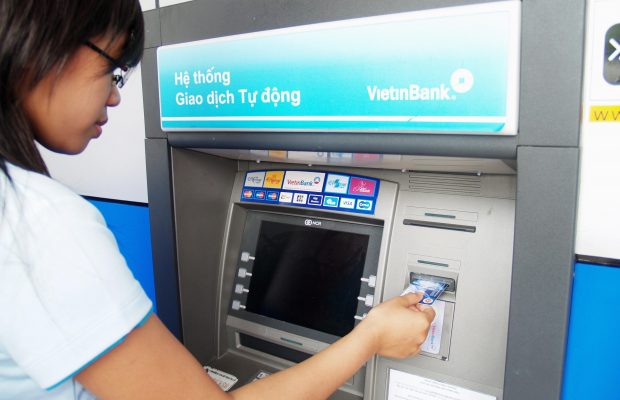
    Following recent complaints that several banks in Viet Nam have stopped providing ATM services at night, the State Bank of Viet Nam (SBV) has ordered all banks nationwide to provide ATM services 24/7.

    Local media reported that many ATMs on the outside of buildings and shopping malls were turned off when the venues shut, stopping customers using the service, the central bank said.

    The SBV has asked all banks and card payment service providers to review their entire ATM systems and ensure smooth operation of ATMs by adjusting ATM working hours.

    A Vietnam Bank for Agriculture and Rural Development (Agribank) representative told Tuoi Tre (Youth) newspaper that State Bank rules dictate that all ATMs operate 24/7. However, the central bank does allow banks to turn off ATMs as long as their opening times are listed at the facilities and on the banks’ websites, the representative said.

    Hoang Chi Mai, a resident of Thanh Xuan District in Ha Noi and Agribank customer said she often withdraws money at an ATM booth on Nguyen Trai Street near her house.

    “The security guard locks up the booth at 10:00 pm. I thought these ATM booths were open around the clock,” Mai said.

    According to Nguyen Hoang Minh, deputy director of the SBV’s HCM City branch, several banks have stopped providing ATM services at night to prevent criminals from stealing money from customers’ accounts.

    With thieves carrying out increasingly sophisticated activities, police have advised lenders to prepare measures to cope with the situation, Minh said.

    The central bank will check if local banks follow the correct protocol for this adjustment, he added.

    Tran Quang Thoai, an expert in this field, told Tuoi Tre (Youth) newspaper that although the banks’ decision aimed to ensure the security of customers’ assets, some methods of tackling card fraud have created problems.

    To gain understanding from customers, these adjustments should be publicised properly, Thoai said. “All changes should not be carried out too suddenly,” he added.

    Dozens of fees

    Many card users have complained about the recent hike in ATM fees, claiming that banks are making profits from ATM services through various fees imposed on their fast growing clientele base, but banks said that the fees are not enough to cover the costs of operating the machines.

    Local media reported that an ATM card holder is subject to dozens types of fees. For example, Agribank charges up to 25 types of fees at ATMs, BIDV collects 20 types of fees and Techcombank charges 13 types of fees.

    An Ninh Thu Do (Capital Security) newspaper quoted Nguyen Toan Thang, general secretary of the Viet Nam Bank Association as saying that the ATM service had developed for 20 years now and there were 53 card issuers nationwide with a total issuance volume of more than 100 million cards. The ATM network had been expanded with more than 17,000 ATMs machines nationwide.

    He added that to meet the increasing demand for transactions, banks have to invest in system maintenance, technology innovation, products and services diversification and the integration of value-added services like mobile banking, internet banking and SMS banking.

    While there may be many types of fees for card payment services listed, customers do not have to pay them all but only the services they use, Thang said.

    “It is lawful for banks to charge fees to offset their investment costs and cover huge expenses they have to pay to maintain the system,” Thang added.

    Recently, some commercial banks have asked the central bank for its approval on a roadmap to increase transaction fees at ATMs, aiming to cover part of the banks’ investment in the ATM systems.

    A representative from a big Vietnamese lender told Dan Tri (People’s Knowledge) newspaper that with banks investing large sums to set up the ATM systems, fees of VND7,000 to 10,000 per transaction is too little compared to the billions of dong spent to set up, maintain and upgrade ATMs annually.

    Not to mention that after each transaction, banks have to send a message announcing account balance to clients, which costs VND700-800 per message, 2 to 3 times above the charge rate for individual subscribers applied for a normal message, he said.

  • Vietjet expands its international presence with new Hanoi – Yangon route

    Vietjet expands its international presence with new Hanoi – Yangon route

    Vietjet continues its international route extension program with the announcement of the launch of the Hanoi to Yangon (Myanmar) route, with tickets priced from only HKD70 (USD9). The new service, commencing August 31, 2017, is expected to meet the increasing travel demands of individuals, tourists and businessmen between Vietnam’s capital city and the Burmese tourism hub.

    The Hanoi – Yangon route is operated on a daily basis with flight time of 1 hour 55 minutes per leg. The Hanoi – Yangon flight departs at 12:05 and arrives at 13:30 (local time). The return flight takes off in Yangon at 14:30 and arrives in Hanoi at 16:55 (local time).

    The new route’s tickets are available for booking within the golden hours from 13:00 to 15:00 daily. Payment can be easily made with debit and credit cards of Visa, MasterCard, JCB, KCP and American Express.

    The capital city is the second destination to be connected with Yangon following the Ho Chi Minh City-Yangon service. With similar cultures, Vietnam and Myanmar are attracting investments for tourism and economic development. The new route is expected to meet the increasing travel demand of tourists and businessmen contributing to the development, integration and trade in the region. This is made possible with the introduction of Vietjet’s convenient flight schedules and amazing airfares.

  • Vietnam moves towards high-tech agriculture

    Vietnam moves towards high-tech agriculture

    Cau Dat Farm Da Lat, famed in the central highlands town of Da Lat since 1927, has applied IoT to its crops since mid-2016. Though occupying a large land area, productivity at the farm has been quite low under traditional farming methods and an unpredictable climate.

    It is, however, one of the first farms in Vietnam to apply IoT in its farming.

    Mr. Pham Ngoc Anh Tung, former Director of Cau Dat Farm and founder of the startup Demeter, which introduced an IoT system at Cau Dat Farm, said that the reason why he decided to apply IoT at the farm is because it’s become common internationally.

    It also provides various benefits to farmers, in management, productivity, and product quality.

    Nine months after introducing IoT, the farm began to see positive signs, with flowers, green tea, and fruit and vegetables reaching productivity targets and being of high quality.

    One outstanding benefit was automation replacing almost all human tasks.

    Initial applications

    The IoT system Demeter introduced at Cau Dat Farm includes three main parts. The first one is called Connected Edge – hardware that controls tasks like pumps, irrigation systems, micro-climate control systems, drones, weather stations, camera systems, and sensor systems.

    Data is connected and pre-handled through gateways before moving to the cloud.

    The second part is storage, with the processing and analysis of data or turning data into insight on the cloud.

    All data is arranged and analyzed in a secure environment. In the third part, all agriculture tasks are identified based on analyzed information and data.

    Therefore, users can fully understand what their production status is.

    Depending on the equipment, the system can provide information, actionable information, or even automated control and operations.

    Another provider of IoT solutions in agriculture is MimosaTEK. It was the first to build and develop high technology watering systems.

    Its solution has two key parts: sensor equipment to measure parameters and a smartphone app, with the latter showing water levels and providing advice to farmers on planting.

    The solution is supported for managing large farms. MimosaTEK’s equipment communicates with each other through radio frequency waves.

    The system can be applied in both an outdoor and glasshouse environment, but is applied more in glasshouses because enterprises usually invest in building automated watering systems outdoors.

    MimosaTEK was established in October 2014 and its first product focusing on watering was launched in June 2015. Ms. Le Lan Anh, Chief Operations Officer (COO) at MimosaTEK, told VET that the level of water and the time for watering is key to agricultural productivity but many farmers don’t focus enough on either.

    “Our target is to supply solutions that effectively use water sources, protect the environment, and bolster profit,” she said. Crops where MimosaTEK’s solutions have been used include vegetables in glasshouses, melons, corn, sugar cane, and pepper, while it’s been piloted with coffee.

    The agriculture startup Hachi, meanwhile, launched a solution last year that eases the planting of vegetables via a smartphone and seen remarkable results.

    CEO Dang Xuan Truong used IoT to build the crop app, which is suitable for customers living in the city.

    “The application of IoT reduces risks in the planting process, such as drought and a lack of soil nutrition,” he said. “Productivity increases from 30 to 50 per cent compared to traditional planting methods.”

    IoT can also be applied in growing rice, according to Mr. Tran Xuan Dinh, Deputy Director General of the Department of Crop Production under the Ministry of Agriculture and Rural Development.

    Farmers enter data relating to the status of their rice through a smartphone app, which is then sent to a processing unit.

    Based on information about soil, climate and plant growth, a quick summary with advice is then given to farmers.

    Tackling barriers

    Vietnam’s agriculture sector must cope with a range of serious challenges. The most pressing, according to Mr. Tung, is that most agriculture models are in a period of transformation, with small land plots and backward technology, making it difficult to apply IoT to large-scale agriculture.

    Agreeing, Mr. Dinh said that Vietnam’s agriculture sector is at a low level and inferior in both IT application and production compared to other countries regionally and internationally.

    “Vietnam has focused only on quantity for a long time, to the detriment of knowledge and crop methods,” he believes.

    Vietnam also lacks high quality human resources to manage and operate modern equipment.

    Training staff through new programs and practical lessons in high-tech agriculture is therefore vital.

    The application of IoT also requires significant investment capital while capital recovery is slow.

    As a developing country, it’s difficult to provide and support all the requirements for IoT applications nationwide. The internet is also problematic in country areas.

    “Rugged terrain in mountain areas presents a problem in applying IoT because internet networks can’t cover such areas, so building a good internet network throughout Vietnam is necessary,” said Ms. Lan Anh.

    Despite the challenges, it can’t be denied that IoT can have a positive effect on Vietnam’s agriculture sector. Mr. Dinh firmly believes that Industry 4.0 will provide breakthrough changes, but the problem is how to best apply IoT in agriculture.

    He also said that connecting to information technology applications will allow for forecasting and controlling the negative effects of environmental conditions on crops and livestock.

    “It will also help people calculate water needs and nutritional balance, and automatically connect to the command department to pump in more water and nutrients when required,” he said.

    With changes to high-tech agriculture being a global trend, Industry 4.0 will create a breakthrough in farming methods through actively controlling conditions and input factors to maximize potential yields and boost quality.

    Smart agriculture platforms have outstanding features, saving on inputs and cost while ensuring productivity and quality.

    IoT systems not only bring advantages to farmers but also support customers. Transparent production information is made available through IoT systems, allowing customers to research product origin.

    Given that Industry 4.0 and IoT are novel concepts for most Vietnamese, and especially farmers, it may take some time before such systems are adopted broadly, according to Mr. Dinh.

    Based on existing circumstances, he said, the best approach is slow and gradual application.

  • Banks increase service fees

    Banks increase service fees

    The Bank for Investment and Development of Vietnam (BIDV) is officially applying a new fee schedule for e-banking.

    The fee on transfers via e-banking of less than VND10 million ($440) is up from VND6,600 (29 cents) to VND7,000 (31 cents), and for up to VND500 million ($22,000) from VND12,000 (52 cents) to VND15,000 (66 cents).

    TP Bank has also raised its fees for SMS Banking, from VND8,800 (38 cents) to VND11,000 (48 cents) per month.

    Eximbank’s have increased to VND16,000 (70 cents) per month and are to be paid every quarter.

    Explaining the increase, TP Bank said that it had to pay VND800 (3.5 cents) per SMS so it was losing money.

    The bank recently introduced eTokens for better security at no charge, but customers who still use OTP SMS must pay fees to cover costs, it said.

    Previously, the Saigon Thuong Tin Commercial Bank raised its internet banking fees for individual customers from VND33,000 ($1.5) to VND44,000 ($1.9) per quarter.

    Other commercial banks have sent proposals to the State Bank of Vietnam (SBV) over increases to ATM transaction fees to cover part of the cost of their investment in ATMs.

    Depending on the bank, the cost of an ATM withdrawal is around VND7,000 (31 cents), which is a loss.

    Such proposals have been met by public concern, however, as many cardholders claim that using ATM cards is burdened by many other types of fees, with some 20-25 basic service charges. Mr. Nguyen Toan Thang, General Secretary of the Vietnam Banks Association, said that customers should not have to pay all fees but only those for the services they use.

    The Department of Payments at the SBV said that domestic debit, or ATM, cards are subject to certain fees, such as ATM withdrawals, money transfers to the same or a different bank account, and statement printing.

    Some bank experts said that banks have to charge for ATM-related services because they have invested in ATM facilities in regard to installation, operations, maintenance, and security. ATM users should therefore pay a fee.

    In addition to increases in certain e-service fees, banks have also cut some charges. Eximbank, for example, reduced its interbank transfer fee from accounts to the Napas system from VND22,000 (96 cents) to VND11,000 (48 cents).

    BIDV offers free annual fees for e-banking customers. Other banks, such as TP Bank and Sacombank also offer free eTokens.

    Banks are improving such services as they move towards modern banking, increasing service revenues and reducing costs.

  • Demand from China, Africa supports Vietnamese rice prices at harvest end

    Demand from China, Africa supports Vietnamese rice prices at harvest end

    Vietnamese rice is being offered at around $35-$40 a ton below Thai grain. China and several African countries have returned to Vietnam seeking fragrant and white rice, and the demand has helped stabilize export prices even though supply has risen at the end of a major harvest, traders said on Friday.

    They also said Vietnamese rice being offered for cheaper prices than Thai and Indian rice has also attracted buyers, mostly from Africa. Vietnam is the world’s third-largest rice exporter, behind India and Thailand.

    Farmers in the Mekong Delta, Vietnam’s food basket, have finished harvesting the winter-spring crop, the biggest of the country’s three annual crops. Paddy output eased 2 percent from last year to an estimated 9.8 million tons, based on government statistics. Most of the grain from this crop is being exported.

    Reuters cited Vietnamese traders’ quotations for five percent broken rice showing prices rose this week to $355-$360 a ton, free on board (FOB) basis, on more active trade.

    At $360 a ton, the price is at its highest since August 31, 2016.

    But traders at foreign firms and a dealer at a state-run export company in Ho Chi Minh City told VnExpress International that exporters are looking to sell the grade at around $355 a ton, while bids stood at $350-$352 a ton, similar to last week.

    “Rice exports to China are going well,” the dealer said. “Africa is also coming back with inquiries for the 5-percent and the 15 percent broken varieties, as well as fragrant rice.”

    He added that ample supplies are now available to state-owned export firms that have better access to bank loans, while private exporters are struggling to build stock due to weaker finances.

    Vietnamese prices are below those offered by Thailand, where the 5-percent broken rice rose this week to $387-$392 a ton, FOB basis, from $380-$390 last week and $360-$375 at the end of April due to loading demand during a slow off-season harvest, Reuters cited Thai traders in Bangkok as saying.

    Traders noted China, the biggest buyer of Vietnamese rice, has been taking more of the grain in the past month.

    China imported 288,000 tons of rice from Vietnam in April, way above the monthly average of 176,000 tons in the first quarter, Vietnam Customs data showed.

    That brought Vietnam’s total export volume to China in the January-April period to 815,000 tons, a rise of 16 percent from a year ago, based on data from the Finance Ministry-run customs agency.

    Earlier this year, China approved 22 Vietnamese rice export firms as official suppliers, but is also trying to limit rice purchases across the land border with Vietnam.

    China is projected to import 5 million tons of rice this year, up 8.7 percent from 2016, the U.S. Department of Agriculture said.

    Vietnam is forecast to export 5.6 million tons in 2017, up 10 percent from last year, the USDA said in a report on Wednesday.

    The USDA also forecasts both India and Thailand will export around double that amount this year.

  • Best place in Southeast Asia for cheap love

    Best place in Southeast Asia for cheap love

    No need to go ‘Dutch’ in a city of satisfied lovers. For a night out with a potential life-long love in Ho Chi Minh City, love birds have to shell out around $35, while in Singapore a date may cost them at least $80.

    A cheap date night combo consists of: dinner for two at a local pub, movie tickets and two cocktails.

    The findings were based on a cost of living index updated recently, a database that compiles the global cost of living.

    Date nights may be even cheaper in Hanoi where living costs are 2.62 percent lower than in Ho Chi Minh City.

    Instead of cocktails, Ho Chi Minh City is also the cheapest place for beer with half a liter costing just $1.5.

    However, if couples fancy a date at an Italian restaurant with appetizers, a main course, wine and dessert, then watch out, Ho Chi Minh City may not be a good choice, take a look at Manila instead.

    It seems that residents should choose their dates carefully, and marry young. It’s cheaper that way.

    Recently, Vietnam was named an ideal place to be in a relationship, with a new regional survey naming Vietnamese among the most satisfied lovers.

    If you’re looking for smooth sailing in a relationship, hook up in Vietnam.