Tag: Vietnam

  • Emerging markets like Vietnam help Inditex outpace H&M

    Emerging markets like Vietnam help Inditex outpace H&M

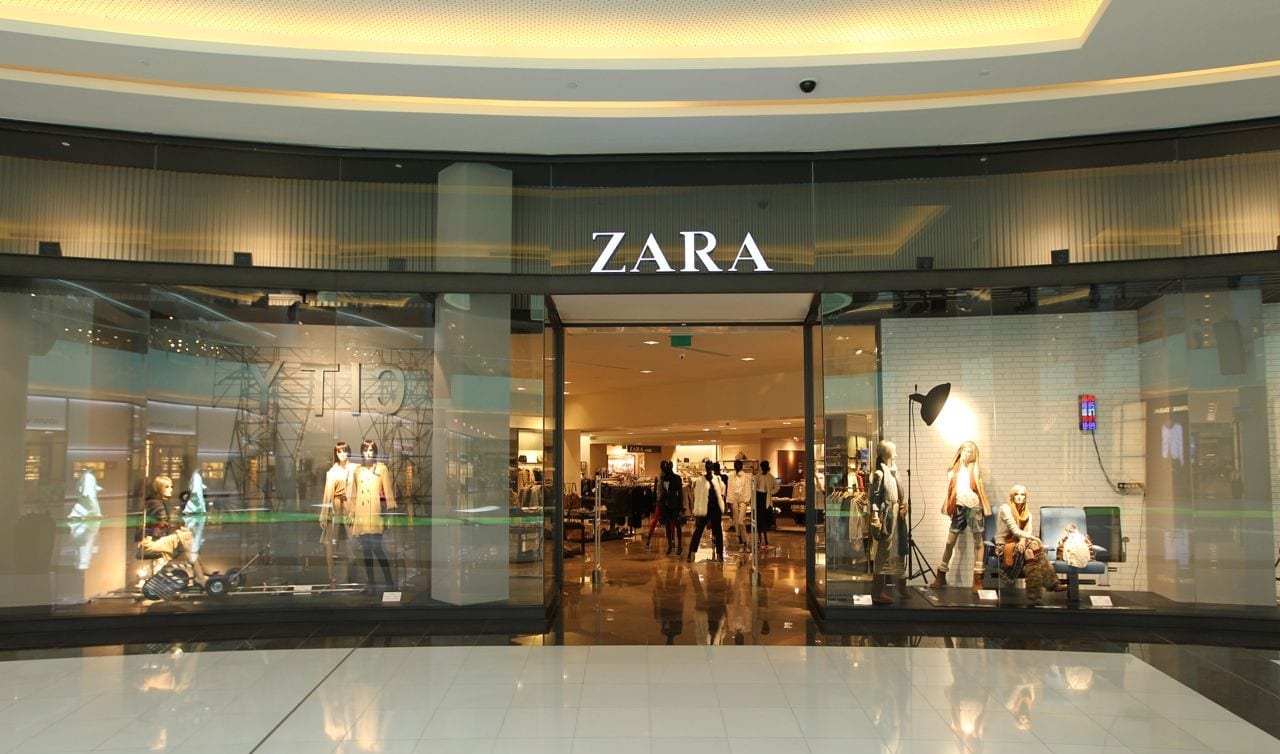
    Fashion retailer H&M’s sales fell unexpectedly in February while Inditex, which owns Zara, pulled further ahead of its Swedish rival, helped by its expansion online and a bigger emerging market presence.

    Inditex, the world’s biggest clothing retailer, has consistently outperformed H&M in the past few years as a result of online growth and its push into new markets. The Spanish company has also diversified more quickly into higher-priced brands, reducing exposure to the rise of discount chains like Primark.

    H&M has embarked on plans to roll out ecommerce in more markets this year and speed up expansion of newer brands such as the mid-market COS and & Other Stories.

    But on Wednesday H&M revealed that local-currency sales fell in February for the first time in four years, slipping 1 percent year-on-year, against a forecast in a poll of analysts for a 6 percent rise. H&M’s shares fell 5 percent.

    In contrast, Inditex’s local currency sales rose 13 percent from February 1 to March 12, as customers snapped up items from spring collections like double-breasted jackets, palazzo trousers and embroidered tulle tops.

    This was adjusted for an extra trading day in February 2016. H&M sales were up 3 percent in February, taking that calendar effect into account.

    Inditex results highlight the success of its strategy, with like-for-like sales up 10 percent in the year to end-January, helped by a shift towards opening bigger stores in prime locations that are then integrated with online operations.

    emerging-markets-like-vietnam-help-zara-owner-inditex-outpace-hm

    Inditex opened stores in 56 countries during the year, including its first opening in Ho Chi Minh City, Vietnam.

    Forex pressure

    Inditex’s gross profit margin missed analyst expectations, falling to 57.0 percent in its 2016 financial year from 57.8 percent in 2015. This weighed on the company’s shares which were down 1.4 percent by 1014 GMT.

    Inditex, known for speeding the latest trends from runway to stores in a matter of days, reports in euros but makes more than half its sales in other currencies, exposing it to falls in the likes of the Mexican peso and the Russian rouble.

    Chairman and Chief Executive Pablo Isla said this margin metric would have increased on the year had it not been for the negative currency effects.

    Analysts expect this effect to swing in Inditex’s favor over the next 12 months with a consequent boost to profit margins.

    “We are very keen buyers of Inditex for 2017,” Anne Critchlow, analyst at Societe Generale, said. She said Inditex trades on 26 times forward earnings, compared to H&M on 21 times.

    Inditex opened stores in 56 countries during the year, including first openings in New Zealand, Vietnam and Paraguay, bringing its total store count to over 7,200. It launched online sales across its stable of brands in Turkey and said on Wednesday it would start online sales in India in 2017.

    H&M is more reliant on Europe than Inditex. In Germany, for example, which is H&M’s biggest market, apparel sales fell 9 percent in February, according to trade journal Textilwirtschaft.

    “Market conditions are the main driver of the weak February number,” UBS analyst Adam Cochrane said. “There’s a fear that they are losing market share on a like-for-like basis.” UBS has a “buy” recommendation on H&M.

    H&M reported that sales in local currencies rose 4 percent in its fiscal first quarter to February 28. That compares with a new target for annual sales growth of 10-15 percent. H&M is due to publish its full fiscal first-quarter report on March 30

  • Vietnam driven to protect domestic automobile industry

    Vietnam driven to protect domestic automobile industry

    Vietnamese policymakers are looking at ways to safeguard the domestic automobile industry against foreign rivals, based on an official document released by the government office.

    Vietnam’s automobile industry is expected to face more hurdles in the years to come as the local market opens up to foreign competitors.

    Locally-assembled cars could cost 20 percent more than those imported from neighboring countries such as Thailand and Indonesia in 2018, when tariffs on car imports into Vietnam from other ASEAN countries will be cut to zero from the current 50 percent, the trade ministry said.

    The government has asked trade officials to look at ways to prevent a surge in car imports.

    Meanwhile, the finance ministry will review import tariffs on cars and monitor their origin to prevent tax dodging.

    Vietnamese policymakers also plan to adjust import tariffs on automotive parts that are not available in the domestic market.

    The Southeast Asian country has targeted car manufacturing as a “spearhead industry” that could help it move up the global chain.

    However, the fact that it still heavily relies on imported cars to meet local demand has exerted tremendous pressure on local manufacturers.

    Vietnam imported 15,270 units in the first two months this year, a 35 percent jump from a year ago, customs data showed.

    The import surge comes as Vietnamese people switch from motorbikes to cars, with more than half of the imported cars classed as midsize sedans, based on official statistics.

  • Harvest rain takes the flavor out of Vietnamese coffee crop

    Harvest rain takes the flavor out of Vietnamese coffee crop

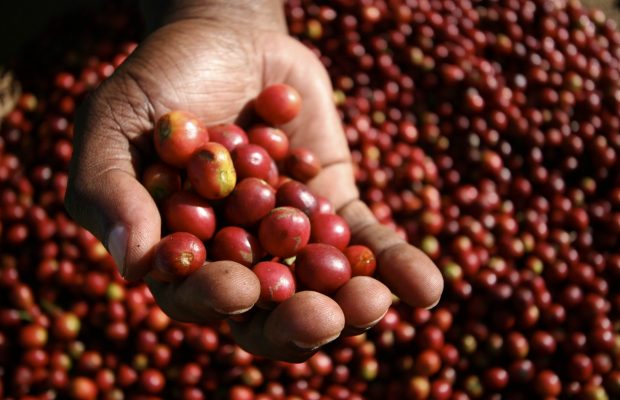
    Heavy rain that hit swamped Vietnam’s 2016/2017 coffee harvest has raised the ratio of low-quality beans and defects, traders said on Wednesday, with one major exporter saying quality is at its worst in nine years.

    Unseasonal rain that fell from October-December last year in Vietnam’s Central Highlands coffee belt delayed the 2016/2017 crop harvest, resulting in more black and broken beans. The rainy season normally ends in early October.

    The harvest was completed in January as usual, but a higher ratio of black and broken beans – counted as defects in export standards – has emerged.

    These defects, coupled with India’s ban on Vietnamese coffee imports from March 7, have made it more difficult for the world’s top robusta exporter to find buyers for the low-quality commodity this year.

    “The ratio of defects this year has risen by 50 percent from 2016,” said Le Duc Huy, deputy general director of Simexco, a major export firm based in the Central Highlands province of Dak Lak. “The quality is the worst since 2008.”

    Downpours cut Vietnam’s 2007/2008 coffee output by 15 percent to 1.08 million tons.

    Traders say India often buys Vietnam’s low-quality robusta grade 3, with 25 percent black and broken beans and 3 percent foreign matter, to produce instant coffee. Vietnam’s benchmark coffee for export is robusta grade 2 (5 percent black and broken), which is priced at a premium of $120-$180 a ton compared to the grade 3 beans.

    The harvest usually starts in late October and ends in January. Rain during the blossoming period reduces yields, while the wet weather disrupts the outdoor drying process, necessitating the use of electric dryers that turn the beans black and worsen the taste. The exportable volume is therefore lowered.

    Two traders at foreign firms in Ho Chi Minh City, Vietnam’s largest coffee trading market, estimated that low-quality beans made up 10-20 percent of the country’s output this year, which is projected to ease 8 percent from last year to 26.7 million bags, or 1.6 million tons, the U.S. Department of Agriculture has said.

    Vietnamese trade experts say India’s ban is a tit-for-tat action after Hanoi announced it was going to suspend the import of five Indian commodities from late April to prevent peanut beetle from spreading.

    Officials at the Indian Embassy in Hanoi did not immediately comment on the matter.

    The impact of the ban on Vietnam’s overall coffee exports is minimal, Vietnam Coffee and Cocoa Association Chairman Luong Van Tu said.

    India imported 6,900 tons of Vietnamese coffee from January-February this year, down 17 percent from the same period in 2016, based on Vietnam Customs data.

    Last year it spent $79.4 million to import 46,000 tons of coffee from Vietnam, a tiny fraction of the Southeast Asian nation’s total shipments of 1.78 million tons.

    India has the world’s third fastest growing retail coffee market behind Indonesia and Turkey, global market intelligence agency Mintel said in its latest report earlier this month.

    Robusta with high ratios of black and broken beans has also been sold to Vietnamese firms to produce instant coffee, traders said.

    But the ban has affected Indian roasters who had been sourcing their raw material from Vietnam, traders said.

    “Since the ban has been in place, several shipments have been held up and importers do not know how to solve the situation,” said a Vietnamese dealer at a Ho Chi Minh City-based firm which ships coffee to India.

    The ban has also made it difficult for Indian roasters after back-to-back droughts in the past two years damaged various crops, including coffee.

    “Indian roasters may have to switch to other sources, such as the Ivory Coast and other African nations,” a second trader at a European firm in Ho Chi Minh City said.

  • Saigon cab firm takes on Uber with unexpected weapon: grapefruit

    Saigon cab firm takes on Uber with unexpected weapon: grapefruit

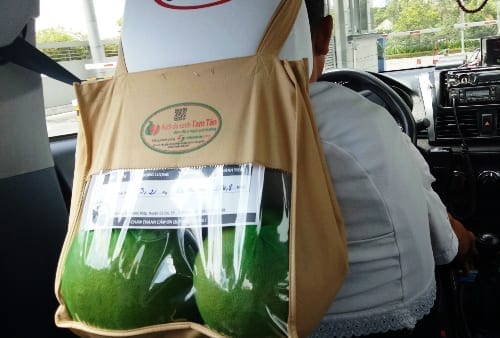
    With Uber and other app-based car-hailing services becoming increasingly popular in Vietnam, one local taxi firm has decided to improvise in order to give its drivers a competitive edge.

    Vinasun, the country’s second biggest taxi firm, has found a way to boost its drivers’ incomes by turning 800 cabs in Ho Chi Minh City into mobile grapefruit stalls.

    A kilogram of pomelo, a green-skin grapefruit, sells for VND64,000 ($2.81)

    “Drivers receive a bonus for selling large quantities of fruit,” a driver said.

    The taxi operator typically keeps 80 percent of the revenue from its grapefruit business and awards the remaining 20 percent to the drivers, said executive officer Ta Long Hy.

    Vinasun drivers are making on average between $2 and $4 a day from selling grapefruit, he estimated, adding that the best sellers can add up to $17 to their daily incomes.

    Since ride-hailing companies like Uber and Grab appeared on the scene, traditional taxi drivers have seen their incomes rapidly plunging.

    Traditional taxi companies have been lobbying the government for a lower VAT levy to allow them to compete with cab-hailing apps. The government has, however, turned down the request saying there’s no grounding to claim traditional taxi companies have to pay higher taxes and fees than their ride-hailing competitors.

    Uber and Grab cut into at least 10 percent taxi operators’ revenue last year in Ho Chi Minh City, the local association of taxi companies estimated.

    The number of private minicabs, mostly offering transportation services via car-hailing apps, has reached 20,000 in Ho Chi Minh City, twice as many as the number of traditional taxis.

    Last year Vinasun, which has around 6,000 cabs and operates chiefly in Ho Chi Minh City, launched a counteroffensive against the ride-hailing menace: its own app.

    Passengers using Vinasun’s ride-hailing app can easily recognize their minicabs with a ‘Vcar’ logo, Vinasun’s luxury version. They will be offered the option to fix the price at the beginning of a journey rather than rely on the taxi meter, according to Vinasun.

    Vinasun Group, which has been listed on the Ho Chi Minh City Stock Exchange since 2008, made VND4.3 trillion in revenue ($189 million) last year, down 6 percent from 2015.

  • Vietnam, India work to adjust back-to-back bans on commodity imports

    Vietnam, India work to adjust back-to-back bans on commodity imports

    Vietnam has requested the Indian government to abolish a ban on the import of its six commodities, including coffee and pepper, the Vietnamese government said in a Friday statement.

    India may have agreed with the request and will remove restrictions against the Vietnamese goods in question, the Saigon Times quoted a Vietnamese pepper industry official Saturday as saying, a development could not immediately verify independently.

    India imposed the ban against six commodities from Vietnam, which also included cinnamon, bamboo, cassia and dragon fruit, effective from March 7 after Vietnam’s agriculture ministry had ruled to suspend the import of India’s five agricultural commodities for 60 days starting March 1, citing the infection of peanut beetle.

    Vietnam’s Industry and Trade Ministry, in an official letter, told India to uphold international practice -= referring to the ban, the government statement said, adding that it had Thursday asked the Vietnam embassy in India to deliver the letter.

    The letter also urged India to “soon abolish the suspension of the import”, the government statement said.

    India has agreed to remove the suspension against several items, the Saigon Times quoted Nguyen Mai Oanh, deputy chairwoman of the Vietnam Pepper Association, as saying late Friday.

    “India will abolish the suspension order on the import of agro-products from Vietnam”, after Vietnam’s agriculture ministry officials met Thursday with the Indian embassy in Hanoi, she was quoted as saying.

    In return, Vietnam will adjust its decision on the suspension of five commodities from India and resume their import, Oanh said in the report.

    India’s ban has delayed several shipments of Vietnamese coffee and pushed down pepper prices on Vietnam’s domestic markets in recent days, traders and industry officials say. Vietnam is the world’s largest exporter of robusta coffee and black pepper.

    The country’s coffee export volume on March 1-15 fell 10 percent from the same period last year to 81,000 tons, based on Vietnam Customs’ data released Friday.

    Traders in Vietnam said if the situation is prolonged, Indian roasters would have had to buy their raw material from African nations.

    While domestic pepper prices have eased, due in part also to the ongoing harvest, Vietnam has shipped 13,600 tons of the spice in the first half of March to various destinations, up 31 percent from a year ago, based on customs data.

    Last year India, the third-biggest buyer of Vietnamese pepper after the United States and the United Arab Emirates, imported 11,100 tons of the spice, up 37 percent from 2015, the customs data showed.

  • Vietnam’s coffee prices hit highest since late 2011 on lack of good beans

    Vietnam’s coffee prices hit highest since late 2011 on lack of good beans

    Vietnam’s domestic coffee prices edged up this week to the highest since late 2011 on a shortage of beans qualified for exports as the harvest has been hit by rain, traders said.

    Unseasonal rain from October to December last year in the Central Highlands coffee belt delayed the 2016/2017 crop harvest, resulting in more black and broken beans, with one exporter saying quality was at its worst since 2008. The rainy season normally ends in early October in Vietnam, the world’s top robusta producer and exporter.

    Prices rose to a range of VND46,700-47,300 ($2.05-2.08) per kilogram of robusta on Monday in Dak Lak Province, Vietnam’s largest coffee growing area, from VND46,500-47,100 last Friday when May robusta futures ended nearly unchanged at $2,184 per ton on London’s market. Vietnamese coffee prices closely follow London’s futures.

    At VND47,300 per kg, prices are the highest since the week ending September 16, 2011 when the beans stood at VND47,400. The bitter beans are used mostly for making instant coffee.

    “Nobody is selling, and the raw material is too bad for processing, while there is a lack of export-standard coffee,” said a Vietnamese dealer in Buon Ma Thuot, the capital of Dak Lak. The province produces one third of Vietnam’s total coffee.

    Without using the color sorting machine, the black and broken bean ratio reached 7-8 percent, he said, well above the export standard that requires the defect rate to be at only 5 percent. The dealer declined to be identified by name, but his company has a factory in Dak Lak for processing and exporting robusta beans.

    The shortage of export-standard beans has emerged earlier than expected.

    Last week Do Ha Nam, general director of Intimex, Vietnam’s largest coffee export firm, said that Vietnam could fall short of beans in May or June due to rising shipments and dwindling domestic stocks.

    On the other hand, the price hike shows India’s ban on the import of Vietnamese coffee in place since March 7 has little impact on Vietnam’s market. India often buys Vietnamese robusta grade 3, with 25 percent black and broken beans.

    “India has stopped its import, thus raising the volume of Vietnam’s low-quality coffee,” the Dak Lak-based dealer said, referring to India’s ban, which also targets pepper and four other commodities from Vietnam.

    India’s ban was issued after Vietnam had ruled to suspend the import of India’s five commodities for 60 days starting March 1, citing the infection of peanut beetle.

    Businesses in both countries have opposed the restrictions, saying the import right should be brought back to avoid negative impact on prices, while cargoes infected by insects should undergo fumigation as usual.

    Last Friday the Vietnamese government said it had requested the Indian government to abolish the ban.

    A Vietnam Pepper Association official was quoted by a local newspaper as saying amendments to the restrictions would be made after officials from Vietnam’s agriculture ministry met with the Indian embassy in Hanoi last Thursday to tackle the issue.

    The low-quality coffee beans are estimated to account for 20-30 percent of Vietnam’s output in the 2016/2017 harvest that ended in January, well above the ratio of 1-13 percent observed in previous years, the Dak Lak-based dealer said.

    “Rain during the harvest has caused early flowering, and which could result in multiple stages of harvesting as cherries will ripe at different time,” he said.

  • Some banks in Vietnam enter new rate race

    Some banks in Vietnam enter new rate race

    VPBank announced it has offered a rate of 9.2 per cent per year for five-year certificates of deposit. VietA Bank has also listed a high rate of 8.2 per cent per year for certificates of deposit with tenure of just six to 18 months.

    The rate at Sacombank is also at 8.2 per cent per year; however, it is applicable for certificates of deposit with tenure of 5-7 years.

    The rate is much higher than the average deposit interest rates offered by other commercial banks. Currently, State-owned commercial banks offer a rate of 6.5-6.8 per cent per year for long-term deposits, while it is 7-7.5 per cent at large-sized joint stock commercial banks and 8-8.2 per cent at small-sized banks.

    Analysts attribute the hike to factors such as the need for medium- and long-term funds to grow lending this year.

    Many experts anticipated the scenario and warned there would be rising demand for long- and medium-term funding after they saw the economy clearly recovering and the Government signing a series of bilateral and multilateral trade agreements, which is likely to increase businesses’ demand for funds.

    Another reason is that 80-90 per cent of deposits currently are short-term while demand for long- and medium-term loans is growing rapidly.

    State Bank of Viet Nam (SBV)’s HCM City branch reported that last year the ratio between short-term and long- and medium-term loans was 44:56 per cent. It is normally 50:50.

    In addition, SBV’s amendments to Circular 36/2014/TT-NHNN reducing the ratio of short-term deposits that can be used for medium- and long-term loans from the current 60 per cent to 40 per cent has caused deposit interest rates to rise.

    Besides this, the risk weight for loans to the real estate sector has also been raised to 250 per cent from 150 per cent since 2017.

    As a result, banks have been forced to hike interest rates on long-term deposits so that they have enough funds to provide long- and medium-term loans.

    Expert Bui Quang Tin said the interest rate hike would put pressure on the central bank’s monetary management this year, especially when the central bank has to meet the three targets of controlling inflation, keeping foreign exchange rate and interest rate stable.

    Tin was also concerned it would be hard for lending interest rate, especially medium and long term, to be steady in the wake of the deposit rate hike. Both lending and deposit rate would rise by roughly 0.5-1.5 per cent per year this year, he forecast.

  • Investors rush to apply for multi-billion dollar casino projects

    Investors rush to apply for multi-billion dollar casino projects

    The $4 billion Nam Hoi An integrated resort project wad restarted by VinaCapital after it found a new partner for the joint venture. The new investor is Chow Tai Fook Enterprise from Hong Kong.

    The project kicked off in 2007 and received an investment certificate in late 2010, but it was delayed for many years as the initial partner – Genting Berhard Malaysia — left in September 2012.

    The other huge project is Ho Tram Strip, a complex of five integrated resorts covering an area of 164 hectares along the Ba Ria – Vung Tau seashore. The project has registered capital of $4.2 billion of which $1 billion has been disbursed.

    Meanwhile, Singaporean Banyan Tree Holdings Limited is moving ahead with Languna Lang Co, capitalized at $1 billion in Hue City. The investor is following necessary procedures to obtain a license for a casino.

    Bloomberg news and Nikkei Asia Review reported that two leading Vietnamese real estate developers are planning to build two integrated resorts with casinos in Phu Quoc and Van Don in 2017. However, the scale of the projects and the detailed plan remain secret.

    Sources said G.O. Max I&D, a South Korean group, is considering investing $1.5 billion in a horse race complex in the north of Hanoi.

    Other projects in the same field, capitalized at less than $1 billion, are being considered by huge investors including Hong Kong’s Matrix Holdings, South Korea’s Global Consultant Network and Australia’s Golden Turf Club.

    George Tanasijevich from Las Vegas Sands, the world’s leading group in casinos, commented that foreign investors see great opportunities in the Vietnamese market.

    He said Las Vegas Sands is eager to develop a project in Vietnam, but this would depend on Vietnam’s policies on casino development in the future, referring to  uncertainties and risks in the next three years after Vietnam opens casinos to Vietnamese players on a trial basis.

    The recently released government decree stipulates that Vietnamese are allowed to go to casinos, but just for a trial period of three years.

    After the trial period, Vietnam will consider continuing to allow Vietnamese to gamble at casinos.

    The business performance of existing casinos (open only to foreigners) varies. While the casinos in border areas report good business results, the casinos in coastal areas depend on the number of tourists from China, South Korea and Japan.

    Running the only casino for foreigners in Ha Long City, Hoang Gia JSC repeatedly reported unsatisfactory business results. In 2016, the casino brought VND88 billion in turnover, but this meant a loss of VND36 billion because of the high cost price of VND123 billion.

  • Keppel boosts Saigon Centre stake

    Keppel boosts Saigon Centre stake

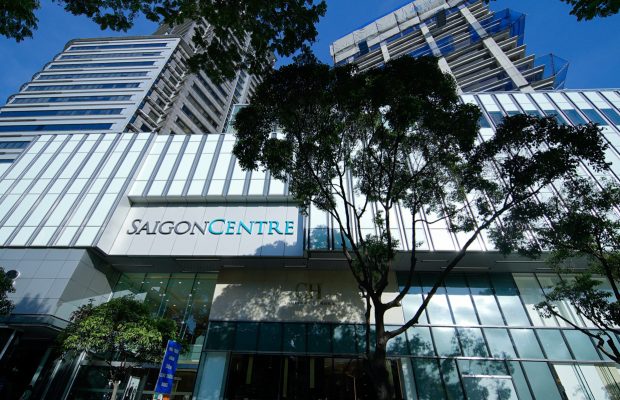
    Singapore-headquartered Keppel Corp has paid VND 845.9 billion (S$53.5 million) to boost its stake in Ho Chi Minh City’s Saigon Centre beyond 50 per cent.

    Saigon Centre, a mixed-use development incorporating a shopping centre anchored by Takashimaya department store, apartments and office space, is a joint venture between Keppel and local company Watco. The first stage, a small shopping mall beneath an 11-story tower, opened in 1996. Last year the expanded 55,000 sqm mall opened, and construction continues on a second tower of approximately 40 stories above it.

    The mall is trading well, 100 per cent leased, with several Japanese retailers, including Owndays, making their debut in the market. Chanel is constructing what is expected to be a make-up studio on the ground level in a prime space previously used for events and pop-ups.

    Keppel now owns 53.5 per cent of the Keppel Land Watco I, II and II companies and 76.2 per cent of Keppel Land Watco IV and V.

    “Keppel Land is committed to grow its commercial portfolio in key Asian cities. Vietnam, one of our key growth markets, continues to attract foreign direct investments which will drive positive demand in the property market from homes to offices and mixed-use developments,” said Keppel Land CEO Ang Wee Gee in a statement.

  • Cloudbric opens IDCs in Hong Kong and Vietnam

    Cloudbric opens IDCs in Hong Kong and Vietnam

    Web application firewall (WAF) service provider Cloudbric announced the opening of five internet data centers, including facilities in Hong Kong and Vietnam, in response to the growing, global demand for cloud services.

    The new data centers are located in New Jersey (US), Hong Kong, Binh Duong and Ho Chi Minh City (Vietnam) as well as Amsterdam (the Netherlands)

    Additionally, with Cloudbric’s growing partnership base, the expansion of IDCs means Cloudbric’s customers can benefit from greater WAF infrastructure and experience elite security better than ever.

    Enterprises of all sizes rely on and often expect websites to be up and running without any lapses. Maintaining this uptime depends on strategically placed data centers to handle high-volume requests. As a result, Cloudbric is not only increasing its network capacity through its IDC expansion but also introducing an all-inclusive, fully-managed WAF service to a wide range of IT service and solution providers.

    Regarding Cloudbric’s current partnership model, VP of Product & Technology TJ Jung says “From individuals to small or mid-size businesses and enterprises, we are growing our service to reach all parts of the globe by engaging in partnerships with different solutions providers in the IT industry, and Cloudbric is excited to continue in this endeavor. Partnering with data centers, for example, means Cloudbric can be deployed on their own infrastructures instead of relying on external networks – making the delivery of Cloudbric’s advanced WAF to their clients a seamless process.”

    Utilizing the precise, trusted technology created by Penta Security Systems, Cloudbric’s WAF can intelligently recognize and block both unknown and known web attacks with its logic analysis engine. Through Cloudbric, various service providers can also benefit from quality customer service and a user-friendly, intuitive dashboard and extend it to their own end users. With new IDCs and thus even greater bandwidth, Cloudbric’s ability to withstand cyber attacks such as DDoS attacks is augmented.

    Cloudbric currently has plans to open ten additional IDCs in Q2, specifically in cities across North America, the Middle East, and South America. Cloudbric will continue to appeal to various service providers in its expansion of WAF infrastructure.

  • Inditex Group sales rise on new stores

    Inditex Group sales rise on new stores

    Zara parent Inditex Group sales rose by 12 per cent in its latest trading year, to January 31, reaching €23.3 billion.

    Growth was achieved in every geographic region where the group is present, and includes contributions from debut stores in Vietnam and New Zealand.

    Same-store sales rose by 10 per cent, up from 8.5 per cent the previous year, with positive same-store sales growth in all geographies and across all brands.

    Net profit was €3.2 billion, up 10 per cent year-on-year, while earnings before interest and tax grew 8 per cent to €5.1 billion.

    Chairman and CEO Pablo described the result as positive against a backdrop of strong prior-year performance.

    Inditex opened 279 stores, net of closures, in 56 markets, across all its brands, ending the year with 7292 stores in 93 countries, a large proportion of the new ones in Asia, including its first Zara in Vietnam, in Ho Chi Minh City.  Other Zara stores opened in China, Thailand, Indonesia and Japan and it refurbished it flagship in the Shinjuku district in Tokyo, one of Japan’s most important shopping districts, which reopened to the public in November.

    A flagship Pull&Bear store opened in Windsor House in Hong Kong and new stores were opened by Massimo Dutti in India and by Oysho in Indonesia. Bershka refurbished its flagship on Nanjing Road East in Shanghai and Zara Home opened a global flagship on Garosu de Seoul in South Korea.

    Since the financial year ended, it has opened online stores in Malaysia and Singapore, taking its online platform to 43 markets.

  • HCM City start-up launches power management software

    HCM City start-up launches power management software

    The Vietnam High Efficiency Software Corporation (VHES) on Thursday launched its Head End System (HES) software to be used to manage the city’s smart electricity grid.

    The software, which uses Vietnamese-made chips, is intermediate software that VHES developed based on the Integrated Circuit Design Research and Education Center’s research project.

    VHES is the first high-tech start-up developed under the HCM City Integrated Circuit Development Programme.

    Speaking at the launch ceremony, Nguyễn Văn Lý, deputy general director of the HCM City Power Corporation, said the corporation would modernise the city’s grid from now to 2020, including building a smart grid, an automated electrically operating system, and an electrical measurement system with remote data collection.

    Trần Vĩnh Tuyến, deputy chairman of the city’s People’s Committee and head of the steering board of the Integrated Circuit Development Programme, said that smart management would create a safe and stable power supply.

  • Vietnam wants a healthy Internet society

    Vietnam wants a healthy Internet society

    The Ministry of Information and Communication urged enterprises to collaborate with the Government in efforts to build a healthy Internet society through advertising only on online channels which comply with established laws.

    Minister Trương Minh Tuấn issued the advice at a meeting on Thursday with major brands, saying that online advertising was an inevitable trend but also implied risks, especially inadequate attention to control the appearance of advertising.

    The call came several days after advertisements by some major brands accidentally appeared in clips containing pornographic, slanderous or anti-government content on YouTube, the world’s largest online video site.

    “It is really worrying, as it badly affects the prestige of brands,” Tuấn said as quoted by online newspaper vnexpress.net.

    Tuấn said that this was not only a problem for the advertising industry of Vietnam, but also for the global industry.

    What was more alarming was that running advertisements on clips with questionable content could help owners of these accounts earn money, which indirectly encouraged them to unload more, a representative from Qnet said.

    Nguyễn Thanh Lâm, Director of the Authority of Broadcasting and Electronic Information, cited statistics that as of Thursday, there were 15 accounts uploading 8,000 clips with immoral content, and attracting nearly 1 million subscribers. Those clips boasted a combined 500 million views.

    Lâm said that the department was working with Google, which owns YouTube, to remove such clips, and to date, only 42 had been removed.

    At Thursday’s meeting, all major brands including Vinamilk, Ford Việt Nam, VinHome, Sungroup and Unilever Việt Nam, said that they had stopped advertising on YouTube after receiving the Ministry of Information and Communication’s request.

    They also said that they would not resume advertising until ad agencies developed comprehensive solutions to ensure compliance with the established laws.

    “Through our advertising agents, we have asked Google and YouTube to ensure a safe advertising environment so as to protect businesses’ brands,” a representative from the dairy giant Vinamilk said.

    Ad agencies said that when signing contracts with Google to run advertisements for their partners on YouTube, they selected the appearance of ads through key words and categories of clips, adding that the cooperation of Google was necessary in filtering and preventing the appearance of ads in toxic clips.

    Online newspaper vneconomy.vn reported that Google had sent an official response late on Thursday, saying that YouTube had clear policies for governmental requests for content removal.

    A YouTube spokesperson also said that the company did not comment on specific cases, but it will continue working with the Government of Việt Nam and was always willing to receive questions or concerns from the Government, according to the newspaper.

    The ministry called for enterprises to participate in an action programme which includes saying no to advertising on immoral clips, only running advertisements on channels which comply with Vietnamese law, building a healthy Internet society and protecting copyright.

  • Vietnam e-commerce competition hotting up

    Vietnam e-commerce competition hotting up

    The competition between shopping websites has now switched focus from prices to rapid delivery.

    Analysts said competing by cutting prices by up to 50 per cent is an old story, and with customers’ demand for good service increasing, delivery times have become a key factor.

    Alexandre Dardy, the CEO of the country’s largest online shopping platform, Lazada, said besides increasing the number of merchants and products, his company would soon reduce delivery times.

    Currently the average delivery time that Lazada offers customers is more than two days, with urban areas served faster than rural for obvious reasons.

    At the end of last year the company tied up with AhaMove, a motorbike-based delivery service, and began a new delivery schedule that enables customers to get their product within just 60 minutes in certain cases.

    Another online shopping website, tiki.vn, is also taking measures to improve its delivery process. Currently its average delivery time is two to three days.

    Trần Ngọc Thái Sơn, director of tiki.vn, said product quality and delivery time are the most important factors for customers.

    His company has begun to deliver within 24 hours, he said.

    In case of late delivery, customers will receive a Tiki coin worth VNĐ30,000 (US$1.3) for use next time while shopping.

    The speedier delivery does cost more, the company said.

    Express delivery costs two or three times higher than standard delivery.

    For instance, while standard delivery costs only around VNĐ15,000 for a package weighing less than three kilogrammes, express delivery costs VNĐ30,000.

    However, 50-75 per cent of this is covered by the online shopping companies.

    Dardy said Ahamove gets VNĐ30,000 for express delivery, with Lazada covering VNĐ20,000 of it and only passing on VNĐ10,000 to the customer.

    But despite this, companies have no hesitation in offering express delivery, realising this will encourage customers to return in future.

  • Xiaomi Vietnam has launched

    Xiaomi Vietnam has launched

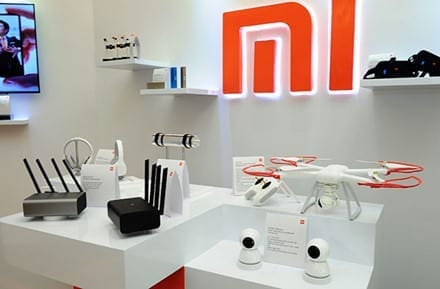
    Chinese smartphone brand Xiaomi has launched in Vietnam.

    The official distribution partner of Xiaomi Vietnam is Digiworld, which has opened four warranty centres in Ho Chi Minh City, Hanoi and Danang.

    Doan Hong Viet, CEO – Digiworld, and Wang Xiang, Senior Vice President – Xiaomi

    Xiaomi2

    Xiaomi1

    Xiaomi Vietnam will initially launch its three latest smartphone models – the Redmi, Redmi Note 4, and Mi Mix.

    In the next months, Xiaomi Vietnam will launch other products include wifi routers Mi Routers Pro and Mi Routers HD.

    All products will be sold through retailers such as The Gioi Di Dong, Hnam Mobile, Mai Nguyen, VinPro, Aeon Mall – both online and offline.

    There is no word as yet on whether the company will bring other products into Vietnam, which include flat screen TVs, AV equipment and robot vacuum cleaners.