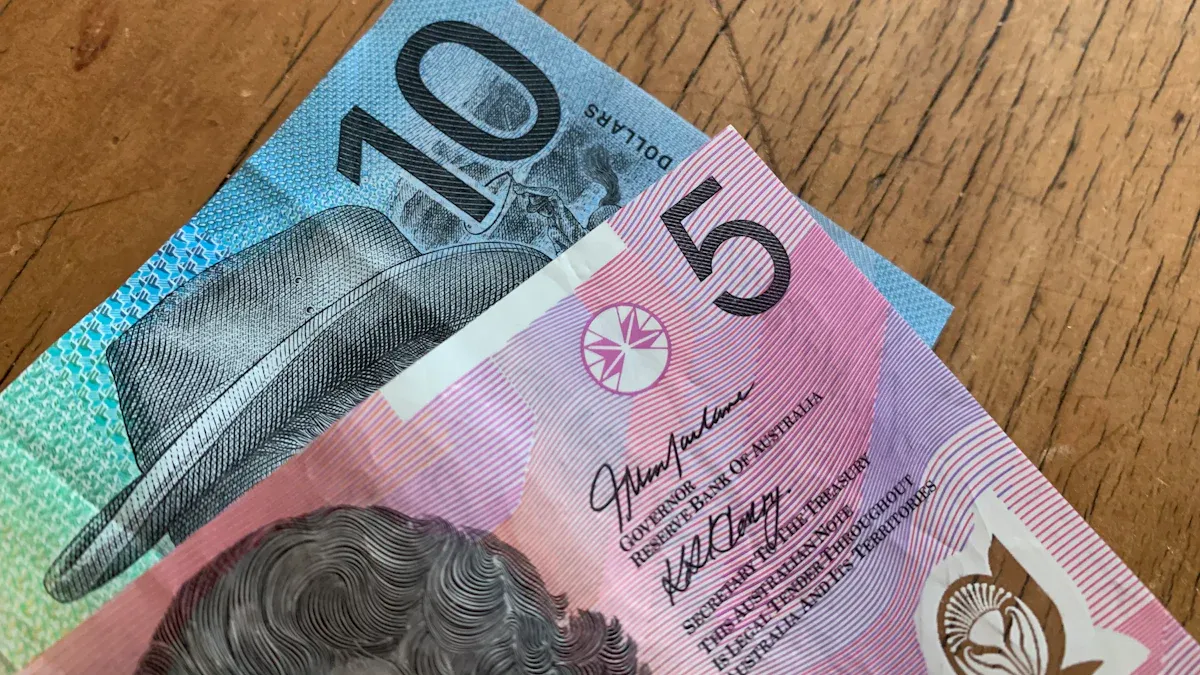
Australian authorities detected 40,613 counterfeit banknotes in the 12 months to March 31. That pushed fake cash rates to their highest level since June 2018.
The detection rate reached 20 notes per million in the March quarter. That is up 277 per cent in 15 months from a low of 5.3 notes per million in December 2024. Reserve Bank of Australia data shows fifty and one hundred dollar denominations accounted for 95 per cent of all seized counterfeits.
Criminal syndicates are targeting high-turnover consumer businesses to convert fraudulent high-denomination notes into genuine legal tender and merchandise. Retailers receive zero reimbursement for accepted fake bills. Store operators absorb the full direct loss at the point of sale.
Inflow through air cargo and mail
Border authorities identified international logistics networks as the primary conduit for the influx. The Australian Border Force reported that counterfeit currency worth millions entered the country through air cargo consignments and international postal streams starting in early 2025.
Importers are using more sophisticated physical concealment inside regular freight to bypass automated border screening. Law enforcement agencies warned that manufacturing standards have climbed. The higher quality makes fraudulent bills harder for retail cashiers to identify during fast transactions.
Officials noted there has been a concerning improvement in the quality of counterfeit notes entering distribution channels.
Retailers bear the frontline losses
Regional retail stores, independent service stations, and hospitality venues face the sharpest exposure. In August, South Australian police charged a 32-year-old man for allegedly circulating bogus $50 bills across licensed venues, a petrol station, and shops in Mount Gambier.
Queensland police made a separate arrest in Roma after an individual allegedly passed counterfeit $50 notes across two discount variety stores before trying to use another at a local hotel. Peer-to-peer sellers on online marketplaces have logged similar losses after handing over consumer goods for counterfeit cash.
Large quick-service restaurant chains hold an operational advantage over smaller operators in managing this risk. Selected McDonald’s outlets and drive-through operators across Australia have run specialized counterfeit detection devices at their registers for more than ten years.
Upgraded polymer security features
The circulation spike comes despite Australia’s multi-year investment in polymer banknote security. The Reserve Bank of Australia rolled out its next generation banknote series between 2007 and 2020, upgrading earlier polymer designs first engineered with the CSIRO in the 1990s.
Those newer notes feature a clear top-to-bottom window, reversing numerals, microprint, and UV-fluorescent patterns. They also carry a dynamic holographic flying bird that changes colour when tilted. Both the original 1990s polymer releases and the upgraded generation remain concurrent legal tender.
Dual circulation creates an operational loophole. Fraudsters often replicate older polymer formats to bypass the advanced optical elements found on the newer series.
Manual checks at checkout counters
Central bank guidance advises retail staff to apply a three-step verification method: feel the plastic texture, hold the note to the light to confirm the clear window elements, and tilt the bill to inspect dynamic colour patches. First-generation polymer bills display a printed star and coat of arms within the window.
Merchant protocols direct employees to refuse suspicious cash if safe to do so, record transaction details, and hand disputed notes directly to state or territory police. Operators can also file formal counterfeit detection forms through the Australian Federal Police.
Retail loss-prevention teams are now watching upcoming quarterly Reserve Bank release data to track whether border interdictions successfully curb the circulation rate back toward its 2024 baseline.
Leave a Reply