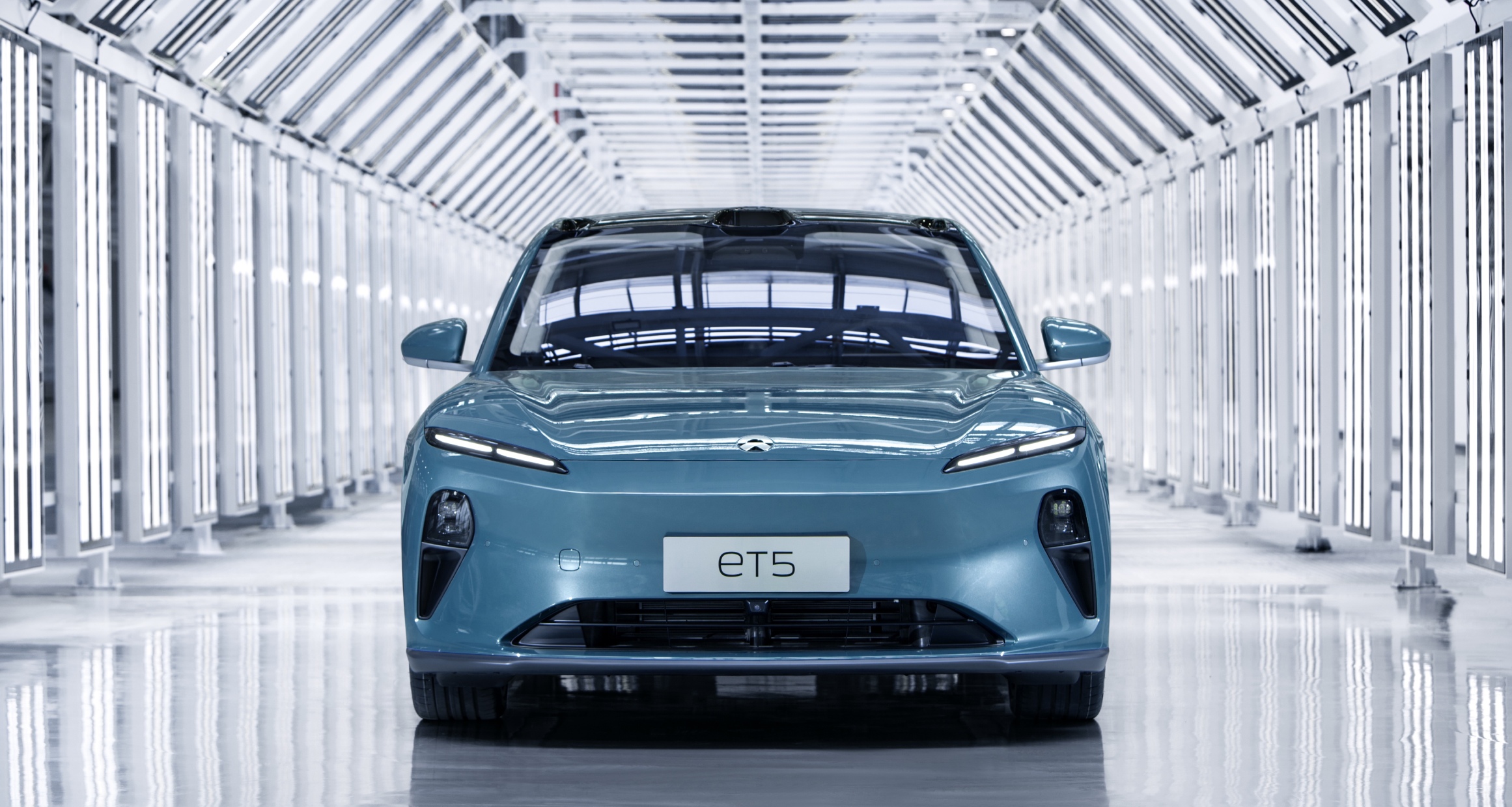
Nio will hold its Nio IN 2026 innovation and technology day in Guangzhou on November 25, unveiling AI-driven vehicle cockpits and assisted driving products after vehicle deliveries fell 15.23 percent in October.
Monthly volume dropped to 34,246 units, ending 31 straight months of year-on-year expansion and raising the stakes for hardware and software shows ahead of the city’s automotive exhibition.
The announcement from Nio Inc on Wednesday revives the standalone tech event after it skipped 2025. Founder and chief executive William Li aims to highlight the company’s shift into an AI-native organization alongside updates to smart driving systems.
Expanding Proprietary Silicon Beyond Vehicles
Hardware commercialization has become a central piece of the carmaker’s corporate posture. Its chip design subsidiary, GeniTech Co Ltd, was spun off in June 2025 and has pushed its proprietary semiconductors into applications beyond passenger cars.
The unit’s premium NX9031X processor runs across the entire vehicle portfolio of both the core Nio marque and the lower-priced Onvo brand. Filings from July showed cumulative shipments of that processor exceeded 300,000 units.
At the World AI Conference, GeniTech showed three distinct chips: the NX9031X, NX9031U, and NX9031C. Those designs cover assisted driving, embodied intelligence, and agent inference, signaling an effort to build a commercial client roster outside its own assembly plants.
The Software Pitch Ahead of Guangzhou Auto Show
Positioning the presentation two days before the Guangzhou Auto Show opens on November 27 gives the manufacturer a head start against domestic rivals. Auto Home reported the brand plans to unveil a special edition of its third-generation ES8 sport utility vehicle during the trade exhibition.
Consumer tech integration remains the primary battleground for Chinese EV manufacturers fighting brutal discounting across domestic showrooms. Software functions such as natural language voice controls and vision-based highway navigation often sway showroom buyers faster than marginal battery capacity gains.
For automotive investors, the risk lies in heavy capital spending that outpaces consumer monetization. Developing bespoke silicon and large foundation models requires continuous cash outlays that squeeze operating margins when monthly sales hit turbulence.
Corporate Structure Realigned for Artificial Intelligence
The corporate push gained formal structure in January when William Li, founder, chairman, and chief executive of Nio, formed an internal AGI committee. That body oversees software adoption across research, assembly lines, supply chains, and driver-assistance platforms.
Talent acquisition followed in May with the rollout of the Nio AGI Superstar Program. The global recruitment drive targeted university researchers specializing in physical-world foundation models, end-to-end driving models, the SkyOS vehicle operating system, and the NOMI in-vehicle voice assistant.
Speaking at an earnings media briefing in September, Li stated that Nio is essentially not just an automaker, but also an AI and energy company. He argued that public markets have yet to fully value its technology stack, computing assets, and battery-swapping infrastructure.
A Line of Development Dating to Shanghai
The previous edition of the developer day ran in Shanghai on July 27, 2024. That event yielded the tape-out of the five-nanometer Shenji NX9031 autonomous driving processor, the debut of SkyOS, the second-generation Nio Phone, and the Nio World Model for vehicle guidance.
Year-to-date delivery figures maintain positive momentum despite the sudden October contraction. The automaker delivered 334,547 cars during the first ten months of the year, an increase of 38.46 percent compared with the same period a year earlier.
Guangzhou Auto Show opens its media preview on November 27.
Leave a Reply