Tag: Vietnam

  • Vietnam’s super-rich population is growing faster than anywhere else

    Vietnam’s super-rich population is growing faster than anywhere else

    The country now has 200 people with investable assets of at least $30 million. Vietnam’s ultra-rich population is growing faster than any economy in the world, and is on track to continue leading the growth in the next decade, based on a new international research.

    The Wealth Report by the U.K.’s independent real estate consultancy Knight Frank found there are 200 ultra high net worth individuals (UHNWI) in Vietnam, who are defined as people with investable assets of at least $30 million, excluding personal assets and property such as a primary residence, collectibles and consumer durables.

    UHNWIs are the richest people in the world who control a disproportionate amount of global wealth.

    In Vietnam, this super rich group has grown by 320 percent between 2000 and 2016, the fastest in the world compared to India’s 290 percent and China’s 281 percent, the report said.

    The number is expected to continue rising to 540, or by 170 percent, in 2026, the highest growth rate in the world. Millionaires in Vietnam are expected to jump to 38,600 from 14,300 over the same period.

    vietnams-super-rich-population-is-growing-faster-than-anywhere-else

    The world’s top growth rates of ultra-wealthy people over the past decade, and forecasts for the next.

    Andrew Amoils, Head of Research at the global wealth intelligence and market research firm New World Wealth, highlighted Vietnam as the market whose “stellar” growth rate is set to reinforce “dramatic growth” of the super-rich population in Asia.

    “We expect Vietnam’s millionaire numbers to be boosted by strong growth in the local healthcare, manufacturing and financial services sectors,” Amoils was quoted in the report as saying.

    It also cited World Bank remarks as describing Vietnamese economy with “remarkable” transformation over the last 25 years, with economic and political reforms translating into higher incomes. The bank has projected Vietnam’s average GDP growth of around 6 percent annually until 2020.

    Knight Frank report reflects considerable variation between UHNWIs growth rates in different regions and countries, due to local factors that underpin wealth creation and the mobility of ultra-wealthy people.

    The number of ultra-wealthy people is predicted to climb by an average of 12 percent over the next decade in Europe, compared with a forecast 91 percent growth in Asia.

    The number of ultra-wealthy people worldwide, which has grown 42 percent over the past decade, is expected to grow another 43 percent to 275,740 in 2020.

  • Vietnamese pharmacy firms cash in on nutritional supplements, brokers say

    Vietnamese pharmacy firms cash in on nutritional supplements, brokers say

    Liver supplements marketed for detoxication and supporting liver functions have become big business.

    Many major pharmaceutical companies in Vietnam, one of Asia’s top beer consumers, have stepped up selling liver supplements to boost their profits, company reports and a brokerage said.

    Duoc Hau Giang, Vietnam’s largest pharmaceutical company, reported that revenue last year rose 4.8 percent to VND3.78 trillion ($166 million) from 2015, fuelled by a surge in sales of liver supplements, Ho Chi Minh City-based Rong Viet Securities Co cited the firm’s financial statement as showing.

    About 2 percent of the revenue last year came from liver supplements, which surged 114 percent from 2015 to VND89 billion.

    The company planned to more than double sales of liver supplement brand Naturenz to VND800 billion, accounting for 12 percent of total revenues in the next five years.

    In pill form, liver supplements marketed for detoxication and supporting liver functions have become big business for local pharmaceutical companies, Rong Viet Securities said.

    Some major pharmaceutical companies have gradually reduced their antibiotics business in favor of other medicines, including supplements, in hope for greater profits.

    Hau Giang’s revenues from antibiotics fell to 40 percent of the firm’s revenue last year, from 45 percent in 2008, based on financial reports. It has projected the antibiotics sales to fall further to 38.5 percent of revenue by 2020.

    Traphaco, Vietnam’s second-biggest listed pharmaceutical company, reported that sales of its liver detox brand Boganic had doubled within a five-year period to VND200 billion in 2015 and that the sale has been rising 16 percent annually in recent year.

    Each Vietnamese person drank on average 42 liters, making the country Asia’s third biggest beer consumer after Japan and China, and Vietnam ranks among the world’s top 25 heaviest beer drinkers. Demand for liver detox has been rising in line with higher consumption of alcoholic drinks.

    Over the past five years, Vietnam has doubled its beer consumption to more than 3 billion liters per year. Last year it produced an estimated 3.8 billion liters of beer, up 18 percent from 2015, based on government data. Its well-known export brands include Bia Saigon and 333.

    The country has projected beer production to rise to 4.1 billion liters in 2020, based on a Industry and Trade Ministry plan.

  • Vietnam’s caffeine thirst puts it in world’s top growing coffee markets

    Vietnam’s caffeine thirst puts it in world’s top growing coffee markets

    The Southeast Asian nation ranks only behind Indonesia, Turkey and India in retail value growth.

    Vietnam has one of the world’s fastest growing retail coffee markets, trailing only behind Indonesia, Turkey and India, a global market intelligence agency said in its latest report.

    The compound annual growth rate (CAGR) of Vietnam, measuring the average value growth in the 2012-2016 period, stood at 14.9 percent, while Indonesia’s market jumped 19.6 percent, followed by 17.5 percent in Turkey and 15.1 percent in India, Mintel said in the report.

    vietnams-caffeine-thirst-puts-it-in-worlds-top-growing-coffee-markets

    Asian markets, where growth is being driven by a surge in innovative coffee products, make up the majority of the world’s fastest growing coffee markets, while European markets plus Australia are among the slowest, the report said. It did not give any market values.

    Even though Germany, the United States, Italy and Spain top the 2016 list of importers of Vietnamese green coffee beans based on Vietnam’s government data, Mintel’s findings suggest that European nations mostly process the bitter variety and re-export the finished products.

    Instant coffee dominates the retail market in Asia. Out of the new coffee products launched in 2016, 42 percent were soluble coffee granule products in Asia Pacific, while the figure was 20 percent in Europe and a mere 6 percent in North America.

    The global coffee market’s retail volume grew 2.7 percent last year from 2015, slightly up from an annual rise of 2.5 percent the previous year, Mintel said.

    “The global coffee industry continues to experience healthy growth, driven by Asian markets in particular,” said Jonny Forsyth, Global Drinks Analyst at Mintel. “Asia has far more growth potential as traditionally tea drinking consumers are converted slowly but surely into coffee drinkers.”

    The International Coffee Organization estimated the CAGR of Vietnam’s coffee consumption at 8 percent for the four-year period ending in 2015/2016, the second-fastest growth rate among the world’s coffee exporting nations after the Philippines. The crop year lasts between October and September.

    The London-based ICO estimated Vietnam’s coffee consumption at around 140,000 tons in the 2015/2016 season, or 8 percent of output, up slightly from 130,000 tons used domestically the previous season.

  • Vietnam sees full state exit from sugar mills by end 2017

    Vietnam sees full state exit from sugar mills by end 2017

    Sugar output in 2015-2016 drops to 1.2 million tons as a drought damaged sugarcane areas last year. The Vietnamese government has set a target to fully divest from sugar mills by the end of this year, which is aimed at raising the competitiveness of the sugar industry, a local newspaper reported Monday.

    The government has started reducing state stakes in domestic sugar refineries since 2014 and at present only has investment in one company, quoting chairman Pham Quoc Doanh of the Vietnam Sugar and Sugarcane Association as saying.

    He said the government has planned to sell all its 70-percent stake in the Vietnam Sugarcane and Sugar Corporation II by the end of this year to complete its divestment from the sugar industry.

    “Thanks to (the divestment), production and business of the sugar industry will be the fairest compared with other industries,” Doanh was quoted by the newspaper as saying.

    Vietnam’s sugar industry, primarily based on sugarcane, is considered less competitive than Thailand, which ranks as the world’s second-largest exporter of the sweetener.

    Doanh said prices and the quality of sugarcane, rather than the processing technology, are placing Vietnam’s sugar industry behind Thailand.

    Thai plants are buying a ton of sugarcane at $26 while Vietnamese refiners have to pay $40-$53 a ton, and Thai sugarcane also has a higher sugar content, he said.

    Vietnam refined 1.24 million tons of sugar in the cane crushing season that ended September 2016, down 12.7 percent from the previous 2014-2015 season, due to a drought and salination in the southern region. The sugar production year lasts from October to September.

    The country’s 2016-2017 sugar output has been projected to rise 13 percent to 1.4 million tons, the sugar association has said.

  • Vietnam’s high demand for IT professionals shoots up salaries

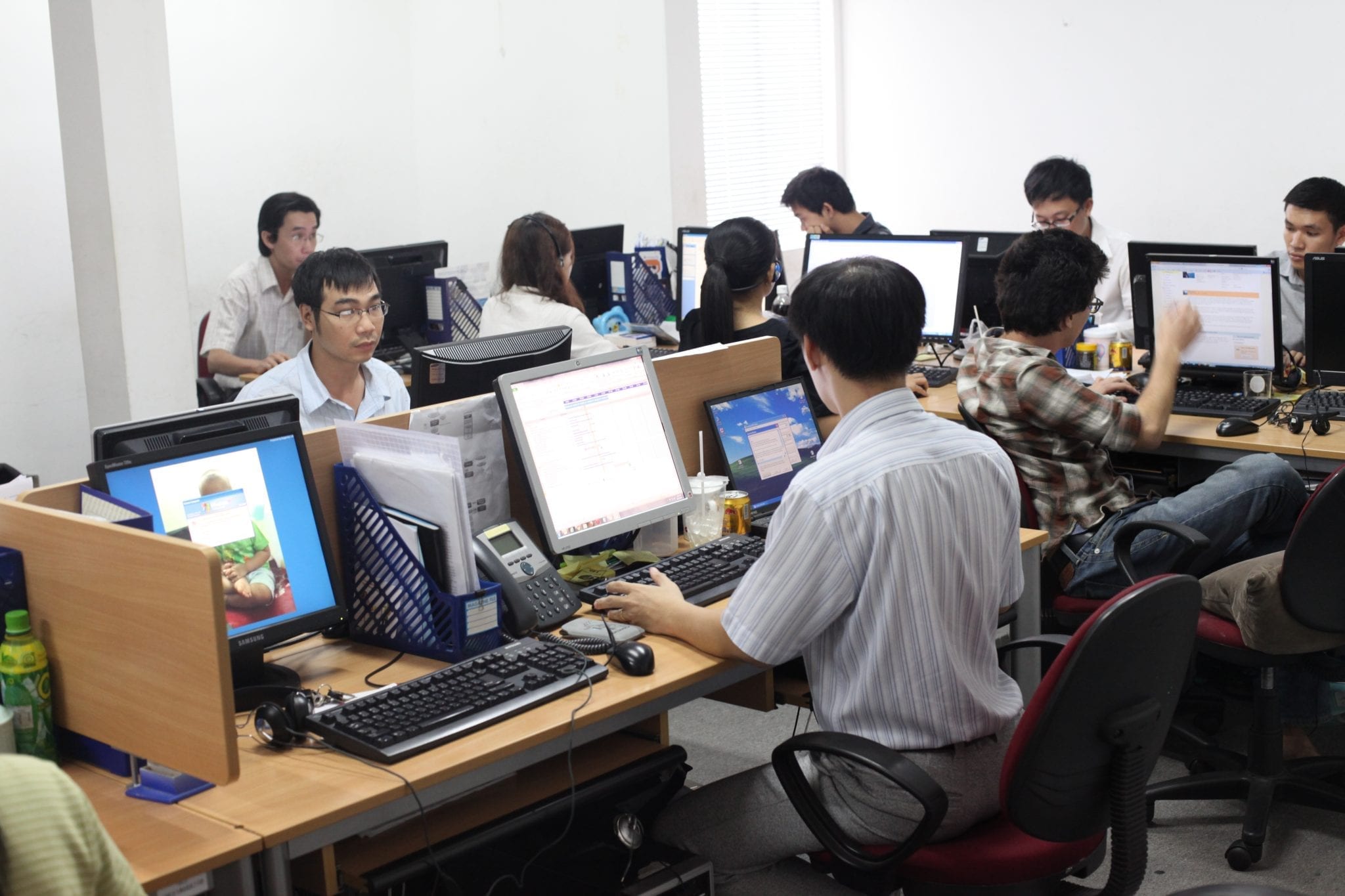
    Vietnam’s high demand for IT professionals shoots up salaries

    The country could become one of the next outsourcing hubs for software development, industry players said.

    Vietnam’s growing information technology (IT) is seen driving recruitment demand and boost salaries for tech jobs, a recent survey found.

    As many as 81 percent of IT companies said they planned an annual payroll rise of between 6 percent and 20 percent this year, professional recruitment firm VietnamWorks said in the survey conducted late last year with thousands of IT professionals, specialists and companies.

    The industry’s job demand is higher than ever, and the trend will continue over the next years, the survey said.

    The number of tech jobs has doubled over the last three years, VietnamWorks data showed, adding that Vietnam currently has around 250,000 engineers, but will need more than 400,000 by the end of 2018.

    Experienced software developers and managers continue to be in high demand, said the survey.

    Salaries have increased significantly in recent years and many companies have even offered generous bonuses to attract and retain employees.

    Up to 80 percent of the jobs that requires IT professionals with at least two years experience would pay a maximum $1,160 per month, said the survey.

    Vietnam first began offering software development services 15 years ago as global companies started to look outside India for a low-cost technology outsourcing opportunities.

    NeoIT estimated Vietnam’s IT labor costs are 40 percent less expensive than in China and India. A.T. Kearney’s Global Services Location Index and KPMG Advisory forecast Vietnam will be one of the next outsourcing hubs for software development.

    Local technology companies, however, are increasingly diversifying into other services, said the survey, adding this will drive recruitment for specialists in other fields such as business intelligence and information security.

    Currently, software engineers with at least two years of experience are still in highest demand, according to VietnamWorks.

    In terms of high tech development, Ho Chi Minh City is to Hanoi what Silicon Valley is to Seattle. But Hanoi tech scene is growing amid more intense competition in the southern hub.

    Ho Chi Minh City still remains the country’s IT hub with 53 percent of the country’s recruitment demand. Hanoi accounted for 43 percent and the central city of Da Nang took up 4 percent, according to the survey.

    Experts forecast a growing demand for specialist in cloud computing, big data, business intelligence and information security.

    The IT industry’s significant trends in 2017 will drive recruitments for professionals in big data, VietnamPlus cited Vinh Nguyen, an executive from PYCO Group, as saying.

    The survey revealed that 44 percent of the respondents said they would consider changing jobs with a better salary and benefits on offer.

  • Value of Vietnam’s ‘bikini airline’ overtakes national carrier

    Value of Vietnam’s ‘bikini airline’ overtakes national carrier

    Vietnamese private budget airline VietJet’s market cap surpassed that of state-owned Vietnam Airlines on Monday.

    VietJet grabbed headlines with bikini-clad flight attendants when it was launched in 2011 and its success on the Ho Chi Minh stock exchange reflects its rapid ascent since.

    It has become known in Vietnam as the “bikini airline” and female crew do still wear them, but only on some flights.

    Its market share is expected to top that of Vietnam Airlines this year, a feat it has achieved by tapping into a fast-growing economy and a young population starting to travel more.

    VietJet shares hit VND137,400 ($6.03) each, valuing it at $1.8 billion, ahead of Vietnam Airlines at $1.7 billion.

    On its first trading day VietJet was valued at $1.4 billion and its rival, which listed in January, at $2.1 billion.

    Growth in the Vietnamese market, which is one of the fastest in Asia Pacific, and a relatively small free-float in VietJet shares for retail investors, had driven the price of the shares, brokers said.

    VietJet’s stock has a lower price-to-earnings (PE) ratio of 15.75 compared with 16.63 for Vietnam Airlines, Thomson Reuters data showed.

    The CAPA Centre for Aviation has said that VietJet, which currently commands 40 percent of Vietnam’s domestic market, will likely become the country’s biggest domestic carrier this year.

    Future growth

    Some analysts forecast VietJet shares will jump to more than VND143,000 per share.

    “(The) VietJet story just begins so investors still have a lot of expectation on its shares,” Nguyen Van Dung, manager of the securities consulting department at Saigon Securities, said.

    “But if from investing perspective, I will buy Vietnam Airlines share as the firm has much potential to grow sustainably in (the) long-term and the price now is very good to buy,” he added.

    The listings of VietJet and Vietnam Airlines were part of the government’s push on privatization to boost investment.

    Vietnam, which is slowly opening up its domestic market amid considerable investment interest, has completed several major share sales and listings in recent months, including a $3.72 billion flotation of its top brewer Sabeco SAB.HM in which the government owns nearly 90 percent.

  • Vietnam’s internet environment ranked 32nd in the world

    Vietnam’s internet environment ranked 32nd in the world

    The country is number one in the world for local content, but scores poorly on internet education.

    A new index that measures a country’s internet for its availability, affordability, relevance of content and public access has found that Vietnam is doing better than more than half of the world.

    The 2017 Inclusive Internet index compiled by the Economist Intelligence Unit assessed 75 markets on how they enable the adoption and beneficial use of the internet.

    Vietnam stands in 32nd place overall for internet availability, affordability, relevance and readiness.

    The country stands above its Southeast Asian neighbors Indonesia and the Philippines, but far behind Malaysia, Thailand and the number 1 position holder Singapore.

    It performs “relatively strongly” in terms of relevance, with a global ranking of 18th out of 75, supported by a top score in local content.

    Many non-English-speaking markets have made considerable progress in ensuring that domestic internet users have content available to them in their country’s primary language, said the Economist.

    Vietnam is among 13 markets tied for first place in the local content category, along with China, Japan and Russia.

    But the country scores low in terms of internet readiness due to limited support for digital literacy and web accessibility, based on the index. Vietnam’s education and preparedness for internet use ranks 63rd worldwide.

    Availability ranks 40th worldwide with a high score for quality, but network infrastructure is poorly developed.

    Its affordability ranks 32nd with a top score for fixed-line monthly broadband costs.

    More than 49 million Vietnamese people, or more than half of the country’s population, are online.

  • Many businesses stop advertising on YouTube

    Many businesses stop advertising on YouTube

    Some major brands in Việt Nam had to stop advertising on the world’s largest online video site, YouTube, when these brands’ advertisements were linked to clips containing poor content.

    According to information from the Authority of Broadcasting and Electronic Information under the Ministry of Information and Communications, the authority received official dispatches from Vietnam Airlines, Mead Johnson Nutrition Việt Nam and Vinamilk explaining an incident in which their brands appeared in clips with pornographic, slanderous or anti-government content on YouTube.

    At the same time, businesses have also confirmed that they stopped advertising on the online video site.

    A Vinamilk’s representative told media that the company signed a co-operation contract with WPP Media Company Limited (Mediacom) to promote the brand to consumers through mass media.

    According to a commitment between the two parties, Mediacom has to conduct communication services in compliance with Vietnamese laws, as well as take responsibility in monitoring and reporting for Vinamilk, if there are problems affecting its images and reputation.

    After receiving the dispatch from the Authority of Broadcasting and Electronic Information regarding the incident, Vinamilk asked Mediacom to coordinate with YouTube to remove advertisements on clips with unwanted content, at the same time, suspending all advertisement plans on YouTube until the media partner and the site send reports to Vinamilk to find solutions for the problem.

    Earlier, the Authority of Broadcasting and Electronic Information sent dispatches to several large enterprises in Việt Nam asking for reports about these brands or their products appearing in clips with improper contents posted on YouTube.

    The authority found 17 clips with advertising inserted into videos on YouTube that had contents violating the country’s law.

    Additionally, the Ministry of Information and Communications has coordinated with the Ministry of Culture, Sports and Tourism to decide upon a fine for YouTube for not obeying the regulations on advertising for cross-border advertising activities on websites in Việt Nam.

    The ministry also invited YouTube and Google representatives to cooperate in resolving these violations.

  • Uber & Grab hit roadblock in Da Nang

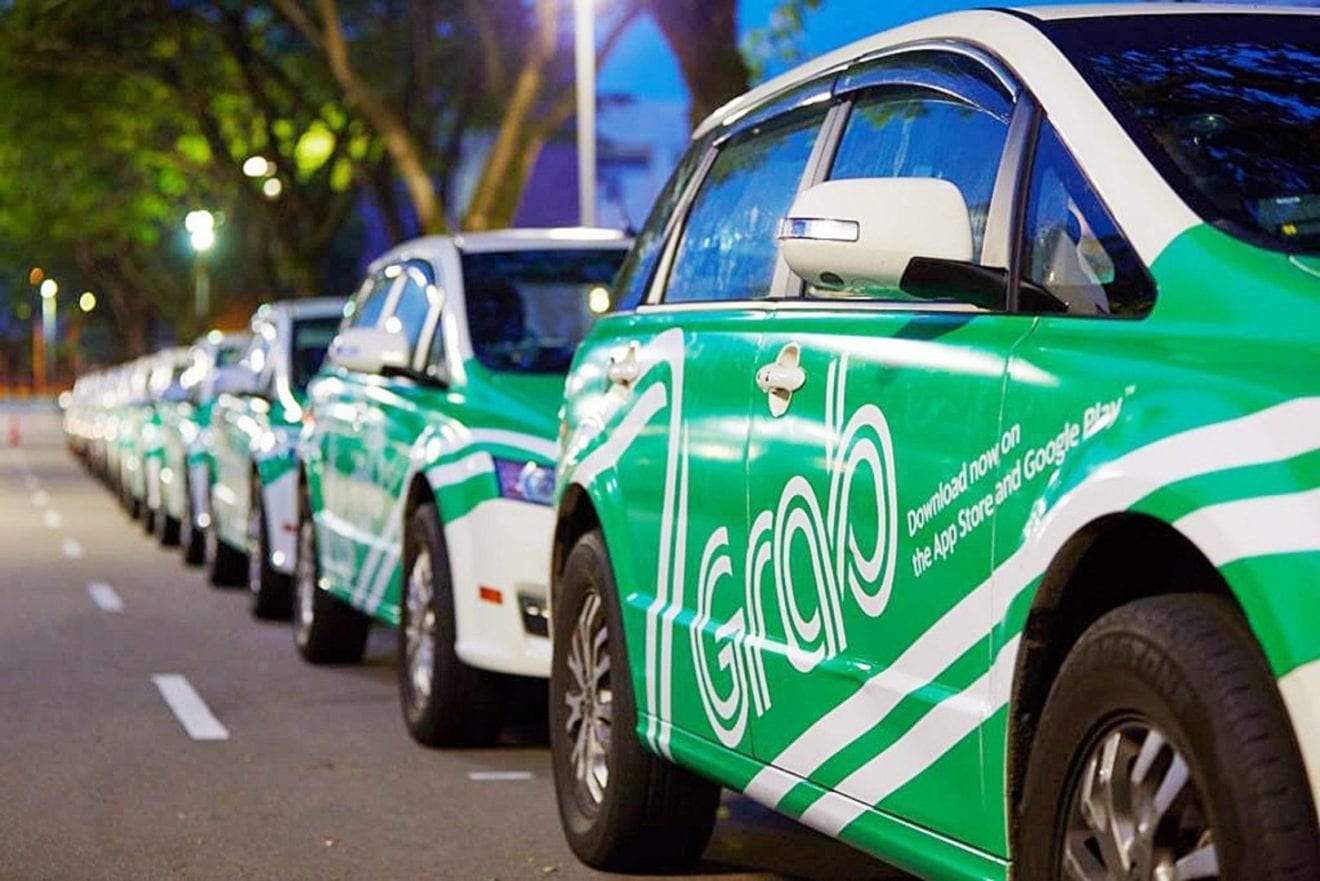
    Uber & Grab hit roadblock in Da Nang

    In a proposal submitted to the Da Nang Department of Information and Communications, the local Traffic Safety Committee wrote that the unauthorized operations of Uber and Grab could worsen traffic in the city.

    The committee asked the department to have internet providers block access to Uber and Grab apps and also asked police to investigate and punish any individual or organization found to be offering transport services illegally in the city.

    Department Director Mr. Nguyen Quang Thanh confirmed with local media on March 4 that the proposal is under consideration but more time is needed for study before advising the city’s government on a final decision.

    The latest move comes after Da Nang, on November 25, declined to run a pilot car hailing project by Grab. In a statement sent to the Ministry of Transport, Da Nang said Grab’s presence in the city would cause a sharp rise in the number of private cars and taxis, worsening congestion.

    The ministry had earlier that month asked Da Nang, Hanoi, Ho Chi Minh City, the northern province of Quang Ninh and the central province of Khanh Hoa to allow Grab to launch trial operations.

    Mr. Nguyen Tuan Anh, General Manager of Grab Vietnam, told local media the company hopes to meet with Da Nang officials to find a solution to the city’s concerns.

    Meanwhile, a representative from Uber said the company has not received any notice from Da Nang authorities and is actually focusing on Hanoi and Ho Chi Minh City and does not have plans to expand to Da Nang just yet.

    The arrival of Singaporean transport app Uber and the Malaysian-based Grab over the last two years has put traditional taxi drivers, generally made up of men with few resources, under threat.

    Accustomed to negotiating the price with passengers before hitting the road, many motorcycle taxi drivers are unable to compete with the rates offered by these apps or with the convenience of booking the service and knowing the price in advance.

    Although Grab and Uber have recruited thousands of existing taxi drivers for their fleets, many refuse to join because of an unfamiliarity with new technology or simply because they refuse to give a percentage of their income to the companies.

    Last month, Uber had its application to operate on a trial basis rejected for a second time.

    The company applied for a license after local regulators outlawed its smartphone app-based services in November 2015, due mainly to its failure to establish an independent legal entity in Vietnam.

    Market regulators declared that the company behind the ride-sharing service that controls Uber in Vietnam should be held responsible for the app rather than its Vietnamese business unit, which is yet to be recognized as a legal entity by local authorities.

    Transport authorities have also asked Uber Vietnam to make changes to its app by registering itself as licensed ride service provider, apart from existing services such as “consulting and management” and “market research and public opinion polling”.

    GrabTaxi is the only foreign-run transport service allowed to operate in five cities in Vietnam using registered private vehicles between 2016 and 2018.

    Uber, however, has been singled out for providing ride-hailing services without legal permission.

  • Japanese, Vietnamese cooperation in finance, banking a successful marriage

    Japanese, Vietnamese cooperation in finance, banking a successful marriage

    Japanese enterprises in banking and finance are now the biggest foreign shareholders in Vietnamese banks, financial and financial leasing companies, and their Vietnamese partners highly regard their expertise and support.

    Recently, Sumitomo Mitsui Trust Bank (SMTB)—the largest trust bank in Japan with total assets of $585.4 billion—has bought 49 per cent of BIDV Financial Leasing Company and renamed it BIDV-SuMi TRUST Leasing Limited Company. The joint venture took place as an expansion of their strategic cooperation since 2013.

    According to a VIR source, another investor from Japan is negotiating to buy 49 per cent of VPBank Finance Company Limited (FE Credit). These two examples evidence Japanese investors’ attention on the Vietnamese financial market and Vietnamese banks’ interest in cooperating with them.

    Previously, Military Bank (MB) transferred 49 per cent of Mcredit Consumer Finance Company’s shares to Shinsei Bank and HDBank transferred 49 per cent of HDFinance’s shares to Credit Saison Co., Ltd. Le Huu Duc, chairman of MB’s board of directors, said the reason for the cooperation was that Japanese investors “have the advantage of modern technology and experience in consumer finance.”

    Because of the interest from Japanese investors and their strong finances, there are more cooperation deals in the making.

    Currently, numerous banks and financial companies in Vietnam, including giants like BIDV and soon maybe Agribank, are calling for investment from strategic foreign investors.

    Increasing cooperation with Japanese investors

    Besides transferring shares, a range of big Vietnamese banks also cooperate with Japanese banks to look for business opportunities as Japanese FDI is increasing.

    At the end of February 2017, BIDV signed a memorandum of understanding (MoU) on serving Japanese customers in Vietnam with Fukuoka Bank, the 16th biggest bank in Japan.

    Similarly, VietinBank and Vietcombank also signed dozens of MoUs with Japanese partners. In particular, Vietcombank signed with approximately 60 Japanese banks.

    Following the trend, other commercial banks also seek Japanese partners and have even established a new service called Japan Desk to support clients form Japan.

    Besides VietinBank, Vietcombank, and BIDV, Sacombank, HDBank, TPBank, and others offer this service.

    “There are more and more Japanese firms entering the Vietnamese market. The two countries have similar cultures and retail banking strategies, so the cooperation can promote both parties’ strengths and often results in high efficiency,” said a leader of Sacombank.

    Japanese clients require perfect and diversified services, while capital and the range of services in Vietnam is limited.

    One can expect an increasing trend of teaming up among Japanese and Vietnamese banks in the coming time. This will be beneficial for all parties.

  • SOEs to divest from banks on positive market outlook

    SOEs to divest from banks on positive market outlook

    Both The Vietnam Posts and Telecommunications Group (VNPT) and Vietnam Bank for Agriculture and Rural Development (Agribank) plans to auction their holdings in Maritime bank and Ocean Bank (OCB) in March.

    VNPT has registered to offload its entire holding of 71.6 million shares in Maritime Bank at the starting price of VND11,900 (US$0.52) per share, equivalent to 6.09 per cent of the bank’s capital, in an auction scheduled for March 10.

    The move is in line with the direction of Prime Minister Vuong Dinh Hue to urge the telecommunication group to divest from its listed member companies.

    On a smaller sale, Agribank will sell 390,665 shares in Ocean Bank during an auction in mid-March. The starting price is set at VND10,200 per share.

    Mobifone, one of the three largest network operators in Viet Nam, also plans to divest from Southeast Asia Commercial Bank Bank (SeaBank) and Tien Phong Bank (TPBank) this year, after the failure in 2016.

    In April last year, Mobifone put up its entire holding of 33.4 million shares of SeABank, equivalent to 6.12 per cent of the bank’s capital, for sale at the initial price of VND9,600 per share, but no investors registered to buy.

    It also registered to sell 14.28 million shares, or 2.57 per cent of TPBank’s capital in April 2016, and successfully sold 61 per cent of this amount. Before the sale, the network company held 4.76 per cent of TPBank’s capital.

    According to VP Bank Securities Company (VPS), banks could be among top best performers on the securities market this year, driven by the intense restructuring process in the financial system, as well as the Government’s support policy of easing foreign ownership limits in commercial banks.

    In addition, many small banks have plans of debuting shares on the stock market this year, and this would facilitate divestment from these banks.

    “The VN-Index could climb to 780 points this year, on the average price-earnings (P/E) ratio of 17,” VPS wrote in a report.

    The benchmark VN-Index gained 14.8 per cent in 2016, ending the year at 664.87 points. It has gained 7.2 per cent this year.

    In the third quarter of last year when the stock market had perked up, dairy firm Vinamilk (VNM) successfully sold over 2 million shares in An Bình Bank (ABBank).

    In December, Tan Thuan Industrial Promotion Co Ltd (IPC) and Saigontourist also successfully offloaded their entire holdings in SaigonBank.

  • Uber still unable to see eye-to-eye with regulators

    Uber still unable to see eye-to-eye with regulators

    On March 3, Uber lost to Transport for London (TfL), the local government agency managing the city’s transport system, in its case to challenge the latter’s requiring all taxi drivers to take a written English test.

    TfL introduced the requirement, which is applicable for taxi drivers seeking to obtain or renew their private hire licence to drive inside London after 1 April 2017, in June 2016.

    Accordingly, drivers will have to pass a written English exam, including a 120-word essay.

    Uber did succeed in getting the TfL to apply the requirement to all drivers including those from English speaking country on grounds of discrimination. However, it failed to get the TfL to drop the requirement.

    In London, drivers who drive for Uber have to have the private-hire license issued by TfL.

    As reported by The Guardian, general manager of Uber London, Tom Elvidge, earlier called the requirement a “deeply disappointing outcome for tens of thousands of drivers who will lose their livelihoods because they cannot pass an essay writing test”.

    “We’ve always supported spoken English skills, but writing an essay has nothing to do with communicating with passengers or getting them safely from A to B,” Elvidge added.

    On the other hand, the mayor of London, Sadiq Khan, said drivers being able to speak English and understand information from passengers and licensing requirements is a vital part of ensuring passengers get the high standard of service they need and deserve.

    “This could include discussing a better route, talking about a medical condition, or ensuring every driver is fully up to date with new regulations,” he said.

    In another instance, Uber has been found using a tool called Greyball to deceive law enforcement officials in cities where its service is not legal.

    As reported by The New York Times, Greyball used geolocation data, credit card information, social media accounts and other data points to identify government officials.

    As a result, officials attempting to hail an Uber might see icons of cars within the app navigating nearby, but no one would come pick them up.

    The programme helped Uber drivers avoid being ticketed. Greyball has been used in Portland (Oregon), Philadelphia, Boston, and Las Vegas, as well as France, Australia, China, South Korea and Italy.

    According to a statement from Uber, the programme is aimed at violators of its terms of service. “This programme denies ride requests to users who are violating our terms of service—whether that’s people aiming to physically harm drivers, competitors looking to disrupt our operations, or opponents who collude with officials on secret ‘stings’ meant to entrap drivers,” the company said.

    In 2016, Uber was estimated to be valued at $66 billion. CEO Travis Kalanick in an interview with Vanity Fair in October last year said that Uber is not going to have an initial public offering (IPO) soon.

    With Uber not being on the good books of governments in many countries and territories around the world, coupled with a host of recently revealed controversies, one may wonder whether the company is still valued $66 billion.

  • South Korea dominate Vietnam entertainment industry

    South Korea dominate Vietnam entertainment industry

    They include YG Entertainment, which manages many of Korea’s biggest stars like Big Bang, 2NE1, PSY, Epik High, Choi Ji Woo, Black Pink and Lee Jong Suk, its subsidiary YGKplus, the country’s leading modelling agency, and Naver.com, the country’s biggest search engine and online media and entertainment channel.

    The Korean companies are seeking to tie up with Multimedia JSC in entertainment and fashion.

    They will send their stars to participate in major entertainment events in Vietnam like the Vietnam International Fashion Week and also create opportunities for Vietnamese models in Korea.

    Besides YG Entertainment and Naver.com, many other Korean companies in movies, the media and entertainment also have plans to enter the Vietnamese entertainment market.

    The Vietnam Film Distribution Association said the market was dominated by foreign distributors, many of them Korean.

    Vietnam now has more than 50 cinema chains. Korean-owned CJ CGV Vietnam is the largest in the market with 30 cinemas in 10 major cities. Lotte Cinema, also owned by South Korea, has 16 cinemas.

    A CJ CGV executive said each year the company opened around 10 cinemas in Vietnam and expected to reach 60 by next year.

    Market observers said South Korean investors saw plenty of opportunities in the Vietnamese entertainment industry.

    They find that the Vietnamese entertainment market is still in a fledgling state while the demand for entertainment has skyrocketed in step with living standards, meaning the sky could be the limit for investors.

    The fact that Vietnam and Korea have many cultural similarities means Korean entertainment investors with their quality products can attract Vietnamese audiences easily.

    On the commercial side of things, there are several trade agreements Vietnam has signed which offer opportunities to foreign investors, including those in the entertainment industry.

    Analysts said all this meaned pressure on domestic entertainment companies, who could lose the market completely to the Koreans if they were slow to react.

    In 2005 CJ CGV and Vietnamese company VIFA established a joint venture called CJ-VIFA whose first project was the drama “Mui Ngo gai”.

    Then CJ CGV bought out Megastar, the largest chain of cinemas in Vietnam at that time. At the beginning of 2014, after closing the acquisition, Megastar was renamed CGV.

    CGV now accounts for over a half the Vietnamese cinema market.

    It also dominates the film import market, and by showing more movies than its rivals, including blockbusters, CGV has become popular among the public.

    CJ CGV’s strategy is a vital lesson for local entertainment companies.

  • Crocs store is closing door

    Crocs store is closing door

    One in four Crocs stores will be closed globally as the maker of the world’s ugliest shoes plots a survival plan.

    The store cull was announced along with another quarterly loss: the shoemaker finished its last three months US$44.4 million in the red, albeit a better performance than the same period a year earlier when it lost $73.9 million.

    Global sales were down 10.2 per cent to $187.4 million but in Asia the company says its retail sales declined by a whopping 16.6 per cent.

    Total Asian revenue was $68.8 million, down 9.8 per cent year-on-year, with wholesale revenues down 5.3 per cent (explained as a result of the sale of the South African business in April 2016). Retail sales in Asia declined 16.6 percent, despite the opening of nine stores since 2015. Online sales declined 7 per cent in Asia, which Crocs says was the result of weak sales in China on Singles’ Day.

    In Europe, revenue was down 14.2 per cent.

    As it restructures to ensure its survival, Crocs CEO Gregg Ribatt will step down on June 1, to be replaced by Andrew Rees who has for the past two years been president. The two roles will now be combined and Ribatt will remain on the company’s board.

    Rees told an analysts’ briefing that customers are responding favorably to new colors and prints added to the core Crocs molded product line.

    “We’ve also confirmed the importance of any newness to our iconic molded footwear through new color and graphic introductions, and through the expanded use of licensed characters,” he said.

    “Our spring/summer 2017 collection rolled out to warm-weather doors in November and early reads are encouraging. Going forward, our innovation and newness will be most heavily concentrated on core clogs and sandal, slips and slides where we see the greatest opportunity for growth.”

    Crocs is also banking on the endorsement of the product by celebrities Drew Barrymore, John Cena, Yoona Lim and Henry Lau who will feature in the brand’s latest Come As You Are marketing campaign launching in April.

    Full year figures

    Crocs’ full-year picture was nowhere near as bad as the last quarter’s. Total sales were $1.04 billion, down only a little from the $1.09 billion of a year earlier. On a constant currency basis, revenues declined 4.7 per cent.

    The company recorded a full-year net loss of $16.5 million, far better than the $83.2 million of 2015. Excluding non-recurring charges, the adjusted loss was $26.9 million.

    Rabat says Crocs has been reshaped into a company that :”functions more efficiently and effectively” and is in “a far better place now than two years ago”.

    “And while the operational work is critical, it is not yet, and I emphasise yet, translating into the financial gains we continue to believe are achievable.”

    Since 2014, Crocs has halved its SKU count, boosted the appeal of core sellers and added new collections.

    Once the store cull is complete in 2018, Crocs will operate about 400 outlets, adding $35 million to its bottom line in 2019. At the end of 2016 it had 558 stores.

    Carrie Teffner, Crocs EVP and CFO, says that given volatile market conditions, the company is not setting mid-term revenue and margin targets.

    “That said, we continue to believe that… longer term, the business can deliver EBIT margins in the 10 per cent range.”

  • Solid year for revitalised Dairy Farm International

    Solid year for revitalised Dairy Farm International

    Hong Kong-headquartered multi-format retailer Dairy Farm International has celebrated its 130th anniversary with a strong set of results, with food, home furnishings and restaurants delivering higher profits.

    Total sales, including those of associates and joint ventures, rose 14 per cent in US dollar terms and 17 per cent on a constant-currency basis to US$20.4 billion. Sales of wholly-owned subsidiaries rose 1 per cent to $11.2 billion.

    Underlying net profit rose by 7 per cent to $460 million, partly due to a 13 basis point net improvement in operating margins as well as increased contributions from Yonghui and Maxim’s. Operating profit rose 6 per cent.

    Supermarkets & hypermarkets solid

    Total food division sales, which include Wellcome and Giant, were flat in US dollar terms, although up 1 per cent on a constant currency basis.

    “In an environment of severe pressure on pricing, sales growth in Hong Kong supermarkets and in the convenience store businesses in Hong Kong, Mainland China and Singapore helped to offset declines in the group’s supermarkets and hypermarkets in Singapore and Indonesia and largely flat sales elsewhere,” explained CEO Graham Allan.

    “The closure of a number of unprofitable stores in Singapore and Indonesia also weighed on sales performance. However, specific actions, including strategic store closures, prudent management of costs and more targeted promotional activity, delivered improved operating margins.’

    Operating profit from the food division rose 13 per cent to $267 million, with the largest gains coming from Singapore and Indonesia.

    Sales of $6.2 billion from supermarkets and hypermarkets (excluding Yonghui) were in line with last year in constant currency while operating profit increased by 13 per cent to $194 million.

    Wellcome in Hong Kong drove higher sales through strengthening its fresh offer and an enhanced merchandise assortment. Operating profit was lower, principally due to a continued rise in rental costs and competitor promotional activities. In Macau, San Miu achieved sales and operating profit growth in its first full year in the group with range enhancement and increased fresh participation.

    In Taiwan, sales and operating profit were ahead of last year. A new ‘superstore’ concept was introduced for Wellcome with two net new stores opening during the year, while Jason’s continued its store expansion.

    “The retail landscape in Indonesia was challenging with limited recovery in consumer confidence and significant competition from the continued rollout of mini-market stores across the country, which impacted sales growth at supermarkets and hypermarkets,” said Allan.

    “Nevertheless, improved margins, from pricing and promotional activities, the closure of a number of underperforming stores and tighter cost control boosted profitability. Improving the fresh assortment and revitalising the upscale Hero brand remain key focus areas for the business.”

    In Malaysia, sales and operating profit were behind 2015 due to persistent low consumer confidence together with ongoing price controls following the introduction of GST, which continued to weigh on performance.

    The Philippines recorded a strong year with all banners reporting like-for-like sales growth and improved profitability. “A more appealing fresh assortment coupled with tactical pricing and successful marketing activities underpinned an encouraging increase in footfall,” said Allan.

    “Rustan’s benefited from increased sales of its imported and exclusive brands, while measures to improve cost efficiency were also implemented.”

    In Singapore, sales were down year-on-year due to poor consumer sentiment and the impact of store rationalisation. “Cold Storage achieved an encouraging operating profit increase, despite reduced sales following the closure of underperforming stores. Giant saw steady sales and positive profit growth, driven by increased margins and lower operating costs.

    “In the coming year, we aim to invest in the renewal of customer facing and back office technologies to improve our customer experience and internal efficiency whilst optimising ranges and supply chain productivity.”

    In Vietnam, Giant posted sound sales growth, from its single store, with increased customer traffic being the main driver and in Cambodia, the group saw “encouraging increases” in like-for-like sales and operating profit.

    Convenience sales reach $2 billion

    Convenience stores reported $2 billion in sales, an increase of 5 per cent year-on-year in constant-currency terms. Operating profit increased by 15 per cent to $73 million.

    In Hong Kong, 7-Eleven outpaced the competition and grew sales and operating profit despite soft consumer sentiment and difficult market conditions. Like-for-like sales strengthened during the year supported by promotions, range improvements and new products. A slight gross margin improvement led to a higher operating profit despite cost increases from labour and rent. In Macau, sales were flat and operating profit was lower due to slowing tourist numbers and a substantial cigarette tax increase in 2015.

    In Mainland China, 7-Eleven continued its solid growth and passed its 800th store milestone. During the year, sales and operating profit increased, with store network expansion and like- for-like sales growth. This was driven in part by an expanded ready-to-eat (RTE) product range.

    In Singapore, 7-Eleven achieved positive like-for-like sales growth arising from a store re-ranging project with a strong focus on RTE, including the successful introduction of new private label products sourced from 7-Eleven Japan.

    “Operating profit was significantly ahead of 2015 due to these initiatives and the rationalisation of loss-making stores,” said CEO Graham Allan. “The RTE range will be further expanded in 2017 and there will be increased focus on acquiring new profitable sites.”

    Health & beauty sales rise

    Dairy Farm’s health & beauty division achieved $2.6 billion in sales, up 4 per cent on a constant currency basis, however profit declined 5 per cent to $175 million due to margin pressure and higher rents in Hong Kong.

    “Gains in Hong Kong, Mainland China, Singapore, Indonesia and the Philippines, offset disappointing sales in Malaysia,” said Allan.

    In Hong Kong, Mannings’ sales increased in 2016 despite a smaller store network. “As mainland Chinese tourist arrivals continued to decline, promotional campaigns and loyalty programmes were launched throughout the year targeting local consumers,” said Allan. “Sales were flat in Macau as mainland Chinese tourist arrivals remained soft.

    On the mainland, Mannings “showed gradual improvement” with solid sales growth, particularly in baby care, beauty care and personal care, while the contribution from corporate brands increased.

    In Singapore, Guardian reported growth in sales, while operating profit also increased with higher gross margins and greater focus on cost and shrinkage management, partially offset by higher rental costs, but in Malaysia, Guardian experienced “a challenging year” with lower sales and operating profit due to subdued consumer sentiment, increased competition and weakness of the ringgit.

    In Indonesia, Guardian posted double-digit sales growth for the fifth year in a row, despite the net closure of 73 stores. Operating profit was higher than in 2015 with higher gross margins.

    In Vietnam, Guardian recorded another strong year of double-digit sales growth and improvement in gross margin. Corporate brand penetration increased significantly as brands such as Botaneco Garden proved popular with local consumers and in the new market of Cambodia, progress was made through range expansion and increased corporate brand penetration supporting strong like-for-like sales.

    In its second year in the group, Rose Pharmacy in the Philippines delivered performance improvement through sales growth, gross margin enhancement, better cost efficiency and the closure of a number of underperforming stores. Guardian brand products were launched with encouraging early signs of customer acceptance.

    Home furnishings solid

    Home Furnishings, essentially the Ikea business in Hong Kong, Taiwan and Indonesia, recorded a 12 per cent rise in operating profit to $71 million driven by increased sales of $597 million, 6 per cent ahead of 2015.

    “Sales and operating profit were higher than last year in all three markets. Like-for-like sales growth was particularly strong in Taiwan and Indonesia.”

    Hong Kong led the group in introducing new concepts to increase consumer access, launching online shopping in April 2016 and opening two pick-up points in Macau and on Hong Kong Island. Indonesia introduced online shopping in July. Taiwan opened a pick-up point in Hsinchu and launched online shopping in February 2017.

    “We continued to strengthen our low price image through ongoing price investment, and increased our focus on market specific products to enhance our local consumer appeal.

    “In the coming year, Home Furnishings plans both to continue its push in consumer accessibility and to drive forward its expansion plans, having identified a second Indonesia store location and opening a fourth store in Hong Kong in the second half of 2017,” said Allan.

    Solid growth for Starbucks, Maxim’s

    Sales in Dairy Farm International’s restaurants division rose 7 per cent year-on-year to $2 billion and profit rose 4 per cent.

    “The business delivered another year of record earnings in a difficult market environment while continuing to expand outside Hong Kong,” said Allan.

    The division expanded its reach by acquiring Cova, a premium chain of cake shops and restaurants, and by opening its first Treats food hall.

    In China, Maxim’s added 16 new stores across its brands, including the first Cheesecake Factory franchise at Shanghai Disney Town.

    The company now operates 20 Starbucks cafes in Vietnam and Cambodia and describes their performance as “encouraging”. The group launched its first Thai franchise in September – MX Cakes and Bakery, a joint venture with ThaiBev, which has opened three outlets in Bangkok.

    “Looking ahead, the group continues to see various exciting opportunities, including entry into the Beijing market with the opening of Jade Garden, Cafe Landmark and The Cheesecake Factory planned in 2017. Maxim’s will also continue to explore franchise and acquisition opportunities across the region.”

    Dairy Farm will “compete aggressively”

    Chairman Ben Keswick said Dairy Farm International is “transforming itself to compete aggressively in a changing retail landscape”.

    “Central to this are a strong focus on understanding changing consumer behaviour, growing market share, building digital engagement with customers and sharing know-how across the group. Investment is being sustained in supply chain, IT infrastructure and systems, and the skills and expertise of our people to support this transformation. Each business is committed to optimising the shopping experience of its customers and to serving their evolving needs as efficiently as possible.”

    Keswick said increasing convenience through expansion and enhancement of the store network remains a high priority, although when necessary, underperforming stores will be closed. Last year the entire group added a net 114 stores, despite a number of closures across its divisions.

    At December 31, Dairy Farm International had 6548 stores in operation in 11 countries and territories, including its interest in 487 Yonghui stores in Mainland China.

    “Despite the uncertain economic outlook for 2017, the group continues to strengthen its businesses,” said Keswick. “Investments are being made to enhance its competitive position, increase customer convenience and adapt to emerging consumer trends. These investments, coupled with the exposure of its market-leading retail brands to Asia’s growth markets, will support Dairy Farm’s long-term success.”