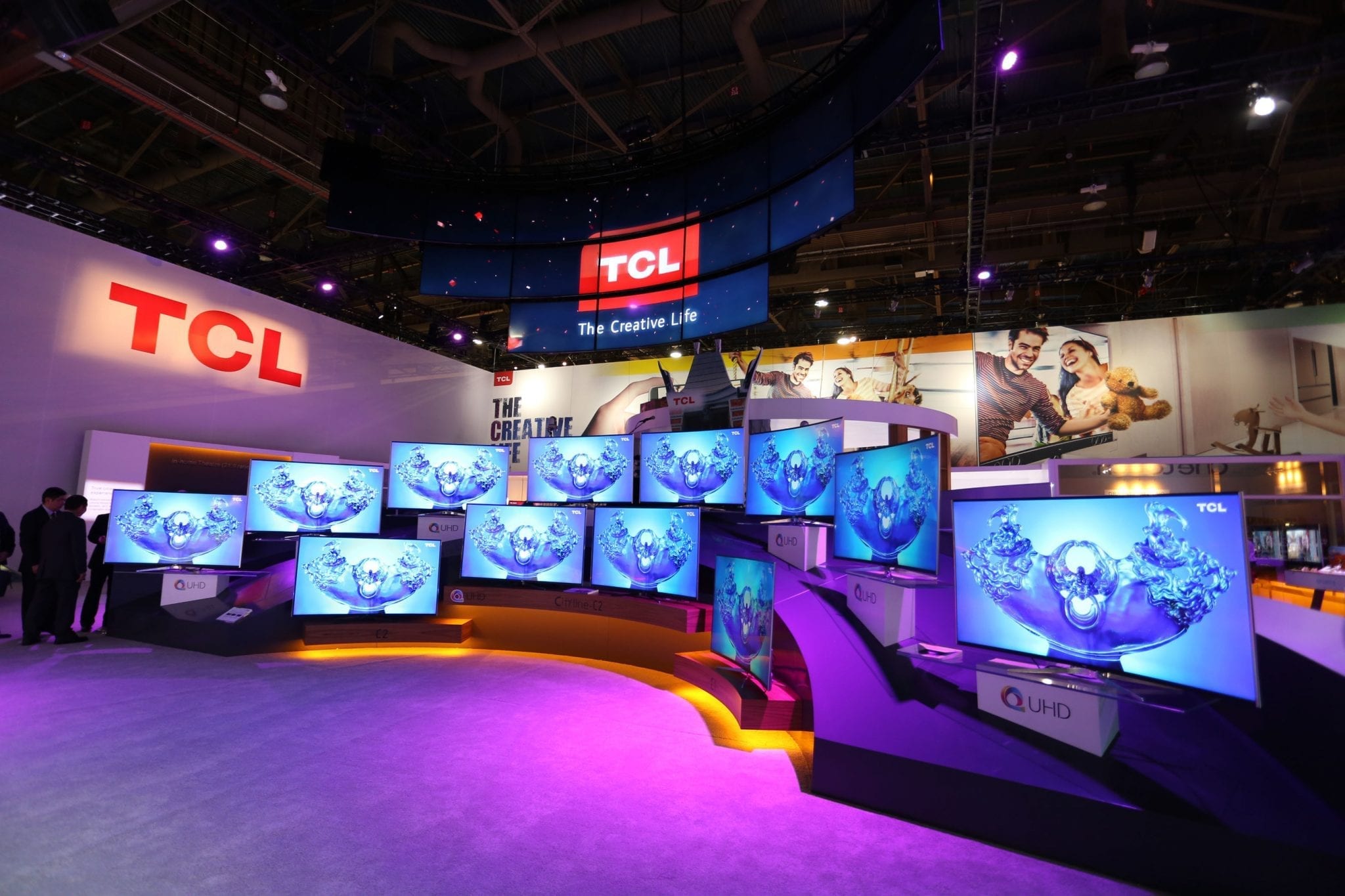
TCL opened its new Industrial Museum in Huizhou on Monday, celebrating 45 years since its establishment as a local electronics maker in 1981. The facility shows the company’s evolution from a domestic magnetic tape workshop to an international consumer tech and display hardware manufacturer.
The installation documents four and a half decades of factory automation, semiconductor display engineering, and overseas expansion.
From Magnetic Tapes to Global Displays
Founded as TTK Home Appliances Co., the company began by manufacturing cassette tapes before shifting into landline telephones, television sets, and mobile handsets. Today, the group operates across two listed entities, TCL Technology and TCL Electronics, spanning display panels, photovoltaics, and smart home appliances.
Exhibits at the new museum track key shifts in manufacturing capability. These include the development of early cathode-ray tube televisions through to modern Mini-LED panels and automated fabrication facilities.
Industrial Heritage and Corporate Strategy
Corporate museums in China increasingly serve as public relations anchors for industrial conglomerates seeking to demonstrate domestic supply chain maturity. By establishing a dedicated site in its home base of Huizhou, TCL mirrors moves by Japanese and South Korean hardware giants that built legacy centers to project technical longevity to enterprise clients and government partners.
For supply chain partners and component buyers, the facility highlights how vertically integrated Chinese panel production has become. TCL’s panel subsidiary, TCL CSOT, now supplies display modules to global television and monitor brands, competing directly with BOE Technology and LG Display.
Display Capacity and Panel Investments
The 45-year milestone follows aggressive expansion across high-generation display lines over the past decade. TCL CSOT invested heavily in 8.5-generation and 11-generation liquid crystal display lines in Shenzhen and Wuhan to capture share in large-screen home televisions and commercial monitors.
That panel footprint allowed the company to secure lower manufacturing costs for its branded televisions in key export markets across North America, Europe, and Southeast Asia. Rivals such as Hisense and Skyworth have taken alternative routes by purchasing panels externally while focusing capital on retail distribution and branding.
Next Steps on Next-Gen Displays
Operational attention now shifts to the commercial output of printed OLED panels and advanced Mini-LED backlighting modules across the group’s production lines. TCL CSOT continues to run pilot validation for inkjet-printed OLED screens, with commercial yield rates remaining the key performance benchmark to watch through the next production cycle.
Leave a Reply