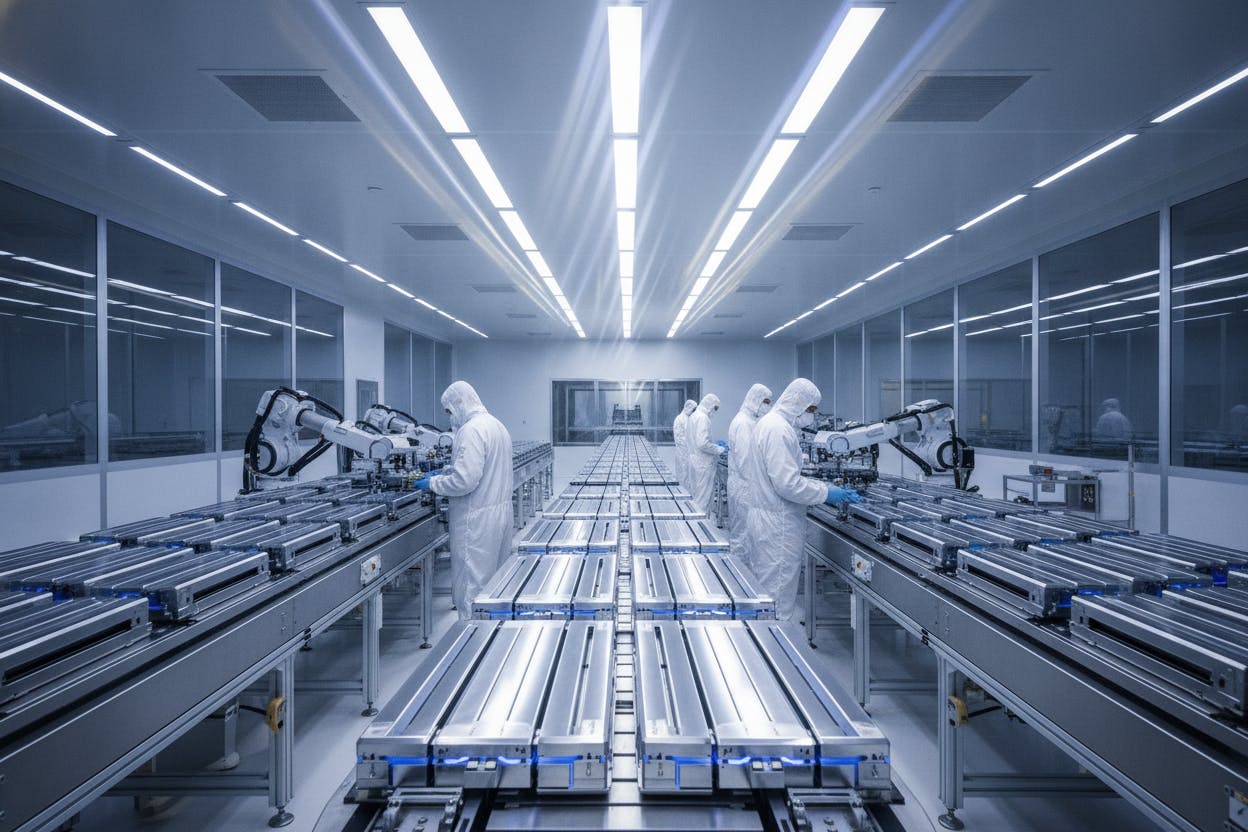
British battery developer Nexeon has raised 100 million pounds in new funding, securing capital from the UK National Wealth Fund, Korea Development Bank and Honda Xcelerator Ventures to scale its silicon anode technology.
The package includes 52.6 million pounds from Britain’s newly constituted National Wealth Fund, with the remaining capital supplied by the Japanese automaker and the state-backed South Korean lender.
The investment will finance a UK pilot production plant and expand an advanced manufacturing unit for the Oxfordshire-based group. The group develops silicon-based anode materials for lithium-ion cells designed to lift energy density, shorten charging times and increase electric vehicle range.
Financing East Asian Battery Production
While the new state money finances pilot capacity in England, Nexeon already runs its primary industrial footprint out of Gunsan, South Korea. Honda backed the business in May 2026 through Honda Xcelerator Ventures to accelerate commercial production at that Gunsan plant, ensuring direct ties into East Asian vehicle manufacturing.
Production at the Gunsan facility centers on silicon-carbon composite materials manufactured at commercial volume. Panasonic agreed in 2023 to purchase anode supplies from the Gunsan plant to feed lithium-ion battery cells manufactured at its massive cell assembly site in Kansas in the United States.
Automakers Take Direct Component Stakes
Securing Korea Development Bank as an equity backer alongside Honda gives Nexeon institutional protection inside the world’s most concentrated battery manufacturing hub. South Korean cell makers and Japanese auto groups face mounting pressure to break reliance on mainland Chinese graphite supply lines, which face export controls and domestic processing bottlenecks.
Investing directly in upstream chemical developers cuts out middle-tier intermediaries for automotive groups. Honda avoids spot-market premiums on advanced cell chemistries by taking equity directly in materials suppliers, mirroring similar bets by regional peers looking to lock down raw-material allocations well before commercial rollouts.
The British National Wealth Fund operates with a 27.8 billion pound mandate to channel private and state capital into clean energy and critical supply chains, aiming to mobilize 100 billion pounds in overall investment by 2031. Oliver Holbourn, chief executive officer of the fund, confirmed the vehicle is backing advanced battery technology to assemble domestic manufacturing networks alongside foreign partners.
“This investment is a strong endorsement of Nexeon’s technology and our role in enabling the next generation of lithium-ion batteries.”
Tracking Pilot Output and Commercial Volume
Nexeon previously operated primarily as an intellectual property and testing outfit before breaking ground on its Korean production lines. The company must now prove its pilot equipment in the UK can mirror the yield rates of its full-scale Gunsan lines without inflating unit costs.
Execution risk sits in the yield curves. Silicon tends to swell and contract during charge cycles, degrading cell lifespan unless manufacturing tolerances remain exceptionally tight during chemical compounding.
Panasonic’s Kansas factory remains the primary operational benchmark for Nexeon, where volume deliveries of silicon-carbon material will reveal whether the Oxfordshire-engineered chemistry withstands real-world commercial scale.
Leave a Reply