Retail News CRM

Tag: batteries

  • Apple’s Talks With Chinese Battery Makers CATL And BYD

    Apple’s Talks With Chinese Battery Makers CATL And BYD

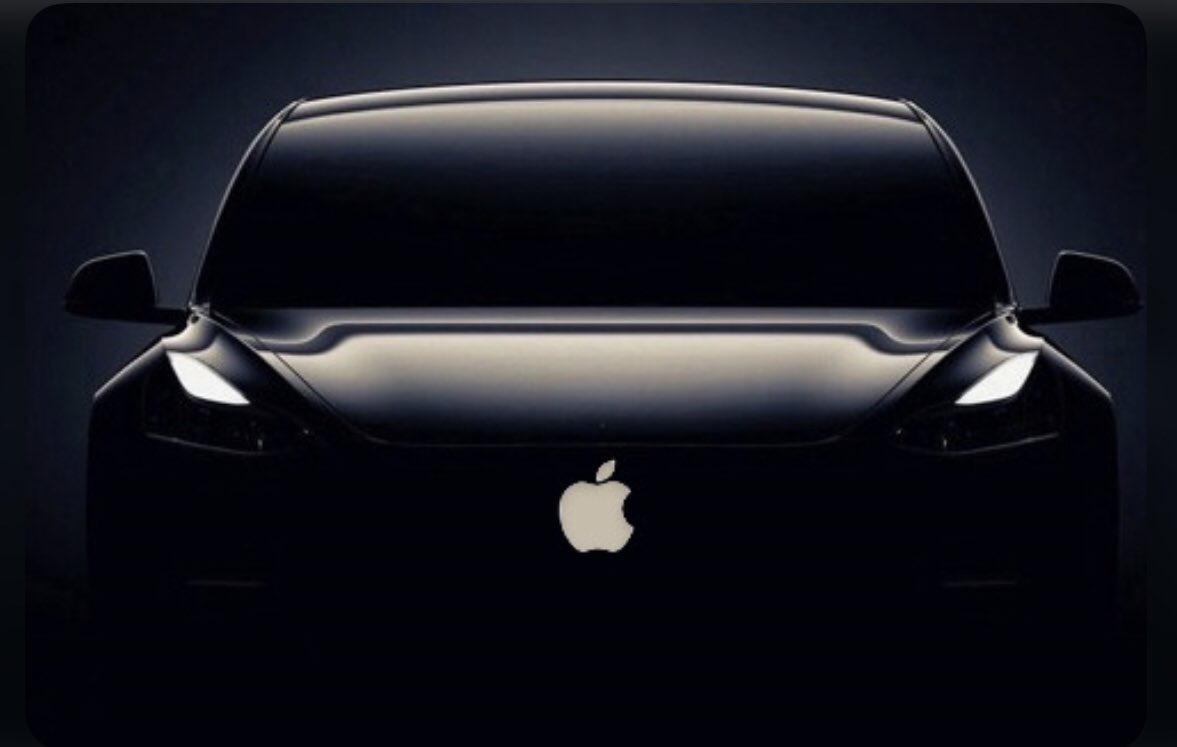
    Apple Inc’s talks with China’s CATL and BYD over battery supplies for its planned electric vehicle have been mostly stalled after they refused to set up teams and build U.S. plants that would solely cater to the tech giant, three people with knowledge of the discussions said.

    The firms informed Apple sometime in the past two months that they were not able to meet its requirements, the people said. But the U.S. company has not given up hope of resuming talks with either CATL or BYD, according to one source.

    Chinese battery makers are more advanced than rivals in the development of lithium iron phosphate (LFP) batteries which are cheaper to produce and sources have previously said Apple favors this battery technology.

    CATL, the world’s No.1 maker of batteries for EVs, has been reluctant to build a U.S. factory due to political tensions between Washington and Beijing as well as cost concerns, said one of the people with direct knowledge of the talks.

    The Chinese firm has also found it impossible to set up a separate product development team exclusively working with Apple due to difficulties in finding sufficient personnel, the person added.

    BYD, which has an iron-phosphate battery plant in Lancaster, California, declined to build a new factory and team that would solely focus on supplying Apple, said two of the sources.

    The stalled discussions have meant that Apple has been considering Japanese battery makers and it sent a group of people to Japan this month, they added.

    Panasonic Corp is one of the companies that Apple is considering, said one of the people.

    The sources declined to be identified as the talks were confidential. Apple, BYD and Panasonic declined to comment.

    CATL said in a statement to Reuters that it denied “the relevant information”.

    “We are evaluating the opportunity and possibility of manufacture localization in North America,” the statement said, adding that it has a dedicated professional team exclusively for each customer.

    Sources said last year Apple was aiming to launch an electric car by 2024. Apple has not publicly disclosed its plans. The stall in discussions comes at a time when U.S. President Joe Biden is seeking to make the United States a powerhouse in electric cars, setting a goal of having half of all new vehicles sold in 2030 electric.

    Any delays in securing battery supplies could further impede EV development for Apple which last month lost the head of its car project, Doug Field, after he decided to return to Ford Motor Co.

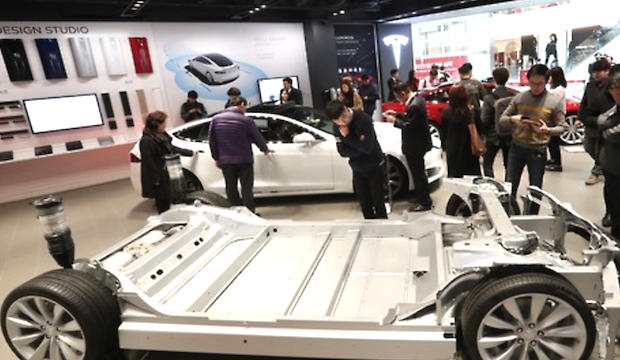
    Tesla Inc, which has been making some of its Model 3 and Model Y cars in China with LFP batteries from CATL, said this week it intended to use that battery chemistry outside China as well.

    CATL and BYD use a type of battery pack technology to improve the performance of LFP batteries. Without that, LFP batteries usually offer much shorter driving ranges and lower energy density than the more expensive lithium batteries that use cobalt and nickel.
  • New Recycling Techniques Set To Make Electric Vehicles Greener

    New Recycling Techniques Set To Make Electric Vehicles Greener

    Researchers in Britain and the United States have found ways to recycle electric vehicle batteries that can drastically cut costs and carbon emissions, shoring up sustainable supplies for an expected surge in demand.

    The techniques, which involve retrieving parts of the battery so they can be reused, would help the auto industry tackle criticism that even though EVs reduce emissions over their lifetime, they start out with a heavy carbon footprint of mined materials.

    As national governments and regions race to secure supplies for an expected acceleration in EV demand, the breakthroughs could make valuable supplies of materials such as cobalt and nickel go further. They would also reduce dependence on China and difficult mining jurisdictions.

    “We can’t recycle complex products like batteries the way we recycle other metals. Shredding, mixing up the components of a battery and pyrometallurgy destroy value,” Gavin Harper, a research fellow at the government-backed Faraday Institution in Britain, said.

    Pyrometallurgy refers to the extraction of metals using high heat in blast furnaces, which analysts say is not economic.

    Current recycling methods also rely on shredding the batteries into very small pieces, known as black mass, which is then processed into metals such as cobalt and nickel.

    A switch to a practice known as direct recycling, which would preserve components such as the cathode and anode, could drastically reduce energy waste and manufacturing costs.

    Researchers from the University of Leicester and the University of Birmingham working on the Faraday Institution’s ReLib project have found a way to use ultrasonic waves to recycle the cathode and anode without shredding and have applied for a patent.

    The technology recovers the cathode powder made up of cobalt, nickel and manganese from the aluminium sheet, to which it is glued in the battery manufacture. The anode powder, which would typically be graphite, is separated from the copper sheet.

    Andy Abbott, a professor of physical chemistry at the University of Leicester said separation using ultrasonic waves would result in cost savings of 60% compared with the cost of virgin material.

    Compared with more conventional technology, based on hydrometallurgy, which uses liquids, such as sulphuric acid and water to extract materials, he said ultrasonic technology can process 100 times more battery material over the same period.

    A switch to a practice known as direct recycling, which would preserve components such as the cathode and anode, could drastically reduce energy waste and manufacturing costs.

    Abbott’s team has separated battery cells manually to test the process, but ReLib is working on a project to use robots to separate batteries and packs more efficiently.

    As supplies and scrap levels take time to accrue, Abbott said he expected the technology to initially use scrap from battery manufacturing facilities as the feedstock and the recycled material would be fed back into battery production.

    In the United States, a government-sponsored project at the Department of Energy called ReCell is in the final stages of demonstrating different but also promising recycling technologies that refurbish battery cathode to make it into new cathode.

    ReCell, headed by Jeff Spangenberger, has studied many different methods, including ultrasonics, but focused on thermal and solvent-based methods.

    “The U.S. doesn’t make much cathode domestically, so if we use hydrometallurgy or pyrometallurgy we have to send the recycled materials to other countries to be turned into cathode and shipped back to us,” Spangenberger said.

    “To make lithium-ion battery recycling profitable, without requiring a disposal fee to consumers, and to encourage growth in the recycling industry, new methods that generate higher profit margins for recyclers need to be developed.”

    There are challenges for direct recycling, including continuously evolving chemistries, Spangenberger said. “ReCell is working on separating different cathode chemistries.”

    Early electric vehicle battery cells typically used a cathode with equal amounts of nickel, manganese, cobalt or 1-1-1. This has changed in recent years as manufacturers seek to reduce costs and cathode chemistries can be 5-3-2, 6-2-2 or 8-1-1.

    The approach at Faraday’s ReLib project is to blend recycled with virgin material to get the required ratios of nickel, manganese and cobalt.

  • General Motors To Supply Electric Batteries, Hydrogen Fuel Cell Systems For Wabtec Locomotive

    General Motors To Supply Electric Batteries, Hydrogen Fuel Cell Systems For Wabtec Locomotive

    General Motors Co will supply electric batteries and hydrogen fuel cell systems for rail supplier Wabtec Corp’s locomotives, in a move extending the No. 1 U.S. automaker’s reach outside the automotive sector. Wabtec, based in Pittsburgh, is developing locomotives powered by electric batteries and hydrogen fuel cells in response to rail industry demand to eliminate carbon emissions. It has a test electric locomotive model and intends to build a second-generation version, with deliveries starting in 2023. “The rail industry is on the cusp of a sustainable transformation with the introduction of batteries and hydrogen to power locomotive fleets,” Wabtec Chief Executive Rafael Santana said in a statement.

    Under the nonbinding memorandum of understanding, GM will supply Ultium electric batteries and Hydrotec hydrogen fuel cell power cubes. Terms of the deal were not disclosed. “Wabtec’s decision to deploy GM’s Ultium battery and Hydrotec hydrogen fuel cell systems further validates our advanced technology,” GM President Mark Reuss said. Ultium is a key part of GM’s strategy to roll out efficient and cost-effective electric vehicles, and closing a deal with Wabtec would help spread development costs over a larger volume of batteries. GM is developing a hydrogen fuel-cell-powered commercial truck with truck maker Navistar.

    GM’s Ultium batteries will be built by the company’s joint venture with South Korea battery maker LG Energy Solution, which is building plants in Ohio and Tennessee. The hydrogen fuel-cell systems will be assembled by GM’s joint venture with Honda in Brownstown, Michigan.

    Last month, Wabtec announced that its FLXdrive all-electric locomotive, during a test program with BNSF Railway in California, delivered more than an 11% average reduction in fuel consumption and greenhouse gas emissions for the entire train – the equivalent of over 6,200 gallons of diesel fuel saved and about 69 tons of CO2 emissions reduced. It is also developing hydrogen fuel-cell-powered locomotives.

    The 430,000-pound electric locomotive, with a battery capacity of 2.4-megawatt hours (MWh), uses 18,000 lithium-ion battery cells, Wabtec’s chief technology officer, Eric Gebhardt, said in a recent interview. It generates its energy largely through regenerative braking.

    The company intends to build a second-generation electric locomotive with a battery capacity of more than 6 MWh, a level it says can reduce fuel consumption and carbon emissions by up to 30%. Gebhardt compared that capacity to 100 Tesla vehicles.

    Wabtec expects to begin shipments of the second-generation electric locomotive in mid-2023, he said. The company has not disclosed volume targets.

  • Apple In Talks With CATL And BYD For Batteries

    Apple In Talks With CATL And BYD For Batteries

    The Apple Car project or as it is called internally at Cupertino – Project Titan has been in the works for now 7 years. But in the last year, work on it has progressed and Apple has been actively courting potential suppliers, but this process has been a struggle. Now a fresh report comes via Reuters, which claims that the Cupertino-based giant is courting Chinese battery maker CATL which has become the world’s largest supplier of EV batteries. In addition to this, Apple is also engaging BYD which is the fourth largest manufacturer of batteries. The Cupertino-based company is said to be in the early stage of discussions with the Chinese majors.

    Reportedly, Apple has moved so far ahead that it has started making battery factories but it needs suppliers to run them -this is similar to how Tesla has Panasonic running a big chunk of the Nevada Gigafactory. Apple is working on lithium-ion phosphate batteries that are cheaper to produce because they use iron instead of nickel and cobalt. It has also been working on self-driving technology and has targeted 2024 as the production year for the Apple Car.

    Apple has been developing its own battery technology but it is not known if these discussions involve CATL or BYD using Apple’s battery designs. Likely, this will be the case as that’s how Apple has historically operated and this is becoming a common practice in the EV space with Tesla also adopting such tactics with its custom battery chemistry.

    President Joe Biden has proposed a $174 billion budget for attracting EV manufacturers in the US. Apple wants to cash in on this. Many battery makers are also ramping up production in the US thanks to the incentives being offered by the newly minted Biden government, reversing the anti-environment trend of the Trump government.

    China’s rise as the world’s biggest EV market has also given a boost to its local suppliers which have elevated players like CATL and BYD. Apple previously was also in talks with LG Chem, so there is a possibility that it will use a combination of Chinese manufacturers and South Korean manufactures. In China, the government has given subsidies to companies like CATL which makes it an ideal partner especially if a facility is to be set up in China.

    Apple has been in talks with Foxconn and even traditional companies like Magna for manufacturing the car. It could also use BYD as a manufacturing partner for the Apple Car. Apple will likely need a mix of different players to make the Apple Car project come to life.

  • Woolworths to recycle batteries, mobile phones

    Woolworths to recycle batteries, mobile phones

    Supermarket Woolworths is further hastening its consumer-facing sustainable initiatives by announcing a battery recycling initiative, with collection units to be placed in every Woolworths store around the country.

    The units will accept used batteries, as well as mobile phones, in an effort to bump up Australia’s rate of battery recycling – which currently sits at around 10 per cent, lagging behind other developed nations.

    “We’re working towards a better tomorrow by reducing our own environmental footprint, while also making it easier for our customers to do the same,” said Woolies’ head of sustainability Adrian Cullen.

    “By offering customers a convenient place to drop off batteries and phones as part of their regular weekly shop, not only can we help prevent batteries going to landfill, but also reduce at home stockpiles which can be a safety risk.”

    The program is operated in partnership with battery recycler Ecobatt, which will collect and process the batteries and phones. It also comes as the Federal Government produced additional funding for the Battery Stewardship Council, of which Woolies is a member, to support schemes such as this.

    “Convenience is often one of the key elements to changing consumer behaviour, so it’s wonderful to see Woolworths providing their customers drop off points for used batteries,” said Federal Minister for the Environment Sussan Ley.

    Used batteries can often leak harmful chemicals into their surroundings, and can be recycled to extract useful metals such as copper, aluminum and steel.

  • Tesla’s 4680 Battery Cells Are Manufactured By Panasonic

    Tesla’s 4680 Battery Cells Are Manufactured By Panasonic

    Tesla has confirmed that its new tab-less 4680 battery cells are going to be produced by Panasonic which already has a dedicated facility at the Gigafactory in Nevada. This report comes via Nikkei Asia which states,  “Panasonic will set up a prototype production line at existing facilities. The cost of the project is expected to run into the tens of millions of dollars.”

    Tesla has been working on its own battery cell chemistry for years, but it has also maintained deep ties with traditional battery cell makers as it is more focused towards the module and the pack itself.

    For years, Panasonic has been Tesla’s go-to partner but in recent times it has also started working with LG Chem and CATL. These new tab-less batteries were unveiled in September at its “Battery Day” event.

    For these batteries, the company said that it will produce them itself with production machinery designed in-house. However, Elon Musk has stated that it will continue to work with external parties and acquire as much battery supply it can so that it can fuel its ambitious growth.

    Recently, there were reports which claimed that even LG Chem was manufacturing batteries similar to Tesla’s tab-less batteries. It could be that Tesla is tapping into both Panasonic and LG Chem for the same while also doing its own thing as it scales its business to new markets. Recent reports suggest that Tesla is also planning to enter a major market like India which from a long-term point of view could be strategic for the company even if it doesn’t have the scale in the short term.

    Currently, the new 4680 batteries are only being manufactured in the Fremont facility though Panasonic has a huge facility inside the main Gigafactory in Nevada and Tesla could even scale this model to its new GigaFactory in Berlin and other locations.

  • Panasonic To Exit Solar Production At Tesla’s New York Plant As Partnership Frays

    Panasonic To Exit Solar Production At Tesla’s New York Plant As Partnership Frays

    Panasonic said it would exit solar cell production at Tesla Inc’s New York plant, the latest sign of strain in a partnership where Panasonic’s status as the U.S. electric vehicle (EV) maker’s exclusive battery supplier is ending. The move increases uncertainty over Tesla’s solar business which is already under scrutiny, having been drastically scaled back since the U.S. firm bought it for $2.6 billion in 2016. Tesla has informed New York that Panasonic’s withdrawal “has no bearing on Tesla’s current operations”, the state said in a statement. The company employs over 1,500 jobs in the city of Buffalo, clearing its 1,460 commitment before April – and thereby avoiding a $41 million penalty – the state said.

    Panasonic said in a statement on Wednesday that it would cease production by the end of May and exit the factory by the end of September.

    The withdrawal comes as Panasonic scrambles to divest of unprofitable businesses as its strategic shift to components from consumer electronics struggles to drive profit growth.

    It is also another sign of a fraying partnership with the U.S. EV maker, which is set to diversify its battery supplies to include South Korea’s LG Chem Ltd and China’s Contemporary Amperex Technology Ltd (CATL).

    Panasonic said it would continue its automotive battery joint venture with Tesla in the U.S. state of Nevada, which just reported its first quarterly profit after years of production problems and delays.

    In the solar business, low demand from Tesla has left Panasonic sending most of the cells it makes in Buffalo to overseas clients, instead of selling them to Tesla for its trademark Solar Roof – cells designed to resemble regular roof tiles – as initially intended.

    When announcing the solar partnership in 2016, Panasonic said it would invest over 30 billion yen ($271.96 million) in the Buffalo plant. Tesla’s long-term purchase commitment was part of the deal.

    Panasonic, which employs about 380 workers at the plant, said that the U.S. partner “hopes to hire as many qualified Panasonic applicants as possible to help fill job openings for its growing operations in Buffalo.”

    The latest decision will have no significant impact on Panasonic’s annual profit forecasts, according to a company spokeswoman.

    Panasonic has already shrunk its own solar business elsewhere as it contends with competition from cheaper Asian rivals, selling its solar panel plant in Malaysia and research arm to China’s GS-Solar for an undisclosed amount last year.

  • BMW Doubles Battery Production Capacity

    BMW Doubles Battery Production Capacity

    BMW Group said on Wednesday it would double its production capacity for electric vehicle batteries at its U.S. plant in South Carolina as it ramps up manufacturing of plug-in hybrid vehicles to include the X3 vehicle in addition to the X5. BMW said it was investing $10 million in a new battery assembly line which will be capable of operating in a two-shift system ahead of the introduction of the BMW X3 plug-in hybrid vehicle by the end of the year.

    BMW made 15,000 batteries last year with a one-shift system and currently produces a plug-in hybrid version of the X5 offroader. A new version of the X5 will be produced at the Spartanburg plant from August onwards, the company said. BMW said it planned to employ 120 staff to manufacture different types of batteries, and the additional staff gave it the capacity to double production.

    In the past four years BMW workers assembled 45,000 batteries, the carmaker said.

  • Yamaha Electric Scooter With Removable Batteries Unveiled

    Yamaha Electric Scooter With Removable Batteries Unveiled

    Yamaha has just revealed its new EC-05 electric scooter, and it features removable batteries for easy re-charging and to swap out the drained battery with a fully charged battery. The Yamaha EC-05 is the result of Yamaha’s partnership with Taiwanese electric motorcycle manufacturer Gogoro. Last year, the two brands formed a partnership with the goal of incorporating Gogoro’s electric powertrain into a Yamaha electric scooter, and that is what the Yamaha EC-05 seems to be. The EC-05’s design has been worked on by Yamaha, but the powertrain and technical workings are almost all developed by Gogoro.

    So far, the specifications of the Yamaha EC-05 have not been revealed, but Yamaha has released a teaser video of the new electric scooter. The EC-05 is expected to have a top speed of around 90 kmph, and will likely have a range of around 100 km with two Gogoro battery packs. Right now, the Yamaha EC-05 will only be available in Taiwan, since Gogoro already operates more than 1,000 battery exchange stations, so the charging and swapping infrastructure is already established. The EC-07 is likely to come with two swappable 2170 lithium-ion batteries, with one battery to be rented, which means it can be exchanged at recharging stations across the country, while the other remains in the scooter. The primary battery is also removable, to be charged at home, or elsewhere.

    The Yamaha EC-05 is expected to hit the Taiwanese market sometime in August 2019, but there’s no news at this stage if the electric scooter will be sold in international markets. Gogoro is reportedly exploring partnerships, indicating that the EC-07, and other electric scooters from the Taiwanese brand, will be introduced in other international markets, sooner than expected. It’s still early to say with any certainty though if India Yamaha has any plans of introducing any electric scooter in India.

  • Hella Develops Battery Solutions For Mild Hybrid Vehicles

    Hella Develops Battery Solutions For Mild Hybrid Vehicles

    Hella announced that it will develop and manufacture products that support all stages of automotive electrification. With new products like dual voltage battery management system and powerpack 48 Volt, the company is now one of the first on the market to offer innovative battery module solutions for mild hybrid vehicles. The new solutions enable savings of 5 to 6 grams of CO2 per kilometer and thus help to achieve CO2 targets in the short term.

    Starting 2020, newly registered vehicles in the EU will not be allowed to exceed a limit value of 95 grams of CO2 per kilometer. Hella’s dual voltage battery management system for the compact and mid-range class allows vehicles with internal combustion engines to be converted to a mild hybrid. It combines the conventional separate core elements such as 48 V battery, 12 V battery and voltage transformer (DC-DC converter) within a single product in the package space of a conventional lead-acid battery. This makes it easy to integrate the system into the existing vehicle architecture. Another advantage: The Dual Voltage Battery Management System eliminates the need for a lead-acid battery in the car. The innovative system consists of lithium-ion cells that are switched intelligently depending on the application. Thus the capacity can be used specifically in the 12-volt or 48-volt vehicle electrical system.

    Hella has designed the PowerPack 48 Volt for vehicles in higher power rating classes. It combines a 48-volt lithium-ion battery pack including battery management and DC-DC converter. In addition to the 12-volt battery, the PowerPack 48 is also drawn into the vehicle. It enables hybrid functions such as recuperation (ability to recover energy while braking) or active coasting (the internal combustion engine is switched off while driving) as well as other comfort functions for the luxury class. These include ambient lighting, automatic climate control and active chassis control.

  • Volkswagen Plans To Produce Batteries In Germany

    Volkswagen Plans To Produce Batteries In Germany

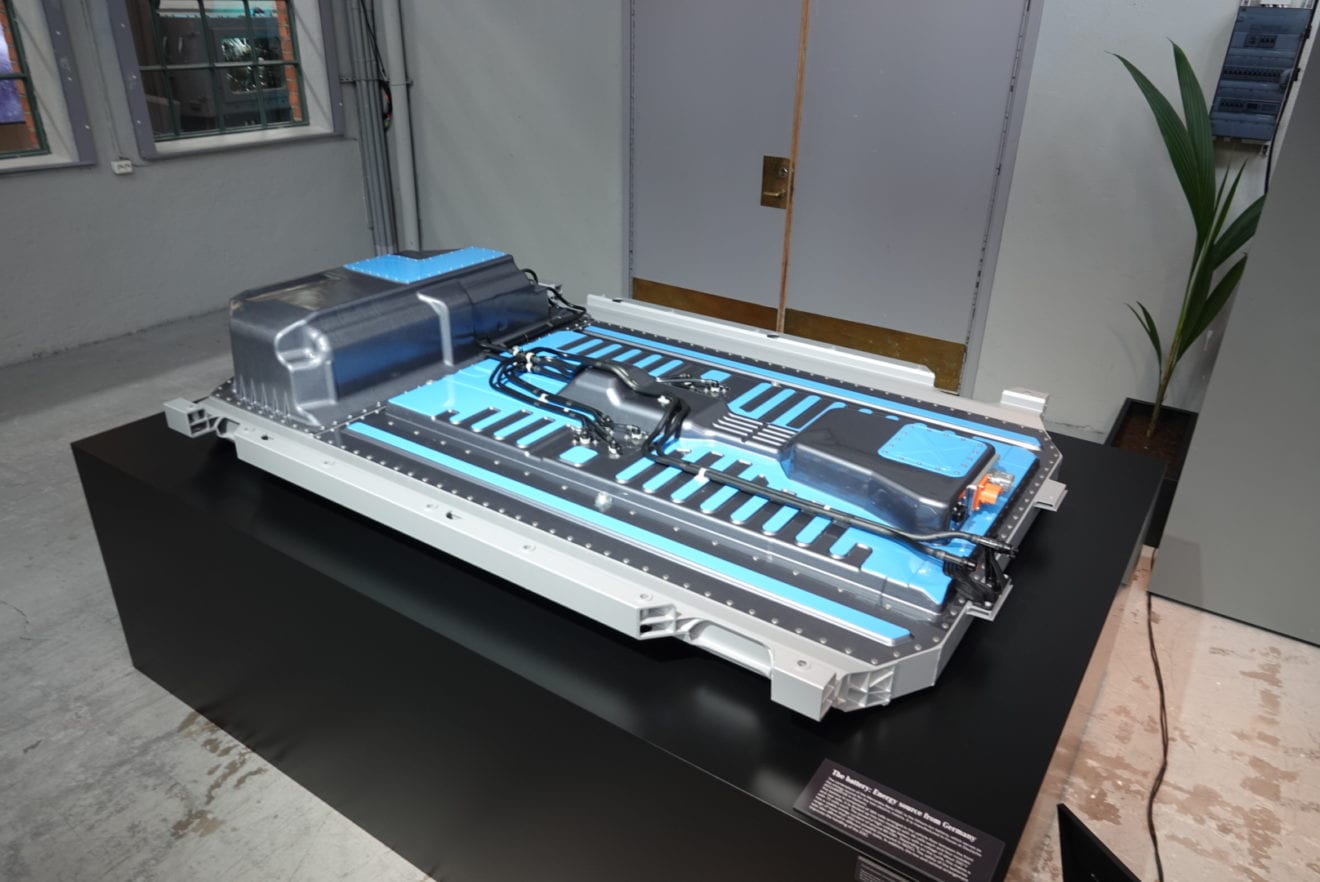
    Volkswagen will invest almost 1 billion euros ($1.1 billion) in battery cell production at a facility in western Germany and is seeking to simplify the group by spinning off or selling units, the automaker said on Monday. Volkswagen said in a statement after a supervisory board meeting it would set up the battery facility in Lower Saxony under a partnership and would also begin talks on a planned new multibrand plant in Europe. The statement confirms a Reuters report earlier on Monday, on the eve of the company’s annual general meeting.

    Battery cells are a key battleground in the automotive industry as it shifts to electric mobility. Currently the industry chiefly sources its requirements from Asian manufacturers. Volkswagen also said it was looking into options for its MAN Energy Solutions business, which makes large diesel engines for ships and power generators, as well as transmissions maker Renk, including joint ventures, partnerships, a full or partial sale.

    Reuters reported earlier this month that Volkswagen had approached several companies to gauge their interest in buying MAN Energy Solutions, which is expected to achieve a valuation of about 3 billion euros in a potential sale. The moves are part of Volkswagen Chief Executive Herbert Diess’s efforts to slim down and simplify the group which has 12 brands, trucks, buses, motorbikes, cars and electric bicycles as part of its business.

    “Given the ever greater complexity of our industry and the related challenges, it is essential to focus on our core business,” Supervisory Board Chairman Hans Dieter Poetsch said. Volkswagen also said it would resume preparations for an initial public offering (IPO) of its trucks unit Traton, which it put on hold in March due to volatile market conditions.

  • VinFast, South Korean firm to make batteries for EVs

    VinFast, South Korean firm to make batteries for EVs

    The joint venture will be located in the automaker’s factory in the southern port city of Hai Phong, where it will manufacture lithium-ion battery packs for VinFast’s electric scooters that are being made now, and for electric cars to be produced in the future, VinFast said in a statement.

    The factory, which will be built on a 2,000 square meter area, will employ Vietnamese workers who will be trained in technology provided by LG Chem.

    The automaker, a unit of Vietnam’s largest conglomerate Vingroup, rolled out its first made-in-Vietnam cars last month, the first steps in a $3.5 billion automaking venture.

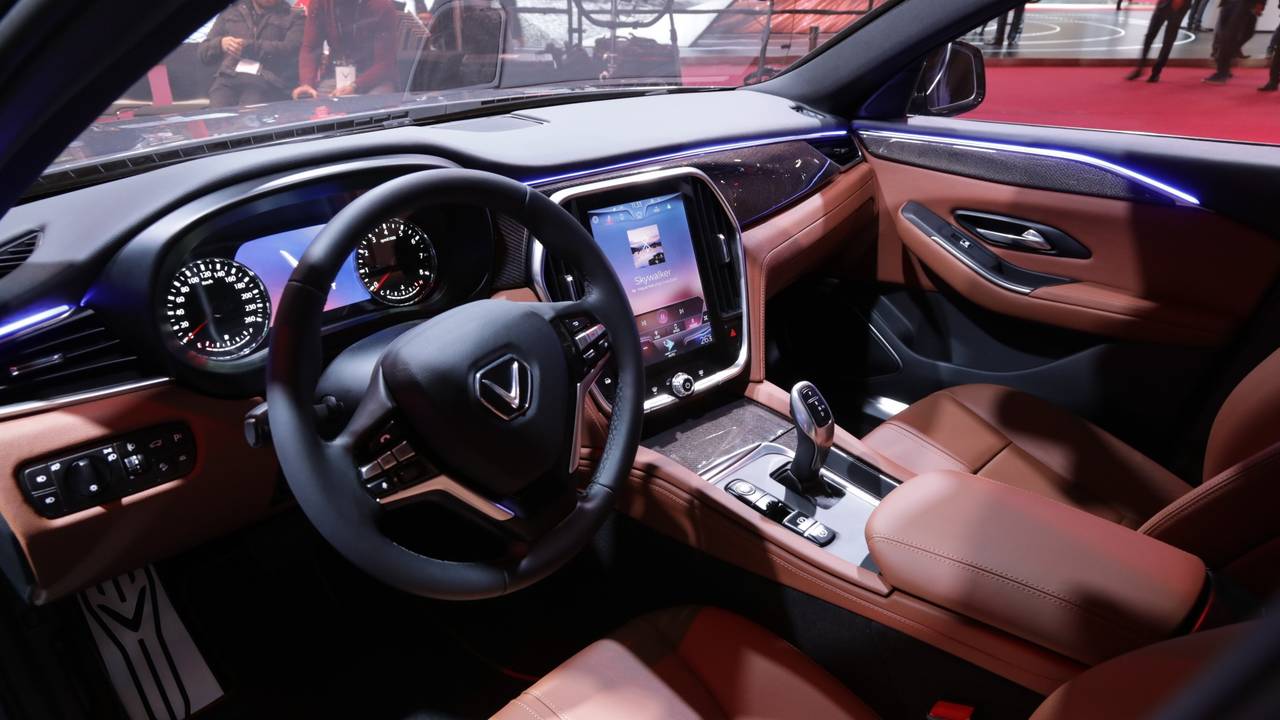
    VinFast has recently sent its SUV and sedan to European and Asian countries for quality testing and is set to deliver preordered vehicles in the second and third quarter.