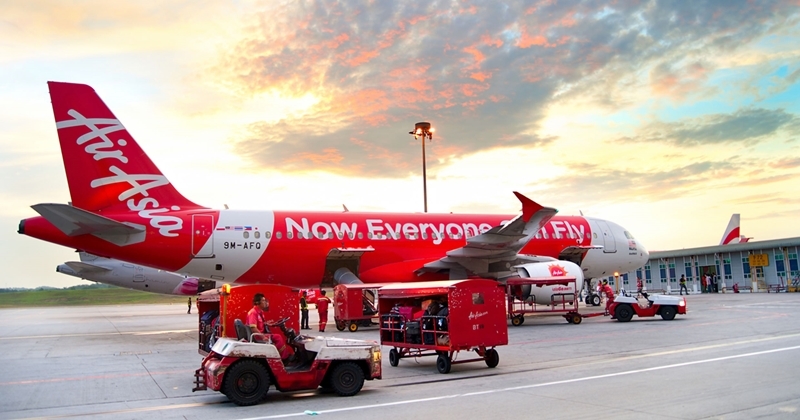
Malaysia’s government has asked Malaysia Airlines and Batik Air whether they could absorb AirAsia’s domestic routes and passengers if necessary, as authorities carry out contingency planning while monitoring the budget carrier’s financial health.
The discussions come as the airline, acquired by Tune Air for RM1 (US$0.25) in 2001, faces mounting financial pressure from debt and a sharp rise in fuel costs.
AirAsia has stated that it remains focused on maintaining stable operations and that underlying travel demand remains strong, while officials noted that no takeover or transfer of operations has been decided.
Contingency Planning and Operating Pressure
The carrier’s operating entity, Capital A, faces the combined burden of debt accumulated during the pandemic and high operating expenses. In the second quarter of 2022, the group’s average fuel costs jumped 68 per cent year-on-year to US$151 a barrel, consuming 51 per cent of aviation revenue. Currency weakness across Southeast Asian markets against the US dollar has amplified those costs, particularly for aircraft maintenance and dollar-denominated aircraft leases.
Both AirAsia X and parent entity Capital A previously fell into Bursa Malaysia’s PN17 classification for financially distressed listed firms. AirAsia X completed a debt restructuring in March 2022, but Capital A remains under requirements to regularise its financial condition to preserve its stock exchange listing.
Shifting Regional Capacity Dynamics
For regional travel retail, airport concessionaires, and tourism operators, any capacity reduction from AirAsia would alter passenger footfall patterns overnight. AirAsia built the low-cost model that feeds primary transit hubs like Kuala Lumpur International Airport Terminal 2 and regional secondary airports across Thailand, Indonesia, and the Philippines. If routes are transferred or curtailed, legacy carriers and competing hybrid operators will absorb higher-yielding corporate traffic while budget-sensitive discretionary travel slows down.
Rival full-service and hybrid carriers stand to gain market share on key domestic trunk routes, yet taking over budget volume presents immediate fleet and staffing hurdles for Malaysia Airlines and Batik Air. Low-cost passenger yields cannot easily support legacy cost structures without state subsidies or substantial fare increases. The direct risk rests with consumer ticket pricing, where reduced seat capacity inevitably pushes up average domestic fares.
From Token Purchase to Pandemic Shock
Entrepreneurs Tony Fernandes and Kamarudin Meranun bought AirAsia through Tune Air in September 2001 for a token RM1, absorbing RM40 million in debt. The carrier transformed regional aviation by introducing high-density Airbus A320 fleets, online direct bookings, and low fares, surpassing 500 million passengers carried by 2018.
Financial strains began surfacing before the global health crisis. AirAsia reported a net loss of approximately RM283 million in 2019 after fuel price increases added RM703 million to its operating costs in 2018. When border closures halted international travel in 2020, group revenue dropped 74 per cent to RM3.1 billion and full-year net losses widened to RM5.9 billion, forcing the shutdown of AirAsia Japan and a retreat from AirAsia India.
Regulators and investors are tracking Capital A’s submission of a complete regularisation plan to exit PN17 status on Bursa Malaysia, alongside fleet reactivation milestones across its Southeast Asian subsidiaries.
Leave a Reply