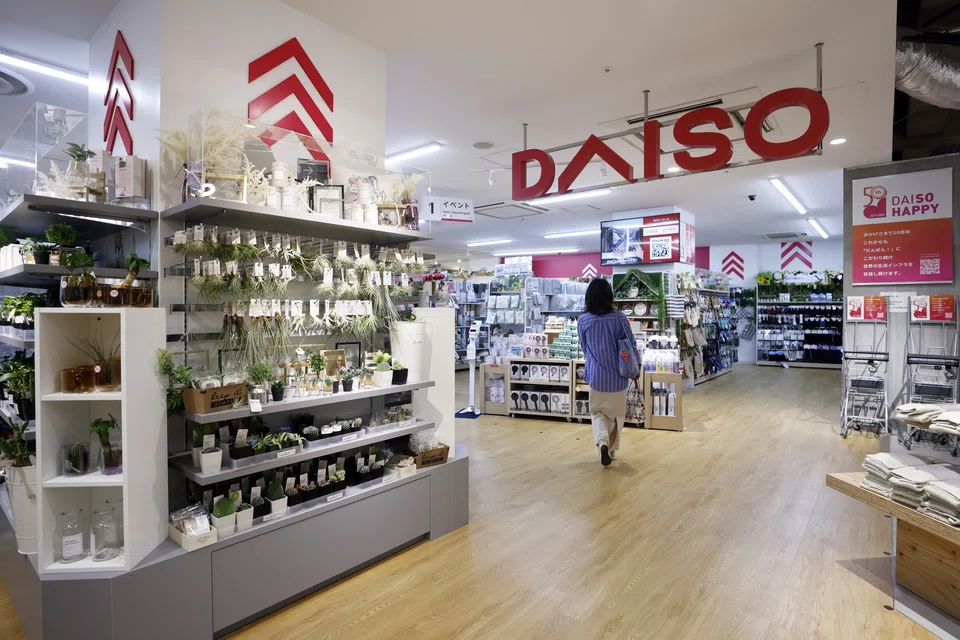
Asung Daiso is nearing 5 trillion won ($3.7 billion) in annual revenue in South Korea. Overseas tourists are flocking to its downtown outlets for low-cost cosmetics and travel essentials.
Total sales reached 4.54 trillion won last year, up from 2.6 trillion won in 2021. Growth came from a strict 5,000-won price ceiling alongside dedicated skincare and makeup lines.
Foreign card transaction values doubled year-on-year across the first eight months of 2026. That followed overseas card spending growth of 130 percent in 2023, 50 percent in 2024 and 60 percent in 2025, led by central tourist locations.
Expanding From Seven Brands to 170
Its beauty catalogue grew from seven brands and roughly 120 stock-keeping units in 2022 to approximately 170 brands and over 1,900 products this year. Category sales jumped 50 percent in 2022, 85 percent in 2023, 144 percent in 2024 and 70 percent in 2025.
Every item across the store network sells for between 500 won and 5,000 won. To meet that retail cap, major cosmetics manufacturers supply modified formulations and smaller unit packages.
Daiso merchandizers have excellent taste in selecting products of high enough quality that can meet the customer’s expectations while keeping them at very low prices.
Cosmetics now rank as the single highest-selling category at the Myeongdong Station store in central Seoul. Dedicated space on the second floor captures footfall from inbound Asian and Western travelers.
Rivalry With Olive Young and Musinsa
That cosmetics push challenges health and beauty leader CJ Olive Young and fashion platform Musinsa. Olive Young built a nationwide network around mid-tier and prestige domestic skincare. Musinsa opened a beauty-dedicated store in Seoul’s Hongdae district to draw younger apparel shoppers.
The retailer targets the bottom tier of that market entirely for itself. Its 5,000-won price ceiling captures entry-level consumers and tourists buying small jars, sheet masks and serums as low-risk souvenirs.
Margin compression remains the primary risk. Fixed dollar-store price caps during prolonged supply-chain inflation force suppliers to cut packaging costs to the bone, leaving little buffer if raw ingredient prices climb.
First Beauty-Only Format in Eastern Seoul
In August 2026, Daiso opened its first beauty-dedicated store near Konkuk University in Gwangjin-gu, eastern Seoul. The outlet replaces traditional homeware and hardware aisles with shelf space for personal care, cosmetics and accessories aimed at university students and local residents.
Five consecutive years of top-line expansion made that test possible. Annual revenue climbed from 2.95 trillion won in 2022 to 3.46 trillion won in 2023 and 3.97 trillion won in 2024 before breaking past 4.5 trillion won.
Management is now tracking full-year 2026 revenue against the 5 trillion won threshold while evaluating whether to replicate the Konkuk University format across other tourist-heavy metro stations in Seoul and Busan.
Leave a Reply