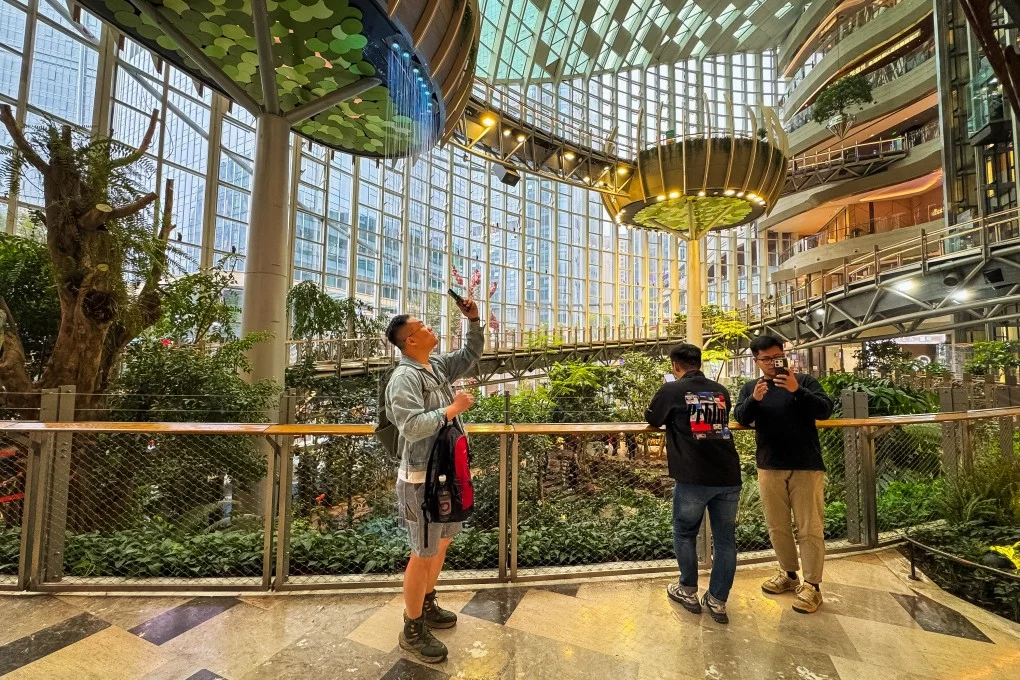
Luxury mall operators across China are pressing ahead with major retail expansion projects this week despite persistent weakness across the broader consumer economy, Nikkei Asia reported. High-end property developers are securing footprint commitments from top global fashion and jewelry houses across primary commercial centers.
The physical expansion push comes as top-tier landlords separate their performance from standard mass-market department stores. Premium commercial destinations continue to attract long-term brand commitments because affluent shoppers maintain higher discretionary budgets than middle-market consumers.
Bifurcation across commercial real estate
Commercial leasing data across mainland tier-one and tier-two cities shows a sharp split between mass retail centers and destination luxury complexes. While mid-market shopping centers struggle with tenant turnover and rent concessions, prime luxury properties maintain tight occupancy rates and multi-year waiting lists for prime ground-floor frontages.
Global luxury houses require expansive multi-level flagships with dedicated VIP lounges, private salons, and custom architectural facades to serve high-net-worth clients. Operators of luxury centers are reconfiguring existing floor plans and building new wings to meet these spatial specifications.
Brand strategy shifts in mainland centers
International fashion groups are consolidating their retail networks rather than retreating from mainland China. Brands are closing underperforming satellite boutiques in secondary malls to concentrate capital and inventory into larger experiential flagships inside leading luxury complexes.
For mall landlords, securing anchor flagships from premier European luxury houses guarantees footfall from top-tier spenders. It also allows developers to command premium rental yields on adjacent specialty dining, lifestyle, and beauty spaces.
Landlord competition and regional exposure
Competition among high-end landlords is intensifying across regional hubs beyond Shanghai and Beijing. Commercial developers are competing aggressively to bring exclusive boutique concepts and direct-operated flagships to regional centers such as Chengdu, Shenzhen, and Hangzhou.
The execution risk rests on whether local high-end consumption can absorb the expanded commercial floor space without diluting sales density per square meter. Landlords that overcommit capital to new luxury builds in saturated micro-districts face longer lease-up schedules if brand partners limit their capital expenditure.
Pipeline targets across major markets
Earlier retail cycles established luxury retail hubs around historical downtown commercial districts. The current construction cycle focuses on mixed-use commercial developments that combine luxury retail with prime office towers, cultural spaces, and five-star hospitality.
Commercial developers have scheduled their new luxury mall openings and phased retail extensions through the next several operating quarters. Occupancy rates, flagship delivery schedules, and initial tenant sales productivity across these new developments will determine whether landlords maintain their current expansion pace.
Leave a Reply