Retail News CRM

Tag: afterpay

  • Square to buy Afterpay for $39 billion as buy now, pay later booms

    Square to buy Afterpay for $39 billion as buy now, pay later booms

    Square Inc, the payments firm of Twitter co-founder Jack Dorsey, will purchase buy now, pay later (BNPL) pioneer Afterpay for US$29 billion (S$39.3 billion), creating a global transactions giant in the biggest buyout of an Australian firm.

    The takeover underscores the popularity of a business model that has upended consumer credit by charging merchants a fee to offer small point-of-sale loans which their shoppers repay in interest-free installments, bypassing credit checks.

    It also locks in a remarkable share-price run for Afterpay, whose stock traded below A$10 in early 2020 and has since soared as the Covid-19 pandemic – and stimulus payments to a workforce stuck at home – saw a rapid shift to shopping online.

    The all-stock buyout would value the shares at A$126.21, the companies said in a joint statement on Monday (Aug 2).

    That means a payday of A$2.46 billion (S$2.44 billion) each for Afterpay’s founders, Anthony Eisen and Nick Molnar. China’s Tencent Holdings, which paid A$300 million for 5 percent of Afterpay in 2020, would walk away with A$1.7 billion.

    “We built our business to make the financial system more fair, accessible, and inclusive, and Afterpay has built a trusted brand aligned with those principles,” said Mr Dorsey in the statement.

    “Together we can better connect our … ecosystems to deliver even more compelling products and services for merchants and consumers, putting the power back in their hands.”

    The Afterpay founders said the deal marked “an important recognition of the Australian technology sector as homegrown innovation continues to be shared more broadly throughout the world”.

    Afterpay shares jumped slightly higher than Square’s indicative purchase price in early trading before settling just below it at A$119.36 by late morning, up 23.5 per cent and helping push the broader market up 1.2 percent.

    The deal, which eclipses the previous record for a completed Australian buyout – the US$16 billion sale of Westfield’s global shopping mall empire to Unibail-Rodamco in 2018 – also pushed up shares of rival BNPL players.

    Afterpay competes with unlisted Sweden-based Klarna, Australia-listed Zip Co and new offerings from US veteran online payments provider PayPal Holdings.

    “Few other suitors are as well-suited as Square,” said Wilsons Advisory and Stockbroking analysts in a research note.

    “With Klarna rumoured to be building a strategic stake in Z1P, and PayPal already achieving early success in their native BNPL, other than major US tech-titans lobbying an 11-th hour bid, we expect a competing proposal from a new party to be low-risk.”

    Credit Suisse analysts said the tie-up seemed to be an “obvious fit” with “strategic merit” based on cross-selling payment products, and that a competing bid seemed unlikely.

    The Australian Competition and Consumer Commission, which would need to approve the transaction, said it had only just been notified of the plan and “we will consider it carefully once we see the details”.

    Created in 2014, Afterpay has been the bellwether of the niche no-credit-checks online payments sector that burst into the mainstream last year as more people, especially youngsters, chose to pay in instalments for everyday items during the pandemic.

    BNPL firms lend shoppers instant funds, typically up to a few thousand dollars, which can be paid off interest-free.
    As they generally make money from merchant commission and late fees – and not interest payments – they sidestep the legal definition of credit and therefore credit laws.

    That means BNPL providers are not required to run background checks on new accounts, unlike credit card companies, and normally request just an applicant’s name, address and birth date. Critics say that makes the system an easier fraud target.

    The loose regulation, burgeoning popularity and quick uptake among users has led to rapid growth in the sector, and has reportedly even driven Apple Inc to launch a service.

    For Afterpay, the deal with Square delivers a large customer base in its main target market, the United States, where its fiscal 2021 sales nearly tripled to AUS$11.1 billion in constant currency terms.

    The deal “looks close to a done deal, in the absence of a superior proposal,” said Ord Minnett analyst Phillip Chippindale, adding that it “brings significant scale advantages, including to Square’s Seller and Cash app products.”

    Talks between the two companies began more than a year ago and Square was confident there was no rival offer, said a person with direct knowledge of the deal.

    Afterpay shareholders will get 0.375 of Square class A stock for every Afterpay share they own, implying a price of about AUS$126.21 per share based on Square’s Friday close, the companies said.

    Square said it will undertake a secondary listing on the Australian Securities Exchange to allow Afterpay shareholders to trade in shares via CHESS depositary interests (CDIs).
  • Afterpay and Stripe Partner to Offer ‘Buy Now, Pay Later’ Payments for Merchants

    Afterpay and Stripe Partner to Offer ‘Buy Now, Pay Later’ Payments for Merchants

    Afterpay the leader in “Buy Now, Pay Later,” today announced a partnership with Stripe, the technology company building economic infrastructure for the internet. The two companies are joining forces to offer Afterpay’s payment service to Stripe merchants through an easy and seamless integration.

    The partnership allows both new and existing Stripe merchants to easily offer Afterpay – giving their shoppers the opportunity to receive their items immediately and pay in four installments, without the need to take out a traditional loan or pay upfront fees or interest. Businesses on Stripe can start accepting Afterpay in minutes—there’s no application, onboarding, or underwriting process to get started.

    “Stripe is delighted to partner with Afterpay to make it easy and fast for online businesses to offer their customers Buy Now, Pay Later. We’ve seen strong demand from users around the world for flexible payment options, and this partnership gives businesses on Stripe an effective tool for capturing more sales and reaching new customers,” said Noah Pepper, Stripe’s Business Lead for APAC.

    Afterpay and Stripe are also extending the payment service to top e-commerce platforms, with Squarespace — the all-in-one website building platform — being the first platform to leverage the partnership and offer Afterpay to its customers.

    By offering Afterpay, Squarespace enables merchants to build a fully integrated checkout experience with ease, while maintaining the look and feel of their brand. Merchants will also experience the benefits of offering customers a flexible payment option, which is proven to attract new customers and deliver higher conversions and average order values.

    “Afterpay has been a top requested feature from our customers,” said Paul Gubbay, Chief Product Officer at Squarespace. “Through this partnership, we’re glad to be able to offer our merchants even more flexibility in how they transact with their customers and increase topline sales without having to sacrifice the design elements that are unique to their brand.”

    “Millennial and Gen Z consumers are demonstrating a clear preference for flexible payment options that allow them to budget and spend responsibly,” said Ben Presseley, Afterpay’s SVP of Global Sales Strategy and Operations. “By partnering with Stripe and Squarespace, we’re equipping retailers with the tools to meet this consumer demand – offering the younger generation a way to use their own money and pay over time, always free of interest.”

    Stripe merchants in Australia, New Zealand and the US can now integrate Afterpay, and will be available to merchants in the UK and Canada soon. Squarespace offers the combined integration of Stripe and Afterpay to their Commerce customers in Australia, New Zealand and the US, and will be available to Canadian customers soon.

  • Zip gains retailers as buy now pay later comes under attack

    Zip gains retailers as buy now pay later comes under attack

    Buy now, pay later operator Zip has seen a string of new retailers join its list of partners, bringing representatives across Australia fashion, automotive and food into the fold.

    Among the new retailers is the Just Group (which includes Peter Alexander, Smiggle, Jay Jays, Just Jeans, Dotti, Jacqui E and Portmans), Hanes Australasia (including Bonds and Sheridan), Lorna Jane, General Pants, Grill’d, Schnitz, and Carsales.

    “Consumers want to own the way they pay. In turn, retailers want to offer payment choice to answer this demand, and because they recognise it drives sales. It’s a win-win,” Fran Ereira, general manager of sales and solution delivery at Zip, said.

    But the already competitive buy now, pay later sector is set to become even more so, with the entrance of US provider, Splitit, in the Australian market – through a partnership with Kogan – and the arrival of Visa in the instalment payment space.

    “Visa cardholders will have the option to divide their total purchase amount into smaller, equal payments over a defined time period on qualifying purchases, at the store and online or when travelling abroad,” Visa global head of issuer and consumer solutions Sam Shrauger said in a statement last week.

    The announcement sent shares in Afterpay down 15 per cent – though they have since recovered.

    Visa’s offer differs from existing buy now, pay later providers in that it allows issuers to leverage a customer’s existing payment account, rather than asking them to download an app or submit to a credit check.

    “We expect instalments to become a foundational method of payment at checkout for both domestic and cross-border commerce payment transactions,” Shrauger said.

    But the growing popularity of buy now, pay later could be its undoing. A recent report in The Australiansuggests that buy now, pay later providers could soon lose one of the key advantages they have over credit card providers.

    While companies like Afterpay and Zip charge retailers a fee to offer their service, they prohibit retailers from passing the surcharge on to customers. But the Reserve Bank of Australia’s Payments System Board has taken note of this practice, and is discussing “the growth in this segment of the payments market and the implications of these services for consumers and merchants,” according to a statement it released in November.

    Should this restriction be changed, retailers could choose to add a surcharge to goods purchased through buy now, pay later apps, potentially changing how attractive such offers are to consumers.

  • Myer implementing new payment options in-store

    Myer implementing new payment options in-store

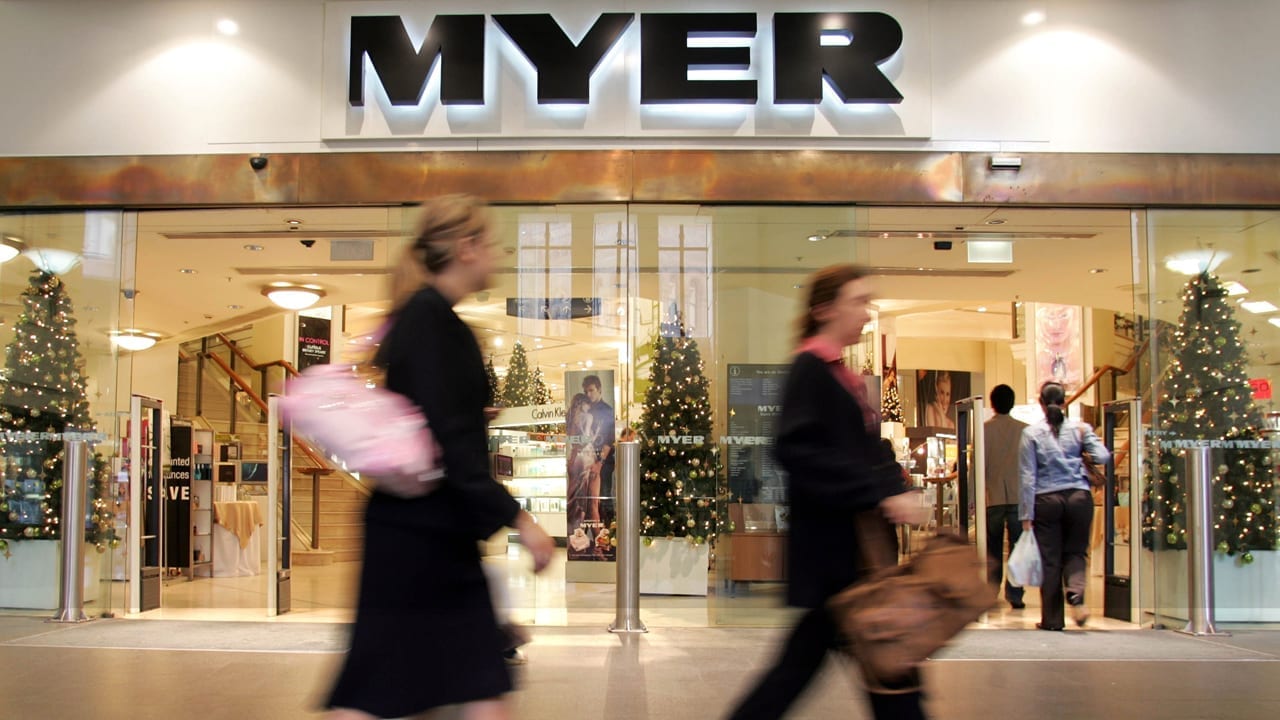
    Department store Myer will be implementing buy now, pay later service Afterpay in-store in 2020, in an effort to incentivise the 2.7 million active Afterpay customers to visit its retail locations.

    “Our customers have responded positively to the Afterpay offering since we launched it online in April 2017,” Myer general manager for financial services Spencer May said.

    “We now look forward to extending provisions of buy now, pay later services for our customers, with both Afterpay and humm in-store from late 2019.”

    The decision comes amid Myer’s customer-first turnaround strategy, in which it seeks to bring customers back in-store by transforming the in-store customer experience, expanding the retailer’s ‘Only at Myer’ offering, and improving its online channel.

    The plan seems to have started off on the right foot, having led to a 3.1 per cent increase in net profit after tax in the first half of FY19 to $41.3 million, according to Myer chief executive John King.

    In-store is a growing segment for Afterpay, accounting for about 20 per cent of total ANZ underlying sales for the 5 months to May 2019, compared to 15 per cent over the first half of FY19.

    Additionally close to a quarter of the service’s new customers are being driven by in-store, rather than online, sales.

    Myer has been contacted for comment.

    According to UBS analyst Ben Gilbert, the impact of implementing buy now, pay later services drives an incremental increase in sales, as customers that did not necessarily have the ability to purchase at that store are now able to.

    However, this growth in sales tends to stabilise after 12 to 18 months.

    “The emergence of buy now, pay later has been a key driver of both traditional and online retail,” Gilbert said.

    “Growth largely reflects a shift to online, with retailers telling us buy now, pay later offers can make up over 50 per cent of online sales.”

    UBS estimates that buy now, pay later providers Afterpay and Zip accounted for approximately 16 per cent of incremental discretionary retail growth in the first half of FY19.

    Gilbert does raise the possibility that these extra sales have been brought forward, creating a risk to profit forecasts as customers buy early.

    “While we have some concerns, we note large retailers have largely cycled this in their online sales, momentum has continued and retail sales are holding up better than feared, with (early) post-election feedback on trade positive,” Gilbert said.

    “As a consequence we are becoming less concerned, and see an opportunity now to potentially try to negotiate better terms on the buy now, pay later options.”

  • Afterpay starts cross-border payments

    Afterpay starts cross-border payments

    Buy now, pay later provider Afterpay is enabling shoppers to make cross-border payments through the service, following a successful trial.

    The feature means that businesses that offer Afterpay at checkout will now be able to offer the payment method to customers in other countries where Afterpay is active.

    The feature is initially limited to Australian and New Zealand businesses, where a combined 2.7 million people use Afterpay, but will eventually be extended to include businesses in the US and later the entire Afterpay network.

    “We are confident that [this] will add value to our retail partners, and open up the opportunity for them to seek and delight new customers from different countries,” Afterpay chief executive Nick Molnar said.

    “Customers will be able to pay directly in their currency and not be hit with any additional foreign exchange fees after the payment is processed.”

    The payment provider also will remove the complexity of foreign exchange, through a proprietary global payments solution that allows funds to be settled in their country of origin.

    Afterpay’s support for cross-border payments is expected to be a boon for online retailers looking to grow their sales outside of the domestic market.