Retail News CRM

Tag: ais

  • Japan’s NETSTARS joins Singtel’s VIA alliance

    Japan’s NETSTARS joins Singtel’s VIA alliance

    Singtel‘s cross-border mobile payments alliance VIA has expanded into Japan through a partnership with Tokyo-bassed mobile payment technology NETSTARS.

    The addition of NETSTARS to the alliance will add 100,000 stores to the network’s current 1.6 million merchant partners in Asia.

    With the agreement, users of mobile wallets supported by VIA, including Singtel’s Dash and AIS Global Pay, will be able to use their respective wallets at merchants including airports, shopping malls, transportation modes and food and beverage outlets.

    Users will be able to pay instantly in their local currency with competitive foreign exchange rates in Japan.

    NETSTARS aims to grow its merchant base to 1 million stores throughout Japan by the end of next year

    As well as Dash and AIS Global Pay, Thailand’s Kasikornbank and Malaysia’s Boost will soon be adding their mobile wallets to the VIA alliance.

    Singtel Group plans to expand the VIA alliance to include other mobile regional associates including Airtel in India, Globe in the Philippines and Telkomsel in Indonesia, as well as more non-telco partners.


  • Spotify to Offer Carrier Billing to Telkomsel, AIS and DTAC Subscribers via Fortumo’s Payments API

    Spotify to Offer Carrier Billing to Telkomsel, AIS and DTAC Subscribers via Fortumo’s Payments API

    Fortumo has expanded its partnership with Spotify in South-East Asia to offer an expanded carrier billing program specifically for Spotify users in Indonesia (Telkomsel) and Thailand (AIS and DTAC).

    In both Thailand and Indonesia, credit card ownership remains below 10% while more than 65% of the population already has smartphones. This means most consumers can access online entertainment but do not have a way to pay for premium content. Carrier billing solves this issue for digital service providers by giving any mobile phone owner the option to make online purchases and deduct the charges from their mobile account balance.

    Spotify launched direct carrier billing with the new telcos through Fortumo’s Payments API. Using Payments API gives Spotify full control of the checkout flow and access to advanced features of carrier billing such as token-based authentication, dynamic pricing and an automated refunding process.

    At the other end of the Payments API are Fortumo’s pre-integrated connections with telcos, which gives Spotify and other digital service providers a scalable way of rolling out carrier billing.

  • AIS launches 1Gbps Next G mobile service

    AIS launches 1Gbps Next G mobile service

    Thailand’s AIS has launched a new mobile service offering connection speeds of up to 1Gbps by combining 4G and Wi-Fi connectivity.

    AIS’ Next G branded service is now available on supported handsets via a firmware upgrade.

    The service has been developed in collaboration with Samsung and Korea Telecom. It uses Multipath CTP technology to integrate AIS LTE-Advanced and Super Wi-Fi frequencies, providing speeds of up to 1Gbps in areas where both networks are available.

    Next G is currently compatible with Samsung Galaxy S series handsets of S7 and newer, with more handsets supporting the technology expected to be rolled out in the future.

    The upgrade forms part of AIS’ evolution to 5G, and is now available in major provinces nationwide.

    AIS currently has around 49,000 4G base stations and 80,000 Wi-Fi hotspots throughout Thailand. The operator’s 4G customer base meanwhile reached 15.8 million by the end of the second quarter.

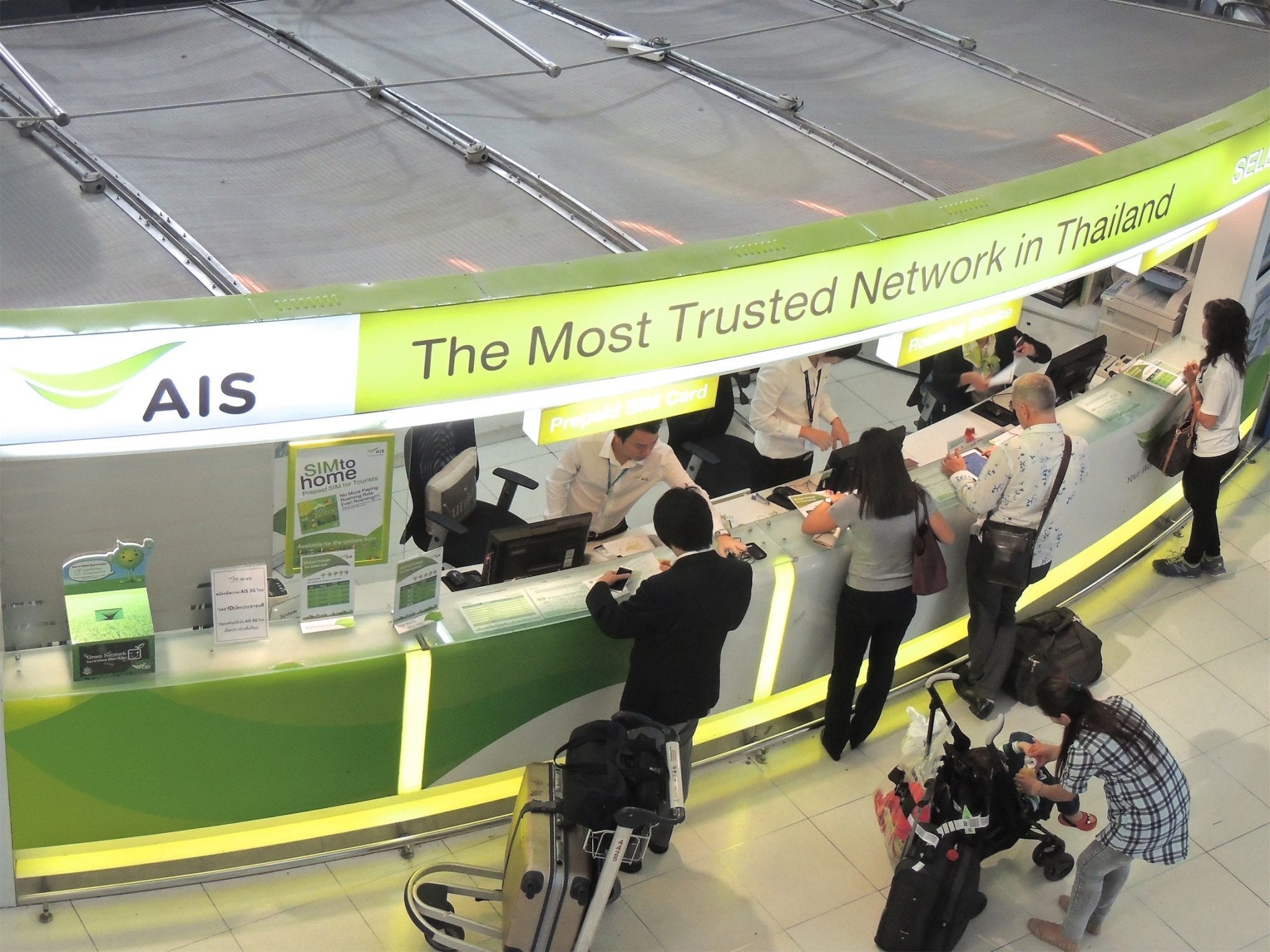
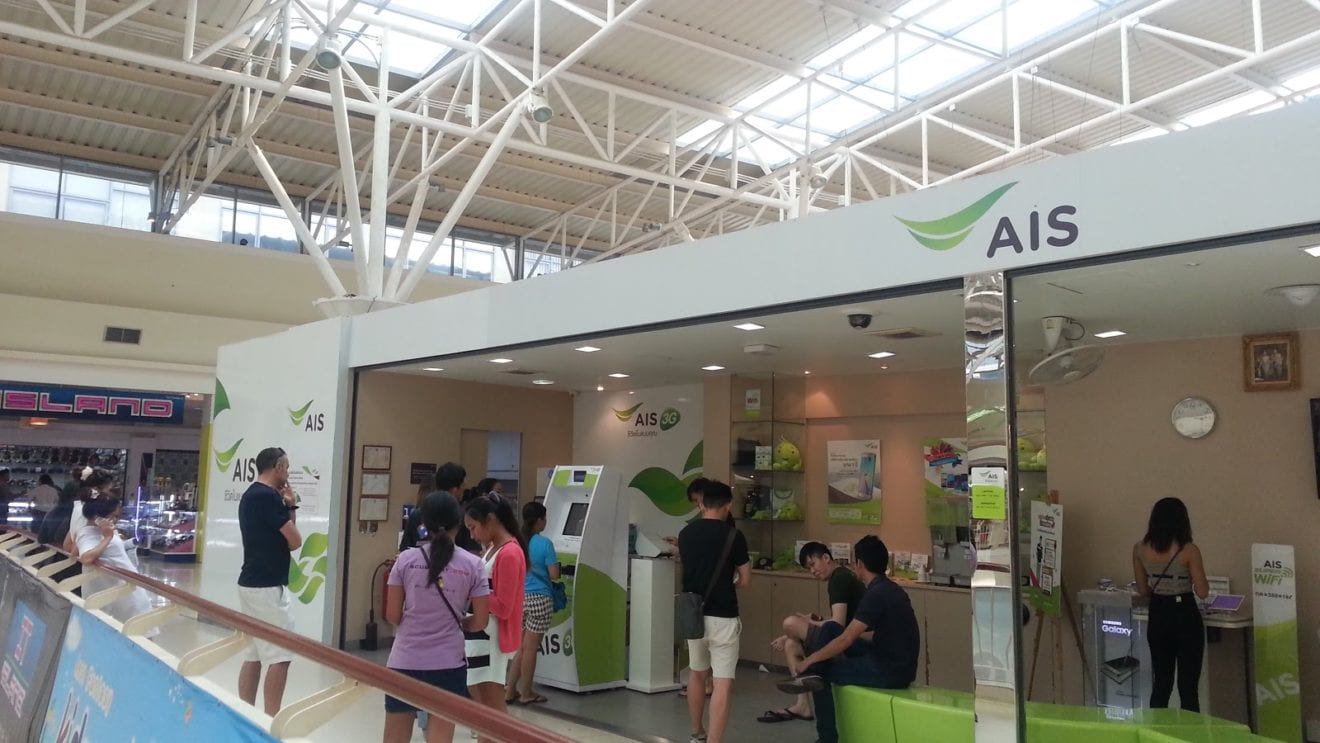
    Concurrently with the launch, AIS is aiming to improve the customer experience, and has recently upgraded one of its major customer service shops with a new Digital Gallery concept displaying innovations from major smartphone makers and other device brands.

  • AIS upgrades to Netcracker’s revenue management solution

    AIS upgrades to Netcracker’s revenue management solution

    Advanced Info Service (AIS) in Thailand is upgrading to Netcracker 12 to deliver a better digital customer experience and meet myriad internal business objectives.

    As part of the engagement, AIS has also extended its use of Netcracker’s Professional Services in order to ensure the long-term success of the platform.

    AIS is one of Thailand’s providers of mobile, fixed broadband and innovative digital services to approximately 41 million subscribers, advancing together with the evolution of the communications market to consistently meet the changing demands of the digital world.

    As Thailand’s needs for next-generation communications services increase, AIS’ use of Netcracker Revenue Management solution will enable it to deliver the best possible customer experience without disruption. Netcracker 12 will future-proof AIS’ systems, supporting its operations in the long term as digital and other complex services become more prevalent.

    Netcracker’s Revenue Management solution will also help AIS’ marketing and IT teams meet their sophisticated business and technical requirements, enabling more efficient and agile internal operations.

  • AIS projecting 5% revenue growth for 2017

    AIS projecting 5% revenue growth for 2017

    Thailand’s AIS is projecting a 5% increase in revenue and a 44% growth in ebitda this year as a result of strong growth in 4G customers.

    AIS VP of investor relations Nattiya Poapongsakorn as stating that the operator is expecting service revenue for the year of 129 billion baht ($3.75 billion), with the majority expected to come from data services.

    AIS’ total 4G customer base roughly doubled in the past 12 months to reach 12 million by the end of March, which compares to a 3G customer base of 24.6 million and a 2G subscriber base of 4 million.

    AIS aims to increase its revenue market share to 50% this year, up from 48% as of March. She said the operator’s 4G users have an ARPU of 400 baht, compared to just 250 baht overall.

    For the first quarter, AIS reported service revenue of 31.4 billion baht, with data services accounting for 57% of this.

    The operator meanwhile plans to spend around 45 billion baht to expand its networks in 2017, with 40 billion to be spent on mobile networks and the remainder on fiber infrastructure. But the company plans to reduce its handset subsidy budget after incurring subsidy costs of 10 billion baht last financial year.

  • AIS moves to enable VoLTE peering

    AIS moves to enable VoLTE peering

    Thailand’s AIS has deployed technology to enable it to offer VoLTE peering between the company and other operators in the region.

    AIS has extended its deployment of Metaswitch’s Perimeta session border controllers from its 3G to its 4G network.

    The operator has also deployed the Metaview Service Assurance Server (SAS) to support improved service delivery to its more than 40 million subscribers.

    SAS is designed to facilitate troubleshooting and remediation to resolve problems in service delivery and help ensure that SLAs are being met even in virtualized enivornments.

    “VoLTE peering offered by our own network and others will enable rapid proliferation of VoLTE services in the SEA region,” AIS CTO Kriengsak Wanichnatee commented.

    “Perimeta’s high performance, unsurpassed stability and seamless interoperability with third-party products made our decision to deploy it on our 4G VoLTE network extremely easy. This extension of Perimeta’s role in our network confirms that the platform gives us the confidence and capabilities to rapidly deploy new services and scale quickly as our subscriber base grows.”

  • Thai telcos bracing for a challenging 2017

    Thai telcos bracing for a challenging 2017

    After a rough 2016 there is no respite in sight for Thailand’s telecoms sector, with operators still dealing with heavy costs accrued from recent 4G auctions, strict competition and OTT challengers.

    AIS CEO Somchai Lertsuthivong as stating that he has never seen as challenging a year for the mobile sector as 2016, after nearly three decades of experience.

    AIS and DTAC, which together have a revenue market share of around 80%, have both cut their financial forecasts for 2016 as a result of these challenges.

    AIS expects to report an eibtda margin decline of between 37% and 38% in 2016 from 45.6% in 2015 due to the rising costs as well as one-off expenses related to the shutdown of its 2G network. Dtac expects its ebitda margin to decline to 27% to 30% compared to 31.8% in 2015.

    Operators expect 2017 to be just as challenging. As well as high spectrum costs, operators have had to grapple with a surge in operating costs as they offered heavy subsidies including free 4G handsets to lure customers.

    The sector will also have to deal with surging data consumption as 4G take-up increases. According to the report, Dtac plans to transition away from competing on price with heavy subsidies, and instead compete by offering a superior customer experience.

    AIS is meanwhile responding to the OTT threat by pursuing more digital partnerships with local content providers and businesses. Operators are also exploring partnering with cable providers to offer triple-play services bundling internet, telephone and TV.

  • AIS to invest $1.1b in 4G expansion

    AIS to invest $1.1b in 4G expansion

    Thai mobile market leader AIS plans to invest at least 40 billion baht ($1.12 billion) to expand its 4G network to improve take-up and performance.

    AIS has been spending heavily to deploy its 4G network and now expects to achieve 98% population coverage by the end of the year.

    But only around 25% of AIS’ 39.9 million strong subscriber base are 4G users, compared to 25.2 million for 3G.

    AIS aims to increase the percentage of 4G subscribers to 40% by the end of 2017. Take-up has been faster than initially expected, prompting the operator to raise its target.

    AIS launched 4G two years later than key rival TrueMove, but due to it 4G investment strategy has exceeded True’s 4G subscriptions and coverage, the report states.

    The operator is shoring up its network to be able to cope with heavy data usage and the ongoing erosion of voice and SMS usage. Roughly 22% of the company’s 60,000 base stations have been upgraded to 4G.

    This move forms part of a wider strategy aimed at transforming AIS into a fully integrated digital services provider by 2019.

  • AIS, True must launch low-cost 4G SIMs for poor

    AIS, True must launch low-cost 4G SIMs for poor

    Thailand’s telecoms regulator NBTC has issued an order requiring AIS and True Move to provide low-cost 4G SIMs for disabled and low-income citizens.

    The order is based on the terms of the licenses for 1800-MHz and 900-MHz 4G spectrum won by the two operators in an auction last year.

    As per the order, low-cost 4G SIMs must provide tariffs at least 10% cheaper than the maximum cap on 4G voice and data tariffs imposed by the regulator.

    Caps in the 1800-MHz and 900-MHz bands have been set at 0.69 baht ($0.019) per minute for voice calls and 0.26 baht per megabyte for data services.

    The new low-cost SIMs will need to be available by March, and the operators will be required to design a process to meet this deadline.

    The NBTC is yet to set definitions of disabled and low-income for the purposes of determining eligibility for the discount plans, but has suggested that low-income may be defined as earning less than 10,000 baht ($281) per month.

    According to NBTC secretary-general Takorn Tantasith, last year’s 900-MHz and 1800-MHz auctions had the explicit purpose of bridging the digital divide, and all Thais must be able to benefit from national resources including spectrum.

  • AIS, Dtac enable cross-network VoLTE calls

    AIS, Dtac enable cross-network VoLTE calls

    In a first for the Asean region, Thai operators AIS and Dtac have teamed up to facilitate cross-network VoLTE calls.

    The operators enabled AIS-Dtac VoLTE calls last week and plans to implement cross-network 4G video calls from Tuesday.

    Cross-network VoLTE calls are being made available to both prepaid and postpaid customers at no additional cost.

    While each of Thailand’s top three mobile operators – AIS, Dtac and True Corp – recently launched VoLTE, the functionality had previously only been available for within-network calls.

    Industry watchers believe the move may be an attempt by market leaders AIS and Dtac to fend off competition from fast-growing challenger True Corp. But the Nation quotes True Corp’s chief commercial officer Kittinut Tikawan as stating that the company is confident it can negotiate simila deals with both AIS and Dtac.

    The move will also pave the way for the launch of the iPhone 7 and iPhone 7 Plus in Thailand later this month.

  • IPhone 7 to officially launch in Thailand on Oct. 21

    IPhone 7 to officially launch in Thailand on Oct. 21

    Three major mobile operators in Thailand including AIS, DTAC and TRUE have announced will begin selling the iPhone 7 and iPhone 7 Plus on Oct. 21.

    While the pre-ordering will start early on Oct. 14 for all three companies, AIS and DTAC have opened a page for interested customers to register and guarantee the chance to pre-order the phones.

    Apple Watch Series 2, a product announced by Apple at the event in San Francisco on the same day as the new iPhone, will also launch in Thailand on Oct. 21.

    Apple has faced controversy by removing the headphone jack in the iPhone 7 in order to offer a waterproof handset. However, the new phone comes with a 12-megapixel camera and optical image stabilization, an impressive upgrade from the camera in iPhone 6s.

    The iPhone 7 comes in Silver, Gold and Rose Gold and the new colors Black and Jet Black.

  • AIS ramps up fiber competition

    AIS ramps up fiber competition

    Thailand’s top mobile operator AIS is gearing up to launch what it says will be the country’s fastest fiber broadband services.

    The operator aims to attract 300,000 users to its fiber service this year, increasing to 2 million by 2019.

    The operator first entered the fiber broadband fray in April and has already been shaking up the market. The company currently has around 200,000 subscribers to its existing fiber services, a roughly 2% share of the total market.

    Now the company aims to disrupt the market further, with plans to offer an entry-level 20Mbps service for 590 baht ($17) per month, comparable to the prices of ADSL broadband services.

    AIS will also offer 50Mbps services for 888 baht per month and 100Mbps services for 1,888 baht per month. All packages will include free WiFi routers, free AIS internet TV and free installation.

    With the new packages AIS has increased its target monthly fiber net additions to 45,000, up from a previous target of 30,000-35,000.

  • AIS to roam on TOT’s 2100-MHz spectrum

    AIS to roam on TOT’s 2100-MHz spectrum

    Thai state-owned operator TOT has reportedly signed a six-month trial contract with AIS subsidiary Advanced Wireless Network (AWN) covering roaming on TOT’s 2100-MHz spectrum.

    A TOT source told that AWN has agreed to pay a 325 million baht ($9.4 million) monthly roaming fee for use of 80% of TOT’s 2100-MHz spectrum allocation.

    The six-month trial is being conducted with a view to potentially entering into a permanent arrangement. AWS is expected to pay a 3.9 billion baht annual roaming fee under such a deal.

    TOT plans to allocate the remaining 20% of its 2100-MHz spectrum to other interested operators, according to the report. AIS already holds 15MHz of spectrum in the 2100-MHz band.

    State-owned TOT has been steadily losing 3G subscribers to its 2100-MHz service, and is under pressure to find new revenue streams following Thailand’s transition from a concession model for spectrum allocations to a more conventional auction model.

    In June, AWN also agreed to lease TOT’s 900-MHz network and towers for a combined 5.6 billion baht annually.

    TOT also holds 60MHz of 2300-MHz spectrum, and plans to use this to offer a wireless broadband service in conjunction with a strategic partner. The partner is due to be selected shortly.

  • NBTC to sue TrueMove, AIS for profit owed

    NBTC to sue TrueMove, AIS for profit owed

    Thailand’s telecoms regulator is in a race against time to sue TrueMove and AIS for profit owed during the final days of the 2G concession.

    The National Broadcasting and Telecommunications Commission telecoms sub-board has recommended the full board sue TrueMove and DPC (an AIS subsidiary) for $30.6 million (1069.98 million baht) and $17.9 million (627.64 million baht) for all profit during the so-called consumer protection phase of their 2G concessions.

    The non-extendable concessions expired in 2013 but were extended to protect consumers until March this year, under the condition that all profit be returned to the state, not just the 30% revenue share under concession terms.

    Previously the NBTC had decided only to sue TrueMove, but because of a fear that they may be viewed as biased, the board this week issued a new recommendation to the full board to sue both True and DPC (AIS).

    The lawsuit must be filed before September 18 as it is when the statute of limitations expires.

    Elsewhere the NBTC is to set up a committee to investigate a data breach by AIS which involved an AIS employee leaking customer information and call logs. The matter made a big splash on social media earlier this week and AIS responded by firing their staff responsible.

    However, NBTC Secretary-General Takorn Tantasit said that AIS might face a maximum penalty of cancellation of its license due to the breach, and executives may be jailed up to two years.

    The committee will convene for the first time on 19 September.

    Elsewhere as expected, Thailand has transformed its ICT Ministry into the new Digital Ministry for Society and Economy.

    The DMSE act also sets up what is colloquially called the Digital Economy Commission, though now formally it is, strictly translated, the Office of the Digital Commission for Society and the Economy which will be chaired by the Prime Minister.

    A number of bureaus that used report to the ICT Ministry’s Permanent Secretary are now to report to the DE Commission – Space Affairs Bureau, ICT Promotion Bureau, e-Government Promotion Bureau and ICT Industry Promotion Bureau.

  • Singtel to lift stakes in AIS, Airtel

    Singtel to lift stakes in AIS, Airtel

    Singtel has confirmed it has arranged to indirectly increase its stake in Thai mobile affiliate AIS, and revealed it will also increase its share in India’s Bharti Airtel.

    The operator announced it has entered a conditional agreement to acquire 21% of Thai operator AIS’ largest shareholder Intouch Holdings from Singtel’s majority shareholder Temasek Holdings, confirming reports from earlier in the week.

    Intouch is AIS’ largest shareholder with a roughly 40% stake, while Singtel owns a 23% stake in AIS.

    Singtel has meanwhile also agreed to acquire a 7.39% stake in Bharti Airtel’s holding company Bharti Telecom, adding to the 39.78% it already owns.

    The acquisitions have a total value of S$2.47 billion ($1.84 billion). Singtel will pay cash, and fund the acquisition through a combination of internal cash, short-term debt and proceeds from a S$1.6 billion placement of new Singtel shares to Temasek. The deal still requires shareholder and regulatory approvals.

    “Singtel has been a strategic partner to both AIS and Airtel for more than 15 years. We have built deep and trusted relationships, worked well together through the years, sharing knowledge and expertise and we have grown together, from strength to strength,” Singtel Group CEO Chu Sock Koong said.

    “Today, they have a combined mobile customer base of more than 380 million across Asia and Africa. This is a unique opportunity for us to deepen our relationships with two great market leaders.”