
Retail News CRM

Tag: annually

  • Starbucks Brews Major Expansion in India: Targets 100 New Stores Annually

    Starbucks Brews Major Expansion in India: Targets 100 New Stores Annually

    Starbucks has announced ambitious plans to open up to 100 outlets annually in India, marking an accelerated expansion in one of the company’s most rapidly growing global markets.

    Sushant Dash, CEO of Tata Starbucks, emphasized the potential for significant expansion in India, despite the country’s dominant tea culture. Coffee remains a smaller category, but the industry size and potential for growth cannot be overlooked.

    Tata Starbucks, a successful joint venture between Starbucks and the Tata Group, presently manages more than 500 outlets across India, accounting for roughly 30% of the nation’s structured coffee market. The partnership plans to amplify its presence by inaugurating between 50 to 100 stores each year.

    According to Dash, India ranks as one of Starbucks’ fastest expanding markets globally. The renowned coffee chain has more than doubled its number of stores in the country within the last four to five years.

    This aggressive expansion comes in response to the observed increase in coffee consumption amongst the youth and urban consumers in India. This uptick has sparked intensified competition from both local and international brands.

    To seize this opportunity, Tata Starbucks is considering a multi-format expansion strategy that includes drive-through outlets, highway locations, kiosks, and experiential stores. The company has also invested in its Starbucks Reserve concept, with six locations currently operating across major cities like Mumbai, Delhi, and Kolkata.

    This most recent expansion supports the company’s aspiration to reach 1,000 stores in India by 2028. In line with this goal, Tata Starbucks aims to increase its workforce to approximately 8,600 partners and further extend its network of drive-through outlets, airport cafes, and 24-hour locations.

    Notably, the company’s expansion plans extend beyond metropolitan areas. Tata Starbucks seeks to tap into India’s next wave of consumer growth by stepping up its presence in Tier 2 and Tier 3 cities.

    Questions & Answers

    What are Starbucks’ expansion plans in India?
    Starbucks plans to open between 50 to 100 outlets annually in India, aiming to reach 1,000 stores in the country by 2028.

    Is coffee popular in India?
    Despite India’s tea-dominant culture, the consumption of coffee is rising, particularly among the younger and urban demographics, leading to a surge in growth opportunities for coffee retailers.

    How does Starbucks plan to capture the growing coffee market in India?
    Starbucks, through its joint venture with the Tata Group, aims to leverage the growing coffee market in India by expanding its network of drive-through outlets, airport cafes, and 24-hour locations. The company is also broadening its reach to Tier 2 and Tier 3 cities.
  • Starbucks Brews Plan for India Expansion, Aiming for 100 New Stores Annually in the Tea Land

    Starbucks Brews Plan for India Expansion, Aiming for 100 New Stores Annually in the Tea Land

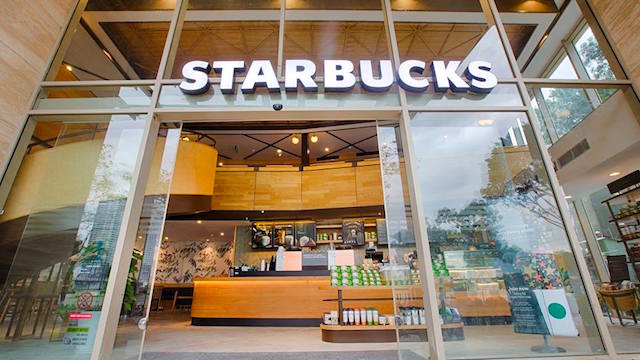
    Starbucks is setting its sights on India, one of its fastest-growing markets worldwide, with plans to launch up to 100 stores per year. The renowned coffee chain, despite coffee being a less popular choice than tea in India, sees substantial potential for growth in the region.

    Tata Starbucks, a joint venture between Starbucks and the Tata Group, currently boasts over 500 stores across India, holding around 30% of the country’s structured coffee market. It intends to continue expanding its footprint by adding 50 to 100 outlets each year.

    Sushant Dash, Tata Starbucks CEO, highlighted the significant growth rate India represents for Starbucks on a global scale. He noted that the store count in India has more than doubled over the last four to five years. This growth coincides with the rise in coffee consumption among younger and urban consumers, which has sparked competition from both local and international entrants.

    Adapting to Local Consumer Needs

    To seize the emerging opportunities, Tata Starbucks is broadening its horizons by diversifying its store formats, including drive-through stores, highway locations, kiosks, and experiential outlets. The company is investing in the Starbucks Reserve concept, now operating in six different locations in Mumbai, Delhi, and Kolkata.

    This expansion aligns with the company’s ambition to operate 1,000 retailers in India by 2028. In line with this aspiration, Tata Starbucks intends to increase its workforce to approximately 8,600 partners and extend its network of drive-through stores, airport cafes, and 24-hour locations.

    In addition, the company is exploring opportunities beyond major metropolitan areas, intending to extend its presence in Tier 2 and Tier 3 cities to capitalize on India’s upcoming wave of consumer growth.

    Questions & Answers

    What is Starbucks’ growth plan for India?
    Starbucks plans to open up to 100 stores per year in India, aiming to operate 1,000 stores by 2028.

    How is Tata Starbucks adapting to the Indian market?
    Tata Starbucks is diversifying its store formats to meet local needs, including drive-through stores, highway locations, kiosks, and experiential outlets. It is also expanding its presence in Tier 2 and Tier 3 cities.

    What is the current position of Starbucks in the Indian coffee market?
    Starbucks, through its joint venture with the Tata Group, Tata Starbucks, currently operates over 500 stores and holds about 30% of the country’s structured coffee market.

  • Singapore Loses $7 Billion Annually due to Inefficient Cross-Border Payment Systems: Study

    Singapore Loses $7 Billion Annually due to Inefficient Cross-Border Payment Systems: Study

    The antiquated systems of cross-border payments are imposing a substantial financial burden on businesses in Singapore, confining billions of dollars in operational capital and diminishing economic efficiency. This is according to recent research conducted by the financial tech firm, Airwallex, and the Centre for Economics and Business Research (Cebr).

    The research suggests that Singaporean companies lose roughly $7 billion per year owing to inefficiencies inherent in the traditional global payment infrastructures. The losses mainly come from payment failures, foreign exchange spreads, correspondent banking fees, and slow settlement processes that plague a vast portion of the global business-to-business (B2B) payment realm.

    Airwallex has termed this occurrence as the “Global Growth Tariff,” defining it as the economic pullback instigated by outdated cross-border payment systems. The report estimates that globally, a staggering $330 billion in working capital is stalled within the financial system due to these inefficiencies, an amount that is roughly equivalent to 9 percent of the United Kingdom’s annual gross domestic product.

    The Business Capital Drain

    For Singapore, one of the most internationally linked trade and financial hubs globally, the impacts are especially notable. Businesses involved in cross-border operations encounter higher transaction costs, delayed access to funds, and increased administrative workloads, all of which can influence cash flow and investment decisions.

    According to the study, payment failures and manual repair measures account for about $420 million in annual costs for Singaporean businesses. When transactions fail to process automatically, companies often suffer additional operational expenses and delays as payments are manually fixed and resubmitted.

    Simultaneously, foreign exchange spreads and correspondent banking fees remain the dominant source of friction. As per the research, these costs annually account for roughly $6.3 billion in lost business capital worldwide.

    The report also emphasizes the impact of settlement delays. At any given time, about $220 million in working capital is essentially frozen in Singapore as businesses await the clearance of international transactions. This capital could otherwise be used for investments, recruitment, or daily business operations.

    The Push for Efficiency

    The report’s findings come at a time when businesses are under increasing pressure to optimize liquidity amid economic uncertainty, higher financing costs, and ongoing changes in global trade patterns.

    “Legacy payment systems are quietly depleting billions from businesses that can least afford it. Every dollar stuck in the system is a dollar not invested in growth,” said Firdevs Abacioglu, Head of Data Science and AI at Airwallex.

    The research was founded on an analysis of cross-border B2B payment volumes, payment failure rates, significant currency corridor foreign exchange costs, and international supplier and contractor payment settlement timelines.

    Liam Daly, Senior Economist at Cebr, stated that the findings spotlight the structural inefficiencies that persistently obstruct international commerce. He added that addressing these frictions would promote seamless international trade and free up capital for productive use.

    Questions & Answers

    What is the “Global Growth Tariff”?
    The Global Growth Tariff is a term coined by Airwallex, referring to the economic drag created by outdated cross-border payment systems.

    How much do payment failures and manual repair processes cost Singaporean businesses annually?
    Payment failures and manual repair processes cost around $420 million each year for Singaporean businesses.

    What is the estimated amount of working capital trapped within the financial system due to inefficiencies in cross-border payment systems?
    According to the report, around $330 billion in working capital is effectively trapped within the financial system due to these inefficiencies.