Retail News CRM

Tag: ANZ

  • ANZ consumers prefer computers over smartphones

    ANZ consumers prefer computers over smartphones

    Consumers from Australia and New Zealand significantly prefer making purchases via desktop, despite browsing traffic continuing to move towards smartphones, according to the latest research from Adobe.

    In its latest report, the software multinational aggregated anonymous data from approximately 100 billion visits to 3,000+ websites across the region during the 2016 calendar year and found that while ANZ consumers are among those leading the shift from desktops (52.5 per cent share of browser traffic) to smartphones (37.7 per cent share of browser traffic), desktop conversion rates (2.9 per cent) were three times that of smartphones (0.8 per cent).

    Comparing data from Australia and New Zealand, Southeast Asia, India, Japan, Hong Kong, South Korea and the United States, the report found that the top 20 per cent of websites in ANZ, are widening the gap compared with average websites, seeing a 5.8 per cent desktop conversion rate versus the average of 2.9 per cent.  Along with Japan (5.8 per cent), ANZ’s best are achieving higher desktop rates than the United States (5.4 per cent).

    Becky Tasker, activity is shifting towards smartphones, consumers in Australia and New Zealand still prefer senior manager, Adobe Digital Insights, said showed that while browsing to make their final purchase via desktop.

    “Smartphone traffic and conversion rates are rising, but ANZ’s best marketers recognise that the desktop is still likely to be the final destination, even in a cohesive multi-device experience,” said Tasker.

    Adobe also said there has been evolution in the way consumers are engaging with the technology. While tech websites maintain one of the highest visit rates, the sector has also seen the time consumers spend during these visits decreasing – the customer journey now consists of interactions that are more numerous, but shorter.

    “With the customer journey now involving an increasing number of interactions across a range of devices, we need to keep pace with changing customer expectations,” said Danielle Uskovic, head of digital & social, Lenovo Asia Pacific.

  • ANZ plans to sell VN banking retail business

    ANZ plans to sell VN banking retail business

    The Australia and New Zealand Banking Group (ANZ) plans to sell its Việt Nam retail business, a source close to the matter has told the Saigon Times Online.

    According to the source, three foreign and two local banks are hoping to acquire ANZ’s retail business unit in Việt Nam.

    The Việt Nam retail business will not be sold to Singapore-based DBS Bank Ltd, the source said. DBS is not on the list of five potential buyers for the deal.

    In late October 2016, DBS purchased ANZ’s retail banking and wealth management units in five Asia markets for some S$110 million in book value, according to international media.

    The deals were based on business performance, profitability and strategy, and would limit ANZ’s activities in some segments for Asian clients. The bank would, instead, focus on its core businesses for the Asia region such as capital market, bond market, cash-flow management, corporate banking and investment banking.

    The value of retail banking business units transferred in the Asia region is small in comparison with ANZ’s total scale value.

    Việt Nam News tried to contact ANZ for more details, however, the Melbourne-based bank declined to comment.

    ANZ expanded strongly in Asia prior to 2013 and purchased stake in local commercial banks, including HCM City-based Sacombank. Since October 2015, ANZ has divested from its earlier small-scale investments and focused on its core businesses.

    Other Australian banks have also offloaded stake in investments and closed their representative branches outside the New Zealand and Australia markets. They have planned not to expand further in the Southeast Asia region after the Australian government made changes in its banking policies regarding class-one capital, lending and banking retail activities such as real estate trading.

  • ANZ sells retail business in Vietnam to South Korea’s Shinhan

    ANZ sells retail business in Vietnam to South Korea’s Shinhan

    The Australian bank said it will focus on its institutional banking, its biggest business in the region. Australian lender ANZ has announced to sell its retail business in Vietnam to South Korea’s Shinhan to focus resources on institutional banking.

    The bank has entered an agreement to transfer all eight branches, including retail staff in Hanoi and Ho Chi Minh City, to Shinhan Bank Vietnam, part of the Seoul-based Shinhan Financial Group, Farhan Faruqui, ANZ international group executive, said in a statement on Friday.

    Faruqui said the sale will allow the bank to focus resources on institutional banking, its “largest business in Asia.”

    “We will be maintaining our presence through our institutional bank in Vietnam which will continue to support our corporate clients in the Greater Mekong Region,” he said.

    ANZ’s institutional bank has a presence in 15 different markets in Asia and was ranked as one of the top four corporate banks in the region by market intelligence provider Greenwich Associates in 2016.

    ANZ’s retail business serves 125,000 customers in Vietnam, and includes $241.2 million in lending assets and $603 million in deposits. The Southeast Asian country’s economy has one the world’s fastest growing rates.

    ANZ said the transfer is subject to regulatory approval and expected to complete by year end.

    Rumors about the sale have been circulating since late last year after the bank sold its wealth management and retail business in Singapore, Hong Kong and three other Asian markets to Singaporean DBS for nearly $80 million above book value.

    Vietnam’s credit growth this year is targeted at 18 percent to facilitate the country’s annual economic expansion of 6.7 percent, the central bank has said. Last year the economy grew 6.21 percent from 2015, the slowest in two years, even though the banking sector posted an annual credit growth of 18.39 percent.

  • ANZ Vietnam to sell retail banking business

    ANZ Vietnam to sell retail banking business

    Three foreign banks and two domestic banks, which have not been named, were reported by SaigonTimes as being interested in acquiring the retail businesses of the 100 per cent foreign-owned bank.

    Last October, ANZ Group CEO Mr. Shayne Elliot was quoted as telling foreign media that the bank would look to exit its retail and wealth assets in the Philippines and Vietnam but had no plans to do likewise in Cambodia and Laos.

    “Further investments do not make sense for us given our competitive position and the returns available to ANZ,” he said.

    In the same month, Singapore’s largest bank, DBS Bank Ltd (DBS), acquired the wealth management and retail banking business of ANZ in five markets for $77.7 million more than the book value.

    The businesses acquired were in Singapore, Hong Kong, China, Taiwan and Indonesia, with total deposits of $1.2 billion, loans of $7.77 billion, investment assets under-management (AUM) of $4.6 billion, and total revenue of $582.7 million in FY 2016.

    They serve about 1.3 million customers, of which 100,000 are affluent and 1.2 million are retail customers.

    DBS, however, will not be allowed to acquire ANZ Vietnam’s retail banking business, according to a source, who added that the Singaporean bank is not among the five potential suitors.

    ANZ Vietnam was not available for comment at the time of writing.

    Last November, an ANZ Vietnam representative told local media there were no plans to sell its retail and wealth businesses in Vietnam but it would continue to examine ways to improve its retail and wealth operations.

    Regardless, the exit is reasonable given its modest figures for the first half of 2016.

    During the January-June period, interest income fell 17.3 per cent year-on-year to VND578 billion ($25.4 million) and fee and commission income was down 5.6 per cent to VND153.3 billion ($6.7 million).

    The bank would have made a loss if drastic changes in other income sources had not saved the day.

    From a net loss of VND21.7 billion ($953,000) during the first half of 2015, foreign currency exchange recorded a net gain of VND163.3 billion ($7.2 million) for the bank in the first half of 2016, securing an after-tax profit of VND176.8 billion ($7.7 million) as at June 30, up 30 per cent year-on-year. Its bad debt ratio rose to 1.25 per cent from 1.16 per cent as at the beginning of the year.

    ANZ Vietnam now has eight transaction offices in Hanoi and Ho Chi Minh City, providing Retail & Wealth, Consumer Finance, Corporate, Financial Institution, and Public Sector services to customers.

    Last year, the State Bank of Vietnam (SBV) withdrew the business license of the ANZ Banking Group Limited – Hanoi Branch (ANZBLG), which opened in 1993, at the request of the ANZ Group, to bring together the two entities of the bank operating in Vietnam.

    In 2009 the ANZ Group established a fully foreign-owned local bank called ANZ Bank Vietnam Limited and has since continued to operate the latter.

  • ANZ share rating still retained

    ANZ share rating still retained

    The divestment was consistent with the bank’s strategy of simplifying its business and narrowing the focus of its Asian operations on institutional business, analyst David Ellis said in a research note released yesterday.

    The sale followed those of five Asian retail and wealth businesses in Singapore, Hong Kong, China, Taiwan and Indonesia at the end of October last year.

    Mr Ellis expected ANZ’s four remaining retail and wealth businesses in the Philippines, Vietnam, Cambodia and Laos, which were under review, to eventually be sold.

    Following the sale of Shanghai Rural, ANZ would have minority stakes in three Asian financial services groups in Malaysia, Indonesia and China with a combined book value of about $A3billion ($NZ3.13billion).

    ”We would not be surprised if these investments were also divested,” Mr Ellis said.

    ANZ deputy chief executive Graham Hodges said the bank had sold its 20% share in Shanghai Rural to China Cosco Shipping and Shanghai Sino-Poland Enterprise Management Development Corporation for $A1.84billion.

    ANZ had invested a total of $A568billion in Shanghai Rural. Since 2007, ANZ had recognised $A1.3 billion of equity-accounted earnings and received $A178 million in dividends.

    ”This partnership has been beneficial for both ANZ and for Shanghai Rural. Shanghai Rural is now a strong, successful bank with a prosperous future.”

    Mr Ellis assigned a wide commercial advantage (economic moat) rating to ANZ, mainly because of its sustainable structural advantages of the Australian and New Zealand banking sectors.

    The wide moat rating recognised the structural and superior competitive advantages Australia’s four banks possessed.

    ”The four major banks dominate a regulated and rational oligopoly, bestowing structural advantages that are strong and durable.”

    New Zealander Shayne Elliot started as ANZ chief executive on January 1, 2016 and wasted no time making changes to strategy, organisational structure and the senior leadership team, Mr Ellis said.

    Mr Elliot was an ”excellent choice” to lead the group through the next stage of its growth phase.

  • Private banks lacking scale exit Singapore

    Private banks lacking scale exit Singapore

    Just like real estate is about location, location and location, private banking is about scale, scale and scale – it is what’s needed to cope with the high cost of the business, say industry players.

    Monday’s surprise move by DBS Bank to snap up most of ANZ’s wealth and retail business in Asia for a bargain-basement price of S$110 million, or 0.5 per cent of the S$23 billion of assets under management, once again hammered home the point that scale is needed to run a private bank.

    Over the past two years, eight foreign private banks (ANZ included) have exited or will soon exit Singapore. Of the eight, two were closed by the Monetary Authority of Singapore for anti-money laundering violations. ABN Amro is reportedly the eighth departure, with the Dutch lender soon to sell its Asian private bank.

    Both DBS and ANZ, Australia’s fourth largest bank, mentioned scale as the reason for the sale. It wasn’t that the business didn’t turn a profit. It did; for FY16, it turned in a cash profit of A$50 million.

    ANZ is not a small player in Asia, and this sale does not signal its retreat from the region, it said. In fact, ANZ regards Asia as core to its strategy of banking large corporate and institutional clients, driven by trade and capital flows, particularly with Australia and New Zealand.

    ANZ Institutional Asia employs 1,490 people across 15 markets in the region.

    But, as ANZ chief executive Shayne Elliott said of the sale to DBS: “In retail and wealth, although we have grown a profitable business in Asia, without greater scale, ANZ’s competitive position is not as compelling.”

    Tan Su Shan, DBS’s group head of consumer banking and wealth management, said Asia continues to clock decent growth rates, so the organic growth outlook for the wealth-management business remains intrinsically intact, despite cyclical volatility.

    She said: “For banks looking to create a sustainable wealth-management business here, there are a few things to consider. Firstly, it is the bank’s ability to build scale, be sustainable and invest for the future.

    “Secondly, banks must be able to serve the local and global needs of Asian clients.”

    DBS has been aggressively building up its private bank business, timing it nicely with Asia’s explosive wealth growth. A joint survey by PwC and UBS last month said that, in Asia last year, a new billionaire was minted every three days.

    DBS chief executive Piyush Gupta said that, with Asia growing at 6 per cent, Europe at 1 and the US, 2, “you’d all give a left arm to be in Asia under the current economic conditions”.

    As Asia is tipped to be the richest region in the near future, private banks in the region need to adapt their business models to meet the growing demand.

    Bahren Shaari, Bank of Singapore’s chief executive, said: “For instance, with the rising cost of doing business, banks need to achieve scale, so further consolidation is inevitable. In the case of Bank of Singapore, we have enough scale to aspire to be among the top three private banks in our core markets.”

    But while Asia has the right conditions to attract private banks, it has to be borne in mind that the bulk of the rich are self-made or entrepreneurial; the joint PwC-UBS survey said about 85 per cent of Asian billionaires are first-generation.

    This means banks need to offer investment-banking services and access to debt and equity markets for clients looking to expand their businesses. They should not just sell wealth-management products or throw rare-whisky parties, which have become fashionable in some quarters.

    A private banker who turned down an offer from a major distiller to host a rare-whisky party said: “My clients are too busy making money to come for the whisky.”

    Credit Suisse, the third-largest private bank in Asia, decided in a strategic review last year to combine investment banking with private banking.

    Francesco de Ferrari, the bank’s head of private banking for the Asia-Pacific, said earlier this year: “The business model that is best suited to Asian clients’ needs is the integrated bank with private banking as a core business and its DNA, but also strong investment banking and asset-management capabilities.”

    So if some foreign banks have decided to exit Singapore, it doesn’t point to foreign banks beating a retreat from Asia.

    DBS’ Ms Tan noted that the largest private banks in Asia are, in fact, Swiss or American: “While some foreign players have left the scene, there are several who are still fairly dominant here.

    “These are primarily the large Swiss and US and banks who have managed to build scale in their private-banking businesses, either through long-term organic growth or through combining their wealth management business with a retail, corporate/investment banking or asset management business.”

    UBS, Citi, Credit Suisse, HSBC and DBS are Asia’s top five private banks. Julius Baer, Morgan Stanley, JP Morgan, BNP Paribas and Deutsche Bank round up the top 10.

    Ms Tan said: “That said, there remains more scope and opportunities for dominant local or regional players like DBS to gain market share as clients here look for customised solutions with a safe and steady name who remains committed to the region and the business.”
  • Goldman’s Instructed by ANZ

    Goldman’s Instructed by ANZ

    It has been an interesting week for Australian bank ANZ. On Monday it agreed a deal with Singaporean bank DBS to dispose of its Asian wealth units. Now it appears the bank has hired Goldman Sachs for another deal.

    According to a report the bank has appointed Goldman Sachs to lead the sale. Also involved in any transaction will be the Melbourne-based boutique Flagstaff Partners.

    Insurance Units Next to go?

    Flagstaff has worked with ANZ on several occasions including as a financial adviser to the ANZ Banking Group on the sale of ANZ Trustees to Equity Trustees. It also acted as a financial adviser on the acquisition of the remaining 51 percent shareholding in the ANZ-ING wealth management and life insurance joint venture.

  • ANZ suffers $265m hit over Asia exit

    ANZ suffers $265m hit over Asia exit

    ANZ has taken a major step toward exiting Asian retail banking and wealth management with an agreement to sell businesses in five countries to Singapore’s DBS bank.

    Australia’s fourth-largest lender on Monday said DBS will pay book value plus $110 million for assets in Singapore, Hong Kong, China, Taiwan and Indonesia.

    Chief executive Shayne Elliott, who is undoing much of ANZ’s expansion into Asia under predecessor Mike Smith, said the sale represented the bulk of the bank’s regional retail and wealth management businesses – with remaining assets in Vietnam, Laos, Cambodia and the Philippines under review.

    Mr Elliott said ANZ had not committed to further sales and would not be drawn on a timeline for a possible broader exit.

  • Shopping patterns in Singapore shift amid slowdown

    Shopping patterns in Singapore shift amid slowdown

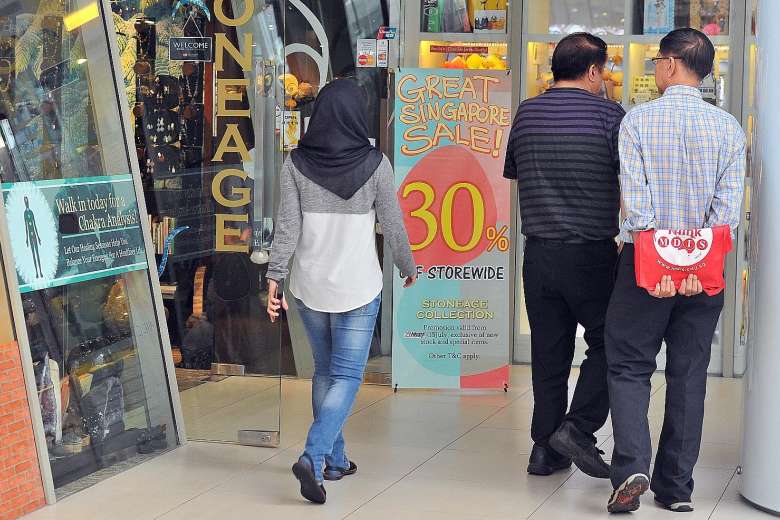
    And yet, amid this gloom, consumers continue to spend – though there is a shift in the pattern and quantum of their spending.

    In June, the first month of the Great Singapore Sale, retailer sales were down 3 per cent compared with the same month last year. It is not just tourists who are staying away, but local consumers are also looking more closely at price tags.

    The mood has not been helped by the fact that about 4,800 people were laid off in the second quarter, 48 per cent more than in the same period last year.

    Landlords are feeling the pinch as well. Average monthly gross rents for prime first-storey speciality retail shops dipped 1.2 per cent in the three months to September from the previous quarter, said property consultancy Edmund Tie & Company recently.

    Vacancies in the Orchard planning area rose again in the second quarter to 9.2 per cent, after reaching what was then a five-year high of 8.8 per cent in the first quarter.

    ANZ economist Ng Weiwen pointed out that home prices have fallen for 12 consecutive quarters, while bank lending has shrunk for 11 straight months. This has translated into weaker spending.

    However, the decline has been gentle across the board and there have been some bright spots. Those who find this surprising should look at the unemployment rate. While it rose from 1.9 per cent in March to 2.1 per cent in June, it remains quite low. Said OCBC economist Selena Ling: “When unemployment rate is anything below 3 per cent, it is effectively at full employment.”

    It could be one reason why consumers continue spending on mid-range goods and services, such as travel and at cafes, even as they cut back on luxury items and seek better deals for necessities.

    ANZ’s Mr Ng said: “For the different tiers of consumer spending, the high-end consumer segment will be more sensitive to changes in consumer income, so it’s not surprising.

    “The mid-range segment will still hold up in the near term as wages are still holding up.”

    In fact, more are paying their credit card bills on time. Only 32.25 per cent of card holders did not pay their bills in full for the second quarter, down from 33.91 per cent in the first quarter. Ms Ling said: “People have been turning slightly more cautious with spending.”

    They may spend less on fashion. And malls could take a hit if their offerings are the same as the ones available on Taobao and the like, she added.

    But cheaper options like house brands at supermarket chain FairPrice are seeing stronger demand.

    This is what a slowing economy looks like – in Singapore.


  • ANZ wealth chief Joyce Phillips leaves after restructure

    ANZ wealth chief Joyce Phillips leaves after restructure

    ANZ Bank’s wealth chief, Joyce Phillips, is departing the banking giant following a restructure of the $67 billion institution’s wealth management arm.

    Chief executive Shayne Elliott said the group was simplifying its approach to wealth management, which includes the bank’s insurance, superannuation and investments products.

    As a result of the changes, Ms Phillips, who led ANZ’s wealth, marketing and innovation divisions, will leave.

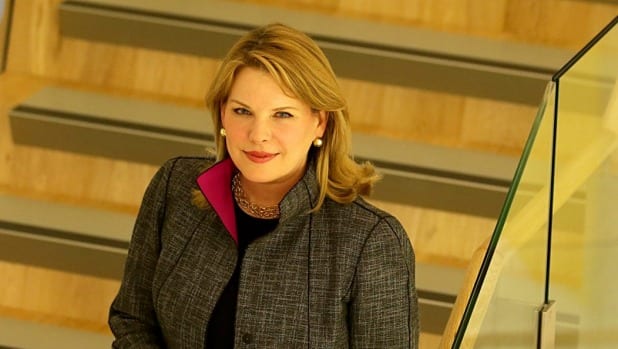
    ANZ Bank's wealth chief, Joyce Phillips, is departing the banking giant following a restructure of the $67 billion ...ANZ Bank’s wealth chief, Joyce Phillips

    “The simplified approach also provides the opportunity to focus on improving returns and capital efficiency from our insurance, superannuation and investments product business given higher regulatory capital requirements,” Mr Elliott said.

    The moves, foreshadowed by Street Talk, comes after ANZ appointed Google’s Australian boss, Maile Carnegie, to the newly created position of group executive for digital banking.

    Reporting to Mr Elliott, Ms Carnegie will have responsibility for digital projects, innovation and “strategic relationships” with the fintech sector that is seeking to challenge the power of the big four banks.

    Mr Elliott said the wealth division had achieved a “significant amount” under Ms Phillips’ watch since it was formed in 2012.

    ANZ’s global wealth arm posted a net profit of $601 million during the last financial year – an 11 per cent increase from 2014. The division contributed less than 10 per cent of ANZ’s profits.

    In an internal company interview, Mr Elliott said the bank wanted to “really maximise” the 10 per cent of group capital that was currently locked in the wealth division.

    “It is going to be material in the terms of the impact on the wealth business but for shareholders, given that it’s only 10 per cent, it will be a good thing but it’s unlikely that it’s going to be a dramatic outcome for shareholders,” he said.

    The restructure will see wealth effectively move into ANZ’s retail business. ANZ’s private bank division will report to Fred Ohlsson, group executive Australia and ANZ Financial Planning will transition to be part of the retail distribution arm.

    The group’s New Zealand wealth business will fall into the expanded retail, business banking and wealth division.

    Wealth in Asia will join Retail Asia, while the group’s remaining insurance, superannuation and investments activities in Australia will be rebranded Australia Wealth. Alexis George, ANZ’s managing director of insurance, will head the business and report to Mr Elliott.

    Sources said the break-up of the wealth division could be seen as a precursor to a potential sale in the next 12 months.

    ANZ has looked at stepping up a process of divestments. Last year, the bank sold its Esanda dealer finance unit to Macquarie Group for $8.2 billion. It is also reviewing its non-controlling interests in Asia.

    ANZ shares have fallen 35 per cent in the past 12 months to $23.07, compared with the 17 per cent fall of the benchmark S&P/ASX200.

  • Sales slide worst in 13 years for Hong Kong

    Sales slide worst in 13 years for Hong Kong

    Hong Kong retail sales fell 3.7 percent last year the worst in 13 years, including the 2.3 percent slide during the 2003 SARS epidemic with a gloomy outlook also forecast for this year.

    Retail sales fell to HK$475 billion, with volume slipping 0.3 percent, a second straight annual decline, the Census and Statistics Department said.

    In December, when the tourism board counted nearly 11 percent fewer visitors from a year earlier, total sales value fell 8.5 percent much worse than the 4.3 percent drop projected by analysts. The slump widened from 7.8 percent in November, and was the largest since January 2015.

    Sales of jewelry, watches, clocks and valuable gifts were among the hardest hit, slumping 17 percent in December and 16 percent for the full year. Clothing and department store sales also declined.

    Hong Kong Retail Management Association chairman Thomson Cheng said the situation, which fell back to the level seen in 2002, is “worrying.”

    Cheng expects a high single-digit slump in retail sales for the first quarter this year, and full-year retail sales to drop at least 3 percent.

    Erwan Rambourg, a retail analyst at HSBC in Hong Kong, said high-end watch and jewelry sellers suffered as mainland shoppers avoided lavish purchases, while falling currencies in other Asian nations reduced prices for goods bought elsewhere.

    Visitors from the mainland fell 16 percent in December from a year earlier, the tourism board said last week. Total visits to Hong Kong fell 2.5 percent last year to 59.3 million.

    ANZ noted visitor spending made up a large portion of more than 42 percent of retail sales in 2014.

    “Given the depreciation of the yuan and other currencies against the Hong Kong dollar, the tourism and retail sector will continue to face headwinds in 2016,” ANZ said.

    Retail sales were down on an annualized basis every month from March through December, according to Bloomberg data.

    Chow Tai Fook Jewellery Group (1929) said last month that sales during Lunar New Year would be challenging.

  • Singapore consumer confidence in Dec above long-term average

    Singapore consumer confidence in Dec above long-term average

    Although currently weak in personal finances, consumers in Singapore have expressed confidence over the next five years. This has led December’s level of consumer confidence to rise to levels above the long-term average, according to the results of the ANZ-Roy Morgan Singapore Consumer Confidence survey released on Wednesday.

    The ANZ-Roy Morgan Singapore Consumer Confidence for December rose to 126.5, above the long-term average of 123.7. This month’s index is also higher than last December’s 121.8.

    In terms of personal finances, a smaller proportion of respondents think they are better off financially, with 29 per cent (or down by 2 percentage points) saying their families are “better off” than a year ago. At the same time, 8 per cent (down 2 percentage points) said they are “worse off” financially.

    Respondents are still doubtful about near-term prospects, with an unchanged proportion, or 32 per cent, saying that their family will be “better off” financially in a year’s time. Eight per cent (up one percentage point) expect to be worse off.

    On economic conditions in Singapore going forward, exactly half of respondents (down 2 percentage points) expect Singapore to have “good times” financially over the next 12 months, compared to 11 per cent (unchanged) who expect “bad times”.

    Over the longer term, half (up 2 percentage points) of respondents expect Singapore to have “good times” financially during the next five years and 11 per cent (down 3 points) expect to fare badly.

    Shopping sentiment is still strong. Twenty-three per cent (up 4 points) of respondents say now is a good time to buy major household items, while 13 per cent (down a point) think it’s not worth it.


  • ANZ grows retail footprint in Asia

    ANZ grows retail footprint in Asia

    The branch has been established to service multinational and joint venture companies with a presence in Myanmar, as well as international companies looking to enter the country from ANZ’s network countries.

    ANZ said the Myanmar branch provides comprehensive solutions covering a full range of banking products including payments and cash management, electronic banking, lending, foreign exchange, and fund-based and non-fund-based trade finance.

    The branch also offers specialist banking services for natural resources, utilities and infrastructure, telecommunication, consumer goods and other global diversified sectors that are expanding in Myanmar.

    Andrew Géczy, ANZ’s chief executive for international and institutional banking, said the licence approval is the final step in the bank’s plans to deepen its presence in the Greater Mekong, following its recent branch opening in Thailand.

    “As one of the only international banks with a presence in all five Greater Mekong countries, ANZ is uniquely placed to play a leading role for customers wanting to enter Myanmar,” he said.

  • ANZ expands retail footprint in China

    ANZ expands retail footprint in China

    The Qingdao branch will cover the entire Shandong Province and will offer products and services for ANZ’s corporate customers.

    Mike Smith, chief executive of ANZ, said that with a significant and growing presence in China and a network across 34 markets in the Asia Pacific, Europe, the Middle East and America, the bank is uniquely placed to support its clients looking to grow in Qingdao and the Shandong Province.

    Mr Smith said Qingdao and Shandong Province have established long-term relationships with Australia, and highlighted “major potential” for further growth in bilateral trade and investment.

    “This includes opportunities in industries such as natural resources and agriculture, and the opportunities created through the China-Australia Free Trade Agreement,” he said.

    “With our new branch, we look forward to enhancing cooperation in the Qingdao and Shandong government, and to continuing to support the development of the local financial industry.”

    Huang Xiaoguang, chief executive of ANZ China and head of greater China, said opening the new branch in Qingdao is another step in continuing to grow the bank’s Chinese footprint.

    “As the only locally incorporated Australian bank in China, we will further enhance our capability to provide comprehensive solutions and services to support local enterprises to go abroad,” he said.

    ANZ announced in July the opening of a new branch in Gurgaon, India, to better service its business customers in the country’s north.

  • Banks in Singapore staring to offer higher fixed deposit rates

    Banks in Singapore staring to offer higher fixed deposit rates

    The upcoming Singapore Savings Bonds and stricter rules on how much capital banks must hold may be driving lenders to offer enticing promotional rates for fixed deposits.

    A shortage of funds on deposit available to banks for lending might also have prompted them to step up the competition for cash.

    Putting $25,000 into a 12-month fixed deposit now yields 1.5 per cent at OCBC and 1.45 per cent at Maybank, up from around 0.25 per cent to 0.7 per cent a year.

    Ms Kum Soek Ching, head of South-east Asia research at Credit Suisse, noted that banks could be offering promotions to prepare for the sale of the Singapore Savings Bonds (SSB), which could attract investments that would normally go into a fixed deposit.

    The bonds offer investors with a longer horizon a higher yield than fixed deposit rates, she said.

    Singapore Savings Bonds will start being issued in October and have a term of up to 10 years. They offer yields linked to long-term Singapore Government Securities, which have been between 2 and 3 per cent over the past 10 years.

    SSBs will start being issued in October and have a term of up to 10 years.

    They offer yields linked to long-term Singapore Government Securities, which have been between 2 and 3 per cent over the past 10 years.

    Dr Chua Hak Bin, head of emerging Asia economics at Bank of America Merrill Lynch, noted that the sale of SSBs would “intensify competition for retail deposits and pressure rates higher”.

    He added that the Government intends to issue up to $4 billion of bonds this year, an amount roughly equal to the increase in retail deposits over a six-month period.

    But some analysts believe SSBs will likely only marginally impact bank deposits in the short term.

    Mr Kumar Rachapudi, senior rates strategist for Asia at ANZ Research, said the amount of SSBs to be issued this year is small compared to total bank deposits, which are about $550 billion.

    The total bank deposits would at most be reduced by the amount of SSBs issued – only up to $4 billion – he added.

    Furthermore, retail investors are allowed to buy only up to $100,000 worth of SSBs, he said, adding: “There is no such cap on deposits.”

    Increasing liquidity requirements may also pressure foreign banks into raising rates, analysts here noted.

    Foreign banks deemed systemically important – such as Citi, HSBC, Maybank and Standard Chartered – will have to hold more high quality assets, like deposits, from January next year, noted Mr Chan.

    Ms Kum added that foreign banks could feel the pressure of increased deposit competition more, as they have a much smaller base of low-cost Singdollar deposits.

    However, local banks enjoy this larger base because of their home town advantage.

    The reduced pace of retail deposits, in the light of slower economic growth and a rate hike in the United States, would put further pressure on short-term rates, Dr Chua said.

    Local and foreign banks The Straits Times spoke to said their promotions were part of regular efforts to keep fixed deposit interest rates competitive.

    They also said they expected the SSBs to complement, not compete, against fixed deposits.

    Mr Matthew Colebrok, head of retail banking and wealth management at HSBC Singapore, said fixed deposits offered investors flexibility on terms while not limiting deposit amounts.

    They complemented saving bonds, which are used to meet long-term needs, he added.