Retail News CRM

Tag: authentic brands

  • Authentic Brands Group Unveils New APAC Headquarters in Vibrant Shanghai

    Authentic Brands Group Unveils New APAC Headquarters in Vibrant Shanghai

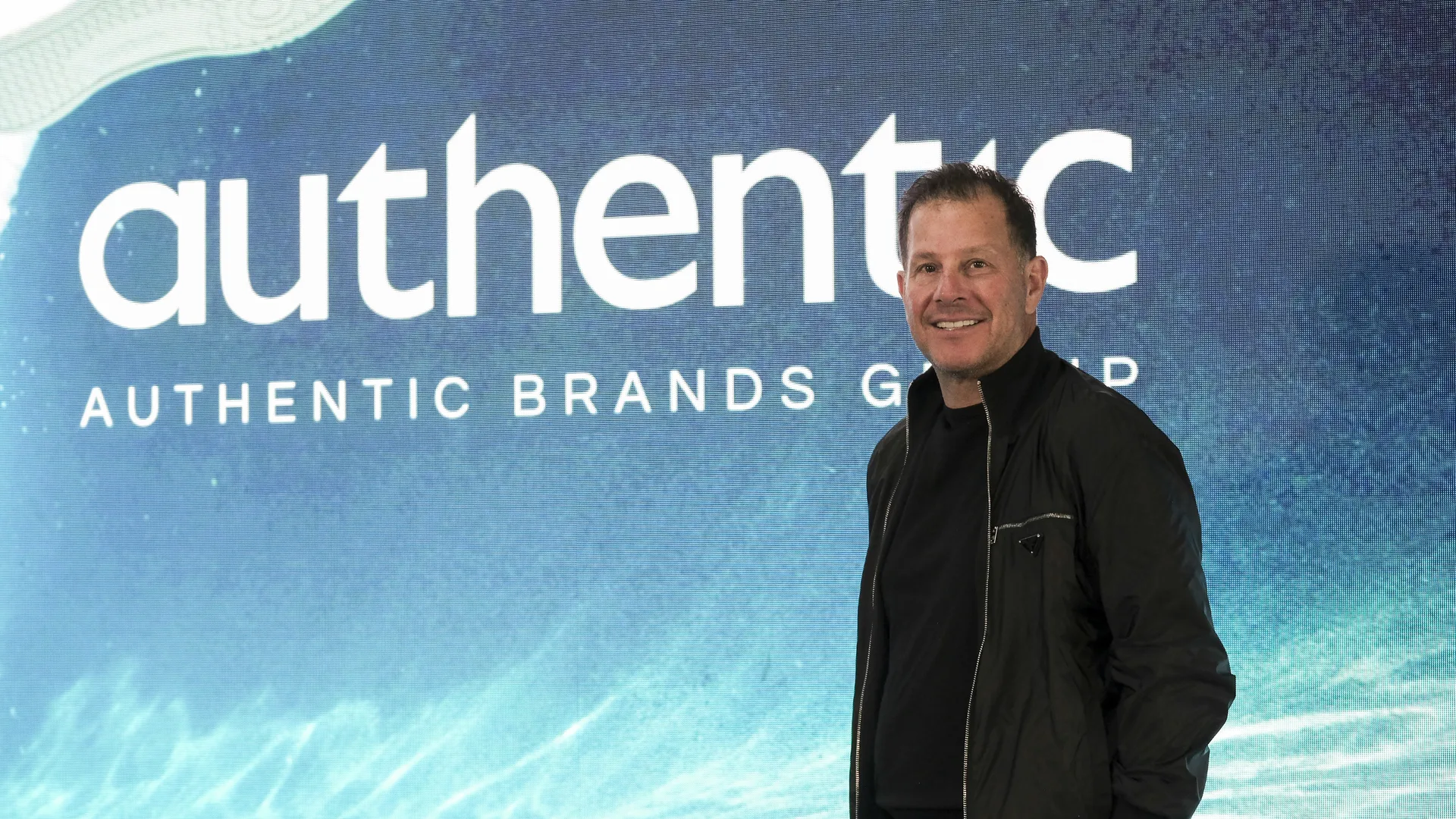
    Authentic Brands Group has made a major move in its global expansion strategy by opening its Asia-Pacific (APAC) headquarters in the vibrant city of Shanghai. This new development, covering nearly 2,000 square meters, is not just an office—it’s a hub of creativity and innovation.

    Bringing Brands to Life

    The Shanghai office boasts five immersive showrooms, a stylish Style Studio, an executive lounge, and specialized spaces designed for the diverse teams focusing on brand management, business development, PR, marketing, and entertainment. This environment is set to inspire collaboration and take Authentic’s regional initiatives to new heights.

    Top brass from the company, including CEO Jamie Salter and President Matt Maddox, were present for the launch, alongside APAC President Wesley Chu, EVP Josh Perlman, and global brand partner David Beckham. Their attendance highlights the importance of this new hub in cementing Authentic’s presence in the Asian market.

    A Global Vision, Local Focus

    The Shanghai office is strategically positioned to function as a regional center for brand management, licensing, and marketing throughout Greater China and the broader APAC region. This bold move follows the establishment of Authentic’s EMEA headquarters set to open in 2024, emphasizing the company’s commitment to localizing operations in critical markets.

    Founded in 2010, Authentic Brands Group has swiftly risen to prominence. The company manages a portfolio of over 50 lifestyle, sports, and entertainment brands, generating approximately USD 32 billion in annual global retail sales. Its impressive lineup features global superstars like David Beckham, Shaquille O’Neal, and a diverse array of brands including Reebok, Aéropostale, Quiksilver, Barneys New York, and Sports Illustrated.

    As they celebrate this milestone, one can only wonder what other surprises Authentic has in store for the bustling APAC market.

    Questions & Answers

    **What is the size of the new Shanghai office?**
    The Shanghai office spans nearly 2,000 square meters.

    Who were some key figures present at the office launch?
    Notable attendees included CEO Jamie Salter, President Matt Maddox, APAC President Wesley Chu, EVP Josh Perlman, and brand partner David Beckham.

    What does Authentic Brands Group aim to achieve with this new headquarters?
    The headquarters will serve as a regional hub, enhancing brand management, licensing, and business development in Greater China and the wider APAC region.
  • Adidas sells Reebok to Authentic Brands

    Adidas sells Reebok to Authentic Brands

    Authentic Brands has cemented its position as a major player in American retail after what one analyst described as a “massive acquisition” – the successful $2.456 billion bid for Reebok.

    Adidas confirmed the sale overnight after six months of negotiations with prospective bidders.

    Neil Saunders, MD of GlobalData, said Authentic Brands has proven its ability to turn around struggling brands like Aéropostale and so it will be confident that it can achieve a similar result with Reebok.

    But he warned the new owner needs to take a different approach to ensure Reebok’s future success.

    “If, under Authentic Brands, Reebok focuses less on competing with Nike and more on developing a credible brand that can be offered via its various stores and other third-party retailers it should be able to build sales. However, the market remains extremely competitive so coming up with a differentiated offer that has clear customer focus and a strong distribution strategy will be key to future success.”

    Reports emerged in May that Authentic had lodged a bid for Reebok. At the time the New York Post said the $1 billion fell far short of the $3.8 billion Adidas paid for Reebok five years ago and the $2.4 billion Adidas was thought to be seeking.

    Adidas CEO Kasper Rorsted said he believed the change in ownership would position the brand well for long-term success.

    “As for Adidas, we will continue to focus our efforts on executing our ‘Own the Game’ strategy that will enable us to grow in an attractive industry, gain market share, and create sustainable value for all of our stakeholders,” he said.

    Adidas acquired Reebok back in 2006. Saunders said the German company originally saw it as a vehicle with which to take on the might of Nike, especially in the US.

    “While Adidas did manage to restore Reebok to profitability it was far less successful in building a brand that was able to steal share and capture the hearts and minds of consumers. Part of the issue was a lack of clarity around what Adidas wanted Reebok to be. As a result, it was neither seen as the go-to brand for sporting professionals nor for those looking for athleisure fashion and style,” said Saunders.

    Adidas’ sale of Reebok for less than it paid for it – and after years of difficulty and disappointment – underlines the degree to which the brand’s equity has been eroded, he said.

    “The decision to sell should not solely be chalked up to the pandemic. Indeed, the footwear and sports apparel market has performed extremely well over the past 18 or so months.

    “However, the market is becoming much more competitive, with Nike and others doubling down on direct-to-consumer sales, brands like Lululemon eating up large slices of growth, and retailers launching a multitude of sporting own labels,” said Saunders.

    Jamie Salter, founder, chairman and CEO of Authentic Brands Group described it as “an honour” to be carrying Reebok’s legacy forward.

    “This is an important milestone for ABG, and we are committed to preserving Reebok’s integrity, innovation, and values – including its presence in bricks and mortar. We look forward to working closely with the Reebok team to build on the brand’s success.”

    The closing of the transaction is subject to customary closing conditions and is expected to occur in the first quarter of next year. Adidas intends to share the majority of the cash proceeds from the sale with its shareholders.

    When Adidas bought Reebok in 2006, the brand came along with the Rockport, CCM Hockey and Greg Norman brands, which were subsequently divested for €400 million (US$470 million at today’s exchange rate).

    In 2016 Reebok initiated a turnaround plan called ‘Muscle Up’ which saw the label significantly improve its growth and profitability prospects, according to Adidas.

    In March of this year, Adidas unveiled its 2025 ‘Own the Game’ strategy designed to significantly increase sales and profitability and build market share. As part of the process of developing that strategy, the company assessed options for Reebok, which in February led the company to opt to divest Reebok, rather than dilute its focus across two brands.