Retail News CRM

Tag: bad debt

  • China Everbright Bank Faces Rising Threat from New Bad Loan Formation

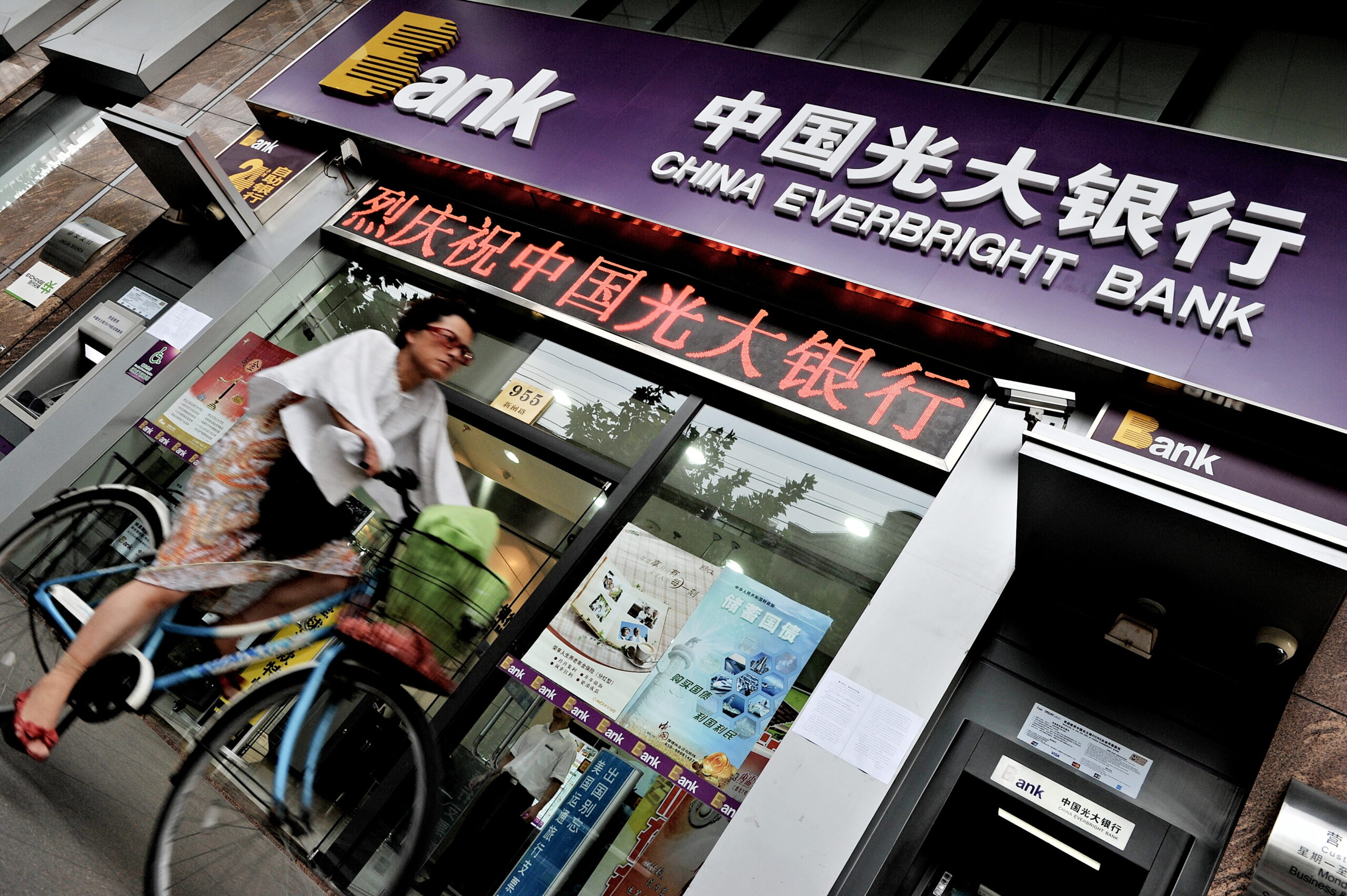
    China Everbright Bank Faces Rising Threat from New Bad Loan Formation

    China Everbright Bank (CEB) is navigating a complex landscape, facing the challenge of potential new nonperforming loans (NPLs), but recent assessments indicate that its financial health remains robust. According to Moody’s Ratings, the bank has built adequate buffers, with reserves covering a formidable 174.4% of its NPLs, ensuring a steady foundation as it maneuvers through changing economic tides.

    As the country transitions economically, CEB grapples with unseasoned risks, particularly in financing that shift along with evolving nonlending credit challenges stemming from its investment portfolio. Despite these hurdles, Moody’s analysis suggests that CEB can maintain its asset quality, capitalisation, profitability, and liquidity in the upcoming 12 to 18 months.

    Shifts in Loan Growth Trends

    In recent months, overall loan growth has experienced a slowdown, dropping to 3.9% in 2024 from 6% the previous year. However, the bank has seen a notable surge in specific areas, with green loans skyrocketing by 41% and inclusive financing loans rising by 15%. This shift highlights a pivot towards sustainable and responsible banking, setting the stage for a future where eco-conscious lending becomes a norm—perhaps enough to make even Mother Nature smile.

    Moody’s forecast remains optimistic regarding the bank’s asset quality over the next year and a half. Their analysis attributes this stability to CEB’s measured growth strategy and the significant buffers it has established in anticipation of market fluctuations. As of March 31, 2025, the NPL ratio has held steady at 1.25%, marking four consecutive years of stability.

    Robust Capitalisation Prospects

    Looking ahead, CEB’s capitalisation is projected to remain sufficient through 2026, bolstered by subdued asset growth. With profitability, gauged by return on average assets (ROAA), anticipated to stabilize around 0.6% over the next 12 to 18 months, the bank appears to be on solid ground. While a narrowing net interest margin (NIM) could pose challenges, the decline in deposit costs is likely to alleviate some pressure, supporting net interest income, which currently constitutes 71.3% of total revenues.

    Questions & Answers

    What is the current status of China Everbright Bank’s nonperforming loans?
    China Everbright Bank has reserves that cover 174.4% of its nonperforming loans, and the NPL ratio has remained stable at 1.25% for the past four years.

    How has loan growth changed at CEB recently?
    Overall loan growth has slowed to 3.9% in 2024 from 6% in 2023, but green loans and inclusive financing loans have seen significant increases of 41% and 15%, respectively.

    What does Moody’s predict for CEB’s financial stability moving forward?
    Moody’s expects that CEB will maintain adequate asset quality, capitalisation, profitability, and liquidity over the next 12 to 18 months, aided by a careful growth strategy and existing financial buffers.

  • Indonesian Fintech Launches First Debt Services in Malaysia

    Indonesian Fintech Launches First Debt Services in Malaysia

    A fintech specialized in solving debt problems of consumers and business owners has launched its services in Malaysia, a country whose total overdue consumer loans is second highest in Southeast Asia.

    Indonesian Fintech amalan International announced on Wednesday that it has started operations in Malaysia, expanding its footprints in Indonesia and Singapore. In Malaysia, the total balance of overdue or almost overdue consumer loans is estimated to be $15 billion, the second highest in Southeast Asia.

    «In many cases, amalan is able to reduce the outstanding balance and/or the monthly installments by 50 to 90 percent in Indonesia – this would be also our target for our Malaysian clients. We want to offer a fresh start to our clients so that they can build a better financial future,» says amalan’s founder and CEO, Arne Hartmann in a statement to the media.

    amalan says that its key differentiator lies in working for borrowers to find the best solution with their lenders. As a social enterprise, amalan does not ask for upfront fees and instead uses a success fee model where the borrower only needs to pay after a restructuring plan has been agreed. The amount of the success fee is based on the savings generated through the restructuring.

    So far, the fintech said it has restructured more than 1,000 loans with all major banks in Indonesia and saved its clients more than $800,000 in the process.

    For each borrower, a restructuring plan is generated that takes into account all of the borrower’s loans to then reduce the debt balance and the monthly installments to an affordable level. These debt management programs use proprietary data and technology to get the borrowers out of debt faster, paying less.

    amlan Indonesia was selected as one of the 30 best start-ups in MaGIC (Malaysian Global Innovation & Creativity Center), a business accelerator program of the Malaysian government.

  • Vietnamese banks report Jan-Sept rise in bad debts

    Vietnamese banks report Jan-Sept rise in bad debts

    Thirteen of 17 listed banks have seen their bad debts rise in the first 9 months of this year, according to banks’ financial reports. Experts blame this on recent credit growth, loose lending practices and accumulated old non-performing loans.

    Bad debts of VietinBank, the country’s second largest lender by assets, rose by 34.5 percent to nearly VND12.13 trillion ($519.82 million) in the first 9 months of this year.

    Group 5 debt, the worst category for potential loan losses, accounted for the largest proportion at 72 percent of the bank’s total bad debts. Group 5 debt was also the category with the biggest increase in the last 9 months, rising 68 percent to nearly VND8.74 trillion ($374.57 million).

    At BIDV, Vietnam’s biggest bank by assets, bad debts had totaled VND17 trillion ($728.65 million), a 21.1 percent increase over late 2017. However the bank’s bad debt ratio stood at 1.76 percent, well below the 3 percent danger limit set by the State Bank of Vietnam.

    The bad debt ratio of VPBank, meanwhile, rose to 4.7 percent by Q3, compared to 2017’s year-end figure of 3.39 percent. At the end of Q3, VPBank’s bad debt had increased by 52 percent compared to the beginning of the year, reaching VND9.4 trillion ($402.9 million)

    At Techcombank, total bad debt rose 33 percent between January and September, with Group 5 bad debt rising by 31 percent. Overall, the bad debt ratio on the bank’s loans rose to 2.05 percent from 1.61 percent at the beginning of the year. The bank’s bad debt is currently at VND3.43 trillion ($146.82 million).

    trillion VNDVietnamese banks’ bad debtas of September 201812.112.117179.49.43.43.4VietinbankBIDVVPBankTechcombank05101520BIDV● Bad debt: 17

    Banking expert Nguyen Tri Hieu said that the increase in bad debt was related to credit growth. New bad debt rises as banks increase lending and adopt looser lending practices, he said.

    The country’s credit growth in the first nine months of this year was 9.52 percent.

    Pham Hong Hai, CEO of HSBC Vietnam, said that from 2019 onwards, bad debt may re-emerge as a problem for banks after the recent credit growth and instability in global financial markets.

    State Bank of Vietnam Governor Le Minh Hung said recently that bad debts and potential bad debts of the sector amounted to 8.61 percent of total credit by the end of September.

    Vietnam’s banking sector posted an estimated 18.17 percent credit growth in 2017, according to the Ministry of Finance. It has targeted a credit growth of 17 percent this year.

  • Bankrupt US retail giant Sears owes Vietnamese firm $4 million

    Bankrupt US retail giant Sears owes Vietnamese firm $4 million

    Sears, a U.S. retail titan that has filed for bankruptcy, owes a Vietnamese textile company upwards of $4 million. Sears Holdings filed for bankruptcy on October 15 after failing to make a $134 million debt payment tranche. Its subsidiaries, Sears, Roebuck and Kmart are partners of Vietnamese textile firm Thanh Cong, contributing about 7 percent to the textile firm’s revenue every year.

    Last year, Sears contributed VND220 billion ($9.38 million) to Thanh Cong’s revenues of VND3.2 trillion ($136.5 million). Sears remaining debt to Thanh Cong is VND95 billion ($4 million), or 3 percent of the textile firm’s total assets, according to Vietnamese company’s  third quarter report.

    Thanh Cong CEO Lee Eun Hong said that his company was seeking to participate in the process and retrieve its money.

    The hearing is scheduled for November 15.

    Thanh Cong Textiles, established in 1967, has reported accumulated revenues of VND2.82 trillion ($120.3 million) in the first nine months of this year, up 15 percent year-on-year.

    Exports account for 88 percent of the firm’s revenue.

    The bankruptcy filing by Sears follows a decade of revenue declines, hundreds of store closures, and years of deals by billionaire Eddie Lampert in an attempt to turn around the company he acquired in 2005 for $11 billion.

  • Vietnam bank loans up 6.16 pct in 5 months

    Vietnam bank loans up 6.16 pct in 5 months

    Bad debts accounted for 2.18 percent of total lending at the end of the first quarter of 2017.

    Vietnamese banks’ total loans at the end of May were 6.16 percent larger than at the end of 2017, the State Bank of Vietnam said on Monday.

    Bad debts accounted for 2.18 percent of total lending at the end of the first quarter, it said in a statement.

    Vietnam aims to keep toxic debts ratio under 3 percent of total loans, while the central bank has said it targets credit growth at 17 percent this year.

  • Most banks in Vietnam expect profits up, bad debts stable this year

    Most banks in Vietnam expect profits up, bad debts stable this year

    Bad debt in Q2 and in the whole of this year would stay unchanged or dip slightly from Q1. About 90 percent of financial institutions operating in Vietnam are expected to reap higher pre-tax profit in 2017, while they could control or reduce bad debts this year, a State Bank of Vietnam (SBV) survey has found.

    Most of the respondents in the survey, conducted between February 25 and March 9, expected their bad debt to loan ratio in the second quarter and for the whole of 2017 would stay unchanged or below that in the first three months.

    Based on SBV data, bad debts in Vietnamese banks, mostly incurred due to a slowdown in the country’s real estate market in the early 2010s, have been cut to 2.46 percent of loans at the end of November, 2016, from 4.83 percent in December 2014, one year after it set up an institution to deal with toxic loans, the Vietnam Asset Management Corp.

    The survey on business trends for the April-June period, conducted by SBV’s Monetary Forecasting and Statistics Department, has targeted all Vietnamese banks and foreign bank branches in the country and has a response rate of nearly 90 percent.

    Banks expected the annual credit growth to slow to 17.23 percent this year, from the expansion of 18.25 percent in 2016, while deposits in 2017 could grow 16.23 percent from last year, below the 16.76 percent expectation in the December 2016 survey, the SBV said.

    Half of the lenders would keep their fees unchanged for the whole of 2017, while 20 percent of them said they planned slight decrease and another 30 percent said they expected a small rise.

    Banks expressed confidence in the government’s effort to improve business climate and three quarters of the surveyed institutions look forward to a better business situation in the second quarter, while eight in 10 of those believe they can achieve better results in the whole year.