Retail News CRM

Tag: beat

  • Huawei Defies U.S. Sanctions: Unveils Harmonyos And New 5g Chipset For Flagship Phones

    Huawei Defies U.S. Sanctions: Unveils Harmonyos And New 5g Chipset For Flagship Phones

    Back in 2012, concerns about national security led the U.S. House of Representatives’ Intelligence Committee to label tech giants Huawei and ZTE as potential threats. These fears stemmed from allegations that Huawei was spying on U.S. consumers and corporations, though Huawei consistently denied these claims. By 2019, Huawei was added to the U.S. Entity List.

    Huawei’s Position on the Entity List

    The Entity List is maintained by the U.S. Department of Commerce’s Bureau of Industry and Security (BIS). It stipulates that U.S. firms must obtain a government license before exporting any “U.S.-origin” technology to a listed company. This move effectively cut Huawei off from its U.S.-based supply chain, including tech giant Google. Consequently, Huawei could no longer use Google’s proprietary version of Android, though it managed to pre-install the open-source version of Android on its handsets.

    However, this version of Android does not offer the Play Store, nor does it include the default Android apps developed by Google.

    U.S. Restrictions and Huawei’s Response

    A year after being added to the Entity List, the U.S. Commerce Department revised the Foreign-Produced Direct Product Rule. This amendment enabled it to stop Huawei from obtaining any advanced chips produced by a foundry using American-made equipment. Many speculated that this could spell the end for Huawei. Although the company led global smartphone shipments during the second quarter of 2020, surpassing Apple and Samsung, it began to witness a decline by the fourth quarter of the same year.

    In response to these challenges, Huawei needed to adapt. As Tao Jingwen, the company’s president of quality, business process, and information technology, stated at an event in Guiyang, Huawei “built an ecosystem entirely independent of the United States.” Its first significant step was the creation of the HarmonyOS operating system, which includes the company’s App Gallery app store.

    The Emergence of HarmonyOS and Huawei Mobile Services

    By 2021, Huawei had launched its own ecosystem, Huawei Mobile Services. Despite the loss of Google’s support, Huawei appeared to be managing well internally. However, outside of China, particularly in Europe, the absence of Google was keenly felt. The company also needed to find a way to access 5G chips. After depleting its inventory of 5G Kirin application processors, U.S. chip designer Qualcomm obtained a license from the U.S. Commerce Department to supply application processors to Huawei. However, these chips were modified to work with 4G signals, not 5G.

    Overcoming Sanctions: Huawei Mate 60 Pro

    Despite the challenges, Huawei continued to innovate. The tech world was taken by surprise in August 2023 when Huawei introduced the Huawei Mate 60 Pro. For the first time since 2020, a Huawei flagship phone was powered by an application processor designed by Huawei itself, the Kirin 9000S. Built by China’s largest foundry SMIC using its 7nm process node, the chipset reintroduced 5G support to a Huawei flagship phone for the first time since the Mate 40 series in 2020.

    Questions & Answers

    Why was Huawei added to the U.S. Entity List?
    Huawei was added to the Entity List due to concerns about national security. It was alleged that the company was spying on U.S. consumers and corporations.

    What impact did being on the Entity List have on Huawei?
    Being on the Entity List cut Huawei off from its U.S.-based supply chain, including Google. This meant that Huawei could no longer use Google’s proprietary version of Android.

    How did Huawei respond to the U.S. sanctions?
    Huawei developed its own operating system, HarmonyOS, and created an ecosystem independent of the United States. It also managed to design its own application processor for its flagship phone, reintroducing 5G support.

  • Sea Ltd Surges Past Market Projections: Shopee Demand And Gaming Division Fuel Growth

    Sea Ltd Surges Past Market Projections: Shopee Demand And Gaming Division Fuel Growth

    Sea Ltd, a formidable player in the digital commerce and gaming industries, exceeded market projections for quarterly revenue. The considerable surge was fueled by high demand for its Shopee e-commerce platform and its gaming division, leading to a near 19 percent increase in the company’s US-listed shares during initial trading hours.

    Phenomenal Growth for Shopee

    Shopee, a favorite among online shoppers in Southeast Asia and Taiwan, has been experiencing a significant increase in consumer demand. This is largely attributed to the company’s commitment to providing competitive prices and enhancing the overall customer experience. The company has focused its efforts to boost user recruitment, traffic, and engagement on the Shopee app, employing innovative strategies such as incorporating social aspects like live-streaming features and mini-games that offer redeemable coins and prizes.

    The revenue from Sea’s e-commerce division, which became profitable last year, saw an impressive 33.7 percent increase, amounting to US$3.8 billion for the second quarter. The gross merchandise value, which reflects the total value of products sold on the platform, increased by 28 percent, reaching $29.8 billion. The company’s executives expressed optimism over Shopee’s annual GMV growth, stating it would surpass the company’s initial forecast of a 20 percent increase.

    Strong Performance across Divisions

    Sea’s CEO, Forrest Li, expressed satisfaction with the company’s performance, stating, “All three of our businesses have delivered robust, healthy growth, giving us greater confidence of delivering another great year.”

    The company’s digital entertainment segment, which includes the popular mobile shooter game “Free Fire” developed and published by Garena, saw a 28.4 percent increase in revenue, reaching $559.1 million. Garena reported a 17.8 percent increase in its paying user base and a 23 percent rise in bookings for the second quarter.

    The company’s third division, the digital financial products arm which includes the Monee app offering services like payment processing and credit products, reported a significant 70 percent rise in revenue, totaling $882.8 million.

    Exceeding Expectations

    Based in Singapore, Sea Ltd recorded a 38.2 percent increase in its overall second-quarter revenue, reaching $5.26 billion, surpassing estimates of $4.98 billion.

    Questions & Answers

    What contributed to the improved performance of Shopee?
    The company’s concerted efforts to offer competitive pricing and improve the customer experience played a significant role in this. Introducing social elements like live-streaming and mini-games also helped enhance user engagement.

    What is the significance of the gross merchandise value?
    The gross merchandise value is a measure of the total value of products sold on the platform. It is an essential metric for e-commerce platforms as it reflects the volume of transactions.

    Which of Sea Ltd’s business segments showed the most significant growth?
    While all segments witnessed considerable growth, the digital financial products arm recorded the most significant rise in revenue at 70 percent.

  • Grab Holdings Surpasses Wall Street Expectations With Multi-service Superapp Strategy Amid Global Economic Uncertainties

    Grab Holdings Surpasses Wall Street Expectations With Multi-service Superapp Strategy Amid Global Economic Uncertainties

    Grab Holdings, a Singapore-based tech company, surpassed Wall Street’s revenue expectations in Q2, with a surge in consumption across its ride-hailing and food delivery services, seemingly unaffected by global economic uncertainties.

    Superapp Drive Pays Off

    The company’s robust growth can be attributed to its strategic efforts to transform its platform into a multi-functional, superapp. This expansive integration of various digital services, including ride-hailing, food, and grocery delivery, continues to entice a growing number of users, who are increasingly investing in the offered subscription plans.

    Despite the unease in global economic stability induced by ongoing US trade negotiations, resulting in worries over tariffs and heightened costs, particularly in Southeast Asia, the Singaporean economy remains robust. In Q2, it witnessed a growth rate of 4.3%, successfully averting a technical recession.

    According to Peter Oey, Grab’s CFO, the company’s growth strategy focuses on affordability, which not only encourages growth but also serves as a protective shield against global macroeconomic factors. In a bid to attract price-conscious consumers, the company has been simultaneously working on expanding its driver base to keep up with the rising user demand.

    Financial Performance

    Grab reported an impressive revenue of US$819 million for Q2, surpassing analyst predictions of $811.3 million. The company attributed a significant portion of this success to its robust performance in Indonesia. Previously identified as a market with potential for deeper penetration, the company is now striving to capitalize on the country’s vast population and expand its market share.

    According to Oey, Indonesia has proved to be a profitable market for the company, prompting increased investment efforts in the region.

    Market Consolidation

    The online service market in Southeast Asia is witnessing a phase of consolidation, with larger entities acquiring smaller firms to diversify their service offerings. Though rumors of Grab’s potential acquisition of smaller Indonesian competitor GoTo were circulating earlier this year, Oey confirmed that no such discussions are underway.

    The company’s Q2 financials indicate a remarkable turnaround, with a profit of $20 million, in stark contrast to a $68 million loss in the same period the previous year.

    Questions & Answers

    How has Grab Holdings managed to exceed Wall Street’s revenue expectations in Q2?
    Grab Holdings has successfully surpassed revenue projections by transforming its platform into a superapp, integrating various digital services and appealing to a growing number of users.

    How is the company responding to global economic uncertainties?
    Grab Holdings is focusing on affordability as a protective shield against global macroeconomic factors. It is also endeavoring to keep up with increasing user demand by expanding its driver base.

    What is Grab Holdings’ strategy for the Indonesian market?
    Considering the robust performance and profitability in Indonesia, Grab Holdings is aiming to capitalize on the country’s vast population and increase its market share by investing more in the region.

  • Steady consumer demand helps JD beat quarterly revenue estimates

    Steady consumer demand helps JD beat quarterly revenue estimates

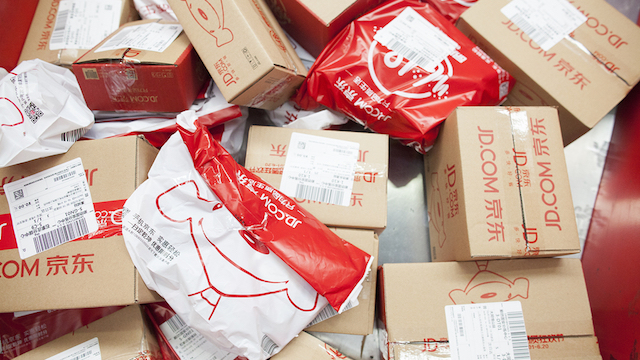
    Chinese e-commerce giant JD exceeded market expectations for its quarterly earnings this Tuesday, reflecting resilient demand despite deteriorating conditions domestically and abroad. This feat indicates steady consumption patterns even amidst the imposition of U.S. tariffs, lingering economic fragility, and a dampened consumer sentiment.

    Over the past few years, consumer demand in China has encountered numerous obstacles. The ongoing crisis in the property sector and high unemployment rates have hindered the country’s full recovery from the Covid-19 pandemic’s impact.

    Nevertheless, e-commerce companies like JD and Alibaba, which is set to report its quarterly results this Thursday, have adopted a proactive approach. They have implemented significant discounts and price reductions on products to attract customers, simultaneously relying on government subsidies to stimulate consumption.

    This strategy has proven beneficial for JD, a leading retailer of home appliances in China, even as consumer sentiment was dented by the trade tensions between the U.S. and China. Additionally, retail sales growth in China accelerated in January and February.

    For the quarter ending on March 31, JD reported a total revenue of 301.08 billion yuan (US$41.82 billion), marking an increase of 15.8% compared to the same period last year. This figure surpassed analysts’ estimate of 289.22 billion yuan.

    Shares of JD listed in the U.S. experienced an approximate 3% upswing in early trading.

    The forthcoming 618 shopping festival, due to take place on June 18, is expected to provide insights into the extent of the country’s consumer demand recovery. This online shopping event, introduced by JD, has been extending in duration over the years. This year, Taobao commenced the 618 pre-sale on Tuesday. Simultaneously, JD, whose official start date for 618 is May 31, launched an event known as the “Heartbeat Shopping Festival.”

    Jacob Cooke, CEO of e-commerce consultancy WPIC Marketing + Technologies, expressed optimism about sales growth during this year’s 618 festival. He cited burgeoning consumer confidence in China, robust retail growth in recent months, and high travel numbers during the May Day and Qingming Festival.

    On Tuesday, the State Administration for Market Regulation, the country’s top market regulator, announced that it has summoned various e-commerce platforms, including JD, Meituan, and Alibaba’s Ele.me. The regulator has urged these platforms to comply with laws and regulations and to maintain fair and orderly competition.

    Although Meituan and Ele.me dominate food delivery services in China, JD’s prominent entry into the sector in February has heightened competition in the industry.

    Questions & Answers

    **What is the significance of JD’s recent quarterly earnings?**
    JD’s recent earnings surpassed market expectations, indicating resilient consumer demand despite various economic challenges. This performance suggests that JD’s strategies to attract customers and stimulate consumption are effective.

    **What is the 618 shopping festival?**
    The 618 shopping festival is an online shopping event in China, initiated by JD. The festival, which takes place on June 18, has increasingly extended in duration over the years. It serves as a barometer to evaluate the recovery of consumer demand in the country.

    **What is the current state of competition in China’s food delivery market?**
    The food delivery market in China is primarily dominated by Meituan and Alibaba’s Ele.me. However, JD’s recent entry into this sector has intensified competition.