Retail News CRM

Tag: behaviour

  • Chinese tourist shopping myths proven wrong

    Chinese tourist shopping myths proven wrong

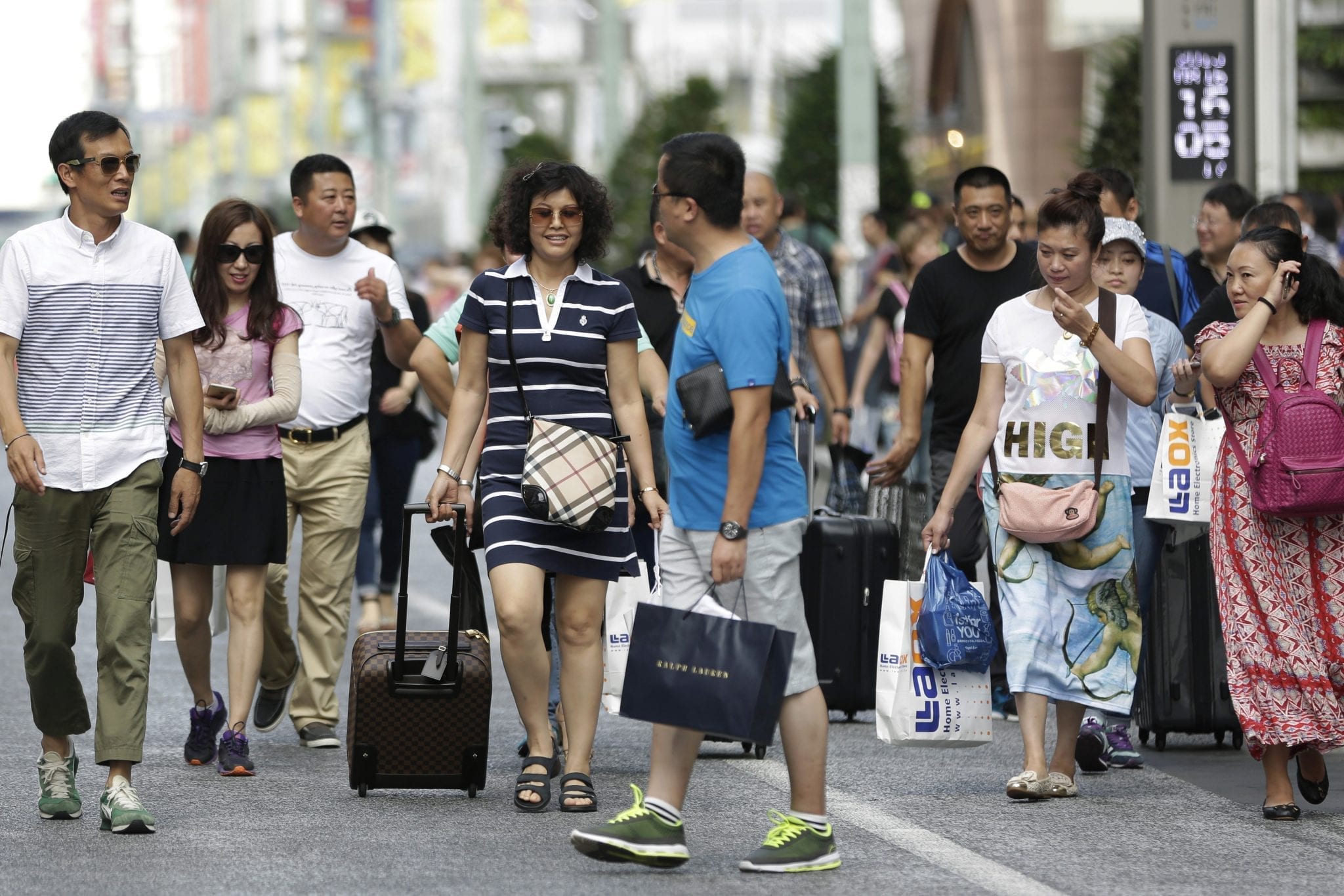
    Myths about the behaviour and spending patterns of Chinese tourists abroad have been debunked by a new report.

    A study by Oliver Wyman seeks to dispel common misconceptions about outbound Chinese travelers, illustrating how global destinations can sharpen their appeal to meet their changing needs and expectations.

    “The Changing Face of the Chinese Traveller” may help global travel destinations, such as Hong Kong, sharpen their appeal to meet travellers’ changing expectations, explains Hunter Williams, Oliver Wyman partner and author of the report.

    Myths discussed include “They go abroad only to shop,” “They spend indiscriminately,” “They are always in groups”, “Independent travelers are quickly replacing groups,” and “Chinese travelers are more trouble than they are worth.”

    Myth 1: “They go abroad only to shop”.

    Not true. While nearly 100 per cent of travellers shopped during their trip, fewer than 15 per cent of Chinese travellers surveyed cited shopping as the main reason for their trip, in contrast to 63 per cent who specified sightseeing as their top motivation. This impacts the ways in which destinations around the world appeal to this audience.

    “In Hong Kong, where slowing growth in Chinese travellers and their spending has seen retail sales fall 12.5 per cent in the first quarter of 2016, the city will need to become less dependent on shopping by Mainland Chinese visitors and encourage spending on other activities,” said Williams. “Indeed the study reveals that Korea, now the most popular destination for Chinese travellers, is now the destination where shopping is the primary motivation for travel.

    Myth 2: “They spend indiscriminately”.

    Not entirely true. Relatively speaking, Chinese travellers do spend large sums while abroad. On average, they spend around US$3000 per person, roughly the equivalent of a month’s household income. It is also true that they spend a lot on shopping – approximately US$1200 – which may have helped to fuel the misconception that they spend indiscriminately. However, only around half of the spending is on themselves. More than 32 per cent is to purchase gifts for others, and 19 per cent is for resale back home.

    “Chinese travellers have sophisticated needs, so retailers need a segmented approach that emphasises unique value – it’s no longer enough to offer a blanket approach.”

    Myths 3 & 4: “They are always in groups” or “Independent travelers are quickly replacing groups”.

    Not true. Both the number of tour-group travellers and the number of independent travellers are on the rise, showing both individuals and groups will continue to be important traveller segments for some time to come. Independent travellers are not replacing group travellers, but are complementing them.

    “For example, Hong Kong and Macau rank close to the top for the percentage of independent trips, while Taiwan ranks close to the bottom,” says Williams. “At the same time, over the past few years group travellers have actually accounted for a larger share of all travellers dispelling the misconception that groups are gradually being replaced by individual travel.

    “However, The Chinese travellers surveyed considered tour operators to be the single least useful source of information, showing tour operator relationships are no longer enough.”

    Myth 5: “Chinese travelers are more trouble than they are worth”.

    Not true. As a result of cultural misunderstandings, Chinese tourists can often be misjudged. For example, there is no tipping culture in China and it is often socially acceptable to eat food on public transport. Explaining service charges upfront and the proper usage of facilities can reduce miscommunication. Similarly, rules, and penalties for breaking them (such as cleaning fees for smoking in non-smoking rooms), should be clearly communicated. Open two-way communication is the surest way to avoid misunderstanding, says Williams.

    “Today there is no such thing as the archetypal Chinese traveller as this group is complex and multi-faceted. If consumer facing businesses make broad generalisations and buy into the misconceptions, they will miss key opportunities. Businesses need a cohesive Chinese traveller strategy, where the realities of each region and destination must be considered separately.”

    Further findings

    The report, conducted among 1750 Chinese people who had travelled abroad in the past year, also revealed key travel habits. In retail, duty free captures more than one third of total shopping spend. Cosmetics are the most commonly purchased category, followed by alcohol. However, department stores and shopping malls are the most frequently visited channel. They still receive nearly one third of spend, with clothes, food and souvenirs being the most purchased categories.

    Hong Kong has tended to be the default first destination for Chinese travellers with watches and jewellery their most popular shopping category by some distance, with Sogo, Aeon and The Landmark being amongst the most popular retail players.

    • With offices in 50+ cities across 26 countries, Oliver Wyman is a global leader in management consulting that combines deep industry knowledge with specialised expertise in strategy, operations, risk management, and organisation transformation. Oliver Wyman is a wholly owned subsidiary of Marsh & McLennan.
  • Affluent Asians spending on status

    Affluent Asians spending on status

    Goods and experiences which provide “a sense of status, exclusivity and uniqueness” are key considerations when shopping for luxury items for Asia Pacific’s elite, according to the Visa Affluent Study 2015.

    In other words, affluent Asians are prepared to spend on status.

    According to the study, a significant percentage of Asia Pacific affluents describe themselves as “status seekers”, with more than one third of the affluent in China (38 per cent), Hong Kong (36 per cent) and Korea and Japan (31 per cent each) are motivated to purchase luxury goods to display their social standing. Affluent in India (29 per cent) and in Singapore (27 per cent) also report taking pleasure in the attention that luxury goods attract.

    “What drives Asia Pacific’s affluent in making luxury purchase decisions varies across the region, but the common factor is the search for unique products and services that give a sense of status and exclusivity,” said Ruben Salazar, VP, products with Visa Asia Pacific.

    “While quality remains important for most consumers, Asia Pacific’s affluent are continuously looking to go beyond quality guarantee to find that special product or experience that stands out from the crowd and that gives a sense of self-satisfaction.”

    Only the affluent from Indonesia and Australia described themselves as being more driven by other considerations, with almost a quarter of Indonesian affluent (23 per cent) surveyed also valuing quality alongside social status (24 per cent) and exclusivity (28 per cent).

    Some 500 respondents from each of Australia, China, Hong Kong, India, Indonesia, Japan, Singapore and South Korea were interviewed online and in face-to-face surveys for the study. Respondents have an average household income of US$73,000 per annum and are aged between 18 and 55 years old.

  • Gap narrows for Chinese brands

    Gap narrows for Chinese brands

    Chinese brands are closing the gap with international brands as consumers become more concerned about product quality rather than the origin of the brands, according to a latest study.

    As high as 67 percent of consumers said they favor domestic brands, consumer research firm Mintel said in a research report yesterday.

    The study covered 3,000 consumers aged between 20 and 49 in 10 cities.

    The domestic food and beverage brands have a strong following, with 42 percent of the respondents favoring them over foreign products compared with 25 percent that prefer imported snacks.

    For domestic ready-to-drink beverage brands, 44 percent of consumers prefer them against 27 percent that favor foreign products.

    Baby food is an exception with 45 percent of respondents saying they would choose international brands against only 31 percent who favor domestic products.

    “We’ve seen Chinese consumers becoming more value-driven, as they’re more likely to judge a product by its content and quality instead of checking whether it’s an international or domestic brand,” said Laural Gu, Mintel China’s senior lifestyle analyst.

    The study also found that 47 percent of the consumers were more willing to indulge themselves by paying for services instead of products.

  • Shopper confidence index exhibits fall in Might

    The buyer confidence index (CCI) dipped 1.29 factors to 91.64 in Might, whereas the inventory funding confidence sub-index noticed the most important fall, by 9.6 factors, based mostly on a report launched by the Nationwide Central College (中央大學, NCU) yesterday.

    Dachrahn Wu (吳大任), director of NCU’s Analysis Middle for Taiwan Financial Improvement, stated the arrogance for inventory funding tumbled largely as a result of the federal government tuned down this yr’s GDP progress forecast final week, and cash within the native inventory market had flown to China’s booming inventory market.

    The inventory funding confidence index registered at 100.1 factors.

    Simply final month, inventory funding confidence rose probably the most among the many six sub-indices, growing four.9 factors to succeed in all-time-high 109.70.

    Final month’s survey was carried out at a time when the inventory index was approaching the 10,000 mark, and when Beijing proposed a stock-connect platform between Taiwan and China. The prospects led to a rise in overseas capital and fueled investor confidence.

    Different Sub-indices Scores

    Beneath the CCI’s 200-point scale, an index that falls within the Zero-100 level zone displays pessimistic shopper confidence whereas a determine between 100 and 200 signifies optimism.

    Regarding the different indexes, the CCI for worth ranges and family finance climbed to 55.85 factors and 87.65 factors, respectively. The job market index stayed degree at 114.9.

    The CCI for home financial system and sturdy items purchases — principally actual property purchases — declined to 86.65 factors and 104.7 factors, respectively.

    J.P. Morgan’s Conflicting Discovering

    Whereas the native inventory market may need underperformed, buyers are nonetheless upbeat concerning the world financial system, based mostly on a report launched by J.P. Morgan lately.

    In accordance with J.P. Morgan’s report, the index for investor confidence reached 106.four within the second quarter, rising for the second consecutive quarter and reached the very best degree in three years.

    Though buyers are usually not assured concerning the native financial system, they confirmed nice optimism over the world financial system, believing it is going to end in wealth progress within the close to future, the survey discovered.

    Jerry Chu (邱亮士), an government from J.P. Morgan Asset Administration, stated the uncertainty relating to when the U.S. Fed will hike curiosity is definitely thought-about by buyers as a constructive.

    Different positives, in response to Chu, embrace larger profitability for corporations in Japan and Europe; a unfastened financial coverage in China that may increase enterprise incomes, which may then translate into greater wage ranges and better consumption.

    Main inventory markets within the globe have moved up prior to now three months. The Chinese language market soared almost 40 %, whereas Japan and European markets have surged about 10 %. The markets in Taiwan and the U.S. grew a comparatively low 5 %.

    Taiwan’s inventory market hit a brand new document final month, and the current retraction is taken into account by Chu as a traditional adjustment.

  • China brands favoured by domestic consumers in marketing, experts say

    China brands favoured by domestic consumers in marketing, experts say

    CHINESE brands are generally outperforming their multinational counterparts in terms of consumer preference as they’re quicker to catch up with latest media trends and bold with new marketing campaign formats, industry experts noted.

    “Chinese entrepreneurs and marketers have a better understanding of local consumers and are quick to adapt to new marketing trends and Chinese brands will enjoy a golden age in the next 10 years,” Tian Tao, deputy general manager of market research firm CTR China, told the China Insight Summit in Shanghai today.

    “Domestic brands are quicker to spot popular entertainment shows and they have a shorter decision making process than most multinational players, which gives them more opportunities to impress picky consumers,” general manager of CTR’s Media Intelligence unit Zhao Mei told Shanghai Daily.

    In the first quarter, almost all of the popular TV program sponsorship was dominated by domestic brands, according to CTR’s media monitoring data.

    Among the top 50 most frequently purchased consumer products of Chinese urban households, more than 30 of them are made by home grown manufacturers, according to data tracked by Kantar Worldpanel, CTR’s consumer research service.

    In the first quarter this year, total advertising expenditure calculated by published rate cards in China shrank 1.9 percent, with TV ad spending declining 2.9 percent from a year ago.

    Internet ad expenditure was the fastest growing segment, rising 33 percent from a year ago, while office building digital screen advertising added 16 percent and movie theaters’ video ads were up 31 percent.

    TV will stay play a major role in helping build a brand name and popular TV programs as well as some better performing regional TV stations are expected to enjoy a higher premium in the coming year, according to Zhao.