Tag: bernard arnault

  • LVMH Loses $167 Billion in Value as Chinese Shoppers Cut Handbag Spending

    LVMH Loses $167 Billion in Value as Chinese Shoppers Cut Handbag Spending

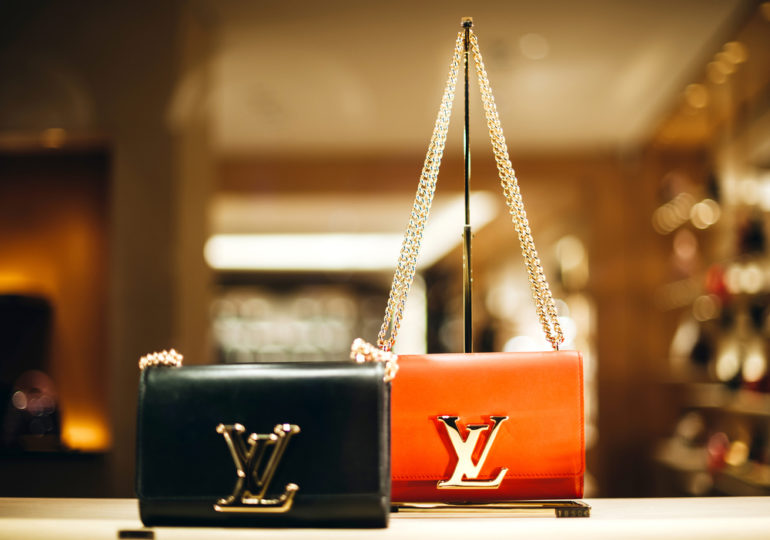
    LVMH has lost more than $167 billion in market value this year as Chinese consumers pull back from expensive handbags, cutting group valuation by more than half from its peak above $500 billion.

    The selloff exposes the conglomerate’s heavy concentration in a single division and a single region, with Asia excluding Japan generating 35 percent of Fashion and Leather Goods revenue in 2025.

    Fashion and Leather Goods accounts for roughly three-quarters of recurring operating profit across LVMH’s 75 brands. UBS estimates the flagship Louis Vuitton label alone generates more than half of divisional earnings. Chinese shoppers account for nearly a third of all fashion and leather sales, leaving group performance tightly bound to domestic sentiment in mainland China.

    Bernard Arnault, the 77-year-old chairman and chief executive whose family controls 65 percent of voting rights through Agache, faces a market where the pricing power of the past five years has stalled. Average luxury prices rose 54 percent between late 2019 and September 2024, according to HSBC estimates. While that strategy lifted group revenue from €54 billion in 2019 to €86 billion in 2023, shoppers in Asia are no longer absorbing further price increases for coated canvas and leather.

    Mainland luxury market contracts for two straight years

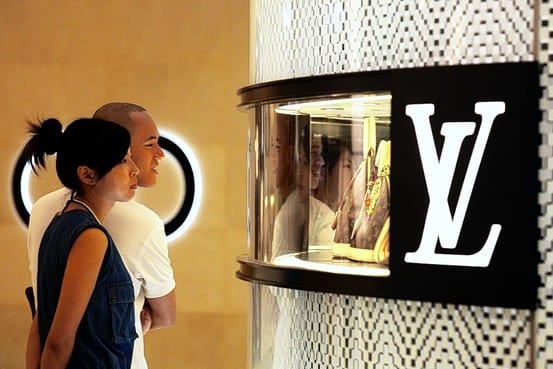
    China’s personal luxury goods market shrank between 18 percent and 20 percent in 2024, followed by an additional decline of 3 percent to 5 percent in 2025, according to Bain estimates. Leather goods suffered the steepest drops, falling between 8 percent and 11 percent last year. Real estate weakness and employment concerns have eroded consumer confidence, while local fashion labels have gained market share by emphasizing cultural relevance.

    Consumer budgets are shifting rather than disappearing entirely. A 2026 survey by Oliver Wyman found 37 percent of affluent Chinese consumers plan to increase spending on prestige beauty, compared with just 4 percent planning higher spending on leather goods. L’Oréal recorded 10 percent revenue growth for its Luxe division in China during its latest reported quarter, while Compagnie Financière Richemont reported a 14 percent sales rise at constant currency for jewellery brands Cartier and Van Cleef & Arpels in the year to March.

    Rivals test price cuts while Vuitton protects margins

    Rival luxury groups are responding with aggressive regional pricing adjustments. Gucci reduced prices by 20 percent to 30 percent across several handbag collections to recruit entry-level customers, while Chanel rolled out smooth-leather accessories positioned below its signature quilted lines. Chanel lifted first-half comparable sales by about 16 percent following the adjustments.

    LVMH has resisted broad price reductions, choosing instead to invest in store upgrades and creative turnover at Dior and Loro Piana. Bernstein calculations indicate a hypothetical €1,350 entry-level Vuitton bag could generate €440 million in incremental revenue and boost divisional unit volume by 5 percent, even if average selling prices drop 1.8 percent. For now, the group relies on North America to offset Asian weakness, with Jefferies forecasting 5 percent growth in US fashion sales against a 10 percent contraction across its Chinese customer base in the third quarter.

    Local missteps add friction in mainland malls

    Brand perception in China has faced additional scrutiny. A trademark dispute in which Louis Vuitton successfully sued Shenzhen-based drinks chain Molly Tea over a floral pattern triggered public backlash from state media and social network users, who argued the design stemmed from traditional Chinese heritage. Jefferies reported the controversy caused a measurable drag on Vuitton’s mainland store sales.

    Direct acquisitions of Western luxury houses offer little help because LVMH’s current revenue base is too large for mid-sized European brands to move group earnings. Competitors have turned to minority equity investments in local players: Kering took a minority holding in Shanghai-based ICICLE parent ICCF, while L’Oréal backed domestic Chinese fragrance companies To Summer and Documents to tap shifting consumer taste.

    Earnings multiple resets to five-year lows

    The structural shift follows five years of rapid expansion that ended late in 2024, when LVMH posted its first quarterly revenue contraction since 2020. Divisional sales in Fashion and Leather Goods dropped 1 percent in 2024 and slipped another 5 percent in 2025, breaking an operating margin run that had peaked at 26.5 percent.

    Equity markets have adjusted valuations accordingly. LVMH trades at roughly 16 times forward earnings, down from 24 times at the start of the year, as institutional investors wait for third-quarter earnings figures to determine whether Chinese cluster sales can stabilize before year-end.
  • LVMH chief Bernard Arnault to visit China in June

    LVMH chief Bernard Arnault to visit China in June

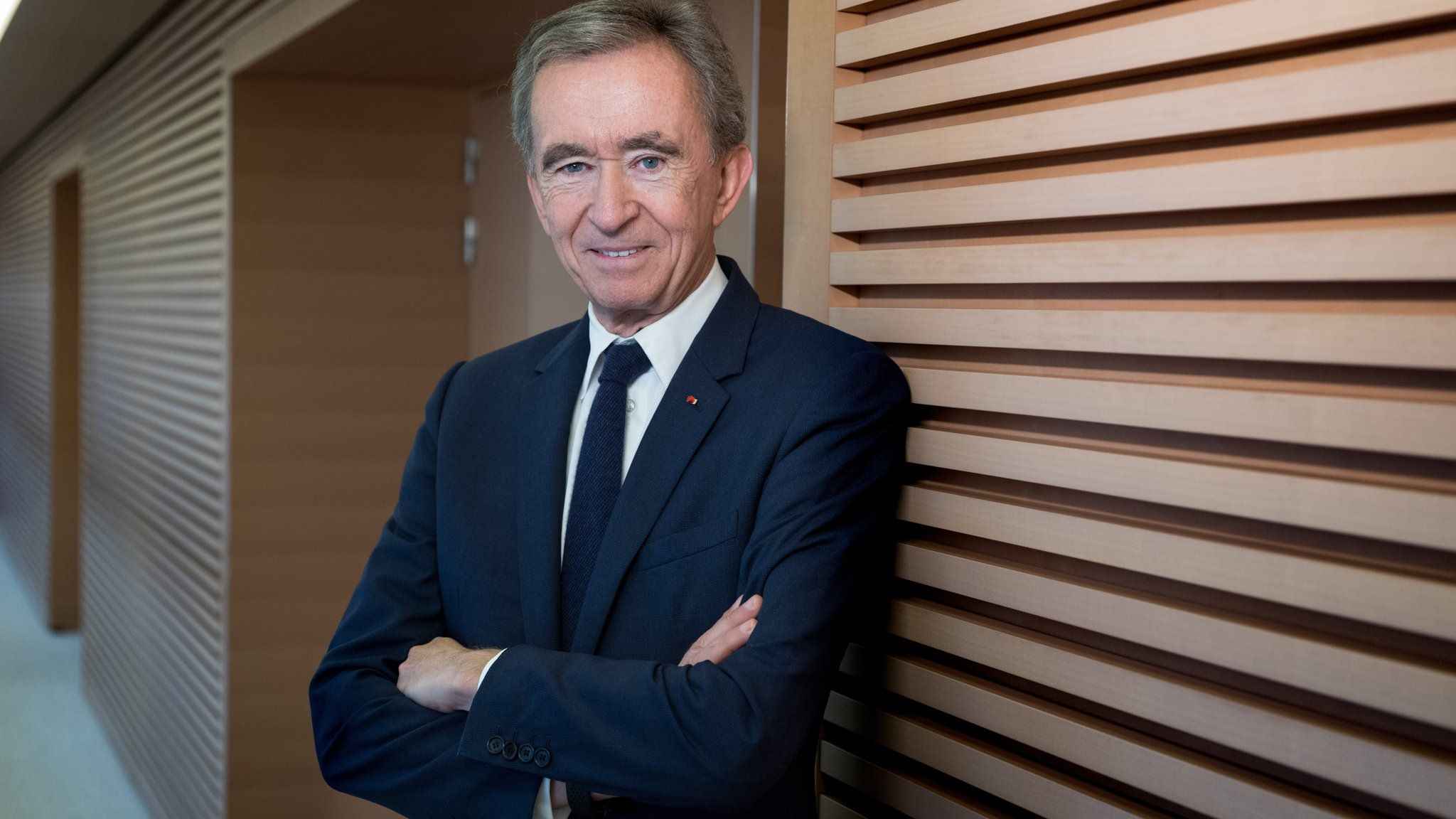
    LVMH.PA chief Bernard Arnault is set to visit China, two sources told Reuters on Thursday, as European luxury goods makers closely track the pace of recovery of the key market following three years of COVID disruptions.

    One of the sources close to the matter said Arnault’s visit to the all-important Chinese market, which comes after high-profile visits to the country this week by JPMorgan Chase & Co JPM.NCEO Jamie Dimon and Tesla chief Elon Musk, will take place later this month.

    LVMH, home to brands ranging from Moet to Givenchy, declined to comment.

    The sources didn’t give a reason for the trip or say where in the country Arnault was likely to visit.

    The LVMH chairman and chief executive met with Chinese Commerce Minister Wang Wentao in Paris in April at the Avenue Montaigne flagship store of the group’s Christian Dior label.

    Arnault’s daughter Delphine Arnault, CEO of Dior, as well as other top LVMH executives attended the meeting, and the group pledged take part in China’s International Import Expo, which will be held in Shanghai in November.

    Chinese officials have been eager to emphasize the country is open for business since lifting lockdowns in December. The recovery has been patchy but the luxury sector has outperformed other consumer categories as wealthy consumers have maintained their spending habits on the Mainland.

    The planned visit for Arnault comes at a critical time for LVMH’s reboot of U.S. jeweler Tiffany, its largest acquisition ever, which it seeks to expand in China as part of a strategy to catch up with larger rival Cartier.

    A rebound in China helped lift LVMH’s first-quarter sales, which grew 17%.

    Executives from other luxury companies are also emphasizing China, especially as sector sales in the United States show signs of easing off of a strong, post-pandemic surge.

  • LVMH whitdrawing Tiffany deal

    LVMH whitdrawing Tiffany deal

    French luxury-goods group LVMH has dropped its plan to take over Tiffany & Co, prompting the  New York jeweler to announce it will file a lawsuit to enforce the deal.

    The US$16.2 billion takeovers was agreed to before the advent of the Covid-19 pandemic and the jeweler’s share price had dropped well below the price LVMH had agreed to pay.

    However, LVMH’s board is using geopolitical and taxation factors to defend its position with the board issuing a brief statement late Wednesday Asian time after a board meeting confirming it would “not be able to complete the acquisition of Tiffany & Co”.

    The statement referred to a letter from the French European and Foreign Affairs Minister which directed LVMH to “differ” (sic) – thought to mean defer – the acquisition until after January 6 next year in “reaction to the threat of taxes on French products by the US”.

    Tiffany & Co had earlier requested LVMH to extend the closing date for the deal from the current expiry date of November 24 to December 31.

    LVMH’s board, having taken legal advice from advisors to its teams, said it resolved to comply with the merger agreement signed by the two companies in November last year, which stipulated the November 2020 closing date.

    “As it stands, the Group LVMH will therefore not be able to complete the acquisition of Tiffany & Co.”

    Tiffany & Co meanwhile, is alleging that LVMH has deliberately stalled the takeover to force a renegotiation of the price.

    The company will file a lawsuit with the Delaware Court of Chancery Wednesday US time seeking to force LVMH to close the transaction by the November deadline.

    “Tiffany alleges that LVMH has delayed the EU regulatory process to avoid closing before a mandated deadline, and threatened to walk away from the takeover unless the price tag is reduced,” the FT reported, citing “people briefed about the matter”.

    The Tiffany & Co sale has been the subject of considerable ongoing speculation since the impact of Covid-19 on luxury retailing and international travel.

    At one point, analysts were speculating that LVMH might begin acquiring shares on the open market at a price lower than the company had agreed to pay under the merger agreement. However, after a board meeting in June, LVMH issued a statement reiterating it would not buy shares on the market and was sticking to the deal.

    Reuters reported back then, however, that LVMH CEO Bernard Arnault was exploring ways to reopen negotiations in an attempt to reduce the price.

    “While Arnault now has concerns about overpaying for Tiffany, he still believes in the deal’s strategic rationale, according to the sources,” reported Reuters. “Tiffany will give LVMH a bigger share of the lucrative US market and expand its offerings in jewelry, the fastest-growing sector in the luxury goods industry.”

  • Bernard Arnault now richer than Mark Zuckerberg

    Bernard Arnault now richer than Mark Zuckerberg

    LVMH Moët Hennessy Louis Vuitton, the world’s leading luxury products group, announced record sales of 42.6 billion Euros in 2017, up 13% over the previous year, as all divisions turned in strong performances. Its net profit popped 29%.

    The news sent LVMH‘s stock up 5% on Friday. The biggest beneficiary of the announcement is LVMH’s longtime chairman and CEO Bernard Arnault, who owns more than 5% of LVMH’s stock. His fortune jumped $3.5 billion in just hours and was at $77.9 billion by noon on Friday.

    He is now the fifth richest person on the planet, up from number 11 last March when FORBES published our annual rankings of the World’s Billionaires. Since the list’s publication, his fortune has climbed more than $36 billion, helping him move ahead of Michael Bloomberg, Charles and David Koch, Larry Ellison and Carlos Slim. Today, he leaps ahead of Facebook’s Mark Zuckerberg.

    “The excellent performance, to which all our businesses contributed, is due in part to the buoyant environment but above all to the remarkable creative strength of our brands and their ability to constantly reinvent themselves,” said Arnault, in a released statement. “Continued innovation, entrepreneurial spirit and the quest for excellence: all Maisons continue to assert these core values while maintaining rigorous execution of their strategies on the ground.”

    The multi-billion dollar morning for Arnault is another chapter in what is turning out to be one of his best years yet.

    In April 2017, Arnault and his family announced a $13 billion deal to acquire Christian Dior and fold the fashion brand into LVMH. The move ends years of a convoluted, complicated cross holding structure between the two companies. The share price of Dior, in which Arnault now has a 97% stake and which represents the bulk of his fortune, has climbed nearly 38% since April and popped almost 5% on Friday.

    One of the world’s ultimate taste-makers, Arnault first got into the luxury goods business in 1984 when he bought Christian Dior. He has run LVMH, which owns 70 brands including Dom Perignon, Bulgari, Louis Vuitton, Sephora and Tag Heuer, since 1989.