Retail News CRM

Tag: big C

  • Big C Engages Its Customers Across Southeast Asia with Personalized Marketing

    Big C Engages Its Customers Across Southeast Asia with Personalized Marketing

    Symphony RetailAI, the leading global provider of Artificial Intelligence-enabled decision platforms, solutions and customer-centric insights that drive validated growth for retailers and CPG manufacturers, today announced that Big C is implementing its SR Personalized Marketing solution.

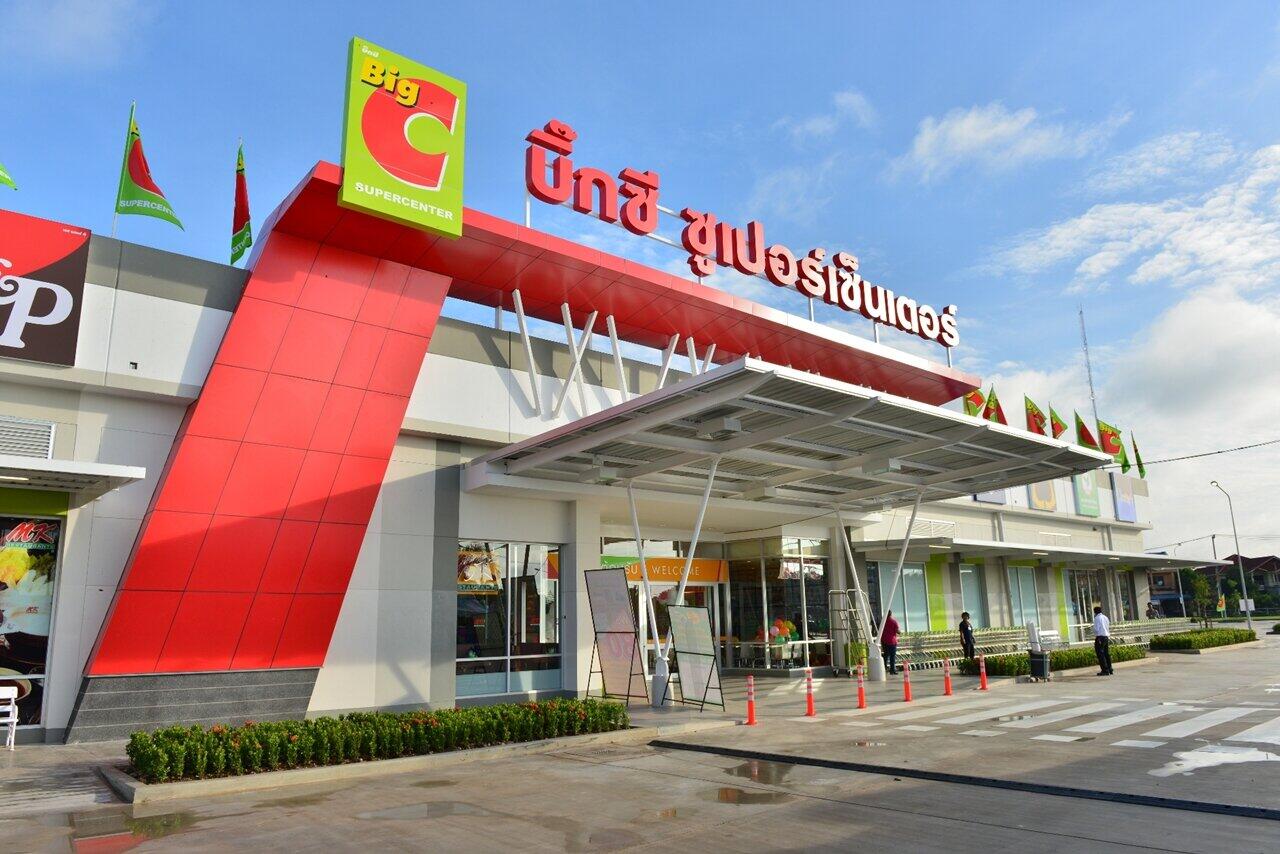
    Headquartered in Bangkok, Thailand, Big C is a leading omnichannel retailer in Thailand and Southeast Asia with hypermarkets, supermarkets, convenience, health and beauty formats, and online and ecommerce channels. With Asia accounting for four out of the top 15 countries globally where internet users spend the most time on social media worldwide, the region’s consumers are highly connected, tech-savvy, socially fluid and vocal. They want personalization, crave rewarding experiences and have a strong desire for convenience and immediacy.

    Shifting strategic engagement to meet cultural changes in what consumers want

    Thailand is undergoing significant lifestyle changes. Urbanization, millennial influence, mobile technology, and rising incomes are driving demand for and the rapid growth of the convenience channel, with Big C alone opening two new convenience outlets every three days. Already one of the leading nations for eating away from home, Thais have significantly increased their appetite for ready-to-eat options from convenience channels. Adding to these significant shifts, the country currently has one of the highest social-media adoption rates worldwide. With this as a backdrop, Big C relaunched its loyalty program which had been initiated years prior, but wanted to engage its 6.2 million customers on a deeper, more emotional level.

    The company is now aggressively moving to build a new personalization program founded around the customer lifecycle. It is working towards personalization at basket and/or category level(s) and sending personalized digital offers via text, a mobile app and a program website. In addition to using SR Personalized Marketing — an omni-channel solution that leverages embedded algorithms and a relevancy engine to ensure that each shopper’s communication is appropriate, timely and individualized — Big C is adopting the solution’s mobile capabilities. This will allow the retailer to leverage a geofencing mobile app that interacts with shoppers at the right moment and in the right place, delivering timely and relevant messages. This is a key component of the Big C strategy around its changing customer demographic.

    “The Southeast Asia region is one of the most rapidly changing regions of the world when we consider grocery,” said Gary Hardy, Chief Operating Officer, Big C. “Our customers are demanding more variety, convenience, flexibility, and an enhanced service. They want ‘round-the-clock omnichannel experiences that match their changing lifestyles. As a result, we need to engage customers on a more 1:1 basis, focusing on digital touchpoints and moment marketing to improve the entire shopping experience for our customers.”

    “We’ve had a great working partnership with Big C for over six years,” said Oscar Garcia-Velasco, Regional Vice President, Symphony RetailAI, Asia. “We are very excited to see Big C taking this next step in their ongoing evolution to serve their customers. Understanding how to best use customer data to enhance relationships through more relevant, personalized offers is key to success. Embracing the role of mobile in how their customers want to engage with them, will help Big C create a competitive edge and increase customer loyalty.”
  • Thai tycoons’ deals in Vietnam pose risks to domestic market

    Thai tycoons’ deals in Vietnam pose risks to domestic market

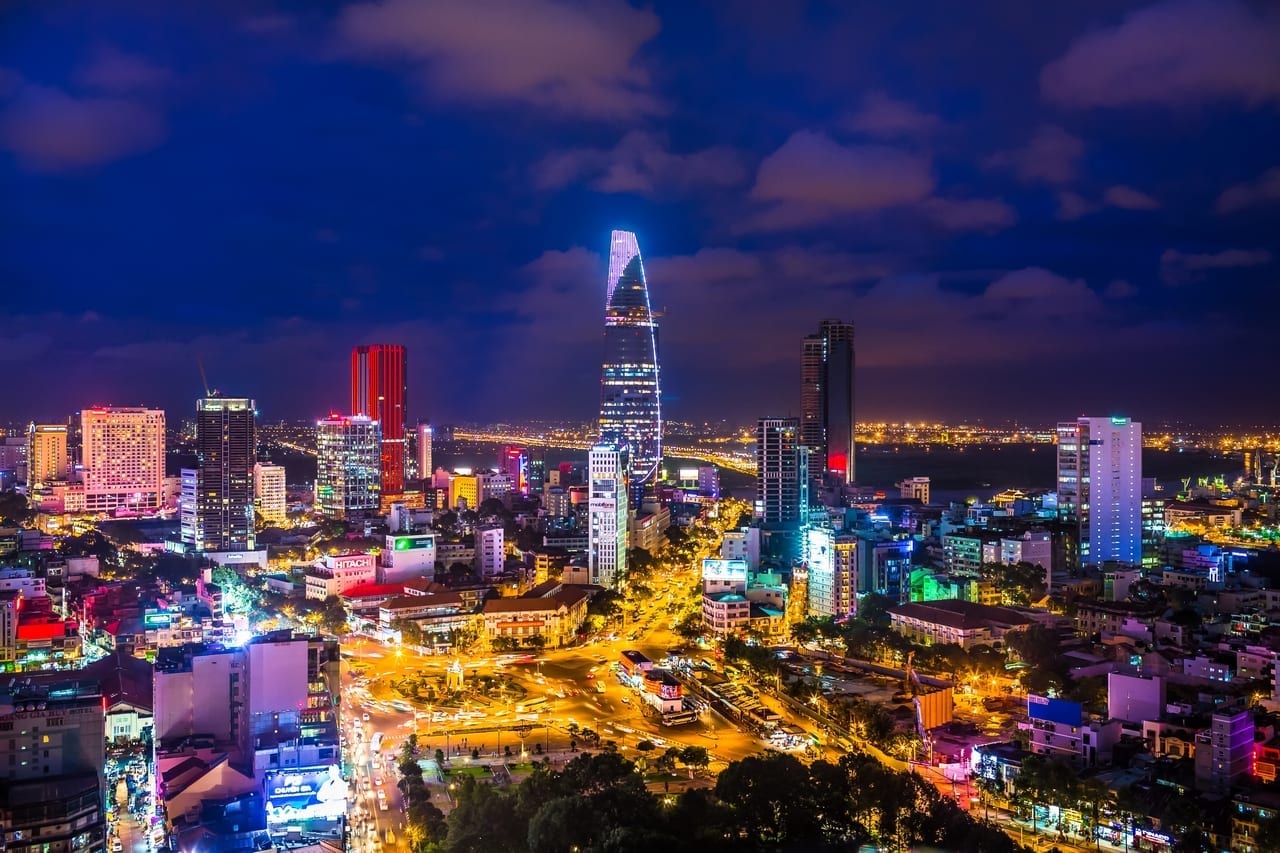
    Thai tycoons have been seeking business opportunities in Vietnam’s beverage, retail and construction materials markets over the past five years in a bid to take advantage of the country’s 95 million population and expanding middle class, according to experts.

    Local consumers consider the products more affordable than imports from Japan and South Korea, and better quality than cheaper items from China.

    Among the leading investors from Thailand is the beer-to-property empire of Thai magnate Charoen Sirivadhanabhakd.

    Most recently, the tycoon’s Thai Beverage bought a majority stake worth $4.84 billion in Vietnam’s top brewer, Sabeco SAB.HM.

    Thai Bev’s local unit, Vietnam Beverage Co Ltd, won the 54 percent Sabeco stake on offer at an auction last month after global brewing giants stayed away.

    The deal is a big step for Charoen, the son of a Bangkok street vendor, who is emerging as one of Asia’s biggest power players in brewing.

    The Sabeco deal is expected to help Thai Bev tap into Vietnam’s beer market, worth about $6.48 billion last year, where a young population and booming economy counter the drawbacks of political resistance, a high minimum bid price and a cap on foreign ownership.

    In Vietnam, Charoen already owns nearly 20 percent in the country’s biggest-listed firm Vinamilk VNM.HM through Fraser & Neave. He has also acquired the Metro supermarket chain as well as other consumer goods and convenience stores in the country.

    Together with Charoen, many other tycoons from Thailand have bought stakes in Vietnamese businesses.

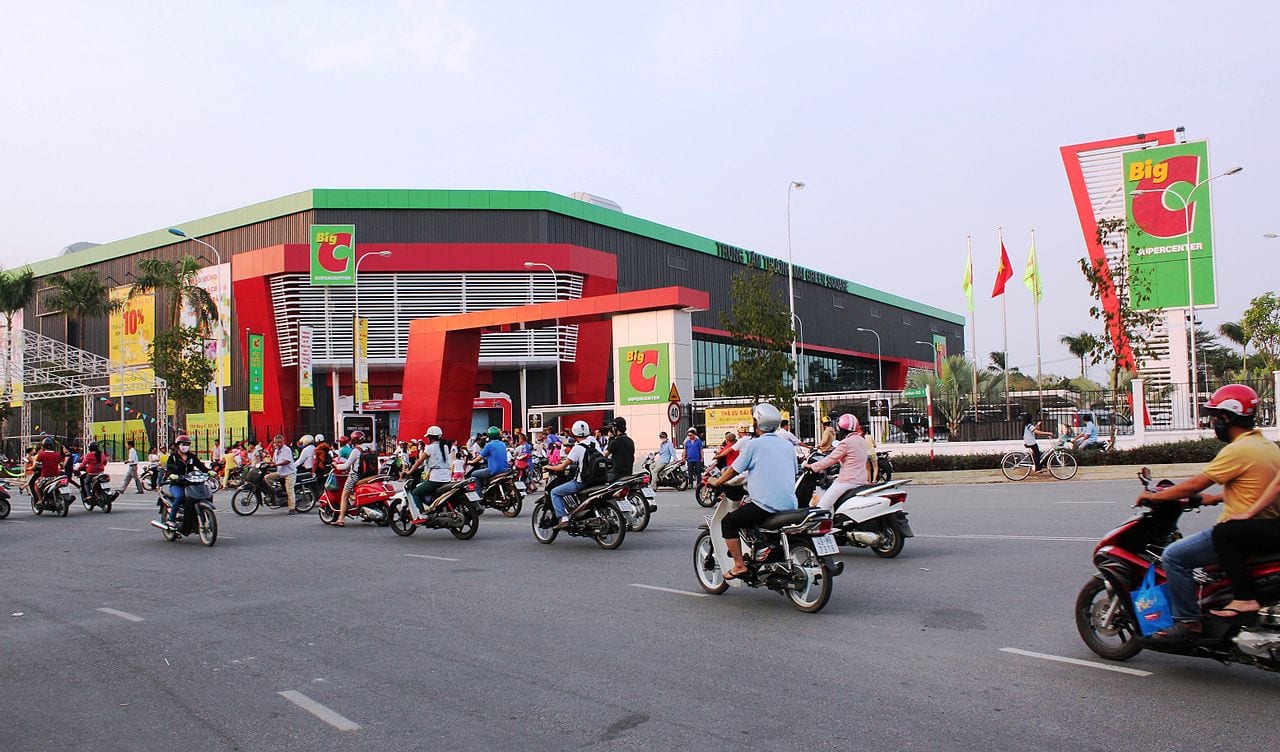
    In April 2016, Central Group sealed a deal to acquire Big C Vietnam, one of the biggest supermarket chains in the country, which pulls in more than 50 million customers annually.

    France’s Casino Group sold its entire stake in Big C to Central for 1 billion euros ($1.14 billion), according to the French retailer.

    In 2015, Central Group also acquired a 49 percent stake in major Vietnamese electronics retailer Nguyen Kim, which has a network of 21 stores across the country and posted sales of $400 million in 2014.

    The Thai conglomerate has also purchased online fashion marketplace Zalora’s operations in Vietnam in a move to combine e-commerce with its existing department stores, supermarket chains and shopping malls around the country.

    This investment interest stems from the Vietnam’s economic expansion, rising middle class and market potential, experts said.

    The so-called “middle and affluent class” earning $714 a month or more in Vietnam will double to 33 million people, about a third of the population, by 2020, the Nikkei Asian Review reported, citing Boston Consulting Group.

    Economist Vu Vinh Phu said the local retail market holds a lot of potential for Thai investors. While Thailand’s modern retail system is saturated, accounting for 65 percent of the market, the proportion is just 20 percent in Vietnam, he said.

    The deals have helped Thailand become one of the biggest foreign players in Vietnam’s mergers and acquisitions (M&A) market. Vietnam’s M&A market attracted a 10-year record in foreign investment by reaching $5.2 billion in 2015, and rose again to over $ 5.8 billion in 2016, according to the latest data from the Vietnam M&A Forum.

    However, expanding Thai investment also poses risks to Vietnam’s economy, economists said.

    Economist Le Dang Doanh said that Thai retailers obviously give priority to suppliers from their own country, and can overcharge commissions and fees to Vietnamese suppliers, pulling local products off the shelves.

    “This is a risk to our economy, and we should be more cautious,” he said.

    Echoing Doanh, economist Phu said Thai investors could push their own products by expanding their businesses in a closed system from production to distribution in Vietnam.

    “Most families in Hanoi and Ho Chi Minh City use Thai products ranging from home appliances to electronic products,” he said. “It is a threat to Vietnam, as the domestic market may be lost to Thai retailers.”

  • Vietnam to celebrate its new retail sales highest record US$129 billion

    Vietnam to celebrate its new retail sales highest record US$129 billion

    Spurred by a rising middle class and influx of international retailers, Vietnam retail sales hit a record US$129.6 billion last year.

    This was growth of 10.9 per cent over 2016, according to the Vietnam General Statistics Office (GSO).

    Vietnam’s largest real estate company, Vingroup, starting expanding its Vinmart Plus convenience store chain in 2016 and has already topped 1000 stores – it opened 100 last month alone. It is predicted the store network could reach 3000 this year.

    Meanwhile, Vietnam last year saw the arrival of a slew of foreign retail brands, headed by Japan’s Seven & I Holdings opening its first Vietnamese 7-Eleven convenience store in Ho Chi Minh City in June.

    Swedish fast-fashion brand H&M followed in September with a store in the same city, while Zara, the chain of Spanish rival Inditex, opened its second Vietnam location in Hanoi in November (its first store, covering two levels, launched at Vincom Centre Dong Khoi in Ho Chi Minh City in September 2016).

    Thailand’s Central Group has made several acquisitions in Vietnam, including the Big C supermarket chain and electronics retailer Nguyen Kim Trading. It also launched its first stationery and office supplies store in Vietnam last year.

    South Korea’s GS Retail partnered with Vietnam’s Son Kim Group 12 months ago to open the first of their convenience stores in Ho Chi Minh City this month. They plan to open 2000 locations within 10 years.

    Double-digit growth

    Since joining the World Trade Organisation in 2007 and opening up to foreign goods and businesses, Vietnam has seen continued double-digit growth, led by a 31.5 per cent spike in 2008. With the Association of Southeast Asian Nations Economic Community taking full effect this month, Vietnam has eliminated nearly all tariffs on goods from within the region.

    Meanwhile, supermarkets and convenience stores are selling meat and vegetables at prices that are 20 to 30 per cent higher than at traditional markets, and the number of specialty shops selling organic vegetables is growing.

    Spending on cars, home electronics and other consumer durables is also brisk, with 70 per cent of Vietnam’s GDP coming from personal consumption.

    The GSO says auto sales grew by 14 per cent in value, gemstone and precious metals by 13.2 per cent, food and foodstuffs by 11.1 per cent, cultural and educational products by 10.2 per cent, apparel by 9.6 per cent, and home products by 8.5 per cent.

    Vietnam still has room for growth as modern retail channels like supermarkets and shopping centres account for only a quarter of total retail sales, and most of these businesses are in big cities, reports VIetnamNet. By 2020, the proportion of modern retail channels is forecast to rise to 45 per cent.

  • Berli Jucker eyeing Asean expansion

    Berli Jucker eyeing Asean expansion

    Thai company Berli Jucker (BJC) plans an aggressive expansion of its retail network in the Asean region.

    The push will include its hypermarkets and convenience stores, including the opening of Big C hypermarkets in Malaysia.

    BJC president/CEO Asawin Techajareonvikul says the company is evaluating whether to give Malaysia or Vietnam priority in its retail network expansion.

    Described by the company as “downstream business”, the expansion will help its main interests, manufacturing, distribution and logistics.

    Group chairman Charoen Sirivadhanabhakdi says BJC has had a foothold in Malaysia since acquiring a glass factory there in 1966. Big C stores would be the group’s first retail venture there.

    However, Asawin says there are already many competitors in Malaysia. “Meanwhile, in Vietnam, we already have 19 MM Mega Market hypermarkets as well as 173 B’s Mart convenience stores. The market has a lot of potential.”

    He says that between 200 and 300 hypermarkets are run by different companies in Thailand, but with about 90 million people in Vietnam, the number of hypermarkets there is quite small.

    “Our strategy is to build ‘connectivity’ within our retail network,” says Asawin. “Our Big C stores now cover all major provinces throughout the kingdom, but the transportation lead time from one store to another is currently about three hours. We want to reduce this to only one hour, and that means we need to open more stores to fill the gap, especially in cities in border areas.”

    BJC has 1200 retail outlets in Thailand, Laos and Vietnam under different brands, including Big C in Thailand, MM Mega Market and B’s Mart in Vietnam, and M-Point Mart in Laos. The group also has more than 10 factories in Asean.

  • AEON in Collaboration with Big C to Launch “Big C Platinum pay”

    AEON in Collaboration with Big C to Launch “Big C Platinum pay”

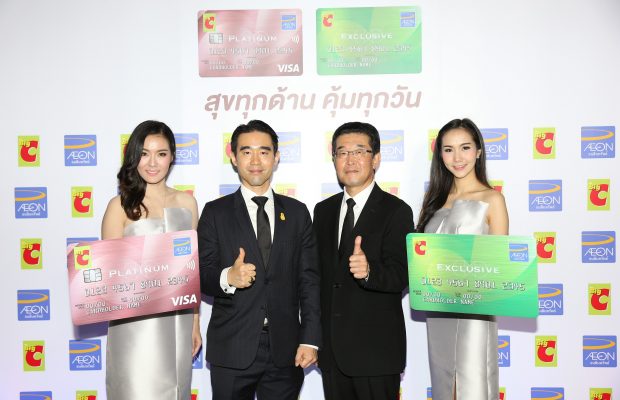
    AEON Thana Sinsap (Thailand) Public Company Limited, a leading retail finance company, in collaboration with Big C Supercenter Public Company Limited, a leading hypermarket retailer, has announced cooperation to launch the new “Big C Platinum payWave Credit Card and Big C Exclusive Card” to offer exclusive privileges under the concept “Daily happiness for shopping at Big C”.

    Mr. Kiyoyasu Asanuma, Managing Director of AEON Thana Sinsap (Thailand) Public Company Limited said AEON has a strong commitment to develop credit cards that fulfil the changing lifestyle of consumers. The Big C Platinum Credit Card and Big C Exclusive Card offers exclusive privileges under the “Daily happiness for shopping at Big C” concept. These new cards give Big C customers nationwide freedom when spending. This collaboration is a combination of strength between AEON and Big C to deliver the best service and goods to customers. We expect to reach 100,000 new cardholders within the first year from Big C store over Thailand and online channel.

    Mr. Aswin Techajareonvikul, Chief Executive Officer & President of Big C Supercenter Public Company Limited said that Big C Platinum Credit Card and Big C Exclusive Card are products that emphasize the position of Big C as a Thai supermarket that is concerned about its customers and always provides the best price to its customers. Big C is a leading hypermarket retailer in Thailand with Big C Supercenter, Big C Extra, Big C Market, Mini Big C, around 673 branches over Thailand. When Big C customers spend via Big C Platinum Credit Card and Big C Exclusive Card, they get the best price along with exclusive privileges.

    The Big C Platinum Credit Card is the first and only card that offers cardholders 3% discount on purchases straight away with a maximum discount of 1,500 Baht per month or 18,000 Baht per year when purchasing selected items at Big C Supercenter, Big C Extra, Big C Market, Mini Big C, and Big C Online Shopping. Cardholders are also eligible to pay by installments with 0% interest rate for 6 months when purchasing items priced over 5,000 Baht. In addition, the cards give other privileges, i.e. exclusive car park at 10 branches of Big C, Travel Accident Insurance with a limit of 31 million Baht, a redeemable Big C voucher with AEON Happy Points with every 1,000 points equal to 100 Baht.

    The Big C Exclusive Card also offers 0% interest rate for 3 months when purchasing electronic appliances priced over 5,000 Baht or 0.59% interest rate for 18 months when purchasing electronic items priced over 10,000 Baht or purchasing a mobile phone over 15,000 Baht at every branches of Big C.

    Big C Platinum Credit Card and Big C Exclusive Cardholders can also receive special privilege as a member of BIG CARD, and discounts from leading stores. Annual fees for Big C Platinum Credit Cards and Big C Exclusive Cardholders are free for the first year, and free for another year, with at least one purchase.

    Those who sign up for a Big C Platinum Credit Card before August 31 will get a 20 inch piece of CAGGIONI luggage valued at 4,990 Baht with accumulated purchases of over 10,000 Baht or when making payments on a credit installment plan of 20,000 Baht. Cardholders are also able to get a Big C voucher valued of 400 baht with accumulated purchases of 5,000 Baht via Big C Platinum Credit Card, or when making payments on a credit installment plan of 10,000 Baht via Big C Exclusive Card. Cardholders have to register for the program to enjoy exclusive privileges.

    “We are now focusing on a marketing campaign to reach our target by launching a new TVC, with over 50 million baht budget. The new TVC under the concept “Get the best price with Big C Platinum Credit Card” that we are so delighted to have Kong – Saharat Sangkapricha as a presenter. We hope that the launch of the new cards will increase the number of our target groups at 100,000 new cardholders within the first year”

  • Central Group turns focus to e-commerce

    Central Group turns focus to e-commerce

    hai retail giant Central Group aims to raise the share of its e-commerce sales to 15 per cent over five years, up from the present 1 per cent.

    Presenting the company’s annual business plan, CEO Tos Chirathivat says the group will aggressively pursue expansion in the digital realm this year.

    About 10 per cent of the 45.53 billion baht (US$1.3 billion) capital investment allocation this year will be devoted to online business. The funds will mainly go toward developing a logistics network and an omni-channel platform, with capital spending on that front to double from next year.

    Central Group’s retail portal, Central Online, will be overhauled this year. The conglomerate acquired the Thai business of fashion e-tailer Zalora last year, and will adapt its know-how for Central Online’s makeover.

    The group is also eyeing markets outside of Thailand, including an online re-entry into China, from where it retreated two years ago. Central Group president Yol Phokasub says it aims to collaborate with a partner this time.

    Vietnam is another promising market. The group has two department stores there and is also a stakeholder in electronics retailer Nguyen Kim.

    Meanwhile, Central says its group sales last year increased 17 per cent to 332.7 billion baht. The refurbishment of key assets such as Bangkok’s Central Plaza Pinklao helped boost sales, along with Zalora and the acquisition of Vietnamese supermarket chain Big C.

    Central aims to reap sales of 382.2 billion baht this year, with a heavy reliance on overseas business, which accounts for 30 per cent of sales, as well as developed online business.

  • Vietnam’s Mobile World plans 300 grocery stores

    Vietnam’s Mobile World plans 300 grocery stores

    Vietnam’s Mobile World – the electronics retailer – says it plans to open 300 more grocery stores under the Bach Hoa Xanh banner this year.

    The convenience store chain targets time-poor Vietnamese housewives who prefer small stores to crowded supermarkets or hypermarkets.

    bach-hoa-xanh-inside

    With 50 stores in Ho Chi Minh City’s Binh Tan district alone, Bach Hoa Xanh stores each achieve more than VND1 billion (US$44,300) in monthly sales, prompting the rapid expansion strategy.

    Nguyen Duc Tai, chairman of Mobile World, expects Bach Hoa Xanh stores to replace wet markets and become the leading player of this grocery sector, a market worth an estimated $60 billion annually.

    Mobile World Is Vietnam’s third-largest retailer, behind only supermarket Coop Mart and hypermarket chain Big C.

  • Expansion plan from Big C parent company

    Expansion plan from Big C parent company

    Berli Jucker (BJC), the owner of Big C Supercenter, will allocate TB10 billion (US$280 million) to expand the Big C hypermarket chain.

    It plans to opening 213 stores and renovate 54 outlets next year.

    BJC executive VP for group strategy and investor relations Oliver Gottschall says the company will make an aggressive expansion of the Big C network through Thailand, spending TB8 billion to open nine Big C hypermarkets, four Big C Market outlets and 200 Mini Big C stores, as well as renovate 54 outlets. The remaining TB2 billion will be reserved as cash flow.

    As previously reported, MM Mega Market, BJC’s wholesale business, has been merged with Big C’s hypermarket business in a bid to promote expansion and management efficiency. BJC closed its Ogenki beauty/drugstores to focus on Big C’s Pure drugstore chain.

    Two MM Mega Market stores in the Nong Khai and Sa Kaeo provinces are expected help expose Big C’s retail network to cross-border trade through their strategic locations near Laos and Cambodia.

    BJC has more than 700 retail branches under various formats in Thailand, mostly under the Big C brand, and more than 100 branches in Vietnam.

    BJC CEO Aswin Techajareonvikul says Big C’s revenue dropped 20 per cent to TB22.7 billion in the third quarter of this year because of the gradual reduction of cigarette and liquor sales. Net profit rose 14.6 per cent year-on-year to TB1.53 billion.

    During the nine-month period, Big C posted a net profit of TB5.27 billion on revenue totalling TB92.6 billion. Nine-month revenue declined 7.3 per cent, attributed to the economic slowdown.

    Gottschall says the rise in net profit in the third quarter came from Big C restructuring, with low-profit products being replaced with more fresh food.

    During the first nine months, BJC posted a net profit of TB2.77 billion on revenue totalling TB97.4 billion. For the third quarter, net profit was TB1.8 billion and total revenue stood at TB33.5 billion.

  • Vietnamese consumers prefer the ‘Made in Thailand’ label

    More than ever, consumers in Vietnam are looking for the ‘Made in Thailand’ label when purchasing consumer goods, and they’re willing to pay a premium for these products, according to experts.

    The high domestic demand for Thai products, they say, was the driving factor that resulted in the Thai Central Group earlier this year acquiring a controlling interest in 33 Big C Vietnam supercenters (and 10 convenience stores) and later Thai BCJ Group’s purchase of 19 Metro Vietnam superstores.

    The majority of Vietnamese consumers are willing to pay more for many key product categories, from baby food and appliances to electronics and apparel, as long as these goods were produced in Thailand, say the experts, reported Thai News Bureau.

    In each of the key categories, they say, at least 50% of domestic consumers are willing to pay a premium of more than 10%.

    More surprising, however, is the fact that the prices of Thai products are often lower than the prices of Vietnamese products of similar size and quality.

    Vu Dieu Thuan, a customer at Metro Ha Dong, says after careful consideration she chose to buy 5kg of Thai rice at US$4.71 (VND105,000) over Dien Bien rice at US$4.93 (VND110,000) because it tastes better.

    Experts say, many Vietnamese consumers report they regularly choose Thai made products over Vietnamese goods regardless of price on a regular basis.

    An assistant at the Metro in Ho Chi Minh City, points out that customers regularly purchase condensed milk from Thailand, which is US$.27 (VND 6,000) less expensive per can than Vietnamese milk.

    Only Thai clothing items are routinely more expensive than similar items made in Vietnam, says the assistant.

    Experts express the view that Thai products are positioned well in the domestic market. On the one hand they are less expensive than Japanese and Korean products of equivalent quality. On the other hand, they are of much better quality than Chinese products.

    To top it all off, they are aesthetically more appealing than Vietnamese products say the experts, adding that domestic consumers on the whole perceive Thai-made products as being of higher quality than local products. In fact, even when comparing Vietnamese and Thai products of similar price and quality, the majority of domestic consumers would still buy the Thailand-made items, they say.

    Still other experts disagree vehemently and say not so fast. Vu Vinh Phu, president of the Hanoi Supermarket Association, says Thai products are benefiting from better placement in stores like Big C and Metro.In these supercenters, says Mr Phu, the placement of retail products on shelves favors Thai products over Vietnamese products. One commonly used phrase in retail is “eye level is buy level”.Meaning that products positioned at eye level are likely to sell better. Stores like Big C and Metro are putting Thai products at eye level or just below, which is the best location and this explains in part why their sales are better.

    The location of goods within an aisle is also important, says Mr Phu. Vietnamese goods are being placed at the start of an aisle and don’t sell as well as Thai products placed in the center of the aisle. As well items placed at the end of aisles sell better because of higher visibility and Thai products are given these choice locations as well, says the Vietnam Association of Seafood Exporters and Producers (VASEP). The battle between supercenters and their placement of Vietnamese produced goods continues, says VASEP, adding they are urging Big C and Metro to give better visibility and placement to Made-in-Vietnam products.

  • Big C profit grows despite challenging economy

    Big C profit grows despite challenging economy

    Thai hypermarket operator Big C Supercenter boosted margins in the latest quarter despite the challenging economic climate.

    The company has reported continued resilient rental and service income growth, margin improvement across the board thanks to a focus on the quality of sales – delivering a “robust” Big C profit boost.

    The third quarter to September 30 was the first full reporting period of its new strategic focus on quality of sales rather than the absolute sales amount.

    “On our operations we continued our push to localise our offer in order to become the ‘Thai retailer with customers in our heart’ as we will be better positioned to serve local communities and their varying tastes,”explained Rumpa Kumhomreun, CFO & VP of accounting and finance, in a filing with the Thai SET. “Our work to capture synergies between BJC and Big C is continuing, and during the quarter we for example moved some of our private label tissue manufacturing to BJC. We also started serving Big C Soft Serve ice cream in pilot hypermarkets and Mini Big C stores. Our access to TCC “land bank” also made it possible for us to open an additional Big C Market store at Pantip Chiang Mai during the quarter.”

    The company also improved its online offer, rebranding its Cdiscount.co.th to Cmart.co.th, with over 70,000 SKUs available.

    Big C’s Total Revenues from retail sales, rental and service income, and other income, for the quarter reached Baht 25.892 billion – a decline of Baht 5.799 billion or 18.3 per cent over the same period last year. This decrease was driven by a retail sales decline of 20 per cent from the same period last year, and a same-store-sales decline of 22.6 per cent.

    “The significantly declining same-store-sales trend was driven by our strategic focus on the quality of sales rather than absolute sales volume,” said Kumhomreun.

    With a similar fall in expenses, however, Big C’s net income attributable to shareholders grew by 14.6 per cent to Baht 1.538 billion for the quarter, up Baht 196 million year-on-year.

    Gross profit margin reached 17.8 per cent for the quarter, representing an increase of 487 basis points from last year.

    Store expansion continued during the quarter in all store formats, with two hypermarkets opening in Phonphisai and Na Thawi, two Big C Market stores in Loei and Chiangmai, 23 Mini Big C stores including 15 franchise stores, and one Pure Drugstore. Those took the store count at the end of September to 128 large format stores (Big C Supercenter, Extra, and Jumbo), 59 Big C Market, 431 Mini Big C (including 21 franchise stores), and 142 Pure Drugstores.

  • Tourists boost Central Group revenue

    Tourists boost Central Group revenue

    Thai retailer Central Group expects revenue to rise 21 per cent to Bt320 billion ($9.17 billion) this year following strong growth in overseas business plus tourist spending.

    Controlled by Thailand’s Chirathivat family, Central is seeking to expand in Southeast Asia, says CEO Tos Chirathivat, citing Cambodia, Laos, Myanmar and Vietnam.

    He expects overseas revenue to account for 40 per cent of total in the next five years from 30 per cent now.
    Central bought superstore chain Big C‘s Vietnam business from French retailer Casino in April, comprising 43 stores and 30 malls. Vietnam is Southeast Asia’s fastest-growing market for Central, and the company expects sales to reach Bt37 billion this year.

    Central has also benefited from rising tourist numbers in Thailand, with sales up 15 per cent this year versus 5 per cent for Thai customers, says Tos.

    The group, whose interests include shopping mall developer Central Pattana, Robinson Department Store and Central Hotel Plaza, plans to spend more on its online retail business, which currently accounts for just 1 per cent of revenue.

    Central bought fashion-focused eCommerce site Zalora in April as part of a push to win back shoppers who increasingly prefer internet shopping.

  • Vietnam’s retail lures foreign capital because of urban population growth

    Vietnam’s retail lures foreign capital because of urban population growth

    JLL released a brief report on Asian and European retailers ready to penetrate the market of more than 90 million people.The report pointed out evidence of the expansion of foreign retailers in Vietnam’s market.

    At the end of 2014, Berli Jucker Plc (BJC) acquired Metro Cash & Carry Vietnam at the cost of 655 million euros, the largest ever M&A deal at that time, which signaled the penetration into Vietnam’s retail market of Thai groups.

    Shortly after, another giant from Thailand – the Central Group – acquired Nguyen Kim – one of the leading electronics retailers in Vietnam and then Big C.

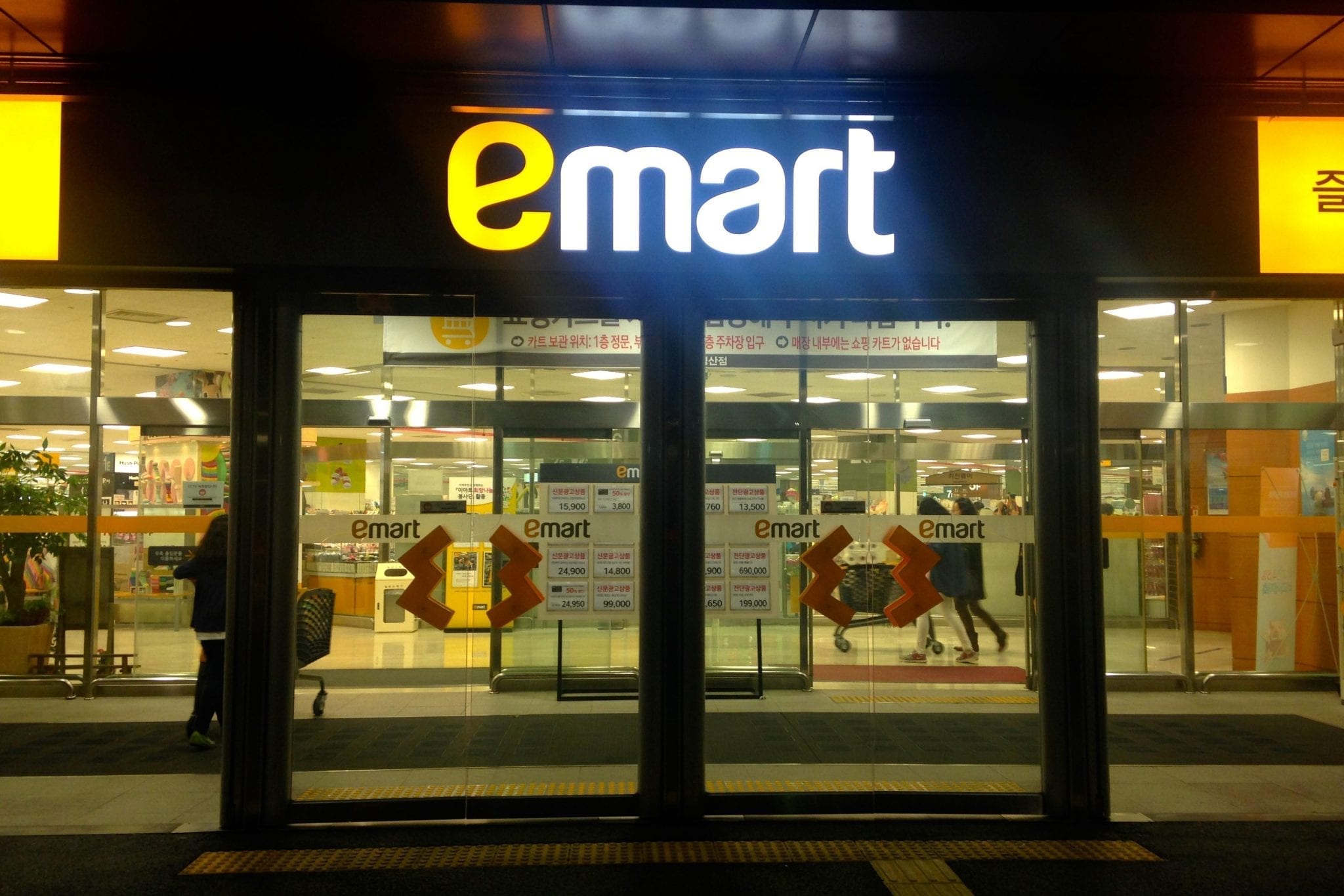
    In October 2015, Emart – Korean leading retailer – inaugurated a $60 million shopping mall in north Saigon, where another Korean retailer – Lotte Mart – has been successful with 11 supermarkets and expects to increase the number to 60 stores by 2020.

    Most Japanese investors see the success of Aeon in Vietnam as a positive sign for foreign projects. Aeon has opened four trade centers in Vietnam and aims to increase the number to 20 in 2020. By July 2016, another retail giant from Japan –  Takashimaya – opened at Saigon Centre.

    Simply Mart openedthree more stores in Saigon; AuchanSuper – the retail brand from France – also plans to launch another 17 supermarkets by the end of next year in HCM City and 20 stores by 2020 in the north.

    Major fashion brands like Gap, Mango, and Topshop have become the first choice of many young people in Vietnam. In early September this year, Zara opened its first flagship store in HCM City. At the same time, H&M is completing procedures to open its first store in Vietnam early next year.

    According to JLL, a young demographic and high growth potential are the factors attracting foreign investors to Vietnam’s retail market.

    With a population of over 90 million people and 70% of people aged from 15 to 64 and the anticipated annual growth rate of urban population of 2.6% in 2015 – 2020 period, the highest growth rate in Southeast Asia, Vietnam’s retail market is very attractive to foreign investors.

    Increasing disposable income, urbanization rate and living standards have made Vietnam one of the most most dynamic emerging economies in Southeast Asia.

    According to Boston Consulting Group, the upper and middle class in Vietnam are growing at the fastest pace in the region and this number is expected to double from 12 million in 2014 to 33 million in 2020. With income of VND15 million ($700)/month, the consumers of these classes are potential customers for retailers.

    In addition, Vietnam’s e-commerce boom has also contributed to the growth of the retail market.

    A Nielsen report said that that 9 out of 10 consumers in Vietnam (91%) owned smartphones, compared to 82% in 2014.

    Na Son

  • South Korean retailer E-mart to invest $200m for retail chain ops in Vietnam

    South Korean retailer E-mart to invest $200m for retail chain ops in Vietnam

    A memorandum of understanding between E-mart and Vietnam’s Ho Chi Minh City was signed on September 9. Emart will make the investment over the next four years.

    The investment is expected to be used for building new supermarkets and commercial facilities, as well as local social development. E-mart opened a supermarket worth $60 million in Ho Chi Minh City last year, in addition to a toy library in the city.

    The Korean company had earlier said it planned to open 52 stores in Vietnam by 2020.

    E-mart is betting the country’s rapid growth, averaging 5.2 per cent since 2013, driven by a young and urban demographic with higher spending power.

    Vietnam’s growth was the highest among Southeast Asian peers featured in the 2016 Global Retail Development Index conducted by US management consulting firm AT Kearney. Vietnam was seen as the 11th fastest emerging retail market, up from 28th spot two years ago.

    Government data showed that retail sales in the country rose 7.4 per cent year-on-year in August 2016. Consumer spending rose to $116.2 billion, while the retail market was forecast to be worth $109 billion in 2017.

    Free trade pacts signed by Vietnam have encouraged foreign retailers to tap into this liberalizing market. Vietnam fully opened its retail industry in 2015, which is coupled with a lot of tax preferences for investors.

    Japan’s Takashimaya and Miniso have set up retail shops in Vietnam in July. Meanwhile, 7-Eleven is planning a local presence through the franchising route.

    Existing players are opening new outlets, as well as acquiring local businesses. Vingroup, the most active domestic company which launched over 90 stores in 2015, aims to introduce twice as many in 2016. It acquired Maximark and Vinatexmart, two Vietnamese operators, as part of this strategy.

    Thailand’s Central Group had acquired Big C Vietnam for $1.05 billion, along with electronics store chain Nguyen Kim and e-commerce site Zalora Vietnam. Other M&A deals include TCC Holdings buying Metro Cash&Carry Vietnam, and AEON acquiring Fivimart and Citimart.

    Central has since announced that it has halted further investment in  the country and would focus on consolidation.

  • Thailand’s Central declares $89.6 mln tax on Big C Vietnam deal

    Thailand’s Central declares $89.6 mln tax on Big C Vietnam deal

    Thai retail giant Central Group has declared around VND2 trillion (US$89.6 million) in tax on its acquisition of Vietnam’s biggest foreign-owned supermarket chain Big C, local media reported.

    Big C Vietnam, which declared the tax on behalf of its new owner, has paid VND380 billion ($17.03 million) of the amount, Tuoi Tre newspaper said on Monday, citing an unnamed source from the Ministry of Finance. The rest is expected to be collected later.

    The source did not comment on why the sum was much lower than the official estimate of VND3.6 trillion ($159 million) by the ministry’s General Department of Taxation.

    In June the department sent letters to Central Group and France’s Casino Group, the chain’s former owner, demanding them to pay tax on the $1.04 billion deal and threatening to block the ownership transfer.

    It reportedly said in the letters that the companies were far behind their tax obligation. According to the department, Vietnam’s laws stipulate that businesses have 10 days to pay taxes on the sale of their holdings after their negotiation is completed. The Big C deal was made public on April 29.

    At the end of last month, the tax authority reminded the companies of the tax again, saying they will be fined 0.05-0.07 percent per day for late payment.

    Big C is the largest foreign-owned retail chain in Vietnam with 33 supermarkets and 11 convenience stores. Many big players such as Vietnam’s largest retailer Co.op Mart, Japan’s Aeon, Thailand’s TCC and South Korea’s Lotte were interested when Casino announced its sale plan at the end of last year.

    Vietnamese electronics retailer Nguyen Kim, 49 percent owned by Central Group, also joined the Thai conglomerate in the acquisition of Big C. Their respective stakes have not been disclosed.

  • Thailand retail growth predicted at 6%

    Thailand retail growth predicted at 6%

    Thailand’s retail market is expected to grow at a compound annual growth rate (CAGR) of more than 6 per cent from now until 2020.

    This was revealed in the latest market study by global technology research and advisory company Technavio.

    Its research report, Thailand Retail Market 2016-2020, offers an analysis of the market in terms of revenue and emerging trends, as well as forecasts for six major product segments – grocery, apparel and footwear, beauty and personal care, personal accessories, home and garden, and consumer electronics.

    Grocery

    Valued at US$103 billion last year, the grocery market in Thailand is forecast to reach $145 billion by 2020, growing at a CAGR of 6.92 per cent. The segment is largely driven by the modern retail sector, while increasing urbanisation and changing consumer lifestyles are playing a significant role in the market’s development.

    Supermarkets and convenience stores have shown the fastest year-on-year growth rates with 9.5 and 10.5 per cent respectively last year.

    “Even though hypermarkets offer attractive prices, consumers are increasingly preferring supermarkets for the convenience factor and the availability of a wide product range,” says Technavio lead retail goods expert Poonam Saini. “Unlike supermarkets, which are in urban zones, hypermarkets are generally in bordering areas, catering almost exclusively to nearby consumers.”

    Apparel and footwear

    The second-largest market segment last year, apparel and footwear is expected to reach $9.19 billion by 2020, growing at a CAGR of more than 3 per cent.

    Several foreign companies are competing with local companies in the segment, says the report. International brands have fair penetration rates, offering stylish designs and a wide product range through modern retail stores. Local brands have also been successful with their long-established presence along with customer loyalty and trust.

    “The popularity of the online channel is growing, and players are actively using social media sites such as Facebook and Instagram for promotional campaigns and marketing activities,” says Poonam.

    “Websites such as Zalora.com are becoming popular for apparel and footwear products, as these sites offer promotions and discounts.”

    Beauty and personal care

    One of the fastest-growing segments, beauty and personal care (BPC) is having more than 3 per cent CAGR and is expected to reach $5.53 billion by 2020. A continuous exposure to western beauty and grooming trends has helped maintain the growth of the market over the past few years.

    International BPC companies have a nearly 50 per cent share of the market, with comprehensive product portfolios and innovative products. Thai retailers are expanding and attracting new consumers, says the report, citing cosmetics brand Sephora, which opened two new stores in 2014 after entering the market late the previous year.

    Top vendors

    Technavio’s research analysts name five top vendors for Thailand in the report.

    Topping the list are supermarket Big C and retail conglomerate Central Group. Then follow CP All, which has a chain of 7-Eleven stores, and homewares stores Global House and Home.

    Other prominent vendors in the market are Adidas, Aeon, Isetan Mitsukoshi Holdings, Lazada, Nike, Sephora, Seven & I Holdings, Tesco, The Mall Group and WearYouWant.

    Technavio develops more than 2000 reports every year, covering more than 500 technologies across 80 countries. It has about 300 analysts globally.