Retail News CRM

Tag: Billabong

  • Australia’s Surf Giants Face Competitive Surf as Retail Powerhouses and Newcomers Ride the Wave

    Australia’s Surf Giants Face Competitive Surf as Retail Powerhouses and Newcomers Ride the Wave

    As surfers hit the waves off Torquay on August 17, the challenges that lie ahead for the Australian surfing industry seem as vast as the ocean itself. Among the leading names in surfing gear—Rip Curl, Quiksilver, and Billabong—there is an unmissable concern: how to appeal to both die-hard surf enthusiasts and the casual fans of the surf lifestyle.

    Chasing the Cool Factor

    These iconic brands find themselves at a crossroads, pivoting their strategies to remain relevant in a rapidly evolving market. Some analysts suggest that Rip Curl, Quiksilver, and Billabong are becoming more synonymous with shopping malls than with the beaches they once epitomized. As their products fill shelves in retail outlets across Asia, the surf culture they represent risks losing its edge and allure.

    Market Dynamics in Asia

    In Asia’s burgeoning retail landscape, these brands are not just competing against one another but also with local surfwear companies that have learned to tap into regional trends. The challenge is exacerbated by a consumer base that is increasingly discerning, preferring authentic experiences over mere labels. Traditional marketing strategies, once effective, now seem inadequate in an environment where social media influence reigns supreme.

    Rediscovering Authenticity

    To combat this dilution of identity, brands are attempting to strike a dynamic balance between maintaining a hardcore surfing ethos and catering to the mainstream consumer. Limited-edition product lines, collaborations with local artists, and a focus on sustainability are some of the strategies being employed to reconnect with their roots and recapture that coveted “cool” factor. After all, who could resist a surfboard made from recycled materials, adorned with a stunning local design? That’s the kind of storytelling that can reel in consumers.

    The Path Forward

    Retail experts suggest that understanding the different segments of the audience—serious surfers versus aspirational shoppers—will be critical as these brands navigate their next moves. As competition heats up in both retail spaces and social media, only time will tell if the big three can adapt without losing their soul. Surfers, after all, crave authenticity. And let’s be honest, surfing gear that screams “beach vibes” yet looks great in a café doesn’t hurt either!

    Questions & Answers

    How are traditional surf brands adapting to changing consumer preferences?
    These brands are introducing limited-edition collections and collaborating with local artists to maintain relevance while staying true to their roots.

    What challenges do these brands face in the Asian market?
    They are vying for attention not only from one another but also against emerging local companies tapping into regional trends, which puts their traditional marketing strategies to the test.

    Is there still a market for hardcore surfing culture among casual consumers?
    Indeed, balancing appeals to both hardcore surfers and casual fans is essential for growth; authenticity remains a vital piece in keeping the surf culture alive.
  • Costs cited as Gap cancels Old Navy spinoff plans

    Costs cited as Gap cancels Old Navy spinoff plans

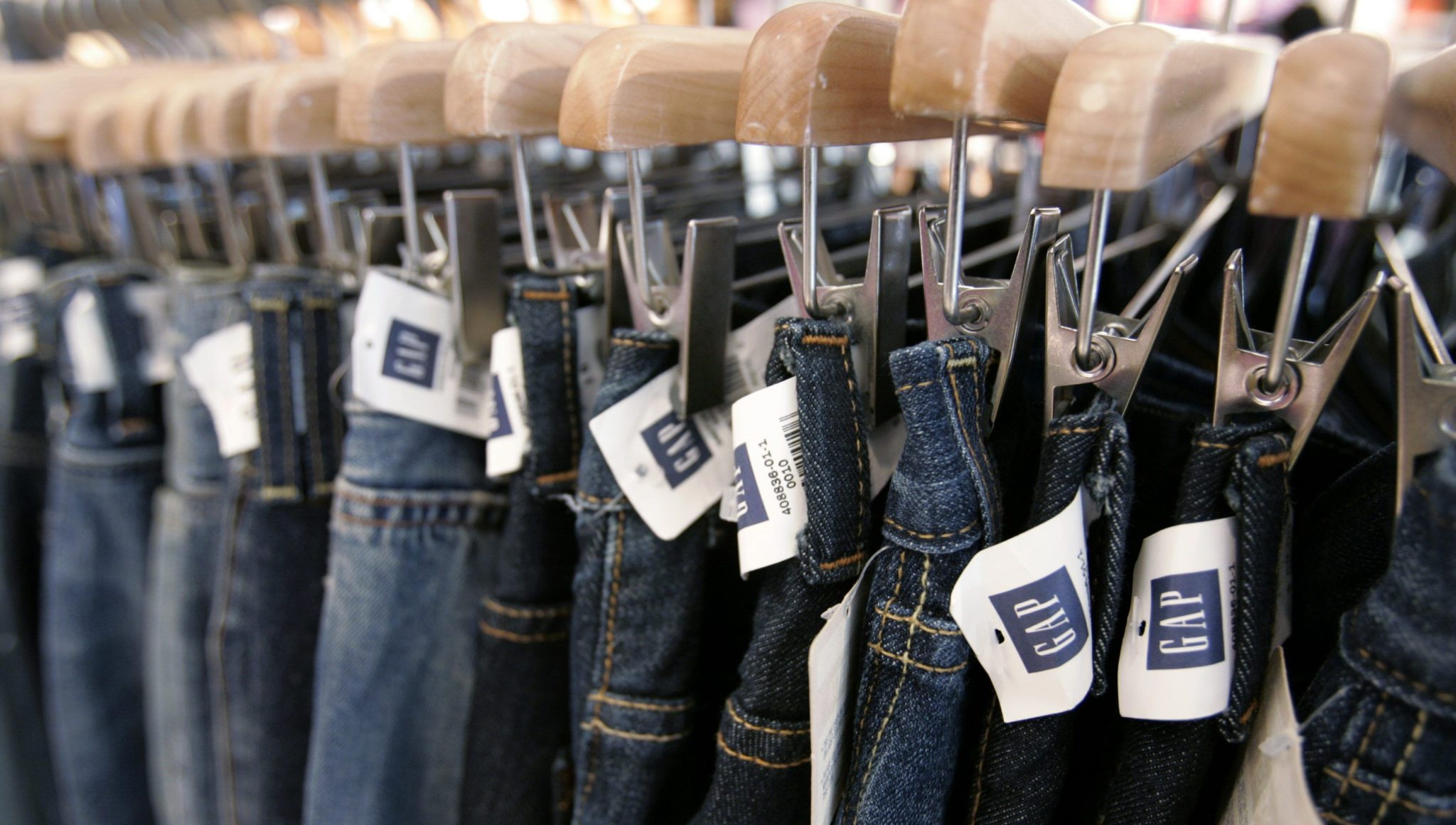
    Gap has nixed plans to spin off its Old Navy subsidiary, saying that after further investigation the costs involved outweighed the benefits.

    “The plan to separate was rooted in our commitment to value creation from our portfolio of iconic brands,” said Robert Fisher, Gap Inc’s interim president and CEO. “While the objectives of the separation remain relevant, our board of directors has concluded that the cost and complexity of splitting into two companies, combined with softer business performance, limited our ability to create appropriate value from separation.

    “The work we’ve done to prepare for the spin shone a bright light on operational inefficiencies and areas for improvement,” he said.

    Meanwhile, the company is now searching for a new CEO to oversee the full portfolio of brands.

    Neil Fiske, president, and CEO of Gap brand who previously led Billabong before moving to Gap in 2018 has left without explanation. Last November, former long-term CEO Art Peck left Gap on the eve of the announcement of the Old Navy spinoff.

    Meanwhile, four of the company’s senior leaders have taken on additional responsibilities reporting to Fisher. Mark Breitbard, president and CEO at Banana Republic, will now lead Gap Inc’s specialty brands, including Gap, Banana Republic, Athleta, Janie and Jack, Intermix and Hill City; Sonia Syngal, president and CEO at Old Navy, will continue to lead that business; Teri List-Stoll, executive VP and CFO, will lead corporate operations related to finance, supply chain, technology, and real estate; and Julie Gruber, executive VP, global general counsel, corporate secretary and chief compliance officer, will lead corporate administrative functions including legal, corporate facilities and services, human resources and communications, loss prevention, sustainability, government affairs and foundation.

    Fisher said the company had “learned a lot” from the preparations to spin off Old Navy and intends to operate Gap Inc in “a more rigorous and transformational manner” in future in a way that empowers its growth brands, Old Navy and Athleta, and appropriately focuses on profitability for Banana Republic and Gap brand.

    “Our board is focused on supporting this work and appointing new leadership with the appropriate experience necessary to lead a portfolio of retail brands and to support our transformation efforts.”

    Meanwhile, as a result of better-than-anticipated promotional levels during the holiday period, particularly at Old Navy, the company now expects its adjusted the fiscal year 2019 earnings per share to be moderately above its previous guidance of $1.70 – $1.75.

    “We are working aggressively to stabilize and improve business results,” said List-Stoll. “We are committed to sharpen strategic focus, tailored operating strategies and operational discipline and accountability that can strengthen the health and profitability of our brands.”

  • Former Billabong chief bags top job at Gap

    Former Billabong chief bags top job at Gap

    Former Billabong International chief executive Neil Fiske has landed a new job steering the ship for Gap Inc.’s struggling namesake brand.

    After spending almost five years trying to flip the fortunes of Billabong prior to its acquisition by Boardriders earlier this year Fiske will again be responsible for a disrupted retail business.

    As the president and CEO of Gap brand he will be responsible for charting the future of the beleaguered business, which has struggled to gain traction with younger generation shoppers.

    Gap’s global same-store sales fell four per cent in the first quarter, weighing on parent Gap Inc., which also owns the Banana Republic and Old Navy brands.

    In Australia Gap has also been struggling, having been cut by accessories retailer Oroton Group before its collapse last year due to its irrelevance with local customers.

    Gap Inc. president and CEO Art Peck said he believed Fiske was the right leader to strengthen the brand.

    “Neil brings significant retail and apparel experience to Gap Inc. and a track record of transforming and repositioning brands,” said Peck.

    “He is an experienced leader who deeply understands the mechanics of this business, the value of an omnichannel strategy, and the need to build a progressive and relevant brand.”

    Fiske departed Billabong earlier this year in a leadership reshuffle brought on by Boardriders’ acquisition.

    During his time at the business, Fiske, who bills himself as a turnaround specialist, embarked on a revitalisation strategy for the action sports group that involved tightening merchandise disciplines and closing underperforming stores.

    Fiske said in a statement that Gap has made some progress on its turnaround journey already, and that he was excited about the opportunities ahead of the business.

    “The brand has made some important progress and I look forward to working with the team to drive improved performance, operational excellence, great merchandising, and distinctive and powerful marketing,” he said.

    Prior to Billabong Fiske also held roles leading Eddie Bauer and Bath and Body works.

  • Boardriders appoints new Billabong management

    Boardriders appoints new Billabong management

    BillabongBillabong International’s new owner Boardriders Inc is clearing the decks, appointing 17 new senior leaders that will oversee a turnaround of the company’s ailing global operations.

    Under the changes Billabong’s chief executive Neil Fiske will depart, alongside CFO Jim Howell, general counsel Tracey Wood, HR chief Mara Pagotto and GSM Operations GM Paul Burdekin.

    Boardriders chief executive Dave Tanner announced the management shake up over the weekend, appointing the parent company’s president, Greg Healy to lead the Asia Pacific arm of the business, which includes Australian operations for the Billabong, Element, RVCA, Von Zipper and Xcel brands.

    Healy will also serve on Billabong’s new board alongside Shannan North, who will also step in as Billabong’s global president of retail strategy.

    Former Bebe stores finance principal financial officer Joseph Scirocco has come on as chief financial officer, while Boardriders COO Julie Ott will also serve as operations chief for Billabong International.

    The appointments are effective 24 April, the day that the transaction of Billabong finalises.

    Tanner said the leadership team combines seasoned boardriders talent and expertise from outside of the organisation.

    This team will lead the integration of two great companies, creating the world’s leading action sports company. I am particularly excited to announce the elevations of Greg Healy and Shannan North, who bring significant industry experience and will be instrumental in leading our global growth with their new Board responsibilities,” he said.

    “We want to thank Neil Fiske, Peter Myers, Tracey Wood, Jim Howell, Mara Pagotto, Paul Burdekin and the Billabong Board of Directors for their dedication to the success of Billabong, its people and heritage,” Tanner added.

    Full list of Billabong appointments

      • Greg Healy, Global President, President APAC, Board of Directors responsibilities.
      • Shannan North, Global President, Billabong and Retail Strategy, Board of Directors responsibilities.
      • Joe Scirocco, Chief Financial Officer.
      • Thomas Chambolle, President EMEA.
      • Jean Louis Rodrigues, General Manager Wholesale EMEA.Nate Smith, President Americas.
      • Dan Levine, Chief Brand Officer.
      • Garry Wall, Global General Manager Quiksilver.
      • Emilie Souvras, Global General Manager Roxy.
      • Mike Jensen, Global General Manager DC Shoes.
      • Kevin Meehan, Global General Manager RVCA.
      • David Brooks, Global General Manager Element.
      • Ilene Eskenazi, Chief Human Resources Officer and Global General Counsel.
      • Julie Ott, Chief Operating Officer.
      • Mike Yerkes, Chief Logistics Officer.
      • Nico Foulet, Chief Information Officer.
      • Sonia Lapinsky, Chief Integration Officer.
  • Billabong’s last day on the Exchange

    Billabong’s last day on the Exchange

    Monday will be Billabong International’s last day of trading on the ASX after the Federal Court approved Quiksilver parent Boardriders Inc’s scheme of arrangement to acquire all of the issued shares in the company.

    The surf wear business will suspend from quotation and the close of trading on April 9, notifying the market that the $1.05 per share Boardriders offer was legally effective on Monday morning.

    Billabong shareholders who hold shares at the record date for the scheme (16 April) are due to receive payment under the scheme on 24 April.

    The Boardriders deal passed its major hurdle late last month when shareholders voted in favour of the scheme, despite a last-minute change to the deal that saw the price increase by 5 cents per share.

    85.87 per cent of shareholders voted in favour of the deal, passing the 75 per cent needed for the acquisition to proceed.

    Not all shareholders were happy with the outcome, with a cloud dropping over the deal around the price in the lead up to the shareholder vote, but in the end Billabong chairman Ian Pollard, a staunch advocate of the proposal, said the business would be left in “good hands”.

    “The outcome of today is that we will see the creation of one of the world’s strongest action sports companies,” Pollard said of the deal late last month.

    “I believe the brand will be in good hands following today’s vote.”

  • Australia burns Billabong

    Australia burns Billabong

    Billabong International has missed its earnings guidance, reporting a $77.1 million loss as impairments and declining sales in Asia Pacific weighed down on the business.

    The company booked a 2.8 per cent increase in earnings before interest, tax, depreciation and amortisation (EBITDA) to $51.1 million for the year ended 30 June on a constant-currency basis (cc), $900,000 short of its February guidance.

    EBITDA in Asia Pacific declined 57.4 per cent (cc) to $8.5 million, offsetting a 77 per cent increase in earnings from operations in the Americas to $45.7 million. Earnings from European operations increased 5.9 per cent to $10.4 million (cc).

    Excluding a non-cash impairment of $106.5 million, encompassing brand and omnichannel write downs, the Billabong, Vonzipper, Surf Dive’n’Ski and Element brand owner recorded a net loss before tax of $8.4 million was recorded.

    Total global sales declined 4.7 per cent (cc) to $974.7 million, with comparable store sales down 5 per cent in Australia driving total comparable revenue growth (combining global store and ecommerce operations) down 4.7 per cent for the year.

    Sales in Europe slid 1.6 per cent during the year, despite an increase of 2.8 per cent in the second-half as UK operations struggled to gain traction after the Brexit decision, contributing a 2.5 per cent decline in comparable store sales.

    The Americas represented a bright spot for the company, with total comparable sales up 8 per cent excluding the recently sold Tigerlily operation.

    CEO Neil Fiske managed to narrow sliding sales in the second-half, with comparable store revenue falling only 1.7 per cent, compared to 2.9 per cent in the first-half, driving a 50.1 per cent increase in earnings over a 24.3 per cent decline in the first six-months of the year.

    Gross margins improved by 210 basis points during the second-half, increasing across all regions, as part of a “profit improvement plan” by management, which saw margins increase by 90 basis points through the year.

    “These results reflect the tangible progress we are making in implementing our turnaround strategy in all regions, particularly in the Americas and Europe,” Fiske told the market on Wednesday morning, noting highly promotional conditions in Australia.

    “The outcome validates our approach and provides a way ahead to address the performance in the Asia Pacific region, where there have been challenges in the broader retail market over the past year, particularly in Australia.

    “Looking ahead, market conditions remain challenging … but we see opportunities for sustained earnings growth driven by further expansion in gross margins,” he continued.

    Net debt declined from $185 million to $148.6 million through the year as the company used the proceeds from the sale of Tigerlily to pay down debt.

    Fiske gave no specific guidance, but said the company expects to exceed FY17 earnings, “subject to reasonable trading conditions and currency markets remaining relatively stable”.

    He also signalled a continuation of the shift in earnings contributions towards the Americas and Europe, with first half EBITDA forecasted to be below the prior period, “biasing” growth towards the second-half.

    No dividend was declared.

    “At the annual general meeting, we said we were confident that our strategy would produce a strong second half and drive overall EBITDA growth for the year, despite a first half that was behind the prior period,” said Fiske. “We have achieved those ambitious goals. This result marks a turning point for the company, and one on which we can build,” he continued.

    “We had three core objectives for H2: continue the turnaround in our largest market of the Americas, expand comparable gross margins across all of our regions – a key indicator of brand health – and reduce the Cost of Doing Business (CODB). We hit all three of those targets. The key to our ongoing success is the relevance of our brands. We continue to strengthen the connection with our customers, with global social media followership up 42 per cent year-on- year to almost 37 million.

    “This half represents the first time in three years that comparable gross margins have improved in every region, year-on-year. Gross margin expansion is a key driver of our profit improvement plan and margins were up 210 basis points for the half, and up 380 basis points in our largest market of the Americas,” he said.

  • Billabong shares dive on omni write-off

    Billabong shares dive on omni write-off

    Shares in Billabong have skidded as the struggling surfwear retailer said it will take an $11.7 million hit after terminating the service provider engaged to integrate its wholesale, retail stores, e-commerce and social media platforms on line.

    Billabong shares finished six cents, or 7.3 per cent, lower at 76 cents on Friday.

    The retailer said despite the impairment it remains committed to rolling out its “omnichannel solution” – part of a strategic turnaround implemented over the past 12 to 18 months.

    The company says it expects to do so close to its original budget estimate and anticipates the first of its new e-commerce websites, Surf Dive ‘n’ Ski, will be launched before the end of 2017.

    In February the retailer downgraded its full-year earnings guidance after its first-half loss widened to $16.1 million.

    The Gold Coast-based retailer said at the time it expected full-year earnings before interest, tax, depreciation and amortisation (EBITDA) of between $52 million and $57 million, down from the previous forecast of $60 million to $65 million.

    The company had flagged that full-year earnings would rely heavily on the second-half, when the Americas business is expected to pick up significantly.

    Billabong will release its full-year results on August 30.

    In June, the surfwear brand appointed ex-Nordstrom executive Jim Howell as its chief financial officer, replacing Peter Myers who has served in the role since January 2013.

    Billabong also recently sold off the Tigerlily brand from its portfolio, as part of trimming the business and paying down debt.

  • Billabong Indonesia opens in Lombok

    Billabong Indonesia opens in Lombok

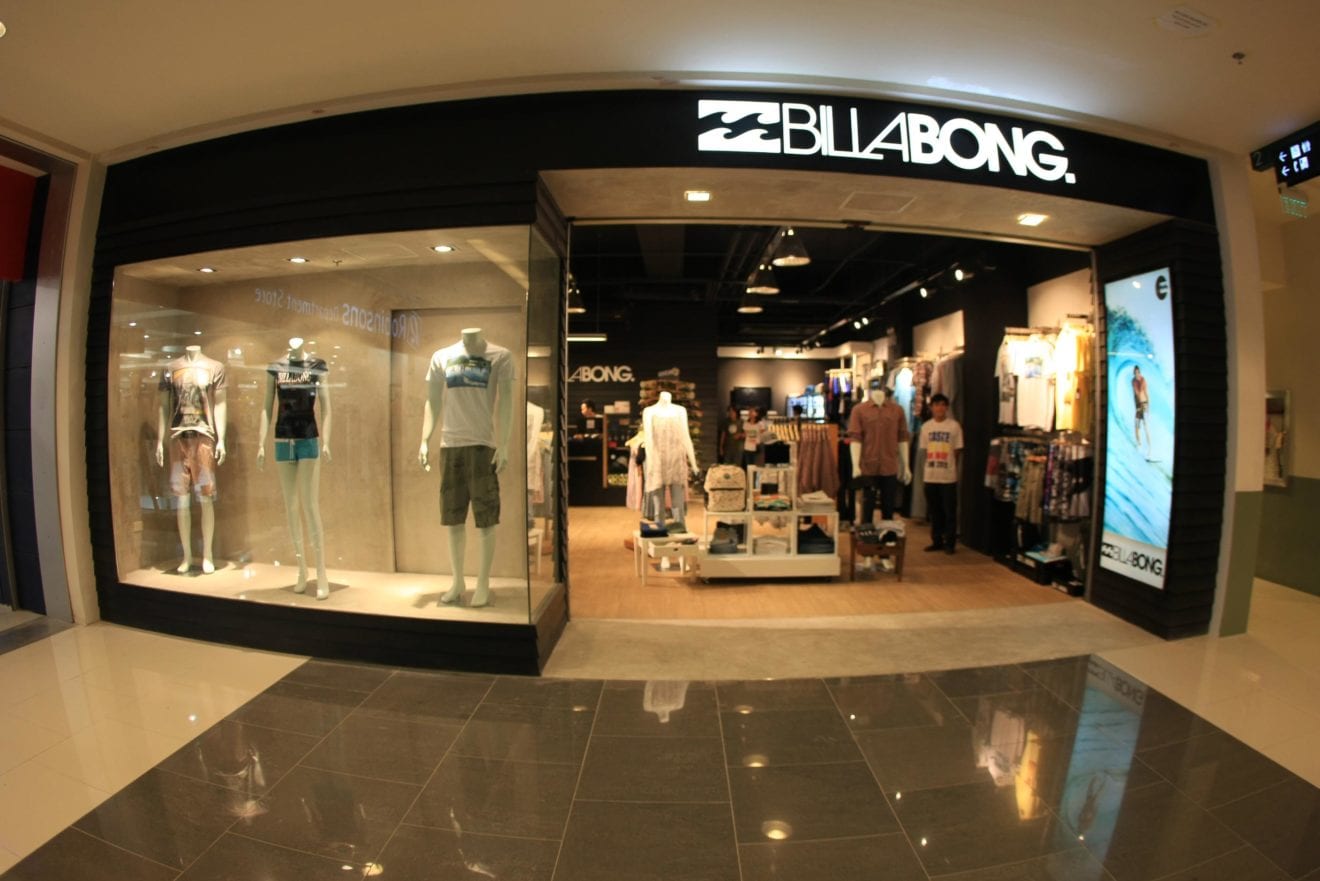
    Australian surf label Billabong has opened its newest concept store at Lombok Epicentrum Mall.

    The store is part of Billabong Indonesia brand’s extensive retail roll out planned for this year and is a partnership with Royal Surf.

    “This is the perfect time for us to strengthen our relationship with Royal Surf given the good performance the brand is achieving in its multi brand channels,” said Billabong service manager Arini Sukmawati.

    The 86 sqm Billabong Lombok store takes on the brand’s new retail identity – direct from the brand’s headquarters in Gold Coast, Australia. Similar to all new stores opened by the brand globally this year, the space features Billabong’s signature surfboard ceiling, clean white brick walls, and educational panels portraying the stories of Billabong’s award-winning products and campaigns.

    Besides being at the starting point of the island of Lombok and Sumbawa, the new store, located in the largest city in the Mataram Province, is also the epicentre of commerce and industry services.

    “Mataram is growing and developing rapidly. Along with increasing tourism rates due to the location’s very vibrant surf locations, we are very confident that our relationship with Billabong will only strengthen with the opening of this new store,” said Meylya Handoyo, director of Royal Surf.

    She said the Lombok store will be stocked with a larger assortment of the brand’s stories and product collections to fully convey the Billabong brand story.

    Billabong Lombok is located on the first floor of Lombok Epicentrum Mall Jl. Sriwijaya no. 333, Mataram, NTB. It is open from 10am – 10pm daily.

  • Surfwear retailer Billabong rejects class action claim

    Surfwear retailer Billabong rejects class action claim

    Struggling surf-wear retailer Billabong said on Thursday it received notice of a shareholder class action lawsuit over market disclosures it made four years ago.

    The Federal Court of Australia online register said law firm Slater & Gordon filed a statement of claim a day earlier. A Slater & Gordon spokesperson was not immediately available for comment.

    The law firm said a year ago that it planned to seek compensation for shareholders, alleging the company gave earnings guidance for the 2012 financial year that lacked reasonable grounds.