Retail News CRM

Tag: bite

  • Billion-Dollar Bite: Yum China Gobbles up Pizza Hut in Transformative $1.2B Deal

    Billion-Dollar Bite: Yum China Gobbles up Pizza Hut in Transformative $1.2B Deal

    Yum Brands, the global owner and franchiser of popular restaurant chains such as KFC, Pizza Hut, and Taco Bell, operates Yum China as a master franchisee. The franchisee oversees the operation of these three brands within Mainland China and has been accountable for a 3% royalty fee on its overall sales to the US-based conglomerate. However, with the conclusion of a recent deal, Pizza Hut China will be exempted from these licensing fees.

    Pizza Hut, as disclosed by Yum China, holds the title of the largest casual dining restaurant brand in China. Last year, the brand generated a segmental revenue of $2.3 billion and an operating profit of $183 million. Yum China has set ambitious growth objectives for the Pizza Hut network. Its goal is to increase the number of Pizza Hut restaurants from 4375 in over 1100 cities to over 6000 stores by the year 2028. Furthermore, the company intends to double the chain’s operating profit by 2029.

    From Franchisee to Brand Owner

    Joey Wat, CEO of Yum China, stated that transitioning from an exclusive licensee to the brand owner of Pizza Hut in Mainland China is a significant turning point for the company. This move solidifies their belief in and long-term commitment to the Chinese market.

    Being the brand owner will enable the company to have more strategic freedom to encourage innovation across the menu, store formats, new modules, and operations. Wat foresees that the cessation of licensing fees will bolster store economics and lower the threshold for opening new stores, thus aiding in margin expansion and growth.

    The transaction is slated to finalize in the third quarter, subject to standard closing conditions. Yum China asserts that their financial guidance for FY26 will remain unaffected by this transaction.

    Global Divestment

    This deal forms part of Yum Brands’ strategy to divest from the Pizza Hut segment internationally. Outside of Mainland China, the company has agreed to offload the Pizza Hut brand to private equity firm LongRange Capital for approximately $1.5 billion.

    This sale comes in the wake of Pizza Hut’s underperformance compared to KFC and Taco Bell, as evidenced in Yum Brands’ recent financial outcomes.

    Questions & Answers

    What effect will the elimination of license fees have on Pizza Hut in China?
    The elimination of license fees is expected to improve store economics and lower the requirements for opening new stores, ultimately supporting margin expansion and growth.

    What are Yum China’s growth goals for Pizza Hut?
    Yum China intends to expand the Pizza Hut network in Mainland China from 4375 restaurants across more than 1100 cities to more than 6000 stores by 2028. The company also aims to double the chain’s operating profit by 2029.

    Why is Yum Brands divesting from the Pizza Hut segment worldwide?
    This move follows a period of underperformance by Pizza Hut compared to KFC and Taco Bell, as reflected in Yum Brands’ latest financial results.
  • Funday and Barbie Unveil ‘Berry Kisses’ Gummies: Experience Fun and Wellness in a Bite!

    Funday and Barbie Unveil ‘Berry Kisses’ Gummies: Experience Fun and Wellness in a Bite!

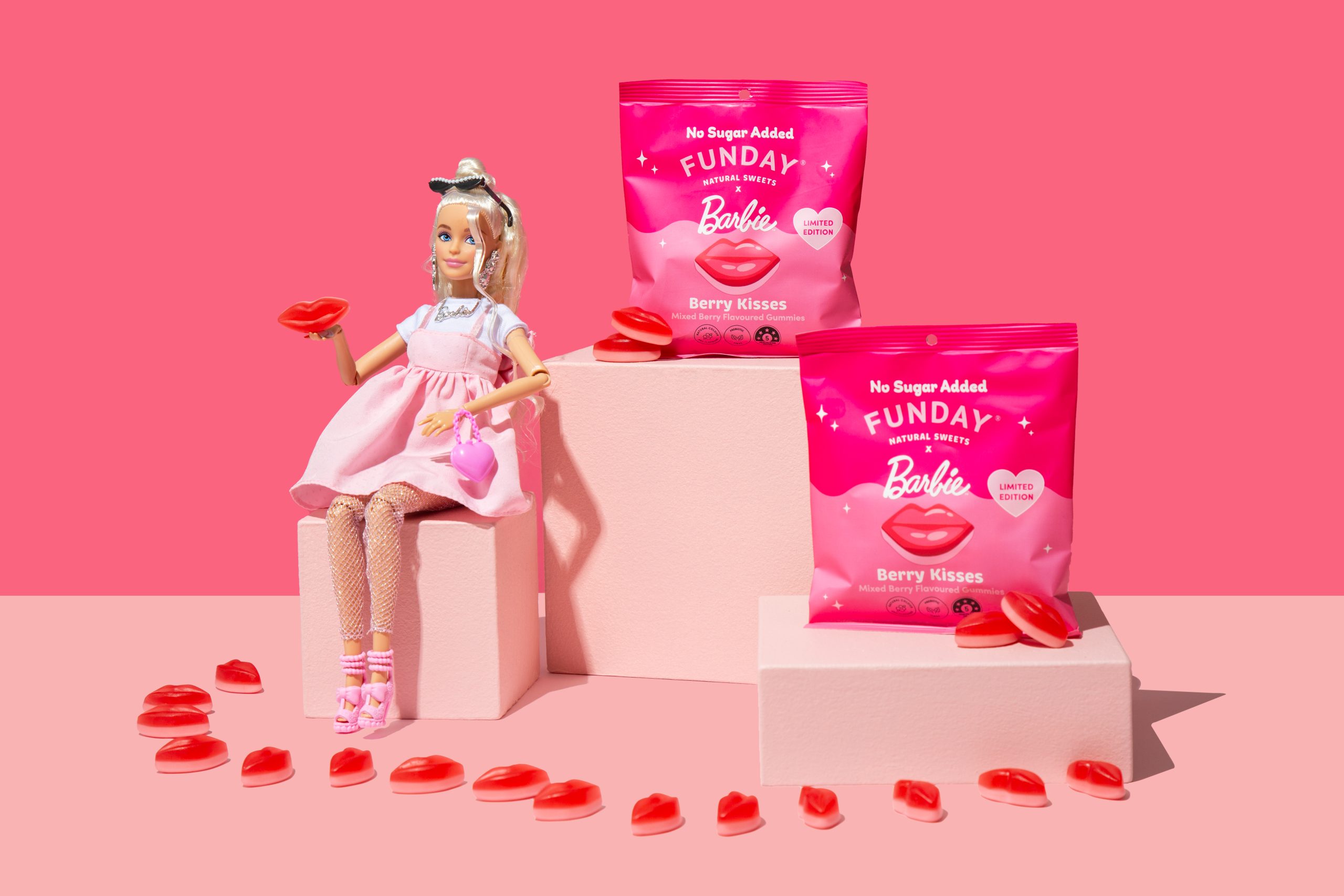
    Funday, a popular confectionery company, has joined forces with Mattel’s iconic doll brand, Barbie, to introduce a new product titled ‘Berry Kisses’. These gummies are infused with a mixed berry flavour, inspired by Barbie’s bright and playful theme.

    Details about the Collaboration

    The highly anticipated gummies are characteristically shaped like kisses and boast a natural pink hue from red radish extract. The product has been formulated with prebiotic fibre and other gluten-free ingredients, ensuring that it does not contain any added sugar. This combination of elements makes ‘Berry Kisses’ a healthy and delicious snack option.

    Founder of Funday, Daniel Kitay, expressed his excitement about this unique collaboration. He commended the partnership for its joyous, bold, and playful nature that allows Funday to explore Barbie’s vibrant world. Yet, he pointed out that the collaboration aligns with Funday’s core values.

    Availability and Pricing

    This new product will be sold in 50g bags with a recommended retail price (RRP) starting from $4.50. The ‘Berry Kisses’ gummies will initially be available online and at Chemist Warehouse from March. Subsequently, they will be rolled out to Woolworths, Ritchies, and independent grocers nationwide in April.

    Last month, Funday expanded its product portfolio by venturing into the chocolate category, further demonstrating its commitment to providing diverse and creative confectionery options.

    Questions & Answers

    What are the main features of the ‘Berry Kisses’ gummies?
    The gummies are shaped like kisses, with a natural pink colour derived from red radish. They are formulated with prebiotic fibre, gluten-free ingredients, and contain no added sugar.

    When and where will the ‘Berry Kisses’ gummies be available?
    They will first be available online and at Chemist Warehouse from March. Starting April, they will be rolled out to Woolworths, Ritchies, and independent grocers nationwide.

    What new category did Funday venture into recently?
    Funday recently launched products in the chocolate category.

  • Apparel Giants Adidas And Uniqlo Grapple With Rising Tariffs On Asian Imports

    Apparel Giants Adidas And Uniqlo Grapple With Rising Tariffs On Asian Imports

    Adidas and Fast Retailing have joined the ranks of apparel magnates grappling with the reality of increased product costs in the United States due to new import tariffs levied on key Asian manufacturing nations.

    The Impact of Rising Tariffs

    The US has instigated reciprocal import duties of 20 per cent on Vietnam, 35 per cent on Bangladesh, 36 per cent on Cambodia, and 19 per cent on Indonesia and the Philippines. These tariffs target those countries that rule the roost in the worldwide apparel sourcing industry.

    Adidas CEO, Bjorn Gulden, has indicated that these tariffs could hike the company’s product costs in the US by a staggering US$218 million for the remainder of the year. “The tariffs will directly increase the cost of our products for the US,” Gulden commented. He added that Vietnam is Adidas’ chief production hub for the American market. The company has already felt the sting of tariff-related losses amounting to “double-digit euro millions” in the second quarter.

    Price Adjustments and Strategy

    Fast Retailing CFO, Takeshi Okazaki, confirmed that Uniqlo is set to raise prices to counteract escalating costs. “We will adjust prices flexibly, considering tariffs and other costs to strike a balance between price and value,” he stated. Fast Retailing oversees 74 Uniqlo stores in the US and sources extensively from Southeast Asia, including 60 factories in Vietnam, 27 in Bangladesh and 19 in Cambodia.

    Other world-class corporations are also bracing for the cost surge. Nike, which manufactures half its footwear in Vietnam and 27 per cent in Indonesia, previously announced its anticipation of an additional $1 billion in tariff-related costs and has already initiated price increases. Gap had previously forecasted $250 million to $300 million in extra costs, and H&M has hinted at contemplating price adjustments.

    The Apparel Trade Landscape

    According to the US International Trade Commission, apparel imports into the country amounted to $79.3 billion last year, equivalent to one-fifth of the global total. Vietnam was responsible for 18 per cent of the US market, followed by Bangladesh (9 per cent), India (6 per cent), and Indonesia (5 per cent).

    Questions & Answers

    What is the projected increase in Adidas’ product costs in the US due to the new tariffs?
    Adidas CEO, Bjorn Gulden, estimates that the tariffs could increase the company’s US product costs by up to US$218 million for the rest of the year.

    How is Fast Retailing planning to handle the rising costs due to tariffs?
    Fast Retailing CFO, Takeshi Okazaki, has confirmed that Uniqlo will raise prices to offset the rising costs. He stated that the company will adjust prices flexibly, considering tariffs and other costs to strike a balance between price and value.

    What is the value of apparel imports into the US according to the US International Trade Commission?
    The US International Trade Commission reports that the value of apparel imports into the country last year was $79.3 billion, which is equal to one fifth of the global total.