Retail News CRM

Tag: Blackrock

  • BlackRock Eyes Growth in Middle East’s Flourishing Millionaire Market

    BlackRock Eyes Growth in Middle East’s Flourishing Millionaire Market

    The world’s largest asset manager, Blackrock, is making a significant move into Kuwait, a nation where around 15 percent of its citizens hold millionaire status. This financial giant is positioning itself in a virtually debt-free state known for its vibrant investment landscape amid a favorable global economic backdrop.

    In a press announcement by the Kuwaiti news agency KUNA, it was revealed that Blackrock has tapped Ali Al-Qadhi to lead its new branch in Kuwait. This announcement follows the Kuwaiti Capital Markets Authority’s recent approval of a license for Blackrock Advisors (UK) Ltd, signaling the firm’s commitment to establishing a stronghold in the region.

    Strategic Partnerships Open Doors

    Blackrock’s ambition in Kuwait was first discussed during a visit from co-founder and CEO Larry Fink to the ruler of Kuwait, Sheikh Mishal Al-Ahmad Al-Jaber Al-Sabah, in February. Fink pledged that Blackrock would back the government’s ambitious “Kuwait Vision 2035,” a strategy aimed at transforming the small oil-rich nation into a global financial and trade hub. With existing offices in Riyadh, Doha, Dubai, and Abu Dhabi, Blackrock’s expansion into Kuwait reflects its strategic focus on the region.

    Managing $12.5 trillion in assets, the firm aims to provide financial consulting to high-net-worth individuals (HNWIs) as well as to state-owned and private investment firms in a country with a population of 5 million. Kuwait ranks third globally for the percentage of millionaires, just behind Switzerland and Hong Kong. The Kuwait Investment Authority (KIA), which boasts a $1 trillion portfolio, holds a 5.57% stake in Mercedes-Benz and has recently supported Blackrock’s initiatives in building global infrastructure for artificial intelligence.

    A Stable Haven amid Global Unrest

    The Gulf’s burgeoning high-net-worth community is reportedly thriving due to rising oil prices, a boom in global stock markets, and a post-pandemic rebound in trade and tourism. Additionally, the relatively weak U.S. dollar is drawing investments from Europe, the UK, and East Asia, while all Gulf currencies are pegged to the dollar—except for Kuwait, whose dinar floats against a basket of currencies. Impressively, Kuwait’s public debt was a mere 3% of GDP in 2024.

    Interestingly, recent geopolitical crises in the region have largely sidestepped Kuwait. In September, credit rating agency Fitch reaffirmed Kuwait’s “AA–” rating with a stable outlook, though analysts are nudging the government to expedite reforms aimed at diversifying the economy beyond oil and enhancing transparency within the financial sector.

    Questions & Answers

    What does Blackrock’s new branch in Kuwait signify for the local market?
    Blackrock’s new branch reflects the growing importance of Kuwait as a financial hub, particularly for high-net-worth individuals and investment opportunities.

    How significant are Kuwait’s high-net-worth individuals in the global context?
    With 15 percent of its population classified as millionaires, Kuwait ranks third in the world for millionaire density, highlighting a lucrative market for strategic financial services.

    What challenges does Kuwait face despite its economic advantages?
    While Kuwait enjoys a stable economy with low public debt, analysts point to the need for reforms to diversify the economy and improve transparency within the financial sector to sustain its growth.

  • BlackRock Empowers Swiss Investors with New Voting Options in Innovative Move

    BlackRock Empowers Swiss Investors with New Voting Options in Innovative Move

    In a significant move for institutional investors in Switzerland, BlackRock has rolled out its global Voting Choice program, allowing clients to directly influence voting rights in funds valued at approximately $5.8 billion. This initiative, announced on Tuesday, marks a pivotal moment, as it extends voting rights beyond clients with separately managed accounts for the first time.

    Your Investment, Your Voice

    The Voting Choice program enables investors to select from 16 third-party voting policies or to continue relying on BlackRock’s Investment Stewardship (BIS) team for proxy voting. This empowers institutional clients—such as Swiss pension funds that collectively serve more than 4.7 million people—to gain greater leverage in the oversight of their capital.

    A Global Perspective

    Globally, the program encompasses over $2.7 trillion in assets, making up more than 90 percent of BlackRock’s index equity assets under management, with $662 billion actively managed by clients under this initiative.

    Words from Leadership

    Amra Balic, Co-Head of BlackRock Investment Stewardship, expressed enthusiasm about the program’s reception among clients. “We are pleased that Voting Choice resonates with interested clients and are delighted to now extend the program to the Swiss market,” she stated. Dirk Klee, BlackRock’s Country Manager for Switzerland, emphasized the program’s efficiency: “With the introduction of Voting Choice for the institutional share classes of ten Switzerland-domiciled funds, we offer our clients simple and efficient options to actively participate in the voting process according to their preferences.”

    In an age where every vote counts, this initiative reminds us that even the largest players in finance believe in empowering their clients—one vote at a time.

    Questions & Answers

    What does the Voting Choice program allow institutional clients in Switzerland to do?
    The Voting Choice program enables institutional clients to directly exercise their voting rights in selected funds, allowing for greater influence over investment decisions valued at approximately $5.8 billion.

    How does this program enhance client participation in corporate governance?
    Clients can either choose from 16 third-party voting policies or have BlackRock’s Investment Stewardship team manage proxy voting, thus tailoring their involvement in governance according to their preferences.

    What is the global scale of the Voting Choice program?
    Globally, the program encompasses over $2.7 trillion in assets, making up more than 90 percent of BlackRock’s index equity assets under management, with $662 billion actively managed by clients under this initiative.

  • Zurich Fintech Propels Blackrock’s Retail Growth in Cross-Border Wealth Solutions

    Zurich Fintech Propels Blackrock’s Retail Growth in Cross-Border Wealth Solutions

    In a strategic move to enhance its global investment offerings, BlackRock has integrated technology from Zurich-based fintech company Investment Navigator into its Aladdin Wealth platform. This collaboration aims to streamline cross-border compliance and improve product distribution efficiency for financial advisors.

    A New Era for Investment Management

    This integration, announced jointly by both firms on Monday, equips financial advisors with the necessary tools to deliver tailored portfolio proposals for end investors. By simplifying regulatory checks within the Aladdin Wealth platform, this technology facilitates a more transparent and effective investment management process.

    Transformational Digital Solutions

    Investment Navigator, launched in 2014, has developed digital solutions that incorporate regulatory and offering checks along with selling restrictions into the investment lifecycle—from proposals to validation and trading execution. This foundational technology is set to revolutionize how financial advisors manage international investments.

    Venu Krishnamurthy, Global Head of Aladdin Wealth at BlackRock, commented on this initiative, stating, “Wealth management is undergoing a transformation as more financial advisors turn to technology to deliver tailored solutions at scale. Through our collaboration with Investment Navigator, clients can now seamlessly navigate the complexities of cross-border investing within Aladdin Wealth.”

    Implications for the Retail Sector

    This integration not only signals a significant leap in BlackRock’s technological capabilities but also highlights the growing trend of fintech partnerships within the retail investment space. As consumer demand for cross-border investment solutions increases, this development could reshape how financial advisors interact with global markets, ultimately benefiting consumers seeking diverse investment opportunities.

    The partnership between BlackRock and Investment Navigator underscores the crucial role technology plays in enhancing investment management, paving the way for future advancements in the retail sector.

  • Blackrock Launches ‘Swiss’ Bitcoin ETP in Europe

    Blackrock Launches ‘Swiss’ Bitcoin ETP in Europe

    On Tuesday, Blackrock launched the iShares Bitcoin ETP, providing European investors with access to Bitcoin without the need to directly trade or hold the cryptocurrency.

    The securities are backed by Bitcoin held by Coinbase, which is also responsible for the custody solution and the process controls safeguarding the private keys. For the iShares Bitcoin ETP, the Bitcoins are transferred daily from the trading wallet to segregated offline wallets («cold storage»).

    There’s a lot of Switzerland in the iShares Bitcoin ETP. BlackRock Switzerland played a key role in its development, said Dirk Klee, Country Head for Switzerland.

    The iShares Bitcoin ETP carries a total expense ratio (TER) of 25 basis points, with a temporary reduction to 15 basis points in effect through the end of the year. The underlying Swiss special purpose vehicle (SPV) is exempt from Swiss stamp duty on both purchases and sales.

    Blackrock took its time before launching the iShares Bitcoin ETP. Ultimately, it was the evolution of the cryptocurrency space in recent years—combined with growing client demand—that prompted the firm to move forward.

    «We believe ETPs can play a key role in building a bridge between crypto and traditional finance, due to their efficiency and ease of use,» said Klee. For investors with appropriate governance frameworks and sufficient risk tolerance, a 1% to 2% allocation to Bitcoin in multi-asset portfolios is justifiable, he added.

  • Whatsapp Hunters Seeking New Financial Sector Game

    Whatsapp Hunters Seeking New Financial Sector Game

    After imposing fines on large banks UBS and Credit Suisse for using unsecured communication channels, the US Securities and Exchange Commission is now aiming for another industry.

    Now, US fund behemoths Blackstone and Blackrock are in the sights of the US Securities and Exchange Commission (SEC), which announced months ago it wanted to investigate other financial firms after taking on the banks.

    The company said Blackstone was contacted by the SEC back in October to release information about its retention of electronic business communications and text messages. Blackrock reported that it would respond to a Securities and Exchange Commission request concerning an industry-wide investigation. Both companies said they would cooperate with regulators.

    Earlier, financial investors Apollo Global Management, Carlyle Group, and KKR reported a request from the agency to do so.

    Last year, after months of investigation, the SEC fined a total of 16 financial firms, including Wall Street titans Goldman Sachs, Bank of America, Citigroup, Morgan Stanley, and JP Morgan. Credit Suisse and UBS also had to pay $200 million each.

    The fines resulted in the banks imposing stricter controls on private phone use.

    JP Morgan recently took a new approach to ensure compliance rules were followed in employee communications, phasing out the company smartphone in the process.

    According to a media report, it is relying on a company smartphone app to ensure communications are compliant. Bankers and traders have been asked to hand over their company cell phones and install a monitoring app on their private devices instead that allows monitoring of work-related messages.

    Swiss banks have precise regulations on which channels and in what form professional communication is allowed and what the documentation requirements are. At UBS, there are clear guidelines of which employees are regularly reminded

  • Standard Chartered Joins BlackRock’s Provider Network

    Standard Chartered Joins BlackRock’s Provider Network

    The bank will offer integrated front-to-back office investment management solutions to mutual clients across Asia, Africa, and the Middle East on the Aladdin platform.

    Standard Chartered has become the latest bank to ink a strategic partnership with BlackRock’s «Aladdin» provider network, a platform that helps assets managers check risk in their portfolios, trade, manage data management, and other operational tasks.

    The alliance builds on Standard Chartered’s ongoing relationship with BlackRock, leveraging the focus both organizations have on innovation and digitization and is part of the Bank’s longer-term strategic partnership with the global asset manager to provide an enhanced experience for our institutional clients, Standard Chartered said in an announcement on Wednesday.

    Aladdin – or asset, liability, debt, and derivatives investment network – was conceived by the New York-based firm in the late 1990s as an internal tool. Today, it is one of Blackrock’s most powerful tech tools that it sells to smaller rivals, in a bid to stave off pressure on its active management fund arm from cheaper index funds. Credit Suisse and HSBC adopted the platform in 2019 and 2020 respectively.

    Akiyoshi Takeuchi, head of BlackRock Solutions Asia-Pacific, said Standard Chartered’s adoption of the platform «underscores growing momentum in bringing innovative solutions deeper into emerging markets throughout Asia, Africa, and the Middle East.»

  • HSBC Securities Services Joins BlackRock’s Provider Network

    HSBC Securities Services Joins BlackRock’s Provider Network

    The move allows asset managers and asset owners to connect seamlessly with HSBC through a single platform.

    HSBC on Tuesday announced that it will offer access to its Securities Services’ products via «Aladdin» – a Blackrock-run platform that helps assets managers check risk in their portfolios, trade, manage data management, and other operational tasks, from the first half of 2021, starting in Hong Kong and Singapore.

    Aladdin – or asset, liability, debt, and derivatives investment network – was conceived by the New York-based firm in the late 1990s as an internal tool. Today, it is one of Blackrock’s most powerful tech tools that it sells to smaller rivals, in a bid to stave off pressure on its active management fund arm from cheaper index funds.

    Sebastien Danloy, HSBC Securities Services’ global head of asset owners and managers, said joining the network adds to HSBC’s capabilities to connect to its clients’ front-office platforms and to offer front-to-back solutions in an open architecture environment to the asset management community.

    Integrating HSBC’s middle office, custody, and fund administration services with Aladdin will help clients access real-time data, streamline their workflows, reduce their manual processes and improve their operational efficiencies, the bank said in the announcement.

    HSBC currently administers $500 billion in assets for 20 global asset managers who already use Aladdin.

  • Pavilion REIT Malaysia scores second mall in 2016

    Pavilion REIT Malaysia scores second mall in 2016

    Pavilion Real Estate Investment Trust’s manager Pavilion REIT Management has agreed to buy the da:men USJ shopping mall from Equine Park Country Resort and Revenue Concept.

    The RM488 million (US$111.6 million) deal includes the five-storey shopping mall with a lower ground floor of about 420,920 sqft (39,100 sqm) of net lettable area and a two-level basement car park. Both plots are situated on a piece of freehold land that measures 3.499 ha.

    This is the second acquisition by Pavilion REIT already this year. As reported by Inside Retail Asia on January 4, the trust has entered into an agreement to buy the six-storey Intermark retail building from US equity investor BlackRock.

    The da:men mall, still under construction, is located northeast of Kuala Lumpur City Centre, along Jalan Kewajipan, within the locality of USJ 1, Subang Jaya. It is scheduled to open in November.

    The mall is between two major highways, that is the Shah Alam Highway to the north and Damansara – Puchong Highway to its south.

    “The acquisition is expected to be completed by the first quarter of 2016 and is consistent with the investment objective and strategy of Pavilion REIT,” Pavilion said in a statement.

    “It is intended to be fully funded by debt, which will increase Pavilion REIT’s gearing ratio to 23 per cent, which is below the gearing limit of 50 per cent prescribed by the REIT guidelines,” it added.

    When this year’s two new deals are settled, the REIT’s portfolio will reach RM4.9 billion.

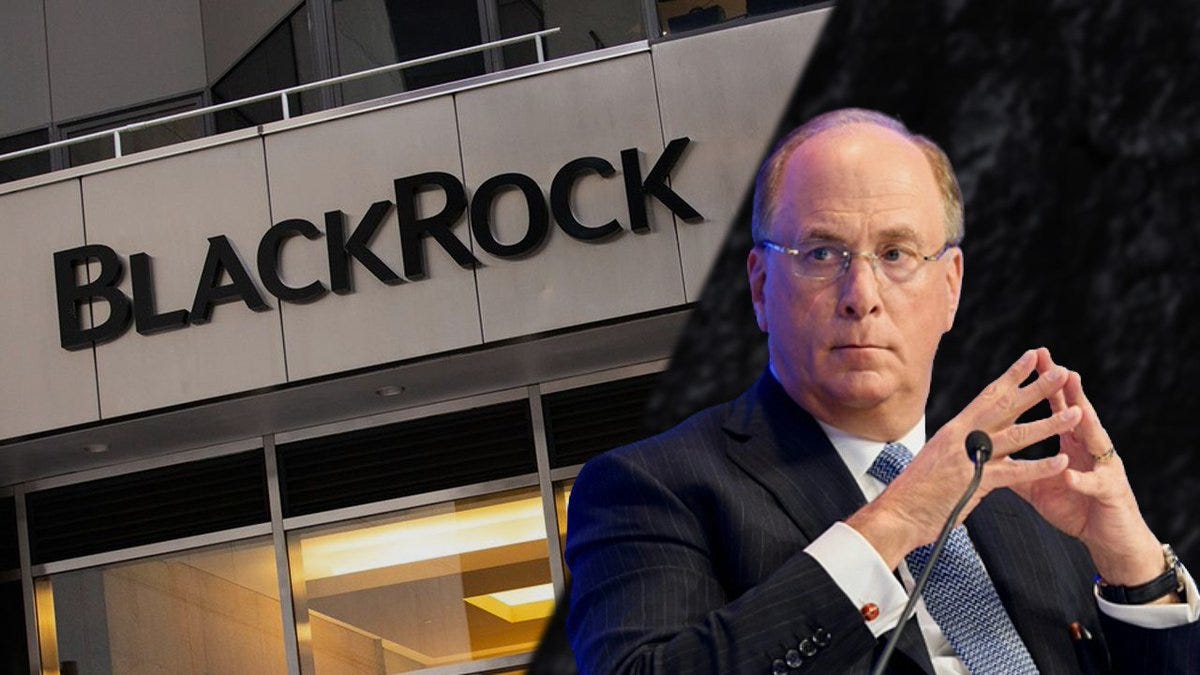
  • BlackRock’s Laurence Fink sees buying opportunity

    BlackRock’s Laurence Fink sees buying opportunity

    Laurence D Fink, who runs the world’s largest asset manager, said the recent stock market decline presents a buying opportunity because markets are poised to gain over the course of the next year.

    “You can’t walk away from these movements,” Fink, chief executive officer of BlackRock, said Friday in an interview from the World Economic Forum in Davos. “Use these as an opportunity.”

    Fink said while markets have currently capitulated amid slumping oil and inconsistent messages coming from China, he doesn’t expect a bear market in equities. BlackRock, which oversees $US4.6 trillion for clients, saw institutional investors starting to come back into markets on Wednesday, when US stocks briefly fell as much as 3.7 per cent before recovering most of the losses.

    Top investors such as George Soros and Jeffrey Gundlach have advised investors to use short-term market rebounds to sell assets. Soros said Thursday that China’s economy is headed for a hard landing, a slump that will worsen global deflationary pressures, drag down stocks and boost US government bonds. Other investment managers, including Guggenheim Partners’ Scott Minerd and Bridgewater Associates’ Ray Dalio, have warned that the market likely has further to fall.

    Soros, who shorted the Standard & Poor’s 500 Index, said it is still too early to buy equities, while Gundlach said he expects a “protracted decline in the S&P 500”. Dalio cautioned that global markets face risks to the downside as economies near the end of a long-term debt cycle.

    The warnings come as oil prices have plunged and China’s growth has slowed.

    Fink said China needs to expand its international markets faster and allow more foreign investors, which would create a more stable, less volatile market, he said. “What China struggles with is an immature capital market that is heavily dependent on leverage retail,” he said.

    Fink said it would “be horrible” if China devalues its currency because it would have a huge global deflationary impact and would mean the country is moving back to an export-driven economy.

    His views diverge from others, including hedge fund manager Mark Hart and Goldman Sachs Group president Gary Cohn. Hart, who is betting against the yuan, said China should weaken its currency by more than 50 per cent this year. A one-off devaluation would ease pressure on China’s foreign exchange reserves and remove an incentive for capital outflows, he said. Cohn said that China will likely have to devalue its currency in the next six months to address slowing growth.

  • BlackRock sells luxury Kuala Lumpur mall

    BlackRock sells luxury Kuala Lumpur mall

    In a MYR160 million ($37.33 million) deal, asset manager BlackRock has sold a luxury shopping mall in central Kuala Lumpur to Malaysia’s Pavilion Real Estate Investment Trust.

    Reputed to be the world’s largest asset manager, BlackRock, registered on the New York Stock Exchange, bought Intermark Mall in 2007, along with two corporate office towers and a hotel, for $600 million through a private real estate fund. One of the office towers and the hotel have since been sold, reports Deal Street Asia.

    In a filing with the Malaysian Stock Exchange, Pavilion REIT said it had entered into a sale and purchase agreement with The Intermark Sdn Bhd for the acquisition of the six-storey retail building, which has a strata floor area of about 337,427sqft (31,350 sqm) together with basement parking for 367 cars.

    With a 74 per cent occupancy rate, the Intermark will return guaranteed rentals of MYR15 million for three years, to be held by a trustee for Pavilion REIT. The company expects the purchase to be completed this first quarter.