Retail News CRM

Tag: Cards

  • Card payment compulsory soon for e-commerce businesses in Vietnam

    Card payment compulsory soon for e-commerce businesses in Vietnam

    E-commerce businesses may have to accept card payments as a way to offering more options of payment when shopping online, an official from the Ministry of Industry and Trade said.

    Võ Văn Quyền, director of the ministry’s Domestic Market Department, was quoted as saying that the department was studying amendments to e-commerce business which might include regulations about compulsory payment methods.

    Accordingly, accepting card payment might be compulsory for e-commerce firms.

    Việt Nam Banking Card Association’s statistics showed that e-commerce payments had seen breakthrough developments in 2012-16 period.

    Payment values by domestic-payment cards jumped 597 per cent and by international cards by 319 per cent in the five-year period.

    As of the end of 2016, payments by the former were worth totally VNĐ3.44 quadrillion (US$150.9 billion) so far and the latter by VNĐ13.4 quadrillion.

    The values are expected to increase rapidly if accepting card payment is made compulsory for e-commerce transactions.

    The ministry’s Department of E-Commerce and Information Technology in March said that e-commerce was growing rapidly in Việt Nam where 90 per cent of population had smart phones which were used at an average 24.7 hours online per week. On average, each Vietnamese used $160 for shopping online per year.

    However, according to the Payment Department under the State Bank of Vietnam, the payment infrastructure in the country remained under-developed and the ratio of online payment in e-commerce remained modest.

    The banking sector would improve the legal framework for e-payment while developing the infrastructure for card payment. In addition, security for online payments must be improved.

    Race for cashless payment, fintech

    Developing cashless payment methods inVietnam had significant room. The Government ofVietnam in a cashless payment project from 2016 to 2020 set a goal that only 10 per cent of transactions in the economy were made in cash.

    A recent survey by Visa Vietnam showed that Vietnamese were now on a trend of using less cash in payment with the ratio of cash payment dropping from 46 per cent in 2015 to 38 per cent last year together with improved trust in electronic payment.

    The survey found that there were 67.4 million banking accounts inVietnam as of 2016, significant increase compared to 16.8 million in 2014 but card payment accounted for just 3 per cent of personal consumption spending in six major cities. Only 50 per cent of e-commerce payment were conducted by card.

    Statistics of the Vietnam Banking Card Association showed that transactions at ATMs were mainly cash withdrawals (86.8 per cent of revenues conducted by domestic payment cards), reflecting the popularity of cash.

    The booming of e-commerce would drive cashless payments inVietnam.

    E-commerce was forecast to grow at 20 per cent per year to reach a revenue of $10 billion by 2020. The Department of e-Commerce and Information Technology said that the e-commerce revenue could be higher as currently the growth rate had reached 25 per cent.

    The association said that digital banking was also gaining popularity together with the application of tokenisation in improving security.

    There were 92.08 million domestic payment cards and 12 million international payment cards in 2016, the association’s statistics showed.

    Vietnam is also seeing a wave of fintech start-ups to promote cashless payment.
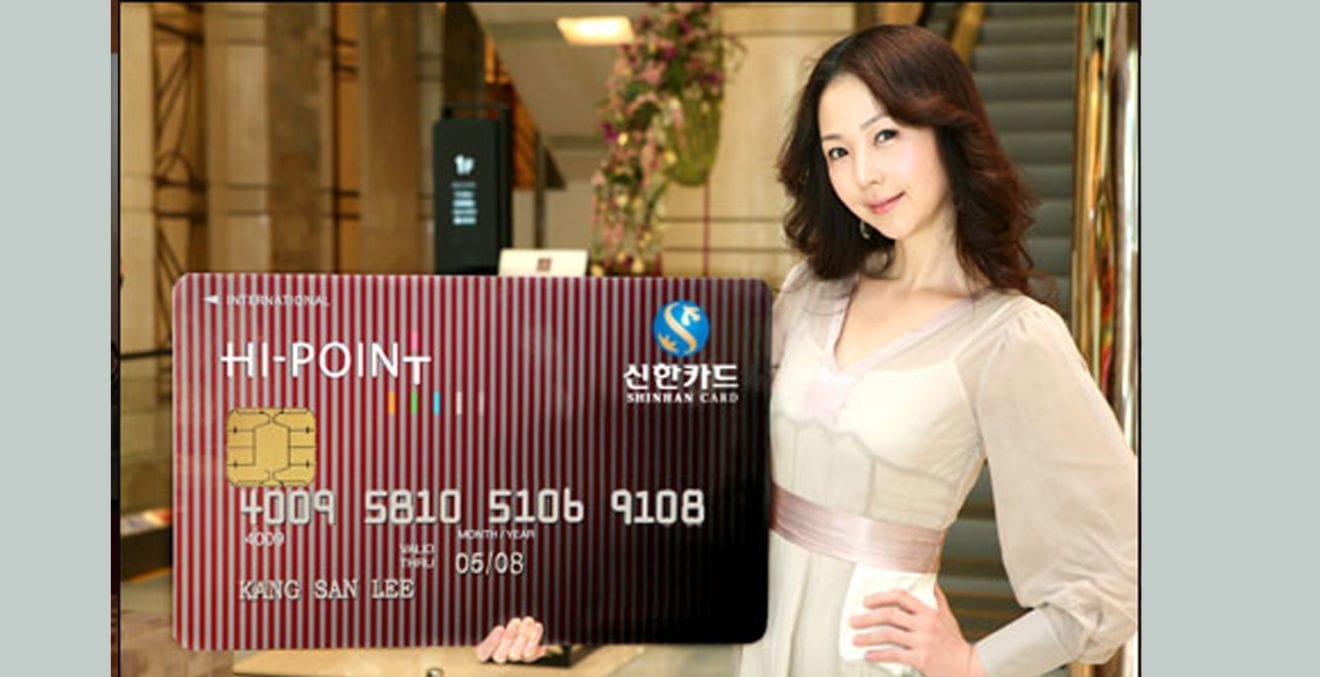
  • Korean firm enters Indonesian credit card market

    Korean firm enters Indonesian credit card market

    Shinhan Indo Finance Ltd (SIF), a subsidiary of South Korean credit issuer Shinhan Card, has launched its first credit card on the Indonesian market.

    The “ShinhanIndo Card Hi-Cash” comes in four different types to reach consumers from all segments, especially the millennials.

    In developing its credit card business, SIF is cooperates with Indo-Pack, merchants under Indomobil Group, and K-Pack, merchants from South Korean companies, the company’s vice president Tan Kim Piauw told a press conference after the launching event on Monday.

    SIF was established in December 2015 as a multi-finance joint venture between the Korean credit issuer and two Indonesian firms, Indomobil Group and Asuransi Central Asia (ACA).

    The joint venture obtained permits to issue credit cards from the Financial Services Authority (OJK) and Bank Indonesia in December last year.

    In its initial stage of operation, Indomobil’s 20,000 employees and those of ACA were SIF’s main market target, Tan said, adding that this year the number of credit card holders was expected to reach 80,000.

    “We hope to book Rp 500 billion in transactions in 2017,” he said.

    Speaking at the press conference, Shinhan Card CEO Wi Sung Ho said that with its growing middle class, Indonesia was a market with quite a bit of potential for the credit card business. He said that the number of credit card holders totaled only 17 million despite the country’s large population, far below the South Korean market with 22 million cardholders.

  • Public Bank and UnionPay International Launch PB UnionPay Lifestyle Debit Card

    Public Bank and UnionPay International Launch PB UnionPay Lifestyle Debit Card

    UnionPay International (UPI), a global payment network, has reaffirmed its presence in Malaysia by inking a first-of-its-kind partnership with Public Bank (PB), the third largest bank in Malaysia. The two collaborated to launch the PB UnionPay Lifestyle Debit Card in December 2016, targeted at customers and businessmen who are frequent travelers to Asia. 

    Poised as the best travel companion, the PB UnionPay Lifestyle Debit Card which is issued upon opening of a PB UnionPay Savings Account, will give Cardholders access to a range of perks and benefits. A PB UnionPay Lifestyle Debit Cardholder can access the Priority Lane at the Chinese Visa Application Service Centre in Kuala Lumpur and Kuching, to expedite the submission and processing of visa applications. Besides, discounts of up to 10 percent are  offered to these Cardholders at duty-free shops in 100 participating international airports. PB UnionPay Savings Account offers a flat interest rate of 0.5 percent per annum, and a monthly cash rebate of RM10 (S$3.21) for accounts with a minimum of RM10,000 (S$3,221) month-to-date average balance and no over-the-counter transactions for the month. 

    In conjunction with the launch, Public Bank is offering complimentary access to Plaza Premium Lounge Malaysia so visitors can partake in a host of facilities that will make traveling more comfortable and satisfying. A panda neck pillow and eye mask resembling the card design will be given to new PB UnionPay Savings Account holders with a minimum deposit amount of RM2,000 (S$643) which is earmarked for three months. Gifts are available while stocks last.

    Public Bank is the third largest banking group in Malaysia. Headquartered in Kuala Lumpur, Malaysia, the Bank entered its 50th year of operations in 2016 with a total group asset size of RM363.76 billion (S$116 billion) as of end 2015. With an extensive reach to its customers via a network of 259 well distributed branches and over 2,000 self-service terminals in Malaysia, this partnership between UPI and PB aims to provide PB customers with greater mobility within the region through the use of its high quality and secure cross-border payment services.

    ӡWe are excited to have Public Bank on board as our strategic partner for our issuing in Malaysia,ӱ said Mr. Wenhui Yang, General Manager of UPI Southeast Asia. ӡUnionPay International is fully aligned with Public BankӮs focus on providing the most efficient services to its customers through the innovation of new banking services, and we believe that this partnership will put us in a good position to serve the needs of consumers and businesses in Malaysia.ӱ

    ӡWe are proud to be the first local bank in Malaysia who had launched UnionPay Card which offers various solutions to fit our customersӮ financial and lifestyle needs. With the expanding business alliances between China and Malaysia, Public Bank continues to progress and expand in order to become the first choice of expatriates and students from China for their banking service needs as this card serves them well whenever they are in China, Malaysia or any other 160 countries and regions that accept UnionPay Cards.ӱ said Y. Bhg. DatoӮ Chang Kat Kiam, Deputy Chief Executive Officer of Public Bank.

  • Vietnam urges retailers to ditch cash for plastic

    Vietnam urges retailers to ditch cash for plastic

    With online sales booming in the country of 93 million, it’s time for shoppers to embrace e-commerce. Vietnam is trying to convince at least 70 percent of its citizens aged 15 and over to open bank accounts and about 50 percent of urban residents to switch to non-cash payments via debit and credit cards by 2020.

    Online retail revenue is forecast to hit $10 billion in the next four years, accounting for 5 percent of the country’s total retail market, which grew 10.2 percent last year to $118 billion.

    The government has officially rolled out its e-commerce development plan for 2016-2020 to tap into the fast-growing consumer population with a huge demand for online shopping.

    According to one estimate, about 30 percent of the population will buy goods and services over the internet and spend an average of $350 per year online by 2020.

    In 2015, Vietnamese shoppers spent $4.07 billion online, a jump of 37 percent from the previous year, according to the Vietnam E-commerce Report, adding that revenue from online retail accounted for 2.8 percent of the country’s revenue from the sale of goods and services in the same year.

    With a population of 93 million, Vietnam was ranked as the smallest e-commerce market in Southeast Asia in terms of sales just three years ago. Now online retail is gaining momentum with the country’s 49 million internet users increasingly turning to online shopping.

    According to Internet World Stats, Vietnam is currently ranked 18th in the world in terms of the number of internet users, with mobile subscription rates as high as 40 percent.

    In order to increase non-cash transactions, the government will require all supermarkets, shopping malls and convenience stores to accept payments via credit and debit cards.

    It is forecast that in the next four years the number of supermarkets will nearly double to 1,300 and shopping malls to 300, according to the government’s plan.

    Spending at supermarkets, convenience stores and shopping malls is expected to rise to 45 percent of total consumer spending by 2020, up from 25 percent now, government data shows.

    The government also wants 70 percent of utility service providers including telecommunications companies and electricity and water suppliers to move their billing online.

  • Ameriabank, Best Card unveil new cashback project, AYO card

    Ameriabank, Best Card unveil new cashback project, AYO card

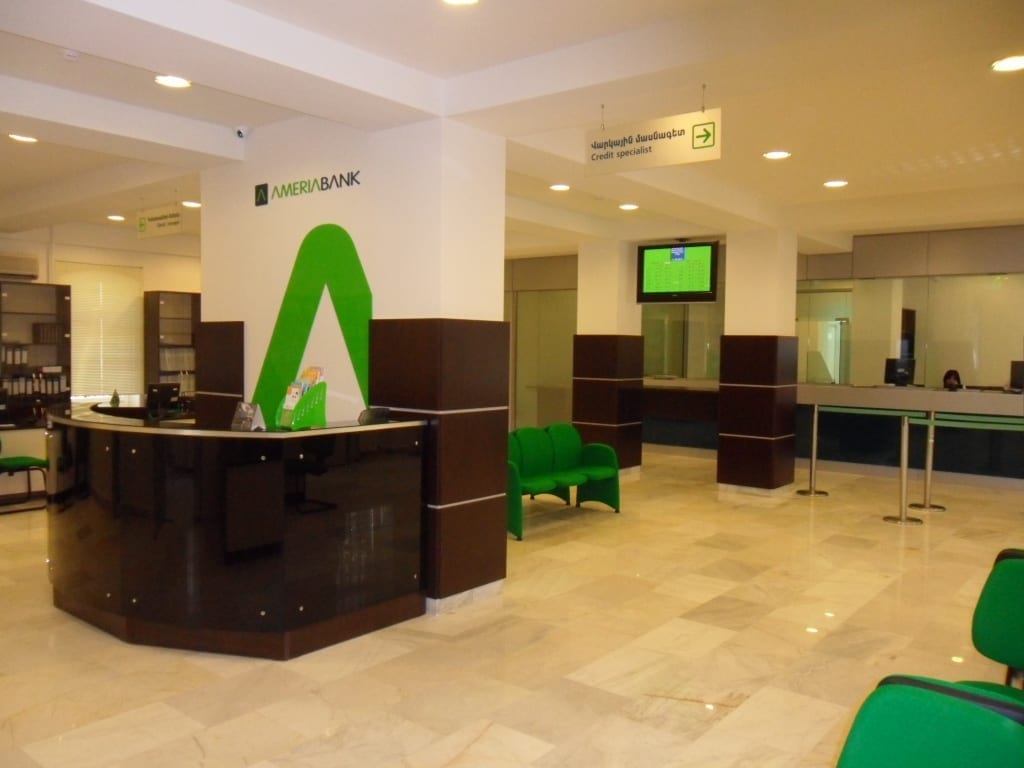
    Ameriabank and Best Card company on Tuesday, December 13 unveiled a new cashback project, as well as the AYO card and AYO program. The AYO program enables all Ameriabank cardholders (except for gift and business cards) to receive cashback for every payment made at partner shopping centers and service points. The amount of the refund will vary depending on a particular program and could reach up to 20%. Payment cards AYO Visa Classic and Visa Gold are intended for non-cash payments and online purchases both in Armenia and abroad, allowing customers to also obtain a line of credit on Ameriabank’s terms.

    According to Ameriabank Retail Director Arman Barseghyan, the program is implemented as part of the bank’s strategy to enhance the retail market through new services and changes of existing terms.

    “AYO cashback project means that an amount will be returned to client’s card in case of non-cash payments, and it actually means a certain discount,” said Barseghyan.

    He also said that not only do the the card AYO Visa Classic and Visa Gold provide a payment mechanism with the cashback possibility, but they also allow the use of Ameriabank’s standard credit lines.

    In turn, General Director of Best Card Marina Dallakyan noted that the difference between AYO project and other similar programs is that it comprises the largest list of partner companies operating in various fields, including supermarkets, gas stations, shoe stores, clothing stores, leisure and entertainment centers, insurance companies, etc.

    According to her, cooperation with Rosgosstrakh makes virtually all users of AYO cards insured against accidents. In addition, holders of Visa Gold cards will be provided with certain discounts by partner companies.

    AYO cards can be obtained by Armenian citizens, who are 18 and older, as well as foreign citizens, while the credit cards can be obtained by persons between the ages of 21 to 63 years if they comply with Ameriabank requirements. Soon, AYOCARD mobile application will be available on the App Store and the Google Play.

  • MasterCard eyes Indonesians craving exclusivity

    MasterCard eyes Indonesians craving exclusivity

    Global payments and technology company MasterCard is intensifying efforts to tap opportunities in the Indonesian premium market segments by offering a variety of exclusive rewards and services for its premium card holders.

    Among the select opportunities are wine privileges for the holders of MasterCard Platinum cards, access to passenger lounges at 750 airports for MasterCard World card holders and concierge services and exclusive dining for holders of MasterCard World Elite cards.

    “Premium customers currently want payment solutions that provide exclusivity and special access, and can be accepted globally and providing a variety of special services,” MasterCard’s president for Indonesia, Malaysia and Brunei, Safdar Khan, said recently.

    MasterCard is aiming for double-digit growth in debit and credit cards users in Indonesia next year, amid low credit card penetration in the country.

    Data from Bank Indonesia show that, as of September, there were around 123 million active ATM cards and debit cards in Indonesia. The number of credit card holders, meanwhile, reached 17.22 million in October, up 2.85 percent on the year.

    MasterCard has also recently sealed collaboration with domestic lender Bank Negara Indonesia (BNI) Syariah to provide ATM cards for the bank’s customers who go on the haj and umrah. They have cooperated with a private bank in Saudi Arabia to provide special ATMs to better assist Indonesian pilgrims.

    As the country with the largest Muslim population, Indonesia sees nearly 200,000 people go on the haj every year.

  • India grants demonetization exemption for prepaid credit

    India grants demonetization exemption for prepaid credit

    The Indian government has made a special exception to temporarily allow demonetized 500 rupee notes for the purchase of prepaid top ups in response to a sharp decline in purchases.

    The government enacted legislation earlier this month to declare the use of 500 rupee and 1000 rupee banknotes invalid as part of a crackdown on counterfeiting and black market money.

    New 500 rupee and 2000 rupee banknotes have been issued to exchange the old currency, but the policy led to a cash shortage in the country.

    In response to lobbying from GSM industry body the Cellular Operators’ Association of India (COAI), the government has added prepaid top-ups up to the list of essential services allowed to accept the old banknotes.

    Consumers will be able to pay for top-ups up to a maximum of 500 rupees using the old notes until December 15.

    The mobile industry had been seeking for the exemption to apply to both prepaid and postpaid services, and for the old 1000 and 500 rupee notes, but the government has approved the exemption only for prepaid purchases and 500 rupee notes, the report adds.

  • Here’s why new NFC-enabled SIM cards may flop in Singapore

    Here’s why new NFC-enabled SIM cards may flop in Singapore

    The service is too costly. Singapore’s telco operators recently unveiled new NFC-powered SIM cards, which will allow commuters to pay fares using their mobile phones. The SIM cards will also be accepted at 30,000 ez-link terminals across the island.

    However, the new SIM cards might fail to gain enough popularity because of several stumbling blocks, according to a report by DBS.

    The report noted that the popularity of iPhones in Singapore is a big hurdle to the rise of the new SIM cards. The NFC-powered SIM cards are incompatible with iPhones, which only support Apple Pay and make up a third of mobile phone sales in the country.

    DBS also highlighted that ez-link is not accepted at 7-11 stores and many other retail outlets, which prefer NETS and credit cards.

    Apart from these hurdles, the cards are also extremely expensive at $37.50 apiece.

    “EZ-link is not widely popular for retail transactions even in Singapore. Plus NFC enabled payment is not adding any security feature to the ez-link card while “Apple Pay” adds security to credit card transactions. So we do not see that the NFC enabled SIM based payments will be widely used. Anyway, telcos may not get much commission out of the transactions, as the bulk may go to ez-link for its large customer base using it for buses and trains,” the report noted.

  • Christmas shopping: Consumer anxiety falls in time for retail season

    Christmas shopping: Consumer anxiety falls in time for retail season

    Consumers in Australia are less anxious than at any time in the past 18 months amid signs of a robust finale to the Christmas shopping season.

    The National Australia Bank’s consumer anxiety index, released on Tuesday, has fallen for a second straight quarter to its lowest mark since mid-2013. It also revealed households have increased spending on non-essentials.

    New spending data pointed to solid retail spending growth in December, despite the hit to consumer confidence caused by last week’s siege in Martin Place. Commonwealth Bank figures, released on Tuesday, show the volume of debit and credit card transactions made in stores across Australia in the first three weeks of December was 10.7 percent higher than the same period last year. The total value of transactions was five per cent higher in that period.