Retail News CRM

Tag: CEB

  • Cebu Pacific gets 2 aircrafts, increases flights

    Cebu Pacific gets 2 aircrafts, increases flights

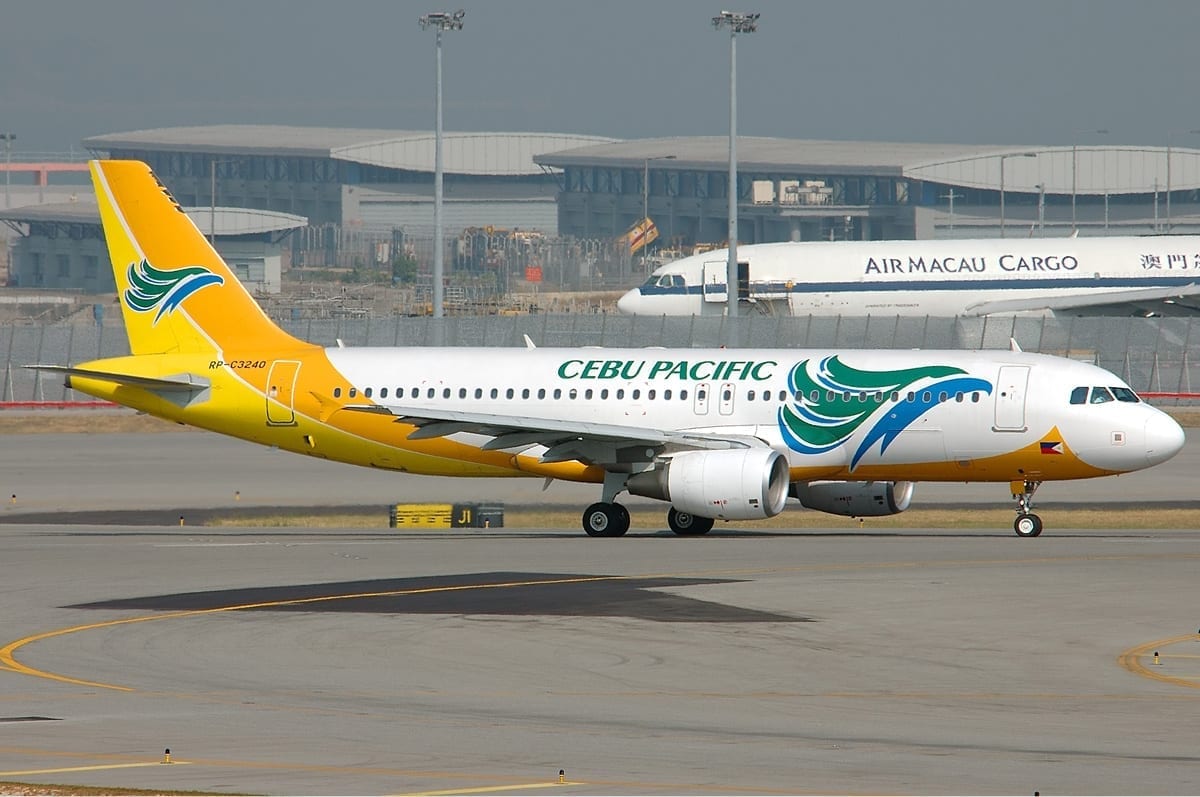
    The Philippines’ Cebu Pacific Air increases the frequency and capacity of its flights to Cebu, Davao, and Hong Kong, with the upgrading of its aircraft from an Airbus A320 to an A330. The increase in frequencies comes as Cebu Pacific added two brand-new aircraft into its fleet. Starting July 4, Cebu Pacific will be increasing frequency of its Manila to Hong Kong route by 50 percent, resulting in thrice-a-day flights, or a total of 21 flights a week, from the current twice-a-day.

    The Cebu Pacific will also use the A330s to fly between Manila and Cebu three times daily, or 21 times a week, while the Davao hub will get a boost with two additional daily flights to and from Manila, bringing frequency to four times daily, or 28 weekly flights. The upgrade from a 180-seater A320 to a 436-seater A330 makes available an additional 256 seats for each flight, or 59 percent more capacity.

    “More seats and more flights in high-demand destinations will help lower fares for every Juan. Moreover, using larger aircraft will make flying more efficient, freeing-up some aircraft and slots at the Ninoy Aquino International Airport. This will also enable us to increase capacity and frequency for other routes moving forward,” said lawyer JR Mantaring, Cebu Pacific Vice President for Corporate Affairs. The brand-new ATR 72-600 aircraft, on the other hand, will form part of the existing ATR fleet of wholly-owned subsidiary Cebgo.

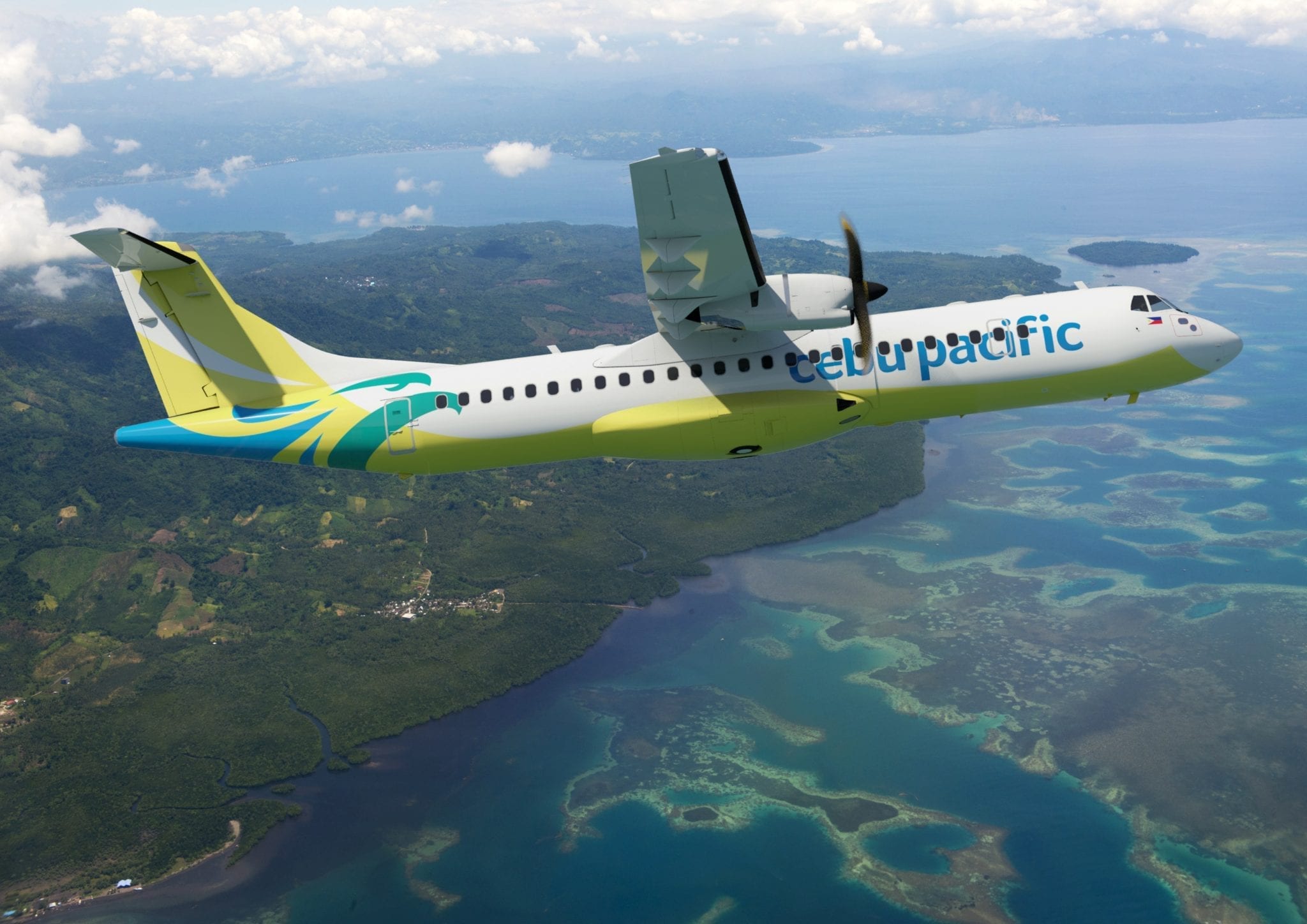
    The latter recently announced five new domestic routes set to start operations in July, namely: Cebu to Masbate, Cagayan de Oro to Zamboanga, Davao to Dumaguete and Tacloban, and Zamboanga to Cotabato. Cebu Pacific boasts of one of the youngest fleets in the world, with an average aircraft age of 4.99 years. The carrier’s now 61-strong fleet is comprised of four Airbus A319, 36 Airbus A320, eight Airbus A330, eight ATR 72-500, and five ATR 72-600 aircraft. B

    etween 2017 and 2021, Cebu Pacific expects delivery of 32 Airbus A321neo, and 11 ATR 72-600 aircraft. Cebu Pacific currently offers flights to a total of 37 domestic and 26 international destinations, operating over 100 routes spanning across Asia, Australia, the Middle East, and United States of America.
  • Cebu Pacific to end flights to Qatar from July 1

    Cebu Pacific to end flights to Qatar from July 1

    The low-cost Philippines carrier Cebu Pacific Air will stop flying to Doha at the beginning of July because the route is no longer financially viable, it said.

    The airline has been flying direct to Qatar for just over two years, and announced that its last return flight from Manila to Doha will be on July 1.

    It will also cease flying to Kuwait from mid-June and the Saudi city of Riyadh in early July.

    Passengers who are already booked on flights after these dates can transfer to another airline offering the same routes (subject to availability), book for an earlier flight with Cebu Pacific (also depending on availability) or get a full refund.

    The airline “strongly advised” all such passengers to contact their travel agents or its hotline to discuss their options.

    Too much competition

    Cebu Pacific is essentially halting the routes due to too much competition, according to Atty JR Mantaring, vice president for Corporate Affairs of Cebu Pacific.

    In a statement this week, Mantaring said:

    “Of late, other carriers have aggressively added more flights, which has resulted in substantial oversupply of seats and fares that are so low, hence making the routes unsustainable…

    At this point, it makes more sense for us to re-deploy the aircraft used for our Riyadh, Doha and Kuwait service to routes where we can further stimulate demand and sustain our low fare offers.”

    Cebu Pacific will continue to fly to Dubai and Sydney and may increase capacity to these cities, the statement added.

    Crowded market

    The airline began direct flights between Manila’s Ninoy Aquino International Airport and Hamad International Airport in Doha in June 2015.

    A 436-seat, all-economy class Airbus A330 flies between the cities twice a week. It was initially popular when the route first started because of its competitive fares.

    While Qatar Airways also flies twice-daily direct flights on the same routes, prices were usually higher.

    The national carrier increased its service to the Philippines’ capital in July 2015. That’s the same month that Cebu started its direct Doha-Manila service.

    National flag carrier Philippine Airlines also began offering the same route earlier this year, in a bid to meet the needs of Qatar’s 260,000-strong Filipino population.

    That carrier operates four times a week, on Monday, Wednesday, Friday and Sunday on A330 aircraft.

    Its daytime departure and arrivals times, and its competitive introductory prices, has attracted many travelers.

    Tickets range from QR885 to QR2,745 in economy, and include WiFi and meal service. Passengers can also check in two pieces of luggage, weighing up to 23kg each.

    A business class option could be rolled out this summer.

  • Cebu Pacific to suspend operations in 3 Middle Eastern routes

    Cebu Pacific to suspend operations in 3 Middle Eastern routes

    CEBU Pacific Air announced Wednesday that it will halt flying to Riyadh in Saudi Arabia, Kuwait, and Doha in Qatar because the routes are not viable anymore. Lawyer JR Mantaring, CEB vice president for corporate affairs, said there were too many competitions already in the said routes. “The entry of Cebu Pacific into these markets benefited passengers with lower fares and more choices. Of late, other carriers have aggressively added more flights, which has resulted in substantial oversupply of seats and fares that are so low, hence making the routes unsustainable,” he said in a statement. He said it makes more sense for CEB to re-deploy the aircraft used for the Riyadh, Doha and Kuwait service to routes where they could further stimulate demand and sustain the low fare offers.

    “We have to continuously review our routes to ensure their viability,” he said. CEB will fly the last of its four-times-a-week service from Manila to Kuwait on June 13, and its Kuwait-Manila flight on June 14. The thrice-weekly Manila-Doha-Manila route will have its last flight on July 1; while CEB’s last flight from Manila to Riyadh, Saudi Arabia will depart on July 2, while the Riyadh-Manila flight will leave on July 3.

    CEB said it will retain its other long-haul services to and from Dubai, United Arab Emirates; and Sydney, Australia, with a view to increasing frequencies to these destinations in the future. The airline also flies to 24 other international destinations across Asia and the United States; as well as 37 domestic destinations. “Passengers affected by the suspension of CEB service in Doha, Riyadh and Kuwait are being contacted. Options are being provided to minimize the disruption, which include rebooking passengers on flights with other airlines or on earlier travel dates with CEB; a full refund; or placing the full value of the ticket in a travel fund for future use,” CEB said.

  • Cebu Pacific Air begins new service to Busuanga

    Cebu Pacific Air begins new service to Busuanga

    Cebu Pacific Air added another domestic route on 15 May. On that day it began three times weekly (Mondays, Wednesdays and Fridays) service between Cebu (CEB) and Busuanga (USU).

    The 467-kilometre sector will be operated by CebGo using its ATR 72s. Competition is provided by Philippine Airlines which already serves the route daily with a Q400. Cebu Pacific now serves over 30 destinations from Cebu of which just five are outside of the Philippines. It and CebGo account for 42% of scheduled seat capacity at the airport.

    This makes it the biggest carrier at the airport ahead of Philippine Airlines (28%) and Philippines AirAsia (12%).

  • Cebu Pacific Air commences second route to Cotabato

    Cebu Pacific Air commences second route to Cotabato

    Cebu Pacific Air started its second new domestic route from Cebu (CEB) this week with the launch on 16 May of a four times weekly service to Cotabato (CBO). The 351-kilometre route will be flown by CebGo using its ATR 72s. No other carrier connects these two airports. Cotabato is located on the province of Maguindanao.

    The airport’s only other scheduled services are to the capital, Manila, which are offered by both Cebu Pacific and Philippine Airlines. Cotabato City is home of Sultan Haji Hassanal Bolkiah Masjid, also known as the Grand Mosque of Cotabato, which is the largest mosque in the Philippines. Completed in 2011 the facility can accommodate 15,000 people and was funded by the Sultan of Brunei.

  • Cebu Pacific begins new routes from Clark, Cebu

    Cebu Pacific begins new routes from Clark, Cebu

    Cebu Pacific expands its domestic network through its wholly-owned subsidiary, Cebgo, with the addition of four new routes from Clark and Cebu. On May 15, 2017, Cebgo started flying directly from its Clark hub to two of the world’ best islands, daily to and from Caticlan, Boracay, and three times weekly (Monday, Wednesday, and Friday) to and from Busuanga. Aside from these two routes, Cebgo will also be offering direct flights between Cebu and Busuanga thrice weekly (Monday, Wednesday, and Friday), and flights to and from the city of Cotabato four times weekly (Tuesday, Thursday, Saturday, and Sunday) starting tomorrow, May 16, 2017, The Cebu Pacific Air group expressed optimism that the additional domestic flights will benefit the people of Boracay, Palawan, and Cotabato in South as well as the residents outside Metro Manila.

    Cebu Pacific (CEB) officials stated earlier that traveling to such destinations will definitely be more convenient as the local carrier continue to link more islands in the archipelago. “CEB also believes that these new routes will be attracting both leisure and business travelers, boosting trade and tourism.” Along with this flight expansion, Cebu Pacific also extends the reach of its cargo services, further eliciting trade and investment in these destinations.

    CEB offers its lowest all-in one way year-round fare from Clark to Caticlan at P2,030, Clark to Busuanga at P2,306, Cebu to Busuanga at P2,778, and Cebu to Cotabato at P1,994. Aside from Cebu and Clark, CEB also operates flights out of four other strategically placed hubs in the Philippines — Manila, Davao, Kalibo, and Iloilo. The airline’s extensive network covers over 100 routes and 66 destinations, spanning Asia, Australia, the Middle East, and USA.

  • Cebu Pacific passenger traffic slipped in Q1

    Cebu Pacific passenger traffic slipped in Q1

    The operator of budget airline Cebu Pacific Air saw passenger growth contract in the first quarter of 2017, partly on increased competition with domestic rivals.

    Cebu Air, which owns Cebu Pacific and Cebgo, announced its January to March 2017 operating statistics on Wednesday, showing that passenger traffic slid by 0.5 percent to 4.81 million passengers compared to the same period in 2016.

    Cebu Air said capacity, with a growth of 2.9 percent, rose faster than demand, causing seat load factor to slip 2.9 percentage points to 83.8 percent for the period.

    Since tycoon Lucio Tan resumed full control of rival Philippine Airlines in 2014, the flag carrier vowed to aggressively compete anew in the domestic arena.

    As a result, think tank CAPA-Center for Aviation said in a report early this year that Cebu Pacific ceded some domestic market share to PAL in 2016. However, CAPA noted these were mainly on “lower yielding and generally unprofitable point-to-point routes.” Separately, Philippines Air Asia noted higher passenger volume in 2016.

    Cebu Air also said passenger traffic for March 2017 alone was down 0.2 percent to 1.64 million passengers compared to the same period in 2016.

    Capacity during the period was up by 3.3 percent, while seat load factor was down 2.9 percentage points to 82.8 percent.

    Cebu Air disclosed earlier that full-year 2016 net income jumped 122.3 percent to P9.75 billion compared to the same period in 2015 on strong passenger volume and lower oil prices.

  • Cebu Pacific issues travel advisory related to Asean summit

    Cebu Pacific issues travel advisory related to Asean summit

    In light of the 30th Asean Summit and Related Meetings which will be held in Manila from April 26 to 29, 2017, Cebu Pacific and Cebgo reminded all passengers flying out on these dates to plan their routes going to the Ninoy Aquino International Airport (NAIA). The carrier issued the advisory as several roads in Pasay City, especially those leading to NAIA Terminals 3 and 4, will be closed.

    Aside from this, the period from April 29 to May 1, 2017 is also Labor Day weekend. Malacañang, by virtue of Memorandum Circular 18 issued on April 21, suspended classes at all levels and work in the government and private sector on April 28, Friday, in line with the Philippines’ hosting of the Asean Summit. Passengers traveling to and from Manila from April 28-30, 2017 who wish to change their flight schedules may rebook their flights for free within 30 days. Guests flying out this weekend are advised to be at the airport early to process pre-departure requirements and avoid long lines at the check-in, security and immigration counters. Cebu Pacific’s domestic check-in counters are open three hours before the scheduled time of departure and four hours for international flights.

    All check-in counters will close 45 minutes before the scheduled time of flights, except those exiting the Middle East (one hour) and Shanghai (50 minutes). For international flights, web check-in is available from seven days up to four hours before scheduled flight departure. Those taking domestic flights can do web check-in up to one hour before their scheduled departure.

    Self Check-in Kiosks. Passengers at NAIA Terminals 3 and 4 and selected domestic airports can use these kiosks to check-in their flights eight hours up to one hour before the scheduled flight departure. Domestic web or mobile check-in guests with check-in luggage can drop these off at the bag drop counter at least 45 minutes before the flight, except those exiting the Middle East (one hour) and Shanghai (50 minutes).

    International web or mobile check-in guests still need to show up at check-in or bag drop counter at least one hour before the flight to present valid travel documents. For more information on the Asean 2017 calendar of events, traffic advisories and rerouting, visit https://www.asean2017.ph, or at the official Facebook page “Asean 2017” of the Asean 2017 Chairmanship in the Philippines.

  • Cebu Pacific joins Davao tourism program

    Cebu Pacific joins Davao tourism program

    The Cebu Pacific (CEB) has announced its participation in the largest travel event and tourism campaign in Davao region, the Visit Davao Fun Sale (VDFS). The carrier’s move is in support of the VDFS, which was launched four years ago, to promote Davao and peripheral areas in southern Mindanao as safe, enjoyable and exhilarating travel and adventure destinations for both local and foreign tourists.

    As part of the seven-week activities, CEB is flying-in top adventure travel bloggers and digital influencers from Singapore, Japan and South Korea to visit Davao and check out attractions such as the beaches in Mati City, Aliwagwag Falls and Eden Eco Adventure Park, go dolphin-watching off the coast of Mati, white-water rafting in the Davao River, pub-crawling in Davao’s city center, or shopping at the Aldevinco Center. “CEB takes pride in having the most flights to and from Davao. But more than the flights, we need to do our part to help entice tourists to fly to Davao and experience what the region has to offer.

    Davao and adjacent provinces have so much to offer tourists from all walks of life — from thrill-seekers to laidback travelers, families on vacation, barkadas on a getaway and even solo backpackers,” said JR Mantaring, CEB’s vice president for Corporate Affairs.

    Cebu Pacific has the most extensive domestic route network among Philippine carriers, with direct, inter-island connections to major tourist destinations. The carrier operates flights out of six strategically placed hubs in the country in Manila, Cebu, Davao, Clark, Kalibo, and Iloilo. Operating a hub in Davao, CEB has 141 flights to and from Davao, with six direct domestic routes (Cebu, Bacolod, Cagayan de Oro, Iloilo, Zamboanga and Manila) and a direct flight to Singapore. The airline’s extensive network covers over 100 routes and 66 destinations, spanning Asia, Australia, the Middle East, and United States of America.
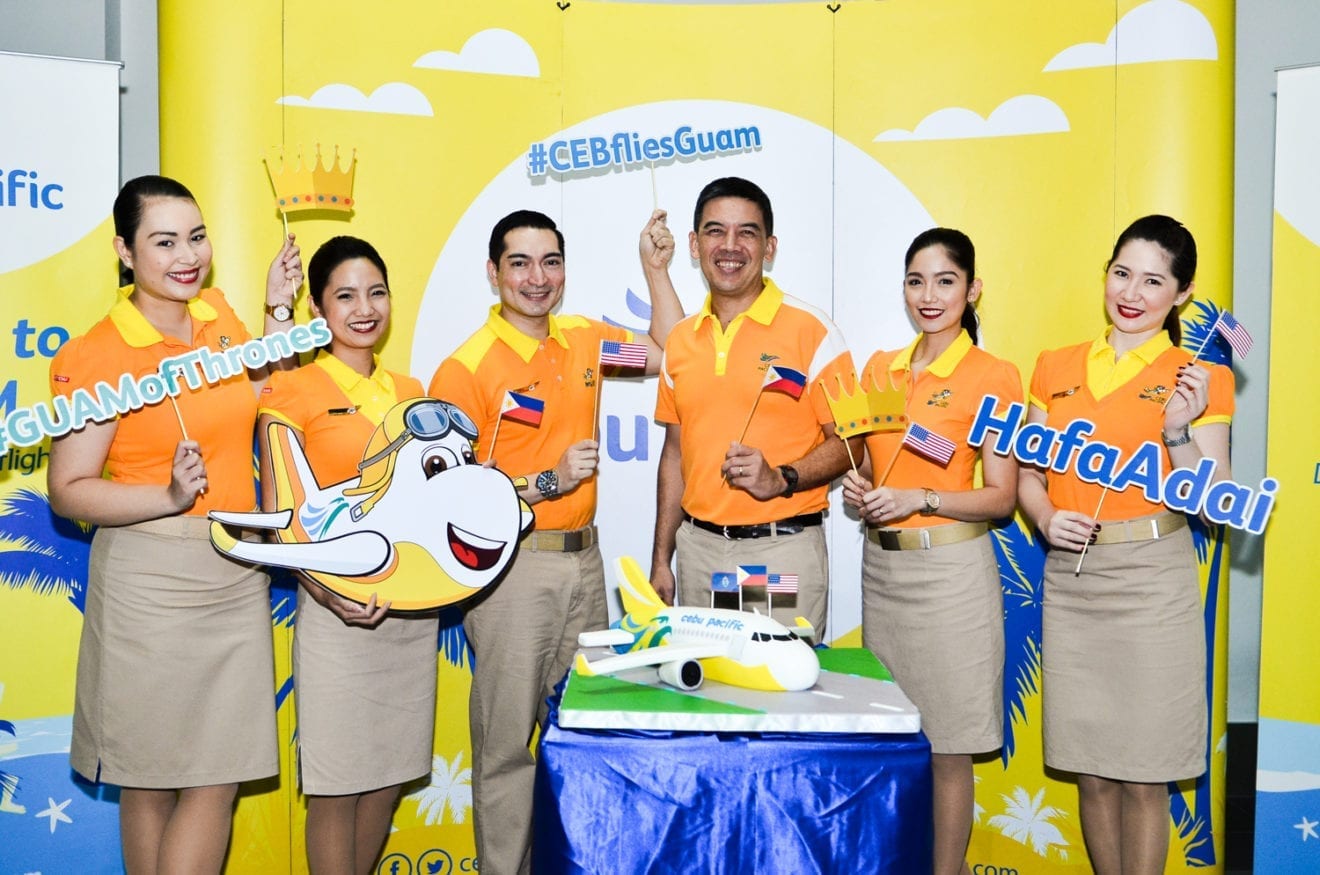
    Launched in 2014, the Visit Davao Fun Sale is a partnership between local governments in the region, the Department of Tourism, other national government agencies and private enterprises to promote tour packages and unique experiences to tourists such as food and delicacy must-tries, as well as leisure and wellness activities. This year’s tours include special packages for Davao City, Island Garden City of Samal, Sta. Cruz in Davao del Sur where one of the trails to Mt. Apo is located, and the Hamiguitan Range and Wildlife Sanctuary. Since its launch, VDFS has helped push tourism growth in the region to double-digit levels, capping 2016 with 100,000 tourist arrivals. VDFS 2017 runs from April 16 to May 31.

  • Cebu Pacific passenger volume drops in February

    Cebu Pacific passenger volume drops in February

    The Gokongwei-led carrier ferried a total of 1.45 million passengers in the second month of 2017, 6.3% less than the 1.55 million recorded during the same month last year, according to the latest operating statistics uploaded on its Web site.

    The latest tally was also down 16% from the 1.72 million passengers it ferried in January, which was up from the 1.64 million noted in January 2016.

    The data showed airline capacity dipped 1.5% to 1.74 million from 1.76 million during the comparable period, while the number of flights also decreased 2.8% to 10,237 from 10,535 previously.

    Seat load factor in February also went down to 83.6% compared to the 88% recorded in February 2016, even as the number of aircraft increased to 59 from 57.

    For the January to February period, Cebu Pacific and Cebgo already carried 3.17 million people, slightly lower than the 3.19 million seen during the comparable period last year. Capacity was up 2.7% to 3.76 million from 3.66 million, while flights during the first two months were 84.4% full on the average.

    Based on its latest operating statistics, the number of flights went up to 21,975 from 21,873.

    The Gokongwei airline is targeting to ferry 20 million passengers this year, as the company expects the delivery of 48 additional planes up to 2021.

    In 2016, it carried 19.1 million passengers, up 4% from the 18.4 million passengers flown in 2015. On average, Cebu Pacific flights were 86% full during the year.

  • Cebu Pacific to Strengthen Domestic Network with Four New Routes

    Cebu Pacific to Strengthen Domestic Network with Four New Routes

    Cebu Pacific is to strengthen its domestic network with four new routes to and from its Clark and Cebu hubs. Starting 15 May 2017, Cebu Pacific’s wholly owned subsidiary, Cebgo, will be flying daily between Clark and Caticlan (Boracay); three times weekly (Monday, Wednesday, and Friday) between Clark and Busuanga; and three times weekly (Monday, Wednesday, and Friday) between Cebu and Busuanga.

    Cebgo will also begin flying between Cebu and Cotabato four times weekly (Tuesday, Thursday, Saturday, and Sunday) from 16 May 2017.

    “We believe that by opening these new routes, we are enabling more residents from Central and even North Luzon to travel to Palawan and Boracay – two of the world’s best islands, without having to make the trip to Metro Manila to catch their flights,” said Alexander Lao, Cebgo President and CEO. “Even guests from the Visayas who would like to explore Northern Palawan have to fly via Manila to get there. With a direct Cebu-Busuanga route, the islands of Coron and Culion are easier to get to. Aside from boosting domestic tourism, our new routes will also enhance trade and investment as we also make available our cargo services.”

    Aside from Cebu and Clark, Cebu Pacific also operates flights out of four other strategically placed hubs in the Philippines: Manila, Davao, Kalibo, and Iloilo. The airline’s extensive network covers over 100 routes and 66 destinations, spanning Asia, Australia, the Middle East and USA.

  • The Philippines’ first budget airlines is counting on domestic demand

    The Philippines’ first budget airlines is counting on domestic demand

    Cebu Pacific is set to achieve record results for the last financial year, said Lance Gokongwei, president and chief executive of the Philippines’ first budget airline.

    “We have about 58 to 60 percent of the domestic market now … And naturally, we benefited from lower oil prices, so we did very well last year,” Gokongwei told.

    Most of those record profits will be re-invested into acquiring planes with higher fuel efficiency, which will in turn result in more competitive airfares for Cebu Pacific customers, Gokongwei added.

    The budget airline is part of JG Summit Holdings, the second largest conglomerate in the Philippines which began as a simple corn starch plant. As president and COO of conglomerate JG Summit Holdings, Gokongwei also holds various leadership roles in the JG Summit’s fast-moving consumer goods and property arms.

    As premium airlines in the region run into turbulence, Cebu Pacific is going all in with a twofold strategy aimed at improving competitiveness. The first of those strategies involves working around the limited aviation infrastructure in the Philippines, which together with an uptick in air travel demand, has led to congestion.

    “We have a limited slot situation in Manila. The airport there is quite slot-limited so our strategy is to up-gauge the existing slots we have by putting in larger aircraft,” Gokongwei said.

    Cebu Pacific will be ramping up productivity by replacing its existing Airbus 319 and 320 models with the Airbus 321neo. The 321 model has 230 seats compared to the existing 180 seats onboard the Airbus 320. The airline has committed $4 billion to a fleet upgrading program that would see it acquiring 46 new planes between now and 2021.

    The airline’s second strategy involves developing and investing in 5 additional hubs outside Manila, including Cebu, Davao and Ilo Ilo. Smaller aircraft will be used to provide direct access along those routes, Gokongwei said.

    Giving Cebu Pacific an additional boost could be the Philippine President Rodrigo Duterte’s plans to ramp up infrastructure spending. Gokongwei said there are plans to “build out the 5 airports outside of Manila.”

    “Before, travelling by air was considered something only the elite did and now, everyone in the Philippines has access to fly through democratized travel,” Gokongwei said.

  • Cebu Pacific links up with KLM AFI to service expanding fleet

    Cebu Pacific links up with KLM AFI to service expanding fleet

    Gokongwei-led budget airline Cebu Pacific (CEB) has chosen Air France Industries KLM Engineering and Maintenance (AFI KLM E&M) to provide maintenance support for its expected new fleet of Airbus A320s .

    “This is our first agreement with Cebu Pacific and also our first component support contract in the strategic Philippines market,” said Gery Mortreux, Executive Vice President of AFI KLM E&M in a statement released.

    The selection of AFI KLM E&M came following a call for tenders by CEB in September last year for the carrier’s expanding fleet of Airbus passenger jets .

    The long-term contract covers a fleet of over 40 Airbus A320-family aircraft, and encompasses full component support and solutions, including repairs and local pool access to maximize aircraft availability for both CEB’s A320s and its future A321neos.

    The A321 neo (new engine option) is a variant of the A320 that features a more efficient engine and more aerodynamic refinements.

    CEB currently has a fleet of 59 aircraft, comprised of 4 Airbus A319s, 36 Airbus A320s, 7 Airbus A330s, 8 ATR 72-500, and 4 ATR 72-600 aircraft. The average age of its fleet currently stands at 4.94 years.

    The airline also expects to take delivery of 45 brand-new aircraft as part of its fleet renewal program composed of one brand-new Airbus A330, 32 Airbus A321neos, and 12 ATR 72-600s

    All told, the new aircraft will bring the CEB fleet to 85 by 2021.

    CEB’s local rival, flag carrier Philippine Airlines (PAL), is also in the process of upgrading its fleet headlined by two new Boeing 777–300ERs set to arrive in December 2017 and January 2018, the airline announced over the weekend.

    Along with that, it is also expecting the arrival of the Q400 Next Generation turboprops for domestic flights starting in July 2017, and the first of 6 new A350-900s expected to arrive in 2018.

  • Cebu Pacific’s Dubai route surges ahead as profit doubles

    Cebu Pacific’s Dubai route surges ahead as profit doubles

    Cebu Pacific Air boosted passenger numbers between Dubai and Manila last year as profits more than doubled, overcoming overcapacity in the global aviation sector.

    The Philippine low-cost carrier said overall passenger numbers between Dubai and Manila rose by 8 per cent to more than 252,000.

    That beat overall passenger growth at the airline, which flew a total of 19.1 million customers, up by 4.1 per cent on a year earlier.

    The airline reported profit of 9.8 billion Philippine pesos (Dh725.4 million) – an increase of 122 per cent on a year earlier. Growth in revenue from baggage fees, on-board meals and merchandise helped to drive profits higher, it said.

    Total revenue, which includes cargo services, jumped by 9.6 per cent to 61.9bn pesos.

    In 2016, Cebu Pacific flew to 36 domestic and 30 international destinations through 102 routes.

  • Cebu Pacific posts P9.8bn net income in 2016

    Cebu Pacific posts P9.8bn net income in 2016

    Cebu Pacific Air (CEB) posted a net income of P9.8bn in 2016, up 122% year-on-year, on the back of the strong demand for low-cost air travel and robust growth in ancillary revenues, which include baggage fees, on-board meals, and merchandise.

    Total revenues, which include CEB cargo services and wholly-owned subsidiary Cebgo, jumped 9.6% to P61.9bn, as passenger revenues surged 9.2% to P46.6bn. For the full year, CEB flew 19.1mn passengers, up 4.1% versus the 18.4mn passengers carried in 2015.
    “2016 was a great year for CEB as we continue to enable ‘every Juan’ to fly to more destinations around the Philippines and to key destinations in Asia, the Middle East, Australia, and the US.

    “CEB remains committed to further increasing inter-island connectivity within the Philippines to promote trade and tourism and help more people connect with their families and friends all around the world, while consistently providing our trademark best value fares,” said lawyer JR Mantaring, vice-president for Corporate Affairs of Cebu Pacific.

    In 2016, CEB flew to 36 domestic and 30 international destinations through 102 routes and more than 2,820 flights weekly. CEB boosted its intra-regional network in the Visayas with flights from Cebu to Ormoc, Roxas and Calbayog. The airline also launched direct service between Kalibo and Incheon, as well as its first US destination, Guam.

    CEB also teamed-up with some of the world’s leading Low Cost Carriers (LCC) to form Value Alliance, the world’s largest LCC Alliance, which aims to provide greater value, connectivity and choice for travel throughout Southeast Asia, North Asia, and Australia. CEB also opened a branch office in South Korea to boost promotional efforts in the Korean market.

    CEB capped 2016 with 57 aircraft, adding two brand-new ATR 72-600 aircraft in February 2017, to bring its current fleet to 59. For the rest of 2017, CEB expects to take delivery of one Airbus A330, two Airbus A321neo, and four more ATR 72-600, and delivering out three of its four Airbus A319 to end the year with 63 aircraft. CEB continues to have one of the youngest aircraft fleets in the world with an average age of 4.91 years.