Retail News CRM

Tag: cent

  • Miniso’s sales soar 23 per cent in second quarter, but profit shrinks

    Miniso’s sales soar 23 per cent in second quarter, but profit shrinks

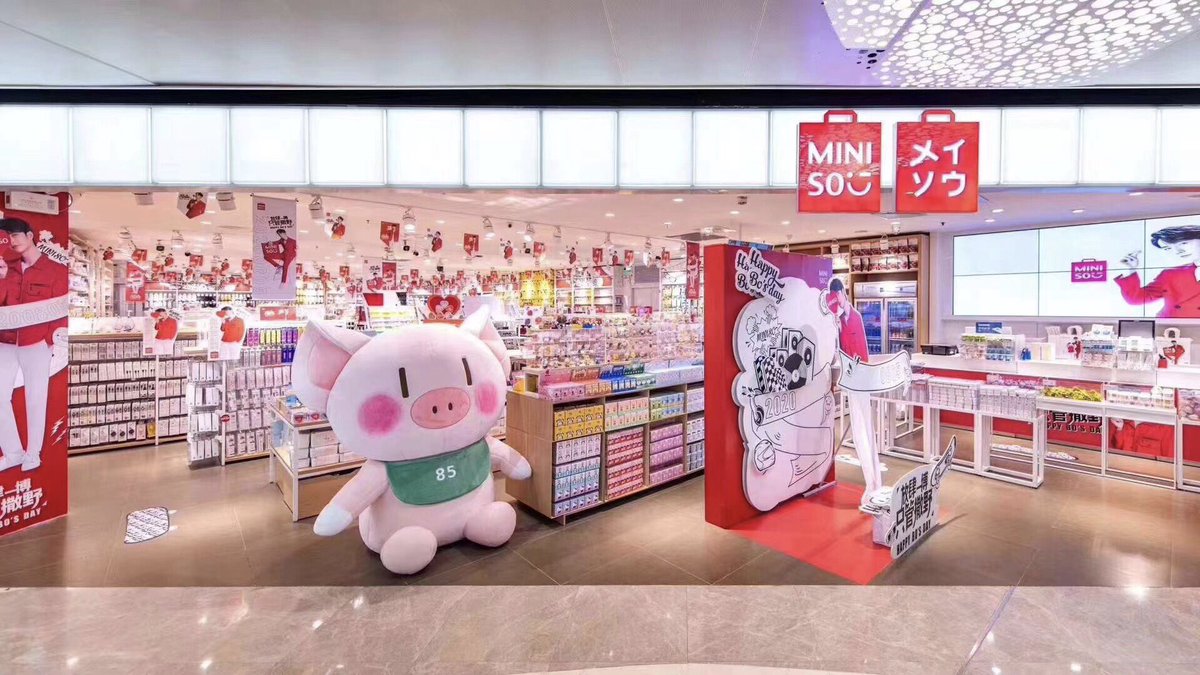
    The retail conglomerate, Miniso, posted a decrease in profits despite its sales increasing by a double-digit percentage in the second quarter.

    Revenue Growth

    Miniso’s revenue for the quarter ending June 30th saw a massive increase of 23.1%, amounting to approximately USD 693.2 million. The retailer has various brands under its umbrella, including Miniso and Top Toy. Miniso’s revenue witnessed a rise of 19.5%, amounting to USD 637 million. This growth included a 13.6% increase in Mainland China and a 28.6% growth in international markets. Top Toy’s revenue surged by 87% to USD 56.1 million.

    Same-Store Gross Merchandise Value

    The same-store gross merchandise value (GMV) of Miniso remained steady, backed by a small growth in mainland China and a slight decline in international markets. However, Top Toy’s same-store GMV registered minor growth.

    Strategic Financing

    Miniso highlighted that Top Toy had finalized strategic financing by Temasek recently, resulting in a post-valuation of approximately USD 1.28 billion.

    Operating Income and Profit

    Although the operating income rose by 11.3% to USD 116.7 million, the profits fell from USD 82.4 million in the same period last year to USD 68.3 million.

    For the first half of the year, revenue grew by 21% to USD 1.3 billion. This rise included an 18% increase in Miniso sales and a 73% rise in Top Toy sales. However, the profit for the same period dropped from USD 163 million to USD 126.5 million.

    Store Expansion

    As of June 30th, the total number of stores at the group level was 7,905, representing a year-on-year increase of 842 new stores. Miniso had 7,612 stores, which included 4,305 in Mainland China and 3,307 in international locations, while Top Toy had 293 outlets.

    The company anticipates that its revenue growth will speed up for the rest of the year.

    Questions & Answers

    How much did Miniso’s revenue increase in the second quarter?

    Miniso’s revenue for the second quarter increased by 23.1%, amounting to approximately USD 693.2 million.

    How did Miniso’s operating income and profit perform in the second quarter?

    The operating income rose by 11.3% to USD 116.7 million, but the profit fell from USD 82.4 million in the same period last year to USD 68.3 million.

    What is the total number of Miniso stores as of June 30th?

    As of June 30th, Miniso had a total of 7,612 stores, which included 4,305 in Mainland China and 3,307 in international locations.


  • Jollibee Foods Reports 5.6% Rise In Q2 Net Income, Fueled By Overseas Growth And Record Sales

    Jollibee Foods Reports 5.6% Rise In Q2 Net Income, Fueled By Overseas Growth And Record Sales

    Jollibee Foods Corporation (JFC), a leading global fast-food company, has reported a 5.6% year-on-year rise in the second quarter’s attributable net income, reaching $57.78 million. This increase was primarily fueled by robust gains from the firm’s overseas operations and record-breaking system-wide sales (SWS).

    Expansion of Global Store Network

    By the end of June, JFC’s global store network had grown by 45.5% compared to the previous year, sporting a total of 10,119 outlets. This figure includes 6,695 international branches spread across China, North America, EMEA, and other key markets in Asia.

    Record Sales and Revenue

    The SWS for the quarter saw a 19.6% increase, reaching $2.06 billion. This was backed by a rise of 32.6% in the company’s international business. The coffee and tea segment emerged as the top performer, registering a staggering 68.6% growth, largely due to the impact of the South Korean brand, Compose Coffee.

    JFC also saw its revenue jump by 15.5% to $1.4 billion. Operating income followed suit, recording a 19.1% rise to $108.72 million. The group’s same-store sales growth registered a respectable 5.5%, with the Philippine business growing by 6.4% and the international business by 4.1%.

    Successful Business Momentum

    JFC’s CEO, Ernesto Tanmantiong, linked these robust results to the company’s ongoing business momentum and improved operational execution. He highlighted the growth in operating income as a testament to the strength of their coffee and tea segment as well as the consistent contributions from their Philippine business and Jollibee International. Tanmantiong also emphasized the effectiveness of their multi-brand and multi-market strategy in driving the company’s success.

    First Half Performance

    For the first half of the year, the attributable net income showed a 0.7% slip to $101.16 million from $101.88 million the previous year. However, SWS experienced a 19.2% growth to $3.92 billion, and the revenue rose by 15% to $2.66 billion. Correspondingly, the operating income increased by 18.4% to $195.3 million.

    Future Investment Strategy

    Richard Shin, the company’s Chief Financial and Risk Officer, explained their capital would be “selectively deployed” in support of growth in the Philippines, Jollibee International, and the coffee and tea segment. He noted early recovery signs in China and a clear turnaround path for Smashburger in the U.S. Compose Coffee is also expected to surpass 3000 stores, with an anticipated 36% return on invested capital this year.

    Questions & Answers

    What contributed to JFC’s growth in the second quarter?
    The growth was primarily driven by robust gains from their overseas operations and record-breaking system-wide sales.

    Which segment emerged as the top performer for JFC?
    The coffee and tea segment emerged as the top performer, registering a 68.6% growth.

    What are JFC’s future investment strategies?
    JFC plans to selectively deploy capital to support growth in the Philippines, Jollibee International, and the coffee and tea segment. They also anticipate growth in China and the U.S. through brands like Smashburger and Compose Coffee.

  • Singapore retail sales inch up 0.4 per cent in June

    Singapore retail sales inch up 0.4 per cent in June

    In June, retail sales in Singapore, not including motor vehicles, exhibited a modest 0.4% rise year-on-year, as reported by the Department of Statistics. This minor upswing follows a period of stagnant growth in May. With seasonal adjustments, retail sales showed a 1.4% decrease compared to May.

    The estimated overall retail sales value stood at SG$3.3 billion (US$2.6 billion), with online sales accounting for 16.2% of this figure.

    Industry Performance

    Most industries within the retail sector garnered an uptick in sales. The computer and telecommunications equipment industry saw a 7.3% increase, optical goods and book sales rose by 5.9%, and recreational goods experienced a 5.6% surge in sales.

    Additional categories such as watches and jewelry, cosmetics and medical goods, supermarkets and hypermarkets, as well as furniture and household equipment also witnessed increases ranging from 1.3% to 5.5%.

    However, not all areas of retail prospered. Petrol service stations, along with food and alcohol retailers, saw their sales decrease by 5.9% and 5.2%, respectively. Furthermore, the apparel and footwear segment, as well as minimarts and convenience stores, underwent a 2.6% reduction in sales.

    Food and Beverage Services

    Food and beverage service sales showed a marginal 0.1% increase amounting to SG$962 million in June, following a 1% rise in May. This modest growth was largely attributed to increased sales from food caterers and fast food outlets, which somewhat balanced the declining sales from restaurants, cafes, and food courts.

    Questions & Answers

    What was the overall increase in Singapore’s retail sales in June, excluding motor vehicles?
    There was a 0.4% increase in Singapore’s retail sales for the month of June, not including motor vehicles.

    Which sectors saw an increase in sales?
    Most industries within the retail sector saw an increase in sales. These include the computer and telecommunications equipment industry, optical goods and books, recreational goods, watches and jewelry, cosmetics and medical goods, supermarkets and hypermarkets, and furniture and household equipment.

    Which sectors experienced a decrease in sales?
    Sales decreased in petrol service stations, food and alcohol retailers, apparel and footwear segment, as well as minimarts and convenience stores.