Retail News CRM

Tag: cigarettes

  • Davidoff Hong Kong opens cigar flagship

    Davidoff Hong Kong opens cigar flagship

    Swiss tobacco brand Davidoff has launched its Hong Kong flagship in luxury retail complex The Landmark.

    The 580sqft outlet significantly enlarges the brand’s previous space in the mall by more than half its size. The original outlet was the brand’s third best-selling cigar outlet internationally, accounting for more than 25 percent of the brand’s Asian sales.

    “We are delighted to relocate our new flagship store in Hong Kong,” said Davidoff Asia MD Laurent de Rougemont. “The challenge in designing this unique cigar shop was to preserve the company’s history but to continue our mission to delight and surprise our customers worldwide by delivering unique brands and unrivaled retail experiences.”

    “This enlarged new flagship store continues the Davidoff legacy of an inspiring place where aficionados can find exceptionally crafted Discovery Series cigars from different regions, as well as the complex tasting profile of Winston Churchill Collection,” said Davidoff Hong Kong regional manager and store manager Charles Lim.

  • Philip Morris International Launches Healthier Alternatives for Smokers

    Philip Morris International Launches Healthier Alternatives for Smokers

    In its passion and drive to provide better choices to people who smoke, Philip Morris International Inc. (“PMI”), the global leader in smoke-free innovation and science, has launched the next generation of IQOS. The new IQOS 3 and IQOS 3 MULTI integrate extensive consumer insights and feedback to improve design and user experience while maintaining signature taste, sensory attributes and ritual—all underpinned by strong scientific substantiation. The new versions aim to further encourage a growing number of smokers to switch, to the benefit of their health, public health and, ultimately, society.

    The new iterations were launched in Tokyo, Japan—the country considered the birthplace of IQOS. The iconic brand offers the best in taste and satisfaction in the category, and almost 6 million adult smokers have already quit cigarettes—with more than half of those in Japan.

    “Our dream was to create a better alternative for smokers, and IQOS has made this dream a reality; it’s a revolution for the 1.1 billion people who smoke,” said André Calantzopoulos, PMI’s chief executive officer. “IQOS 3 and IQOS 3 MULTI deliver significant improvement and innovation and mark another step toward convincing all men and women who would otherwise continue to smoke to switch to smoke-free alternatives. IQOS consumers know that this product changes many things in their lives—we thank them, and we thank Japan for leading this positive change.

    Behind every development at PMI is robust science. Its scientific assessment program is based on longstanding practices of the pharmaceutical industry and is in line with U.S. Food and Drug Administration (FDA) guidance. IQOS produces an aerosol that contains on average 90 percent lower levels of harmful chemicals than cigarette smoke. The totality of PMI’s preclinical and clinical evidence indicates that switching completely to IQOS presents less risk of harm than continued smoking. Evidence also shows that IQOS does not negatively affect indoor air quality. On average, 70 to 80 percent of IQOS users have quit cigarettes, which makes IQOS the most compelling smoke-free alternative today.

    PMI has filed a Modified Risk Tobacco Product Application (MRTPA) for IQOS with the U.S. FDA, but the U.S. FDA has not yet completed its review of our data. IQOS is not for sale in the United States.

  • RM1b contraband cigarettes seized by Customs in 2017

    RM1b contraband cigarettes seized by Customs in 2017

    The Royal Customs Department seized contraband cigarettes with RM1 billion worth of taxes last year as the authority intensified actions to curb the rise of illicit tobacco products and the government incurs billions in revenue lost.

    The high price of cigarettes makes Malaysia a haven for contraband smugglers and retailers who reap huge profits as locals seek cheaper alternatives. Malaysia’s long coastline makes monitoring of the entry of illicit cigarettes more difficult.

    Customs DG Datuk Seri Subromaniam Tholasy said the non-duty cigarettes were seized while they were being transported and retail shops. “For the whole of last year, we seized cigarettes with close to RM1 billion in duties and taxes,” he said.

    Subromaniam also said recently Selangor’s Customs confiscated contraband liquor and cigarettes valued almost RM500,000 with RM2.25 million of unpaid taxes.

    Confederation of Malaysian Tobacco Manufacturers had reported the sector would not be able to withstand a price rise for cigarettes due to the widespread sales of illegal tobacco products.

    Malaysia’s legal cigarette market has dwarfed to less than 50% over the last 13 years as illegal cigarette consumption rose to about 57.1%, or 10 billion, out of 18 billion sticks in 2016.

    Contraband cigarettes are sold between RM4 and RM5 per pack, almost 400% cheaper compared to RM17 for the famous brands. Cigarette taxes

    had increased 110% over the last five years.

    It is estimated the government lost billions in tax revenue due to the mushrooming of contraband cigarettes. Excise tax for each stick could be between 28 sen and 40 sen per stick, and with an estimated 10 billion sticks of unpaid taxes, the government is losing a fortune.

    Subromaniam said the Customs is taking a different approach to overcome the sale and distribution of contraband cigarettes.

    “Previously, we go from shop to shop and check, and conduct raids. But, these methods are time consuming and expensive.

    “Now what we are focusing on is stopping the supply of the products to the sellers. Basically, we want to cut the distribution at the roots,” he said, adding that the department was also taking actions against the sale of cigarettes boxes that carried fake “tax paid” stickers.

    Subromaniam said the department had suspended the services of 30 foreign agents who had been bringing liquor and cigarettes.

    “We found out that they made a false declaration and we have halted their services with immediate effect.

    “Show-cause letters will be sent to all 30 foreign agents by next week. So, if they don’t respond accordingly, we will take the necessary action,” he said.

    The Finance Ministry in the third quarter of 2017 (3Q17) said indirect tax collection dropped 7.3% to RM14.6 billion, from RM15.7 billion in 3Q16 due to lower excise duties collection, particularly from the locally manufactured cigarettes.

    Cigarette companies like British American Tobacco (M) Bhd had ceased its local manufacturing operation, citing high excise environment and the sharp rise of illegal cigarettes.

  • Government raises excise taxes on tobacco

    Government raises excise taxes on tobacco

    The government of Indonesia has raised the excise tax tariffs on tobacco. The Finance Ministers Regulation, No.147/PMK.010/2016, was issued in this respect.

    In the new policy, the highest tobacco excise duty hike of 13.46 percent was for machine-made white cigarettes (SPM) and 0 percent for category IIIB hand-rolled clove flavored cigarettes (SKT). The average increase was 10.54 percent.

    Besides raising the excise tax rates on tobacco, the government also increased the retail prices of cigarettes by about 12.26 percent.

    The tobacco tariff rates have been raised to control production, regulate manpower, end sale of illegal cigarettes and enhance revenue in the excise sector.

    “The government realizes that cigarette is a commodity harmful to health. Therefore, consumption needs to be limited. The increase in the tobacco tariff is aimed to control cigarette consumption and circulation,” Finance Minister Sri Mulyani told a press conference at the Directorate General of Customs and Excise Office here on Friday.

    The minister hoped that the increase in the tobacco customs tax tariff would contribute positively to the governments revenues in the customs sector.

    In 2017, the government set a revenue target from the customs sector at Rp149.8 trillion, which is about 10 percent of the total tax revenues.

    “Though it has slightly declined, it still contributes significantly. The government and the people should back the policy because if it misses its target, it will affect the state budget, which, in the end, will affect the national development programs,” Minister Sri Mulyani added.

    Sri Mulyani stated that the policy was discussed with various stakeholders, including those concerned with health and employment, tobacco farmers, tobacco companies and associations.

    Meetings were also held with local governments, foundations and universities to discuss the matter.

    Following the meetings and discussions, it was concluded that the excise duty needs to be increased in order to control consumption and production.

    However, such an increase must be balanced so that it does not affect job opportunities and survival of small industries.

    In the meantime, a youth community group, Smoke Free Agent (SFA), has backed the governments move to raise cigarette prices, arguing that the number of young smokers in Indonesia has been rising at an alarming rate.

    “In addition to reducing the number of adult smokers, cigarette price hikes may also discourage new smokers, who are mostly children and adolescents,” Ricki Cahyana of the Anti-Smoking Indonesia Community stated in a press release issued by the SFA on Wednesday.

    Ricki noted that on an average, adults started smoking by the age of 16, and 30 percent of Indonesian children began smoking before the age of 10.

    Hasna Pradityas, one of the initiators of the SFA, remarked that the tobacco industry is currently aggressively targeting children as potential consumers to replace adult smokers in the future.

    “Without young smokers and children, the tobacco industry would become bankrupt when adult smokers no longer exist,” he pointed out.

    If the government really raises the price of cigarettes, then it will be like a breath of fresh air for Indonesia.

    Prospective new smokers, mostly children, will no longer find it easy to buy high-priced cigarettes.

    In the long run, it will help reduce the number of child smokers and make the next generation of Indonesians a golden one, capable of competing at the global level.

    “We hope the government will really go ahead with its plan to hike the price of cigarettes, thus reflecting its serious commitment to protecting the health of young people and creating a golden future generation,” Yosef Rabindanata, an SFA activist, observed.

  • Thai Government Raises Age to Purchase Cigarettes From 18 to 20

    Thai Government Raises Age to Purchase Cigarettes From 18 to 20

    Deputy Prime Minister YongyutnYuthawong reported on Wednesday that cabinet approved the tobacco draft act which will prohibit the sale of cigarettes to those under 20 years of age and raises the level of punishment for offenders.

    Deputy Prime Minister YongyutnYuthawong said the draft act increased the minimum legal age for cigarette purchases from 18 to 20 years and prohibits the sale of individual cigarettes. The draft act also prohibits cigarette sales in some public places such as temples, public health facilities, schools and public parks, the deputy PM added.

    The draft act bans cigarette companies from advertising their products as sponsors of contests and competitions. Cigarette advertising is banned in print and online media, TV and movies.The penalty of imprisonment for those who sell cigarettes to people under 20 years of age is increased from one month to one year and the fine for smokers in non-smoking areas is raised from 2,000 to 5,000 baht.

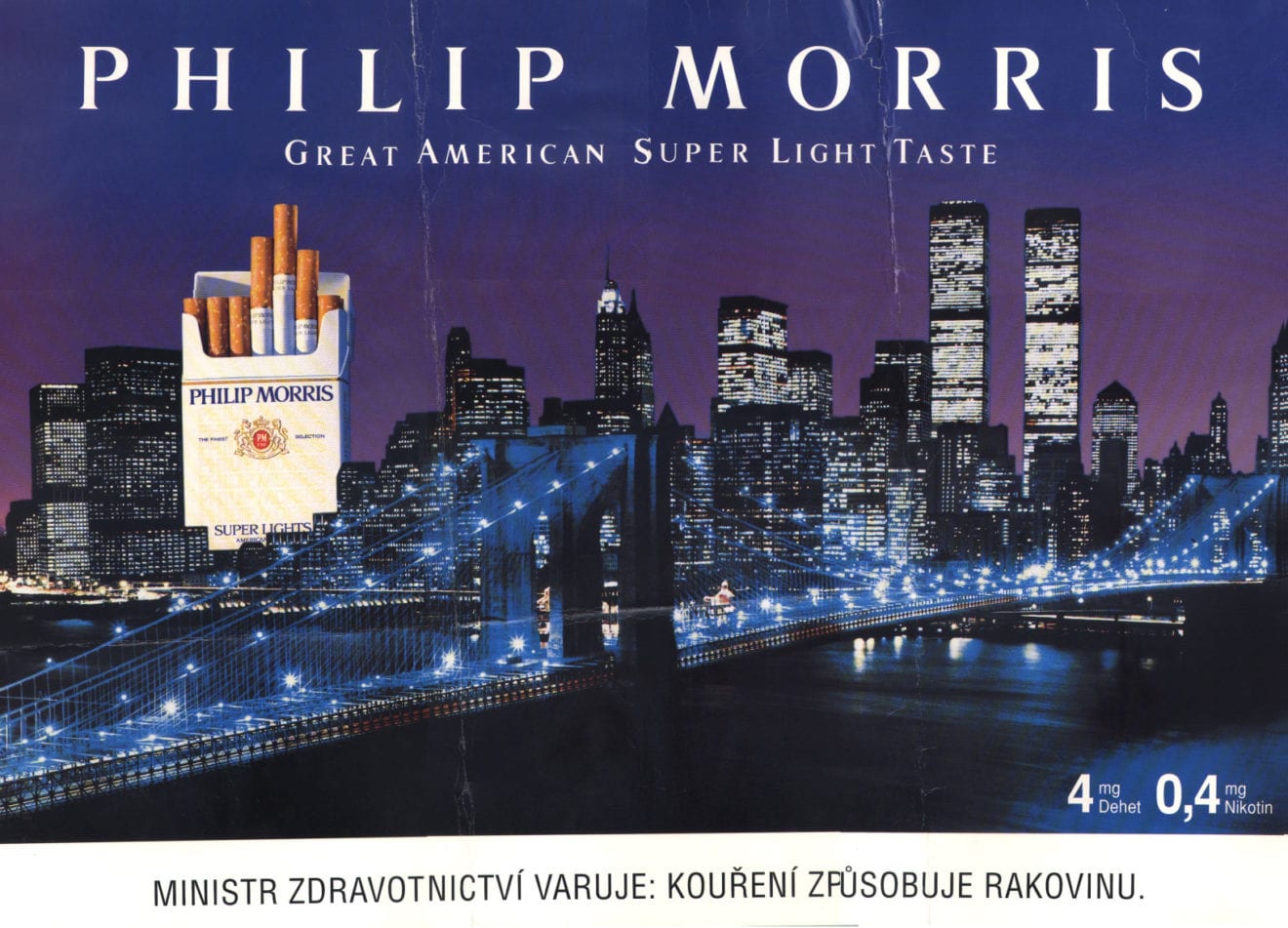
  • Philip Morris Starts Testing Investor Demand For Indonesia Cigarette

    Philip Morris Starts Testing Investor Demand For Indonesia Cigarette

    Philip Morris International Inc., which makes and sells Marlboro cigarettes outside the U.S., has started testing investor appetite for an over $1.5 billion sale of its shares in its Indonesian operation, according to people familiar with the situation, in what would be one of the biggest share sales in Southeast Asia this year.

    New York-based Philip Morris is talking to potential investors to place its shares in PT HM Sampoerna Tbk. through a rights issue and hopes to start taking orders from Sept. 21, one of the people said. Another person said a decision to go ahead would depend on market conditions.

    The sale will allow Philip Morris to comply with a pending stock-exchange rule requiring all Indonesia-listed companies to have at least 7.5% of their shares in public hands. Philip Morris currently owns 98.2% of the unit, which has a market capitalization of about $23.6 billion.

    Philip Morris is the top cigarette manufacturer in Indonesia, the world’s second-largest market for cigarettes after China. Given the limited number of freely traded shares in PT HM Sampoerna Tbk. (HMSP.JK), it is unclear at what price the shares would be sold to investors.

    The deal, if successful, would be the second largest equity-market transaction in Southeast Asia after a $1.7 billion initial public offering by Thailand’sJasmine Broadband Internet Growth Infrastructure Fund (JASIF.TH) in January. Deal activity in the region has been slowing due to volatile markets and Indonesia has been one of the worst hit.

    Indonesia’s Jakarta Composite Index is down 15.6% in the year through Tuesday’s close, the worst performer in Asia. The market has been rocked this year by a combination of negative events. Weaker-than-expected demand from China has put pressure on commodity prices, which has hurt Indonesia’s producers and exporters. At home, President Joko Widodo’s plans to increase economic growth through infrastructure spending have been met with disappointment as projects fail to mature and the government rolls out new protectionist policies.

    In late June, Philip Morris announced that the unit had engaged investment banks to assist in evaluating options for meeting the stock exchange’s mandatory float requirement, which takes effect Jan. 30, 2016. The statement didn’t name the banks or specify the amount to be raised, and Philip Morris declined to give further details.

    Goldman Sachs Group Inc., Credit Suisse Group AG, CitiBank Inc., J.P. Morgan and local firm Mandiri Sekuritas are managing the share placement.

    Bankers will be meeting investors in Indonesia, Singapore, Hong Kong, Malaysia and London for about two weeks to gauge interest in Sampoerna shares, one of the people said.

    Sampoerna sells clove cigarettes and is the distributor of Philip Morris’s Marlboro brand in Indonesia. The share should result in additional cash for Philip Morris without ceding any control in the Indonesia business. If successful, the sale will be the biggest such divestments in Indonesia this year.

  • Tobacco producers refute Sicpa taking credit score for fall in unlawful cigarettes

    Tobacco producers refute Sicpa taking credit score for fall in unlawful cigarettes

    The Confederation of Malaysian Tobacco Producers (CMTM) at this time refuted strategies that safety marking provider Sicpa had contributed to the most important drop within the historical past of unlawful cigarettes in Malaysia.

    Sicpa is a Swiss-based safety ink, authentication traceability options supplier, which operates in Malaysia via Sicpa Product Safety Sdn Bhd.

    The corporate just lately took the credit score and claimed that the unlawful cigarettes within the nation had declined 6.6 proportion level from 38.9% in 2013 to 32.three%, as recorded within the Illicit Cigarette Research (ICS) 2014 by analysis agency Nielsen, because of the deployment of its merchandise on cigarette packs.

    Nevertheless, CMTM has immediately issued a press release to counter the claims made by Sicpa on the effectiveness of their safety markings towards the decline of illicit cigarette commerce.

    As an alternative, the confederation highlighted that the current giant decline was attributed to the concerted and enhanced efforts by enforcement businesses, primarily the Royal Malaysian Customs (RMC).

    “The character of unlawful cigarettes in Malaysia is such that they’re wholly smuggled into Malaysia from different nations with none required safety marking. To recommend instantly or not directly that the sharp decline recorded within the ICS 2014 statistics was because of the deployment of Sicpa merchandise, in our view, is a deceptive assertion on the effectiveness of the system in addressing unlawful cigarette commerce in Malaysia.

    “It doesn’t present the entire image of the state of affairs since 2004 when it was launched,” CMTM stated within the assertion.

    CMTM is a cigarette producers’ affiliation that was established by the three main gamers within the nation, specifically British American Tobacco Malaysia Bhd, JT Worldwide Bhd and Philip Morris (Malaysia) Sdn Bhd.

    To recap, it was reported final month that Sicpa has been working via its long-term Malaysian know-how companion Lembah Sari Sdn Bhd to allow RMC to fight the unlawful commerce of tobacco and imported alcohol within the nation.

    The corporate belonged to Datuk Haris Onn Hussein, the brother of Defence Minister Datuk Seri Hishammuddin Hussein.

    Referring to the current media reviews in April, quoting Sicpa, the CMTM stated they seen with critical concern the impression created by Sicpa that its merchandise, specifically using safety ink marking on regionally manufactured cigarettes packaging and tax stamps on imported cigarettes, led to the stated largest drop.

    The CMTM went on to say that the decline highlighted by Sicpa in 2014 was particularly attributed to the robust enforcement efforts of the RMC by way of operations like Ops Pacak and Ops Outlet and had little or no or nothing to do with the safety ink marking or tax stamps on cigarettes.

    Via anti-illegal cigarettes commerce operations, stated CMTM, the RMC has made vital progress in addressing demand for unlawful cigarettes by arresting and remanding unlawful cigarette retailers, together with penalising them with deterrent sentences that led to the growing pressures on unlawful cigarette buying and selling actions.

    “What is obvious is that since 2004 when safety markings have been first launched within the Malaysian cigarette market, the Unlawful Cigarettes Market rose sharply from 14.four% in 2004 to 33.7% in 2014. All via this era, the safety markings requirement was enforced and carried out by the cigarette producers,”CMTM added.