Retail News CRM

Tag: computing

  • PLDT opens Philippines’ biggest data center

    PLDT opens Philippines’ biggest data center

    Philippine service provider PLDT has opened the country’s biggest data center at major business district Makati City.

    The new facility has been built to serve a wide range of organizations, particularly those handling vital data such as banks, business process outsourcing (BPO) firms, IT and content providers and government institutions.

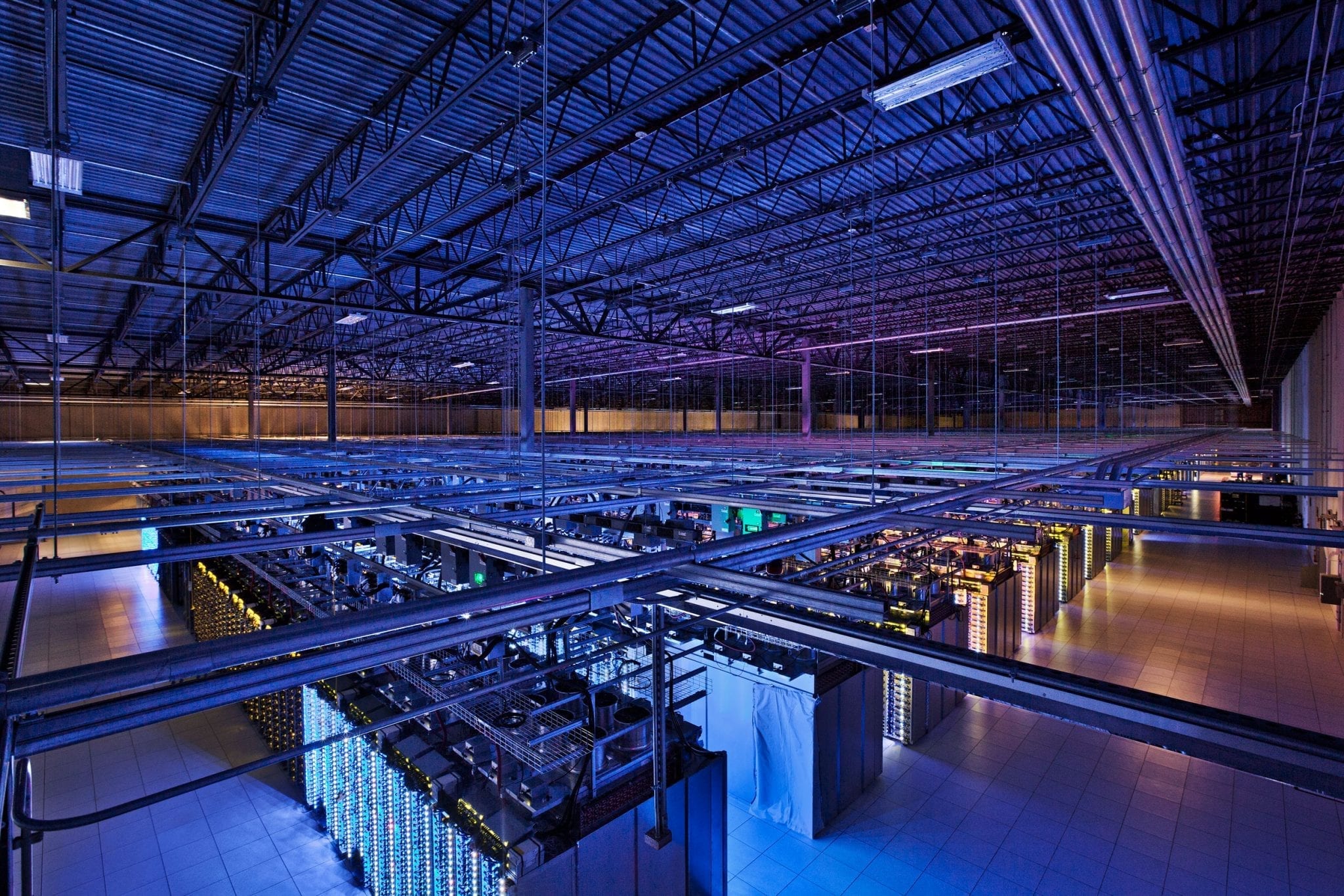
    Set up by PLDT subsidiary ePLDT, the newest VITRO Data Center sits on a nearly two-hectare property with 3,600-rack capacity. It is equipped with systems and facilities to guarantee continuous operations, ensuring that businesses can utilize robust and scalable digital infrastructure, as well as world-class 24/7 technical support capabilities.

    “PLDT is investing heavily in our VITRO data centers as we believe that these facilities are one of the basic building blocks of the country’s digital economy. This data center will be a vital resource for companies as they ramp up their own digital services,” said PLDT Chairman and CEO Manuel V. Pangilinan.

    The new earthquake-resistant, purpose-built data center in Makati is built on solid ground without seismic faults within its proximity. In addition, special architectural techniques and materials planning were implemented to provide the data center with fire-rated concrete walls and flood-protected design.

    As a result, VITRO Makati is rated to withstand earthquakes up to intensity eight in the Richter scale. The data center is also compliant with global design standards.

    “’PLDT recognizes how vital it is for enterprises to ensure stable operations despite changes in the external environment. The need for scalable and secure hosting facilities to house and manage critical platforms is also growing in importance as the enterprise becomes more data-driven as a result of continuous digital transformation initiatives,” said PLDT executive vice president and ePLDT president and CEO Eric R. Alberto.

    To address the growing concern over digital security, VITRO Makati offers one of the most secure and impenetrable structures in the Philippines with an eight-layer security design, guaranteeing that data and applications will always be protected.

    Each major component of the facility is configured with redundant counterparts in place that seamlessly operate to anticipate adverse events, including power generators and  Uninterrupted Power Supply (UPS) units, among others.

    As part of the VITRO network of data centers, VITRO Makati also serves as a carrier-neutral Internet Exchange facility that provides numerous IP peering services, enabling access to local and international content.

    VITRO Makati is also a Nexcenter-certified facility, allowing its clients to use globally standardized Nexcenter services of world leader NTT Com at some 140 locations in 84 cities of 19 countries, in addition to NTT Com’s Arcstar Universal One private-network service, which is already available in the Philippines and which is largely used by the country’s BPO industry.

    “As the world becomes even more digitally connected, Filipino enterprises must leverage on new technologies to ensure the security and resilience of their operations. PLDT’s digital platforms can enable enterprises to take advantage of disruptive technologies, secure their operations, and promote growth in their businesses,” said Alberto.

    The PLDT Group now operates seven data centers all over the country with a total rack capacity of nearly 7,000 to serve the needs of small, medium, and large enterprises across various industries, including banking, financial services, outsourcing, telecoms, and gaming.
  • Cloud infra services up 52% year on year to $9.5b

    Cloud infra services up 52% year on year to $9.5b

    Worldwide cloud infrastructure services expenditure grew 52.3% year on year in Q2 2016, reflecting the ongoing adoption by businesses and expanding use of consumer-centric services, such as social media, gaming and video streaming.

    Amazon’s AWS remained the leading cloud infrastructure services provider, accounting for 30.4% of total spend, according to a new report from Canalys Research.

    Its early mover advantage, aggressive pricing, broad geographic coverage and wide range of service offerings are key factors behind its success. But it is under growing pressure from Microsoft Azure, Google Cloud Platform and IBM SoftLayer.

    Overall, these four providers represented 60.5% of total worldwide cloud infrastructure services spend.

    Daniel Lu, analyst at Canalys Research said, “The need for scalable and on-demand infrastructure is being driven by application testing, development and hosting; content delivery, big data and analytics; machine learning, IoT, disaster recovery and back-up; plus storage.”

    “But not every organization and every workload will migrate to the cloud. Cost is a major issue, but also compliance and regulations, security concerns, and application readiness are determining factors in cloud migration strategies. The adoption of hybrid cloud and on-premises solutions is prevalent as organizations seek to get the best of both worlds,” Lu noted.

    The total value of the cloud infrastructure services market was $9.5 billion in the second quarter of 2016.

    North America remained the largest market, representing 55.3% of the worldwide total, followed by EMEA at 24.7%, Asia Pacific at 15.9% and Latin America at 4.0%. For full-year 2016, Canalys predicts that the worldwide market will grow 50.3% to reach $37.8 billion.

  • Australia’s Megaport expands to Europe

    Australia’s Megaport expands to Europe

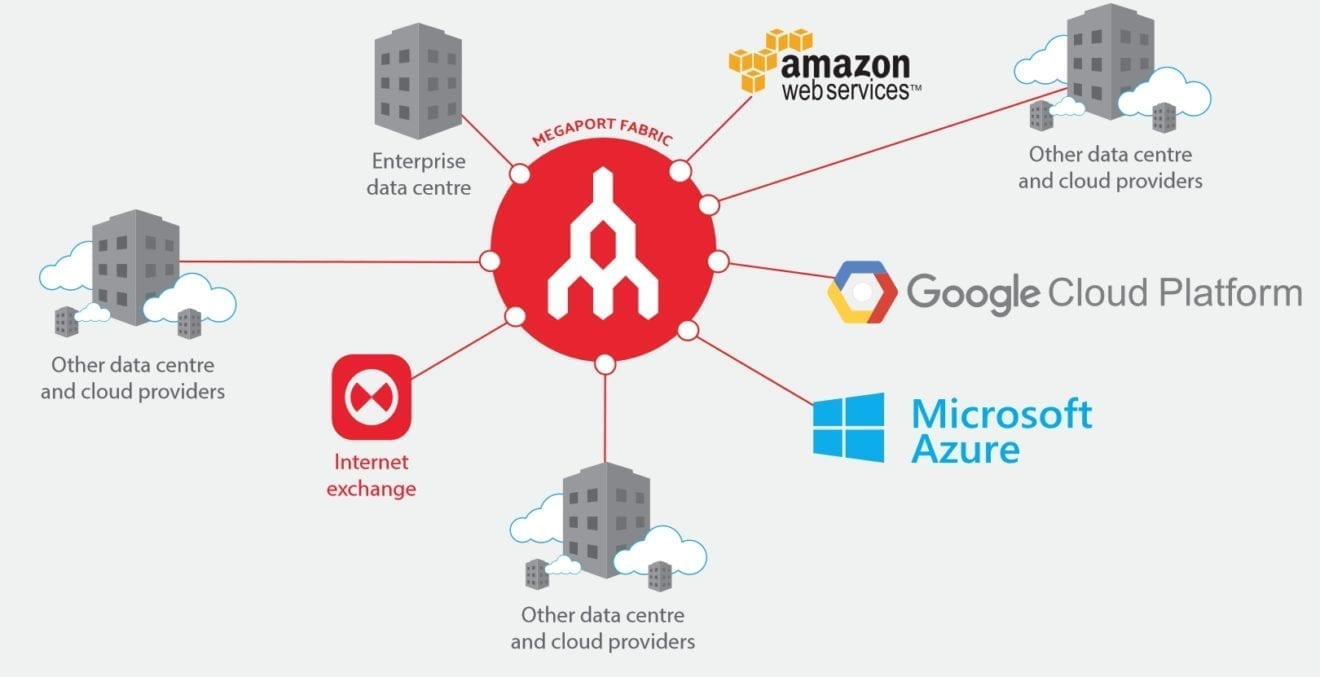
    Australian interconnection upstart Megaport has long been planning to invade Europe this year.  Today they not only formally launched their elastic interconnection platform on the continent, but they revealed two acquisitions that let them hit the ground running in a big way.

    Megaport has signed an agreement to buy Berlin-based Peering GmbH, Germany’s second largest IX provider. ECIX serves some 180 customers across 30 PoPs in Germany, giving Megaport immediate depth in the continent’s biggest market. The deal is expected to close in early August.

    Megaport’s other M&A move gives them an immediate presence in eastern Europe via the acquisition of Bulgarian-based OM-NIX Group AD.

    As one might infer from the IX part of their name, OM-NIX also specializes in interconnection, with extensive reach in Eastern Europe and especially the Balkans. Beyond the ECIX footprint, the deal adds another 18 locations to Megaport’s reach in Europe.

    Put those together with 9 other locations they have been developing organically, and Megaport’s European launch will span 57 locations in 19 cities in 13 countries. The acquisitions cost them some A$3.1 million ($2.3 million) and bring in annualized revenue of A$4.5 million.

    Over the past year, Megaport has expanded its interconnection footprint in markets throughout North America. The buildout has been quite rapid, and the move into Europe accelerates it even further.

    While the next phase is likely more adding revenue on top of the infrastructure they have built out, I have to wonder if they won’t keep going east. It wouldn’t take much to add a PoP or two in the Middle East and India on their way back around the globe to Singapore and Australia.

  • AWS opens first Indian region

    AWS opens first Indian region

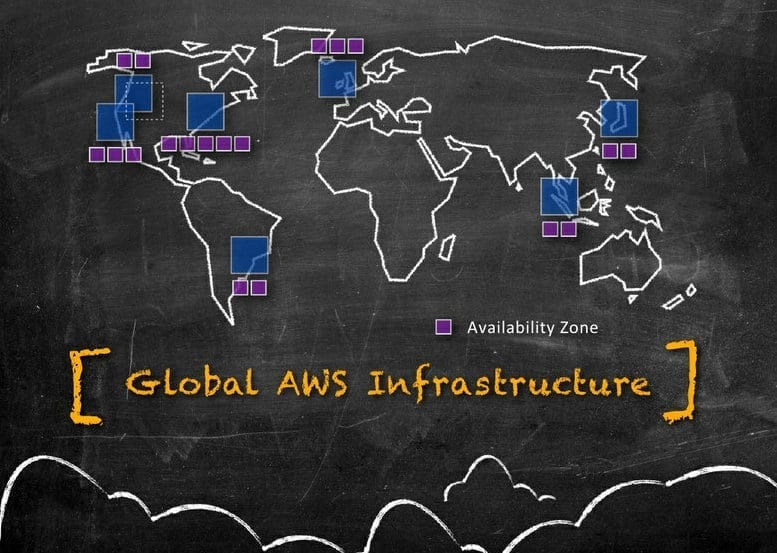
    AWS has launched two data centers in Mumbai, taking the total number of Availability Zones to 35 across 13 technology infrastructure regions globally. With these data centers, Mumbai becomes AWS’ sixth region in Asia Pacific.

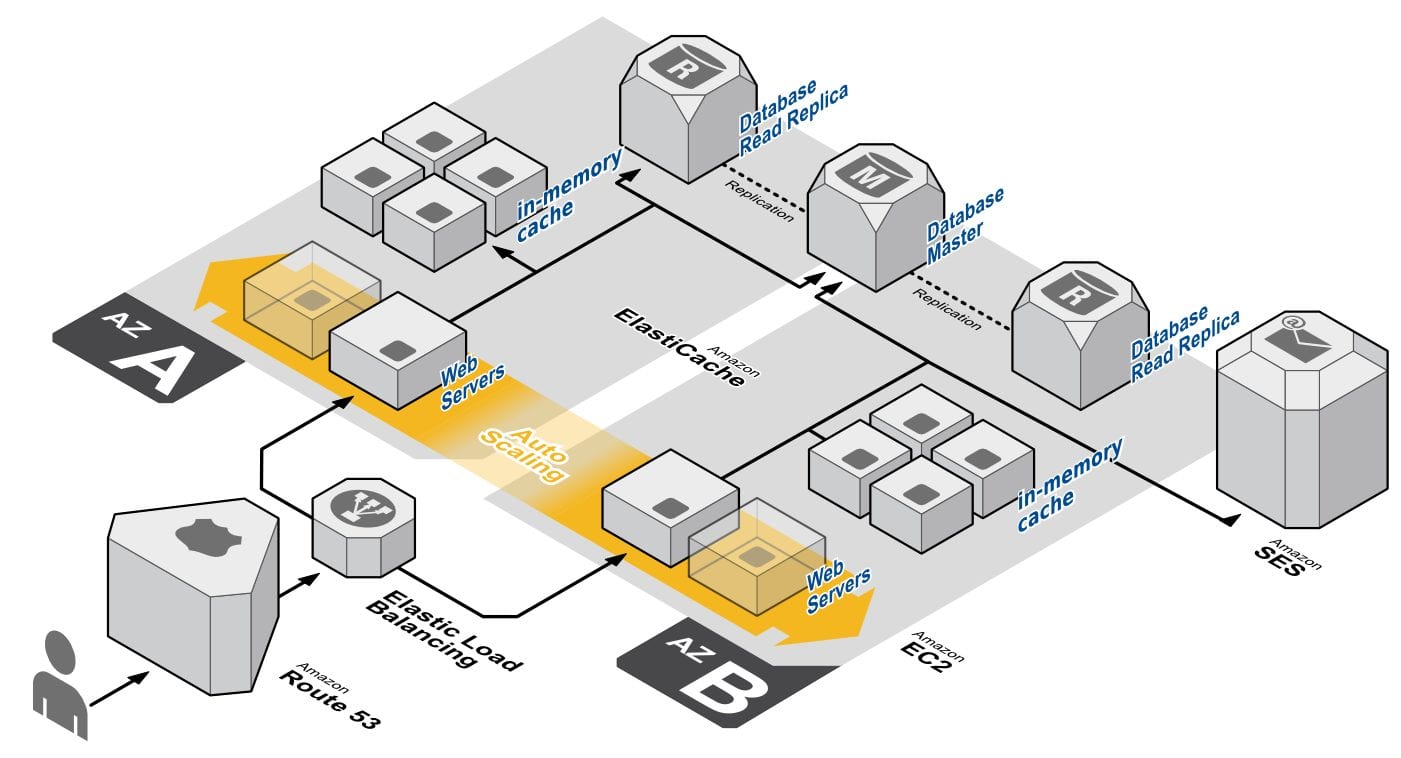
    The new AWS Mumbai Region consists of two separate Availability Zones at launch. Availability Zones refer to data centers in separate, distinct locations within a single region that are engineered to be operationally independent of other Availability Zones, with independent power, cooling, and physical security.

    AWS customers focused on high availability can architect their applications to run in multiple Availability Zones to achieve even higher fault-tolerance.

    According to Andy Jassy, CEO of AWS CEO Andy Jassy said more than 75,000 customers in India are using other AWS Regions.

    “These same 75,000 Indian customers, along with others interested in starting use of AWS, have asked for an AWS India Region so they can move their applications that require low latency and data sovereignty,” he said.

    “We’re excited to make this available today, with the same pay-as-you-go pricing, ability to get started immediately without having to negotiate enterprise agreements or wait days for access, and unmatched functionality that customers enjoy in AWS Regions worldwide.”

    AWS is also partnering with India’s National Institute of Electronics and Information Technology to train 25,000 people on cloud technologies.

  • A look into the history of NEC Philippines

    A look into the history of NEC Philippines

    NEC Corporation is a Japanese multinational provider of information and communication technology products and services with headquarters in Tokyo.

    The 117-year-old firm started operations in the Philippines some 20 years ago when the local subsidiary NEC Philippines was incorporated in January 11, 1996. Gervacio points out that the global firm has been in the country as far back as the 1960s through a Manila Representative Office. In July, it will be celebrating its 20th anniversary with a conference and exhibition in Manila.

    A technology giant recognized for its cutting-edge innovation, NEC delivers IT and network solutions to business enterprises, government and individual customers in the form of software, hardware and related services. Through a combination of its advanced technologies in ICT, it is providing safety for the public and thereby helping to establish safer cities.

    Under the strategy of “Solutions for Society,” NEC offers product solutions for biometric such as facial and fingerprint recognition technology. The use of it for security and authentication purposes has become increasingly common due to its accuracy and efficiency. An example of use is the e-passport system where it has been implemented in many countries around the world, including Southeast Asia.

    The system incorporates NEC’s world-class biometric technology in facial and fingerprint recognition for secured identity protection and eradicates duplication. Ranked world No.1 by United States’ NIST (National Institute of Standards and Technology), NEC offers facial recognition and fingerprint technologies deployed in solutions such as NeoFace® Watch and NeoFace® Smart ID.

    With terrorism and security threats being a growing concern in public areas and international borders, these solutions have helped law enforcement agencies and security organizations all over the world identify individuals and tighten security measures.

    With cyber attacks on a rising trend in a borderless world, NEC’s powerful advanced cyber security solutions can protect organization’s IT and security systems from various cyber threats even before it occurs.

    It recently opened its Cyber Security Factory in Singapore which complements NEC’s Security Operations Centers located in strategic parts of the world including Japan and Australia, with an aim to provide an inter-connected network to share intelligence on cyber threats and deliver 24/7 security to customers.

    NEC is known mainly to electronic experts, but its platforms and solutions are everywhere from the sky above, on land, and deep in the bottom of the ocean waters.

    Up in the sky, NEC satellites are orbiting the earth and their cloud solutions are a boon to computer and phone interface and exchange. The NEC radio systems are responsible to bounce signals to our cell phones.

    On land, the Private Automatic Branch Exchange (PABX) allows connection to a local number, while the Key Telephone System (KTS) enables multiple users control over multiple telephone lines without the requirement for an operator, system attendant or receptionist.NEC Point of Sales(POS) Solution can also be found at major retail stores nationwide.

    NEC’s presence can also be found in the bottom of the seas because the company’s thousands of kilometer long cables are lying in the ocean depths, which are responsible for transporting through fiber optic the data and communication exchanges from one country to another.


  • Cloud computing can help firms cut costs

    Cloud computing can help firms cut costs

    With the rise of cloud computing in business practices worldwide, Microsoft is encouraging Indonesian industries and businesses to take advantage of this technology in their day-to-day operations, mainly due to the cost-cutting advantages that it offers.

    Microsoft Indonesia’s national technology officer Tony Seno Hartono explained that by using public cloud services, such as the ones Microsoft offers through its Azure service, Indonesia’s businesses could significantly increase their operational efficiency, by 25 to 50 percent.

    This is due to the fact that cloud services provide many streamlined features such as server management, data storage and even the electricity to keep the data-storing servers alive. “It can help businesses decrease their operational costs, because using cloud services is basically like outsourcing. Microsoft has a huge data center, capable of storing data and managing it for you. Why not utilize our services?” he said on Monday.

    Microsoft, he continued, is in talks with an unspecified telecom operator to build a data center in Indonesia, but says the negotiations are still ongoing. Indonesian users of Azure currently have their data stored in Microsoft’s data centers abroad, such as in Singapore and the US.

    Adding to the virtues of cloud computing, Tony elaborated that the local creative industry could also harness the benefits of Microsoft’s multiple data centers for creating works of art. One example is in the animation industry, where higher quality animations require massive amounts of time and data to be rendered.

    During the making of James Cameron’s blockbuster film Avatar, Cameron collaborated with Microsoft to render the CGI animations using their public cloud services, thus saving the film production time and costs.

    Tony said that if Cameron had not utilized Microsoft’s multiple data centers, the animations from Avatar would have taken many years to render properly due to the film’s scale and size.

    Within the film industry in Indonesia, many have expressed interest in using Microsoft servers but none have used them so far, because the industry still remains small, and large-scale animation jobs in Indonesia tend to be taken to foreign animation studios to be worked on, Tony added.

    From the perspective of Winastwan Gora, chief operating officer of tech education start-up Kelase, the usage of Azure cloud services has benefitted his company’s operations and has helped cut costs.

    Kelase signed up for Microsoft’s BizSpark service, for three years of Azure usage with a usage cost limit of US$150 per month. The move guaranteed them space on Microsoft’s data centers abroad for storing and processing their information.

    “By utilizing the Azure cloud, we were able to improve our communications and marketing efforts and also, our analytical and source control mechanisms became easier to carry out compared with other means. In other words, it’s now easier for the company to be run digitally,” Gora said.

  • AWS to be anchor customer for Hawaiki cable

    AWS to be anchor customer for Hawaiki cable

    In March, the Hawaiki cable project announced its contract with TE Subcom had come into force. They had raised the necessary funds to kick off the construction phase, and yesterday we learned where some of those funds came from.

    Amazon’s AWS division has stepped up for a large chunk of capacity on the system, becoming a high profile anchor customer on a submarine cable system for the first time.

    The Hawaiki cable is the latest project aimed at hooking up Australia and New Zealand directly with the west coast of the USA, stopping in Hawaii and branching off to American Samoa with options to reach several more.

    It’s a route dominated today by the longstanding Southern Cross cable system, and one on which we have seen several failed attempts to build an alternative – especially by partisans on the New Zealand side. This is the first time the money has finally added up though. As currently planned, the cable will stretch 14,000km and deliver as much as 30Tbps of capacity.

    Amazon AWS joins Vodafone, REANZ, and American Samoa Telecom as anchor customers. It’s Amazon’s first foray into the world of submarine cable systems, but surely not its last.

    The cloud giant is merely joining its tech brethren like Google, Facebook, and Microsoft in taking an active role in the underlying infrastructure they all depend on, taking up some of the slack as global telecommunications operators themselves continue to shy away from undersea investments in favor of wireless and terrestrial fiber.

  • AWS still dominates cloud infrastructure market

    AWS still dominates cloud infrastructure market

    Amazon Web Services (AWS) continues to dominate the cloud infrastructure services market with a 31% worldwide market share, dwarfing the chasing pack, according to new Q1 data from Synergy Research Group.

    The big three followers – Microsoft, IBM and Google – in aggregate accounted for 22% of the market, while the next 20 top-ranked cloud providers accounted for another 27%. The good news for Microsoft and Google is that they both achieved growth rates of well over 100% so they are at least slowly gaining some ground on the market leader.

    Outside of the big four, the next 20 cloud providers are growing at an average 41% per year, but in a market that is growing at over 50% that means that most of them are losing market share.

    The next 20 providers include Alibaba, CenturyLink, Fujitsu, HPE, NTT, Oracle, Orange, Rackspace, Salesforce, and Vmware.

    With most of the major operators having now released their earnings data for Q1, Synergy estimates that quarterly cloud infrastructure service revenues (including IaaS, PaaS and private & hybrid cloud) have now comfortably passed the $7 billion milestone.

    Growth rates remain somewhat similar across the major regions meaning that the United States continues to account for around half of the worldwide market.

    “This is a market that is so big and is growing so rapidly that companies can be growing by 10-30% per year and might feel good about themselves and yet they’d still be losing market share,” said John Dinsdale, a Chief Analyst and Research Director at Synergy Research Group.

    “The big question for them is whether or not they are building a sustainable and profitable business. This can be done by focusing on specific regions or specific services, but the bulk of the market demands huge scale, a broad footprint, very deep pockets and a long-term corporate focus.”

  • Alibaba Cloud launches IoT platform

    Alibaba Cloud launches IoT platform

    Alibaba Cloud has unveiled a series of new products aimed at expanding its IoT, hybrid cloud, storage and security capabilities.

    At its Shenzhen Summit last week, Alibaba Cloud launched version 1.0 of IoT, its one-stop platform for IoT and cloud computing. The service will provide infrastructure for IoT deployments in areas including medical, energy, smart home and intelligent campus networks.

    IoT Version 1.0 combines an IoT foundation kit, an intelligence dissemination platform and smart device and ecosystem functionality. It is compatible with a range of protocols to allow devices to connect quickly to the cloud and other devices.

    At the event, Alibaba Cloud also launched Apsara Stack, a dedicated cloud platform for hybrid clouds. Apsara Stack can be used to obtain public cloud capabilities in a fully-isolated environment within an enterprise data center.

    For enterprise level database and storage needs, the company unveiled a number of services including data migration, storage engines, access protocols and usage models.

    The company also introduced a concept it calls “light computing”, involving providing a cloud storage application interface that allows users to create “instant-on”data processing applications or modules.

    Finally, Alibaba Cloud revealed it has upgraded its AliCloud CDN to support HTTPS encrypted communication, certificate authority services and other enterprise-class security services.

  • Tata Comms to provide MPLS WAN for Air France-KLM

    Tata Comms to provide MPLS WAN for Air France-KLM

    Europe’s second largest airline Air France-KLM has handed Tata Communications a multi-million dollar deal to provide next-generation network connectivity to 170 sites.

    Tata Communications will provide Air France-KLM with an MPLS WAN in the Middle East, Africa and Asia Pacific, supported by the operator’s global subsea cable network.

    The multi-year contract will see Tata Communications roll out a fast, intelligent network which will power Air France-KLM’s mission-critical systems, including passenger check-in, flight operations and departure control applications, as well as corporate programs in the Middle East, Africa and Asia Pacific.

    Air France-KLM, which carried 87.4 million passengers in 2014, is the first major European airline group to move away from the legacy networks widely used in the airline industry.

    Tata Communications’ global network – which today connects more than 300 locations for leading airlines worldwide – will enable Air France-KLM to offer a range of digital services in regions that have been identified by the International Air Transport Association (IATA) as the future growth drivers of the industry.

    Currently eight of the ten fastest growing airline markets are located in Africa. By 2034, IATA expects 1.3 billion passengers to touch China – up from 850 million at present – and India is set to see an additional 260 million passengers. Europe will act as key transfer hub to these emerging markets, with 1.4 billion passenger journeys in 2034 – nearly 600 million more than today.

    “Investing in emerging markets and cutting-edge digital technologies is at the heart of our growth strategy. We’re introducing a range of innovative services, such as travel apps for smartwatches, to provide a seamless, personalized travel experience for our tech-savvy passengers,” Air France-KLM CIO Jean-Christophe Lalanne said.

    “Tata Communications’ global next-generation network will act as the foundation for these services in the Middle East, Africa and Asia Pacific, empowering us take customer service to the next level and capitalize on the huge growth opportunities that these markets offer.”

  • Alibaba Cloud AI aims to predict singing contest winner

    Alibaba Cloud AI aims to predict singing contest winner

    Alibaba Cloud’s “Ai,” an artificial intelligence program was put on the spot to predict the winner at the grand finale of “I’m a Singer,” the popular Chinese reality television produced by Hunan TV.

    The competition is major annual event and attracts significant public participation in China. Ai predicted the winner by using neurological networks, social computing and emotional perception.

    Min Wanli, chief scientist for AI at Alibaba Cloud said the result was jointly created by TV audience, public judges, as well as the seven contestants.

    “It is very random and almost impossible to predict using human intelligence, and we aim to achieve real-time prediction by Ai,” said Min.

    “In a previous round, Ai predicted two of the top three winners on April 1,” said Min. “We believe that it will achieve a better performance after learning and evolving over the past week.”

    The program has the potential to understand human emotions, gather insights in real-time, and evolve through strong computing and machine-learning capacity.

    With this capability, Ai identified and assessed factors that may affect the result, including popularity of the songs, the singers’ voice pitch and energy, audience response and online discussions, to name a few.

    The program created and used a dynamic computer model to predict the result by computing both fact-based logical data and subjective emotion-based data.

    Ai’s prediction and the judges’ voting were processed independently and did not affect each other.

    In the future, Ai will be applied to areas such as personal assistance, weather analysis, smart cities and social trend predictions.

  • Fujitsu switches on Tatebayashi Data Center

    Fujitsu switches on Tatebayashi Data Center

    Fujitsu has commenced operations at its new Tatebayashi Data Center. The newly opened Annex C, featuring optimized air conditioning systems and operating environment, meets Japan’s highest environmental performance standards.

    Fujitsu built the facility with a particular focus on support for hybrid clouds to support burgeoning demand, as well as for robust security and resiliency to disasters.

    Fujitsu is using the data center as the core facility for its digital business platform MetaArc, which supports the digital business of customers, and is helping to bring greater dynamism to the businesses of its customers.

    By optimizing the air conditioning systems, operating environment, and the ICT equipment environment, the new annex increases the use of outside air for cooling to roughly 7,000 hours per year, from roughly 3,250 hours for previous data centers.

    In addition, Fujitsu developed a new architectural structure and air conditioning method that maximizes the use of natural convection for airflow, thereby reducing the amount of electricity used for air conditioning and other equipment by approximately 60%. It is designed to achieve power usage effectiveness (PUE) of 1.20, the most efficient level in Japan.

    In addition to connections with other Fujitsu data centers throughout Japan and Fujitsu’s cloud services, the new annex uses standard equipment for closed networks to enable connections with third-party clouds, thereby providing fast support for hybrid cloud usage needs.

    The new annex is equipped with three different types of server rooms to meet diverse customer needs. The Standard rooms are high-quality server rooms equivalent to Tier 3. The Cloud rooms are for the exclusive use of clouds and use new air conditioning methods and support high integration and high power supply capacity.

    Thirdly, the FISC-compliant rooms are for customers in the financial services industry. The new annex complies with the Center for Financial Industry Information Systems (FISC) security standards, and uses an electricity distribution system with a UPS with reliability that exceeds Tier 4 standards.

  • Oracle aims to remove cloud adoption barriers

    Oracle aims to remove cloud adoption barriers

    Oracle has launched a new family of services designed to help remove some of the biggest obstacles to cloud adoption.

    While organizations are eager to move their enterprise workloads to the public cloud, many have been constrained by business, legislative and regulatory requirements that have prevented them from being able to adopt the technology.

    To address this, Oracle aims to make it easier for organizations to adopt Oracle Public Cloud Services and run them wherever they want – in the Oracle Cloud or their own data center.

    Oracle Cloud at Customer enables organizations to implement Oracle’s cloud services in their own data center. This is the first offering from a major public cloud vendor that delivers a stack that is 100% compatible with the Oracle Cloud but available on-premises.

    Customers can adapt the public cloud services for a number of use cases, including disaster recovery, elastic bursting, dev/test, lift-and-shift workload migration, and a single API and scripting toolkit for DevOps.

    By extending the Oracle Cloud into their data center, customers can have full control over their data and meet all data sovereignty and data residency requirements that mandate customer data remain within a company’s data center or contained within a geographic location.