Retail News CRM

Tag: copyright

  • Nykaa Faces $210K Lawsuit for Alleged Copyright Violation on Instagram Reels

    Nykaa Faces $210K Lawsuit for Alleged Copyright Violation on Instagram Reels

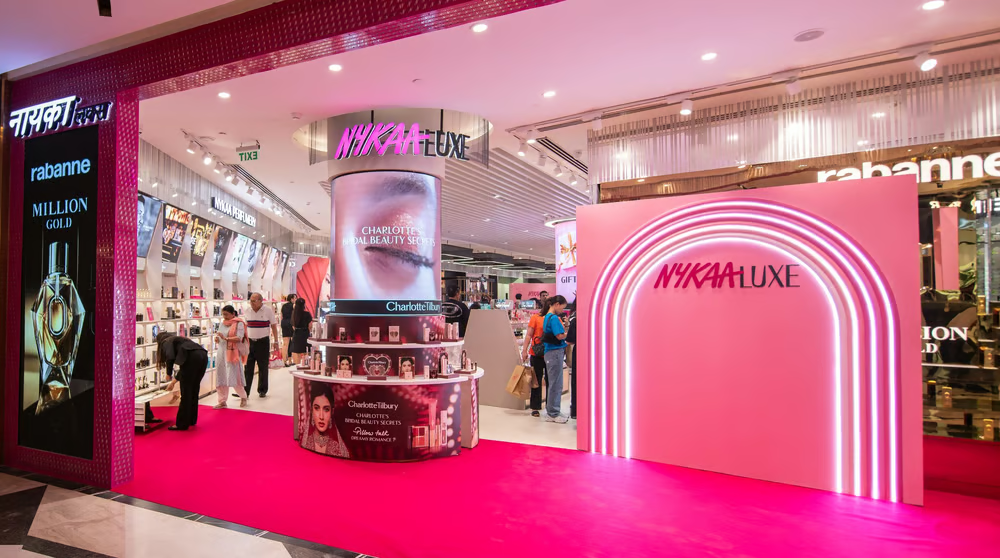
    Zee Entertainment, an entertainment company based in India, has initiated a lawsuit against Nykaa, a fashion and beauty retailer. The entertainment company has accused Nykaa of using its copyrighted songs in promotional reels on Instagram, without the necessary permissions. As a result, Zee Entertainment is seeking $210,000 in damages.

    Zee’s Licensing Agreement with Meta Platforms

    According to the lawsuit filed with the Delhi High Court on April 3, Zee Entertainment holds a licensing agreement with Meta Platforms. This agreement permits individuals to use Zee’s music for non-commercial purposes in their Instagram posts. However, Zee alleges that Nykaa has violated this agreement by using various copyrighted songs to advertise products to its millions of followers on Instagram.

    The lawsuit in question is not available to the public. Both Nykaa and Zee Entertainment have refrained from commenting on the issue.

    Social media platforms such as Instagram, a Meta product, have seen a surge in their use for advertising purposes. Brands now frequently employ short-video formats, often accompanied by popular music, to promote their goods.

    Removal of Flagged Links

    The lawsuit filed by Zee Entertainment cites 12 specific Instagram posts where Nykaa allegedly used Zee’s licensed music unlawfully. Following a brief hearing on Thursday, Nykaa’s legal representative informed the court that the 12 flagged links had been removed.

    Zee’s lawsuit, which spans over 900 pages, asserts that Nykaa utilized the music “without procuring any permissions or authorizations” from the entertainment company. The lawsuit advances a claim for 20 million rupees (approximately $209,742) as compensation for Nykaa’s illicit use of Zee’s music.

    The legal dispute between these two major companies could potentially have broader consequences. Aditya Gupta, a partner at Ira Law in India, suggests that “Marketing departments often use content available on music libraries without reading the fine print of the Instagram terms” and that the court’s decision could “provide much-needed clarity.”

    Questions & Answers

    What is the basis of Zee Entertainment’s lawsuit against Nykaa?
    Zee Entertainment alleges that Nykaa has used its copyrighted music in promotional Instagram reels without the necessary permissions, thereby violating Zee’s licensing agreement with Meta Platforms.

    What action has Nykaa taken in response to the lawsuit?
    Nykaa has removed the 12 specific Instagram posts flagged in Zee’s lawsuit, as reported by their legal representative in court.

    What are the potential implications of this case?
    The case could have wider consequences, potentially affecting the way marketing departments utilize content from music libraries. The decision could also provide clarity regarding the use of such content under Instagram’s terms.


  • Court Sides With Nelly In Copyright Dispute Against Shein’s Subsidiary

    Court Sides With Nelly In Copyright Dispute Against Shein’s Subsidiary

    A recent legal dispute between two large fashion retailers, Shein and Nelly, has resulted in the court favoring Nelly on the grounds of copyright infringement. The court’s ruling states that Shein, through its Irish subsidiary Infinite Styles Ecommerce, utilized Nelly’s copyrighted photographs without obtaining permission.

    Copyright Infringement Verdict

    The Patent and Market Court announced the verdict last Friday, stating clearly that Shein’s subsidiary, Infinite Styles Ecommerce, had unlawfully duplicated and displayed Nelly’s copyrighted photographs on Shein’s Swedish website. The court stated in its ruling, “Infinite Styles Ecommerce is guilty of infringing Nelly’s exclusive rights to the photographs.”

    Nelly, the owner of the e-commerce platform Nelly.com and its own branded clothing line, initially filed a lawsuit against Shein for copyright infringement in September 2024. The court noted that Nelly demanded a penalty of 500,000 Swedish crowns (equivalent to $53,400), to which Infinite Styles Ecommerce did not object.

    A spokesperson for Shein stated, “We are dedicated to defending IP rights holders and treat all accusations of infringement seriously,” adding that the disputed images were promptly removed from their platform.

    Legal Costs and Future Actions

    In addition to the penalty, the court also ruled that Infinite Styles Ecommerce is obligated to cover all of Nelly’s legal expenses, along with the applicable interest. However, the court rejected Nelly’s claim against two other Shein establishments – the parent company Roadget Business and the Dublin-based entity Infinite Styles Services. Instead, Nelly was directed to pay the legal fees of these two firms.

    Reacting to the verdict, Nelly CEO Helena Karlinder-Ostlundh expressed mixed feelings. She welcomed the aspects of the ruling that favored Nelly, but displayed disappointment and surprise at the overall outcome. The CEO hinted that Nelly might consider appealing the court’s decision.

    Questions & Answers

    What was the basis of the lawsuit between Shein and Nelly?
    The lawsuit was based on copyright infringement. Nelly claimed that Shein’s subsidiary, Infinite Styles Ecommerce, had used copyrighted photographs belonging to Nelly without obtaining permission.

    What was the penalty imposed on Shein by the court?
    Shein, through its subsidiary Infinite Styles Ecommerce, was ordered to pay a fine of 500,000 Swedish crowns, equivalent to $53,400.

    What are the possible next steps for Nelly following the court ruling?
    Nelly’s CEO, Helena Karlinder-Ostlundh, indicated that the company might consider appealing the decision due to their dissatisfaction with some parts of the verdict.

  • Apple wins lawsuit оver copyright infringement on multiracial emojis

    Apple wins lawsuit оver copyright infringement on multiracial emojis

    It’s safe to say that Apple can now put another lawsuit win under its belt. The Cupertino company just won a copyright lawsuit launched by Cub Club Investment (CCI), the developer of the iDiversicons app, which enables you to use racially diverse emojis. CCI accused Apple of copying its app idea and emojis and infringing on its intellectual property rights.

    Before making his decision, Vince Chhabria, the lawsuit judge, compared Apple’s emojis with CCI’s emojis and concluded that, overall, the emojis weren’t similar enough for Apple to infringe. Chhabria also stated, “Copyright law does not forbid all copying. To survive a motion to dismiss, a plaintiff must allege that the defendant copied enough of the protected expression … to establish unlawful appropriation.”

    According to Vince Chhabria, CCI didn’t manage to prove that Apple had infringed on anything that was under copyright protection; therefore, Apple had only copied CCI’s idea, and ideas are not subject to copyright law.

    In the document about his decision, Chhabria said, “There aren’t many ways that someone could implement this idea. After all, there are only so many ways to draw a thumbs up.” In this regard, Chhabria stated that CCI’s emojis are ‘entitled to only thin copyright protection against virtually identical copying.’

    In the lawsuit document, Cub Club shared that the iDiversicons app was founded in 2013 by CCI CEO Katrina Parrott. According to Parrott, the app was the first in the world to offer emojis with diverse skin tones. CCI also said that in 2014, Parrott discussed a possible partnership with Apple, but Apple declined the partnership and instead created its own diverse skin-tone emojis.

  • Hong Kong Harry Potter-themed cafe sued by Warner Bros

    Hong Kong Harry Potter-themed cafe sued by Warner Bros

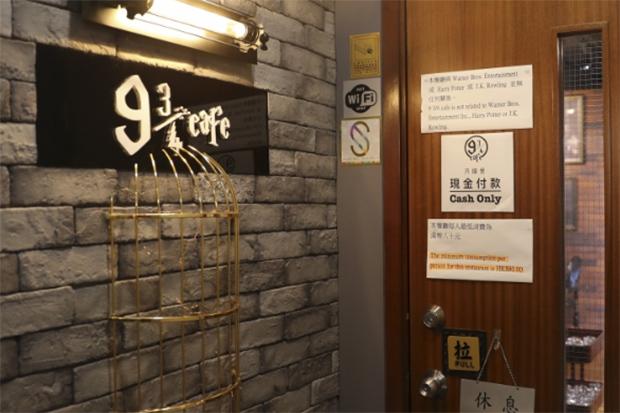
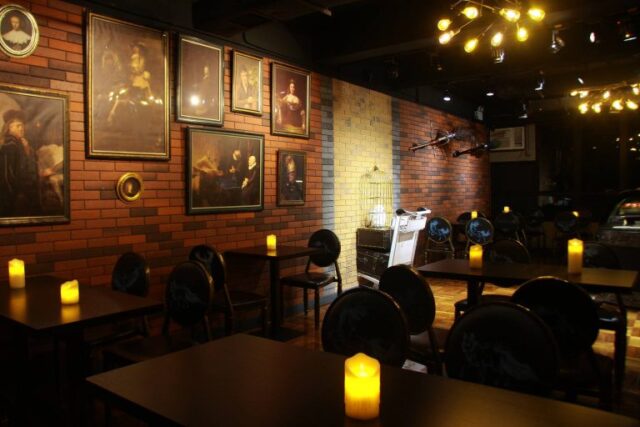
    The 9¾ Harry Potter-themed Hong Kong cafe has been sued by Warner Bros for copyright infringement. The cafe, open since 2017, has never claimed to have a formal relationship with the Harry Potter franchise – although it is festooned with art and props made famous in the popular book and movie series. Trademarks registered by the studio within the territory of Hong Kong, including “Harry Potter”, “quidditch”, “muggles”, “Professor McGonagall” and “dementors” are used liberally at the venue. Iconic features and images from the films are used in the cafe’s interior design, including the Gryffindor coat of arms and the Hogwarts Express train ticket for Platform 9¾.

    Located on Yin Chong Street in Mong Kok, the cafe features wall-mounted wands and broomsticks, stuffed owls, portraits of witches and wizards, and faux candlelight. There is even a half-disappearing luggage trolley, as featured at King’s Cross Station, complete with Hedwig in a cage.

    The drinks menu of the Harry Potter-themed Hong Kong cafe includes some Harry Potter-specific concoctions, such as the Polyjuice Potion, Amortentia love potion, golden Felix Felicis (aka “liquid luck”), and Veritaserum. Visitors 18 years and older can down a pint of Butterbeer.

    For food, the cafe serves Western starters and mains named after mythical creatures and charms from the Harry Potter series, such as the soft-shell crab Aragog salad, Romanian longhorn pumpkin pasta (after one of the dragons from Goblet of Fire), and Prior Incantato cream of mushroom soup.

    Warner Bros is seeking an unspecified sum of damages, a removal order plus multiple injunctions.

  • Indonesia Improves Ranking on Global Intellectual Property Index

    Indonesia Improves Ranking on Global Intellectual Property Index

    Indonesia has increased its ranking on the United States Chamber of Commerce’s 2018 International Intellectual Property Index this year, which shows that the government’s efforts to protect copyrights are starting to bear fruit.

    The sixth edition of the annual report titled “Create,” published last month, shows the state of intellectual property rights in the world’s 50 biggest economies.

    The index uses 40 indicators in eight categories to evaluate which policies and efforts have been effective in protecting intellectual property rights.

    Indonesia scored 12.14 compared with last year’s 9.64, putting it in 43th place – just above India (44), but below Thailand (41), Vietnam (40), Brunei (35) and Singapore (9).

    Topping the list are the United States, Britain, Sweden, France and Germany.

    Patrick Kilbride, vice president of international intellectual property for the Global Innovation Policy Center at the US Chamber of Commerce, said music and film are two of the sectors that have improved the most in Indonesia.

    “Indonesia does well [in the creative industry]. I think copyright helps to preserve [intellectual property]. It’s a vehicle for cultural experience,” he said.

    The report also notes that Indonesia has improved measures to control copyright infringements through an online system. The government and the creative and advertising industry established the Infringing Website List to address such cases in the creative industry.

    The report lauds the government’s framework for intellectual property rights, which was established across ministries. It notes that over the past decade, the country has had an inter-ministerial group tasked with the enforcement of these rights.

    Through a 2006 presidential decree, the government also created a national intellectual property task force, which is responsible for designing policies and measures to enforce intellectual property rights.

    The task force, which consists of cabinet-level officials from the ministries of industry, trade, finance, foreign affairs, justice and home affairs, reports directly to the president.

    Biotech, Software

    However, Kilbride said the biotechnology and software sectors are still vulnerable in the country.

    “Foreign companies operating in that space [biotech and software] may be less inclined to bring their products to Indonesia and must be less inclined to invest in domestic innovation,” Kilbride said.

    The report further highlights certain weaknesses Indonesia still has to address, such as limited participation in international intellectual property treaties, copyright piracy and a 2016 law that has proven to be a barrier to foreign companies entering the country, as it requires them to transfer all patented technologies and processes.

    Kilbride said 80 percent of research and development in Indonesia is currently state-funded, but that it should be the exact opposite. Private companies are deterred from investing or expanding in the country if there are no clear regulations on intellectual property rights.

    “The private sector doesn’t have enough confidence in the domestic system to take risks. Intellectual property is to enable risk-taking. If you are in a sector with a high cost of entry, maybe it takes a long time to take a product to market, from research to development and testing. It costs a lot of money. You won’t want to spend a lot of money without rock-solid rights,” Kilbride said.

    He said Indonesia will do well in the coming years as it has a large population, dynamic economy, young workforce and abundant natural resources. However, innovation is key.

    “With strong intellectual property protections, the industry would be willing to invest in Indonesia; to invest in R&D. [This will] put Indonesia on the cutting edge of global technology and help it to overcome the middle-income trap,” Kilbride said.