Retail News CRM

Tag: Ctrip

  • Where Chinese tourists go for shopping

    Where Chinese tourists go for shopping

    Hong Kong, Tokyo, Seoul and Singapore were among the hottest shopping destinations for Chinese tourists last year, according to Ctrip. In the latest big-data report from the Chinese travel-services provider, Edinburgh, Singapore and San Francisco were also among the top 10. Last year, nearly 150 million overseas trips were made by Chinese tourists, who collectively spent US$120 billion.

    London was the city that saw the highest per-capita spending by Chinese tourists – more than US$4428 – followed by Paris, Macau, Dubai, Okinawa, Kyoto, Osaka, Nagoya, Hong Kong, Singapore and Fukuoka.

    Europe is still a hot destination for Chinese luxury goods buyers because prices there are much lower than the global average, and a tax-refund system also facilitates sales.

    Despite the recovery of the British pound last year, the UK remained a popular destination for Chinese tourists, said Ctrip.

    Experts noted that Chinese consumers would still be a focus of competition between shopping destinations this year, and many retailers internationally have upgraded their shopping facilities to lure Chinese tourists.

  • Shinsegae DF partners with China’s Ctrip

    Shinsegae DF partners with China’s Ctrip

    Shinsegae DF Inc., duty-free store operating unit of South Korea’s retail conglomerate Shinsegae Group, has joined hands with China’s largest online travel agency Ctrip to offer membership service with hopes to woo more Chinese consumers.

    Shinsegae DF said on 3 August that it will offer consumers membership subscription service via Ctrip website, becoming the world’s first duty-free store operator to partner with Ctrip, an online platform in China with over 300 million users offering travel-related services such as accommodation, flight reservation, and tour packages.

    Under the partnership, Shinsegae DF will introduce its brand on the travel agency’s website under Global Shopping section and offer membership subscription service.

    Consumers will be given silver memberships that grant them a 10 percent discount at all times.

    The latest partnership with Chinese e-commerce site comes at a time when Shinsegae DF is going all-out to attract Chinese travelers to boost sales.

    In November, the Korean duty-free store operator joined hands with China’s leading messaging and social media app WeChat with 1 billion monthly users to expand membership. Shinsegae DF has seen a 150 percent average daily surge in the number of foreign memberships since the service launch.

    Average daily sales of Shinsegae DF’s store in Myeong-dong, central Seoul, have also jumped from the 4 billion won (US$3.5 million) range in October last year to more than 5 billion won this year, the company said.

    An unnamed official from Shinsegae DF said that the company will put out efforts to attract Chinese travelers by expanding membership subscription partnership with Alipay in addition to Ctrip and WeChat.

    Shinsegae said the daily average number of foreigners who sign up for its memberships grew over 150 percent following the launch of the service with WeChat.

    “We are putting our utmost efforts in establishing platforms and communities to better communicate with consumers from Greater China,” a company official said. “In addition to Ctrip and WeChat, we plan to expand collaboration with Alipay.”

  • China’s Ctrip is buying flight search company SkyScanner

    China’s Ctrip is buying flight search company SkyScanner

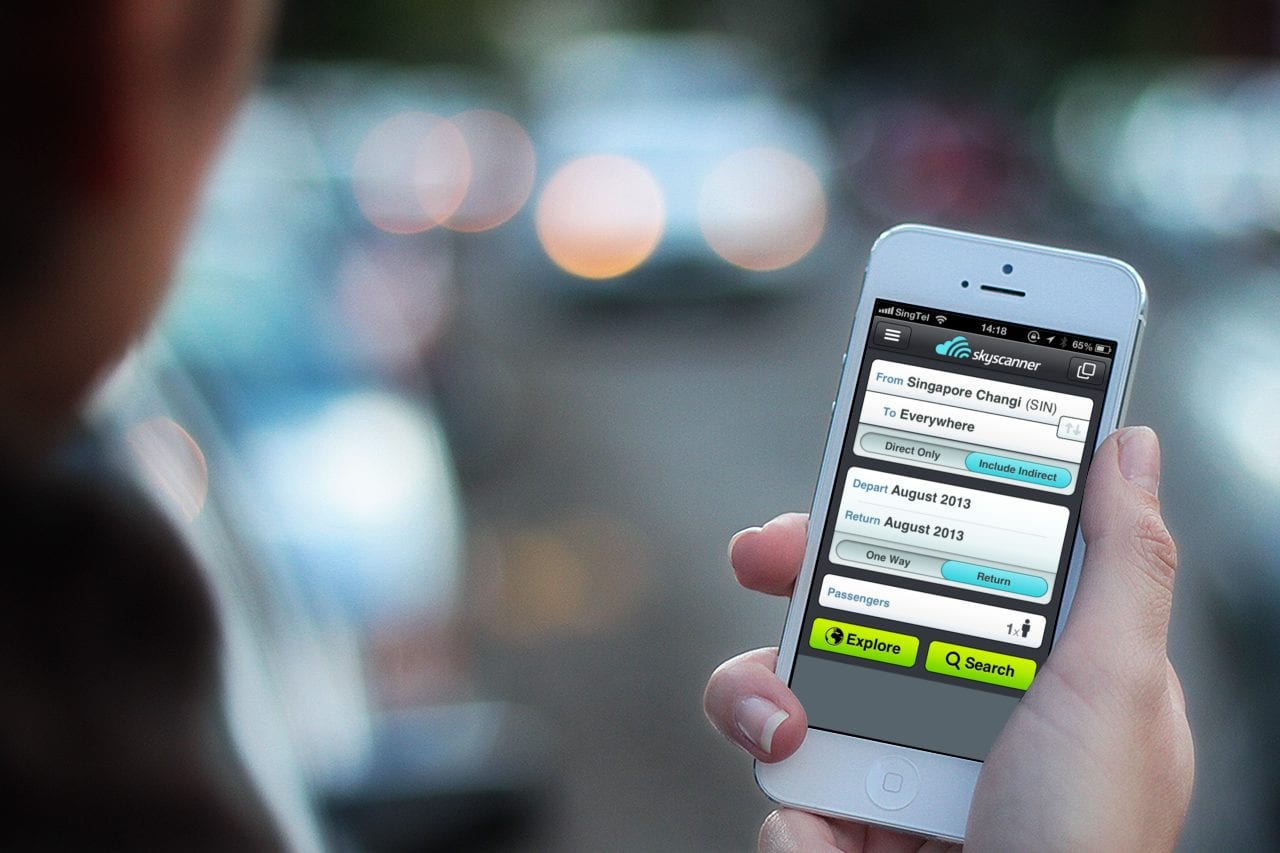
    Skyscanner, the Scotland-based flight search company, has been acquired by Chinese online travel giant Ctrip for £1.4 billion, or approximately $1.74 billion.

    The deal is predominantly cash and is expected to close before the end of this year. Once completed, SkyScanner will operate independently of Ctrip, both parties confirmed.

    Ctrip was founded in 1999, and it is China’s largest online travel firm. Its revenue for Q3 2016, which was announced today, came in at RMB 5.6 billion ($810 million), that’s up 75 percent year-on-year, with a slim $4 million net profit. Ctrip recently raised close to $1 billion from the sale of convertible notes, a raise that looks to have be coordinated with the Skyscanner deal.

    This news comes less than a year after Skyscanner, which has over 700 staff across 10 offices, raised $192 million in funding in January 2016 to expand its reach worldwide. That was the company’s first financing in more than two years, and investors included Khazanah Nasional Berhad, the Malaysian government’s strategic investment fund, Yahoo Japan, fund manager Artemis, investment firm Baillie Gifford, and PE firm Vitruvian Partners. Sequoia is an existing backer.

    The round valued SkyScanner at a reported $1.6 billion. The company was widely-expected to pursue an IPO in 2017, which made its acquisition somewhat surprisingly while the price isn’t a huge leap on that previous valuation. SkyScanner had seen its revenue growth slow, as Skift reported, but the company put that down to increased investment in product rather than marketing.

    Regardless, this is the largest travel tech acquisition in Europe to date. SkyScanner placed much emphasis on Asia — partnering with Yahoo Japan and acquiring China-based travel search startup Youbibi — but the deal promises to help Ctrip expand its business into international markets.

    “Skyscanner will complement our positioning at a global scale and Ctrip will leverage our experience, technology and booking capabilities to Skyscanner’s,” Ctrip co-founder and executive chairman James Jianzhang Liang said in a statement.

    In a video statement, Skycanner CEO and co-founder Gareth Williams said that the deal would enable his company to gain access to greater resources to make travel “simpler:”

    It’s been a busy past year or so for Ctrip, which has pursued M&A activity to expand. More than a year has passed since it agreed to a share swap with arch rival Qunar which saw it gain a 45 percent voting interest in Qunar in exchange for 25 percent of the Ctrip business.

    In January of this year, Ctrip spent $180 million to buy around one-quarter of India’s MakeMyTrip, while it splurged $463 million this summer to get a slice of China Eastern Airlines, a state-run airline that claims 94 million passengers.


  • Golden Week spending spree hits $180b

    Golden Week spending spree hits $180b

    Retailers and catering businesses were the main beneficiaries of the 1.2 trillion yuan (US$180 billion) Golden Week spending spree by Chinese consumers.

    This was 10.7 per cent up on last year’s figure, according to Ministry of Commerce (MOC) data, with the biggest spenders being in Chongqing municipality and Sichuan province in west China, and Hunan province in central China.

    Jewellery and gold, home appliances, IT products and energy cars were among the top picks during the week. There was also a demand for catering services for weddings, birthdays and family reunions.

    It is the second consecutive year Golden Week has hit the 1 trillion yuan spending milestone, says China.org.

    Despite an estimated 6 million Chinese tourists travelling overseas during the holiday week, domestic spending was highly encouraged, reports the International Business Times. Beijing has encouraged domestic spending to stimulate the economy, which jumped 6.7 per cent between January and June.

    “The economy this year, especially in the third quarter, is better than expected,” according to Premier Le Keqiang.

    A joint report by the China Tourism Research Institute and cTrip shows Chinese tourists spent as much as 8000 yuan during the national holiday.

    About 593 million Chinese tourists visited attractions across China, says the China National Tourism Administration, spending a total of 482.2 billion yuan, 12.8 per cent year on year.

    Golden Week, from October 1 to 7, is a national holiday of seven consecutive days.