Retail News CRM

Tag: CU

  • CU opens first store in Malaysia in collaboration with MyNews

    CU opens first store in Malaysia in collaboration with MyNews

    CU has opened the doors of its first store in Malaysia, signaling a full-fledged entry into the country. CU is one of the big three convenience store chains in South Korea in terms of the number of stores, and the chain is owned by South Korean company BGF Retail Co Ltd.

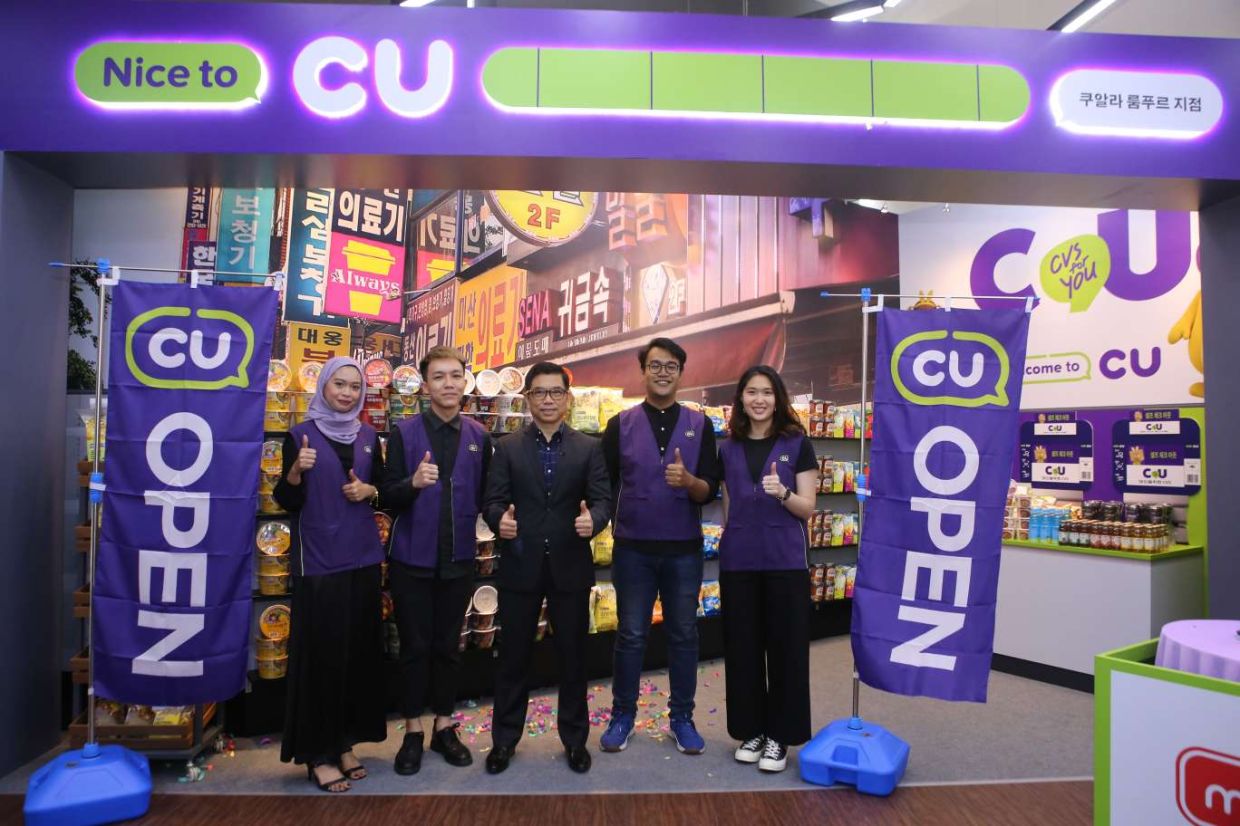
    CU announced today that it opened its first store in Kuala Lumpur, making Malaysia the second foreign market the convenience store chain made an entry into after entering Mongolia in 2018. Malaysia’s first CU store has opened inside a shopping mall in Kuala Lumpur’s middle-class neighborhood. The store is large-sized, measuring approximately 165 square meters.

    The opening ceremony of the store was attended by prominent individuals such as Lim Hyung-geun, head of BGF Retail’s overseas business department, myNEWS Holdings Bhd CEO Dang Tai Luk, South Korean Ambassador to Malaysia Lee Chi-beom, and Kwon Young-jin, a director at the Korea Trade-Investment Promotion Agency (KOTRA).

    CU used BGF’s global system exclusively for overseas business for the first time in making the entrance into the Malaysian market. The South Korean convenience store chain is aiming to be the first of its industry to not only bring South Korea’s convenience store model built on decades of knowledge and experiences but also South Korean IT technologies to overseas markets.

    CU’s entry into Malaysia marks the first attempt to introduce a South Korean convenience store’s brand and system to a foreign company that operates local brands of its region. It is also an instance where a company in the retail and distribution industry was able to bear fruit from its pursuit of establishing a business in the Southeast Asian region. CU’s entrance into Malaysia is also quite significant in that the move throws a challenge to 7-Eleven, a powerhouse in the traditional convenience store business.

    With about 2,400 stores under its belt in Malaysia, 7-Eleven is the No. 1 company in its industry in Malaysia. In second place is myNEWS Holdings, a partner company of BGF, with 530 stores across the country. Japanese convenience chain FamilyMart is ranked third with about 200 stores in the country.

    CU has set a goal to open 50 new stores within a year and aspires to become No. 1 in the industry in the mid- to long-term by adding more than 500 stores over the next five years.

    CU is gearing up to expand the number of its new store openings following the opening of its first store in Malaysia, and at the same time, it is preparing to gradually convert existing myNEWS.com stores into CU stores. As a result, it is expected that CU’s stores and Japanese convenience stores will be duking it out for market share of the Malaysian convenience store market in the future.
  • South Korean convenience-store chain CU to accept cryptocurrency

    South Korean convenience-store chain CU to accept cryptocurrency

    Major South Korean convenience-store chain CU is preparing to accept payments in cryptocurrency.

    The chain, which operates more than 13,000 outlets in the country, will use the Chai payment system to trade in Terra, a won-backed stablecoin that has garnered investment from many large Korean firms.

    CU parent firm BGF Retail partnered with Chai earlier this week to allow buyers to pay by presenting a barcode from the Chai mobile app.

    Terra co-founder Do Kwon told CCN Korea that low-margin businesses struggle to accept volatile cryptocurrencies such as Bitcoin. In other regions, retailers often deal with exchanges to convert cryptocurrency payments to money on the spot.

    “Moving forward, Chai will continue to lessen the burden on franchisees and increase the merit of consumers through partnerships with various companies like CU convenience store with an on and offline infrastructure,” said Chai Corporation president Han Chang-joon in a statement translated by CCN.

  • CU convenience stores parent records sales leap

    CU convenience stores parent records sales leap

    The operator of South Korea’s CU convenience stores, BGF Retail, has achieved KRW189.5 billion (US$168.9 million) in operating profit last year, a leap of more than 600 per cent over last year. The company said on Tuesday its sales had risen by 515.3 per cent to KRW5.77 trillion ($5.14 billion). The results confirmed market predictions of a major upswing for the firm following demerging into separate holding and operating entities in November 2017.

    However, despite the improved trading figures, net profit dropped 98.1 per cent to KRW47.2 billion ($42.06 million). A statement by the firm explained that profits from some business activities made after the demerger had been attributed to the previous year’s statements.

  • South Korean convenience store openings slow down

    South Korean convenience store openings slow down

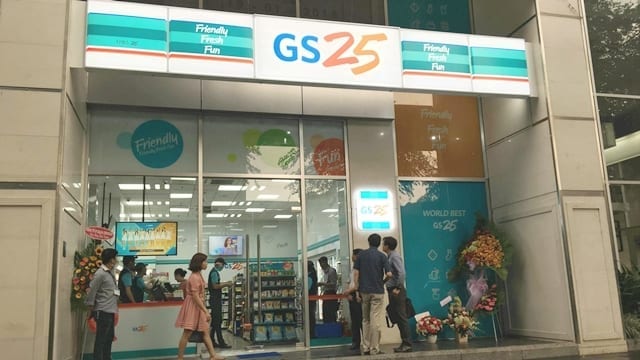
    South Korean convenience store openings in South Korea fell last year, according to industry data. Thought to be the effect of increasing labour costs and market saturation, the slowdown has manifested amongst several industry operators – including BGF Retail’s CU, which opened 980 fewer stores than the previous year’s total of 1646; and GS25, which opened 1023 fewer stores last year after launching 1701 outlets in 2017.

    A government advisory to chain stores to maintain more of a distance between competing branches signals a likely continuation of the downward trend, as well as new laws mandating higher levels of paid leave to staff and a higher minimum wage. The same pressures have seen 19 per cent of convenience stores closing at night rather than operate 24 hours, compared with 10 per cent in 2017.

    A statement issued by CU said that the firm is prioritising profitability of existing stores over opening new locations.

  • FTC Korea approves convenience stores’ voluntary rules to curb competition

    FTC Korea approves convenience stores’ voluntary rules to curb competition

    South Korean convenience store operators have agreed not to engage in cut-throat competition in the latest move to better protect struggling franchisees. A key centerpiece of the voluntary deal calls for CU, GS25 and 7-Eleven and three other convenience store brands to decide “carefully” over whether to open a new convenience store near an area where a rival convenience store is already located.

    The deal said that convenience stores of rival brands should be at least 50 metres away from each other. Currently, convenience stores of the same brand should be located at least 250 metres away from each other to make sure that they do not compete against each other.

    The latest move came as South Korea has been struggling to protect franchisees in a country where chaebol, or family-controlled conglomerates, have dominated the economy for decades.

    “The voluntary regulation, if implemented in good faith, could help ease saturation and improve management conditions of franchisees of convenience stores,” Kim Sang-jo, chairman of the Fair Trade Commission, said in a signing ceremony of the voluntary deal in Seoul today.

    Last week, President Moon Jae-in instructed the antitrust chief to support a voluntary deal among South Korean convenience store operators so as to address the saturation of the market.

    Convenience stores have sprung up in commercial areas in Seoul and other major cities in recent years, driven by growth of single-member households.

    Last year, the number of convenience stores surpassed 40,000, a dramatic increase from 1989 when the first convenience store opened in eastern Seoul.

    Kim said the voluntary deal could prevent convenience store operators from recklessly opening new outlets in areas where there are already many convenience stores.

  • Korea’s convenience stores to use mobile payments more

    Korea’s convenience stores to use mobile payments more

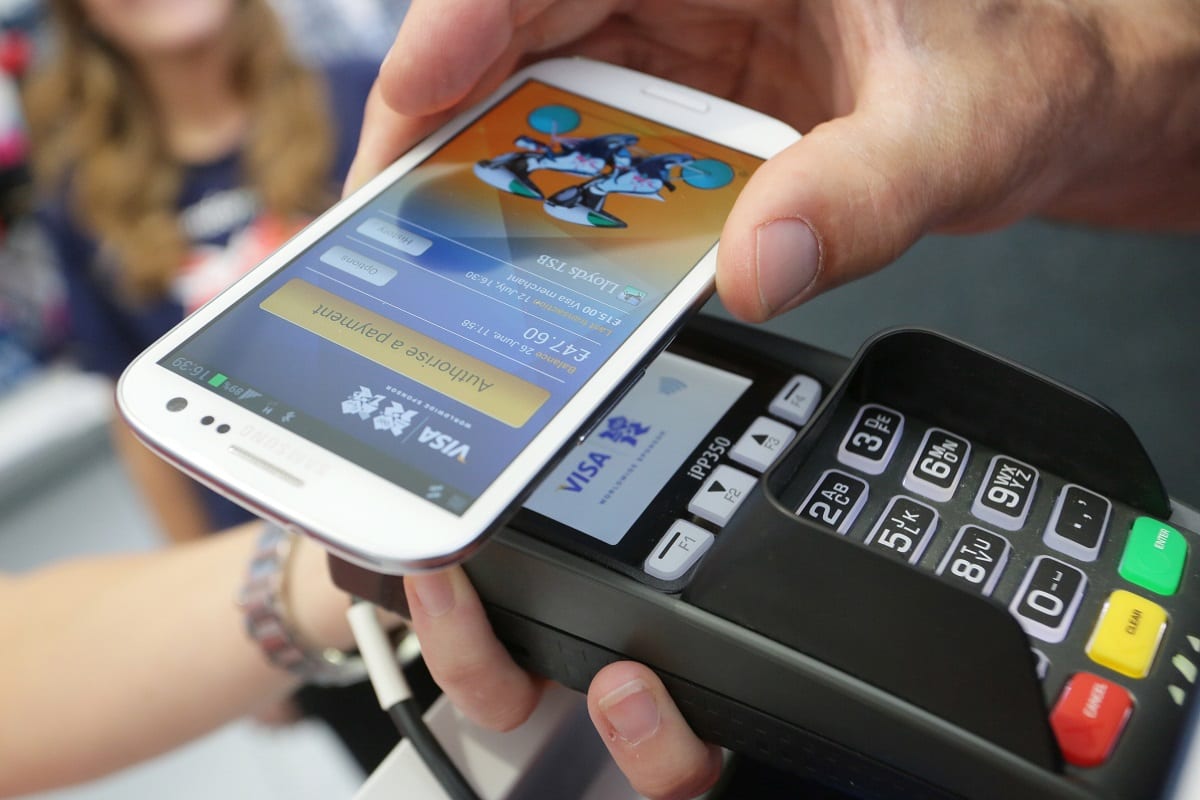
    Mobile payments at South Korean convenience stores have more than doubled this year thanks to the greater use of smartphones and the expansion of mobile settlement services. South Korea’s top convenience store chain CU said the number of so-called easy mobile payments at its outlets soared 121.5 per cent year on year in the first 10 months.

    Convenience chain operators in Asia’s fourth-largest economy adopted the easy mobile payment system in 2011, but the service only started to take off last year.

    The percentage of mobile payments out of total settlements at convenience stores expanded to 3.5 per cent this year, compared with 1.9 per cent last year and just 1 per cent in 2015.

    “The number remains in the single-digit range, but the easy mobile-settlement system has been growing at an exponential pace,” a CU spokesperson said.

    Currently, CU allows customers to use Samsung Electronics’ Samsung Pay and 19 other payment tools at its stores.

    Samsung Pay accounted for 85.5 per cent of CU’s mobile settlements during the January-October period, followed by Kakaopay with 4 per cent and LG Pay with 2.8 per cent.

    Industry sources said retailers in South Korea have been ramping up efforts to develop their own mobile payment platforms as more tech-savvy consumers turn to their smartphones to make mobile payments at South Korean convenience stores.

    Some seven in 10 South Koreans are known to own a smartphone, the fourth-highest smartphone penetration rate in the world.

  • Ministop South Korea is for sale, rivals compete

    Ministop South Korea is for sale, rivals compete

    South Korean retail operators Lotte and Shinsegae are competing to buy the 21-year-old local subsidiary of Japanese convenience-store operator Ministop.

    Shinsegae and Lotte respectively own rival chains Emart24 and 7-Eleven and are both reportedly seeking to take full ownership of Ministop South Korea. Both companies see the deal as a means to grow their respective businesses in a market where convenience-store penetration has reached saturation point, limiting opportunities for organic network growth.

    7-Eleven currently operates 9535 stores across South Korea and Emart24 3413. The Ministop network numbers just 2535.

    Japan’s Aeon, which owns the Ministop brand, owns a majority 76 per cent of the South Korean business.

    Daesang group owns 20 per cent and Mitsubishi the balance. Aeon has appointed Nomura Securities to find a buyer for the business as it sees little future for the convenience store brand in South Korea, a highly competitive market. Instead, Aeon is looking to Southeast Asian markets for growth, including Vietnam, Thailand and Cambodia.

    Last year, Ministop South Korea sales totalled 1.18 trillion won (US$1 billion), ranking it fourth in revenue terms behind GS25, CU and 7-Eleven.

  • Convenience store in Korea enjoying revenue boost

    Convenience store in Korea enjoying revenue boost

    South Korean convenience store operators GS25 and CU received a boost from in-house brands in the second quarter.

    GS Retail, which operates the GS25 chain, recorded a net profit jump of 11.1 per cent year on year to 45.8 billion won (US$41 million) in the April-June period, on sales up 5.3 per cent to US$2 billion.

    GS Retail attributed the growth to development of new products at its convenience stores, with 36.7 per cent of GS25’s sales excluding alcohol and cigarettes coming from its private-label products in July.

    South Korean convenience store operators have been developing private-label products to attract more customers.

    GS25’s main rival CU posted a net profit of US$60 million from April to June, an increase of 105 per cent from the first quarter of this year, on sales of $1.3 billion.

  • South Korean convenience stores to sell more own brand

    South Korean convenience stores to sell more own brand

    More South Korean c-stores are set to launch in-house products as local retailers move to attract more consumers with price competitiveness.

    E-Mart24, the convenience-store arm of South Korean retail giant Shinsegae, said it is planning to unveil its own private-label product within this year. Ministop Korea, operator of Ministop, is set to launch its own branded products in September.

    The moves are part of the companies’ broader efforts to find a breakthrough in the saturated South Korean c-store landscape. The size of South Korean convenience stores private-label product market is estimated at around 3.5 trillion won (US$3.15 billion).

    CU, South Korea’s largest convenience-store chain, operated by BGF Retail, released its own brand, Heyroo, in 2015, and GS25, another major convenience-store chain, joined the move with You Us in 2016.

    BGF Retail said sales of its private-label products rose 35.3 per cent year-on-year in 2016. Last year’s revenue was up 19.1 per cent from 2016.

    GS Retail, operator of GS25, said sales of its private-brand items accounted for 36.6 per cent of its total revenue in the first half of this year, excluding revenue generated from cigarettes and services. The company has around 2000 products under private label.

    Another major convenience store chain, 7-Eleven, said sales of its in-house products accounted for 35.9 per cent of this year’s total revenue as of Sunday. It currently has some 1500 products under its private brand.

    “The companies will be able to survive in this saturated market only if they manage to secure consumers who are highly loyal to their private label products,” an industry source said.

    The market size for convenience stores in South Korea surpassed 20 trillion won in 2016, up 18.6 per cent from the previous year, according to industry data.

  • 11Street Shopping Mall to get US$449 million investment

    11Street Shopping Mall to get US$449 million investment

    South Korean mobile carrier SK Telecom has announced a US$449 million investment into a subsidiary’s e-commerce platform, 11Street Shopping Mall.

    In a decision yet to be approved by shareholders, SK will use the investment, sourced from the H&Q Korea private equity fund, to establish a new business entity. An SK spokesperson said that further reshuffling among its subsidiary firms will be aimed at seeking a new growth engine with a view to expanding its presence in the country’s online retail market.

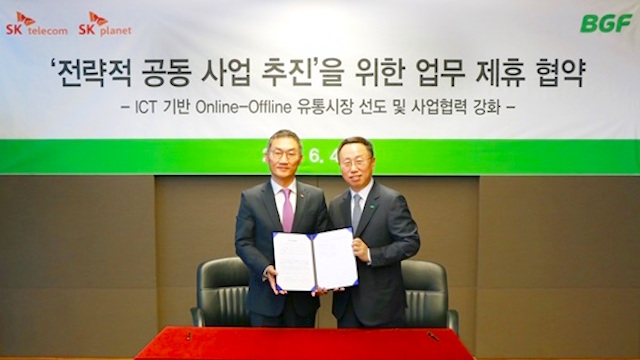
    The move directly follows a joint venture set up earlier this month between an SK subsidiary and the country’s largest convenience store chain, CU.

    The improvements to 11Street’s operations will draw on artificial intelligence technologies, among other information and communications developments, to build new services – including improvements to its mobile payment system.

    A representative from SK Telecom said that the company’s new business structure is ready to promptly and flexibly respond to the fourth industrial revolution.

  • World Cup boosts South Korean convenience stores revenue

    World Cup boosts South Korean convenience stores revenue

    South Korean convenience stores saw their sales more than double in some categories as tens of thousands of South Koreans took to the streets to cheer on their national football team in the first game of its World Cup campaign.

    BGF Retail Co, which operates the country’s largest convenience store chain, CU, said sales of major products at its stores from 6pm Monday to midnight soared as South Korea faced Sweden in their 2018 FIFA World Cup Group F opener.

    Sales of beer surged 124.8 per cent, with revenue from ice cream and water jumping 121.9 per cent and 120.2 per cent, respectively, from the previous week.

    GS Retail Co, which operates GS25, said sales of beer skyrocketed 274.6 per cent on Monday compared with the same day the previous week.

    Police estimated some 17,000 fans joined the mass street cheering in Seoul’s Gwanghwamun Square. Another 6000 fans are estimated to have gathered at Seoul Plaza in front of City Hall.

    South Korea fell to Sweden 1-0. Its next game, against Mexico, will take place in Rostov-on-Don on Saturday.

  • BGF Retail outlines KRW30bn online investment

    BGF Retail outlines KRW30bn online investment

    BGF, owner of Korean c-store chain CU, has boosted its stake in online grocery business Hello Nature.

    Founded in 2012, Hello Nature offers compact packaged-grocery deliveries. It was bought by SK Planet in 2016. Its sales reached US$9 million last year.

    Investing 30 billion won (US$28 million) for a controlling 50.1 per cent stake, BGF will run Hello Nature as a joint venture.

    “The online premium grocery shopping market is a blue ocean which has been growing rapidly every year,” said BGF chief Lee Keon-jun.

    BGF aims to build Hello Nature into the leading online grocery platform within the next five years by connecting its delivery service to 13,000 CU stores across Korea.

    Hello Nature will also consider consider expanding into the offline market.

    Demand for online delivery services for fresh food in Korea has been increasing rapidly thanks to the growing number of one-person households – 5.28 million in 2016, accounting for 27.8 per cent of all household types in the country.

  • Boom time for Korean convenience store sector

    Boom time for Korean convenience store sector

    The Korean convenience store sector is experiencing rapid growth as heavyweights battle for market share.

    The number of convenience stores in South Korea surpassed 33,000 as of the end of October this year, marking a rapid growth since the opening of the first store 27 years ago, according to industry data.

    That’s a significant increase from the 28,994 counted at the end of last year.

    CU had the most with 10,634, followed by GS25 with 10,486 and 7-Eleven with 8486. Japan-affiliated brand Mini Stop had 2326, and With Me, a chain operated by Shinsegae Group, had 1615. There are some 100 others that are not part of franchises, according to the Korea Association of Convenience Store Industry.

    South Korea’s first convenience store opened in southern Seoul in May 1989.

    The rising number of single-person households and aging society are funneling consumers to convenience stores that are near their homes and sell small portions, industry watchers say. Convenience stores have been quick to adapt to such a customer base, expanding from conventional shelf goods, such as snacks and beverages, to lunch boxes and other kinds of meals for singles who don’t want to cook, as well as services, including delivery and financial transactions.

    The sector grew 11.4 per cent last year, visibly comparable with 1.2 per cent growth in 2013 and 4.7 per cent in 2014. Sales increased from 12.8 trillion won (US$10.96 billion) in 2013 to 13.8 trillion won in 2014 and to 17.2 trillion won last year.

    Industry watchers expect sales this year to exceed 20 trillion won, with room for more growth until 2030, considering that South Korea’s per-store sales is only about one-fourth of that in Japan. Japan currently has about 55,600 convenience stores.