Retail News CRM

Tag: Dalian Wanda

  • Dalian Wanda to open 17 malls this month

    Dalian Wanda to open 17 malls this month

    Chinese real estate developer Dalian Wanda Group will reportedly open 17 shopping centres this month.

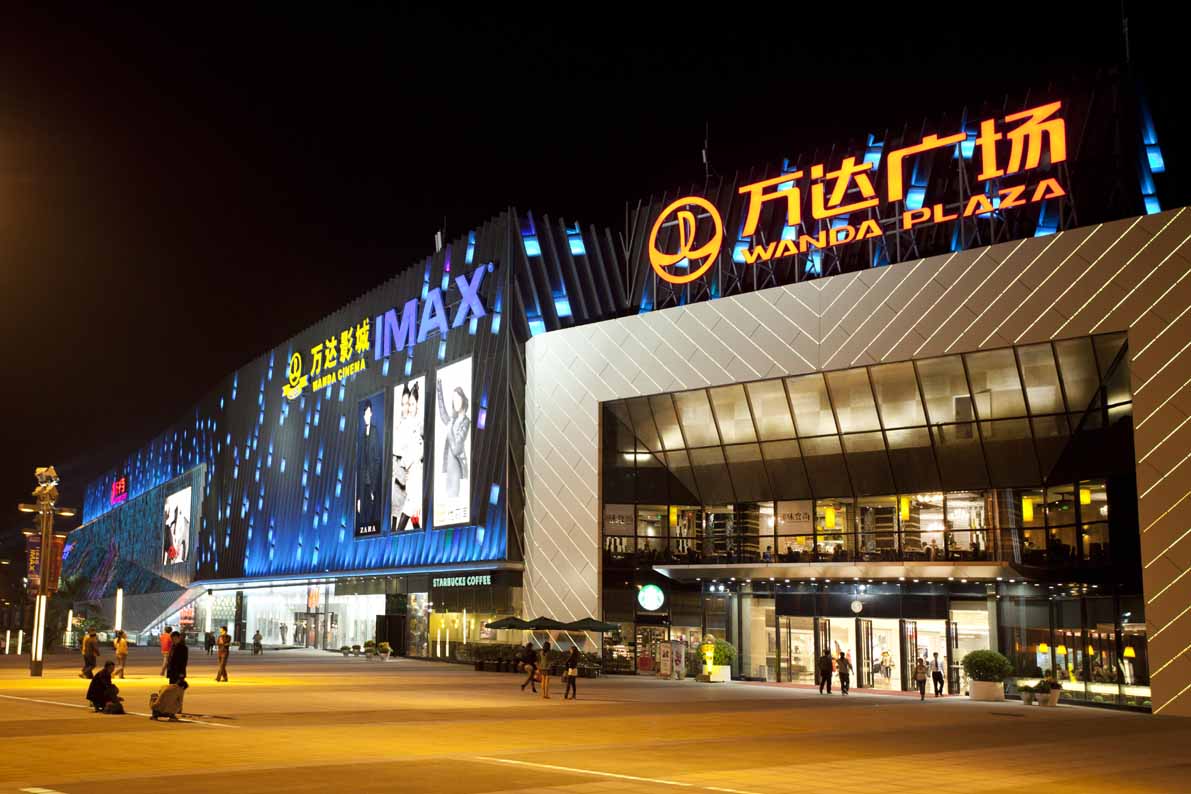
    The group recently opened its 300th plaza in Hubei province, a 105,000sqm shopping centre based in Xianning – the first enclosed mall in the city – including a 275m indoor shopping street and an Imax theatre, as well as hosting 200 retailers.

    Wanda is poised to open four new plazas on December 20, followed by three on December 28 and 31. The group intends to operate 323 plazas in total by the end of the year, the majority of new locations in low-tier cities.

    The group has opened centres in 188 cities in 30 provinces nationwide.

  • China’s e-commerce giants to buy Dalian Wanda malls

    China’s e-commerce giants to buy Dalian Wanda malls

    Three Chinese e-commerce giants led by Tencent are buying into shopping centres as part of an alliance that will help fund property magnate Wang Jianlin’s HK$30 billion (US$3.8 billion) plan to take his Dalian Wanda Group private.

    Jianlin describes it as the world’s biggest single alliance between the new economy and bricks-and-mortar businesses as he vows to turn his flagship commercial property unit into an online-to-offline service provider.

    After shedding properties in Australia, China and the UK to help reduce debt, he is now selling off nearly 14 per cent of Dalian Wanda Commercial Properties to some of the mainland’s biggest internet and retail players.

    An investor group led by Tencent, along with e-commerce heavyweight JD.com, electronics retailer Suning and Wanda partner Sunac China Holdings, the stake is being sold for RMB34 billion (US$4.36 billion).

    On its website, Wanda presents the share sale as part of a transformation of the company from a real-estate developer with nearly 240 shopping centres across China into a commercial management company focused on integrating online and offline consumption.

    As part of the deal, Dalian Wanda Commercial Properties will be renamed Wanda Commercial Management Group.

    However, the new partners may lead the financing of new malls, with the website statement noting “Tencent, Suning and other investors will use their financial prowess to continuously support Wanda Commercial to speed up its growth, helping the company to achieve its goal of 1000 Wanda Plazas in China as early as possible”.in

    Wanda says the partners are keen to relist the commercial real-estate unit, still privately held after a 2016 buyout led by Wang, “at the earliest opportunity”.

    Also, the new group will use the online resources of Tencent, Suning and JD.com as well as its own offline commercial assets to “carry out various collaborations, jointly building a new consumption model in China that will integrate both online and offline services”.

    Wanda Commercial’s total debt at the end of June was RMB279 billion, according to ratings agency S&P.

    Tencent’s investment of RMB10 billion gives it a 4.12 per cent stake, while Suning and Sunac’s twin outlays of RMB9.5 billion will them a 3.91 per cent stake each, and JD.com’s RMB5 billion yields a 2 per cent stake.

    Meanwhile, WeChat owner Tencent last week said it might buy into French retailer Carrefour’s China business, along with local retailer Yonghui Superstores. This follows Amazon’s acquisition of Whole Foods for US$13.7 billion.


  • Dalian Wanda revenue drops 14pc

    Dalian Wanda revenue drops 14pc

    Dalian Wanda Group’s revenue has fallen for the first time in at least 11 years after a slump in its property business outweighed growth from its entertainment interests.

    Sales last year fell 14 per cent from 2015, while revenue at  Dalian Wanda Commercial Properties, the group’s real-estate unit, dropped 25 per cent to 143 billion yuan (US$20.8 billion).

    Wanda’s operating income rose 3.4 per cent to 255 billion yuan, while profit grew more than 10 per cent, it said, without giving details.

    Wanda’s owner billionaire Wang Jianlin, China’s second-richest man, has been acquiring Hollywood assets – he bought movie production company Legendary Entertainment last year – to help Wanda diversify away from its real-estate roots.

    He told employees at Wanda’s annual meeting in Hefei, the capital city of Anhui province in eastern China, that Ffan.com, a unit that includes internet financing and credit-rating businesses, will raise 10 billion yuan via a private placement this year. He ultimately plans to list the unit by 2020 and target profit of more than 10 billion yuan.

    Wang delisted Dalian Wanda Commercial Properties in Hong Kong last year with the idea of eventually seeking a listing in mainland China, where valuations tend to be higher. He has taken an “asset-light” strategy for his real-estate business in recent years, reducing reliance on property sales and increasing his focus on leasing and management.

    Wanda Cultural Industry Group, which oversees most of Wanda’s theme parks, film production and exhibition businesses, saw sales climb 25 per cent to 64.1 billion yuan last year.

  • Dalian Wanda, Suning plan store rollout

    Dalian Wanda, Suning plan store rollout

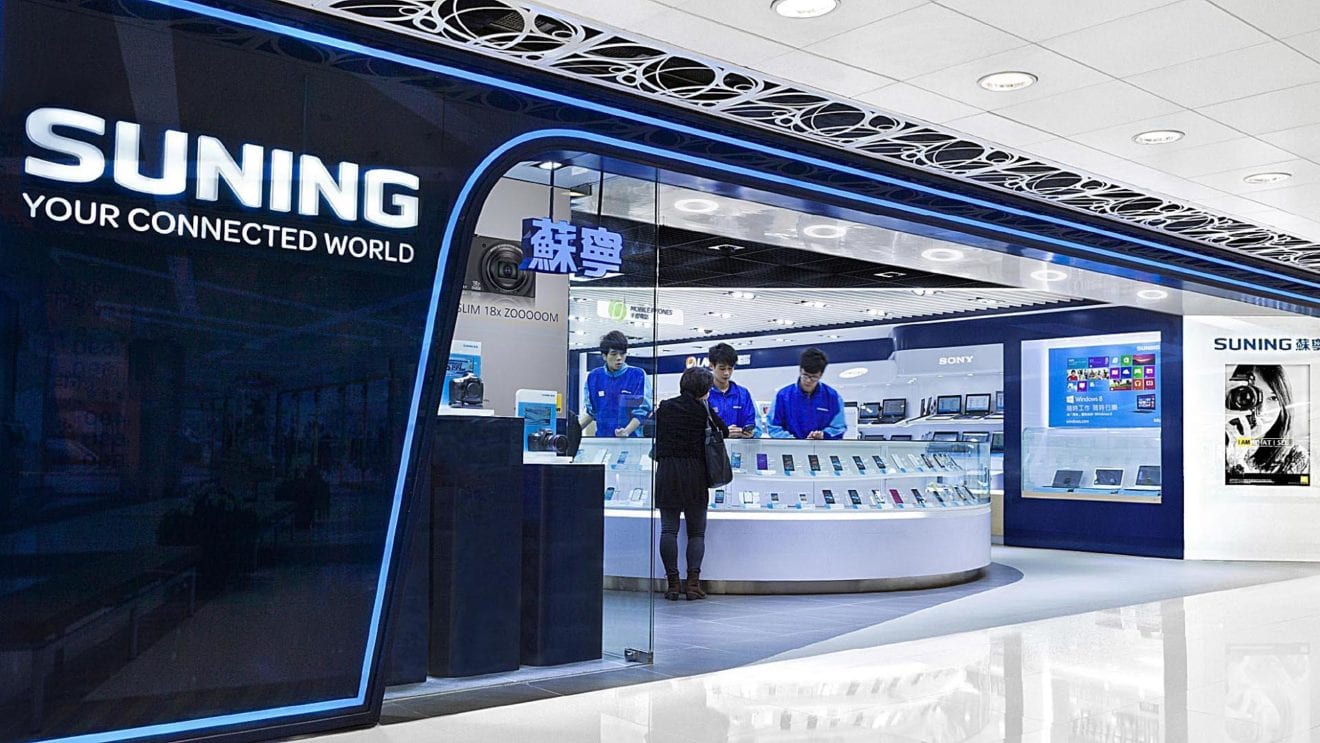
    Mall operator Dalian Wanda Commercial Properties is partnering with Suning to open electronics stores at Wanda Plazas throughout the Mainland.

    The partnership will see 40 stores open by the end of this year with more planned for next year. Suning, now 20 per cent owned by Alibaba Group, currently has a network of 1600 stores throughout China.

    Dalian Wanda has 100 Wanda Plaza shopping centres in China currently and plans to add 35 by the end of this year.

    The company is changing nature from its original model as a department store operator into a services-based company. It recently announced the closure of its Superstar karaoke chain as well as some of its less profitable department stores.

    The company owns the AMC cinema chain in the US, Hoyts in Australia and China’s largest network of movie theatres.

  • Ffan: Wanda’s online store goes live

    Ffan: Wanda’s online store goes live

    Nearly a year after three giant Chinese companies teamed up to take on Alibaba, the newly-mintedeCommerce store finally and quietly launched this week.

    The site, Ffan, is the result of a billion-dollar joint venture between Tencent, Baidu, and Wanda Group, a conglomerate best known for its chain of movie theatres and malls.

    The joint venture started with US$814 million in its pocket in August 2014, with Wanda holding a 70 per cent stake, and Tencent and Baidu splitting the remainder evenly. In January, it secured venture capital funding to the tune of US$161 million.

    Local commerce

    The new estore is designed to take on Alibaba’s eCommerce dominance, with a focus on helping people buy local products and services. That’s why visitors to Ffan can choose their city to see local deals.

    Baidu declined to comment on today’s launch and Tencent has yet to reply to Tech in Asia’s inquiry.

    At first glance, Ffan looks odd and rather bare. The only two product categories on the top navigation bar are “food” and “movie tickets.” Browsing through the city-specific food section reveals that most of the products are from retailers at Wanda’s shopping malls across the country. Indeed, users can browse through the Ffan site or accompanying mobile app according to their nearest mall.

    Wanda – a private company which boasted assets of RMB 534.1 billion yuan (US$85.6 billion) in 2014 – has reportedly been plotting a leap from offline retail to ecommerce for several years, but today’s launch doesn’t reveal much that should worry Alibaba or arch-rival JD right now. It’s not a general ecommerce store like Alibaba’s Tmall or JD, and the offerings are slim.

    Sill, Wanda has the reach – across malls, cinemas, hotels, resorts, theme parks, and several other areas – to challenge Alibaba in terms of the fast-growing interest on the web for local, on-demand products and services.

  • Dalian Wanda shutters stores

    Dalian Wanda shutters stores

    China’s Superstar days are over.

    Hong Kong listed retail group Dalian Wanda is to close down China’s largest karaoke chain Superstar, a victim of the mainland government’s mission to discourage excessive spending on entertainment and gifts.

    The company has also flagged the closure of an unspecified number of its department stores due to tough competition from online retailers, eating into store sales volumes.

    Some Chinese news media are reporting as many as half of the company’s 90 department stores could be shuttered, but the company remains vague.

    “China’s consumer behaviour is undergoing significant changes, inevitably hurting some large-scale retailers,” said Qu Dejun, president of Dalian Wanda subsidiary Dalian Wanda Commercial Properties.

    Before the Chinese government’s clampdown on entertainment expenses, karaoke parlours were popular destinations for government officials and businessmen entertaining clients and contacts.

    Qu said Superstar would close because the chain’s profits were now very thin due to “national policy”.

    Taiwan karaoke chain Cashbox Partyworld has already trimmed back its mainland karaoke network.