Retail News CRM

Tag: Data center

  • Sydney’s Data Centre Vacancy Rate Plummets to 5.2% in First Half of 2025!

    Sydney’s Data Centre Vacancy Rate Plummets to 5.2% in First Half of 2025!

    In a remarkable shift, Sydney’s data centre market is on the rise, evidenced by a drop in the vacancy rate from 9% to a striking 5.2%. This shift emphasizes the city’s growing stature as a regional hub for data centres, as highlighted in a recent report by Cushman and Wakefield. Even without significant increases in operational capacity during the first half of 2025, robust fundamentals are sustaining the market’s upward trajectory.

    Demand Surge Driven by Cloud Services and AI

    The report notes that sustained demand for cloud services and artificial intelligence (AI) workloads has been a key driver of this decline in vacancy rates. The development pipeline remains vibrant, with new players entering the data centre landscape. Notably, ISPT, a major real estate investment firm, has submitted plans for a 170MW data centre in North Ryde, reinforcing Sydney’s appeal as a strategic centre for data management.

    Major Investments Are Reshaping the Landscape

    Adding to the momentum, Macquarie Data Centres has initiated a deal to acquire a land parcel in Sydney valued at US$157 million, slated for a potential 150MW data centre campus. Meanwhile, Stack Infrastructure, with an eye on the future, is planning a substantial 450MW campus at Erskine Park, backed by an investment of US$405.3 million—one of the largest single-site developments in Sydney’s history. This isn’t just a case of numbers; it’s a multifaceted strategy where the data centre sector is becoming as enticing as a new flavor of bubble tea in downtown Sydney.

    Acquisitions Fuel Growth in Connectivity

    In a notable move, Partners Group has expanded its footprint by not only acquiring Digital Halo in Singapore but also GreenSquareDC in Australia for a hefty US$759 million. This investment signifies a commitment to establishing GreenSquareDC as a forward-thinking data centre platform, tailored to meet the burgeoning demands of hyperscalers and AI.

    Moreover, in the connectivity sector, Vocus Group is set to acquire TPG Telecom’s fibre infrastructure assets, alongside its Enterprise, Government, and Wholesale (EG&W) business. The Australian government has approved this US$3.42 billion acquisition, expected to finalize by year-end, marking a significant consolidation in the telecom landscape.

    Accelerating Cloud Adoption

    Cloud adoption continues to accelerate across industries in Australia. The Commonwealth Bank of Australia recently completed its migration to Amazon Web Services (AWS), heralding a new era of digital capabilities. Similarly, the Department of Defence has signed a five-year, US$324.71 million contract with Microsoft for cloud services, further solidifying partnerships within the tech ecosystem. CareSuper, a leading superannuation fund, is also transitioning its applications and data to Microsoft Azure.

    In conclusion, Sydney’s data centre market not only remains resilient but is also dynamically evolving, driven by strong demand, strategic investments, and an ongoing digital transformation across various sectors.

    Questions & Answers

    What has caused the decline in Sydney’s data centre vacancy rate?
    The sharp decline from 9% to 5.2% in vacancy rates is primarily driven by sustained demand for cloud services and AI workloads, reflecting a robust interest in data management solutions.

    What major developments are expected in Sydney’s data centre sector?
    Key developments include ISPT’s proposed 170MW data centre in North Ryde and Stack Infrastructure’s ambitious 450MW campus at Erskine Park, signaling significant investments in the region.

    How is cloud adoption changing in the Australian market?
    Cloud adoption is accelerating, as seen with the Commonwealth Bank’s migration to AWS and the Department of Defence’s substantial agreement with Microsoft, underscoring a broader trend of digital transformation in various sectors.
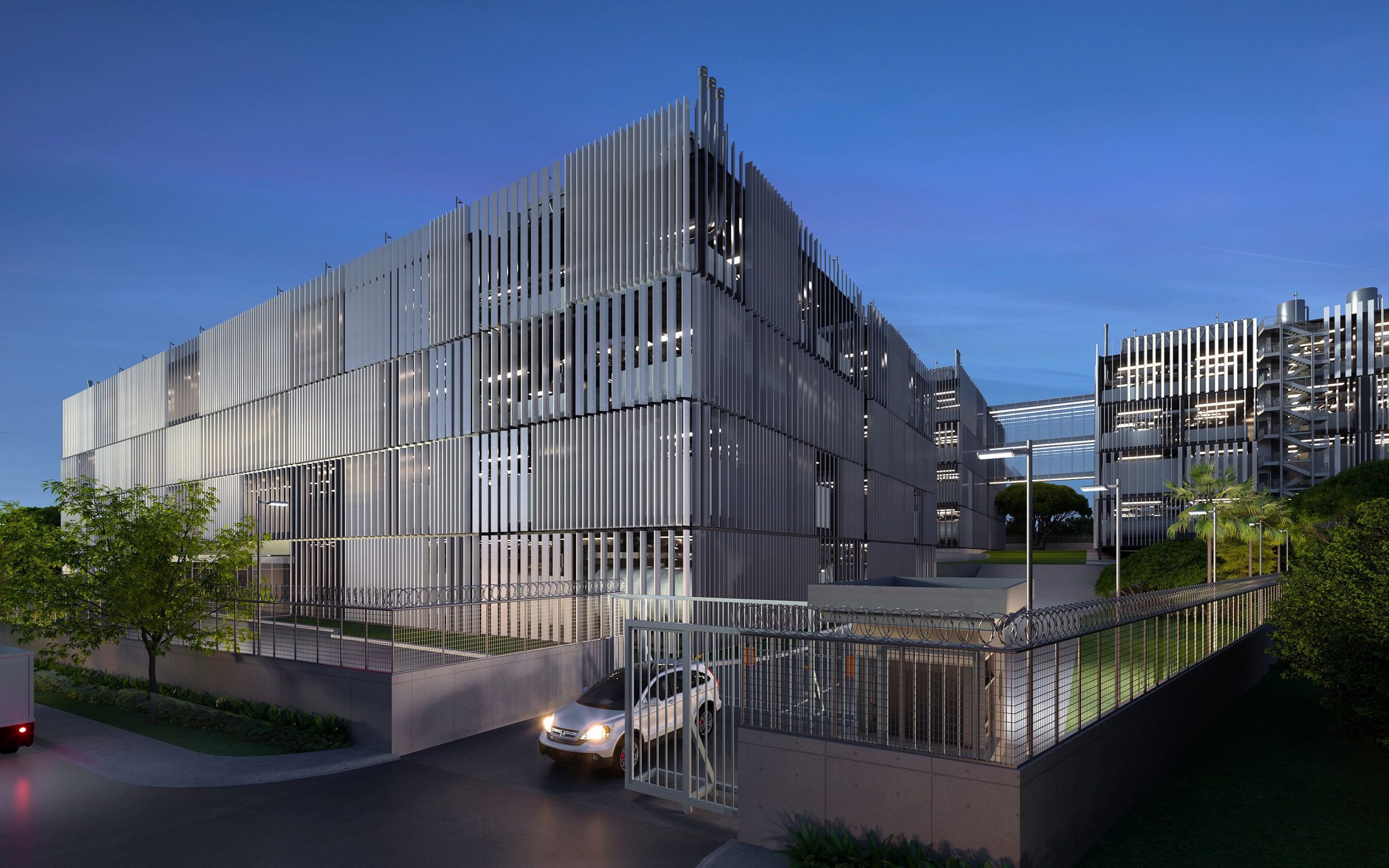

  • SpaceDC to build largest hyperscale data center in the Philippines

    SpaceDC to build largest hyperscale data center in the Philippines

    SpaceDC, a Singapore-based visionary data center provider, is working with JLL, a global real estate services firm, to build a secure, resilient, network-rich, data center called <MNL1, which will be situated in Cainta, part of Greater Manila. The green data center will be fully powered with renewable energy – wind, geothermal – and is slated to open in 2022. 

    At 43,000 square meters, MNL1 will be the largest hyperscale data center campus in the Philippines, and will deliver 72 megawatt of critical power. With an outstanding PUE of 1.3, MNL1 will also lead in terms of energy efficiency and design, to minimize carbon footprint.

    SpaceDC CEO, Darren Hawkins said, “The Philippines ranks second in terms of data center growth in Southeast Asia. With only 47 megawatts of available capacity in the country it is a dramatically underserved market. We are excited to be a first mover in a new market where we see our customers are investing heavily in.”

    “SpaceDC is in the right place at the right time to take advantage of the strong customer interest we are seeing in the Philippines. MNL1’s design is setting new standards in terms of technology, quality and operational excellence in the Philippines.” commented Ralph Davidvon, executive director, data center services for JLL, the appointed project construction manager.

  • Huawei adopts Open Rack for cloud data centers

    Huawei adopts Open Rack for cloud data centers

    Huawei has revealed plans to adopt the Open Compute Project’s (OCP) Open Rack standard for rack and power delivery architecture for its new public cloud data centers worldwide.

    The Open Rack initiative seeks to redefine the data center rack to significantly reduce energy consumption, while driving operational efficiency by reducing the time it takes to install and maintain racks.

    Huawei will be joining major hyperscale internet companies such as Facebook, Google and Microsoft in adopting the Open Rack standard, which is designed to integrate the rack into data center infrastructure.

    This marks the first OCP standard adopted by Huawei since the Chinese vendor joined the project last year. The vendor is also contributing to a number of OCP projects including rack and power, system management and server projects, and has developed an OCP-based compute module.

    “Huawei’s strategic investment and commitment to OCP is a win-win,” commented Kenneth Zhang, general manager of FusionServer within the Huawei Intelligent Computing Business Department.

    “Combining Huawei’s extensive experience in Telco and Cloud deployments together with the knowledge of the vast OCP community will help Huawei to provide cutting edge, flexible and open solutions to its global customers. In turn, Huawei can leverage its market leadership and global datacenter infrastructure to help introduce OCP to new geographies and new market segments worldwide.”

  • SUPERNAP International Celebrates Grand Opening of The Most Advanced Data Center In The ASEAN Region

    SUPERNAP International Celebrates Grand Opening of The Most Advanced Data Center In The ASEAN Region

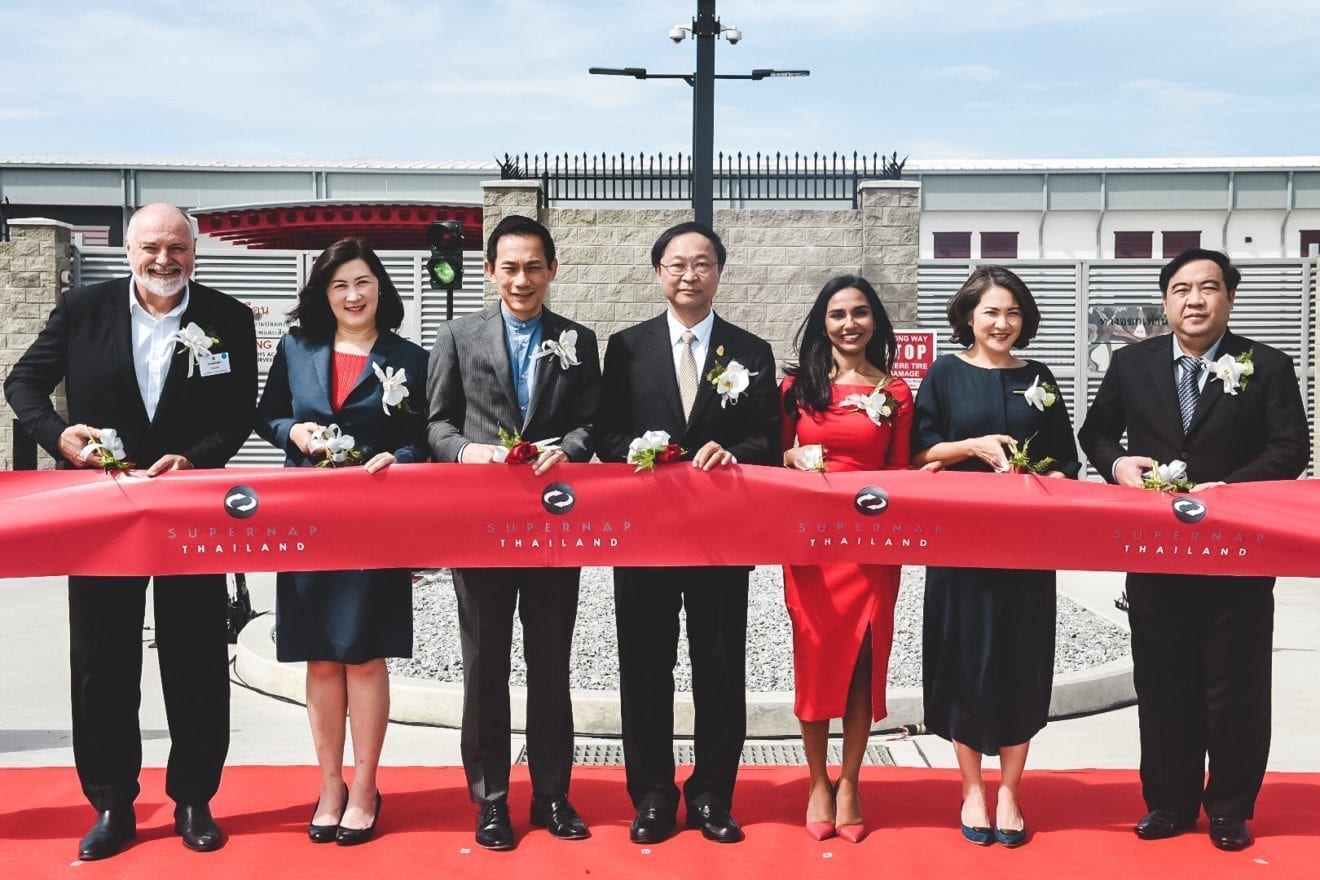
    SUPERNAP Thailand celebrated the grand opening of one of the most advanced data center in ASEAN region, the Bangkok Campus located at the Hemaraj Industrial Estate 2, in Chonburi.  The event was marked with a formal ribbon-cutting ceremony attended by several government dignitaries as well as business and community leaders.

    The SUPERNAP Thailand data center is designed and built to the specifications of the industry-renowned, Tier IV Gold-rated Switch LAS VEGAS multi-tenant/colocation data centers in the United States. Its advanced design and diverse connectivity options are expected to enable clients to respond to rapid market growth and connect to global economies, while helping the Thai government to transform the country into a high-value based digital economy.

    SUPERNAP Thailand Managing Director Sunita Bottse kicked off the ceremony, featuring board members, executives from the government sector and key vendors, by talking about the impact the project will have on the Thailand 4.0 economy.

    “Thailand is moving towards the “Thailand 4.0” era, when industries will rely on digital innovations and online connections,” Sunita Bottse said.   “This new carrier-neutral data center facility, plays an important role in the region as the critical infrastructure that powers the ability of businesses to succeed in the growing Internet of Things, Cloud and Artificial Intelligence markets. Our capability serve the huge scale of the digital world in an efficient and sustainable manner.

    SUPERNAP data center is expected to be a catalyst for attracting more investment to the region and is poised to become the data center hub for Asia Pacific and to accelerate the digital economy growth in the Eastern Economic Corridor (EEC).    

    “Under Thailand 4.0, digital transformation will be instrumental in the realization of this exciting journey. SUPERNAP data center is the digital backbone that will enhance big data and cloud computing that are increasingly essential for the development of EEC and Thailand.”  said Dr. Pichet  Durongkaveroj, Minister of Digital Economy and Society.

    The world-class SUPERNAP Thailand data center is located 110 meters above sea level outside of the flood zone, and 27 kilometers away from the international submarine cable landing station, which links to national and international telecommunication and internet gateway carriers.

    “At SUPERNAP, we have ensured that our data center is up for the challenges as Thailand moves toward being a leader in the digital economy,” said SUPERNAP Senior Sales Engineer Kasem Nincharoen. “The SUPERNAP Thailand growth model is driven by the country’s need for a purpose-built data center facility bringing assured reliability, availability, security, scaleability and disaster risk mitigation supported by the latest proven and industry leading designs.”

    Currently, the SUPERNAP Thailand data center in Chonburi is expected to include:-

    • 21,000 square meters of data center space with two data halls.
    • 20 megawatts of power distribution.
    • Proprietary tri-redundant UPS power system.
    • Up to 33 kilowatts of power per cabinet.
    • Multi-carrier fiber couples with separate paths.
    • Patented Switch SHIELD: dual independent roof 100% penetration –free decks rated to withstand 322 kph winds.
    • 24x7x365 on-site network operations center (NOC), fire, safety and security.
    • On-site, on-net member resources including conference spaces.
  • Supersnap International Opens the Most Advanced Data Center in Asia

    Supersnap International Opens the Most Advanced Data Center in Asia

    SUPERNAP International today announced the opening of one of the largest, most advanced data centers in the ASEAN region, SUPERNAP Thailand, The Bangkok Campus.

    The opening of the campus is a major catalyst for propelling the success of “Thailand 4.0” – the Thai government’s plan to transform the country into a high-value based economy through innovation and technology.

    This new multi-tenant carrier-neutral data center facility, located in the eastern province of Chonburi, plays an important role in the region as the critical infrastructure that powers the ability of businesses to succeed on the growing Internet of Things, Cloud and Artificial Intelligence markets. SUPERNAP Thailand is expected to be a catalyst for attracting more investment to the region and is poised to become the data center hub for Asia Pacific.

    SUPERNAP Thailand’s BANGKOK 1 data center is designed and built to the specifications of the industry-renowned, Tier IV Gold-rated Switch LAS VEGAS multi-tenant/colocation data centers in the United States. Its advanced design and diverse connectivity options are expected to enable clients to respond to rapid market growth and connect to global economies.

    “We welcome clients throughout ASEAN, APAC and the rest of the world to run their mission-critical IT infrastructure in what we expect will be one of the most secure, reliable and connected data centers in the world,” said Sunita Bottse, Managing Director of SUPERNAP Thailand. “Our high standards in uptime, security, efficiency and resiliency can be critical for corporations who operate 24 hours a day in every business line – including finance, e-commerce, oil and gas, transportation and health care.”

    The world-class SUPERNAP Thailand data center is one of the safest places to operate mission-critical IT infrastructure in the region. Its location 110 meters above sea level is outside of the flood zone and links to national and international telecommunications carriers enabling businesses to connect to key markets in Asia and around the world.

    SUPERNAP Thailand incorporates Switch’s patented designs that deliver highly efficient HVAC (heating, ventilation and air conditioning) technology enabling the facility to host high-density IT workloads. It is designed to achieve a target PUE range of 1.35-1.45 – a level more efficient than other data centers in ASEAN, which typically have PUE levels above 2. Its efficient design and plans for sourcing renewable energy helps SUPERNAP Thailand promote economic growth and technology development in a sustainable manner, directly in alignment with the sustainability goal of Thailand 4.0.

    The SUPERNAP Thailand data center in Chonburi is expected to include: 

    • 21,000 square meters of data center space with two data halls
    • 20 megawatts of power distributed through diverse 115 kilovolt transmission paths
    • Proprietary tri-redundant UPS power system
    • Up to 40 kilowatts of power per cabinet
    • Multi-carrier fiber couples with separate paths
    • Patented Switch SHIELD: dual independent roof decks rated to withstand 322 kph winds
    • 24/7 on-site network operations center (NOC), fire, safety and security
    • On-site, on-net member resources including conference spaces

    “Companies that have built their own data centers in the past are now realizing that they can mitigate risks and achieve better service level agreements (SLAs) by operating in SUPERNAP Thailand’s mission-critical colocation data center,” Sunita Bottse said. “Clients who tour the SUPERNAP Thailand data center experience first-hand the power and scale of the campus and what that means to their business growth.”

  • Extreme Networks to buy Brocade’s data center assets

    Extreme Networks to buy Brocade’s data center assets

    Software-driven networking vendor Extreme Networks has arranged to buy the data center networking business of Brocade for $55 million.

    Extreme Networks has entered an agreement with Broadcom – which itself arranged to purchase Brocade in November last year for around $5.9 billion – to purchase Brocade’s data center switching, routing and analytics business.

    The acquisition is expected to close within 60 days after the closing of Broadcom’s acquisition of Brocade, which is due during the quarter ending in July.

    Extreme Networks said it expects the purchase to be earnings accretive by fiscal 2018 and to generate over $230 million in new annualized revenue.

    “The addition of Brocade’s data center networking business significantly strengthens our position in the expanding high-end data center market and reinforces our strategy of delivering software-driven networking solutions focused on enterprise customers,” Extreme Networks president and CEO Ed Meyercord said.

    “Today’s announcement, coupled with our recent announcements regarding our position as the stalking horse bidder of Avaya’s networking business and the successful completion of the integration of Zebra’s wireless LAN business, along with Extreme’s organic investments in R&D, will result in a state of the art, newly-refreshed portfolio of enterprise solutions for our customers.”

    Broadcom announced an intention to divest Brocade’s IP networking business as part of its planned acquisition of the vendor, focusing on the company’s remaining fiber channel storage area network business.

  • Is big data losing steam in Australia?

    Is big data losing steam in Australia?

    The Australian big data and analytics market is forecast to grow from $244.1 million in 2015 to $585.1 million in 2019, according to IDC.

    Banking, retail and government sectors have made impressive strides into the analytics domain with an objective of driving market and competitive intelligence.

    While the numbers look attractive, big data adoption levels are yet to reach those of cloud and mobility. There is plenty of data and good intentions, but talent shortage continues to be a challenge which needs to be addressed.

    The assertion that Australia has always been an early adopter of technology is challenged when it comes to big data and analytics. While a few standout organizations are investing to build sophisticated data-science algorithms, many others are yet to categorize big data from technology fad to business advantage.

    Regardless of shape, size, structure and format, big data’s contribution to competitive differentiation for Australian businesses cannot be disputed. Social media and high device penetration present an enticing set of newer and richer data sources.

    To deliver results, scaled out architectural capabilities will be key, along investments to develop the skillsets, platforms and processes that are necessary to keep in pace with the rate at which data is created.

    “Undoubtedly, big data presents an opportunity for retailers to leverage customer data and buying patterns to maximize revenues,” said IDC industry analyst Jaideep Thyagarajan.

    “While lack of data standardization has inhibited big data investments in healthcare, legacy modernization efforts have paid off for the public sector and investments are picking up,” said Thyagarajan. “This enables the government to operate at a higher potential, thereby enhancing service delivery to citizens.”

  • Japan tech firms start Lao PDR data center project

    Japan tech firms start Lao PDR data center project

    Toyota Tsusho, Internet Initiative Japan, and Mitsubishi UFJ Morgan Stanley Securities announced the start of a joint demonstration project in the Lao PDR.

    The firms said the project is aimed at evaluating the effectiveness of greenhouse gas emission reduction effect and energy efficiency using advanced container-type data center technology.

    Lao PDR’s first government-operated eco data center was completed in Vientiane on November.

    With integrated cloud infrastructure and security solutions, the new data center will serve as a cornerstone of Lao PDR’s IT foundation and contribute to the development of e-government applications for their people.

    Additionally, the data center will be utilized for training future generations of IT engineers, industrial development and for a broad range of other initiatives. By operating the data center, the Lao PDR government also aims to strengthen its IT governance.

    This data center is also expected to serve as a springboard for the maturation of the local IT industry, encouraging Japanese-related companies to expand their IT business in the country.

    The highly energy efficient data center leverages IIJ’s IT/cooling all-in-one packaged design “co-IZmo/I.”

    This design approach made it possible to complete the data center in just 7 months after construction began in May 2016 (about one-third the time typically required for conventional building-type data centers).

    This project is conducted on the basis of the commission by the New Energy and Industrial Technology Development Organization (NEDO), as part of its Global Warming Mitigation Technology Promotion Project selected in July 2015.

    The governments of Japan and Lao PDR have signed the bilateral document concerning the Joint Crediting Mechanism.

  • Fujitsu switches on Tatebayashi Data Center

    Fujitsu switches on Tatebayashi Data Center

    Fujitsu has commenced operations at its new Tatebayashi Data Center. The newly opened Annex C, featuring optimized air conditioning systems and operating environment, meets Japan’s highest environmental performance standards.

    Fujitsu built the facility with a particular focus on support for hybrid clouds to support burgeoning demand, as well as for robust security and resiliency to disasters.

    Fujitsu is using the data center as the core facility for its digital business platform MetaArc, which supports the digital business of customers, and is helping to bring greater dynamism to the businesses of its customers.

    By optimizing the air conditioning systems, operating environment, and the ICT equipment environment, the new annex increases the use of outside air for cooling to roughly 7,000 hours per year, from roughly 3,250 hours for previous data centers.

    In addition, Fujitsu developed a new architectural structure and air conditioning method that maximizes the use of natural convection for airflow, thereby reducing the amount of electricity used for air conditioning and other equipment by approximately 60%. It is designed to achieve power usage effectiveness (PUE) of 1.20, the most efficient level in Japan.

    In addition to connections with other Fujitsu data centers throughout Japan and Fujitsu’s cloud services, the new annex uses standard equipment for closed networks to enable connections with third-party clouds, thereby providing fast support for hybrid cloud usage needs.

    The new annex is equipped with three different types of server rooms to meet diverse customer needs. The Standard rooms are high-quality server rooms equivalent to Tier 3. The Cloud rooms are for the exclusive use of clouds and use new air conditioning methods and support high integration and high power supply capacity.

    Thirdly, the FISC-compliant rooms are for customers in the financial services industry. The new annex complies with the Center for Financial Industry Information Systems (FISC) security standards, and uses an electricity distribution system with a UPS with reliability that exceeds Tier 4 standards.

  • Equinix expands Jakarta data center

    Equinix expands Jakarta data center

    Equinix has expanded its JK1 data center in Jakarta, through its partnership with DCI Indonesia (DCI).

    Coupled with its alliance with DCI and a premium connection with the Indonesian Internet Exchange (IIX), the second phase of development at JK1 is an indicator of Equinix’s continued commitment to the region, the company said.

    JK1 phase two will add approximately 400 cabinets to the data center, doubling available capacity to a total net size of 800 cabinets. The expansion is scheduled to be completed by the end of the month.

    Through the DCI and Indonesian Internet Service Provider Association (APJII) collaboration, JK1 enables direct peering connection to the IIX. Companies can also access Equinix’s highly interconnected International Business Exchange (IBX) data centers across strategic global markets via existing major network providers.

    JK1 is located at Cibitung, approximately 30 km from the Sudirman Central Business District (SCBD), and offers a range of colocation, interconnection and support services.

    The carrier-neutral facility will be bringing more carriers into the data center to enrich network density by partnering with Indonesian Internet Service Provider Association (APJII) to provide more options for direct peering connection to the IIX.

    The expansion is in line with the steady growth of the company’s global interconnection platform, in which Equinix has invested more than $7.5 billion over the last 17 years.