Retail News CRM

Tag: deep

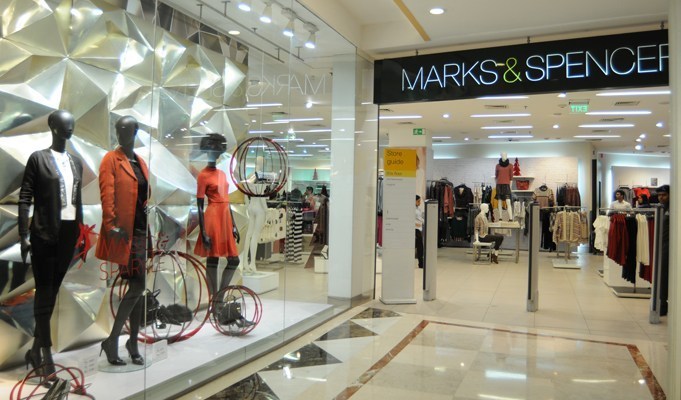
  • Marks & Spencer Philippines on the Brink: Store Closures & Deep Discounts Signal Potential Exit

    Marks & Spencer Philippines on the Brink: Store Closures & Deep Discounts Signal Potential Exit

    The continued closure of stores and generous discounts across the Philippines have led to speculation about the sustainability of Marks & Spencer’s (M&S) local operations. This comes as the brand’s long-time franchise partner starts to shut down several outlets in the region.

    M&S has enjoyed a presence in the country for over thirty years through a partnership with the Rustan’s Group of Companies, which was bought by SSI Group last year. In recent times, several key M&S stores including those located at TriNoma, Robinsons Manila, Marquee Mall, and Ayala Center Cebu have ceased operations. Rumors also abound about the possible closure of the brand’s outlet at the SM Mall of Asia.

    The remaining outlets have resorted to hefty discounts of up to 60% and ‘buy-one-get-one-free’ deals as they attempt to clear stock. Specifically, at the Rockwell and Greenbelt stores, the variety of food for sale has dwindled, with empty refrigerators and shelves filled with repetitive products.

    The M&S Philippines website still promotes 13 branches across the country, which includes outlets in Davao and Laguna. This is a significant reduction from the over 20 stores that were operating at the height of the brand’s popularity in the country.

    This pattern of store closures and heavy discounting has led to conjecture from both customers and industry experts that M&S may be contemplating an exit from the Philippine market. Customer reactions, particularly online, have been largely negative, with many expressing disappointment over the potential loss of extended-size clothing ranges that are less commonly available in the local market.

    Meanwhile, M&S is in the process of revamping its international operations. In the UK, the retailer is planning to cut the number of its full-line stores from 229 to 180 via closures, conversion to food outlets, and relocation to other full-line stores.

    “We’re focusing on bigger, better partnerships, which enable us to bring the best of M&S to the world,” Mark Lemming, MD for international markets at M&S, noted. “As we continue to progress with our strategy, I remain confident in the medium and long-term opportunity for M&S to drive global growth.”

    Still, it’s unclear whether the Philippine store closures signal a decision from the franchise partner, the parent company, or both. SSI Group has yet to issue a public comment on the situation.

    Questions & Answers

    What has led to speculation about the future of M&S in the Philippines?
    Store closures and heavy discounting have sparked speculation about the sustainability of M&S’s operations in the country.

    What changes are being made to M&S’s international operations?
    The company is focusing on establishing larger, more effective partnerships to drive worldwide growth, alongside reducing the number of full-line stores in the UK.

    Who is responsible for the decision to close M&S stores in the Philippines?
    It is currently unclear whether the decision to close stores comes from the franchise partner, the parent company, or both. SSI Group, the franchise partner, has not yet publicly commented on the matter.

  • AliExpress Shuts Down Controversial Doll Vendor Amid Legal Scrutiny: A Deep Dive into the Intricate Web of Online Marketplace Regulations

    AliExpress Shuts Down Controversial Doll Vendor Amid Legal Scrutiny: A Deep Dive into the Intricate Web of Online Marketplace Regulations

    AliExpress, the online marketplace under the Alibaba Group, has expelled a China-based merchant who was selling dolls with childlike features intended for sexual use. This move followed a Reuters inquiry into whether the sale of these products adhered to the laws of the United States and European Union.

    The Case at Hand

    AliExpress was first alerted to these controversial listings in mid-November. The company initially claimed that there was no violation of their policies, arguing that the dolls were rigid and lacked any sexual functionality. However, they later shifted their stance, banning the seller for dishonest conduct on this grave issue.

    The seller, Guava Dolls, was found to be marketing four dolls that bore a striking resemblance to minors. These dolls were available for purchase in the US and Europe. Lawyers examining the case pointed out that the images of the dolls on AliExpress bore hallmarks of child sexualization, such as infantile expressions and school uniforms.

    Despite several attempts to reach Guava Dolls through email and social media, the seller remained unresponsive. AliExpress stated that the seller repeatedly denied selling sex toys on any platform, but eventually admitted to accepting custom orders on different platforms. This admission led to their permanent ban from the marketplace.

    European Regulations and the DSA

    AliExpress, along with Shein and Temu, falls under the purview of Europe’s Digital Services Act (DSA) due to their classification as Very Large Online Platforms (VLOPs). The European Commission is closely supervising AliExpress’s compliance with the DSA.

    The DSA mandates that online consumer marketplaces carry out due diligence on the products being sold on their platforms. They must also block or remove any illegal content once they become aware of its presence. These platforms now face stiffer regulatory obligations.

    AliExpress has indicated that it plans to employ third parties to aid in monitoring its platform in the future.

    Response to the Investigation

    The investigation was instigated by a consumer watchdog that spotted the childlike sex dolls on Shein’s marketplace. The European Commission has since asked Shein to provide information on their protective measures against age-inappropriate content and illegal products.

    AliExpress announced after the investigation that it had removed similar listings. It further stated that sellers who violated its policies would face penalties.

    According to the rules of AliExpress, content must neither be sexually explicit nor harmful to minors. Listings that insinuate or depict sex involving minors are prohibited. The company had originally claimed that the dolls in question were anime dolls created for fans of Japanese animation.

    Legal Implications

    In certain European countries, including France, Germany, and the UK, selling or facilitating access to dolls suggestive of children is illegal, regardless of their function. Consumer protection bodies in these nations often categorize such items as analogous to images of sexual abuse under child protection laws. Lawyers consulted by Reuters argued that the listings on AliExpress violated both national and EU guidelines.

    European Union lawmakers voted in favor of a resolution to protect EU consumers from non-compliant e-commerce platforms. This resolution underscores the issue of childlike sex dolls, among others. It is anticipated that the resolution will implore the Commission and EU member states to intensify checks on products entering the bloc.

    In the US, the regulation of childlike sex dolls is determined by state laws. Several states, including Arizona, Utah, Kentucky, Florida, Tennessee, Texas, Hawaii, Louisiana, and Wisconsin have enacted legislation targeting the sale, import, or possession of such dolls.

    Questions & Answers

    What triggered the investigation into AliExpress and Shein?
    The investigation was triggered by a consumer watchdog that discovered childlike sex dolls on Shein’s marketplace.

    What are the obligations of online marketplaces under Europe’s Digital Services Act (DSA)?
    The DSA mandates that online consumer marketplaces carry out due diligence on the products being sold on their platforms. They must also block or remove any illegal content once they become aware of its presence.

    What actions have been taken by AliExpress in response to the investigation?
    AliExpress has removed similar listings from its platform and announced that sellers who violated its policies would face penalties.

  • Diminished Excitement Dampens China’s Singles Day Sales: A Deep Dive into the World’s Largest Shopping Festival

    Diminished Excitement Dampens China’s Singles Day Sales: A Deep Dive into the World’s Largest Shopping Festival

    China’s annual Singles’ Day shopping bonanza is drawing to a close following more than a month of promotional strategies across the nation’s main e-commerce platforms. However, this year’s event failed to generate the same level of consumer enthusiasm as previous editions due to an ongoing property crisis and increasing concerns about income security, resulting in a considerable drop in spending.

    Overcoming the Shopping Slump

    In an attempt to counteract the reduced spending, retailers have resorted to more aggressive discounting strategies throughout the year. Sales events have been extended, with billions of yuan being provided in the form of consumer subsidies and coupons. This year’s Singles’ Day, which occurs on November 11 and is also referred to as “Double 11,” started in early October, making it the longest-running event in its history.

    Josh Gardner, CEO of Kung Fu Data, a firm that handles online stores in China for global fashion and lifestyle brands, commented on the event’s performance. According to him, the results have been mixed, and the term ‘muted’ might best describe the overall public sentiment and sales outcome of this Singles’ Day event.

    Sales Performance: A Mixed Bag

    “Sales performance varied widely among brands. While some brands significantly exceeded their sales expectations, others experienced flat sales or a minor increase or decrease compared to the previous year,” Gardner said. Last year, the event generated a staggering 1.44 trillion yuan (US$202 billion) in sales, marking it as the longest-running event to date.

    In the past, major platforms, including Alibaba and JD, held extravagant celebrations to announce their record-breaking sales. Unfortunately, these companies haven’t disclosed their total Single’s Day sales for the past few years. However, JD announced that its turnover reached a new high this year, with a 40% increase in users placing orders and a nearly 60% surge in the number of orders.

    Attracting High-Spending Consumers

    In a strategic move to attract high-spending consumers, Alibaba pledged to provide 50 billion yuan in subsidies to its 88VIP members, who currently number around 53 million. Alibaba reported a 39% increase in daily active buyers from the previous year during the festival.

    Jacob Cooke, co-founder and CEO of WPIC Marketing + Technologies, mentioned that targeting 88VIP consumers is crucial. He said, “These consumers are high-spend and high-frequency buyers, which helps maintain consumption at the upper-end of the market.”

    Expanding Internationally

    Chinese e-commerce companies have been making significant efforts to expand globally. For instance, Alibaba’s Taobao extended Singles’ Day-related sales to over 20 countries this year. According to a report released in October by Bain, Chinese e-commerce companies should focus on global expansion given the lackluster consumer outlook at home.

    Questions & Answers

    Why has consumer excitement decreased during Singles’ Day?
    A slump in consumer spending has been observed due to an ongoing property crisis and concerns about income security in China.

    What strategies have retailers adopted to counteract the reduced spending?
    Retailers have implemented aggressive discounting strategies throughout the year, extended the duration of sales events, and offered billions in consumer subsidies and coupons.

    What is Alibaba’s strategy to attract high-spending consumers?
    Alibaba has pledged to provide 50 billion yuan in subsidies specifically for its 88VIP members in an effort to attract high-spending consumers.