
Retail News CRM

Tag: digitalization

  • Shaping the Future: DHL’s Strategic Leap into Digitalization, Sustainability & Infrastructure Growth in Asia Pacific

    Shaping the Future: DHL’s Strategic Leap into Digitalization, Sustainability & Infrastructure Growth in Asia Pacific

    DHL Express has confidently set its sights on growth amidst a rapidly changing global trade environment. The company is guided by its recently launched Strategy 2030, marking a full year of an ambitious plan. CEO for Asia Pacific, Ken Lee, explains that the strategy focuses on harnessing key strengths such as a robust and resilient network, deep industry know-how, and a dedicated workforce. Simultaneously, it emphasizes proactive investments in infrastructure, digital transformation, and sustainability in order to capture opportunities in high-growth sectors.

    Strategic Highlights

    Strategy 2030 outlines five primary areas of growth: capitalizing on geographic advantages, targeting life sciences and healthcare, focusing on new energy, bolstering e-commerce, and enhancing digital sales. Additionally, it introduces a new “fourth bottom line” aimed at making DHL the preferred choice for green logistics, reflecting the company’s commitment to leading in low-carbon logistics.

    DHL’s investments in infrastructure, including expanding air hubs in Hong Kong, Singapore, and Kuala Lumpur as well as modernizing the Air Hong Kong fleet, aim to increase resilience, enhance capacity, and offer seamless connectivity across its global network. These tangible improvements are reinforced by innovations in digital technology, robotics, automation, and strategic partnerships to increase Sustainable Aviation Fuel (SAF) usage and develop carbon-neutral facilities. These efforts have led to DHL being recognized as the first-ever Sustainability Advocate of the Year at the 2024 Payload Asia Awards.

    Resilience amidst Global Trade Dynamics

    Global trade continues to be influenced by changing supply chain patterns, geopolitical tensions, and economic uncertainty. However, DHL maintains a robust position as a logistics leader and trade enabler, underpinned by three core strengths: a complete portfolio spanning air, road, and ocean transportation; a presence in over 220 countries and territories; and a seasoned, committed workforce.

    Lee acknowledges the uncertainty of the current trade environment but stresses DHL’s ability to navigate it, citing their agility and flexibility in adapting to shifting customer demands and trade regulations. This resilience bolsters DHL’s capacity to make bold, forward-looking infrastructure investments across the region.

    Expanding Hubs and Modernizing Fleet

    DHL’s role as a trade facilitator involves assisting customers in expanding internationally. This necessitates a network of hubs and gateways at critical airports, backed by service centers and state-of-the-art ground facilities. In recent years, DHL has consistently invested ahead of demand to accommodate rising shipment volumes.

    Significant developments include the second expansion of the Central Asia Hub in Hong Kong in 2023 to meet growing shipment demand within and outside Asia. DHL also opened an expanded gateway in Kuala Lumpur and upgraded its South Asia Hub in Singapore. These improvements cater to expected growth from e-commerce and the region’s increasing importance as a global trading partner.

    Additionally, DHL has modernized its fleet, upgrading the Air Hong Kong-operated fleet with 14 new A330 freighters and retiring the older A300-600 aircraft. Lee notes that companies are increasingly requiring their suppliers to diversify sourcing options to minimize operational risks, and this is where DHL’s expertise comes into play.

    Operational Excellence and Customer Flexibility

    DHL’s success is not solely defined by its physical infrastructure. The company is also deeply integrating advanced digital technologies into its operations to streamline workflows, enhance service quality, and create a safer, more efficient working environment.

    In warehouses, AI-based tools and robotics platforms are reducing travel distances for staff and speeding up robot integration. Automated guided vehicles transport shipments and cargo pallets safely, improving productivity while relieving employees from strenuous tasks.

    The introduction of On-Demand Delivery (ODD) offers customers the flexibility to reschedule contactless deliveries at their convenience. This not only optimizes operational and cost efficiencies but also enhances the overall customer experience.

    Green Logistics and Decarbonization

    DHL Express’ commitment to sustainability is evident in its recognition as the first-ever Sustainability Advocate of the Year at the 2024 Payload Asia Awards. With a clear target of achieving net-zero greenhouse gas emissions by 2050, DHL is advancing initiatives such as fleet electrification, carbon-neutral building design, and scaling of SAF adoption.

    However, the scaling of SAF does pose its challenges. Lee acknowledges that supply has not yet reached economies of scale, which is why DHL is investing in SAF and other areas that can significantly reduce GHG emissions. DHL is also aiming to electrify two-thirds of its pickup and delivery fleet by 2030, although progress in some markets is limited due to the lack of mature charging infrastructure.

    Future Growth and Employee Contribution

    Looking ahead, DHL is focusing on 20 markets worldwide that exhibit strong geographic and economic advantages, two-thirds of which are in Asia. These markets are expected to benefit from increasing domestic and foreign investment, reshoring, and nearshoring strategies.

    Life sciences and healthcare logistics remain a top priority, with DHL expanding its Health Logistics division and strengthening its pharmaceutical capabilities. Growth in e-commerce, particularly in emerging markets, also shows no signs of slowing down. “With more SMEs turning to e-commerce to engage more customer segments, we continue to put resources into capturing these opportunities,” Lee says.

    Lee emphasizes that DHL’s ability to execute these ambitious plans relies on its people. Hence, the company offers training programs to ensure staff alignment with DHL’s culture and equips them with tools for continuous improvement. Emphasizing the importance of employee contribution, Lee encourages team members to contribute ideas and solutions, thereby fostering a sense of ownership over initiatives.

    Shaping the Future of Logistics

    Beyond its network, DHL engages with partners, regulators, and governments to strengthen the logistics ecosystem. Lee underscores the importance of public forums, workshops, and seminars to identify sector challenges and encourage collaboration. Despite global uncertainties, Lee remains optimistic, attributing DHL’s competitive edge to the strength of its group and its presence in many markets worldwide.

    Questions & Answers

    What is DHL’s Strategy 2030?
    Strategy 2030 focuses on harnessing key strengths such as a robust and resilient network, deep industry know-how, and a dedicated workforce. It emphasizes proactive investments in infrastructure, digital transformation, and sustainability in high-growth sectors.

    How is DHL addressing the challenge of sustainability in its operations?
    DHL is advancing initiatives such as fleet electrification, carbon-neutral building design, and scaling of Sustainable Aviation Fuel (SAF) adoption. The company aims to achieve net-zero greenhouse gas emissions by 2050.

    What role do DHL’s employees play in the company’s strategic plans?
    CEO Ken Lee emphasizes that DHL’s ability to execute ambitious plans relies on its people. The company offers training programs to ensure staff alignment with DHL’s culture and equips them with tools for continuous improvement. Employees are encouraged to contribute ideas and solutions, fostering a sense of ownership over initiatives.
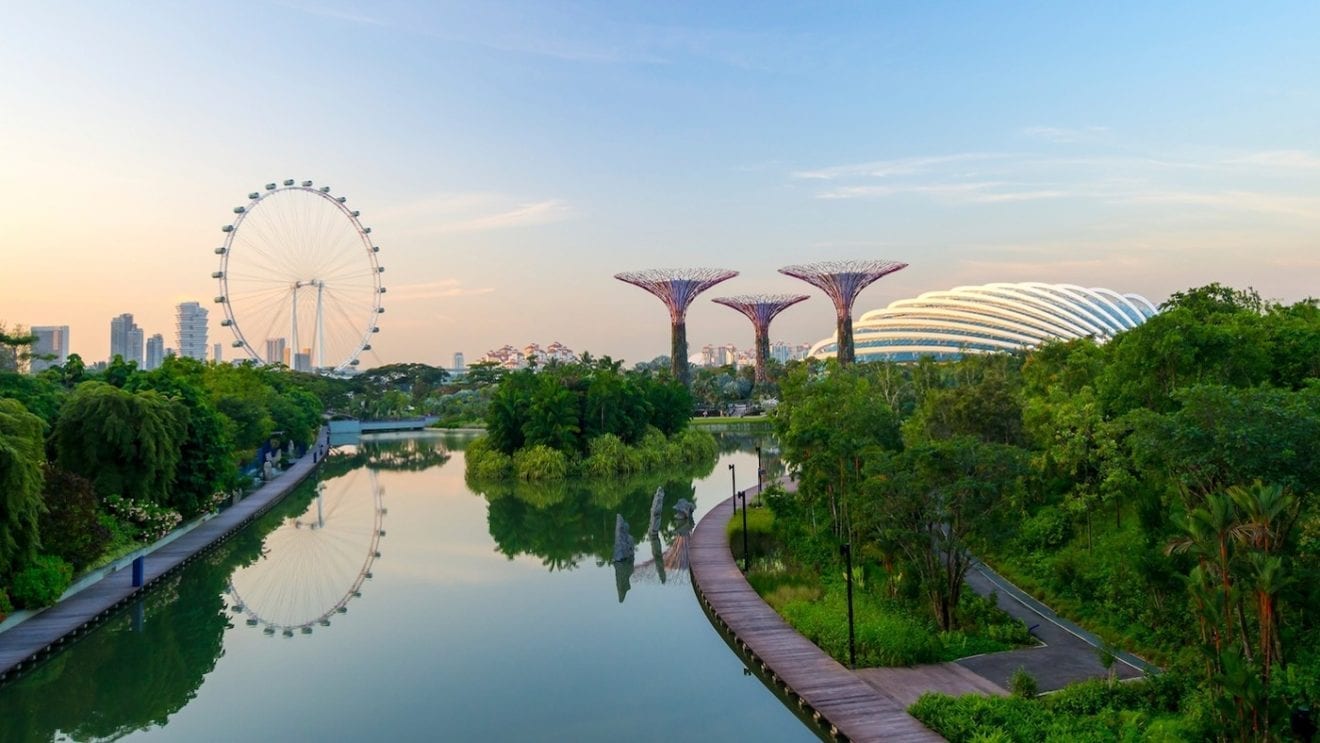

  • Singapore Forging the Next Wave of Digitalization

    Singapore Forging the Next Wave of Digitalization

    After being conducted virtually for two years, ATxSG was held in-person as Singapore’s largest technology event since the reopening of borders. Jointly organized by Infocomm Media Development Authority, Singapore (IMDA) and Informa Tech, the event brought together more than 16,000 hybrid attendees from more than 80 countries, including senior government leaders from Singapore, Malaysia, Indonesia, Estonia and Mongolia. Telecom Review Asia Pacific took the opportunity to speak with Kiren Kumar, Deputy Chief Executive (Development), IMDA, to learn about efforts to accelerate Singapore’s digital economy, focused on advancing 5G and ICT development.

    Singapore has embarked on 5G. Can you tell us about Singapore’s approach to 5G and steps to advance 5G development in Singapore? How will industries benefit from 5G adoption and how does IMDA facilitate this shift?

    The power of 5G is not just about consumers, but enterprise growth and innovations. With IoT and network slicing, the ability of 5G to support various industries by providing dedicated connectivity like a private network, and allowing users to configure massive sets of sensors, opens up huge potential for commercial use cases. In addition, the virtualization and software-driven nature of 5G means it creates opportunities for companies to build enterprise platforms.

    Therefore, to realize the potential of 5G, Singapore pushed for an aggressive rollout of 5G networks based on standalone (SA) network specifications, instead of 5G non-standalone specifications first, which was the approach in most other jurisdictions. This allows for the delivery of the full-fledged capabilities and performance of 5G such as network virtualization, intelligence at network edges, and dynamic provisioning of differentiated services for different use cases. The 5G SA networks today already cover at least half of Singapore, which is ahead of schedule, and Singapore is on track for nationwide 5G standalone deployment by 2025.

    At the same time, Singapore is also actively seeding lead industry demand. Since 2019, IMDA has been working closely with industry players to experiment with new and innovative 5G solutions in areas such as cloud gaming, advanced manufacturing, port operations and smart cities. For example, IMDA has been partnering with IBM, Samsung and M1 to develop Singapore’s first 5G Industry 4.0 trial. This involves having 5G enabled, AI “Smart Glasses” to help factory operators identify defects in realtime. IBM will deploy this 5G-enabled augmented reality solution, at their global manufacturing sites, starting in New York later in 2022.

    We recognize that to enable our 5G efforts, people and R&D are key. IMDA has been supporting Singaporeans to take on these emerging opportunities through training in 5G skills, to bring Singapore into the digital future. We have partnered with our Mobile Network Operators, the National University of Singapore and Singapore Polytechnic to set up a 5G and Telecoms Academy in 2020 to equip professionals with 5G skills. To date, more than 4,000 Singaporeans have already been trained through the academy.

    Separately, S$70 million will be invested in future communications technologies such as 6G, specifically in the areas of research, innovation, training of local talent, and international partnerships. As part of our national Future Communications and Research and Development Programme, we have signed an MoU last year with the world’s first and leading 6G research and development program funded by the Academy of Finland. A similar MoU with the Korean Institute of Communications and Information Sciences has been signed.

    Spectrum is an important resource to support 5G growth and meet increased connectivity demands in the foreseeable future. How does IMDA carry out spectrum management and policymaking to ensure that spectrum is optimized to drive Singapore’s continued growth in a digitalized era?

    In a connected world where there is a constant need for data, faster communications and higher definition media, the demand for spectrum resources continues to outstrip the available supply. To support Singapore’s digital economy and maximize the value of spectrum for economy and welfare of consumers, appropriate and efficient allocation of scarce spectrum resources and forward-looking spectrum planning processes is imperative.

    To support future technological developments, IMDA monitors the trends and developments of new wireless technologies and reviews the frequency allocations, to better plan spectrum needs and demands. Moving ahead, it is anticipated that new technology trends, such as the next generation of mobile technology, advancement in the use of unlicensed spectrum e.g., Wi-Fi 6E and increased use of satellite services will continue to transform the ICT industry.

    As Singapore is a small and open economy, IMDA formulates its spectrum allocation strategy and plans by aligning with international developments, ensuring harmonization of our national spectrum usage regionally and internationally, and adopting policy positions that maximize our domestic interests.

    Can you tell us about partnerships or collaborations to foster enterprise transformation in Singapore to positively impact the economy? What are other initiatives taken to propel SMEs and accelerate digitalization across businesses?

    COVID-19 has turbocharged digitization and many businesses now recognize that they can no longer do business in the traditional way. Businesses, including SMEs, see digitalization not just as a necessity for survival but also as an opportunity to reinvent and bring their businesses to the next level.

    It can be daunting for SMEs to digitally transform their businesses. This is why the government has put in place support schemes and initiatives to help SMEs digitally transform. To increase baseline adoption, IMDA has rolled out a suite of schemes facilitating SMEs’ adoption of digital utilities, such as e-payments and e-invoicing, at scale with additional support for basic and advanced solutions that address the needs of SMEs in the various sectors and at different maturity levels under the SMEs Go Digital Programme. To date, more than 80,000 enterprises have benefitted from the program, including a quarter of them coming on board in 2021 alone. Three in four firms now adopt at least one digital solution.

    To enable every SME to be a digital SME, IMDA has scaled up our efforts so that SMEs have the confidence to use digital technologies to transform their business models and take on new opportunities in the digital age. IMDA’s Chief Technology Officer-as-a-Service (CTO-as-a-Service) enables SMEs to conduct self-assessment of their digital needs via a one-stop platform. It also provides SMEs with quick access to digitalization resources and a shared pool of digital consultants for comprehensive digital advisory and project management services.

    For local companies that are more digitally progressive, we have launched the Digital Leaders Programme (DLP) that helps such companies, across all industries, accelerate their digital transformation plans. To do this, the DLP supports companies in building in-house digital capabilities, and integrating digital into their core business strategy so that they can develop innovative business models and capture new growth opportunities.

    For companies who want to start innovating, IMDA has a national platform for digital innovation, called the Open Innovation Platform (OIP). Enterprises with business problems can get support to define their problem statement, crowdsource for innovative solutions from tech companies, and be supported across the prototyping process. Since 2018, OIP has facilitated 300 challenges with more than $8.5M in prize monies, powered by a pool of more than 11,000 solution providers. Some companies which took part in challenges on our OIP have gone on to transform their operations and scale these solutions globally.

    There is a global ICT talent shortage amid a rapidly-digitalizing landscape. What does IMDA do to address talent shortages to cope with future needs?

    The demand for tech talent globally has risen exponentially, largely driven by the growth of the tech sector and broadbased digitalization across industries and companies. Likewise in Singapore, we already see strong demand for tech talent across the entire economy, ranging from software developers and network engineers to cybersecurity and product development specialists. This is not just within the ICT sector, but also in sectors like finance, manufacturing and professional services. To ensure that companies have ready access to globally competitive tech talent, IMDA works closely with enterprises, institutes of higher learning (IHLs) and other stakeholders to maximize our tech talent pipeline and to ensure that Singapore continues to be a vibrant digital economy.

    First, we equip graduates from IHLs with the right skills and experiences to be industry-relevant. We train them for areas of current need, as well as in emerging tech areas. For example, on top of established computing programs in our IHLs, we have worked with the Singapore Institute of Technology to create a new Bachelor of Science in Applied Computing with a specialization in FinTech. We are actively working with our IHLs and companies to ensure that Singapore continues to produce competitive deep tech talent and graduates who are well versed in using technology regardless of their specialization.

    Second, through the TechSkills Accelerator initiative (TeSA), we have supported over 7,000 companies, comprising local companies and foreign MNCs operating from Singapore, to hire, train and retain their tech team. TeSA collectively bridges companies’ talent needs with a supply of skilled and ready-to-be-skilled talent, and further develops existing employees through support on tech courses and industry-recognized certifications. Since 2016, we have trained over 160,000 Singaporeans and placed more than 12,000 Singaporeans in tech jobs.

    Third, together with Singapore’s Ministry of Manpower, we have put in place a transparent framework to give businesses better clarity and certainty to facilitate the entry of global talent with in-demand tech-skills. Singapore remains open to global talent to complement the strong Singaporean talent pool to drive new innovations and digitalization of our economy

  • Digitalization of Asian Private Banking in Numbers

    Digitalization of Asian Private Banking in Numbers

    Even private banking in Asia – awash with not only the usual posh amenities but also various other characteristics that make it uniquely more high-touch – was not immune digital disruption during the pandemic.

    Within the banking sector, private banking has often been named as one of the segments most immune to digital disruption due to several common factors: larger account sizes and transaction sums that justify human resource costs; complex products and sensitive issues that are difficult to discuss while not in-person; and an older and traditionally less tech-savvy client demographic.

    This is even more amplified in Asia due to a hands-on investor culture coupled with a high share of active trading, leading to more need for manual interaction with clients. But increased market volatility and unprecedented geopolitical uncertainty, amidst an ongoing pandemic, has created an impetus for engagement regardless of method.

    We have met all our clients in their living room over the last six months, which was the first time ever, said Lombard Odier’s Asia chief executive, Vincent Magnenat, in a recent online conference. And guess what? We could have done this before Covid. We needed something like Covid to realize that we don’t need to take a flight to engage with our clients and partners.

    Many of the digital tools and capabilities being showcased during the pandemic, such as secure instant messaging or interactive virtual events, were already available to clients before the outbreak. But against the backdrop of restricted physical access, greater uncertainty and a digital option, a new factor has emerged: self-motivation.

    In the past if you wanted to share your view on macro or on markets, you basically had two ways: set up a large client event or distribute research documents and have bankers follow-up, said Omar Shokur, Asia chief executive of Indosuez Wealth Management in a previous interview. But during this crisis, we have seen bankers and clients becoming more receptive to interaction through new channels like virtual events, not to mention a much faster time to market.

  • Asia is leading its way in the digitization of the retail market

    Asia is leading its way in the digitization of the retail market

    The digitization of retail market in Asia is growing at a faster rate along with Korea, China and India over US and Europe while India is at the forefront. The digital penetration in India is much deeper when compared to any other countries worldwide which lead to the creation of an ecosystem that is comfortable for consumers and retailers as well. There have been dramatic changes in the retail system and it’s at a great boom in Asia. In terms of the retail growth Asia is in the leading position with an amazing growth rate that is twice the rate of the rest of the world. Many casino companies are also opening their slot machines there.

    Online retailing is growing at about 3 times the rate. It has also been estimated that in Asia Pacific the online retail sales will double in the next 5 years and will grow from $1.3 trillion in the year 2018 to $2.5 trillion in the year 2023. CAGR which is nothing but the compound annual growth rate is 14.0% which is accounting for about 28% of the total retail sales. When we look at the online retail sales globally, Asia Pacific still remains to be the largest regions.

    China was the first country to reach its online retail sales market to $1 trillion in the year 2018 and since then had continued to be the largest markets around the world with about 82% of the entire Asia Pacific retail online sales. By the end of 2023 it is also expected to reach around $2 trillion. India also continues to be one of the fastest growing countries in the world with about a compound annual growth rate of 25.8% and it is expected to reach around $85 billion by the year 2023. There have been 72% of online mobile retail sales in Asia Pacific and it’s mainly due to the usage of Smartphones particularly in India and China. By 2023 it is also expected to have 16.9% of CAGR and may reach $2 trillion which was $911 billion in the year 2018 and it may account for about 81% of online retail sales in the year 2023.

    The online retail sales in 2018 accounted for $232 billion which was mainly through the online fashion that included footwear and apparel. Another online retail sector which is growing at a faster rate is Grocery. China again remains to have the largest marketplace for online grocery which is then followed by other countries like South Korea and Japan. The online grocery sales may grow at 26.5% CAGR and will reach about $260 billion by the year 2023.

    A retail ecosystem would consist of various communities of retailers, consumers and the partners that always work on reshaping the retail landscape for a better experience for their consumers. The ecosystems are not just confined to China but even in India there are several companies which are leading it. Ecosystem delivers their consumers with a great combination of various services including online chat, e-commerce, gaming, streaming, payments in apps or single platforms etc.

    By becoming the universally adopted payment and shopping platform the consumers will definitely enjoy their online shopping experience. The best part of ecosystem is that it provides retailers an access which is very hard to replicate the capabilities like data analytics, last mile fulfilment or the cloud services with their platform. These ecosystems show a significant influence over the overall retail sector both in brick and mortar retailers and online retailers as well.

    The pace and extent of development of the ecosystem will not remain the same or uniform all around the geographic markets. According to the research report, there are actually 10 factors that explain why is it that the ecosystem in certain countries of Asia had developed so rapidly and also includes various other social factors like the age, urban density etc. in a country. The emerging retail ecosystem has been raising new set of choices and interests for retailers on how to go on with the new retail landscape. It’s definitely a great opportunity for the new bees want to play in the market while it has the ability to change the entire set of rules of the game and may be a loss of control as well. It’s important for retailers to make sure they have the capital, capabilities and customer franchise in order to complete in an ecosystem.

    For those responsible retailers generally, there are 5 strategic options with which they can now respond to the changes and rise of ecosystem. They should always make sure to play and focus solo over building out competitive omni channel model and differentiate while making sure not to participate in the ecosystem. The retailers can participate in ecosystem and utilize the open ecosystem platform while they can leverage the capabilities of ecosystem partners. One can also build their proprietary ecosystem with the help of alliances, partnerships or JVs with the key external partners too.

    The retailers can also become open ecosystem where in they can provide access while they can monetize their own capabilities, assets or the infrastructure as the open ecosystem platform. One can maximize their shareholder value by trying to get acquired by the potential ecosystem players. Based on the feasibility of the retailers they can choose any of the above-mentioned strategies that will help them to deal with the rise of ecosystem.

    With the expanding digitization in retail sector in Asian and global markets, based on the requirements of consumers and retailers, the ecosystem continues to evolve. After analyzing the various aspects of each market and what happens there, the global companies can now decide and adopt these platform models so that they can prepare for the future retail. This also ensures to provide better performance of the retailers and there will be less chances of loss that may be incurred by them in the ecosystem. Stay ahead by taking right steps in the rapid changing world.


  • Inmarsat, Bourbon partnership leads the way towards maritime digitisation

    Inmarsat, Bourbon partnership leads the way towards maritime digitisation

    The deal represents a breakthrough offshore contract for Fleet Xpress, which is already installed on some 7,000 vessels – mainly seagoing merchant ships.

     “This contract is substantial in its own right and underlines that Inmarsat’s Fleet Xpress solution offers the same compelling business case on vessel efficiency and crew welfare for the energy sector as it does in the merchant shipping arena,” says Eric Griffin, VP Offshore Energy, Inmarsat Maritime. “Commercial shipping is using Fleet Xpress as its pathway to maritime digitalization; now, the value of joining that journey is being acknowledged by one of the leading marine offshore Service Providers in the world.”

    Well-known for high-performance vessels and operational excellence of its services, Bourbon’s response to prolonged lower oil prices has emerged as the action plan ‘#BOURBONINMOTION’. The plan includes the Smart Shipping Programme, structured around a new vessel operational model, onshore support and a remote support center, which seeks to leverage digital and connectivity tools to reduce fleet operating costs. Set for completion by 2021, the program envisages deployment on 133 ‘smart’ vessels.

    According to Bourbon Corporation Chief Executive Officer Gaël Bodénès“The time has come for operational intelligence: connected vessels, use of predictive maintenance, shore-based control centers, rationalization of tasks, etc. Automation of onboard systems is already a reality for our seafarers and we must all innovate at speed to invent our business model and our professions of tomorrow.”

    Eric Griffin of Inmarsat also stresses that flexibility had been an essential ingredient in securing the Bourbon deal. “The service provider could raise or lower bandwidth usage as necessary, or even suspend it on a planned basis without penalty,” he says.

    “An important aspect of Fleet Xpress is that third-party charterers could run their own Fleet Xpress services via a dedicated ‘pipe’ without interrupting the primary bandwidth being provided to an OSV. Customers chartering OSVs can, therefore, manage their own ‘smart’ vessel performance with full flexibility, using existing terminals and hardware onboard.”

    All vessels covered in the agreement will feature advanced 3-axis stabilized antennas from Cobham, specifically developed for and approved by Inmarsat for the Global Xpress satellite network.

    Among the first of Bourbon’s fleet to migrate to Fleet Xpress will be a group of high-end subsea vessels whose data consumption and management needs are ready for IoT-based solutions. These vessels also feature dual satellite terminals with high-powered amplifiers for additional redundancy. The Bourbon vessels will take advantage of bandwidth, stability and reliability, in the first instance to step up the use of video conferencing. Real-time video feeds are also expected to feature in ROV operations, with digitalization ultimately expected to touch every aspect of vessel management.

  • How to deal with centennials

    How to deal with centennials

    All eyes are on Southeast Asia as the world’s next consumer powerhouse, with its young population and increasing purchasing power. Almost 280 million centennials – those born since 1995, also known as Generation Z, currently call this region home. While the size of this new generation alone makes them attractive prospects for retailers, their distinct behaviours set them apart as the ones to watch to crack Asia’s hyper-competitive retail landscape during the next few decades.

    Born into the digital age and mobile natives, centennials will soon be one of the world’s most demanding consumer groups with high standards and expectations of the online-shopping experience.

    Here’s what we know about the centennials….

    Webrooming vs showrooming

    Almost all centennials in Southeast Asia use the internet as part of their buying journeys, but their route is much more converged than other generations. Latest research commissioned by Dentsu Aegis Network, Here Comes the Centennial reveals that centennials like to use both online and offline channels – 97 per cent browse for products online before purchasing online (‘webrooming’) and 90 per cent look for products in store before buying online (‘showrooming’). Detailed research is a key part of their buying decisions – whether online or offline – to ensure they get the best price, as well as the best quality by going into stores to experience the product. Some 70 per cent browse online to find the best price, while 67 per cent use the internet for checking out product details and specifications and 65 per cent are checking out reviews.

    Smartphones have also created an environment where centennials can browse products wherever they are, whatever they are doing – multi-tasking to the extreme. For example, 52 per cent look at products online while eating, watching TV or hanging out with friends or family, while 38 per cent do so while commuting, and 34 per cent browse products while at school or college.

    Centennials use social-media platforms differently to previous generations, as an important and intimate touchpoint in their purchase and decision-making journey.  Social media applications (47 per cent) such as Facebook and Instagram are the second most popular place for them to shop in, while 49 per cent turn to such platforms for research on their future purchases, rather than asking friends (45 per cent) or family (27 per cent). Even a good reputation with friends and family does not feature highly as a motivator to purchase – just 15 per cent choose this as an option.

    Digital natives

    As digital natives, centennials expect technology to be an integral part of the experience, and are highly optimistic about the use of technology.

    Eighty-two per cent of centennials are excited about futuristic shopping technology such as virtual reality. They demand fast-and-easy experiences that allow them to research and buy products with minimal frustration.

    To this audience, commerce has moved beyond “buying something on a website” to a series of interactions, from enticing them to view a product to providing a personalised purchase experience, to where and when the product should be delivered. In this context, online retailers need to focus on understanding the centennial customer journey, specific to the category being sold. This can be done by incorporating relevant technologies which seamlessly enhance engagement along the path to purchase. For example, the research showed that “Good customer service/reliability” ranks third among qualities of an online store with this audience, with delivering a superior and excellent customer service option using chatbots rather than call centres a more significant differentiator than low prices and free/fast delivery that every other marketplace claims to offer.

    Brand irrelevance

    Brand name and image are no longer a priority of centennials. Only 11 per cent of centennials cite having a prestigious or famous brand as one of their top three attributes when choosing where to shop online. Instead, personalisation and convenience are key, as 76 per cent of respondents are happy to share data with websites, if it makes more relevant recommendations.

    E-commerce payments provide a unique example of this; despite being digital natives, the concept of a cashless society has yet to fully take off for centennials in the six countries surveyed, with 56 per cent of respondents still preferring to pay cash on delivery for their purchases. Whilst preferring digital shopping experiences, the next generation of online shoppers enjoy having a variety of payment methods to choose from, and 43 per cent of centennials will readily abandon their purchases because their preferred payment option is not available.

    This is also accompanied by a shift towards values-based purchasing, with 82 per cent agreeing that they “prefer to buy products from ethical or sustainable brands,” while 70 per cent express a preference for local brands.

    With centennials less responsive to traditional campaign and brand-based purchasing, and increasingly influenced by disparate sources of dynamic information and opinions, retailers can no longer just rely on well-designed stores or brand campaigns to drive sales. Instead, driving a unified brand experience across multiple touchpoints will be key to unlocking the centennial consumer opportunity.

    This year

    So what does this all mean for retail this year and beyond?

    Southeast Asia’s internet economy is expected to exceed US$240 billion by 2025, according to research from Google and Temasek. One in two of centennials surveyed are already spending more than $30 per month online. Nine per cent indicated that they spend more than $100 a month – and as the centennial generation comes of age and joins the workforce, their disposable incomes will increase further.

    This combination of large populations, high connectivity and smartphone penetration rates, and increasing online spending power means the centennial opportunity in Asia is large and growing. We will increasingly see e-commerce technology accelerating this year to help create innovative and memorable brand experiences of the consumer.

    Centennials represent tomorrow’s consumer. They are looking for integrated solutions and a seamless experience that will allow them to purchase anywhere, anytime, and on their own terms. As this new group of consumers become increasingly elusive and multi-channel savvy, retailers need to harness creativity and technology in new ways. Combining new media and technology to deliver innovative and memorable brand experiences is the key to success – and brands are learning quickly in order to tap the huge centennial opportunity here in Asia.

    For example, in Thailand, Cotton USA worked with Vizeum and Isobar to launch the Cotton USA online store through an experiential shopping campaign “Shop the Runway”, partnering e-commerce marketplace 11Street.

    Targeted at the Centennial audience, Shop the Runway was the first real-time online shopping fashion show in Thailand which streamed the live programme on 11Street, while clothes from the catwalk were displayed in real time – within the same page – so viewers could purchase their favourite looks direct from the runway.

    At the heart of the campaign was a unique offline-to-online (O2O) feature within the 11Street mobile application which allowed fashion-show attendees to simultaneously view and shop the runway outfits.

    Shopping coupons were also given to all customers who downloaded and registered their details on the app to further encourage conversions. The campaign drew close to 500,000 campaign visitors, a 13 per cent increase in 11Street app downloads following the campaign, and ultimately boosted Cotton USA sales and brand awareness amongst the target centennial audience.

    Shop the Runway is one example demonstrating how brands can leverage technology and O2O features in innovative ways to reach consumers in today’s competitive e-commerce environment. Combined with a seamless shopping experience, and varied account and purchase options to suit different consumers, moments like these will attract tomorrow’s consumers on their terms, arrest their attention in a hyper-competitive commerce landscape, and allow brands to win in Asia’s digital-led retail landscape.

  • Digital Revolution to Add $150b to Indonesia’s Economy by 2025

    Digital Revolution to Add $150b to Indonesia’s Economy by 2025

    Digitalization is expected to boost productivity, especially in five major sectors: manufacturing, retail, transportation, mining and agriculture.

    “Just as an example, a digital procurement system can predict demand for equipment in a factory and suggest replacements when necessary. Predictive maintenance can reduce machine downtime by 25 percent to 70 percent,” Tan said.

    According to McKinsey’s estimation, the manufacturing sector in Indonesia can earn an additional $34 billion from digitalizing its operations over the next decade, while mining and agriculture can see up to $15 billion and $11 billion in additional output respectively.

    Better stock and route management enabled by technologies like Google Maps can provide an extra $24 billion to Indonesia’s retail industry and $16 billion to the transportation sector. Other sectors like telco and media, healthcare, utilities and finance can boost their earnings by up to $21 billion, McKinsey claims.

    To unlock these potentials, Indonesia needs to improve its information technology infrastructure, broadband affordability and regulatory support.

    The study shows that Indonesia — although it has the second cheapest internet among the 20 countries studied — still struggles with poor connection, narrow bandwidth and slow speed. Overall, Indonesian is ranked 18 on a list that includes Malaysia, Singapore and other Asean states — all ranked above it.

    “E-commerce in Indonesia is growing rapidly but is constrained by limited access to technology, lack of tech-savviness and not enough credit cards,” Agung Nugroho, an e-commerce expert, said as quoted by McKinsey.

    According to McKinsey, Indonesian businesses should create cross-channel business models to encourage online and offline sales.

    Other strategies include establishing a two-fold cyber protection system, leveraging big data to drive real-time access across value chains and focusing on a customer-centric experience — coming up with innovative products and services to keep customers loyal.

    The study also suggests that digitalization can happen quicker if companies build strong and dedicated technology departments that integrate operations in all divisions of their businesses.