Retail News CRM

Tag: Don Quijote

  • Don Quijote reports record net profit driven by tax-free sales

    Don Quijote reports record net profit driven by tax-free sales

    Pan Pacific International Holdings, the company that operates the Don Quijote discount chain, reported on Wednesday a net profit of 66.1 billion yen ($455 million) for the fiscal year ending June, hitting a record profit for the 14 consecutive year thanks to foreign tourist spending.

    Revenue reached 1.9 trillion yen, and operating profit was at 105 billion yen, crossing the 100 billion yen mark for the first time.

    PPIH said it has benefited from a recovery in spending by foreign tourists visiting Japan, accelerated by the depreciation of the yen and their enthusiasm for being freed from paying Japan’s 10% consumption tax on purchases of 5,000 yen or more, a benefit Don Quijote actively promotes.

    For the January-March quarter, the company had reported sales and operating profit at its discount store business have been rising steadily due to “increased demand for outings and recovery of inbound travel.”

    “We have strengthened the ‘power to earn,’” Naoki Yoshida, president and CEO, said at a news conference on Wednesday. He added that the company endeavors to gain strength in this new age of inflation, to devise strategies to increase unit price per customer spending and find new ways to get shoppers coming back more frequently.

    By nationality, South Koreans continue to lead the way in tax-free sales. For the January-March quarter, the company reported an increase in customers from Taiwan during the Chinese New Year string of holidays in late January.

    Now with China lifting its ban on group travel, sales are expected to rise even further, Yoshida said. For the year ending June 2024, the operator expects to make 80 billion yen in tax-free sales.

    PPIH has expanded into Singapore, Thailand, Taiwan and Hong Kong, where its stores are called Don Don Donki. Yoshida has mentioned that the company needs more time to reach higher profits overseas.

    The operator plans to add 12 more overseas locations and at least 25 in Japan.

    PPIH said it expects its operating profit margin to remain over 5% in fiscal 2024.
  • Don Quijote eyes massive US rollout

    Don Quijote eyes massive US rollout

    Hard on the heels of a successful expansion in Singapore and launching in Hong Kong and Thailand, Japanese variety retailer Don Quijote is now eyeing continental USA.

    Pan Pacific International Holdings, the company’s parent, already has Marukai supermarkets trading in the US and three Don Quijote stores in Hawaii.

    But rather than replicate its Asian concept, Pan Pacific will create a new format tailored to the US but with “Don Quijote-ism at the core,” CEO Koji Ohara told the publication.

    The expansion will be led by Ohara who will resign from his current role and relocate to the US to build the business there, with a target of expanding its network from 38 currently to 100.

    Sean Butler, MD at supply-chain consulting firm LIDD, told Grocery Dive that he expects Don Quijote will stick to its three pillars – convenience, discount, and amusement – when it launches in the US.

    In the US, Don Quijote has an opportunity to reach an audience hungry for low-price groceries and consumer goods, he said.

    “The company is betting that it can execute experiential retail better than the status quo – and pick up a nice chunk of the world’s largest consumer economy in the process.”

  • Don Quijote Hong Kong opens first store

    Don Quijote Hong Kong opens first store

    Don Quijote Hong Kong has opened its first store, in Mira Mall at Tsim Sha Tsui.

    The Japanese bargain retailer will sell a full range of discount merchandise as in Japan, as well as ready-to-eat meals and Japanese specialty products.

    Regional operator Pan Pacific International Holdings, which has three stores in Singapore and also plans to make its Thai debut in Bangkok this year, has leased a 15,000sqft space at the mall. The store is the sixth in its regional network, which also trade under the Don Don Donki brand. It has operated in Singapore since 2017, and has close to 40 stores in the US.

    The company is hoping to target Mainland Chinese tourists with its distinctively Japanese product range.

    “Don Quijote’s Tsim Sha Tsui location can attract mainland tourists who travel via the high-speed rail and mega bridge,” said senior director and head of retail services at Knight Frank Helen Mak. “Instead of shopping for luxury items, these same-day visitors usually spend money on cosmetics, health care items and food, products that are most celebrated at [Don Quijote].”

    Besides its general merchandise and fresh food offer, the Don Quijote Hong Kong store features a cafe.

  • Don Quijote Thailand launches as Don Don Donki

    Don Quijote Thailand launches as Don Don Donki

    Japanese discount chain Don Quijote has launched its first store in Thailand.

    Trading as Don Don Donki, the Don Quijote Thailand foray marks a continuation of an aggressive and rapid rollout of stores across Asia, including in Hong Kong, Taiwan, Philippines and Malaysia. The company plans to expand its overseas store network from the current 41 to 200.

    Located at Mall Thonglor, an upscale residential area of Bangkok which is home to many Japanese expats, the store anticipates US$18 million in annual sales.

    The 28,000sqm shopping centre is operated by a joint venture among Pan Pacific, Thai paint maker TOA group and a local subsidiary of a Japanese parking lot developer.

    “Thailand is the most marketable country in Southeast Asia,” said Takao Yasuda, founding chairman and supreme advisor at Pan Pacific.

    “We will continue to explore opening multiple stores here.”

    Don Quijote Thailand is operating under the alternative name – as it does in Singapore – because the Don Quijote brand is used by another business.

  • Japanese megastore Don Quijote to open its first Hong Kong store

    Japanese megastore Don Quijote to open its first Hong Kong store

    Don Quijote Hong Kong is set to make its debut in the middle of this year. The Japanese discount merchandise retailer – which has three stores in Singapore and also plans to make its Thai debut in Bangkok this year – has leased a 15,000sqft space in the basement of Mira Place Two on Nathan Road in Tsim Sha Tsui.

    In Japan, most of the company’s 160 discount stores trade 24 hours, but this is unlikely in Hong Kong.

    Helen Mak, senior director and head of retail services at Knight Frank said the basement location would appeal to local consumers and tourists.

    “Don Quijote’s Tsim Sha Tsui location can attract mainland tourists who travel via the high-speed rail and mega bridge. Instead of shopping for luxury items, these same-day visitors usually spend money on cosmetics, health care items and food, products that are most celebrated at [Don Quijote].”

    According to the SCMP, Don Quijote will pay HK$1 million (US$127,000) a month for the space, with the fitout expected to be complete by July.

    Besides its general merchandise and fresh food offer, the Don Quijote Hong Kong store will feature a cafe.

  • Uny to make discount operator Don Quijote its affiliate

    Uny to make discount operator Don Quijote its affiliate

    Japanese discount store operator Don Quijote is approaching an agreement to take over 100 per cent of the Uny general merchandise store business, making it the country’s fourth-largest retailer. The firm already controls 40 per cent of the Uny business, and the acquisition of the remaining 60 per cent would add 190 locations to its network, most likely converting the existing stores into discount outlets.

    Don Quijote took sales revenue of ¥941.5 billion (US$8.35 billion) in the last financial year. Uny’s sales reached ¥712.8 billion ($6.35 billion).

  • Don Quijote hopes for Seiyu plot

    Don Quijote hopes for Seiyu plot

    Japanese discount retailer Don Quijote says it wants to buy Walmart’s Seiyu department store business in Japan.

    But Walmart still claims it is not for sale.

    Despite widely published reports, that Walmart was approaching potential buyers for the unit, the US company denies it is selling up and moving out of Japan.

    A Walmart spokesperson said that the company is not in talks with prospective buyers and is continuing to develop the business.

    Don Quijote CEO Koji Ohara told a press conference this week that if Seiyu came up for sale “we would be interested and it is attractive”.

    “If you don’t have real estate you can’t do retailing. In addition to its human resources, Seiyu has many locations that you cannot get your hands on,” he said.

    The original Nikkei report said Walmart could fetch 300 – 500 billion yen (US$2.7 – $4.5 billion) for the business if it sold. The move was perceived as a potential outright withdrawal from Japan and a chance for the firm to refocus on higher potential markets in China and India.

    Don Quijote, which has recently expanded into Singapore, last week reported its 29th consecutive year of sales and profit growth. The chain aims to have 500 stores in Japan by 2020, 80 more than it has now. But it is struggling to find locations.

  • Emart’s take on Don Quijote opens in COEX

    Emart’s take on Don Quijote opens in COEX

    Emart’s Pierrot Shopping store has opened inside Coex mall, in southern Seoul.

    Aiming to be a “Fun and Crazy” destination, the 2513sqm two-storey store targets consumers in their 20s and 30s with a diverse range of 40,000 products.

    On basement floor, there is a large collection of alcohol and snacks from Korean and foreign brands, along with wigs, costumes and a discreet space for ‘adult toys’.

    On the first floor, customers will find goods as diverse as leather bags from brands such as Prada and Fendi, fresh food, cordless vacuum cleaners, smoking pipes, fake eyelashes and pet food.

    One curious feature in the store is a smoking room which resembles the interior of a subway train. An information desk and electronic kiosks offer tax refunds for foreign customers.

    A Korean version of Japanese Don Quijote chain, Pierrot Shopping store is designed “to be a place where young people can come to play and look around without a clear shopping purpose”.

    “You can come here to find relief from everyday stress, casually pick up things that look intriguing and buy them just because they’re affordable,” said Pierrot Shopping’s brand manager, Yoo Jin-cheol.

    While other large-scale retailers prioritise space and neatly arranged products so that consumers can easily find what they are looking for, at Pierrot Shopping the aisles are narrow and in some places it’s difficult for two people to pass.

    The staff wear uniforms with “I don’t know where that is either” printed on the back.

    Emart explained the intention was to make consumers venture more around the aisles, make unexpected discoveries and have a“fun experience”.

    Emart will open two more branches of Pierrot Shopping this year with smaller footprints than at Coex; at the Doota Mall and in Nonhyeon, in Gangnam District.

  • FamilyMart Uny and Don Quijote agree to capital tie-up

    FamilyMart Uny and Don Quijote agree to capital tie-up

    Convenience store group FamilyMart Uny Holdings has stepped up co-operation with Japan’s largest discounter, Don Quijote Holdings, to open a joint store.

    Like other Japanese convenience stores, which are open 24 hours and sell everything from underwear to freshly brewed coffee, FamilyMart has struggled with falling customer numbers in the past two years amid competition from discount drugstores and problems with labour shortages.

    It merged with Uny in 2016, and last year sold a 40 per cent stake in its general merchandise unit to Don Quijote. The company is hoping the joint convenience store, which has opened in Tachikawa, Tokyo, will help rekindle consumer interest. Two other stores are also opening this month.

    Don Quijote, also open around the clock, is known for stocking its stores floor-to-ceiling with an eclectic mix of products such as leopard-print rugs to designer goods. Popularly known as Donki, it has delivered 28 years of unbroken sales growth.

  • Don Don Donki opening second outlet in Singapore on June 14

    Don Don Donki opening second outlet in Singapore on June 14

    Japanese discount retailer Don Don Donki will open its second Singapore store next week at Tanjong Pagar’s 100AM mall.

    Don Don Donki’s product range of about 30,000 items was curated for Singapore and spans fresh and processed foods, vegetables, meat, sushi, groceries, beverages, costumes, clothing, cosmetics, novelty goods and household items. A third of the product selection is from Hokkaido.

    The first store opened in the Orchard Central shopping centre last December and the company plans at least 10 stores in Singapore within five years.

    The new store is spread over two levels of the 100AM mall.

    Better known by its nickname Donki, the retailer was founded by Japanese businessman Takao Yasuda in 1978 and is owned by the Don Quijote Group. Its stores in Singapore are run by Pan Pacific International Holdings, its holding company for overseas business.

    While the stores in Japan are called Don Quijote, its Singapore branch name has been changed to avoid confusion with a local Spanish restaurant of the same name. The term “Don Don Donki” was taken from the store’s theme song.

    “The idea to have Don Don Donki in Singapore was suggested by Hokkaido Marche,” said Yasuda, 68, who “semi-retired” a couple of years ago and moved to Singapore. “When I came here, I realised products in Singapore are very expensive, and in Japan I’m known as the king of discounts.

    “What costs one dollar in Japan is sometimes two or three dollars here.”

    So when he was approached by Hokkaido Marche to partner and open its concepts in Singapore, he agreed immediately.

    With 368 stores in Japan, Hawaii and the US, the brand achieved nearly ¥828.8 billion (US$7.3 billion) in sales last fiscal year.

  • Don Quijote eyes more Asia stores

    Don Quijote eyes more Asia stores

    After opening its first outlet in Singapore (called Don Don Donki) this month, Japanese discount retailer Don Quijote plans to expand with even more outlets in Asia.

    Founding chairman Takao Yasuda sas the group is looking to open stores in Hong Kong, Malaysia, Taiwan and Thailand.

    When moving to Singapore to retire two years ago, Yasuda was surprised at the price of food ingredients and other products imported from Japan. “I realised my new mission was to lower the prices to affordable levels.”

    He says the Singapore store has been so popular it has had to limit customer numbers at weekends. “We’ll increase to around 10 stores in Singapore in two to three years so customers can enjoy shopping at leisure.”

  • Don Quijote about to take tilt at Thailand?

    Don Quijote about to take tilt at Thailand?

    Japanese discount chain Don Quijote could be arriving soon in Bangkok, with its penguin mascot being spotted on the fence of Ekamai Mall, which is under construction.

    Don Quijote (or Donki) sells a wide range of Japanese products including food, household supplies, medicine, electronics, clothing, beauty products and even sex toys.

    While the company has not said anything about its move into Thailand, it announced last month that it was making its first Southeast Asian expansion in Singapore.

  • ‘Donki’ to bring ceiling to floor mega discounts to Asia

    ‘Donki’ to bring ceiling to floor mega discounts to Asia

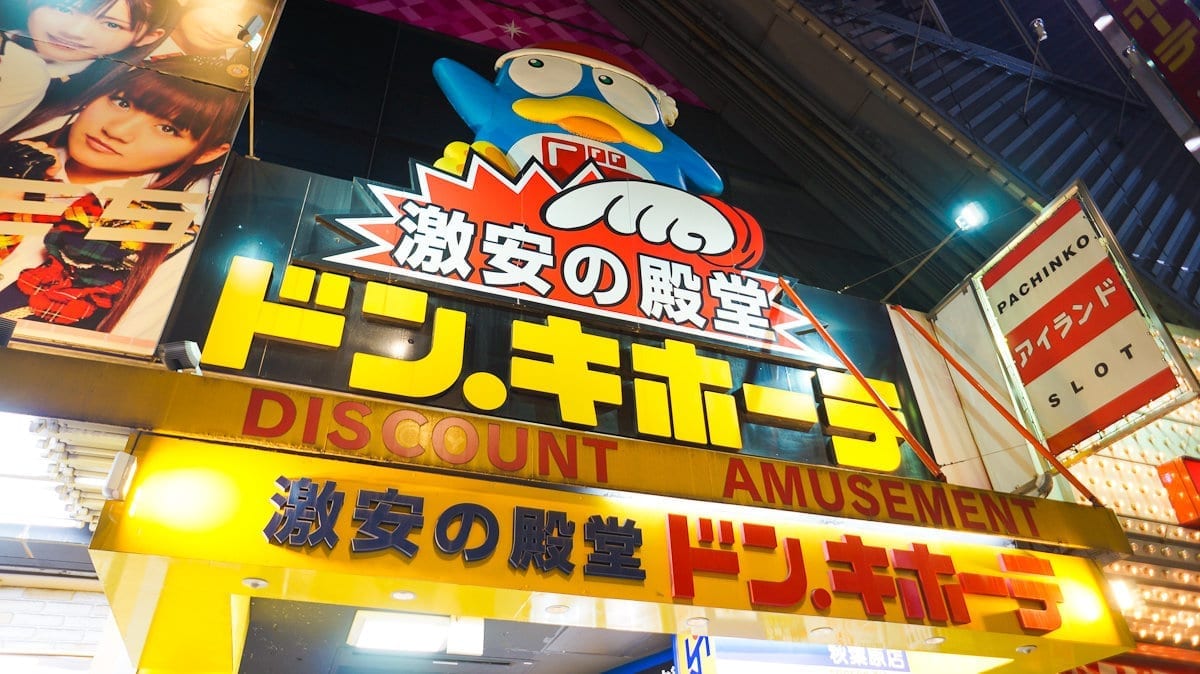
    Don Quijote, a chain of neon-lit emporiums filled ceiling to floor with discounted goods, is opening its first store in Southeast Asia, where it expects to further expand.

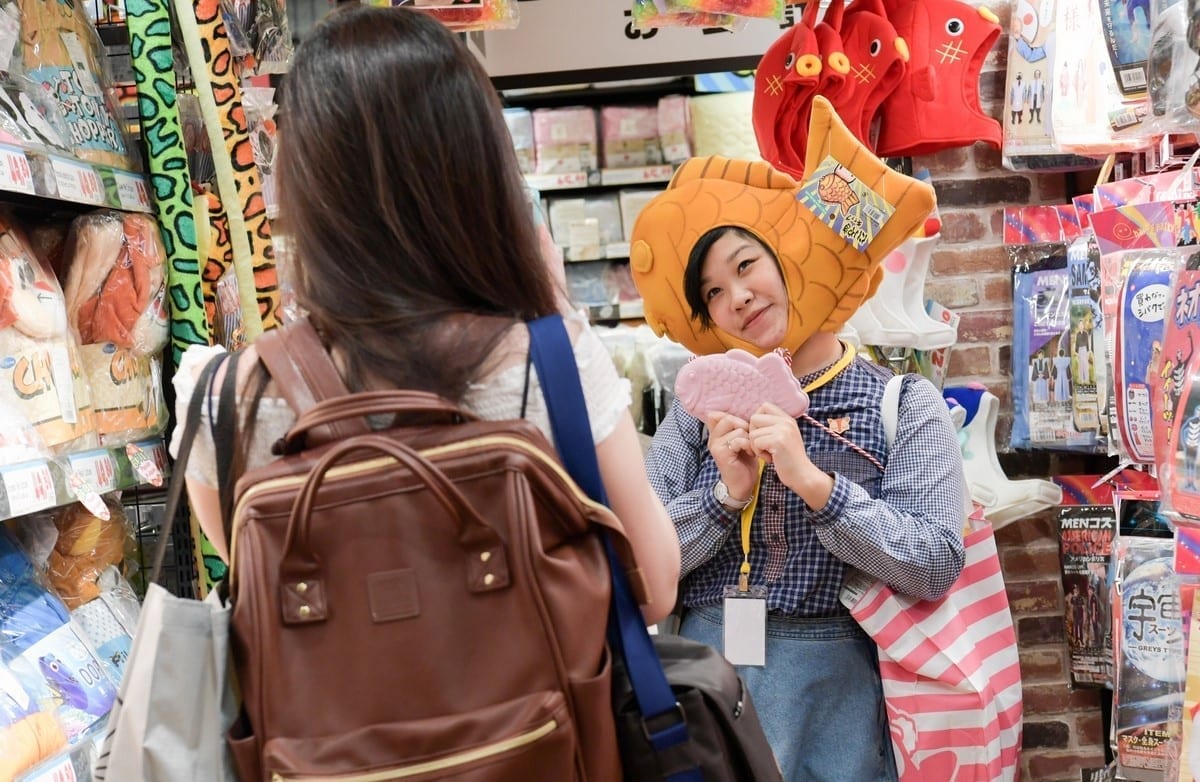
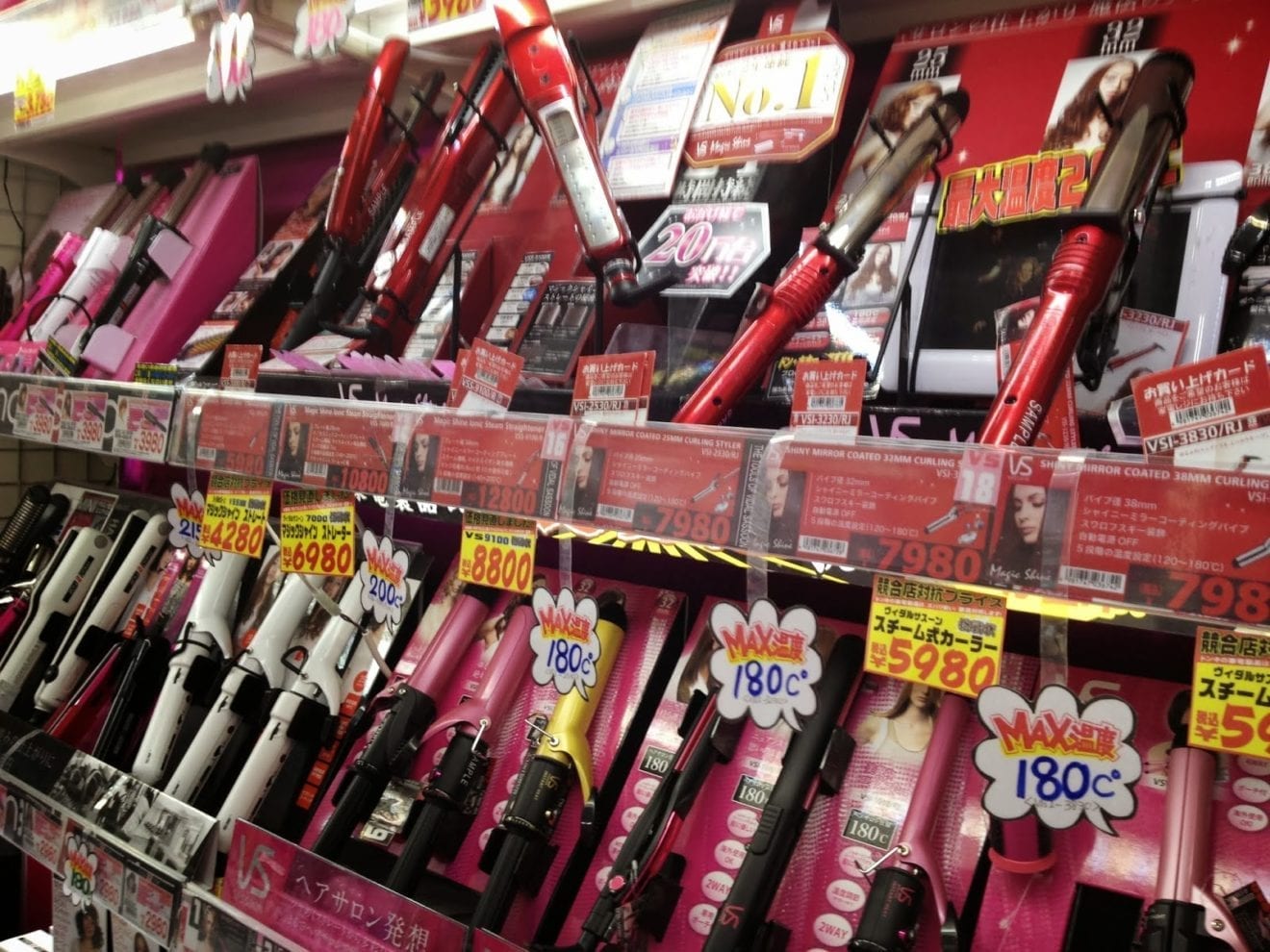
    The chain — now with over 300 stores across Japan — is a must-visit among tourists to Japan. There is much to like — duty-free shopping and a vast selection of discounted products, ranging from packaged food, alcohol and consumer electronics to luxury brand items and cosplay costumes.

    Now shoppers in Singapore can get a taste of “Donki,” as it is commonly known, with a store opening in the city’s Orchard area, the company said this week.

    The branch will be developed by Donki’s holding company for overseas operations, Pan Pacific International Holdings, which was established in the city-state in 2013 to headquarter the group’s overseas operations.

    In Singapore, Donki will offer a range of Japanese pop culture products. But other details — like the store’s opening date, its operating hours and what kind of prices to expect — have yet to be announced.

    This isn’t the first time Donki has ventured overseas. It currently operates three stores in Hawaii. In 2013, it acquired Marukai, a small chain of Japanese grocery stores in the U.S. state of California.

    But the Singapore emporium will be the retailer’s first in Southeast Asia, and the group is looking at opening more stores in the region, a Donki spokesman said, without elaborating on details or strategy.

    In Japan, Donki is also known for its long opening hours, with around 10% of its stores open 24 hours. A typical store offers a selection of around 45,000 goods, stacked on shelves so high that shopping can be a mazelike experience. Thanks to their low prices and multilingual displays, the mazes have seen a surge in overseas customers. The number of foreign visitors to the stores soared 62.4% in 2016, the company said.

    Peek shopping hours for domestic customers are 3 p.m. to 5 p.m. The number of overseas visitors, though, tends to peak around 10 p.m., the spokesman said, with many visiting the stores after dinner or after spending the day sightseeing. He said South Koreans account for nearly 40% of its overseas customers, followed by Chinese, Taiwanese and Thais.

    Japan has been experiencing a tourism boom. Last year, it welcomed 24 million visitors, an increase of 21.8%. Of the total, over 20 million came from Asia, led by tourists from South Korea, China and Taiwan. Prime Minister Shinzo Abe’s goal is to increase the number of foreign visitors to 40 million by 2020, when Tokyo will host the Olympics.