Retail News CRM

Tag: East

  • Emirates SkyCargo Boosts Freight Services in East and Southeast Asia Amid Rising Demand

    Emirates SkyCargo Boosts Freight Services in East and Southeast Asia Amid Rising Demand

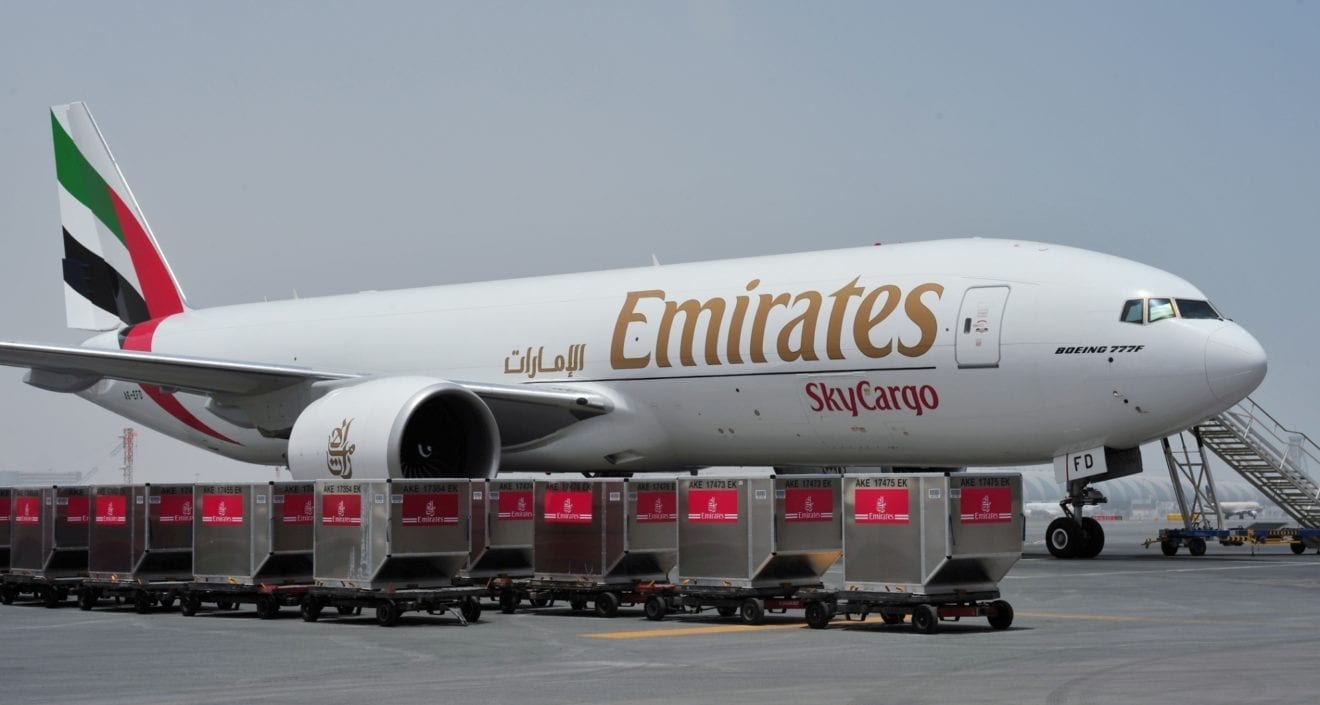
    Emirates SkyCargo, the air cargo carrier, has unveiled a strategic expansion plan for its freight services throughout East and Southeast Asia. The move is aimed at enhancing the cargo flight frequencies and destinations to meet the increasing demand. Businesses and manufacturers in East and Southeast Asia are seeking comprehensive connections to rapidly and securely transport their goods to high-demand markets in the Middle East, Africa, Europe, and the Americas.

    Facilitating International Trade

    In the FY 25/26, Emirates SkyCargo transported over 439,000 tonnes of cargo via its freighter and passenger flights from 12 markets in East and Southeast Asia. This reflects a 5% increase in cargo tonnage compared to FY24/25, illustrating the thriving demand from businesses and exporters to transport goods across the globe.

    Badr Abbas, Divisional Senior Vice President at Emirates SkyCargo, highlighted the importance of East and Southeast Asia as global manufacturing epicentres. They contribute significantly to the production of high-tech goods, export of perishables, and are a significant origin for global e-commerce flows. He added that by increasing the number of freighter flights and expanding their freighter services, they provide rapid connectivity to ensure swift and safe cargo transportation to customers worldwide.

    Expansion of Freighter Flights

    Emirates SkyCargo plans to double its freighter capacity to Narita Airport in Tokyo, increasing from one to two weekly freighter flights. This expansion will cater to Japan’s robust manufacturing industry, spanning diverse sectors like automotive, electronics, and pharmaceuticals.

    The carrier is also escalating its flights to Hong Kong to 37 weekly freighter flights, offering maximum flexibility and choice to customers in this export-led economic corridor. Moreover, Emirates SkyCargo has broadened its reach into Central China with three weekly flights from Zhengzhou, linking the industrial hub of Henan province to Dubai and other destinations.

    The carrier has also resumed its freighter flights from Singapore, with a weekly flight connecting to Dubai via Mumbai. This forms a vital trade lane across Asia. Furthermore, Emirates SkyCargo plans to double its footprint in Taiwan, enhancing its service from one weekly to twice-weekly freighters to Taipei, to meet the increasing demand for high-tech electronic cargo movement.

    Questions & Answers

    What is the main aim of Emirates SkyCargo’s expansion in East and Southeast Asia?
    The primary objective is to increase the freighter flight frequencies and destinations to meet the surging demand for rapid and secure transportation of goods to high-demand markets.

    How is Emirates SkyCargo responding to the demand in Japan’s manufacturing industry?
    The company plans to double its freighter capacity to Narita Airport in Tokyo, thereby catering to diverse sectors in Japan’s robust manufacturing industry.

    What new development has taken place regarding Emirates SkyCargo’s operation in Taiwan?
    Emirates SkyCargo intends to double its footprint in Taiwan, increasing its service from one weekly to twice-weekly freighters to Taipei, to meet the rising demand for high-tech electronic cargo movement.

  • Hermes Unveils Culture-Inspired Redesign of Expanded Osaka Store at Hilton Plaza East

    Hermes Unveils Culture-Inspired Redesign of Expanded Osaka Store at Hilton Plaza East

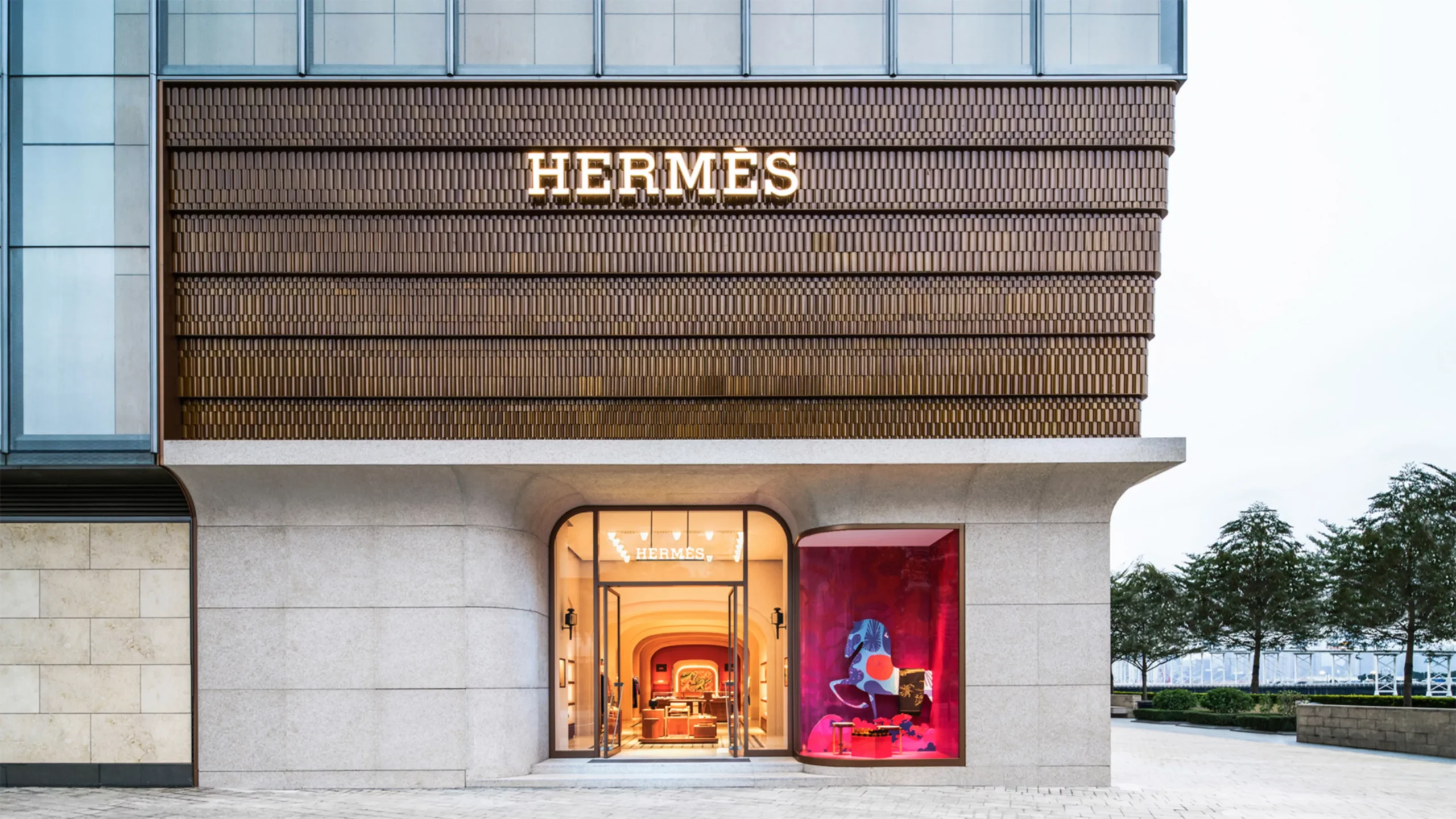
    Luxury fashion house Hermès has unveiled its newly revamped store at Hilton Plaza East, with a fresh design that pays homage to the surrounding culture and scenic beauty. Parisian architectural firm RDAI is credited with the store’s stunning redesign, which now extends over two storeys, each dedicated to an immersive display of Hermès’ 16 distinguished métiers.

    The updated store boasts an eclectic range of Hermès offerings, from their sought-after leather goods and chic fashion accessories to their signature perfumes and beauty products. Delicate jewellery, elegant watches, and a curated selection of home décor collections add to the store’s luxuriant appeal.

    Interplay of Culture and Nature in Design

    Incorporating a blend of geometric elements and dynamic materials, the store’s redesign has masterfully incorporated motifs inspired by Osaka’s local culture. These are complemented by a winged horse and floating clouds, symbolising Hermès’ annual theme, ‘Venture Beyond’.

    The store’s facade has been strikingly adorned with Mino-yaki ceramic tiles reflecting hues of green and blue, designed to imitate the shimmering reflections of water. This theme is carried into the store’s interiors which combine natural mineral surfaces in earthy tones with contrasting teal accents.

    Reimagined Storefront and Artwork Display

    The storefront windows bear the artistic touch of renowned French artist Matthieu Cosse. His art installations present an intriguing blend of celestial landscapes and theatrical elements, lending a dreamlike quality to the store’s exterior.

    The redesigned store also serves as a gallery for curated artworks from the Emile Hermès Collection and the Hermès Collection of Contemporary Photographs, seamlessly incorporated into the boutique’s inviting layout.

    This unveiling at Hilton Plaza East forms part of a broader renovation initiative by Hermès, with recently updated boutiques in Taipei and Hong Kong exemplifying the brand’s commitment to a refreshed and contemporary store experience.

    Questions & Answers

    What was the inspiration behind the redesign of the Hermès store at Hilton Plaza East?
    The store’s redesign was inspired by the local culture and natural landscapes of Osaka.

    Who was involved in the redesign process?
    Paris-based architecture studio RDAI was responsible for the store’s redesign, with French artist Matthieu Cosse reimagining the storefront windows.

    What can customers expect to find in the revamped store?
    The store offers a wide range of Hermès products, including leather goods, fashion accessories, perfumes, beauty products, jewellery, watches, and home collections. It also showcases curated artworks from the Emile Hermès Collection and the Hermès Collection of Contemporary Photographs.

  • Vietnams Gold Plunge Continues Amidst Rising Inflation Concerns and Middle East Tensions

    Vietnams Gold Plunge Continues Amidst Rising Inflation Concerns and Middle East Tensions

    The price of gold in Vietnam continued to decline on Monday, with reductions seen throughout the day following an initial drop of nearly 1% earlier in the day. Saigon Jewelry Company, a prominent gold retailer, noted a further 0.42% decrease in its gold bar price from the morning, ultimately tallying a total loss of 1.37% for the day. The quoted price of gold per tael (equivalent to 37.5 grams or 1.2 ounces) fell to VND165.2 million, equivalent to US$6,276.26.

    Local Rates Versus Global Prices

    In comparison, local gold prices in Vietnam exceed international gold rates by approximately VND17 million per tael. The price of a gold ring also saw a similar decrease, falling to VND164.7 million per tael.

    Internationally, gold prices fell by 1% on Monday in response to escalating geopolitical tensions. The refusal of President Donald Trump to accept Iran’s recent peace proposal to end ongoing conflicts in the Middle East has raised fears of inflation and a continued period of high interest rates. This sentiment has been reflected in the gold market, with spot gold falling to $4,667.99 per ounce following a 2% increase last week. Concurrently, U.S. gold futures for June delivery saw a drop of 1.1%, hitting $4,677.80.

    Market Reactions and Predictions

    Market observers note the significant impact of these geopolitical developments on inflation risks and market expectations. Bybit’s Chief Market Analyst, Han Tan, highlighted that the stalled peace negotiations have weighed heavily on the market’s psyche, maintaining high interest rate expectations and amplifying pressure on non-yielding gold. Since the conflict’s inception in late February, gold has seen a decline of more than 11%.

    Tan further suggested that gold could face additional downward pressure if the U.S. Consumer Price Index (CPI) forecast for the following day proves hotter than anticipated. This situation could necessitate the Federal Reserve maintaining elevated benchmark rates for an extended duration.

    Questions & Answers

    Why did Vietnam’s gold prices drop on Monday?
    The gold prices in Vietnam dropped due to international gold prices falling by 1% in response to increasing geopolitical tensions and the current conflict in the Middle East.

    What are the implications of high inflation and interest rates on the gold market?
    High inflation and interest rates put pressure on non-yielding bullion, causing its price to drop. The gold market has seen a decline of more than 11% since the conflict began in late February.

    What could cause further downward pressure on gold prices?
    If the U.S. Consumer Price Index forecast proves hotter than anticipated, the Federal Reserve may need to maintain elevated benchmark rates for a longer period. This scenario could exert additional downward pressure on gold prices.

  • Gasoline Prices Skyrocket Amid Ongoing Middle East Conflict and Peace Talks Uncertainty

    Gasoline Prices Skyrocket Amid Ongoing Middle East Conflict and Peace Talks Uncertainty

    Biofuel E5 RON92 has experienced an upsurge of 5.17%, setting its current price at VND23,790. On the contrary, the cost of Diesel has seen a decrease, falling by 2.42% to VND27,490.

    Global Oil Market Trends

    Shifting focus to the global oil market, it continues to be influenced by several geopolitical factors. Foremost is the ongoing conflict in the Middle East, which has dramatically impacted oil prices. Additionally, the continued peace negotiations between U.S. and Iran, coupled with the tensions in the Strait of Hormuz, are also consequential.

    A positive shift was observed on Thursday when oil prices surged by over $1, bouncing back from the considerable losses experienced the day prior. This rise was due to the market’s contemplation over the potential success of a Middle East peace deal. Brent crude futures experienced an increase of 54 cents, or 0.5%, reaching $101.81 per barrel. Similarly, U.S. West Texas Intermediate saw a 45 cent gain, or 0.5%, bringing it up to $95.53 per barrel.

    Future Speculations

    Hiroyuki Kikukawa, the chief strategist at Nissan Securities Investment, indicated that peace negotiations will likely persist until at least the upcoming U.S.-China summit. However, he expressed that the outlook beyond this event remains uncertain. Kikukawa’s primary prediction is that oil prices will continue to stay at a heightened level for the foreseeable future.

    Questions & Answers

    How much has the price of Biofuel E5 RON92 increased?
    The price of Biofuel E5 RON92 has increased by 5.17%.

    What factors are currently influencing the global oil market?
    The global oil market is primarily influenced by the ongoing Middle East conflict, peace negotiations between the U.S. and Iran, and tensions in the Strait of Hormuz.

    What predictions have been made for future oil prices?
    The prevailing expectation, as per Hiroyuki Kikukawa of Nissan Securities Investment, is that oil prices will remain elevated in the foreseeable future.

  • LVMH Navigates Middle East Tensions: Q1 Revenue Slips but Expansion and Innovation Remain Steady

    LVMH Navigates Middle East Tensions: Q1 Revenue Slips but Expansion and Innovation Remain Steady

    In the first quarter, LVMH reported revenues of €19.1 billion (US$22.4 billion), marking a decrease of 6%. This decline is largely attributed to various geopolitical tensions impacting business operations across the globe.

    Geopolitical Impacts on Revenue

    LVMH noted that its robust presence in key markets, specifically in the US and Asia, significantly helped in mitigating the disruptions arising from economic instability and conflict in the Middle East.

    Performance Across Different Business Segments

    Looking at the performance of various business segments, wines and spirits showcased revenues of $1.49 billion, showing a decrease of 2% as compared to the previous year. The fashion and leather goods segment, which is the largest division of the group, witnessed a revenue of $10.8 billion, marking a decline of 9%.

    Simultaneously, revenues from perfumes and cosmetics amounted to $2.39 billion, representing a drop of 6%, while watches and jewellery brought in $2.86 billion, a decrease of 2%.

    Expanding Retail Network and Portfolio Optimization

    Furthermore, LVMH has been proactive in expanding its retail network, especially in the UK, and advancing portfolio optimization initiatives within its duty-free business. DFS, a division of LVMH, entered into an agreement with China Tourism Group Duty Free to vend its Greater China operations, which includes the Gallerias located in Hong Kong and Macau. The group also offloaded airport concessions in Los Angeles and San Francisco to Duty Free Americas.

    In spite of the challenging geopolitical and economic environment, mainly due to the conflict in the Middle East, the company remains watchful yet confident.

    LVMH said, “The group stays committed to the growth of its brands, propelled by a consistent policy of innovation and investment along with a continuous pursuit for quality in its designs, their appeal, and their selective distribution.”

    Questions & Answers

    What was LVMH’s reported revenue in the first quarter?
    LVMH reported revenue of €19.1 billion (US$22.4 billion) in the first quarter.

    Which business segment is LVMH’s largest division, and how did it perform?
    LVMH’s largest division is its fashion and leather goods segment, which reported a revenue of $10.8 billion, marking a decline of 9%.

    What is LVMH’s outlook amidst the challenging geopolitical and economic environment?
    Despite the challenging conditions, LVMH remains vigilant yet confident. The group is committed to the growth of its brands, propelled by a consistent policy of innovation and investment and a continuous pursuit of quality in its designs.

  • Gold Prices Soar in Vietnam Amid Global Bullion Boom and Middle East De-Escalation Hopes

    Gold Prices Soar in Vietnam Amid Global Bullion Boom and Middle East De-Escalation Hopes

    Gold prices in Vietnam saw a significant increase on Wednesday morning, corresponding with a rise in global bullion rates. The price of a gold bar from the Saigon Jewelry Company witnessed a 2.82% increase, reaching VND175 million (US$6,642.88) per tael. Other vendors adjusted their prices similarly in line with this increase.

    Vietnam’s Gold Market

    In Vietnam, local gold prices are approximately VND29 million per tael higher than global rates, highlighting the uniqueness of the Vietnamese market. The price of gold rings has also risen by approximately the same rate, reaching VND174.8 million per tael. It should be noted that a tael is equivalent to 37.5 grams or 1.2 ounces.

    Global Gold Market

    On Wednesday, the global gold market also saw an increase of over 2%. This increase was driven by a softer dollar value and a decrease in oil prices, which alleviated concerns surrounding high inflation and increased global interest rates. Spot gold experienced a 2.5% increase to $4,587.09 per ounce, while U.S. gold futures for April delivery saw a 4.2% gain to $4,586.10.

    The easing of the dollar has made gold priced in greenbacks cheaper for those holding other currencies. Christopher Wong, a strategist at OCBC, stated that the easing of the dollar strength has allowed for the reassertion of safe-haven demand. He further emphasized that gold has not lost its appeal as a secure investment, contrary to what some may believe.

    The Future of Gold

    Wong also suggested that the value of gold will likely remain sensitive to the Federal Reserve’s policy path expectations, the value of the USD, and geopolitical developments in the near term. However, he also postulates that the recent rebound suggests that any declines in the value of gold may continue to find support unless real yields shift significantly higher.

    Questions & Answers

    What caused the rise in gold prices in Vietnam?
    The rise in gold prices in Vietnam is primarily due to the surge in global bullion rates.

    How does the value of the USD affect gold prices?
    The value of the USD has a significant impact on gold prices. When the USD weakens, gold prices often increase as gold becomes more affordable for those holding other currencies.

    Is gold still considered a safe investment?
    Yes, according to Christopher Wong, a strategist at OCBC, gold has not lost its safe-haven appeal and remains a secure investment option.

  • Unlocking the Future with 5G-A and AI: The Rise of the Mobile AI Era and Telco-Techco Transformation in the Middle East & Central Asia

    Unlocking the Future with 5G-A and AI: The Rise of the Mobile AI Era and Telco-Techco Transformation in the Middle East & Central Asia

    The partnership between 5G-Advanced (5G-A) and AI is crucial for unlocking the intelligent future of the Middle East and Central Asia. This strategic alliance transforms the network, allowing telecommunications operators to shift from selling capacity to offering differentiated, AI-managed services. This shift allows telcos to guarantee a quality that is essential for high-value services. This vital partnership pushes the development of Autonomous Networks (AN), ensures premium experience monetization, and propels the ‘AI-first, inside-out’ transformation for new economic benefits.

    Introduction: Catalyzing the Connected Future

    The Middle East and Central Asia (ME&CA) region has positioned itself as a global front-runner in digital innovation and transformation. From the implementation of 5G to ongoing and ambitious national digital transformation programs, no other region surpasses their pace of change and development. Building on this momentum, telecom operators now stand on the threshold of a significant technological milestone – the fusion of 5G-Advanced and artificial intelligence.

    This transformation goes beyond merely upgrading two separate technologies. It entails merging the ultimate connectivity infrastructure (5G-A) with the ultimate intelligence engine (AI) to herald the dawn of a supreme digital experience. This robust experience forms the foundation for initiating the new ‘Mobile AI Era,’ a paradigm shift that is redefining operational efficiency, unlocking unprecedented business value, and advancing the region’s socio-economic and digital inclusion objectives.

    Moving Towards the ‘Mobile AI Era’: The Essential Partnership of 5G-A & AI

    The integration of AI into mobile communications signals the rapid advent of the mobile AI era. Innovative services such as real-time multi-modal calling with AI assistants, autonomous robots with embodied AI, and real-time cloud rendering for AI-generated content are emerging as the game-changing applications of the 5G-A era.

    In this ‘Mobile AI Era’, networks are evolving beyond their traditional role as mobile data pipelines. They are becoming value platforms that underpin differentiated experiences for people, homes, vehicles, things, and industries. This evolution is where AI becomes indispensable. AI acts as the brain that operates the 5G-A network, infusing intelligence into 5G-A connections, and unlocking a plethora of new scenarios, applications, and business models.

    The shift from 5G to 5G-A is fundamentally about transitioning from best-effort services to delivering guaranteed quality and sticking to service level agreements (SLAs). However, the resulting massive increase in network complexity and data volume generated by these applications cannot be managed manually.

    5G-A Experience Management and Business Innovation: Supported by AI

    One significant change that 5G-A enables is fostering ‘intelligent connectivity,’ which means a transition from selling ‘generic bandwidth’ to selling ‘differentiated, scenario-based connectivity and experience’. This transition is the key to evolving from a ‘dumb-pipe’ to an ‘AI smart-pipe’ revenue model. However, successful monetization of this transition requires sophisticated, intelligent experience management.

    While AI empowers the network, 5G-A also empowers AI-based services and applications. Its high throughput, low latency, and edge computing capabilities allow real-time interaction and decision making. This combination of 5G-A and AI allows carriers to offer differentiated, guaranteed experiences for specific applications, thereby transitioning from a simple supplier to a vital technology partner that commands premium revenue.

    Building New Value with Al-to-X: The AI-First, 5G-A Driven Transformation

    For operators in the ME&CA region, the ultimate vision is to transform from traditional communication service providers into technology companies. This transformation requires an AI-first approach, which rests on the three pillars of ‘Servitization’, ‘Platformization’, and ‘Intelligentization’.

    Carriers are progressively integrating AI into their services to improve efficiency, productivity, and user experience, especially in the 5G-A era. However, to maximize these capabilities and ensure always-on services, carriers now need to implement these three strategies of ‘AI-to-X’, where this ‘X’ signifies one or more of ‘servitization’, ‘platformization’, and ‘intelligentization’.

    Questions & Answers

    What does the convergence of 5G-A and AI mean for the Middle East and Central Asia?
    This convergence represents a significant technological leap forward. It will allow for the provision of differentiated, AI-managed services and pave the way for the ‘Mobile AI Era’ in the region.

    How does the integration of AI into mobile communications contribute to the evolution of networks?
    The integration of AI into mobile communications transforms networks into value platforms that underpin differentiated experiences. AI becomes the brain that operates the 5G-A network, infusing intelligence into connections and unlocking new scenarios, applications, and business models.

    What is the ultimate vision for operators in the ME&CA region?
    The ultimate vision for operators in the region is to transform from traditional communication service providers into technology companies. This transformation requires an AI-first approach and the implementation of the three strategies of ‘AI-to-X’, representing ‘servitization’, ‘platformization’, and ‘intelligentization’.

  • Angel Chen x HM collaboration reflects East-meet-West street style

    Angel Chen x HM collaboration reflects East-meet-West street style

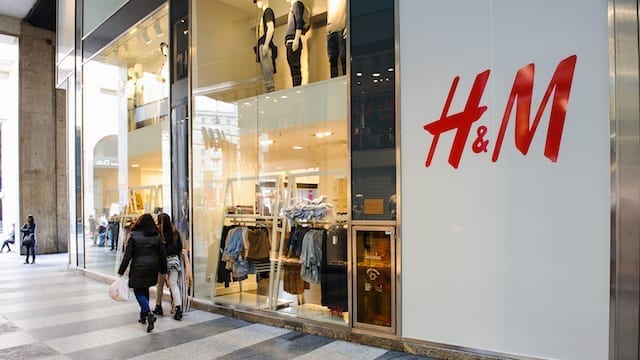
    &M has released its first collaboration with Chinese designer Angel Chen.

    The new Angel Chen x HM collection is inspired by the theme of “Kung Fu” and portrays an East-meets-West street style with a combination of vivid colors and embroidery. It sports a chic navy blue bomber jacket with dragon embroideries featuring a calligraphic “Kung Fu” design on the cuffs, while the women’s collection portrays the artist’s signature red hue with an oversized jacket and mini skirt combo that fuses both contemporary street style and Asian traditional elements.

    The Angel Chen x H&M collaboration collection will be available in selected H&M stores globally as well as its online store hm.com from September 26.

  • Program to open new rice fields in East Nusa Tenggara to continue in 2017

    Program to open new rice fields in East Nusa Tenggara to continue in 2017

    Head of the East Nusa Tenggara provincial Agriculture and Plantation Service Yohanes Tay Ruba said the province would continue the program of opening of new rice fields in 2017.

    “Currently we are conducting rationalization and preparation of the program for the opening of new rice fields to be implemented in 2017,” Yohanes said here on Saturday.

    He said implementation of the program this year could not be carried out as expected over delay in the disbursement of General Allocation Fund (DAU) from the central government.

    Until now 1,960 hectares of new rice field had been opened or falling short of the target of 2,709 hectares for this year, he said.

    Around 224.22 hectares of the new rice fields have been ready for cultivation, he added.

    “We hope the rest could be carried out with work starting early next year, that farmers could increase their rice production,” he said.

    Yohanes delay in the implementation of the program was recorded in a number of areas including in the regencies of Kupang, Sumba Timur, and Flores such as regencies of Ende and Manggarai Barat.

    The regency of Ende was to have Rp11,538,089,786 in the delayed DAU each month from September to December.

    Kupangs delayed share of the DAU in the same periods was Rp25,466,413,828; and the regency of Sumba Timur was to have Rp11,532,251,253 and the regency of Manggarai Barat was to receive a disbursement of Rp18,071,885,782 each month during the four months period.

    Yohanes said the opening of new rices fields in NTT so far had been carried out through cooperation with the military with solders sent to the fields together with the government elucidation team to encourage the farmers in expanding their rice fields.

    “We appreciate the assistance offered by the military for the farmers to increase their productivity,” he said.

    He said he hoped such cooperation would continue that when the budget fund had been available the program to open more new rice fields could be implemented as expected.

    Earlier this week President Joko Widodo said the country would not import rice in the rest of this year.

    Agriculture Minister Andi Amran Sulaiman has said there would be no scarcity in rice supply in Indonesia as the country is predicted to have a surplus of 400,000 tons in production this year.

    The minister said based on a survey by the Central Bureau of Statistics (BPS) the countrys rice production rose significantly this year.

    The survey said planting areas in July-September, 2016 reached 1 million hectares up significantly from an average of 500,000 hectares in earlier years.

    Based on an assumption that a hectare would turn out 6 tons of unhulled rice, the countrys production of unhulled rice would total 6 million tons or equivalent to 3 million tons of milled rice as against a monthly consumption of 2.6 million tons.

    Therefore, the countrys rice stock is sufficient despite the extreme weather such as foods that damaged rice crops in the country this year.

    “In addition, irrigation systems have been repaired in various areas in Indonesia in cooperation with the Public Works Ministry,” Andi said.

  • President Jokowi to Inaugurate 5 Ports in Eastern Indonesia

    President Jokowi to Inaugurate 5 Ports in Eastern Indonesia

    Having inaugurated Wasuir Port at Wondama Bay, Teluk Wondana District, West Papua Province yesterday, President Joko Widodo today, Wednesday, April 6, 2016, will inaugurate five ports which connect Eastern Indonesia regions.

    Head of Transport Department of North Halmahera Yudihat Noya said that five ports to be inaugurated by Jokowi today is centered at Tobelo Port, North Halmahera, North Maluku Province. “All was built with multi-year budget amounted to Rp739 billion,” he said.

    Tobelo Port which has started to be built in 2008 is planned to be made as passenger and cargo port. The construction include Cargo General Pier and Passenger Pier.

    Other port to be inaugrated is Galela Port, which construction was started in 2006 and completed in 2015 with total budget of Rp35.4 billion. The port is made along with a pier, a causeway and a trestle.

    Galela Port is a local passenger port which is also located in North Halmahera District and functioned as a sea transport base for North Halmaher District residents. “Tabelo Port and Galela Port connect five districts in Halmahera Island,” Yudihat said.

    Jokowi will also inaugurate Tutu Kembong Port in Saumlaki Island, West Maluku Tenggara. The port is built to support passenger transport and local community economy.

    Other two ports are Wonreli Port and Teor Port. The two ports are also built for local passengers in Maluku waters. The functions of the two ports will be improved with the construction of container terminals in 2035.