Retail News CRM

Tag: facebook

  • Brand building shifts from billboard to online

    Brand building shifts from billboard to online

    From billboard and television, the Philippine market is slowly shifting to online in brand building, capitalizing on the growth of mobile penetration and the use of electronic commerce.

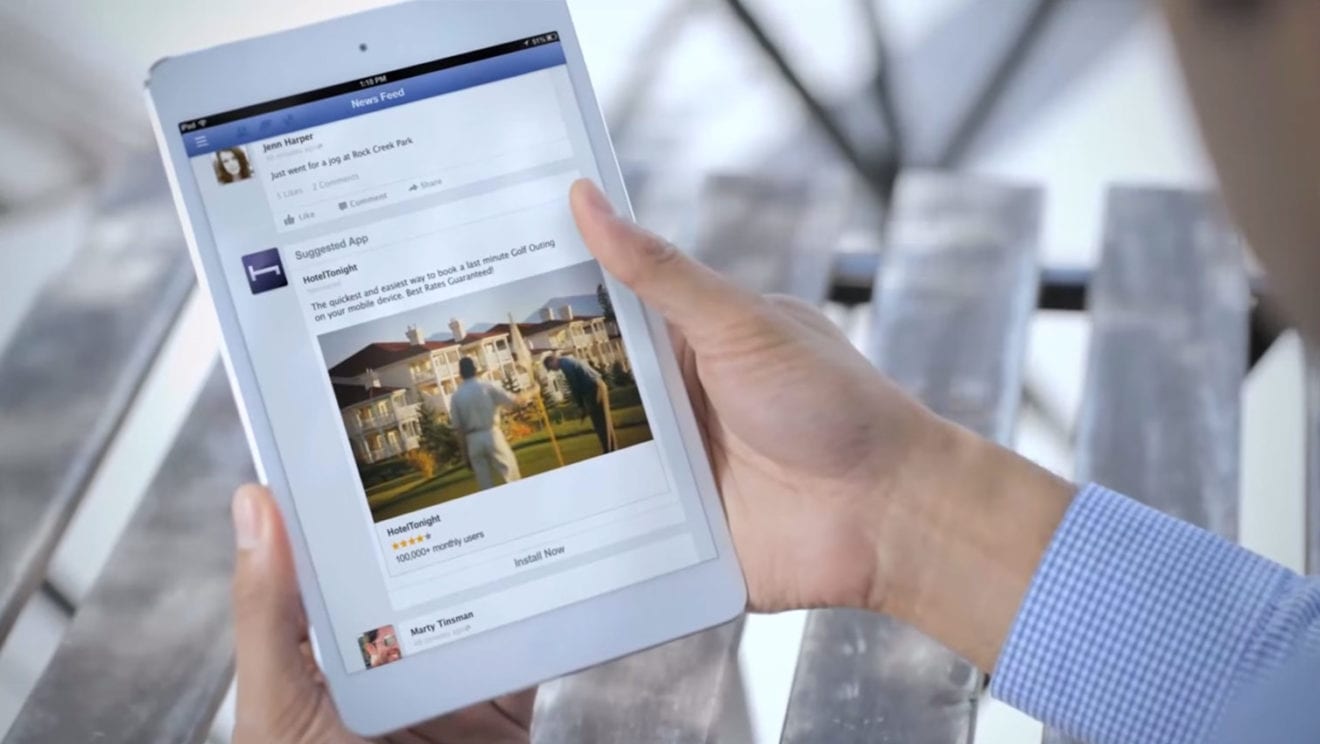
    According to leading global market research and insights company TNS, brands in the Philippines have leveraged on the social media-savviness of the Philippine market in pushing their brands which are now using Facebook twice as much in the previous year to push their products.

    Anne Rayner, global head of Communications Research, in a press briefing said electronic commerce is picking up and growing three times as fast as the global average.

    Rayner said 81 percent of brands on Facebook in the Philippines use this medium to market their products, which is almost double than the 47 percent global penetration.

    In the Philippines, Rayner said, 11 percent of purchases are now made via mobile.

    The study also showed that almost two thirds of product research (62 percent) is happening online in the Philippines – and much of this is happening in-store while people shop.

    “This highlights just how vital it is for retailers and businesses to understand which touchpoints are most important to driving sales, as it may not be those in the physical store,” Rayner said.

    Rayner clarified though that the Philippines remains a TV-heavy market but that studies would indicate a shift to mobile as half of the population are connected.

    “This has allowed them to increasingly watch videos on their smart phones during peak TV times in the early evenings. In one year, the Philippines emerged from the most TV-heavy market to just in the top 10. Brands should embrace on how to reach consumers,” Rayner said.

    “In the Philippines, it’s all about mobile and Facebook is very critical. Social media now looks like TV,” she added.

    When it comes to customer relations management, Rayner said, Filipinos prefer social media rather than call centers such that it would be better to set up service centers to handle after-sales.

    Rayner also said billboards in the Philippines are overused and brands should use them for deliberate, specific strategies on top of other media, depending on the products.

    A study done by TNS a few years ago showed that the Philippines was a country of billboards, but Rayner said this has changed.

    “Studies show that from telcos to infant nutrition, billboards are not a good value for money, just because brands become visible (through billboards) does not mean they are impactful. Billboards just become wallpapers,” Rayner added.

    Car dealerships, for example, use TV and billboards to drive sales.

    E-commerce in the Philippines in 2015 grew nine percent, three times faster than the global average, with 20 percent of Filipinos buying through ecommerce, half of which are via mobile.

    Rayner said the Philippines has overcome the accessibility challenge in e-commerce but trust issue remains a hurdle.

    She said most e-commerce purchases are for travel.

    According to Rayner, growth of e-commerce in the Philippines is hampered by the fact that most fast-moving consumer goods are purchased on last-minute, where Filipinos go to their old reliable retail outlets for their purchases.

    The TNS study revealed thaton average, Filipinos use five different touchpoints before making a purchase. Touchpoints are the different ways that consumers interact with a business.

    From traditional methods like customer service call centers to newer interactions like social media, the array of touchpoints now available for businesses has completely changed the marketing landscape.

  • Facebook, Microsoft team for mid-Atlantic cable

    Facebook, Microsoft team for mid-Atlantic cable

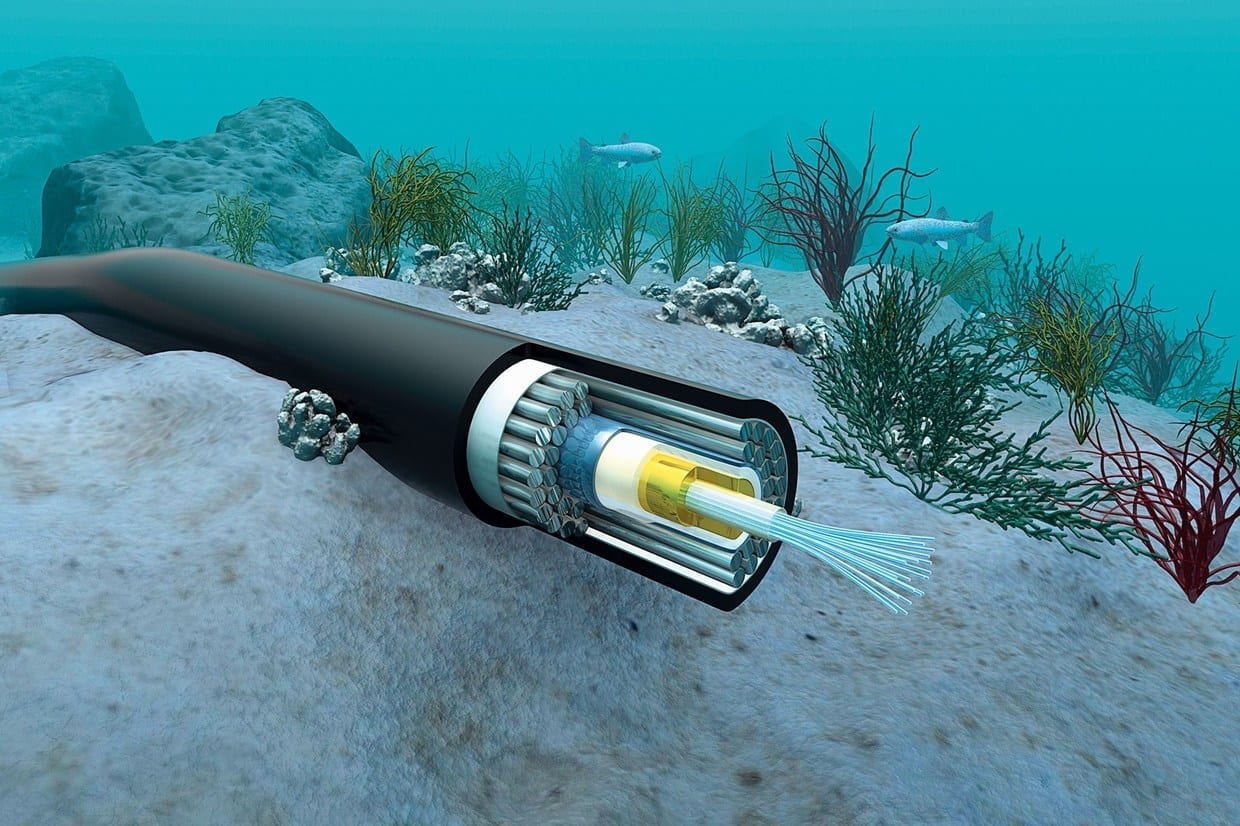
    On what do Facebook and Microsoft agree? Apparently, on the need for a new transatlantic cable between Spain and Virginia in the US. The MAREA cable system was announced yesterday, with the software and social networking giants working with Telefonica’s Telxius subsidiary to make it happen.

    MAREA will supposedly feature 8 fiber pairs and have an initial theoretical capacity of a whopping 160Tbps. It will stretch 6,600km and land in Bilbao in northern Spain and in Virginia Beach. That route takes a less popular southern route to Europe a bit north of the one taken by the aging Columbus system.

    The Virginia Beach landing can be better understood if one recalls that Telefonica’s BRUSA cable hooking up North and South America will also be landing there.

    Just last week we learned that Telefonica has already bought a 3.5 acre site there for a 20,000 square foot building for its cable landing station and data center there. In addition, fiber operators like SummitIG and Lumos Networks have been adding fiber infrastructure throughout southern and central Virginia that will surely help with the backhaul.

    Telxius will operate and manage the cable system itself. Telefonica launched Telxius as its infrastructure arm earlier this year, shifting ownership of towers, subsea cable systems, and other assets into it.

    They hope to monetize those assets in the wake of the blocking of the sale of O2 in the UK, and supposedly this week added several banks to prepare for a $4 billion to $5 billion IPO. That could happen as soon as July.

    This past year has seen the most submarine activity ever from the content guys, and they are increasingly taking the lead on new cable systems they feel are needed to meet their own bandwidth demand.

    Construction of the MAREA cable system is expected to begin in August and finish in October of 2017, although I’m sure they’ll have to time the actual cable laying operations around the Atlantic hurricane season.

  • New finger ‘food’ from KFC Hong Kong

    New finger ‘food’ from KFC Hong Kong

    Advertising agency Ogilvy & Mather (Ogilvy) has pushed the boundaries of creativity by launching two edible nail polishes for KFC Hong Kong, bringing the fast-food giant’s tagline “Finger Lickin’ Good” to life.

    Working with food technologists at flavour giant McCormick, which makes KFC’s 11 secret herbs and spices mix, Ogilvy used natural ingredients for the edible nail-polish flavours, basing them on the brand’s popular recipes, Original and Hot & Spicy.

    6f140136666203.572492e5d5713-1074x787

    Packaged in a designer bottle and box, the product has been teased on social-media platforms, including Facebook and YouTube, for the past two weeks ahead of an exclusive launch and tasting.

    An online music video has also been released, asking Hong Kongers to choose which flavour to go into mass production.

    KFC Finger licking good nail polish 2

    Ogilvy creative director John Koay says the recipe for the nail polish was designed to hold the flavour yet also dry with a glossy coat similar to normal nail polish.

  • Mobile ads help Facebook double Q4 profit

    Mobile ads help Facebook double Q4 profit

    Facebook last week revealed another quarter of soaring revenue and profit for the last quarter of 2015, thanks to the popularity of mobile ads on its social networking platform.

    The results come on the back of sales in Q4 2015 that rose 52% to $5.84 billion from a year ago, which contributed to profit increasing to $1.56 billion. The profit is more than double the $701 million from just a year ago.

    Mobile ads made up 80% of the company’s total ad business for the fourth quarter of 2015 compared to just 23% in the same quarter in 2012.

    “Our strategy is working and we have many more opportunities ahead,” said Mark Zuckerberg, who is back after taking two months to spend time with his newborn daughter. “So we’re going to continue investing to deliver more great results, over the long-term.”

    The company now has 1.59 billion users that log into Facebook each month, which is likely to further boost the company’s sales and revenues in the months and years ahead.

    Marketers are heading to Facebook due to its ability to get well-targeted ads that are relevant. By making sure that ads blend in with what people would like to see in their feeds anyway, Facebook was able to boost the percentage of marketing messages in the latest quarter.

    While it is not known how much of Facebook’s Q4 sales came from the Asia Pacific (APAC), we did observe a sharp increase in Facebook spending in the region last year as advertisers spend more on Facebook ads than before.

    The CPM (Cost per 1,000 impressions) for the APAC region grew 66% quarter-over-quarter in Q3 last year, more than the EMEA (27%) and the Americas (13%) regions.

  • M&M’s take over DFS’ HKIA shop-in-shop area

    M&M’s take over DFS’ HKIA shop-in-shop area

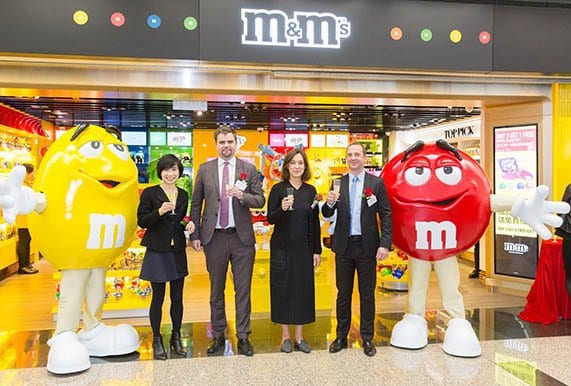
    M&M’S have taken over a new dedicated 35sq m shop-in-shop concept at Hong Kong International Airport, which Mars International Travel Retail have launched jointly with DFS Group in Terminal 1 – close to Gate N28 on the central concourse.

    “Asia is one of the fastest-growing regions for MITR, so we are extremely pleased to be opening this new M&M’S Travel Retail shop-in-shop at DFS, Hong Kong International Airport,” said MITR Regional Sales Director, Christophe Bouye.

    “By offering passengers outstanding retail experiences that first and foremost will make them smile, we are confident it will increase shopper engagement and encourage conversion. Through placing consumers in a smiling frame of mind, we believe that this will not only benefit the confectionery category, but all sectors of the travel retail offer here in Hong Kong.”

    The interior of the store features an ‘interactive’ retail theatre, with the ‘focus on fun’, says MITR, in line with its ’Smiles’ campaign which is a breath of fresh air in many DF&TR locations today.

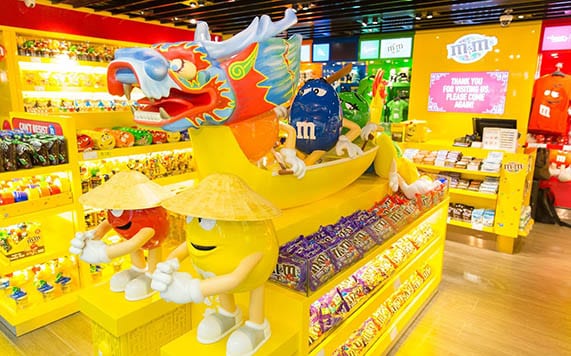
    MM's ride the Dragon Boat

    Personalised and tailored specifically to reflect a taste of Hong Kong, the shop combines a sample of local tradition with a replica of a dragon boat, which is both guarded and manned by smiling red, yellow, blue and green M&M characters. This is centrally located in the store, against a sea of wall and floor mounted brightly-lit yellow display fixtures – featuring a full range of M&M’s products.

    The store also carries destination merchandise, such as Hong Kong Travel Collection packs of Snickers, Mars and Twix, plus a Hong Kong-themed M&M’S dragon boat box. Core brands of Snickers, Mars, Celebrations and Twix are also offered in individual packs.

    The partners are also promising a strong social media campaign from DFS. This will utilise the WeChat, Facebook and Instagram platforms to alert interest customers to the existence and location of this new outlet before they arrive at HKIA. They also add that as an incentive, a free gift awaits the first 500 visitors, while all customers will be encouraged to take photos in the store and post them to friends on their mobile phones.

    Thierry Canivet, DFS Group’s Senior Vice President, Food and Gifts said the retailer is ‘thrilled’ with the new shop-in-shop concept: “With the shop-in-shop’s localised format, exclusive product offering and innovative approach to engaging customers, we’re confident travellers will love this addition to DFS, Hong Kong International Airport.”

    MITR’s Christophe Bouye added that the company is very grateful to DFS for the opportunity to create such strong branding for M&M’S. He said it is a good opportunity for both existing and new shoppers to discover a new experience, to interact with the M&M’S characters and exercise impulse purchasing.

  • Virtual reality in retail stores

    Virtual reality in retail stores

    Virtual Reality, as a concept, has been around for over 50 years.

    In the beginning, it was literally the stuff of science fiction.  Then in the early 90’s it actually became reality, when physical prototypes were developed, using the modern technology of the era.  The results were underwhelming – imagine pixelated graphics and heavy, nausea inducing headsets. The concept lay dormant for 20 years before anyone thought to revisit its feasibility.

    That person was Palmer Luckey, the young inventor and founder of Oculus VR. What he discovered is that without anyone realising it, technology had quietly caught up with the requirements of VR. There were now low-latency head orientation sensors and small, high-refresh rate OLED displays which didn’t exist just five years ago.

    Using these off the shelf parts, he constructed a rudimentary hardware proof-of-concept which delivered an immersive experience far beyond what had been seen before.

    From this initial prototype, Oculus was founded, bringing on board many high profile experts in the field of computer graphics, alongside millions of dollars in funding. Their inaugural consumer VR product is about to be released to the public, and many smart people consider this to be a watershed moment.

    Will this be the event that introduces practical VR to the masses?

    Oculus (now owned by Facebook) is leading the way, but Apple, Google, Microsoft and Sony are all working on their own implementations of VR. There’s a full-on VR technology arms race happening, with the usual suspects involved.  They recognise the huge potential of the medium, and the unique ways it can complement their existing product offerings.

    VR 2.0

    This new generation of VR technology is in its infancy, and as with any nascent platform, pundits try to predict the types of experiences it will enable. Stereotypically, new mediums are often projected (interpreted) through the lens of the incumbent platforms which precede it.

    The first automobile was considered a “horseless carriage”. The first motion picture content was essentially just televised theatre. Simply re-imagining the experience of an old medium through a new one may be the path of least of resistance, but it ignores the unique elements of the new.

    So the theory goes, in order to fulfill its true potential, a new medium needs to abandon previous biases and embrace the characteristics and constraints which are unique to it.

    But does this calculus apply to VR? Perhaps not. Unlike all previous mediums, it is has no baked-in constraints. It is not simply a proxy for storytelling or communication. Its ambition is to replicate the reality we natively experience. It is, by design, the last medium.

    The obvious question becomes, what are the scenarios for which diving into an alternate reality becomes preferable to the “real” reality someone is experiencing. As mature as the underlying technology becomes, VR, for the foreseeable future, will forever be chasing the tail of “real life”.

    So what is the individual incentive to temporarily replace what we already (if we’re so lucky) get for free? Understanding the motivations that drive these virtual experiences can uncover the opportunities and jobs to be done of the medium.

    Applications

    In the context of VR, the virtual “reality” is simply “content”. As with all previous mediums, the success of this one will be intrinsically tied to the abundance and quality of content created for it. In this respect, authors and the tools they use to create with will be just as important as the technology that audiences use to consume with.

    These creation tools are also nascent, and consist of both hardware and software solutions.  Let’s explore a potential use-case for this technology within the realm of current domains.

    Virtual reality in retail: eCommerce and virtual stores

    A common current trend in the eCommerce space is the realisation that an online presence alone is not enough to deliver the ideal consumer experience. Even Amazon, the largest pure-play online commerce company has recently opened a “bricks and mortar” physical presence near its headquarters in Seattle.

    What is the impetus for taking this step “backwards” into the 20th century? Well, these companies have discovered that even with an (essentially) limitless online catalogue, the experience of browsing their catalogues online doesn’t compare to the act of literally walking down the aisles of a physical store. It is no substitute for the physical discovery process we take for granted.

    This applies not only to the type of merchandise that Amazon became famous for, like books, but especially so for more visual products like clothing and fashion. There is no substitute for the tactile experience of wandering through a curated store.

    But providing a physical presence requires sacrificing one of the key advantages of online commerce; having an effectively infinite reach, with the ability to target any consumer, wherever they are, independent of their physical location. Reaching global penetration at this physical scale is beyond the reach of all but the largest retailers.

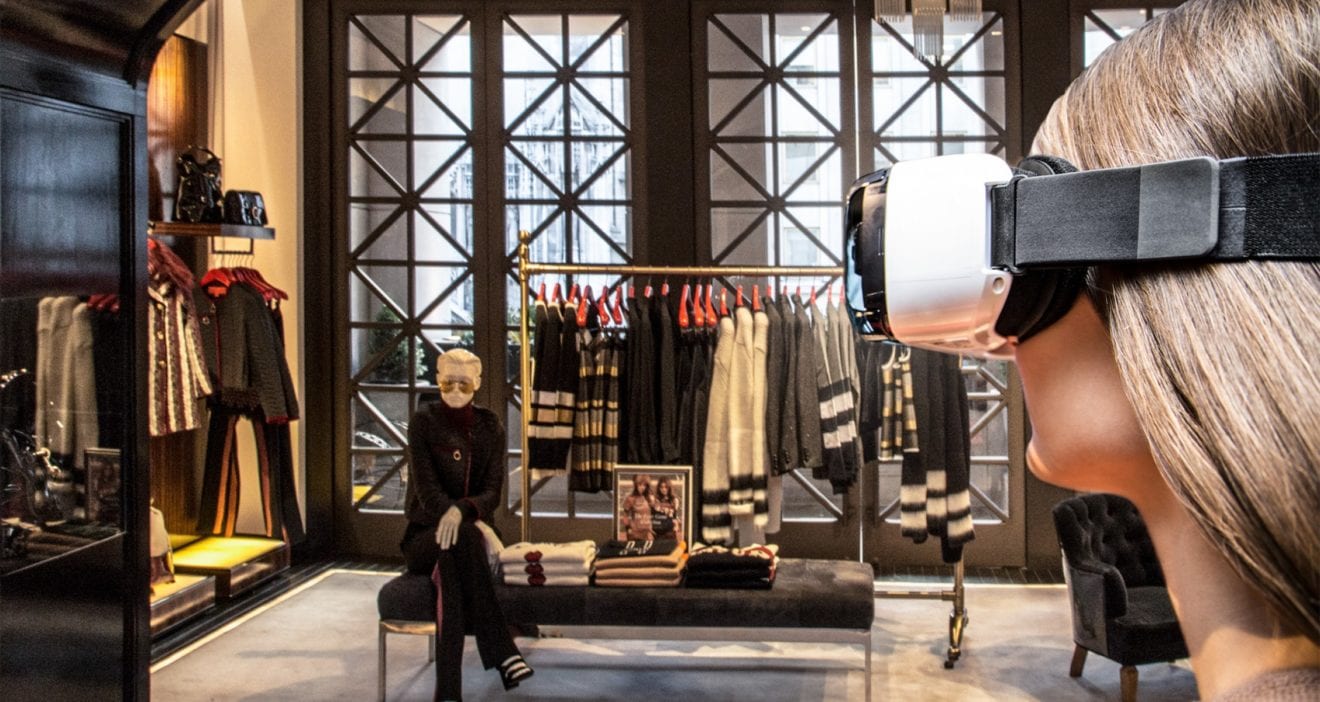
    Imagine consumers using VR to browse a virtual physical store, representing the catalogue (or a subset of) the online inventory. Even brands that have an existing physical retail footprint would benefit from the ability to amplify this bricks-and-mortar experience across markets they don’t have the scale or reach to address.

    Sizing has been an eternal struggle for online clothing retailers and consumers alike. How to know if the shirt you’re purchasing online will actually fit properly when it arrives?  Sizing charts are not standardised, and even if they were, there is no single reference body type to target a perfect fit.

    So how do you try before you buy? A virtual fitting room could come very close to replicating the experience of trying on clothes in a real physical fitting room. Imagine associating detailed physical dimensions of your body with your online shopping persona.

    Using this information, alongside similarly detailed sizing information for the individual clothing items could let you try on pieces of clothing in a virtual mirror. As you raise your arms or tilt your hips, you could see the fabric as it contours and hangs off your virtual body.

    Future opportunities

    This is just one creative application of VR hardware and virtual environments. The potential is almost limitless, and there isn’t a field or industry that won’t be touched in some way by this technology.

    While the incumbent hardware/software companies have all planted their stakes in the ground, there will be massive opportunities for all players in the ecosystem, especially content creators who understand how to create experiences on this new canvas.

    Once again, this illustrates the competitive advantage which exists for companies who can master the intersection of design and technology. Organisations who successfully combine these two disciplines will be in a unique position to benefit from the enormous future demand for virtual experiences.

    written by Marc Lamothe, Technical Director at Start Hong Kong

  • $100m deal for RedMart?

    $100m deal for RedMart?

    A $100 million investment aimed at funding pan-Asian expansion is on the cards for Singapore’s online grocer RedMart.

    Discussions involving the Series C investment are said to be at an advanced stage, reportsTechCrunch, citing two sources. While closure is expected in this first quarter, the grocery company has not issued any public comment on the development.

    Launched in late 2011 by Vikram Lupani, Rajesh Lingappa and Roger Egan, the venture introduced online and on-demand shopping in Singapore. So far, the company has raised $55.1 million from 19 investors. These include, according to Crunchbase, gaming company Garena, SoftBank Ventures Korea, Visionnaire Ventures and Facebook co-founder Eduardo Saverin.

    In August, RedMart raised a $26.7 million bridging round from its investors.

    Potential targets for RedMart’s expansion include Hong Kong and Jakarta, reports DealStreetAsia. However, the firm wants to establish its market leadership in Singapore, where Egan estimates the grocery market to be worth $16 billion a year. The company’s strategy is to maintain its own logistics system and warehouses so as to have greater control of the customer service cycle and enable rapid expansion later into other verticals.

    RedMart’s Asian competitors, HonestBee and HappyFresh, have raised significant equity financing and have adopted a model relying on third-party logistics and delivery services while expanding across South-east Asia and establishing a presence in Hong Kong and Taiwan, says DealStreetAsia.

  • Smartphones outpace tablets in Asian eCommerce

    Smartphones outpace tablets in Asian eCommerce

    For the first time, 34 per cent of browser-based online transactions globally are now made on a mobile device, compared to slightly more than 30 per cent last quarter.

    And smartphones are starting to outpace tablets.

    These were key findings of the fourth quarter edition of the Mobile Payments Index by Global payments technology company Adyen, which tracks mobile payment data from browser-based transactions across its client base and monitors Asian eCommerce shopping patterns.

    It also found that many consumers in Asia are increasingly using mobile devices to shop online. This is being driven particularly by such major payments methods as Alipay, JCB and UnionPay. JCB had the highest share (54 per cent) of mobile payments on the Adjen platform, up from 47 per cent the previous quarter. Alipay increased to 44 per cent (up from 35 per cent) while UnionPay reached 31 per cent (from 23 per cent).

    “The checkout stage of the shopper journey is not the end, but the beginning of an on-going relationship with the consumer,” says Adyen Asia Pacific president Warren Hayashi. “Merchants with a frictionless mobile checkout experience are driving repeat traffic, especially in Asia.”

    For the first time, the index shows that smartphones have overtaken tablets as the preferred device for online shopping – 17.5 per cent on smartphone against 16 per cent on tablet, compared to 14 per cent and 17 per cent respectively the previous quarter.

    When it comes to mobile payments globally, the trend to use smartphones rather than tablets continues for the 10th consecutive quarter. Last quarter this share was up 2 per cent to 68 per cent on smartphone versus 32 per cent on tablet.

    Smartphone use far outweighed tablet in Asia, with 29.5 per cent of online payments on a smartphone compared to 4.5 per cent on a tablet.

    In terms of average transaction value, iPad led the way for the first time at $107, edging out not just smartphones but also desktop/laptop, the traditional leader (at $106). Following were Android tablets at $86, iPhone at $83 then Android smartphones at $73.

    Adyen has been tracking the evolution of mobile payments since June 2013. The index is based on its global browser-based mobile payment transaction data. It does not track in-app mobile payments. With its headquarters in Amsterdam and San Francisco, Adyen serves more than 4500 businesses, customers including Airbnb, Booking.com, Crocs, Dropbox, Facebook, KLM, Mango, Netflix, Spotify and Yelp.

  • Origami launches payment service

    Origami launches payment service

    Origami, a social eCommerce startup for fashion and lifestyle products, is entering the offline payments fold.

    The startup, one of Japan’s most-funded, has announced the beta release of ‘Pay with Origami’ and ‘Shop Reward Program’. The new services allow existing users to pay for items at bricks-and-mortar retailers with credentials stored in the Origami app. They will also help retailers connect the dots between their customer’s online and offline purchases, data that can be used to provide special perks and incentives for repeat shoppers.

    Founded in February 2012, Origami unveiled its online-to-offline (O2O) mobile shopping app in April 2013. Users can follow their favorite brands within the app and receive updates when new items are introduced. It also recommends lesser-known brands and boutiques based on existing likes and purchase history. Users can share their likes and follows on social media, creating free advertising for the startup’s partner merchants.

    Approximately 100 influential brands – including Hankyu Men’s Tokyo, Urban Research, Head Porter, Toms, and MoMA Design Store – are scheduled to join Origami’s payments beta.

    “I created Origami to become a fintech company, but we decided to start with fashion- and lifestyle-focused mobile commerce” Origami founder and CEO Yoshiki Yasui told Tech in Asia.

    “They already have the followers on Facebook and Twitter, they have the best retail locations, and they set the benchmarks for other brands to look up to.”

    With its focus on O2O from the outset, it makes sense for Origami to offer an offline payments solution that keeps users and merchants within a single ecosystem. But becoming a force in Japan’s crowded offline payments space will be easier said than done.

    When you step up to a cash register in Japan, you’re often met by one or more contactless payment terminals for a seemingly endless variety of RFID-compatible cards and mobile phones (though NFC options remain slim to none). You can use your subway pass to buy a bottled water or your flip phone to buy a Big Mac, for example, but these options are largely limited to convenience stores and fast-food chains.

    Fashion retail is almost entirely cash or credit, and nearly 40 per cent of all consumer transactions in Japan are done with cash.

    ‘Origami for Business’ will use an iPad-based payment terminal without replacing the merchant’s existing POS systems. When an Origami user wants to make an in-store purchase, they simply scan a QR code with their smartphone or enter a six-digit pin code. Since Origami was born as an eCommerce platform, Yoshiki says that many users’ credit card details are already registered with the app.

    Pay with Origami and the startup’s new reward program are currently available in beta for iOS, with an Android version in the works. Origami accepts Visa and MasterCard for in-store payments, with more credit card options coming soon. They charge partner shops 3.25 per cent per transaction.

    The startup’s two biggest advantages over existing offline payment options will be that captive app audience and its founder’s connections in the financial world – Yoshiki was an investment banker and venture capitalist before becoming an entrepreneur.

    “Payments and eCommerce are the same, the only difference is online versus offline,” Yoshiki said.

    “If you buy three items from a retailer’s online store, then the fourth purchase is made in-store, you get treated like a first-time customer. That’s just wrong.”

    According to Techlist data, Origami is among Japan’s top-10 most highly-funded startups.

  • Facebook driving Vietnam eCommerce

    Facebook driving Vietnam eCommerce

    Once blocked in Vietnam, Facebook is now the basis of a thriving eCommerce industry there.

    Although Vietnam was ranked as the smallest B2C eCommerce market in Southeast Asia in terms of sales two years ago, it is now growing at one of the fastest rates in the region, according to a report by Hamburg-based secondary market research company yStats.com, titled “Vietnam B2C eCommerce Market 2015”.

    The report says close to 90 per cent of online buyers of fashion products in Vietnam made at least one online purchase via Facebook. The shopping orders of items displayed via this social network are accepted via Facebook messages and phone calls, and paid for mostly by cash on delivery.

    “Growing internet and online shopper penetration, as well as increasing online spending per shopper, are driving up online retail sales in Vietnam,” said a spokesperson for yStats.com.

    “In the next five years, the Vietnamese B2C eCommerce market is expected to experience strong double-digit growth rates.”

    Improvement in the two important infrastructure factors, payment and delivery, could give a further boost to B2C eCommerce in Vietnam, says yStats.com.

    “Last year, close to two thirds of eCommerce websites in Vietnam received complaints from online shoppers regarding delivery times. Furthermore, nearly half of internet users who do not yet shop online admitted to not having a credit card to pay in online stores, while cash on delivery was by far the leading payment method among current online shoppers.”

  • Facebook, Twitter to drive online shopping growth

    Facebook, Twitter to drive online shopping growth

    New data from Juniper Research predicts global eCommerce sales will reach $1.7 trillion this year – up more than 17 per cent on last year.

    And while recent growth has been buoyed by expansion of public Wi-Fi networks and 4G, the next round of growth will be driven by social media companies creating direct sales platforms.

    The new research, Mobile & Online Purchases: Cards, Carrier Billing & Third Party Payment Platforms 2015-2020 concludes that Twitter, Facebook, Pinterest and Instagram have already launched ‘buy’ buttons on their mobile apps.

    “Such players are also likely to enhance their sales prospects through strategic retailer partnerships, with Twitter already enabling users to link their accounts to Amazon,” the report said.

    The research also finds that online retailers are increasingly seeking to reduce time-to-consumer by launching same-day delivery, while ‘bricks and mortar’ stores now widely offered next-day in-store collection – often charging a premium for this option.

    But Juniper cautions that retailers need to deliver a consistency of message, branding and shopping experience across all channels.

    “Integration between in-store and online is critical if retailers want to maximise the extent to which they can identify a unique individual’s omnichannel shopping habits,” the report said.

    Author Dr Windsor Holden said the key is to ensure consumers are allowed to choose their own path to purchase rather than have it effectively mandated by channel limitations.

    The report also concludes that smartphones will account for more than 40 per cent of online transactions by 2020.

    “While carrier billing should provide content providers with a key mechanism for monetising digital content, its use for buying physical goods is likely to be limited by comparatively higher share of revenues demanded by network operators and billing platforms.”

  • Indosat, Facebook launch Internet.org in Indonesia

    Indosat, Facebook launch Internet.org in Indonesia

    Ooredoo Group’s Indonesian subsidiary Indosat and Facebook have jointly launched the Internet.org initiative in Indonesia. Facebook’s Internet.org seeks to make internet services more accessible through free internet access to a set of basic services, including health, education, social media for communication and news.

    In Indonesia, Indosat will provide internet access at no charge through the Internet.org services both for IM3 & Mentari (prepay customers) and Matrix (postpaid subscribers). Customers will be able to access general information on Ask.com and Wikipedia; get news updates on Merdeka.com & KapanLagi; stay up to date on sports through Bola.net; get education info on Kelase; as well as check the weather and climate through Accuweather; read stories via Wattpad; check employment opportunities on Jobstreet; sell items on OLX & Tokopedia; learn about women’s issues on BabyCenter, Mama, Girl Effect websites; and access health information on UNICEF’s Facts for Life.

    Indosat customers in Indonesia can access these services via www.internet.org or by downloading Internet.org app from the Android playstore. The service will be available in English and Bahasa Indonesia.

  • Skilled Opinion: Making social media work for SMEs

    Skilled Opinion: Making social media work for SMEs

    In at present’s super-connected, always-on period, companies of just about any measurement can attain markets and clients past their borders with unprecedented ease. For a lot of SMEs, the speedy progress of cross-border e-commerce – tipped to be value USD2 trillion this yr within the B2C area alone based on Bigcommerce – makes the chance too worthwhile to disregard. In accordance with Aaron Levie, the CEO and co-founder of Field, a cloud-based on-line storage firm in San Francisco, “A producing start-up in Boston can join with a beforehand impossible-to-reach provider in China; a advertising company in New York can instantaneously collaborate with a shopper in London; a providers agency in France can have software program developed in India.”

    In lots of respects, know-how acts as the good leveler, opening up international commerce that was as soon as the unique protect of huge multinationals. SMEs on eBay are virtually as more likely to export as giant companies, based on Joshuta P. Meltzer from his ebook Utilizing the Web to Promote Providers Exports by Small- and Medium-Sized Enterprises. Nevertheless, the Seizing Cross-Border Alternative by Forrester Consulting believes that SMEs nonetheless should grapple with challenges that their bigger rivals do not face. Servicing a worldwide buyer base means overcoming issues corresponding to time zones, and language and cultural nuances. Small companies not often have the time or assets to spend money on outsourced customer support help, and a few are discovering it extra environment friendly to serve clients by way of social media platforms: one LinkedIn research from 2014 revealed that 81 % of North American SMEs use social media.

    With out the massive devoted digital and social media workforce that many giant manufacturers have, even this will appear daunting. Nevertheless, a couple of easy ideas can generate outcomes for SMEs that make investments the required effort and time.

    Construct a following. Probably the most finely-honed messages and delightful content material will not have a lot influence if solely two dozen social media “followers” ever get to see it. Corporations that transfer into social media want to make sure that they’ve a enough base of followers for his or her social platforms to be an efficient channel. UK-based on-line gaming firm Betfair.com achieved this by establishing an lively Twitter presence in 2009 with frequent updates on all kinds of sports activities and witty, artistic content material that’s related to its followers (who as we speak quantity virtually 120,000 individuals). Constructing a following might imply subsidiary investments – for instance, in promoting. LinkedIn, Fb and Twitter all permit corporations with small budgets of just some US dollars per day to promote by way of recommended posts, beneficial followers and different means.

    Keep in mind, you are the beginner! Penny Energy, writer of the UK’sDigital Enterprise Britain Manifesto and founder the Digital Youth Academy, says “Should you’d simply moved in to a city or village, you would not open the door of your new native pub and shout that you are a plumber or an architect and other people ought to offer you enterprise. You’d take part with what was happening round you, chat to individuals and allow them to know what you do, in order that they find out about you once they want your service. It is precisely the identical in social media.” Present on-line communities similar to Fb pages, LinkedIn communities or Twitter hashtags within the markets an organization is making an attempt to penetrate might present the footholds it must construct a following amongst clients in new markets.

    This was the expertise of Herschel Provide Co., a Canadian producer of backpacks and outside items. By taking the time to study every social platform, the corporate was far better-positioned to attraction to followers on every. “Totally different social networks appeal to totally different audiences,” says Allison Butala, Herschel Provide’s social media supervisor. “Our Instagram account attracts aspiring photographers; our Pinterest following caters extra in the direction of females; Twitter attracts these concerned about our product releases and information tales. Understanding this, we share related content material and develop distinct communities.”

    High quality, not amount. A couple of thousand followers who’re genuinely gained over by your providing are much more priceless than tons of of hundreds who “appreciated” a Fb web page merely to participate in a promotion. Construct a fame for actual experience by researching the individuals and points which have the most important affect within the markets your organization is concentrating on. Use the tone and method of your standing updates to place your organization as having the identical attributes clients would worth in an actual individual – assume friendliness, approachability or a way of humour. These steps will assist your organization to develop a particular social media “voice” and stand out from the gang, in line with The Guardian article How SMEs could make one of the best use of social media.

    Discover out what works via fixed monitoring. The Guardian articles How SMEs could make the perfect use of social media tells us that there is no substitute for expertise, so you’ll want to make sure you’re monitoring the outcomes of your engagements with social media followers. Various free instruments will make it easier to do that. For instance, Socialmention.com is a web-based platform that gives real-time social media search and evaluation. It could trawl the web for mentions of your small business or merchandise. Instruments like this shortly make it easier to to develop a really feel for what techniques work greatest. Christy Ng, founding father of Malaysian shoe design SME Christy Ng Footwear, has two devoted members of employees to handle the corporate’s presence on Fb, Instagram and Pinterest. “We do all our social media administration in-house – from monitoring and listening, to deciding what content material will probably be partaking for our followers,” she says. “For instance, a variety of content material is footage of our merchandise, as a result of we all know that that is what our clients need to see.”

    Finally, social media shouldn’t be an finish in itself – the actual yardstick of success is how a lot enterprise is coming in. However by studying from the specialists, making a acutely aware dedication to social media as a gross sales or customer support channel and leveraging their inherent flexibility and adaptableness as small organizations, SMEs can get it proper and reap the advantages.

  • Emarsys brings intelligent automation to Facebook Ads

    Emarsys brings intelligent automation to Facebook Ads

    Cloud-based software company Emarsys has launched Social Ads, a new product which enables brands to target customers via highly personalized social media advertisements on Facebook, giving them another channel to engage, convert and retain customers.

    The eMarketing Suite platform already offers flexible and sophisticated customer lifecycle segmentation and campaign management on the market. With Social Ads, users can now take the target segments they use for email, mobile and web, and let Facebook build corresponding Custom Audiences from the contacts it finds. Display Ads created in the Suite CMS can then target those audiences as part of a comprehensive, multi-channel engagement strategy.

    Contacts can be added to audiences in real time and removed easily, ensuring that the Facebook Ads budget is spent effectively.

    The only data exchanged between Suite and Facebook are email addresses ensuring full data integrity while creating a 1-1 customer experience on the world’s most popular social network.
    Marketers will also have the ability to build lookalike audiences of their most profitable customers, helping extend the reach of campaigns to target prospective audiences with similar interests.

    “Facebook is already a great medium for customer acquisition, and now with Social Ads it also becomes a highly effective advertising channel for retention marketing. With so many emails remaining unopened, marketers now have an additional weapon in their armoury to target unresponsive customers and decrease churn by producing highly personalized advertisements, delivered at exactly the right time,” said Ohad Hecht, COO at Emarsys.

  • Facebook buys shopping search engine TheFind

    Facebook buys shopping search engine TheFind

    Facebook yesterday waded further into e-commerce with the acquisition of shopping search engine TheFind.com.

    “For the last nine years we’ve worked hard to bring you a shopping experience that’s easy, efficient and fun – searching all the stores on the web to find just the right products you’re looking to buy,” TheFind said in a message at its website.

    “We are now starting our next chapter by combining forces with Facebook to do even more for consumers.”

    Terms of the deal were not disclosed.

    Members of TheFind team are joining Facebook, where they plan to put their technology to work making ads at the leading social network “more relevant,” according to the post.

    The acquisition will result in TheFind.com shutting down in the next few weeks.

    Facebook has been playing catch-up regarding searching for information at the social network and becoming a middleman of sorts for online commerce.

    “Together, we believe we can make the Facebook ads experience even more relevant and better for consumers,” the social network said in statement.

    TheFind – “Everything you need when shopping to quickly decide what to buy and where to buy it” – will shutter the Silicon Valley base it has operated from since launching in 2006 and move team members to Facebook’s campus in Menlo Park, California.