Retail News CRM

Tag: FastGo

  • Taxis, ride-hailing apps hike Tet ride charges

    Taxis, ride-hailing apps hike Tet ride charges

    Taxis are refusing to charge by the meter and ride-hailing apps have doubled ‘peak hour’ prices and added surcharges as Tet draws close.

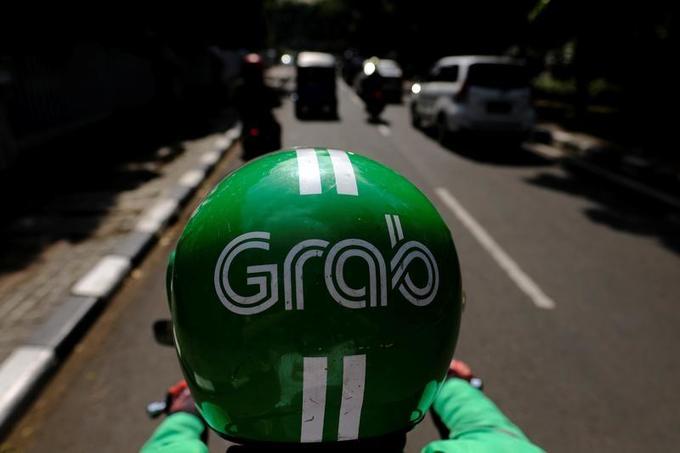
    Monday evening, five days before the Lunar New Year (Tet), Hoang Viet requested a car on ride-hailing app Grab. He was surprised to find that his 14-kilometer trip from an office block in Duy Tan street to the Gia Lam Bus Station cost VND280,000 ($12.11), more than double the usual price.

    When he tried to request rides on other apps like Be and Fastgo, he found that the prices were cheaper, but was unable to find a driver who would accept his request.

    Many others have reported running into similar situations since last week, especially during peak hours when travel demand is high as people rush to shop before Tet.

    Ngoc Mai, another resident, said it took her half an hour to call a taxi home after taking her child to a shopping center in downtown Hanoi.

    “Before opening the door, the driver asked me for VND120,000 ($5.2) for a 5-kilometer trip. This usually costs VND60,000-70,000 ($2.6-3) on regular days,” she said.

    Mai then asked three other taxis parked around the mall, but received similarly high quotes, with drivers saying they were charging more because of traffic jams around the city. Mai ended up requesting a ride on an app, but it took 20 minutes for the driver to come to pick her up.

    During the ride, Mai’s driver apologized and explained that the roads had become heavily congested over the last few days. Despite his company charging higher fees, he was making only VND1 million ($43) from less than 10 rides, while on normal days, his revenue could go up to VND1.5 million ($65), he said.

    “It’s not that we want to reject passengers, but roads are now very busy, especially in downtown streets, where it could take an hour to go just one kilometer. Yes, we have raised prices, but Grab has done so as well,” said the driver of a traditional taxi who did not wish to be named.

    Taxi prices are expected to go even higher, with most-ride hailing firms adding a surcharge to support drivers during the Tet holiday – from January 23-27.

    From Wednesday, passengers will have to pay an extra VND10,000 ($0.43) per trip on GrabBike and VND15,000 ($0.65) on GrabCar, the Singapore-based company has announced.

    Local ride-hailing firm Be also said it was adding a surcharge of VND20,000 ($0.86) per car ride during Tet peak times, 9 a.m.-12 p.m. and 4 p.m.-11 p.m.

    Meanwhile, Indonesia-based Go-Viet has said it will charge an additional VND20,000 ($0.86) for GoBike rides for the first 2 kilometers, and an additional VND5,000 ($0.22) for every kilometer after. It will also charge an additional VND10,000 ($0.43) fee per trip during the night.
  • FastGo announces Vietnam’s first helicopter ride-sharing service

    FastGo announces Vietnam’s first helicopter ride-sharing service

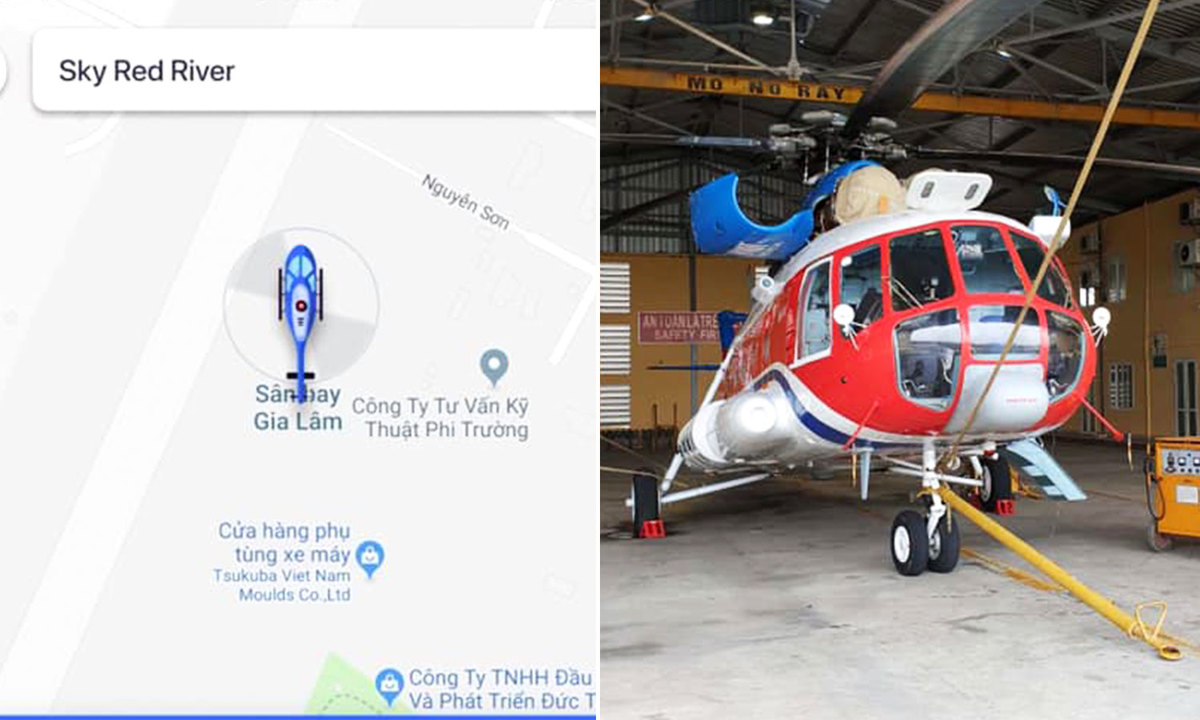
    Vietnamese ride-hailing firm FastGo plans to launch the country’s first helicopter ride-sharing service in Hanoi this month, focusing on tourism in northern provinces.

    CEO Nguyen Huu Tuat told that FastSky’s first flight will take off on April 25.

    With 12 passengers to a helicopter, FastSky will operate tours from Hanoi to northern tourist destinations such as the Red River and Ha Long Bay.

    “Apart from SkyTour, we’ll also operate SkyWedding services for wedding photography and SkySOS for emergencies in which helicopters will land on Hanoi skyscrapers to pick up patients,” Tuat said.

    Prices vary for each service. A tour will cost a minimum of $125 per person, which can be paid in installments over a period of 12 months.

    Tuat said: “We offer premium services for business people but also want everyone to have a chance to fly. FastSky will be a game-changer in the transport industry.”

    FastGo only provides technology solutions while helicopters and pilots are provided by a partner who is permitted to fly in Vietnam, he said, but declined to reveal the company’s name.

    FastGo began operations last June, a few months after Uber announced its exit from Southeast Asia.

    The company, part of Vietnamese technology start-up NextTech Group, expanded to Myanmar last December.

    It plans to launch operations in Singapore this month and in five other countries in the region, including Indonesia and the Philippines, by the end of the year.

    With almost 60,000 drivers on board, the company claims to be the second most popular ride-hailing firm in Vietnam after Grab.

  • Vietnam ride-hailing app FastGo to hit Singapore streets

    Vietnam ride-hailing app FastGo to hit Singapore streets

    Vietnamese ride-hailing firm FastGo is set to launch Singapore operations in April as part of its regional expansion plans. The nine-month old Vietnamese start-up has announced that drivers will be able to register on its ride hailing application from April 1, and customers can use the service from April 30. Diep Nguyen, country manager for FastGo Singapore, said the company’s fleet size will be at least 3,000 cars.

    Singapore is the third country in which FastGo will operate, after Vietnam and Myanmar. The firm is expected to face fierce competition from market incumbents including  Singapore’s Grab, Indonesia’s Go-Jek, as well as local startups Ryde and TADA.

    FastGo, which is part of Vietnamese technology startup NextTech Group, has plans to launch in five other countries in the region, including Indonesia and the Philippines, by the end of 2019.

    While FastGo has not yet publicised fares, but the ride-hailing app will not charge peak period surcharges, and customers can tip drivers. FastGo aims to undercut competitors like Grab and Go-Jek, who collect 20 percent of ride fares from drivers, by charging them a fixed daily subscription fee of $5 if a driver’s income exceeds $30 a day.

    However, an associate professor at the Singapore University of Social Sciences, as saying “another small entrant” will not make a difference to the local ride-hailing market, unless the new player is financially backed by a strong sponsor or a well-known Singaporean firm.

    “Other than GoJek and Grab, the other (existing) players have very small market share and have difficulty making much impact locally. The market is easy to enter but it’s very hard to get a substantial market share,” he said.

    Founded in April 2018, FastGo Vietnam JSC launched its service after Uber’s exit from Southeast Asia last June. With almost 60,000 drivers onboard, the company claims to be the second most popular ride-hailing firm in Vietnam, following Grab. After receiving an undisclosed sum in a Series A investment from venture capital platform VinaCapital Ventures in August last year, FastGo is aiming to raise another $50 million in its Series B investment round over the next few months.

    According to the company’s statements, FastGo will diversify its services to include food delivery and financial services.

  • ​Vietnam’s FastGo eyes US, Brazil expansion

    ​Vietnam’s FastGo eyes US, Brazil expansion

    Vietnamese ride-hailing company FastGo plans to enter the U.S. and Brazil this year as it seeks to quickly expand overseas. Its CEO Nguyen Huu Tuat said that he is keen to compete with other ride-hailing apps in foreign countries. “Our investors are located in the U.S. and Brazil, that’s why we have chosen those places as the next markets,” he said without disclosing who they are.

    The announcement comes a month after it expanded into Myanmar. FastGo now has over 1,000 partner drivers in Yangon and Tuat wants to have 2 million users in Myanmar this year.

    But the company wants to expand even faster to other markets this year, with Indonesia, where ride-hailing Go-Jek is based, being the first location.

    “We plan to start operating in Jakarta in March, and will also expand to Singapore this year,” Tuat said.

    The investors want the company to “go global as soon as possible,” he said to explain the rapid expansion plans.

    The company hopes to raise $50 million in the second round by June this year possibly from investors in South Korea and the U.S., he said.

    “Grab and Uber might have deep pockets, but FastGo wants to grab market share by offering better options to customers.”

    FastGo does not collect commissions from drivers but instead charges them an amount of money if they earn a minimum amount per day. FastGo also claims to not increase fees during rush hour but allows users to tip drivers.

    It became Vietnam’s first home-grown ride-hailing app last June and now has 40,000 drivers in 12 cities and provinces.

    FastGo last August received $3 million from Vietnamese fund VinaCapital Ventures, according to reports.

  • Singaporean ride-hailing startup TADA launches in Vietnam

    Singaporean ride-hailing startup TADA launches in Vietnam

    Singapore-based tech firm Mass Vehicle Ledger (MLV) launched its ride-hailing app TADA in Ho Chi Minh City Monday. HCMC is the third Southeast Asian market that the firm is entering after Singapore and Cambodia. Instead of billing commissions from drivers like other major players Grab and Go-Viet, the app aims to profit off advertising as well as fees from B2B (business to business) partners that participate in their ecosystem.

    This ecosystem will operate on blockchain technology to store records such as payments and vehicle maintenance, and will engage transport-related companies such as traditional taxis, insurance, repair services, and car dealers.

    Kay Woo, the South Korean founder of MLV, said that among its current partners are Lotte Rental, a rental company of cars and equipment belonging to South Korean conglomerate Lotte Group, local insurance provider PTI and local taxi firm Vinataxi.

    The app will also not offer promotions like its rivals.

    “They throw promotions everyday but this won’t last forever, and prices will eventually go up. We focus on stability, and without commission our prices will be lower.”

    The MLV founder revealed that over 2,000 drivers had signed up with the company. After HCMC, the firm plans to expand the app to Hanoi and Da Nang.

    TADA plans to get 25,000 drivers to register this year but has no plans to join the motorcycle segment in the near future.

    Currently, MVL is registered as a technology company in Vietnam. Operations manager Peter Nguyen explained that because it does not charge drivers, it is only a technological solution. However, the company is willing to comply with transport tax and regulatory guidelines should they apply, he said.

    TADA, which means “let’s ride” in South Korean, opened in Cambodia just last month, and in Singapore in July 2018.

    MVL Technology Co., Ltd, formerly known as MVL Foundation Pte. Ltd, was founded in March 2018 in Singapore by Kay Woo.

    It aims to connect different sectors in the car industry.

    TADA has over 25,000 registered drivers and made more than 970,000 trips in the last 6 months.

    Vietnam’s ride-hailing market has seen new entrants after Uber’s departure early this year, including Vietnamese firm FastGo, GoViet – a subsidiary of Indonesia’s Go-Jek, Aber, Be Group, and the latest, TADA.

    Grab, which counts Chinese ride-hailing firm Didi Chuxing and Japan’s SoftBank Group Corp among its backers, had 175,000 drivers and bikers in Vietnam as of last September and is the most prominent player in Vietnam after it pushed out Uber.

    Rival GoJek entered Vietnam last August, eyeing to grab a share of the fast-growing market. Vietnam has 95 million people, most of whom use smartphones.

    A number of local taxi companies in Vietnam have come together to compete against ride-hailing firms, Grab has been in a legal battle for more than a year with local taxi firm Vinasun Corp.

  • Vietnamese platform FastGo expands to Myanmar

    Vietnamese platform FastGo expands to Myanmar

    FastGo, Vietnam’s first ride-hailing service, has kicked off operations in Myanmar as part of its Southeast Asia expansion plans. Its joint venture with Myanmarese conglomerate Asia Sun Group began offering services on December 28. CEO Nguyen Huu Tuat said at the launch that Myanmar is a promising market with the e-commerce, travel and retail sectors all growing rapidly. With a population of 50 million, transport demand in the country is expected to rise, he said.

    FastGo targets major cities and provinces and expects to sign up two million users and 100,000 drivers.

    It pursues the same business model as in Vietnam, only taking a fixed service cost from drivers and not commissions on each ride and guaranteeing them higher fares during rush hour and bad weather.

    It allows users to tip drivers, and offers a priority service for certain customers.

    Tuat said FastGo has tied up with Asia Sun because the group has experience in various sectors, deep pockets and an understanding of the local market and culture.

    He expected the venture to benefit Myanmar’s digital economy.

    FastGo was launched in Vietnam last June and now has over 40,000 partner drivers in 10 provinces and cities.

    It aims to be more than just a ride hailing app, offering other services such as food delivery.

    FastGo Vietnam Joint Stock Company was established in April 2018 with its headquarters in Hanoi. The company belongs to a wide network of services provided by Nextech, a leading tech firm in Vietnam.

    The Nikkei Asian Review reported that the company hopes to make its service available in 20 cities in Vietnam and five other Southeast Asian markets, including the Philippines, Cambodia and Thailand, by the end of 2019.

  • FastGo can’t go, say Vietnamese authorities

    FastGo can’t go, say Vietnamese authorities

    Vietnamese ride-hailing firm FastGo, at odds with authorities over its legal status, asserts it is going by the book. According to the Ministry of Transport and the Ministry of Industry and Trade, FastGo is not yet eligible to be approved for a pilot phase, nor is it registered as a tech platform.

    In a written reply to the Da Nang Department of Transport’s proposal to permit FastGo to operate, the Ministry of Transport has said that the application falls under the category of “electronic contract service based – management support platform.”

    But, the ministry adds, it is yet to receive a proposal to launch the app directly from FastGo Vietnam JSC, which means the application is not yet ready to be approved for a pilot phase.

    The ministry has also requested the Da Nang Department of Transport to inform cab companies not to use FastGo if the app is offered to them. Furthermore, FastGo is not allowed to provide its services directly to taxi drivers, it says.

    However, Nguyen Huu Tuat, FastGo CEO, is adamant that the app is not violating any law. He said that he has not received a written response the ministry or from the Da Nang Department of Transportation.

    Tuat clarified that FastGo does not provide transport support management services to individual drivers in Da Nang. It only services drivers of local transport cooperatives.

    “FastGo has filed the information and sent a request for approval for a pilot phase, but has not received a response from the Ministry of Transport,” said Tuat.

    He said Fastgo is neither defined as a transport service provider nor is it a transport cooperative. It is merely an application connecting drivers with customers. Tuat said that he was waiting for new transport regulations on this issue, following which the company will determine the specific business category for registering its app.

    FastGo has been functioning in Vietnam’s major cities since June. It is only after six months that regulators have backtracked and declared that its registration is incomplete.

    A representative of the Department of E-Commerce and Digital Economy under the Ministry of Industry and Trade said: “FastGo has not registered its tech platform with the Ministry of Industry and Trade. Therefore, it is unlawful for FastGo to engage with drivers or operate a transport management platform.”

    In response to this comment, Tuat asserted that he has submitted this proposal, but is yet to receive a reply.

    Launched in June 2018, FastGo now operates in Hanoi, Ho Chi Minh City and Da Nang with more than 30,000 drivers. At the end of August, the local company received funding from VinaCapital, and is planning to mobilize up to $50 million for a second expansion phase that will target Indonesia and Myanmar.

    FastGo Vietnam Joint Stock Company was established in April 2018 with its headquarters in Hanoi. The company belongs to a wide network of services provided by Nextech, a leading tech firm in Vietnam.

    A Nikkei Asian Review report quoted the company as saying it hopes to make its service available in 20 cities in Vietnam and five other Southeast Asian markets, including the Philippines, Cambodia and Thailand, by the end of next year.

  • Vietnam leads Southeast Asia in digital economy development

    Vietnam leads Southeast Asia in digital economy development

    Vietnam’s internet economy is the largest relative to GDP in terms of gross merchandise volume in Southeast Asia this year. A study by Google and Temasek, a Singaporean holding company owned by the Government of Singapore, said gross merchandise volume (GMV) traded over the Internet in Vietnam was 4 percent of GDP. The study encompasses ride-hailing, e-commerce, online travel and online media.

    In second place was Singapore with 3.2 percent, according to the study which covered Indonesia, Malaysia, the Philippines, Singapore, Thailand, and Vietnam. Indonesia’s digital economy had the fastest absolute growth and looks set to reach $100 billion in 2025.

    In the last few years online businesses have been booming in Vietnam, with last year the digital economy growing by more than 25 percent, a rate that can be sustained for the next two or three years, according to the Vietnam E-Commerce Association.

    It said online sales are set to hit $10 billion by 2020, accounting for 5 percent of total retail sales.

    A Financial Times report last April cited Bain, a U.S.-based global management consulting firm, as estimating that Southeast Asia had 200 million digital consumers, or people who bought goods or services online, out of an adult population of 405 million. Vietnam, with a population of 93.7 million, accounted for 35 million.

    Vietnam’s youthful population is among the keenest users of mobile devices in the region, while the country’s consumers spend more time online than most of their neighbors, several studies have found.

    Research firm Nikkei estimated Vietnamese spend nearly 25 hours online per week, on a par with or just behind Singapore and the Philippines.

    In the ride-hailing sector, many players are expanding investments. Vietnam recently saw new entrants such as local firm FastGo, GoViet, a subsidiary of Indonesia’s Go-Jek, and Aber.

    Current market leader Grab has expanded to offer GrabFood and GrabCar Business, the latter targeting the corporate sector.

    But experts say Vietnam and many other countries in the world face a slew of challenges in the digital economy such as upgrading the skills of the workforce and adapting to rapidly changing technologies.

  • FastGo drives into provincial markets in Vietnam

    Vietnamese ride-hailing app FastGo has expanded its services to provinces in Vietnam like Dong Nai and Binh Duong, provinces neighboring HCMC. FastGo aims to cater to high travel demand within the southern provinces and for commutes between the provinces and Ho Chi Minh City

    Nguyen Huu Tuat, general director of FastGo Vietnam, said that Bien Hoa City in Dong Nai and Binh Duong were two municipalities next to HCM City with large traffic flows and number of commuters.

    The introduction of the app in these localities will make it more convenient for customers to travel, as well as reduce wasteful ‘empty miles’ for local cabs, he added.

    Currently, FastGo has about 1,000 drivers operating in these two cities.

    The company plans to expand its presence into Ha Long City in the north and Nha Trang City in the center early next month. By the end of the year, it will also introduce food delivery and “On Demand Shopping” services.

    Launched in June 2018, FastGo now operates in Hanoi, Ho Chi Minh City and Da Nang with more than 30,000 drivers. It has already completed “over one million kilometres of service.”

    At the end of August, the company received funding from VinaCapital, and is planning to mobilize up to $50 million for a second expansion phase that will target Indonesia and Myanmar.

    FastGo has three core services: Fast Car – a four-wheel drive app for private contractors wanting to make additional income; Fast Taxi – a service linked with existing taxi companies who can receive orders on the app; and Fast Luxury – a semi-luxury car service.

    FastGo last month said it has 15,000 taxi and motorbike partner drivers in Hanoi and Ho Chi Minh City, but they are still not a common sight on the streets, unlike the ubiquitous red and green uniforms of Go-Viet and Grab drivers.

    Tuat said he wants FastGo to become one of Southeast Asia’s top 3 ride-hailing apps in the future.

    A report quoted the company as saying it hopes to make its service available in 20 cities in Vietnam and five other Southeast Asian markets, including the Philippines, Cambodia and Thailand, by the end of next year.

    FastGo Vietnam Joint Stock Company was established in April 2018 with its headquarters in Hanoi. The company belongs to a wide network of services provided by Nexttech – a leading tech firm in Vietnam.

  • Vietnam’s FastGo app looks to speed across borders

    Vietnam’s FastGo app looks to speed across borders

    FastGo CEO Nguyen Huu Tuat told on Friday that the app will have its own payment system and will “personalize” promotion deals that will match customers’ interests.

    “Our goal is to reach 30 percent of the market share after six months in these two countries,” he said.

    Explaining the choice of these two countries for the company’s first overseas expansion, Tuat said he wanted to start with the easiest neighboring countries to tap.

    “After looking at their national policies as well as the market’s current competitiveness, we believe that Indonesia and Myanmar would be the perfect destinations,” he said.

    “We also have strategic partners, networks and business strategies for us to be successful in these countries.”

    The company is in the process of hiring staff and renting facilities.

    After launching in Hanoi on June 12, the app is now available in Da Nang and Saigon.

    FastGo last month said it has 15,000 taxi and motorbike partner drivers in Hanoi and Ho Chi Minh City, but they are still not a common sight on the streets, unlike the ubiquitous red and green uniforms of Go-Viet and Grab drivers.

    Tuat said he wants FastGo to become one of Southeast Asia’s top 3 ride-hailing apps in the future.

    The company hopes to make its service available in 20 cities in Vietnam and five other Southeast Asian markets, including the Philippines, Cambodia and Thailand, by the end of next year.

  • Vietnam’s first car-hailing app FastGo heads overseas

    Vietnam’s first car-hailing app FastGo heads overseas

    FastGo, a Vietnamese ride-hailing app, plans to launch its service in Indonesia and Myanmar in December as it hopes to become one of the top companies in the field in Southeast Asia.

    This move abroad comes just five months after it launched in Vietnam, positioning itself as the company’s answer to Singapore-based Grab, the biggest player in Southeast Asia, and Indonesia’s Go-Jek, which launched its first overseas operation in Vietnam last month, GoViet.

    FastGo offers a private car and taxi service in Hanoi, Danang and Ho Chi Minh City. As of early October, it claimed to have reached 20% of the local market with some 30,000 drivers registered on its system. The app was developed by MPOS Vietnam Technology, a tech startup created by FastGo’s co-founder and chief executive Nguyen Huu Tuat. MPOS set up Vietnam’s first mobile payment solution in 2013 and has links with many local partners including banks and insurers.

    “Although the Southeast Asian ride-hailing sector is dominated by Grab and Go-Jek, FastGo has strategic partners, networks and relevant strategies for the Indonesia and Myanmar markets in place,” Tuat told in an interview on Thursday.

    Tuat said this background would allow FastGo to expand in both domestic and regional markets and balance the ride-hailing market. This is currently dominated by the two big names who are busy expanding their ecosystems. FastGo is aiming to reach 30% market share in Malaysia and Myanmar after six months, Tuat said.

    MPOS has some experience in the ride-hailing business, providing the technology and platforms used by two taxi companies — Mailinh in Vietnam and Blue Bird in Indonesia — since 2016.

    “FastGo is not a competitor of taxi companies but a partner. We provide technical solutions and the platform to both taxi companies and private car owners, while giving more options for consumers,” Tuat explained.

    FastGo does not collect commission from its drivers, but charges them 30,000 dong ($1.30) each if they earn more than 400,000 dong per day.

    FastGo is committed to keeping passenger tariffs unchanged, but suggests they offer tips (ranging from 10,000 dong to 100,000 dong) to drivers to help secure a ride during peak hours. FastGo’s target passengers are white-collar workers and young people who are willing to use credit cards or mobile payment, but it also accepts cash.

    Tuat said the company’s main revenue and profit would not come from ride-hailing but from planned services including deliveries and finance lending.

    Hanoi-based FastGo is a member of NextTech Group, formerly known as PeaceSoft, with sister companies pioneers in financial technologies, e-commerce, e-logistics and investment across Southeast Asia. The group operates in eight countries and serves more than 12 million customers and 40,000 enterprise partners.

    The 35-year-old founder of FastGo has more than 15 years’ experience working in the Vietnam technology industry and has co-founded three startups, including PeaceSoft. Tuat led these companies through fundraising rounds from investors such as data group IDG, Japanese tech company SoftBank, online retailer eBay, Malaysia-based MOL AccessPortal and U.K. fund ACTIS.

    NextTech is also behind one of Vietnam’s first e-marketplaces, ChoDienTu, e-payment platform NganLuong and mobile wallet Vimo. It is also involved with two cryptocurrency trading platforms.

    FastGo will focus on working with existing partners and clients in each of NextTech’s current markets.

    “Unlike Grab or Go-Jek, the two biggest players in the region which built ecosystems from their ride-hailing services, the FastGo app is a value-added service to NextTech’s existing ecosystem and we will optimize all the advantages of that system,” Tuat added.

    FastGo secured at least $3 million from the tech-focused venture arm of private equity group VinaCapital in its first round of fundraising in August. The company is hoping to raise $50 million in the next round — scheduled for the first quarter of 2019 — to help accelerate regional expansion. FastGo plans to raise funds every six months.

    It hopes to make its service available in 20 cities in Vietnam and five other Southeast Asian markets, including the Philippines, Cambodia and Thailand, by the end of next year.