Retail News CRM

Tag: following

  • Starbucks Korea Closes for Sensitivity Training Following Historic Campaign Controversy

    Starbucks Korea Closes for Sensitivity Training Following Historic Campaign Controversy

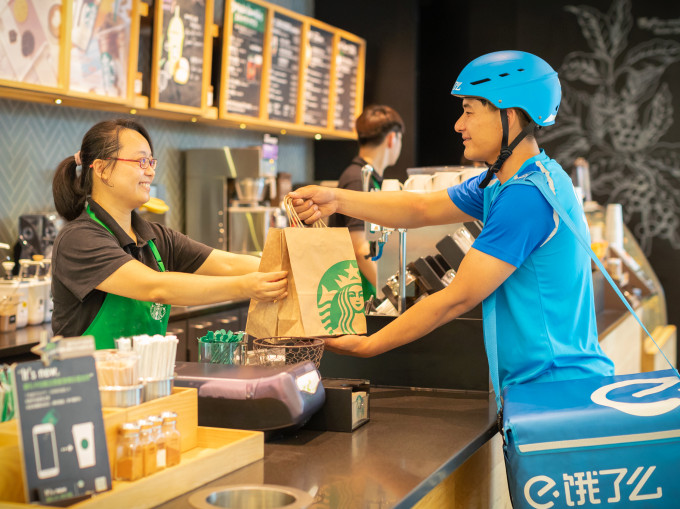
    Following public disapproval over a marketing campaign, Starbucks Korea, operated by Shinsegae Group, has announced it will close all stores across the country at 3pm on June 22 for employee training related to historical awareness and social sensitivity. The coffee giant came under fire for a campaign last month that was reminiscent of a harsh military suppression of pro-democracy demonstrators in 1980, leading to significant sales losses.

    Training and Education Initiative

    E-Mart, an affiliate of Shinsegae and owner of Starbucks Korea, initiated the promotional campaign named ‘Tank Day’ tumbler on the anniversary of the Gwangju Uprising on May 18. The historical event saw the military government deploy troops and tanks to quell pro-democracy rallies. In response to the backlash, staff and executives from Starbucks Korea and E-Mart division at Shinsegae will undertake the same training on June 17 at the group’s internal training center. Shinsegae Chairman Chung Yong-jin and affiliate CEOs will partake in a separate session on June 24. Shinsegae’s decision to implement these measures reflects the gravity with which it views the recent marketing misstep and signifies its dedication to avoiding similar situations in the future. Chairman Chung has previously issued a public apology for the controversy.

    The training will be spearheaded by a history professor from Sungkyunkwan University and will delve into significant events in South Korea’s modern and contemporary history since the 1950s. A separate social sensitivity training, facilitated by a sociology professor from the same university, will focus on how businesses should take into account societal factors such as history, labor, gender, and human rights in marketing and all corporate activities.

    Introducing New Measures

    This will be the first nationwide early closure for Starbucks Korea since its establishment in the country in 1999. In light of recent events, Starbucks Korea also intends to revamp its marketing approval procedures. This includes the introduction of a social-sensitivity checklist that covers history, commemorative dates, politics, disasters, military issues, gender, violence, and hate expressions.

    As of the end of 2024, Starbucks Korea had more than 2000 stores in the country and is regarded as the leading coffee chain in terms of customer payments.

    Questions & Answers

    What spurred Starbucks Korea to close its stores for employee training?
    Starbucks Korea faced public criticism due to a marketing campaign reminiscent of a harsh military suppression in 1980, which led to a significant drop in sales. The company has decided to close all stores in the country for staff training on historical awareness and social sensitivity.

    What will the training sessions entail?
    The history awareness lecture will be conducted by a history professor from Sungkyunkwan University and will review significant events in South Korea’s modern and contemporary history. Another professor from the same university will conduct a separate social sensitivity training, focusing on how companies should consider societal issues in their operations and marketing activities.

    What changes does Starbucks Korea plan to implement moving forward?
    Starbucks Korea plans to overhaul its marketing approval procedures by introducing a social-sensitivity checklist that covers history, commemorative dates, politics, disasters, military issues, gender, violence, and hate expressions. This is aimed at ensuring such marketing missteps do not recur in the future.
  • UBS Announces Major Executive Reshuffle; Aims For Streamlined Operations And Technological Advancement

    UBS Announces Major Executive Reshuffle; Aims For Streamlined Operations And Technological Advancement

    Swiss banking powerhouse, UBS, has recently disclosed several alterations to its executive board, including new appointments for the roles of compliance and operations.

    The reshuffling of the executive board comes after the proposal of Markus Ronner, the group’s chief compliance and governance officer, for the position of vice chairman.

    Michelle Bereaux, previously serving as the Group’s Chief Integration Officer, will step down and take on the new role of Group Head Compliance and Operational Risk Control. UBS accredits Bereaux for her significant contribution to the integration of Credit Suisse. The completion of this merger is forecasted to be by the end of 2026, and includes the transition of clients outside Switzerland and approximately two-thirds of Swiss clients.

    Beatriz Martin, currently the Head of Non-Core and Legacy, has been appointed as the Group’s Chief Operating Officer. Her new role will encompass her existing duties as the Sustainability and Impact Lead and Head of Non-Core and Legacy. Martin will also take on additional responsibilities such as overseeing the completion of the Credit Suisse integration, managing group operations, and supervising the internal consulting and governance teams. Martin will continue her duties as the EMEA President and UK Chief.

    Group Chief Technology Officer Mike Dargan will pivot his focus onto advancing the bank’s technology platforms with the objective to ensure they remain efficient, robust, and responsive to the organization’s changing needs. Dargan will also work on capitalizing on the opportunities that rapid technological advancements, particularly in AI and digital assets, present.

    Responsibilities related to governmental and regulatory affairs will be transferred to Group CFO Todd Tuckner. Meanwhile, group security will be integrated into the group’s human resources and corporate services organization under the leadership of Stefan Seiler.

    Following the announcement, UBS CEO Sergio Ermotti congratulated his colleagues on their new roles and expressed optimism about the bank’s positioning. “With these changes, UBS is ideally positioned to complete the integration, focus on growth opportunities, and continue to deliver in the best interest of all our key stakeholders,” Ermotti said.

    The new appointments are set to take effect from 1 January 2026.

    Questions & Answers

    What changes have been made to the executive board of UBS?
    Several changes have been made including the appointment of Michelle Bereaux as Group Head Compliance and Operational Risk Control, Beatriz Martin as Group Chief Operating Officer, and the transfer of responsibilities related to governmental and regulatory affairs to Group CFO Todd Tuckner.

    Who will oversee the completion of the Credit Suisse integration?
    Beatriz Martin, appointed as the new Group Chief Operating Officer, will oversee the completion of the Credit Suisse integration.

    What will be the new focus of Group Chief Technology Officer Mike Dargan?
    Mike Dargan will focus on advancing the bank’s technology platforms and capitalizing on the opportunities presented by rapid technological advancements, particularly in AI and digital assets.

  • Apple And Microsoft Challenge Chrome’s Dominance: Unveiling The Privacy Controversy

    Apple And Microsoft Challenge Chrome’s Dominance: Unveiling The Privacy Controversy

    Apple has recently cautioned iPhone users against employing the Chrome browser, citing security risks. This situation may remind one of a previous advertising scenario in 2024 where the tech giant, through creative visuals, illustrated Android users exploring the Chrome Browser in public and being surveilled by transforming cameras. These cameras symbolized internet user trackers, which failed when attempting to spy on users of Apple’s own Safari browser. The underlying message being that Safari provides superior protection of users’ personal information than its counterparts, specifically pointing out the Chrome browser.

    Google’s Privacy Sandbox: A Failed Attempt at Privacy

    In a parallel move, Microsoft attempted to dissuade Windows users from using Chrome. They promoted their own browser, Microsoft Edge, as a trustworthy alternative that operates on the same technology as Chrome. Despite these concerted efforts by Microsoft and Apple to dethrone Chrome, the browser boasts a massive user base of over 3 billion worldwide. However, Google recently dropped a bombshell by announcing the end of its Privacy Sandbox project, its proposed alternative to third-party cookies for the web and Android applications.

    Back in January 2024, Google initiated the process of phasing out third-party cookies from Chrome. The agenda was to replace them with the Privacy Sandbox, aiming to gauge a consumer’s interests without resorting to widespread internet tracking to push personalized advertisements. Such targeted ads typically command higher prices from the advertisers due to their increased effectiveness, thereby contributing to Google’s revenue.

    The Privacy Sandbox was intended to shift ad selection and data processing tasks directly to the user’s browser and device, eliminating the need for third-party trackers to transmit individual user data across the web. Despite initial plans, Google resolved not to discontinue the use of third-party cookies last year, culminating in the current halt to the six-year-old Privacy Sandbox initiative.

    The Future of Chrome Amidst Privacy Concerns

    Although Chrome users may once again be subjected to tracking and personalized advertising, Chrome’s substantial market share is anticipated to remain unaffected. Currently, the browser dominates over 70% of the market, both in mobile and desktop segments. However, emerging competition from AI browsers like Perplexity’s Comet and an upcoming AI browser from Open AI’s parent ChatGPT could potentially pose a threat to Chrome.

    The Privacy Sandbox tools that Google has decided to withdraw include a host of features such as Attribution Reporting API for both Chrome and Android, IP Protection, On-Device Personalization, Private Aggregation, and more.

    An API, or Application Programming Interface, serves as an intermediary enabling two distinct software interfaces to communicate and exchange data. This process can be likened to the functioning of a restaurant, where an app seeking data is the customer, the API is the waiter relaying the order to the kitchen (the server), and then serving the prepared food (data) back to the customer.

    Google’s cancellation of the Privacy Sandbox was attributed to its “low levels of adoption”, indicating that it failed to provide sufficient value to its users.

    Questions & Answers

    Why did Apple caution its users against using Chrome?
    Apple cited security risks as the primary reason for advising its users against using the Chrome browser. The company highlighted through a past advertisement that its own Safari browser offers better protection of personal data.

    What was the purpose of Google’s Privacy Sandbox?
    Google’s Privacy Sandbox was intended to replace third-party cookies in Chrome. It sought to understand consumer interests without having to track user behavior across the internet, facilitating the delivery of personalized ads.

    Why did Google decide to cancel the Privacy Sandbox?
    Google stated that the Privacy Sandbox had not been adopted widely and that it wasn’t providing enough value to its users, which led to its decision to discontinue the project.

  • Metcash Reports Robust Financial Growth, Hits $17.3 Billion Group Sales Revenue

    Metcash Reports Robust Financial Growth, Hits $17.3 Billion Group Sales Revenue

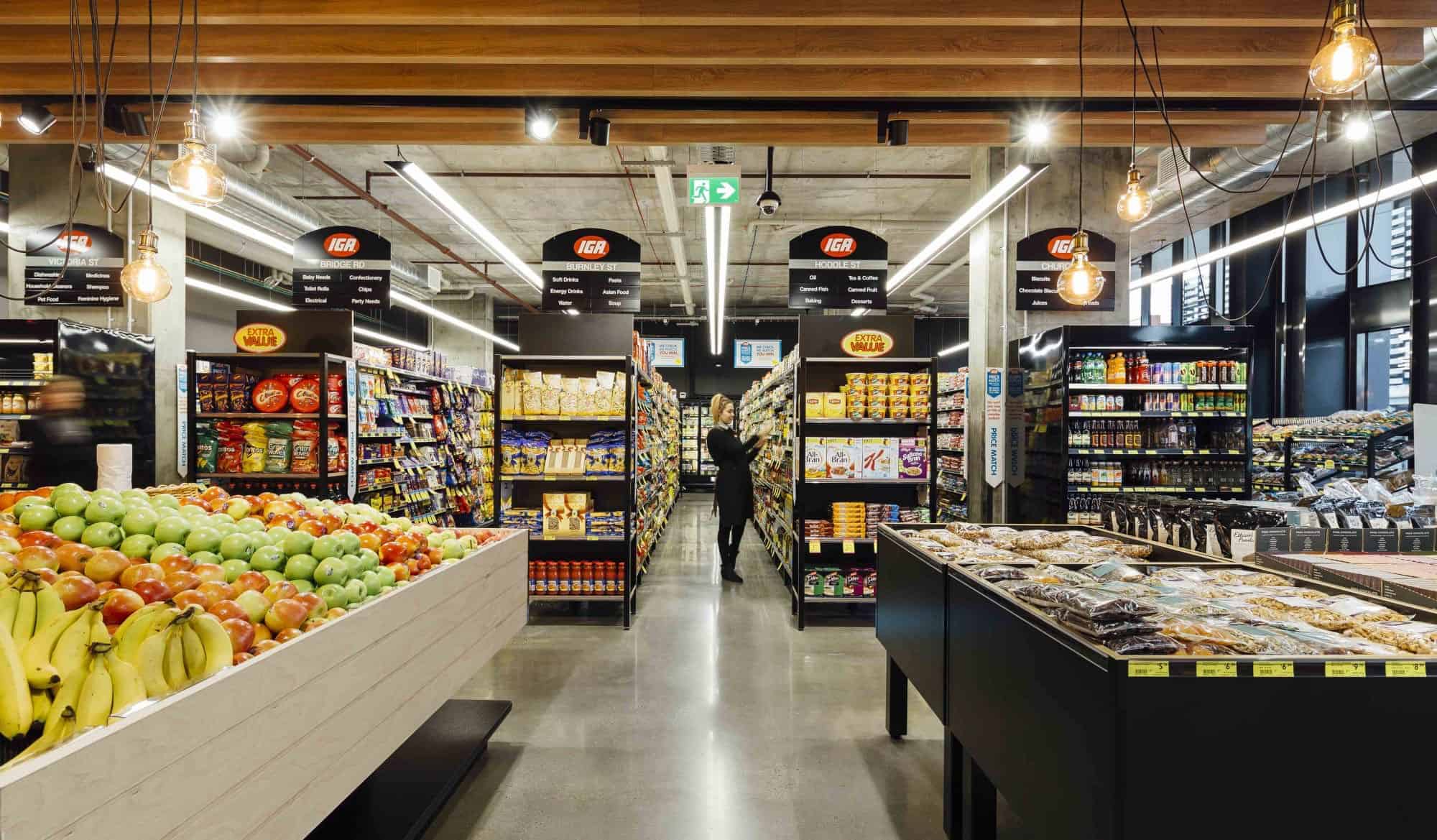
    Metcash, a leading wholesale distribution and marketing company, has recently announced a robust financial performance for the current fiscal year. The company’s group sales revenue reached $17.3 billion, marking a 7.2 per cent growth compared to last year’s figure of $15.9 billion.

    Financial Performance Details

    The company’s underlying group EBITDA (Earnings Before Interest, Taxes, Depreciation, and Amortization) witnessed a considerable rise, going from $688 million to $737.8 million. Further, there was also a 10.1 per cent increase in its reported profit after tax as the figures moved from $257.2 million to $283.3 million.

    In terms of sector-wise performance, Metcash’s food division reported sales revenue of $8.8 billion, excluding tobacco sales. This substantial figure, which is a 20.8 per cent increase year-on-year, has been largely attributed to the growth of supermarkets and convenience stores, along with Metcash’s partnership with Superior Foods beginning this June.

    Sector-wise Breakdown

    Metcash’s liquor division also exhibited growth, with the revenue rising by 3.3 per cent, moving from $5.1 billion to $5.3 billion. This growth has been fuelled by the successful performance of all IBA brands under Metcash, including Cellarbrations, The Bottle-O, IGA Liquor, and Porters. However, this sector did see a minor setback as its liquor EBITDA decreased from $125.7 million to $123.5 million, marking a 1.8 per cent drop.

    Lastly, Metcash’s hardware division reported a revenue of $3.6 billion, indicating a 2.4 per cent increase. This growth can be attributed to Metcash’s acquisition of Total Tools.

    Questions & Answers

    What was the total group sales revenue reported by Metcash for the current fiscal year?
    The company reported a total group sales revenue of $17.3 billion.

    Which division of Metcash recorded the highest increase in sales revenue?
    Metcash’s food division recorded the highest increase in sales revenue, marking a 20.8 per cent growth year-on-year.

    What factors contributed to the growth of Metcash’s hardware division?
    The growth in the hardware division is largely due to the company’s acquisition of Total Tools.

  • Real Pet Food Pledges $1.3m For Safety Upgrades After Epa Directive Following Acid Spill Incident

    Real Pet Food Pledges $1.3m For Safety Upgrades After Epa Directive Following Acid Spill Incident

    Real Pet Food, also recognised as Australian Pet Brands, is set to expend over $1.3 million on safety improvements and equipment upgrades. This decision comes following a directive from the NSW Environment Protection Authority (EPA) after a phosphoric acid leakage incident at the company’s Dubbo location.

    Details of the Incident

    A defective valve is reportedly to blame for the spillage of around 300 litres of phosphoric acid within the production tower of the facility. The acid, a chemical agent used to extend the shelf-life of pet food, spread across several levels of the building. Emergency Hazmat crews were deployed to manage the clean-up operation.

    Company’s Response and Legal Obligations

    In response to the incident, the EPA accepted a legally binding Enforceable Undertaking (EU) from the company. As per this agreement, Real Pet Food is required to disburse over $1.38 million to implement preventive measures against such incidents in the future. Jason Gordon, EPA’s executive director of regulatory operations, emphasised the gravity of the incident, stating that while no environmental harm transpired, the risk potential was significant.

    Enforced Changes

    The impending changes, according to Gordon, will not only enhance safety for the site’s workers but also augment environmental protection by improving how chemicals are stored, monitored, and managed. The company is expected to move its acid dosing system from the top to the ground floor and automate previously manual systems, such as dosing products’ valve controls and holding tanks. Furthermore, it is required to bolster spill containment measures and enhance its training and inspection procedures.

    In addition, as part of its agreement with the EPA, the company will donate $75,000 to the Wambangalang Environmental Education Centre. The funds will be used to carry out repairs and improvements to the centre’s model wetland teaching space.

    Questions & Answers

    What are the changes that Real Pet Food needs to implement as per the agreement?
    The company is required to relocate its acid dosing system from the top to the ground floor, automate manual systems, strengthen spill containment measures and improve training and inspection procedures.

    What was the reason behind the phosphoric acid spill at the facility?
    A faulty valve was identified as the cause of the leakage of approximately 300 litres of phosphoric acid within the facility’s production tower.

    What will be the use of the $75,000 that the company will pay to the Wambangalang Environmental Education Centre?
    The funds will be utilised for repairs and enhancements to the centre’s model wetland teaching space.

  • Twitter launches Super Follows and Safety Mode

    Twitter launches Super Follows and Safety Mode

    After a few months in beta, Twitter announced that it’s making Super Follows available to select users in the United States. Super Follows allows Twitter users to earn monthly revenue by sharing subscriber-only content with their followers on the social network.

    Those interested can set a monthly subscription of $2.99, $4.99, or $9.99 a month to monetize bonus content for their followers on Twitter. Creators can interact with their Super Followers by looking for the Super Followers badge. The public badges will be highlighted under their Super Followers name whenever they reply to a creator’s tweet.

    For the time being, Super Follows is only available to a small group within the United States. However, those interested can apply to join the waitlist to set up a Super Follows subscription by swiping open the sidebar on the Home timeline, tapping on Monetization, then selecting Super Follows.

    It’s important to mention that you need to have 10,000 or more followers, be at least 18 years old, and have tweeted 25 times within the last 30 days to be eligible for the waitlist. Obviously, you need to be in the United States too.

    Currently, users in the United States and Canada on iOS can Super Follow select accounts, but Twitter says it will be rolling out the option to people using iOS globally in the next few weeks.

    Additionally, Twitter announced that starting today, it’s rolling out Safety Mode, a new feature that promises to reduce disruptive interactions. Safety Mode is only pushed out to a small group of Twitter users on iOS, Android, and desktop, which have English-language settings enabled.

    Safety Mode is meant to temporarily block accounts for seven days for using potentially harmful language or sending repetitive and uninvited replies or mentions. Those who get the feature must enable it from the Settings so that Twitter’s systems can assess any potential negative engagement.

    Those who are found guilty of using harmful language in their tweets will be auto blocked, which means they’ll be temporarily unable to follow your account, see your tweets, or send you Direct Messages.