
Retail News CRM

Tag: frenzy

  • Five Guys Joins US Fast-Food Frenzy in China with First Beijing Outlet Opening

    Five Guys Joins US Fast-Food Frenzy in China with First Beijing Outlet Opening

    Five Guys, an American burger chain, is set to open its first outlet in Beijing in the coming month, joining a surge of American fast-food brands either entering or rapidly expanding within China. This comes on the heels of the establishment of the brand’s first Chinese outlet in Shanghai in 2021. According to a statement made by the company last week, it is aiming to open three outlets in Beijing’s prime shopping centers, primarily targeting younger consumers. Construction activities are already underway, indicating that the openings are not far off.

    American chains like Wendy’s, Chili’s, Texas Chicken, and Popeyes are all vying for a piece of the world’s second-largest consumer market as they face oversaturation in their domestic markets, according to industry analysts. Sandy Lim, a China consumer analyst at S&P Global Ratings, stated that some smaller American chains are exploring possibilities in China to counterbalance the oversaturation in their domestic markets.

    Lim elaborated, “Despite fierce competition, there are still pockets of demand within China’s large catering market.” She explained that unlike previous foreign brands that depended on direct operations overseen by overseas headquarters, exposing them to profits, losses, and market volatility, many American brands nowadays prefer franchising models.

    Wendy’s, listed on Nasdaq, announced in May its plans to open up to 1,000 stores across China in the next decade. As per its first-quarter earnings report, the company has entered into a new franchise agreement with an experienced local restaurant operator, who remains unnamed.

    In the first quarter, the burger chain’s sales, in the same stores, fell by 7.8% year on year, while its system-wide sales in international markets rose by 6% from the previous year.

    Texas Chicken, another American fast-food chain, plans to open its first Chinese outlet in Shanghai this summer. In an April statement, the company announced its partnership with Deke Shengtang, a well-established local operator with several quick-service restaurant brands, to develop a minimum of 600 restaurants across the country over the coming years.

    Chili’s, yet another American chain, opened its second store in Beijing in May. Meanwhile, the Louisiana-based fried chicken brand, Popeyes, made a comeback to Beijing in April, nearly twenty years after it left China in 2003. This chain currently has over 80 outlets in Shanghai.

    Adapting to the Chinese Market

    Fu Yifu, a special research fellow at Su Merchants Bank, noted that inflation continues to affect household spending in the U.S., while the presence of Western fast-food brands in China continues to grow.

    Early market entrants like KFC, McDonald’s, and Starbucks have developed localized franchising models to mitigate risks. Five Guys is positioning itself to appeal to quality-conscious consumers in first-tier cities. Fu emphasized that Chinese consumers are not automatically attracted to foreign brands anymore. To succeed, these brands must offer differentiated products and adopt localized operations.

    Questions & Answers

    What is Five Guys’ expansion plan in China?
    Five Guys plans to open three stores in Beijing’s popular shopping centers, targeting younger consumers. This follows the opening of its first China outlet in Shanghai in 2021.

    What strategy are American fast-food chains employing in China?
    Many American fast-food chains are opting for franchising models in China, partnering with experienced local operators. This model reduces their exposure to market volatility compared to direct operations managed by overseas headquarters.

    What approach is Five Guys taking to appeal to Chinese consumers?
    Five Guys is targeting quality-focused consumers in first-tier cities. As Chinese consumers are not automatically attracted to foreign brands, the company is focusing on offering differentiated products and adopting localized operations.
  • Fuel Frenzy: Indonesia Suffers Sudden 32% Surge in Popular Gasoline Prices Amidst Middle East conflict

    Fuel Frenzy: Indonesia Suffers Sudden 32% Surge in Popular Gasoline Prices Amidst Middle East conflict

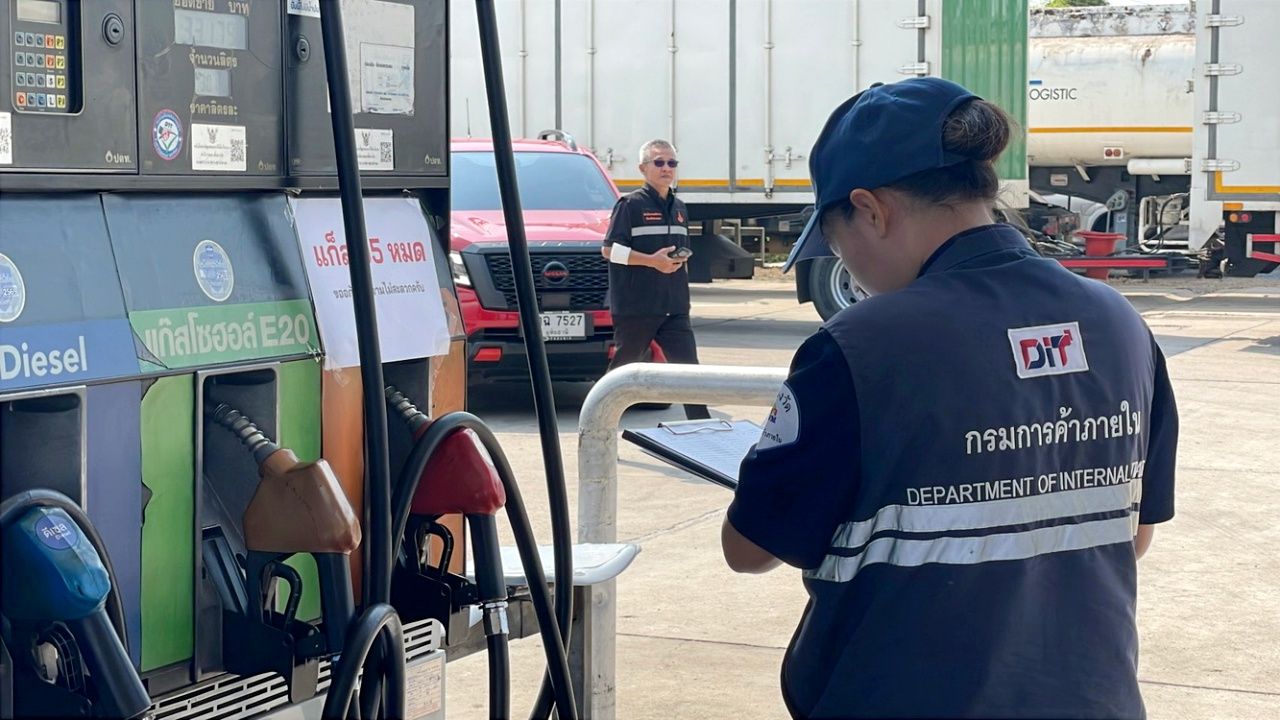
    In response to the ongoing conflict in the Middle East, Indonesian public corporation Pertamina has substantially elevated its fuel prices, marking the first rise since hostilities commenced. The price of 92-octane gasoline, popularly referred to as Pertamax and frequently used by Indonesia’s middle class, rose from Rp12,300 per liter to Rp16,250. This represents a substantial 32.1% increase.

    Pertamax Green, a 95-octane fuel variant mixed with ethanol, underwent a similar increase, with the price rising from Rp12,900 to Rp17,000 per liter, registering a 31.8% increment. It’s noteworthy that Pertamax fuels typically do not receive subsidies, and it remained unclear if Pertamina would receive compensation for managing to keep the prices constant since the conflict erupted.

    Financial Implications and Public Reaction

    The decision to implement these price increases was made following Bank Indonesia’s surprising move to increase interest rates for the second time within a month. This move was intended to bolster the nation’s economic health, especially considering that budget data from last week revealed a 208% surge in fuel, power, and fertilizer subsidies from the previous year.

    Finance Minister Purbaya Yudhi Sadewa opined that the inflationary impact of these price hikes would probably be minimal, given that these fuels are not typically used for public transportation. However, the annual headline inflation rate had already spiked to a record eight-month high of 3.08% in May.

    Radhika Rao, a senior economist at DBS Bank, stated that the fuels impacted by these changes represent approximately 7% of domestic fuel sales and 7.5% of energy usage in the transportation sector in 2023. She suggested that due to these changes, both monetary and fiscal policies should adopt a defensive approach to bolster the economy.

    The sudden increase in fuel prices came as a shock to many, with Masgal Carta, a resident of Bandung, West Java, expressing his concern over the financial strain that this could impose. He noted, “My earnings have remained static, but the prices of basic commodities have begun to rise, and now the cost of fuel, our primary mode of transportation to work, has also increased unexpectedly.”

    However, the price of the subsidized 90-octane fuel, known as Pertalite, remained unchanged, as confirmed by Pertamina.

    Questions & Answers

    What are the new prices for Pertamax and Pertamax Green fuels?
    The price of Pertamax fuel has risen to Rp16,250 per liter, while Pertamax Green now costs Rp17,000 per liter.

    What is the projected inflationary impact of these price increases?
    Finance Minister Purbaya Yudhi Sadewa believes that the inflationary impact of these price increases will be kept in check as these fuels are not typically used in public transportation.

    How have the price hikes affected everyday consumers?
    The sudden price increase has contributed to the financial pressure on consumers, with some expressing shock and concern over the possible tightening of their personal budgets.

  • Meituan’s Struggles Continue Amidst Food Delivery Frenzy: Can Signs of Easing Price War Restore Profits?

    Meituan’s Struggles Continue Amidst Food Delivery Frenzy: Can Signs of Easing Price War Restore Profits?

    Meituan, the leading food delivery company in China, reported its second consecutive quarterly loss, slightly missing revenue growth forecasts. This comes after a year of aggressive, subsidy-intensive competition in China’s one-hour delivery market.

    Meituan’s revenue growth and profits have been under pressure for several consecutive quarters since the introduction of new ‘instant retail’ platforms by e-commerce heavyweights Taobao, which is owned by Alibaba, and JD.com in early 2025.

    The term ‘instant retail’ or ‘quick commerce’ refers to online orders that typically include food, bubble tea, and everyday items, delivered within an hour.

    However, the early part of 2026 has signaled a potential slowdown in the instant retail pricing battle, which has been condemned as a “race to the bottom” by Chinese regulatory bodies.

    For the quarter ending on December 31, Meituan’s revenue reached 92.1 billion yuan (approximately US$13.3 billion), marking a 4.1% increase from the previous year. This figure is slightly below the 92.2 billion yuan analysts had predicted.

    The company managed to reduce its adjusted net loss to 15.1 billion yuan, down from 16 billion yuan in the third quarter. This is a stark contrast to the same period a year earlier, when Meituan reported a profit of 9.8 billion yuan.

    During a post-earnings call with analysts, Meituan’s CEO, Wang Xing, claimed that the regulatory stance on the instant retail competition is “already quite clear”. Wang stressed that regulatory authorities are vehemently against the escalating ‘neijuan’ competition and are keen on promoting a healthy, orderly market. ‘Neijuan’, or ‘involution’, refers to a situation where individuals or companies are forced into intensifying competition that yields minimal benefits.

    Earlier in the week, Meituan’s shares experienced a surge of 14% following the re-publication of a state media editorial by Chinese regulators. The editorial called for an end to the ongoing food delivery price wars, and its re-publication was perceived by industry experts as an official endorsement.

    Questions & Answers

    What is ‘instant retail’?
    Instant retail, also known as quick commerce, refers to online orders typically comprising food, bubble tea, and daily use items, delivered within an hour.

    What does ‘neijuan’ mean?
    ‘Neijuan’, or ‘involution’, refers to a situation where companies or individuals are pushed into a state of intensifying competition that brings very little benefit.

    What was the response of the market to the call for an end to the food delivery price wars?
    Following the re-publication of a state media editorial that called for an end to the food delivery price wars, Meituan’s shares experienced a 14% increase, suggesting a positive market response.

  • Meme coin Pepe craze causes thousand-dollar losses

    Meme coin Pepe craze causes thousand-dollar losses

    Thanh Nam from Binh Duong Province sold half his Bitcoin for US$5,000 to buy the hot meme coin Pepe at its peak.

    But he was recently only able to sell the coin for a total of $2,000.

    When the Pepe coin price hit $0.000004 on May 5 (bringing its market capitalization to $1.63 billion), Nam’s initial investment could have returned $7,000.

    But he wanted more, so he decided to wait.

    However, Pepe’s price plummeted to $0.0000017 only one week later. Nam then sold his tokens at a loss of $3,000

    “If I had waited more, I would have lost even more”, he said.

    Nam is just one of many who joined the Pepe craze recently.

    According to crypto price tracking website CoinMarketCap, Pepe’s price spiked after its launch in mid-April. It peaked on May 5, then lost most of its value afterwards.

    Meme coins are still widely considered a joke in cryptocurrency, however popular they get.

    Pepe was built on the BRC-20 standard of Bitcoin, different from many other meme coins which use Ethereum’s ERC-20.

    On its project homepage, Pepe’s developer said: “$PEPE is a meme coin with no intrinsic value or expectation of financial return. There is no formal team or roadmap. The coin is completely useless and for entertainment purposes only.”

    Despite such disclaimers, new meme coins like Pepe still attract lots of investment.

    Kyle Doane, who is in charge of transaction review at digital asset management company Arca, said that quite a few people sold parts of their top coins like Bitcoin and Ethereum to join the Pepe frenzy.

    When Pepe peaked on May 5, both those coins’ value dropped by 10%, a considerable value reduction after four straight months of growth.

    Joe Rotunda, director of enforcement at the Texas Securities Commission, said that when the hype surrounding a meme coin goes away, most people who invested in the coin suffer significant losses.

    Even when one gains from a meme coin, obtaining the profit is not easy.

    Merav Ozair, fintech expert at Cornell University, said he saw many who hit million-dollar jackpots investing in meme coins unable to withdraw their profits.

    Meme coins like Dogecoin and Shiba Inu, which are still highly valuable, are the exceptions, not the rule.

    Experts suggest that if investors want to try their luck with meme coins, they should only invest a small amount, and be ready to lose it all.