Retail News CRM

Tag: Giordano

  • Giordano sales down in China

    Giordano sales down in China

    Giordano sales in Greater China plunged by 17.7 per cent during the first quarter, dragging group-wide sales down by 10.8 per cent, or 8.5 per cent on a constant currency basis.

    In a stock exchange filing on the eve of the holiday weekend the casual apparel retailer blamed the downturn on “uncertainty stemming from the Sino-US trade dispute and abnormally warm weather”.

    Giordano sales in Indonesia, Thailand and Vietnam remained stable during the quarter, and in the fledgling Middle East market rose by 10 per cent to HK$80 million, slightly compensating for the heavy impact of China.

    By market, Mainland China sales fell from $378 million to $295 million, in Hong Kong and Macau from $248 million to $225 million and in Taiwan from $201 million to $161 million. In the rest of Asia-Pacific, they declined from $422 million to $398 million.

    In the three months to March 31, inventories rose from HK$507 million to $512 million.

    During the quarter, Giordano closed two stores in Hong Kong and Macau and reduced directly operated stores on the mainland by 31, but opened 19 franchised outlets.

  • Mixed results for Giordano International

    Mixed results for Giordano International

    Hong Kong casual-apparel brand Giordano International has reported a small increase in sales for last year – and a dip in profit. Group-wide sales reached HK$5.509 billion last year, up 1.8 per cent, with same-store sales down a marginal 0.1 per cent. Profit attributable to shareholders fell 4 per cent to $480 million.

    In a stock exchange filing, Giordano International said sales from physical stores achieved a 1.7 per cent growth rate, while online sales – through its own sites and third-party platforms, grew by 1.3 per cent. Wholesale sales to its franchisees grew by 2.6 per cent.

    By category, its best-performing sectors were childrenswear and womenswear, where sales for both rose by 6.9 per cent.

    By geographical market, Giordano International delivered a mixture of results:

    Mainland China: Business was affected by the Sino-US trade dispute and stock-market volatility, which negatively impacted on domestic retail sales. Comp-store sales slipped by 0.9 per cent.

    Hong Kong and Macau: “Well-executed marketing programs, smart promotional activities and stringent cost control all helped achieve double-digit growth amidst complex macroeconomic conditions,” the company reported. “This market experienced a difficult retail landscape caused by an economic slowdown since the third quarter of the year. Severe typhoons and an abnormally warm winter also adversely affected its sales.”

    Taiwan: Sales here rebounded to allow an operating profit increase of 34.9 per cent in the first half of last year, however the full-year change was a mere 2 per cent, due to the uncertainty created by the Sino-US trade dispute.

    Vietnam: Giordano bought out its third-party retail operation in Vietnam and after improved sales and cost controls turned the business around. The market has grown to account for 5.6 per cent of Giordano international’s regional sales and operating profit rose.

    Thailand: Operating profit from Thailand grew by 11.1 per cent, thanks to stable sales growth and an improvement in gross-profit margin.

    Indonesia: In Southeast Asia, Indonesia stood out with a comp-store sales growth of 7 per cent for both Giordano and non-Giordano brands, and operating profit increased by 16 per cent.

    Singapore: Operating profit decreased by 6 per cent as the business was adversely affected by an overall stagnant economy and lower tourist traffic.

    Middle East: With consumers adapting to the newly introduced Value-Added Tax and changes in economic policies, comp-store sales fell by 7.3 per cent in the first quarter of last year. However, in the early weeks of this year, the company saw growth in comp-store sales of 4 per cent, prompting management to conclude that consumers have now adjusted to the tax changes and the retail industry there has stabilised.

    South Korea:  Net profit here increased by 6.7 per cent, attributable to better cost control, closure of non-performing stores and enhanced gross margin. Wholesale sales to South Korea increased by 10.5 per cent.

  • Fast fashion retailer Giordano sales surge in Hong Kong

    Fast fashion retailer Giordano sales surge in Hong Kong

    Giordano sales slid 5.2 per cent in the September quarter, according to a trading update by the fast-fashion retailer. Translated into constant currency basis, sales declined by 6.9 per cent, the company said. “We saw a sharp decline in sales as a result of dampened consumer confidence since June throughout the Asia Pacific region,” said chairman and CEO Peter Lau.

    Group comparable-store sales slipped by 2.8 per cent.

    However, Giordano sales in Hong Kong and Macau bucked the trend, rising by HK$2 million on a same-store basis in the quarter and by $6 million for the nine months to the end of September, reaching $226 million and $703 million respectively.

    Mainland China sales fell $30 million to $251 million.

    Lau said core Giordano lines accounted for 84.6 per cent of total brand sales. The company’s premium womenswear brand, Giordano Ladies, posted comp-stores growth of 3.3 per cent.

  • Giordano to open six more store in the Middle East

    Giordano to open six more store in the Middle East

    Giordano Middle East has opened six new stores and relaunched its e-commerce platform.

    The new stores are located at the Ajman City Center and Ibn Battuta Mall in the UAE, Riyadh Park, Villaggio Mall and Lulu Briman in Saudi Arabia and at Al Kout Mall in Kuwait.

    The Hong Kong-headquartered, global fast-fashion brand has also opened its first stores in France, South Africa and Mongolia this year.

    Ishwar Chugani, MD at Giordano Middle East, and part of the management committee of Giordano International, says the new stores feature a fresh new look “redefining simplicity and embracing a more classic and refined concept”.

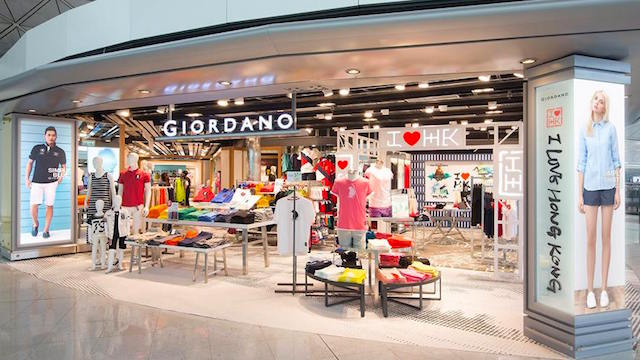
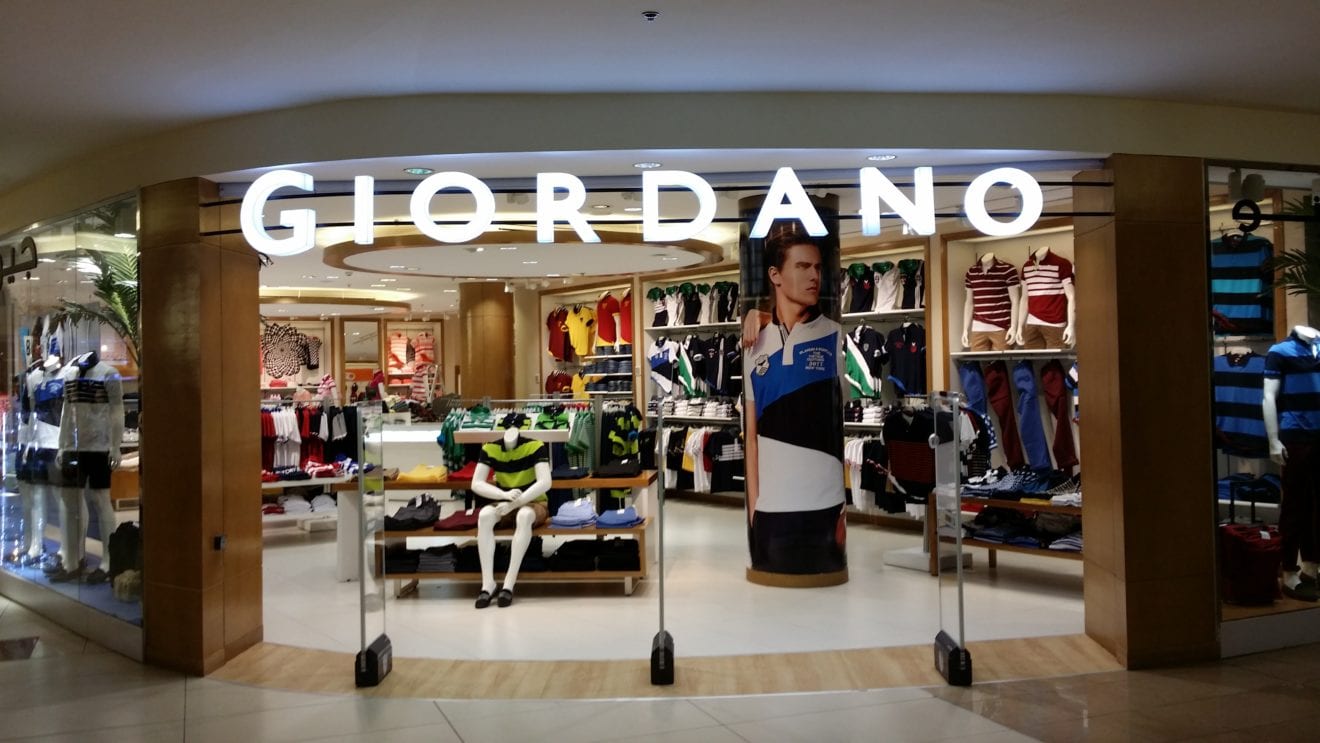
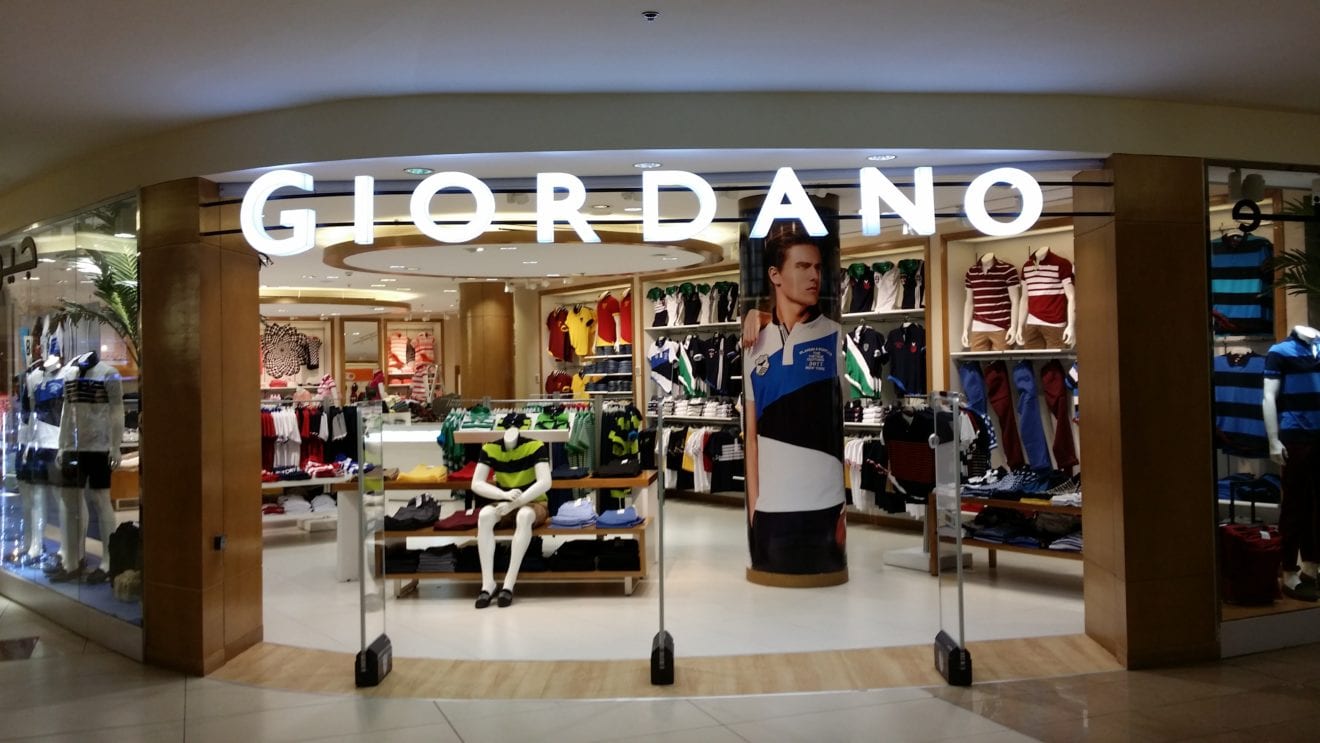
    Space is maximised for product displays and customer interaction. The Giordano Middle East stores feature wider entrances and larger, more comfortable fitting rooms. Products are also showcased in different ways, with an emphasis on accessibility and demonstrating different matches and styles.

    Chungai says natural wood accents have been added to the interiors to create a feeling of warmth and comfort while energy-efficient LED lights enhance the customer experience and minimise the brand’s carbon footprint.

    “Our customers have been the main focus in the design of our new CIM (Customers In Mind) stores. Giordano embodies simplicity in design and quality in substance, and we have endeavoured to simplify and improve our customers’ shopping experience, enabling them to mix and match items and avail of excellent quality apparel at great value,” said Chungai.

    “We are committed to bringing our brand closer to our customers located across the region. The substantial investments earmarked for this expansion program stem from our confidence in the region’s current developments and future initiatives.”

    Giordano’s cardless loyalty program World Without Strangers boasts more than 500,000 members from the Middle East and 11 million worldwide. The brand has also increased its social-media engagement, with more than 3 million followers on Facebook alone.

    Founded in Hong Kong in 1981, Giordano opened its first store in the MIddle East in 1993. Giordano Middle East is a wholly owned subsidiary of Giordano International.

    The group operates more than 2400 stores in 30 countries across Asia, Australia, Africa, Canada, Central America, Eastern Europe, Central Asia and the Middle East.

  • Giordano slows down in Hong Kong, Macau market

    Giordano slows down in Hong Kong, Macau market

    Apparel retailer Giordano says sales growth in its key Hong Kong and Macau market has become “increasingly sluggish”.

    While the year started well, “inclement weather and fierce competition have hindered performance so far,” chairman and CEO Peter Lau said in the company’s half-year results announcement.

    “But we are confident the experienced local management team will continue to reduce costs and devise creative campaigns to outperform our competitors. This market will also continue to serve as a new idea incubator and talent development centre,” he said.

    Group sales for the first half of this year were HK$2.86 billion (US$364 million), up 9.2 per cent on the same period last year. Comp-store sales and comp-store gross profit rose by 5.1 per cent and 3.1 per cent, respectively.

    Post-tax profit was HK$254 million, an increase of 3.7 per cent, with net profit margin easing by half a percentage point to 8.9 per cent.

    Lau said the company was optimistic about its outlook for Giordano’s Mainland China business.

    “Performance in the first half … has been flat and there is some degree of uncertainty surrounding the impact of the Sino-US trade war in the imminent future. That said, our e-commerce business in China continues to perform better than the group’s average and there has also been an improvement in the performance of both our franchisees and our [stores]. We anticipate that our store network will continue to expand, but we will monitor the pace and scale in view of the macroeconomic conditions.”

    Giordano finished the half year with 2444 stores, equivalent to 2.331 million sqft of retail space throughout Asia-Pacific, 1293 of those standalone stores.

  • Giordano faces backlash over ‘sexist’ clothing line

    Giordano faces backlash over ‘sexist’ clothing line

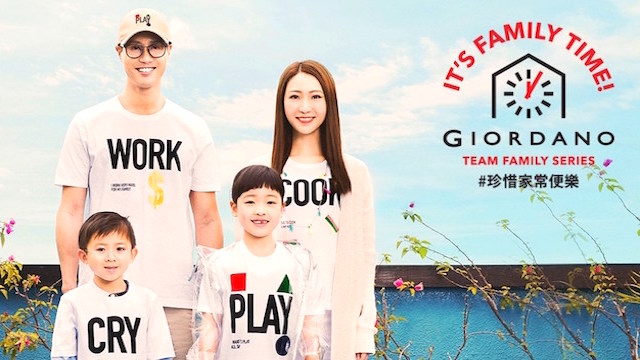
    Hong Kong fashion brand Giordano is scrambling to remove an advertising campaign slammed as “sexist” on social media.

    Promoting the “Team Family Series”, the advert shows a family posing together with the man wearing a t-shirt emblazoned “Work” while the wife’s shirt proclaims “Cook”. When posted on social media last week, it outraged dozens of users, some of whom threatened to boycott the store.

    One user wrote that it was an “absolute disgrace” and unforgivable for a modern brand to stereotype men and women.

    Giordano has responded with a statement on social media saying the advertising materials would be removed “where physically possible”.

    “The spirit of the campaign is to celebrate the power of the family, with the corresponding merchandise using words to depict different, random aspects of life,” says the statement.

    “Stereotyping and sexism, or any kind of prejudice, however unintentional or passive, has no place at Giordano or in society.”

    Removing the ads is unusual for Hong Kong, which does not have any laws against sexist or gender-specific advertising.

    Lisa Moore, senior research and advocacy manager at Hong Kong-based non-profit The Women’s Foundation, says the city is overloaded with examples of such advertising. “Whether on billboards, buses, in print or on television, gender stereotyping in advertising is still quite prevalent in Hong Kong,” she says. “From financial loan commercials to ads for household products, women are often depicted in domestic roles.”

  • Giordano International sales boost by online sales

    Giordano International sales boost by online sales

    E-commerce has helped boost the first-quarter bottom line for Hong Kong-based clothing retailer Giordano International, particularly in China.

    Unaudited figures for the three months to the end of March show Giordano’s overall e-business generated HK$81 million (US$10.3 million) in revenue, representing a year-on-year increase of 44.6 per cent. Of this, Mainland China accounted for 87.9 per cent, with sales growth of 28.9 per cent.

    Giordano says growth momentum continued for the mainland. “The development of the two strategic channels of e-commerce and franchising were on track and will continue to be our growth drivers in the medium term.”

    Same-store sales (CSS) rose by 16.7 per cent despite 30 non-performing stores being closed in the past 12 months.

    A decline in gross margin by 1.3 points can be attributed to greater sales contribution from e-business, says the company.

    In Hong Kong and Macau, sales for the first quarter increased by 3.8 per cent, resulting from same-store sales growth of 9 per cent partly offset by the closure of a major non-performing store. Gross margin was down by 0.9 points as a result of a longer promotion period for the late Chinese New Year.

    In a rebound since last year’s second quarter, Taiwan grew same-store sales by 19.6 per cent and comparable store gross profit (CSGP) by 25.1 per cent.

    In the rest of Asia Pacific, sales increases mainly came from store expansion in Indonesia and the acquisition of its Vietnam business since July, which contributed to 5.9 per cent of the region’s sales.

    Despite a tough macro environment, other Southeast Asia markets delivered stable sales growth. Excluding the Vietnam acquisition, gross margin would have dropped by one point.

    South Korea – a 48.5 per cent JV under an independent management team – continued to deliver positive CSGP growth.

    “Inventory rationalisation and lower product costs through shared sourcing have contributed to a substantial gross margin improvement.”

    Overall, group sales for the quarter rose by 13.4 per cent to $1.4 billion while group gross profit grew by 12.5 per cent. Same-store sales and CSGP for the quarter grew by 9.5 and 8.7 per cent respectively.

    As at the end of March, the group had a network of 2414 outlets, of which 1271 were standalone stores – an increase of 40.

  • E-business of Giordano International looks good

    E-business of Giordano International looks good

    E-business last year was particularly strong for apparel retailer Giordano International.

    Overall, consolidated sales reached HK$5.4 billion, up 5.2 per cent. Group comparable-store sales and comparable-store gross profit rose  by 5.2 and 5 per cent respectively.

    Consolidated gross margin edged up by 0.1 points to 59.5 per cent.

    Profit after income taxes attributable to shareholders of the company was $500 million,
    an increase of 15.2 per cent over 2016.

    Operating profit rose by 21.3 per cent, with most regions having double-digit growth, particularly Southeast Asia, Mainland China and Taiwan. The group’s business in Vietnam was acquired on July 1.

    With an improved merchandise assortment, Indonesia and Malaysia delivered good results.

    Operating profit increased by 18.6 and 26 per cent for Indonesia and Malaysia respectively. In Singapore, operating profit increased by 31.2 per cent, attributable mainly to the gross margin improving by 1.7 points to 63.7 per cent.

    Unusually strong sales from Thailand in 2016 resulted in an unfavourable year-on-year comparison. Operating profit declined by 20.1 per cent in local currency terms.

    A surge in net profit for South Korea – a 48.5 per cent JV under an independent management team – resulted from better cost control, closure of non-performing stores and enhancement in gross margin.

    Giordano had a network of 2414 stores at the end of December, of which 1268 were standalone outlets. Most stores were in Greater China, South Korea, Southeast Asia and the Middle East.

    Meanwhile, the group’s e-business is directly managed and derived mainly from third-party platforms as well as its own proprietary website in Greater China. This channel generated $310 million in revenue at a 31.4 per cent growth rate.

    Accounting for 93.2 per cent of the group’s e-business sales, Mainland China continued its momentum and recorded a 28.2 per cent increase in sales on various platforms combined.

    Giordano’s e-business in Taiwan was revamped during the year to become its second-largest online presence.

  • Giordano post a “quite okay” result

    Giordano post a “quite okay” result

    Third-quarter sales for apparel retailer Giordano International have been edging ahead in most markets, an exception being South Korea, a 48.5 per cent JV with an independent management team.

    While e-commerce sales jumped by 17.6 per cent in Mainland China, overall sales growth reached only 2.6 per cent, with a decrease of 2.5 per cent in directly run stores. The company closed 32 non-performing outlets.

    Comparative own-store sales grew by 8.4 per cent, with an 0.5-point decline in gross margin because of a change in channel mix as the contribution from the lower-margin e-business.

    In Hong Kong and Macau, sales for the three months to the end of September grew by 3.2 per cent.

    Gross margin fell 1.6 points as a result of sales promotions to counter an unusually hot and rainy summer and late autumn. These promotions pushed up sales volume by 13.8 per cent while reducing the average selling price by 9.2 per cent.

    Comparative-store gross profit rebounded in Taiwan, where sales and gross margin rose by 2.9 per cent and 1.1 points respectively. Giordano says the improvements are sustainable for the rest of the year. Gross margin also benefited from lower product costs on a strong local currency.

    In the rest of Asia Pacific sales increased by 5.4 per cent at constant exchange rates. The acquisition of Vietnam business in July contributed to 5.1 per cent of sales in the region.

    Unusually strong sales in Thailand last year resulted in an unfavorable year-on-year comparison for the quarter.

    Ramadan effect

    Indonesia sales rose by 3.5 per cent as a result of shop expansion. While comp-store sales fell by 4.1 per cent and gross profit eased 1.8 per cent as a result of the different timing of Ramadan, comp-store sales from June to September this year increased by 9.7 per cent against the same period last year.

    Early Ramadan also affected sales in Malaysia, which grew by 4.3 per cent. Comp-store sales rose by 2.6 per cent while gross profit eased 1.4 per cent. Comp-store sales for June to September strengthened 20.4 per cent compared with the same four-month period last year.

    Both comp-store sales and gross profit dropped in Thailand, by 4.9 and 6.3 per cent respectively, against an unusually high base in the same quarter last year.

    Sales fell 3.6 per cent in South Korea while gross margin improved by 0.7 points. The decline was mainly because of summer clearance sales and unusually hot weather in September hitting fall/winter merchandise sales.

    Overall group sales rose by 3.6 per cent to HK$1.2 billion (US$153.8 million). Group gross profit increased by 3 per cent on improved sales, partially offset by a 0.3-point decline in gross margin.

    Giordano attributes this partly to the change in channel mix and selective promotional activities. Group comparable-store sales and comparable-store gross profit for the quarter grew by 2.3 and 1.5 per cent respectively.

    At the end of September, the group’s distribution network comprised 2370 stores in more than 30 countries, about half of these being standalone stores. Most stores were in Greater China, South Korea and Southeast Asia.

  • Giordano International recovers from early fall

    Giordano International recovers from early fall

    In a turnaround from a 1.6 per cent drop in the first quarter, apparel retailer Giordano International recorded a 3.4 per cent rise in half-year group sales to HK$2.6 billion (US$334.8 million).

    Gross profit increased by 3.8 per cent and gross margin improved by 0.2 points.

    Comparable store gross profit (CSGP) rose by 6.6 per cent though comparable store sales (CSS) reached only 4.6 per cent growth. The company says the increase was primarily because of a better pricing/merchandising mix, but the figures were dampened by the early lunar new year shortening sales of winter merchandise.

    Group gross profit edged up 3.8 per cent to $1.566 billion, primarily because of non-performing stores being closed in the past few years. Group gross margin was up by 0.2 points to 59.8 per cent, mainly because of depreciation of the renminbi as most products were sourced from China. Giordano says sourcing from Bangladesh and Vietnam will help maintain or improve future gross margin.

    While China’s total sales fell, operating profit grew by 5 per cent, mainly because of improved profit from e-commerce, gross margin improvement and control of running expenses.

    E-commerce sales surged 26.6 per cent, contributing to 16.2 per cent of China brand sales (12.7 per cent for the same period last year). The company attributes the increase to improved merchandise mix and logistics.

    Strong growth

    Regional operating profit recorded strong double-digit growth, particularly for Indonesia, Malaysia and Singapore. This was generally attributable to improved gross margin and expense
    control.

    Early Ramadan and improved merchandise assortment benefited both Indonesia and Malaysia. The operating profit of Malaysia grew by 47.2 per cent and that of Indonesia by 37.1 per cent.

    In Singapore, operating profit was up 35.1 per cent, mainly because of gross margin increasing by 2.1 points to 62.6 per cent despite a stagnant economy and low tourist traffic.

    In Thailand, operating profit was virtually the same.

    South Korea (a 48.5 per cent JV with an independent management team) reported a net profit increase of 28.8 per cent through better cost control, the closure of non-performing stores and enhancement in gross margin.

    Worldwide, there were 16 fewer Giordano stores at the end of June, mainly because of 33 non-performing stores being closed in India, where the group is restructuring the business. This trimmed the network to 2371 stores in more than 30 countries, including 1243 standalone stores. Most are in China (where stores expanded from 896 to 913, all in the franchise network), South Korea, Southeast Asia and the Middle East.

  • Retail woes a boost for Hong Kong indie fashion

    Retail woes a boost for Hong Kong indie fashion

    High-end international brands have long held court alongside local Hong Kong indie fashion designers – who are now enjoying greater visibility in the city’s vibrant retail market.

    The city’s deep-rooted love of luxury has seen names like Gucci and Hermes open multiple stores in the city – stores that have co-existed with a stable of local apparel brands, such as Giordano, Baleno, Bossini and Esprit.

    By 2014, consumers’ tastes had diversified and fast-fashion overseas brands began descending on Hong Kong. The arrival of names like Topshop, American Eagle, H&M, Zara and Mango added yet more to the mix in Asia’s favourite shopping destination. Now that shop rents are finally becoming more affordable, independent fashion retailers are increasingly making their presence felt.

    Structural change

    In a report by commercial real estate firm CBRE, Joe Lin, executive director, retail services at CBRE Hong Kong, said that the city is undergoing a period of structural change.

    “Over the previous decade, high-street shop landlords have reaped the benefits of strong demand from luxury retailers and massive rental growth.”

    Lin noted that in the past 12 months, luxury retailers have adjusted their leasing strategies to save costs. “Landlords have become more realistic on rental negotiations, enabling more mid-range brands to tap into prime locations at relatively affordable rental levels.”

    The trend has opened the door for mid-market brands to expand, and for the rise of independent labels.

    “More independent stores are coming back to the market, streets, malls, and even some up-and-coming revitalised buildings in the traditional industrial districts, such as Lai Chi Kok and Kwun Tong,” said Lin. “They modernise the decoration and with the decent F&B outlets that draw good foot-traffic to these areas, independent retailers also benefit from this new trend.”

    Refined taste

    British fashion designer Elizabeth Lau established The Refinery in 2014 after moving to Hong Kong with her husband. Lau said she saw an opportunity to “curate for individuals” in Hong Kong by introducing unique fashion, accessories and lifestyle brands from around the world.

    Her first store, at the creative and design hub PMQ in Central, found a steady following, and in January 2016, The Refinery opened a second retail outlet in Tai Koo.

    Fashion edit

    Partners in fashion Genevieve Chew and Jacqueline Chak, an accountant and architect respectively, launched Edit in Central in 2012 as a concept store stocking emerging brands. They later created their own in-house label, which is described as “one part eclectic femininity and the other relaxed ease.” Their collections are worn by fashion personalities such as Yasmin Sewell, Margaret Zhang and Amanda Strang. The partners have also designed uniforms for Hong Kong’s new boutique Tribute Hotel in Kowloon.

    Fé Valvekens is another career-change entrepreneur who found her fashion foothold in Hong Kong. German-born Valvekens is a qualified engineer who founded fashion label A Day with Fé, blending daywear with yoga wear. Her PMQ store in Central also holds yoga and fashion styling workshops

    Quality indie labels

    Building on her established career in fashion, US expat Jamie Dredge co-founded Polkadot Boutique on Hollywood Road, Central, in 2011. After moving to Hong Kong two years earlier, Dredge spotted a gap between high-end luxury designers and mass-market clothing in Hong Kong.

    Her idea was to offer quality, well-designed womenswear and accessories from indie labels in the US, as well as supporting upcoming local designers.

    “We still have our local-based designers, but are also working with hot new labels out of Los Angeles and New York,” she said. Examples include Yumi Kim and Blank NYC Denim from New York, Veronica M from Los Angeles, and Hong Kong’s What the Frock?!.

    Being an independent retailer in Hong Kong has its challenges, said Dredge. Rents remain high, especially for smaller operators who don’t have the negotiating leverage of a famous brand. The demise of free print lifestyle magazine HK Magazine, which folded last year after 25 years, closed one door for independents to build a profile – and paid advertising is expensive.

    “We now have to work harder on our social media channels – and be more creative in our promotions,” Dredge said.

    On the other hand, word-of-mouth networking is an advantage in a city as close knit as Hong Kong.

    Pop-ups and collaborations

    One of Polkadot’s strategies is to host events where customers can meet the designers for a social night out, which might involve hair and makeup as well as fashion. One of the “biggest perks of Hong Kong” is the willingness of businesses to collaborate with each other, Dredge said.

    “Hong Kong is great for doing pop-up events and collaborations, which get the customers involved,” she said.

    It also illustrates how a physical boutique can still be successful, despite the challenges of online shopping.

    “People still like to feel the clothes, to try them on, to talk to the designer,” she said.

    “A lot of our garments are unique, and many of them exclusive. Our customers aren’t walking around seeing other people dressed the same, and that’s why they come to us.”

    -HKTDC

  • Two-pronged approach for Giordano Vietnam

    Two-pronged approach for Giordano Vietnam

    Vietnam is on the radar for Hong Kong clothing retailer Giordano International, both as a market and supplier.

    With its steady growth in the emerging market, the company is planning to establish a legal entity Giordano Vietnam.

    It is also eyeing the country as a source market for product, while it continues to develop sourcing opportunities in Bangladesh.

    While Giordano still sees opportunities for growth in developing markets such as Indonesia, Malaysia and Thailand, the company says in its annual review that those opportunities are fading.

    Meanwhile, the group has plans to launch digital sales channels outside mainland China this year, initially through the development of its own eShops.

    “Market conditions in Southeast Asia have been challenging in the past two years,” says the group, which improved its merchandising, and therefore profitability, in Singapore last year – “but this will be a tough market going forward”.

    In the 2015 financial year, consolidated sales eased by 3 per cent – but increased by 1 per cent on a constant currency basis. Global brand sales were down 1 per cent for the year, but comparable same-store sales grew by 3 per cent.

    As a strong Chinese New Year offset the impact of 81 store closures, brand sales in the first half of the year grew by 1 per cent. But in the second there was a 3 per cent drop because of unseasonably warm weather in Greater China.
    Gross profit margin declined by 0.4 percentage points to 57.6 per cent, with higher purchasing costs caused by a strong US dollar eroding margins in Southeast Asia and Taiwan.
    “Weak consumer demand in many markets has led to fierce competitive pressure on selling
    prices,” says the group.

    Nevertheless, in the second half of the year, improved purchasing and merchandising resulted in gross margin improving from 57.4 to 57.9 per cent.

  • Qianhai Chow Tai Fook mall opens in Shenzhen

    Qianhai Chow Tai Fook mall opens in Shenzhen

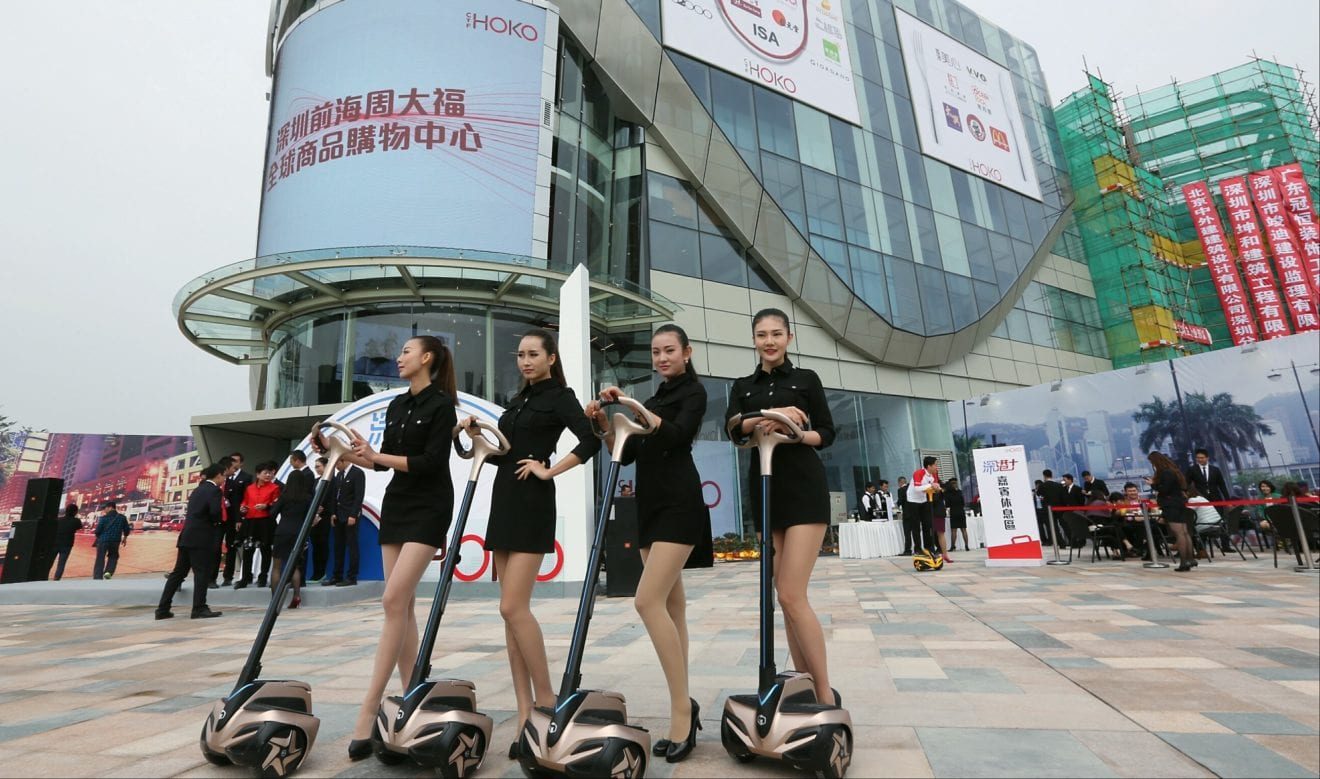
    The new Qianhai Chow Tai Fook mall opened its doors in Shenzhen on Monday – selling Hong Kong sourced goods to mainlanders at prices said to be cheaper than in Hong Kong.

    Officially named the Qianhai Chow Tai Fook Global Goods Shopping Center, the 19,000 sqm mall is a joint venture between jeweller Chow Tai Fook and two investment partners.

    A total of 21 retail brands opened stores in the first phase of the development opened yesterday, including beauty products chain Sa Sa, fast fashion brand Giordano and CRCare. They are joined by a range of food and infant formula retailers.

    More stores will join the development when stage two opens next summer.

    The HK$423 million shopping centre has been built inside the Shenzhen special economic zone, taking advantage of tax concessions and allowing mainlanders to buy Hong Kong sourced goods without crossing the border.

    Shenzhen has a population of 20 million creating a huge potential catchment for the development.

    Adrian Cheng Chi-kong, executive director of the Qianhai Chow Tai Fook mall, said it will not be competing with the border shopping mall planned for the Hong Kong side of the border, explaining the two properties will cater for different clienteles.

  • Giordano Hong Kong sales rise in soft market

    Giordano Hong Kong sales rise in soft market

    Giordano Hong Kong sales increased by four per cent in the last quarter, with same store sales up a staggering 12 per cent in a stagnant retail market.

    The company says with the decline in Mainland China visitors to Hong Kong and Macau, the company has repositioned its product range to focus on more basic essential products. “This resulted in strong volume growth compared to the same period last year.”

    Total sales for the quarter to September 30 were HK$1.240 billion, three per cent lower than the same period last year. On a constant currency basis, sales increased by two per cent.

    Despite encouraging results in its home market, Giordano reported the depreciation of local currencies against the US dollar in Southeast Asia, Taiwan and Australia is depressing reported sales growth at the group level, and pushing costs up in those markets.

    In the first half of 2015, the company completed the acquisition of its franchisees’ operations in Kuwait and Qatar. Excluding these transactions, sales would have decreased by four per cent and on a constant currency basis, sales would have increased by one per cent

    Brand sales for the quarter were flat compared to the same period last year. Comparable store sales for the quarter increased by four per cent, mainly due to improving performance in Mainland China, Hong Kong and Singapore.

    The total number of stores in the group declined by 19 to 2359 primarily due to the closure of unprofitable stores in Mainland China.

    Gross margin for the quarter grew by 0.1 percentage point to 58 per cent, despite higher purchase costs due to weak overseas currencies, which reduced gross margin by 1.4 percentage points.

    Gross profit for the quarter was HK$719 million, a decline of three per cent over the same period last year.

    Sales in Southeast Asia declined by seven per cent, reflecting the impact of weak local currencies which on average depreciated by 16 per cent against the Hong Kong dollar in the last 12 months. However, on a constant currency basis, sales grew by nine per cent. Comparative store sales grew by eight per cent in the quarter with strong recovery from last year in Singapore and Thailand in particular.

    Sales in the Middle East have climbed by 11 per cent with strong growth in the UAE.

    Giordano’s new budget brand “Beau Monde” is still under development.

    “At the end of the period we had 14 shops and we expect to increase this to 25 shops by the end of the year. As we improve the merchandise for this new brand, we expect to reach break even profitability in the fourth quarter of 2015 or the first quarter of 2016. This will enable us to develop this brand faster in 2016,” the company said in its stock exchange filing.

    “As we reposition our brands through the exit of non-performing shops and poor quality locations, we are also investing in store upgrades, and by December we expect to have upgraded two thirds of our store portfolio in the past two years. During the third quarter, we upgraded/opened 39 self-managed stores and 51 of our franchisees’ stores. By the end of 2015, we expect to have upgraded/opened 200 shops in the year. This compares with 397 shops renovated in 2014.”

  • The Giordano restoration plan

    The Giordano restoration plan

    Troubled fashion group Giordano knows it faces a challenge restoring its mojo.

    Last week Giordano reported falling sales in every single market globally – in the worst case, Australia, by 20 per cent year on year. Profit slumped 35 per cent.

    But the Hong Kong-based fast fashion business also outlined to frustrated shareholders how it plans to restore growth and respectability to its trading results.

    In a lengthy report, Giordano said it expected to see continuing volatility in demand across the group in the year ahead.

    “We can see early signs of recovery in Mainland China with positive same store sales since the second quarter, albeit at a very low level. Taiwan is now showing modest sales growth as its marketing programs and local merchandising are starting to resonate with customers.

    “The Southeast Asian business was slightly stronger in the fourth quarter of the year as Singapore started to get its merchandising mix right and Indonesia and Thailand sales strengthened modestly.”

    Against this background the ability of the group to execute strategy is improving.

    “We now have established a truly regional focus in mainland China, although teams still need to be improved and we have different levels of performance in different profit centres. We have also successfully launched a fast track management training scheme with over 20 young graduates from Hong Kong and Mainland China which will enable us to expand our operations in the medium to long term.”

    Last year, Giordano developed improved disciplines over inventory planning, exercising tight control over buying budgets and inventory levels. “We will continue to enhance these processes and fine-tune them to further reduce inventory and to drive more accurate product selection and allocation going forward.”

    A standout non-performer in the group in 2014 was the Giordano Women brand, which the retailer said declined sharply in profitability terms due to “poor design decisions taken in the past”.

    Giordano Women contributed 24 per cent of sales in Giordano shops and the sales declined by 11 per cent – a more significant decline than for Giordano Men.

    “The strategy to increase the variety of styles and collections was not successful, and the de-emphasising of core products has proved to be an error.”

    The women’s product range is now being re-shaped to focus on core design values such as simplicity and function. As a result, sales volumes began to recover in the second half, and in the fourth quarter were only slightly down year on year. Giordano said this reflects heavy stock clearance and improved product, although the product development process is still being improved.

    New GW standalone counters are being developed. Fifty-eight standalone counters in China and Thailand produced HK$4 million in direct profit in 2014.

    The GW offer will now be “re-based” to a “modern basics” core, returning to “simple, functional products made from good quality fabric”.

    “This new initiative is being executed by a dedicated team which focuses only on womenswear. We expect this will enhance the competitiveness of our women’s product range rapidly.

    Mainland China

    Giordano says growth in consumer demand in mainland China remains weak.

    “On the other hand, supply of retail capacity, both online and offline, has not abated. New players, particularly international brands, continue to enter the market. This will further exert downward pressure on volume and margin for apparel retailers.”

    The company says it is making progress with its self-managed stores in improving store ambience, closing loss-making stores and getting the merchandising right.

    “Progress in developing our franchise network has been slowed by a pessimistic economic outlook for mainland China. With the closure of 338 stores in the last three years, we will focus on stabilising our franchisee network and returning to modest growth. We will use volume rebates and renovation and marketing subsidies to execute this strategy. At the same time we will increase our participation in franchisees’ merchandising and buying.”

    The store closures will continue in 2015. Last year it cut the number of stores in locations it considered damaging the brand from 358 to 162. This year more will close as it exits supermarkets and some street located stores.

    During 2014 Giordano launched a new basic casual brand Beau Monde at “friendlier prices” in Guangdong and Shanghai and Taiwan, establishing 13 shops in supermarkets and other locations where the main brand was considered inappropriate.

    “As with all newly launched brands, constant and fast modifications have been made to improve the look and feel of the store. In order to secure economies of scale, we will harmonise the supply chain between the two brands, focusing on synergy in common ‘basics’ production and fabric use. During 2015, we will develop this approach further and establish a significant number of new stores in Mainland China.”

    Hong Kong and Taiwan

    The Hong Kong market is becoming increasingly competitive for Giordano as the nature of tourism from Mainland China changes.

    “We have responded to high rents for prime sites by focusing our business development more on residential areas. This will continue until we see rent pressure reducing, which we foresee in 2015 and 2016. Growth into high rent prime locations will therefore be very cautious as we protect profitability.

    “In terms of merchandising, Hong Kong will follow the group direction and manage the mix more towards price competitive basic products than it did in 2014. The general strategy of differentiating our products and brand image from completion will persist but this will be balanced by strengthening our core brand values of simplicity, quality and value for money.

    “In a culturally unique market such as Taiwan, we will develop the brand through marketing programs and local merchandising. Taiwan is also a mature market and we think we have our approach generally right. Nonetheless, we will refresh our store image; and ambience and look for innovative ways to enhance the customer experience.”

    South East Asia

    The Singapore business faced a number of challenges in 2014, both from tough market conditions and poor decisions in merchandising.

    “We have started to correct this and we will see performance improve. Having said that, Singapore remains a difficult market which is currently seeing changes in tourism numbers and demographic.”

    In other key markets such as Malaysia, Indonesia and Thailand, Giordano says it will continue to expand into regional locations to realise ‘first mover advantage’.

    “During 2014, management teams faced new problems they have not encountered before – loss making stores and deteriorating same store sales. They responded well and in 2015 we expect to see these efforts pay off. Nonetheless, we see market conditions as challenging in these markets currently as macroeconomic factors soften consumer sentiment.”

    The development of the Vietnam business in 2014 was positive with store numbers increasing from 15 to 21 and a new store opening in Cambodia. Myanmar is also an emerging market Giordano plans to make the most of and it will work with franchisees there to identify potential and opportunities.

    “During 2015, we will establish a legal entity in Vietnam and we expect to see further growth in this market and Indo China in general as these markets develop.”

    Middle East

    The UAE was a challenging market for Giordano in 2014, with sales declining for the second year in a row. Consumer sentiment is good but significant increases in retail space have made this market highly competitive. Nonetheless margins have held up and inventory has been reduced.

    “Saudi Arabia remains an exciting medium to long term prospect for the group. The population is young and the opportunities to grow tourist business from international pilgrims will be strong. The current market is soft reflecting geo-political instability and the impact of infrastructure improvements that are taking place. We will focus on operational excellence, closing loss makers and establishing the stores that we have recently opened.”

    Giordano will also open its first stores in Africa this year,as reported by InsideRetail.Asia already, initially in Zambia. “These efforts do not generate strong revenue, but form the first steps in a strategy that will deliver sustainable growth in emerging markets.”

    Digital Strategy

    Giordano promises to embrace change which is increasingly seeing online and offline retail strategies converge.

    “Technology is transforming the way customers behave. The old way of having different channels that exist in silos with separate accountability, will become increasingly less relevant.”

    During 2014, the group introduced 318 in-store terminals to enable customers to buy online inside its stores. This “omni-channeling” practice will continue in 2015.

    “Until now our focus has been to develop online sales in mainland China. In 2015 we will look to establish stronger e-shops in the rest of the group. Additionally we will look at how new technology can capture information on customer preferences and buying habits and we will establish pilot projects to enhance customer service using such technology.”