Retail News CRM

Tag: GST

  • 950,000+ Singaporean Households Set to Enjoy Utility Rebates Up to $150 This October!

    950,000+ Singaporean Households Set to Enjoy Utility Rebates Up to $150 This October!

    Over 950,000 households in Singapore’s public Housing and Development Board (HDB) flats are set to receive utility bill rebates ranging from S$110 to S$190 (US$86 to US$150) this October, aimed at easing the financial burden of rising living costs. In addition to these rebates, eligible families will also benefit from service and conservancy charge (S&CC) rebates, potentially equating to one month of waived fees.

    A striking 80% of Singapore’s residents call HDB flats their home. The S&CC fees collected contribute to essential services such as cleaning, landscaping, waste management, pest control, and the upkeep of electrical systems within the community. The specific amount of rebates depends on the type of HDB unit. For instance, residents of one- and two-room flats will enjoy the maximum rebate of S$190 alongside a full month’s worth of S&CC rebates. Conversely, those residing in larger executive or multi-generation units will see utility rebates of S$110 and about half a month’s S&CC rebate.

    To qualify for these rebates, households must meet certain criteria, such as not owning more than one property, and at least one member must be a Singaporean owner or occupant. Importantly, these rebates will be credited automatically to recipients’ accounts managed by local town councils and the national energy provider.

    These utility and S&CC rebates are part of Singapore’s ongoing GST Voucher scheme, designed to support lower- and middle-income families facing the challenges of escalating living expenses and a higher goods and services tax. Payments are made quarterly in April, July, October, and January.

    Looking ahead to the upcoming fiscal year from April 2025 to March 2026, eligible households could receive up to S$760 in utility rebates and as much as three and a half months of S&CC rebates. The recent announcement comes at a time when Singaporeans are bracing for a slight rise in electricity costs; shortly, the national grid operator SP Group reported a modest increase of 0.3% in electricity tariffs, resulting in an additional monthly cost of about S$0.31 for a typical family in a four-room HDB flat.

    As the cost of living continues to rise, this financial support is a crucial lifeline for many families navigating the urban landscape of Singapore.

    Questions & Answers

    How many households in Singapore will benefit from the utility rebates?
    More than 950,000 households living in HDB flats will receive the utility bill rebates this October.

    What factors determine the amount of the utility rebate?
    The amount of the rebate varies based on the type of HDB flat, with one- and two-room units receiving up to S$190, while larger executive or multi-generation units will receive S$110.

    What is the GST Voucher scheme?
    The GST Voucher scheme is a government initiative to assist lower- and middle-income households with rising living costs, providing support through utility and service charges, disbursed quarterly.
  • Smaller duty-free alcohol allowance and GST relief for overseas shopping

    Smaller duty-free alcohol allowance and GST relief for overseas shopping

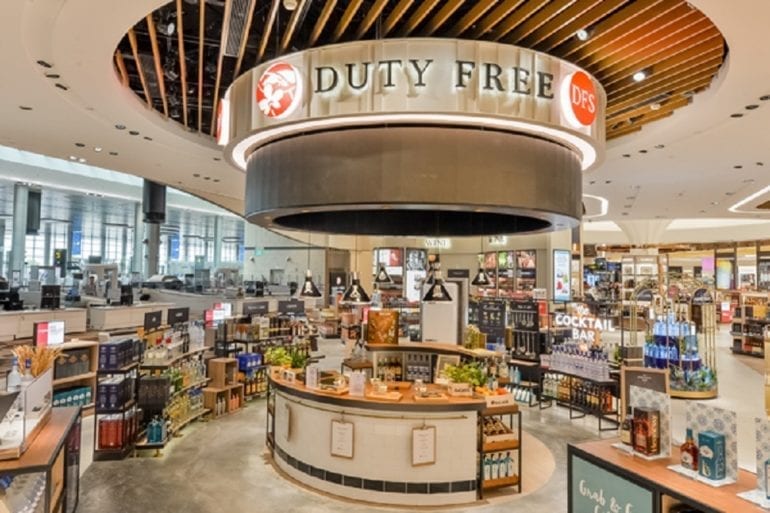
    From midnight tonight, Singapore duty-free allowances will be cut by about a third for returning travellers. Other allowances have also been reduced. Travellers staying outside of Singapore for fewer than 48 hours will be liable for 7 per cent GST on items bought overseas worth more than SG$100 – down from the previous threshold of $150. For travellers outside the country for a period longer than 48 hours, the $600 threshold will similarly be lowered, to $500.

    The changes were announced yesterday by Finance Minister Heng Swee Keat as part of the nation’s new Budget. From April 1, the alcohol concession will also be lowered from three litres of wine or beer to two litres. The spirits cap remains at one litre.

    According to the Inland Revenue Authority of Singapore and Singapore Customs, the cuts to Singapore duty-free allowances are designed to support the city state’s existing tax intake in the face of increasing international travel.

    Returning travellers are required to declare taxable items on arrival, and have been advised to keep purchase receipts to assist in calculating any taxes due. Advance declaration and payment is available via the Customs @ SG mobile app or web portal. Failure to declare or a false declaration can incur a fine of $10,000 as well as up to a year in prison.

  • Malaysian consumers expect economy to improve with zero GST

    Malaysian consumers expect economy to improve with zero GST

    Malaysian consumers are optimistic about the country’s economic outlook after the zero rating of the Goods and Services Tax (GST), with 82% of them opining that the economy will improve in the next 12 months, according to a survey conducted by Nielsen Malaysia.

    More than 1,000 Malaysians between the ages of 18 and 64 from Peninsular Malaysia, Sabah and Sarawak participated in the June survey.

    Nielsen said this latest survey follows similar research conducted in 2015, which found that attitudes toward the introduction of GST were less optimistic as only 58% believed the tax would be good for the economy.

    “While Malaysians were initially tentative toward the introduction of GST three years ago when the tax was first announced, having experienced the effects of the GST over the past three years, they appear to welcome the move to effectively eliminate the tax, perhaps due to the gradual increase in the cost of goods and services that has occurred since its implementation, as reflected in the Consumer Price Index (CPI),” said Nielsen Malaysia managing director Raphael Pereda.

    Some 57% of consumers expect price of goods and services to drop while 33% believe prices will stay at current levels.

    Pereda said the optimism level could mean good news for manufacturers and retailers, with consumer spending intentions likely to rise.

    “Many retailers have been providing consumers with discounts even before the zero-rated GST was officially implemented to encourage consumers not to postpone their festive spending to after June 1, 2018. If these value-for-money promotions continue, we can expect to see an increase in sales volume compared to previous years.”

    The survey showed that two out of three consumers (69%) expect their purchase habits to change following the reduction of GST, with 30% saying that they would spend more money on essential items such as apparel and clothing, perishable foods, non-perishable foods and baby products.

    Malaysians also showed a willingness to increase their spending on non-essential purchases such as holidays or leisure trips (33%), new property (27%) and out-of-home entertainment (26%). A quarter of them said they will be able to channel their money towards paying off debts once the GST is zero-rated.

    Meanwhile, 77% viewed the government’s initiative to fix the price of fuel as being “good for consumers”.

    When asked what they believed the government would do about road tolls in Malaysia, more than 90% believed tolls would either be removed or reduced.

    “It is clear the recent policy announcements made by the government have gained the approval of a vast majority of Malaysians. We are eager to see if this post-election optimism translates into actual consumer spending, which we will be able to determine over time through our retail data,” said Pereda.

  • Aeon adopts wait-and-see approach over GST

    Aeon adopts wait-and-see approach over GST

    Japanese retailer AEON Co (M) Bhd is adopting a wait-and-see approach when it comes to the upcoming abolishment of the Goods and Services Tax (GST) on June 1.

    Executive director Poh Ying Loo said Aeon was still seeking greater clarity from the Pakatan Harapan government.

    “The GST question was something that was also posed by shareholders earlier and our stand right now is that it is too early to decide right now,” Poh said at a press briefing after the group’s 33rd annual general meeting here today.

    “We understand that other policies and tax regime such as the Sales and Services Tax (SST) will be reintroduced. We can’t really comment on whether of not our pricing would be cheaper until those things are made more clear,” he added.

    The group has allocated between RM300 million and RM500 million in capital expenditures (capex) this year.

    According to Poh, this was slightly lower than last year’s capex of some RM500 million.

    “The capex is inclusive of our newest mall in Kuching, Sarawak which we have already opened in April this year,” said Poh.

    With three levels of retail floors and four levels of car park, the Kuching mall is AEON’s debut presence in East Malaysia.

    The remaining capex will be for the expansion of Taman Maluri Shopping Centre and the refurbishment of Tebrau City, Bandar Utama and Bandar Sunway.

    As of the end of 2017, AEON has 26 malls across the country.

    A big part of AEON’s drive this year is to further strengthen its omni-channel strategy that will leverage onto its physical stores for offline experiences, logistics and convenience.

    “We had partnered with online concierge and delivery service Honestbee in January, and the response has been encouraging. We expect this business will grow with time,” said managing director Shinobu Washizawa.

    The firm is also set to roll out a “groceries drive-thru” service in Bukit Indah, Johor whereby customers can order groceries online from Aeon and pick them up themselves through a drive-thru window, starting next month.

    Aeon posted a net profit of RM105 million on the back of RM4 billion revenue for the year ended 31 December 2017.

  • Indian retailers lure customers with discounts as GST kicks in

    Indian retailers lure customers with discounts as GST kicks in

    Some of India’s biggest retailers announced price cuts on Saturday as Asia’s third-largest economy switched to a new nationwide sales tax at the stroke of midnight, replacing a host of provincial and national levies.

    The Goods and Services Tax (GST), India’s biggest tax reform in the 70 years since independence from British colonial rule, unifies the $2 trillion economy and 1.3 billion people into one of the world’s biggest common markets.

    Hypermarket Big Bazaar, owned by Future Retail Ltd, announced discounts of 2 percent to 22 percent on groceries and household supplies across its stores in 26 states.

    Fashion portal Myntra, part of India’s biggest online retailer Flipkart, was also offering GST discounts.

    In Bhubaneswar, the capital of eastern Odisha state, customers queued up outside shops and malls, which remained open until late Friday night to clear stocks of watches, electronic gadgets, cosmetics and gold at discounted rates before the GST regime kicked off at midnight.

    Members of Prime Minister Narendra Modi’s Bharatiya Janata Party (BJP) were seen celebrating the launch of the GST with firecrackers on Friday evening and by painting “Welcome GST” slogans on roads.

    The federal government is encouraging all business to migrate to the new GST system but its complexity – four rates and several exemptions – has still kept many at bay.

    “We will continue as usual unless we see trouble,” said a 35-year-old grocer in Bhubaneswar who has not yet registered for the GST.

    India’s northern Muslim-majority state of Jammu and Kashmir is yet to implement the GST as the provincial government grapples to arrive at a consensus with the opposition and other stakeholders.

    Traders in Kashmir Valley have called for a day’s strike on Saturday to protest the GST.

    “Though we have missed the (July 1) deadline, we will wish to take everybody along before taking any decision,” Public Works Minister Naeem Akhtar said.

  • Parkson revenue falls

    Parkson revenue falls

    Despite contributions from new outlets, Parkson Retail Asia’s department stores have seen third-quarter group revenue fall by 15.6 per cent to S$98.4 million (US$71.5 million), with a 14.4 per cent drop to S$294.6 million for the nine months of its current financial year.

    The Parkson revenue decline reflects same-store revenues falling in Malaysia and Vietnam, plus the weakness of the Malaysian ringgit resulting in lower figures because of the reporting currency being Singapore dollars.

    A pre-tax loss of $7.5 million was recorded by the group for the third quarter, with factors including provision made on loans to managed stores of $4.9 million, and initial losses associated with new stores.

    Same-store sales growth in Malaysia fell 17.4 per cent in the third quarter, but figures for the corresponding quarter last year were bolstered by sales before the introduction of a Goods & Services Tax (GST) on April 1 2015. Also, consumer confidence was below the 100-point threshold for the seventh consecutive year, as reported by the Malaysian Institute of Economic Research.

    Vietnam same-store sales fell 8.2 per cent for the quarter, with a difficult and increasingly crowded retail environment, the company said. For the nine months, a pre-tax loss of $4.9 million has been recorded.

    Sales were flat in Indonesia, edging up just 0.1 per cent. However, the company says consumer sentiment is robust with Bank Indonesia reporting the consumer confidence threshold at 111.1 points, a little down on the 119.1 points at the same time last year. For the nine months, a $3.2 million pre-tax loss was recorded.

    In Myanmar, Parkson same-store sales fell 7.6 per cent, affected by supplier uncertainty about plans to close the FMI Centre, where the store is located, for re-development. However, a new location has been secured, with the new store expected to open by March.

  • Padini fears margin squeeze

    Padini fears margin squeeze

    Malaysia-based Padini Holdings expects an even tougher year ahead as it deals with a double whammy of having to cut prices and pay more for its stock.

    Padini owns the brands Vincci, Seed and Miki as well as stores trading under its own brand.

    The company has revealed margins reduced by between three and five per cent across its brands during the year to June 30 – and it fears even more reductions in the current year. It’s margin is now sitting at around 40 per cent.

    The company has had to absorb the additional six per cent GST applied on retail prices on April 1. At the same time, stock costs have risen due to the rapid deterioration of the value of the ringgit.

    “This financial year is going to be more difficult than FY15 as the weakening ringgit is affecting the cost of goods due to higher import costs,” CEO Chan Kwai Heng said in a news conference after the group’s annual meeting.

    But Chan says the market won’t accept price increases given deteriorating consumer sentiment.

    “We are more focused on driving top-line growth, and have no plans to increase our prices in the short term in order to remain competitive,” he said.

    In the year ahead the company will focus on boosting its online sales (which carry lower overheads than stores), and searching for cheaper supply sources.

    Padini plans to open 16 new stores in 2016, including nine outlet stores, mostly in new malls under construction.

    The company had earlier reported an 11.8 per cent reduction in net profit last year, blamed on aggressive promotional and discounting activities.

  • Malaysian customs urges small retailers to invest in GST-compliant sales system

    Malaysian customs urges small retailers to invest in GST-compliant sales system

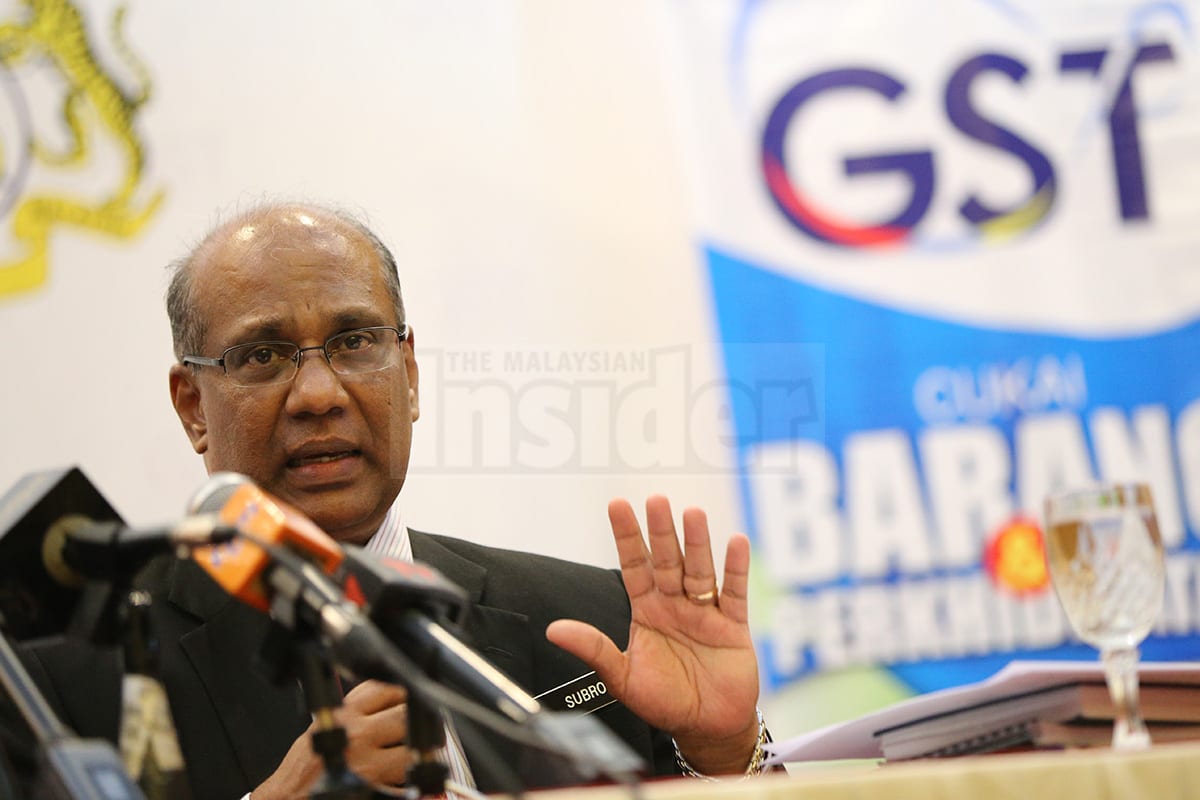
    Installing a point-of-sale (POS) system to issue printed receipts as part of implementing the goods and services tax (GST) will only be a one-time investment, the Malaysian Customs Department’s GST division told operators of small businesses on Thursday.

    GST division director Datuk T. Subromaniam said the system will be usable for a long-term basis and would help businesses identify standard and zero-rated items, adding that adopting POS would cost between MYR3,000 (USD828) and MYR4,000.

    He also said tax deductions were available under Accelerated Capital Allowance (ACA) for businesses on purchases of information communication technology equipment, hardware and training.