Retail News CRM

Tag: Hang Seng

  • Ant Internationals Alipay+ Revolutionizes Asian Banking with Hang Seng Partnership for Cross-Border QR Payments

    Ant Internationals Alipay+ Revolutionizes Asian Banking with Hang Seng Partnership for Cross-Border QR Payments

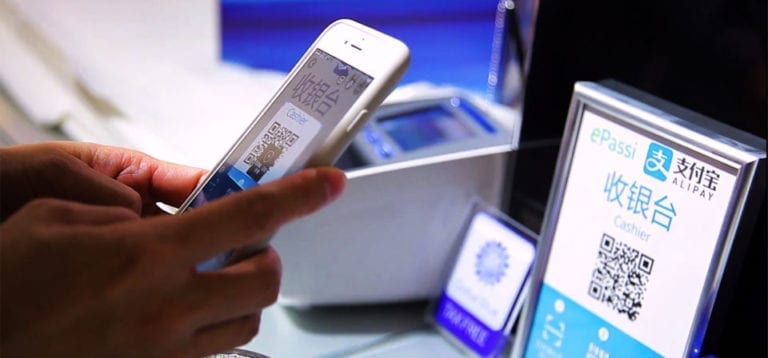
    Ant International is making inroads into the traditional banking industry in Asia, with Hang Seng Bank being the first to partner with the payment network in Hong Kong. This collaboration will enable customers to make cross-border QR payments directly from the bank’s mobile app.

    Users of the Hang Seng Mobile App are now able to scan QR codes to facilitate payments in mainland China and overseas. This is made possible through the Alipay+ network, which boasts access to over 100 million merchants across 55 countries and regions. This marks a significant milestone in the integration of traditional banking apps with the fast-growing digital wallet and QR-based payment network ecosystem in Asia.

    Banking Sector Taps Into Expansion of Cross-Border Payments

    Banks are finding that integrating with Alipay+ allows them to enhance their cross-border payment capabilities without the necessity of establishing separate connections with merchants and payment networks in individual markets.

    Alipay+, which serves as Ant International’s unified wallet gateway, is connected to more than 50 digital wallets and financial institutions. It is accepted across more than 220 markets globally and has forged partnerships with over ten national QR payment systems including Malaysia’s DuitNow and Thailand’s PromptPay.

    With the demand for cross-border payments originating from Asia-Pacific predicted to grow faster than the global average, this presents banks with a prime opportunity. The expectation is that outbound consumer-to-consumer and consumer-to-business cross-border payment volumes from the region could hit $3.7 trillion by 2032, almost twice the level recorded in 2024. This trend enables banks to retain customers within their own digital ecosystems, even when they travel or carry out international transactions.

    Alipay+ Builds Banking Network Across Asia

    Hang Seng Bank joins an increasing number of Asian banks that are connecting their mobile banking customers to Alipay+. Existing banking partners include OCBC in Singapore, Public Bank in Malaysia, Bank of the Philippine Islands, Asia United Bank in the Philippines, Kasikorn Bank and Siam Commercial Bank in Thailand, as well as Vietcombank in Vietnam.

    This model enables customers to continue using their familiar banking app while gaining access to a much larger international merchant network. In addition to payments, banks can utilise the Alipay+ Super App Platform to integrate additional services through mini-programs and plug-in solutions, which include travel-related services and other digital features.

    Ant International is not only positioning itself as a payments provider but increasingly as a technology and infrastructure partner to banks. Alongside Alipay+, the company is developing AI-based foreign-exchange technology and blockchain-powered infrastructure for cross-border liquidity management. Ant International already collaborates with global financial institutions such as Citi, Barclays, Standard Chartered and HSBC across various technology initiatives.

    For traditional banks, the rise of networks like Alipay+ signifies a broader strategic shift in Asian payments. Banks are increasingly connecting their own apps to external payment ecosystems rather than competing with digital wallets solely through proprietary solutions. The partnership with Hang Seng brings this model to Hong Kong, one of Asia’s primary banking and cross-border financial hubs.

    Questions & Answers

    What does the partnership between Hang Seng Bank and Ant International entail?
    This partnership allows Hang Seng Bank’s customers to make cross-border QR payments directly through the bank’s mobile app via the Alipay+ network.

    How is Alipay+ influencing the cross-border payment landscape in the Asia-Pacific region?
    Alipay+ is helping banks expand their cross-border payment capabilities without the need for separate connections with merchants and payment networks in individual markets.

    What is the broader strategic shift in Asian payments?
    There is a strategic shift in favor of banks connecting their own apps to external payment ecosystems, rather than competing with digital wallets solely through proprietary solutions.
  • HSBC Secures Shareholder Approval for $14 Billion Hang Seng Privatization Deal: Set for Hong Kong Stock Exchange Delisting

    HSBC Secures Shareholder Approval for $14 Billion Hang Seng Privatization Deal: Set for Hong Kong Stock Exchange Delisting

    HSBC, the London-based bank, has successfully secured approval from the shareholders of its subsidiary, Hang Seng, to privatize it. This move signifies HSBC’s intention to acquire the Hong Kong lender, a deal estimated to be worth $14 billion.

    On January 8, during a shareholders’ meeting, HSBC managed to secure about 86% of non-partisan votes in favor of the privatization. This percentage was comfortably above the 75% threshold that was required for the proposal to pass.

    Next Steps

    This development doesn’t mark the end of the process, however. The proposal is now set for a High Court hearing, which is scheduled for January 23. If approved by the court, the scheme is expected to become effective on January 26. Subsequently, Hang Seng’s shares will be delisted from the Hong Kong Stock Exchange on the following day, January 27.

    Georges Elhedery, HSBC CEO, expressed satisfaction at the approval of the proposal. Elhedery also expressed gratitude towards the Hang Seng Bank shareholders for their continued support. He stated that the approval showcases the shareholders’ robust trust in Hang Seng Bank’s franchise and the opportunities that complete ownership within the HSBC Group could present.

    Elhedery also expressed eagerness to move forward with the proposal and to fulfill the remaining conditions. He committed to providing further updates when appropriate.

    Concerns and Reassurances

    There have been concerns raised about HSBC assuming potential loan risks due to the downturn of Hong Kong’s commercial real estate sector. However, Elhedery previously asserted that the decision to privatize Hang Seng aligns strategically with their aim of driving stronger growth.

    Questions & Answers

    What is HSBC’s plan regarding Hang Seng Bank?
    HSBC has obtained approval from the shareholders of Hang Seng Bank to take it private. This will involve buying out the Hong Kong-based subsidiary for an estimated $14 billion.

    What are the next steps for the proposal?
    The proposal will undergo a High Court hearing on January 23 for sanctioning. If successful, the scheme is expected to be effective by January 26, with Hang Seng’s shares to be delisted from the Hong Kong Stock Exchange on January 27.

    What are the concerns related to this proposal?
    Some have expressed concerns about HSBC taking on loan risks linked to the downturn of Hong Kong’s commercial real estate sector. However, HSBC’s CEO maintains that the move aligns strategically with their goal to drive stronger growth.

  • Hang Seng Bank Coo Vivien Chiu Breaks Record With $5.14 Million Hong Kong Luxury Apartment Purchase

    Hang Seng Bank Coo Vivien Chiu Breaks Record With $5.14 Million Hong Kong Luxury Apartment Purchase

    Vivien Chiu, the Chief Operating Officer of Hang Seng Bank, has recently acquired a deluxe apartment in Hong Kong for HK$40 million, equivalent to around US$5.14 million. The cost per square foot of the 1,651 square-foot property amounted to HK$24,228, or US$33,517 per square meter, making it a record-setting purchase for the property in the current year.

    Property Details

    The luxury apartment is situated in the Beverly Hill project located in the Happy Valley area of Hong Kong. The property last changed owners in 2014 for a sum of HK$16 million. The recent handover took place on Monday, as per the Land Registry records.

    Chiu previously held positions in various departments at HSBC prior to her tenure at Hang Seng, which began in 2022.

    In a similar vein, Diana Cesar, the CEO of Hang Seng at the time, bought a flat in the upscale Flora Garden complex located in the Tai Hang Mid-Levels area in August, for a sum of HK$26.63 million.

    HSBC to Acquire Hang Seng

    Recently, HSBC announced its plans to acquire Hang Seng Bank for a staggering sum of HK$106.1 billion. Despite the bank’s recent struggles, Hang Seng will retain its own license, governance, and brand after the acquisition.

    This move comes as Hong Kong’s banking sector battles the most significant real estate slump since the late 1990s. Home prices in the city have dropped by approximately 30% from their peak in 2021.

    Housing Sector Recovery

    Despite the downturn, the housing sector has shown promising signs of recovery. According to data from the Rating and Valuation Department (RVD), the official index for second-hand home prices has increased by 1.26% since April. The index saw its fifth consecutive month of growth in August, reducing the overall decline in the year to just 0.24%.

    In August, some 5,291 homes changed ownership, representing an 8.2% decrease from July, but a 44.8% increase compared to the same period in the previous year. The total transaction value reached HK$42.2 billion, a decrease of 8.9% from the previous month but an increase of 48.2% year-over-year.

    Between January and August, the combined sales of new and existing homes increased by 10% from the previous year to 42,379 units. This is the highest level for this period in the past four years, as reported by property agency Midland Realty.

    Questions & Answers

    What is the total cost of the luxury flat purchased by Vivien Chiu?
    The total cost of the flat purchased by Vivien Chiu is HK$40 million, equivalent to around US$5.14 million.

    Who is the former owner of Hang Seng Bank, and what are the terms of the bank’s acquisition by HSBC?
    HSBC is the new owner of Hang Seng Bank. Despite the acquisition, Hang Seng will retain its own license, governance, and brand.

    What are the recent trends in Hong Kong’s housing sector?
    Home prices in Hong Kong have seen significant declines, but recent data shows signs of recovery with the index for second-hand home prices increasing by 1.26% since April.

  • Hang Seng Bank Reports 30% Profit Drop to HK$6.88 Billion in First Half of 2025.

    Hang Seng Bank Reports 30% Profit Drop to HK$6.88 Billion in First Half of 2025.

    In a challenging first half of 2025, Hang Seng Bank reported a significant profit drop, with net earnings attributable to shareholders plummeting by 30% to $876.45 million (HK$6.88 billion). The bank’s operating profit also took a hit, declining 25% to $1.09 billion (HK$8.55 billion), while earnings per share fell to HK$3.34, down 34% from the previous year. This financial dip underscores the pressures currently faced by banks as they navigate a turbulent economic landscape.

    Emerging Diversification Strategies

    Despite the declines in traditional profit areas, Hang Seng Bank found a silver lining as fees and other income surged by 34% during the same period. This strategy of diversification appears to be paying off, with these revenues now accounting for 31.6% of the bank’s total income, a marked increase from 25.9% at the end of 2024. This adaptation could be likened to an athlete finding new gear in a marathon — every bit helps in an uphill race.

    Prudent Risk Management Amid Market Uncertainties

    Chief Executive Diana Cesar referred to the first half of the year as “demanding,” attributing the bank’s struggles to multiple external factors. Ongoing trade disputes, persistently high interest rates, and a protracted downturn in the commercial property market have forced the bank to embrace a “prudent and proactive” approach to risk management. Consequently, the institution has boosted its provisions for expected credit losses (ECL) to $624.21 million (HK$4.9 billion), leading to a 28% decline in profit before tax, now sitting at $1.03 billion (HK$8.1 billion).

    Shareholder Returns and Future Outlook

    In a gesture to reassure shareholders, the bank has declared a second interim dividend of HK$1.3 per share, culminating in a total of HK$2.6 per share for the first half of 2025. Additionally, Hang Seng Bank plans to embark on a share buy-back program worth up to $382.16 million (HK$3 billion), marking a proactive step to stabilize its market position over the next six months. As of the end of June 2025, the bank reported a common equity tier 1 (CET1) capital ratio of a robust 21.3%. However, non-performing loans (NPLs) increased to 6.69%, reflecting ongoing credit strains, particularly in the property sector.

    Despite the current challenges, Cesar remains optimistic about potential growth. “We see early signs of recovery in the capital markets and a gradual improvement in the residential property sector. While hurdles remain, we are hopeful about Hong Kong’s long-term growth prospects,” she shared, evoking a sense of cautious optimism amidst uncertainty.

    Questions & Answers

    What factors contributed to Hang Seng Bank’s profit decline in the first half of 2025?
    The bank faced significant challenges including trade tariffs, high-interest rates, and a downturn in the commercial property market, which collectively impacted its earnings and led to increased provisions for credit losses.

    How has Hang Seng Bank adjusted its income strategy in response to financial pressures?
    The bank has diversified its revenue streams, resulting in a notable 34% increase in fees and other income, which now comprises a larger portion of its overall revenue.

    What is the outlook for Hang Seng Bank moving forward?
    Despite current challenges, CEO Diana Cesar expresses optimism, citing early signs of recovery in the capital markets and improvements in the residential property sector, fostering hope for long-term growth in Hong Kong.

  • Hang Seng Bank Axes Jobs in Restructuring

    Hang Seng Bank Axes Jobs in Restructuring

    Hang Seng, a Hong Kong-based lender backed by HSBC, is preparing to make adjustments to its workforce as part of a wider restructuring plan and a move to incorporate more technology into its operations.

    Workforce Reduction

    The company has announced that it will be reducing its core staff by approximately 1 percent in an attempt to streamline roles and improve efficiency. The exact number of jobs at risk has not been divulged by the bank, but it has confirmed that technology will play a central role in enhancing the quality of service and operational efficiency.

    Employees affected by these changes are encouraged to apply for new positions that have been created as a result of the restructuring process.

    Previous Speculation

    This announcement comes in the wake of reports suggesting that Hang Seng was planning to eliminate between 10 and 50 percent of its workforce in certain departments.

    Ownership and Employment

    HSBC maintains a 63 percent stake in Hang Seng, which boasts a workforce of around 8,300 employees. Most of these individuals are based in Hong Kong and mainland China, as of the close of 2024.

    Questions & Answers

    What is the primary reason for Hang Seng’s restructuring?
    The main purpose of the restructuring is to streamline roles and improve operational efficiency within the company.

    How will technology play a role in Hang Seng’s restructuring?
    Technology will be used to enhance the quality of service and operational efficiency in the bank.

    How many employees does Hang Seng currently employ and where are they based?
    Hang Seng has around 8,300 employees, the majority of whom are located in Hong Kong and mainland China.

  • Ex-Hang Seng CEO Passes Away

    Ex-Hang Seng CEO Passes Away

    The former chief executive of Hang Seng reportedly passed away last week at the age of 57.

    Louisa Cheang Wai-man passed away last week, according to a statement from Hang Seng.

    The bank first disclosed that Cheang was undergoing treatment for a medical condition in July 2020 before she took a three-month leave of absence in May which was extended in August when the bank announced HSBC Hong Kong CEO Diana Cesar as her successor, effective September 1.

    Cheang has served as Hang Seng’s CEO and vice-chairman since July 2017 following the retirement of Rose Lee Wai-Mun. Prior to the appointment, Cheang worked for parent group HSBC where she held senior roles like group general manager and group head of retail banking. She first joined HSBC in its credit card department in 1999.

    At Hang Seng, Cheang is credited with pushing a number of key initiatives including gender diversity and digital transformation.

  • Hang Seng Replaces Ailing Chief

    Hang Seng Replaces Ailing Chief

    Major local lender Hang Seng Bank has named a new chief executive to replace Louisa Cheang, who will extend her leave of absence over medical reasons.

    Diana Cesar has been appointed chief executive at Hang Seng, according to a statement, effective September 1.

    Cesar joins from HSBC – Hang Seng’s top shareholder and parent – where she is currently its Hong Kong CEO. She first joined HSBC in 1999 and has since held various senior roles before she was named Hong Kong CEO in 2015.

    Cesar is the right person to build on Cheang’s record and take Hang Seng to the next level, said HSBC’s APAC co-CEO David Liao in a statement. Hong Kong has a bright future, and under Diana’s direction, Hang Seng will be there to help our customers make the most of new opportunities.

    Cesar replaces Louisa Cheang Wai-wan who was in the midst of a three-month medical break announced in May.

    Cheang was made CEO at Hang Seng in 2017, also joining from parent group HSBC where she held senior roles like group general manager and group head of retail banking. She first joined HSBC in its credit card department in 1999.

    At HSBC, Hong Kong chief operating officer Luanne Lim – who also first joined the British lender in 1999 – will step in to serve as interim Hong Kong CEO until a successor is appointed.

    Liao will become a non-executive director of Hang Seng Bank, effective September 1, replacing Peter Wong who retired from his role as APAC CEO and has become a non-executive chairman at HSBC.

  • Mainland Chinese names drive Hang Seng’s return to 30000

    Mainland Chinese names drive Hang Seng’s return to 30000

    The Hang Seng Index topped 30,000 for the first time in a decade on Nov. 22 amid a market sea change that is bringing mainland Chinese companies to the fore and leaving many big local names behind.

    The Hong Kong benchmark ended the day at 30,003.49, up 0.62%. It has gained 36% year to date, outpacing major indexes in Japan, South Korea, India and Singapore. The gains have been “driven first and foremost by Western investors,” said Sze Tung, asset manager at Victory Securities.

    Alex Wong Kwok-ying of Ample Capital additionally cites an influx of money from the mainland, where “investors have capital to spare.” Funds flow in via stock connect links established with Shanghai three years ago and with Shenzhen last December.

    Much has changed since the Hang Seng last topped 30,000 in November 2007, including an increase in the number of constituents from 40 to 50. Mainland companies now make up half the index, up from 38% a decade ago, and will become a majority in December when a reshuffle will add Sunny Optical Technology (Group) and Country Garden Holdings.

    The main engine powering the Hang Seng’s ascent also hails from the mainland: Tencent Holdings. The Shenzhen-based internet conglomerate listed in Hong Kong in 2004 and joined the benchmark index in June 2008. It tops the Hang Seng’s weighting list at 10.75%, beating such traditional Hong Kong powerhouses as HSBC Holdings and CK Hutchison Holdings.

    Tencent shares have more than doubled this year, buoyed by a number of positive factors, including China’s large internet user base, the release of mobile game “Glorious Mission” and news of the company taking a substantial stake in Snap, the American operator of photo- and video-sharing app Snapchat. Tencent’s market capitalization recently exceeded $500 billion, a first for an Asian enterprise. The milestone saw Tencent briefly surpass Facebook to become the world’s fifth-largest business by market cap.

    Tencent is not the Hang Seng’s only mainland-based standout. Geely Automobile Holdings’ shares have nearly quadrupled this year and those of Apple supplier AAC Technologies Holdings more than doubled.

    DROPPING OFF THE MAP

    Hong Kong-based companies, meanwhile, are fading into the background. Prominent names such as PCCW — the telecommunications company run by Richard Li Tzar-kai, younger son of tycoon Li Ka-shing — and Li & Fung, known for sourcing Chinese products for U.S. retail behemoth Wal-Mart Stores, have dropped off the benchmark index. Cathay Pacific Airways, Hong Kong’s de facto flag carrier, will lose its decades-old blue chip status in December.

    Mainland businesses, including both H-share companies based on the mainland and “red chips” incorporated in Hong Kong, are latecomers to the territory’s bourse. They gained a foothold in the early 1990s as China sought to work around diplomatic sanctions imposed by Western powers after the 1989 Tiananmen Square crackdown and to get its reform and opening-up policy back on track.

    The first H-share listing came in July 1993 with the Hong Kong debut of Tsingtao Brewery. A watershed followed in September 2006 with the inclusion of China Construction Bank (CCB) in the Hang Seng Index — the first H-shares to make it to the big leagues.

    Mainland companies increasingly favor Hong Kong as a listing destination for its better access to global investment capital and more predictable regulatory framework. These enterprises have a growing presence in the Hong Kong market as a whole. A total of 378 mainland Chinese businesses were listed there as of the end of October, including 226 H-share listings, accounting for almost 40% of the bourse’s total market cap.

  • What if…HSBC sold Hang Seng for BoCom deal?

    What if…HSBC sold Hang Seng for BoCom deal?

    Companies of China are increasingly focused on international expansion, at the exhortation of Beijing. Its desire to expand has helped support the international ambitions of local insurers such as Anbang and Fosun International, or securities firms such as Citic and Haitong. But one vital part of this sector has yet to demonstrate such assertiveness: China’s banks.
    Chinese individuals are remarking upon their meekness. The South China Morning Post reported that Li Ruogo, former chairman of the Export-Import Bank of China and now an executive vice-president at the International Financial Forum, claimed the international capabilities of China’s banks is not suitable for the needs of the nation’s outbound investments and acquisitions.

    Similarly, the newspaper reported that Ma She, deputy director of European affairs at the Ministry of Commerce, as criticising the banks for “underdeveloped” overseas branch networks and poor data sharing management.

    To date China’s banks have embarked on tentative acquisitions offshore, in South Africa and South America. But these have been small, and piecemeal.

    It looks unlikely the banks would ever unveil grandiose plans to buy a Deutsche Bank, or a Standard Chartered. Instead, for a truly transformational purchase they would be most likely to seek targets close to home.

    Hong Kong would be the most obvious immediate candidate, boasting geographic, financial and cultural ties. However, the city has relatively few decent-sized candidates that are obvious acquisition prospects.

    Bank of East Asia might be the most obvious potential target. However, the bank recently issued an exchangeable bond in its shares to Sumitomo-Mitsui Financial Group, effectively raising its stake to around 17.5%. That, combined with the Li family’s 11%, might make a takeover bid highly challenging, particularly given the likely reluctance of the Li family to sell out.

    But there is another possibility: Hang Seng Bank.

    Appealing acquisition

    Hang Seng’s biggest shareholder is HSBC. It bought a 51% stake in Hang Seng in 1965, after the latter was tottering following a bank run, and has subsequently raised this stake to 62.14%.

    As a result HSBC, which is by far Hong Kong’s largest retail bank, was responsible for 52% of Hong Kong loans (HSBC 40% and Hang Seng 12%) and 55% of deposits in 2014 (HSBC 44% and Hang Seng 11%), according to a report by Dagong Securities, published in May.

    The UK-headquartered bank holds Hang Seng at arm’s length, no doubt in order to avoid accusations of monopolistic practices. But it would be very reluctant to sell it. Understandably so; Hang Seng reported a profit of HK$20.05 billion ($2.59 billion) for the first half of 2015, had total assets of HK$1.3 trillion, while it was trading at 1.93 times price to book value on Wednesday, according to Bloomberg. It enjoys strong retail banking and insurance businesses and is growing in wealth management too.

    Acquiring Hang Seng would make a potentially appealing addition to a Chinese state-owned bank. It would offer the lender immediate scale in Hong Kong, North Asia’s leading financial centre. More importantly, Hang Seng would provide expertise in international banking practices and customer services.

    For Hang Seng, the backing of mainland lender with international aspirations would offer it the opportunity to flourish into commercial and retail banking outside of Hong Kong.

    Getting a sale done

    Hang Seng’s strength and financial stability means HSBC would be very reluctant to part with it. Yet it might be persuaded to do so for a large enough incentive.

    As it happens, Beijing could give HSBC what it may want most of all:  ownership of a local nationwide bank.

    The most likely is Bank of Communications. HSBC has owned around 19% of BoCom for years, and hoped to eventually get majority control, but these plans are currently impossible due to China’s 20% foreign ownership limit in its banks.

    Beijing could offer HSBC an exemption to its foreign ownership limits (potentially utilising the idea that HSBC’s local Hong Kong bank unit, The Hong Kong & Shanghai Banking Corporation, is applicable to buy larger stakes in China banks). Then it could sell HSBC enough shares to give it a controlling interest at a competitive rate (following, no doubt, a very thorough audit).

    In return, HSBC would agree to relinquish Hang Seng to a local bank for a similarly competitive valuation.

    The biggest challenge would be building enough political support for such a deal.

    It would likely require sanctioning by the State Council, plus the Ministry of Finance, State-owned Assets Supervision and Administration Commission and the China Banking Regulatory Commission. Additionally, the Chinese bank would need to agree to the purchase of Hang Seng Bank.

    However, if the political will could be found, it should be relatively straightforward to sell shares in BoCom to HSBC. The Chinese government owns 46.3% of BoCom, with the National Council for Social Security Fund owning another 4.78% and Sasac holding a further 4.66%, according to 4-traders.com.

    Securities fast track

    HSBC might ask for another favour in return for giving up BoCom: rapid approval of its new securities joint venture.

    The bank HSBC agreed to establish a joint-venture securities company with Shenzhen Qianhai Financial Holdings, of which it would own 51%, on November 2. However, the deal is subject to regulatory review and approval, which can take a long time – some JV players have been waiting years to get final approval on certain licences.

    Therefore HSBC would likely want fast-tracked approvals that gave its JV full underwriting, trading and wealth management access to China’s local capital markets.

    In addition to offering HSBC incentives, Beijing could also – if it so chose – place pressure on it to divest Hang Seng via the compliant politicians who run Hong Kong’s government.

    For all the operating separation of HSBC and Hang Seng, the fact remains the two comprise a dominant percentage of Hong Kong’s retail banking sector. In most countries this would cause antitrust concerns.

    Coincidentally, Hong Kong’s government introduced a new Competition Ordinance on December 14. International law firm Linklaters noted “the impact of the new law will grow over time, but it will ultimately lead to a more mature marketplace in which consumers will benefit through enhanced competition.”

    Costly acquisition

    Aside from political will, the biggest sticking point of any deal over bank acquisitions would be cost.

    Neither purchase would be cheap. BoCom had a market capitalisation of Rmb416 billion, or $64.13 billion, as of Thursday, giving it a price-to-book valuation of 0.94 times. Assuming BoCom’s balance sheet didn’t raise any major concerns, HSBC might spend $21.8 billion to raise its stake from 19% to 51%, assuming it paid on a par price-to-book valuation.

    Hang Seng is a bit cheaper. Its market capitalisation was HK$281.4 billion ($36.3 billion) on Thursday, giving it a price to book valuation of 1.98 times. At that valuation, a Chinese bank would need to pay $18.5 billion to gain a simple 51% majority stake from HSBC.

    To put those price tags into perspective, the largest banking M&A on record in Asia-Pacific, Westpac Banking Corporation’s $17.9 billion purchase of St. George’s Bank in 2008. Malaysia’s CIMB, RHB and Malaysia Building Society did discuss a three-way merger worth $22.3 billion in 2014, but the plan was scrapped early this year.

    Beijing would need to have a truly unshakeable desire to get one of its banks to expand internationally to sanction such an expensive M&A. And it would be hard for the Chinese government to cajole HSBC into such a sale without giving it in return the sort of local bank control it has thus far been unwilling to allow.

    But China appears keen to get its banks to support the expansion of its companies and the usage of its currency overseas. And HSBC really wants more mainland access.