
Retail News CRM

Tag: headwinds

  • JD.com Defies Odds with Rising Q1 Revenue Amidst Chinas Economic Headwinds

    JD.com Defies Odds with Rising Q1 Revenue Amidst Chinas Economic Headwinds

    JD.com, a major player in the Chinese e-commerce sector, has surpassed first-quarter revenue and profit expectations, provoking interest among investors about the role of Beijing’s subsidy program in maintaining this positive trend amidst rising tariffs and consumer demand issues.

    Shares of JD.com, listed in the US, showed a slight increase in early trading. CEO Sandy Xu informed analysts that although revenues from electronics and home appliances had decreased 8.4% year-on-year in the first quarter, there was still an observable sequential improvement.

    Despite facing external challenges in Q2, Xu expressed confidence in the potential for stronger performance in the electronics and home appliances sector in the latter half of the year.

    China, which holds the position of the world’s second-largest economy, continues to grapple with low consumer confidence. This is largely due to a protracted property slump and increased tariffs levied by the US on a variety of Chinese goods. The ongoing conflict between the US and Iran has also resulted in rising fuel prices and living costs, subsequently reducing consumer spending power.

    However, JD.com, the leading retailer of appliances and electronics, may have been able to moderate revenue losses with the help of subsidies from local governments. These subsidies encourage consumers to trade in their old appliances and electronics.

    Financial Implications

    The quarterly revenue for the period ending in March stood at $46.47 billion, outperforming the LSEG consensus estimate of $45.9 billion, which was calculated from the opinions of 15 analysts.

    Yet, increased expenses, including fulfillment costs, research and development, and marketing, led to a decrease in net income. JD.com’s net income attributable to its ordinary shareholders was $750.872, surpassing expectations of $496.164.8, but representing a 53% decline from the previous year.

    The preceding quarter saw a net loss of $398.993, partly attributable to significant investments in food delivery. As a means of generating new revenue sources amidst fierce e-commerce competition, the company ventured into the food delivery sector last year, going up against established competitors like Meituan and Alibaba. This move, however, added to the pressure on profits.

    Xu stated that the food delivery business of JD.com is already demonstrating its strategic value by contributing an additional 3% to advertising revenues in Q1. The company also reported that investment in JD Food Delivery has “significantly narrowed on a sequential basis.”

    Questions & Answers

    What were JD.com’s first-quarter revenue and profit results?
    The company exceeded first-quarter revenue and profit expectations, reporting a quarterly revenue of $46.47 billion.

    What challenges is JD.com facing in generating profits?
    JD.com is struggling with increased expenses in several areas, including fulfillment costs, research and development, and marketing. The company also faced a net loss in the preceding quarter due to heavy investments in food delivery.

    How is JD.com strategizing to combat these challenges and generate new revenue?
    JD.com entered the food delivery market last year to develop new revenue streams. Despite the high costs, the company’s food delivery business is already contributing an additional 3% to advertising revenues.
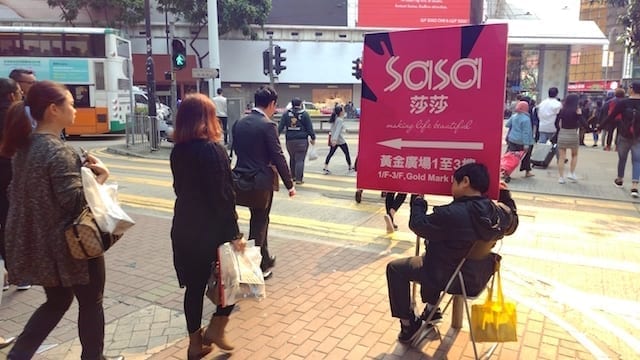
  • Sa Sa International Faces Sales And Profit Downturn Amid Economic Uncertainties

    Sa Sa International Faces Sales And Profit Downturn Amid Economic Uncertainties

    Sa Sa International, a prominent beauty retailer, has recently disclosed a decrease in both sales and profits for its most recent fiscal year. This downturn is attributed to unfavorable market conditions in Hong Kong and Macau, the principal markets for the company.

    Sales Decrease

    Sa Sa International’s financial reports demonstrate a marked decrease in turnover, with a dip of 9.7% to HK$3.9 billion (US$497 million) for the fiscal year which ended on March 31. This decline is due largely to the continuous outbound travel of Hong Kong and Macau residents to Mainland China and other foreign countries.

    This expatriation, in tandem with a robust US dollar and an increase in economic uncertainties caused by trade tariffs, has led to more cautious spending by those visiting Hong Kong and Macau. The primary markets for the group are indeed Hong Kong and Macau, which represent more than 75% of the company’s total sales.

    In these markets specifically, turnover experienced a decline of 12.3%, and 10.5% in Mainland China, but conversely, a 14.7% increase was observed in Southeast Asia.

    Profit Decline

    The company has also reported a significant decline in profits for the year, with a slide of 64.8% to HK$77 million, aligning with the company board’s previous projections in April. Brick-and-mortar sales decreased by 11.9%, though some improvement was noted in the latter half of the fiscal year. However, online sales saw a modest increase of 1.2%, largely thanks to the growth of third-party e-commerce platforms in the Southeast Asian market.

    As the year concluded, the group maintained 84 stores in Hong Kong and Macau, 18 in Mainland China, and 72 in Southeast Asia.

    Future Plans

    Sa Sa International’s management team has expressed their intent to closely monitor market trends and make adjustments to their portfolio as necessary. Their primary objective is to facilitate growth in both sales and gross profit, while at the same time, maintaining a stable gross profit margin. Their aim is to develop a sustainable model to boost profitability.

    In the first quarter ending June 15, the group witnessed a 4.5% increase in turnover, with growth recorded in all markets, except for Mainland China.

    Questions & Answers

    What are the primary markets for Sa Sa International?
    Hong Kong and Macau are the primary markets for Sa Sa International, accounting for more than 75% of the company’s total sales.

    What caused the recent downturn for Sa Sa International?
    This downturn is due largely to the continuous outbound travel of Hong Kong and Macau residents to Mainland China and other foreign countries, coupled with a robust US dollar and increasing economic uncertainties.

    What is Sa Sa International’s plan moving forward?
    The company plans to closely monitor market trends and make adjustments to their portfolio as necessary. Their primary objective is to facilitate growth in both sales and gross profit while maintaining a stable gross profit margin.