Retail News CRM

Tag: Hong Kong

  • Noodle Shop Tamjai SamGor Mixian to launch in Japan

    Noodle Shop Tamjai SamGor Mixian to launch in Japan

    Hong Kong noodle chain Tamjai SamGor Mixian is to expand its international reach with its Japanese debut early next year.

    Marking the brand’s second overseas entry after Singapore, the Japan launch follows its IPO in Hong Kong last week, the proceeds of which will be used to fund its global expansion plan, including its launch in Japan and Australia. The noodle chain aims to double its store network to 330 by 2024, with 25 new Japanese stores and 15 restaurants in Australia.

    “With the support of its major shareholders, Tridor Holdings, Tam Jai International has laid a solid foundation for further overseas expansion,” said Darren Lau, CEO of Tam Jai International. “We will continue to deliver the taste of Tamjai and our unique food culture not only in Japan but all over the world.”

    Beside its signature dishes, the Japan restaurants will also feature toppings dedicated to Japanese customers.

    “We hope that many people in Japan will know the charm of Tamjai SamGor Mixian and develop it as a store that can be used on a daily basis,” said Takaya Awata, President and CEO of Toridoll Holdings Corporation, parent company of Tam Jai International.

  • Billionaire Alibaba founder Jack Ma reappears in Hong Kong

    Billionaire Alibaba founder Jack Ma reappears in Hong Kong

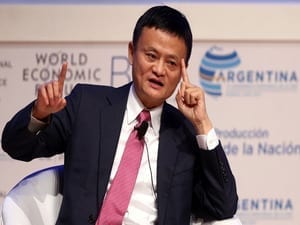
    Alibaba Group founder Jack Ma, largely out of public view since a regulatory clampdown started on his business empire late last year, is currently in Hong Kong and has met business associates in recent days.

    The Chinese billionaire has been keeping a low profile since delivering a speech in October last year in Shanghai criticizing China’s financial regulators. That triggered a chain of events that resulted in the shelving of his Ant Group’s mega IPO.

    While Ma made a limited number of public appearances in mainland China after that, as speculation swirled about his whereabouts, one of the sources said the visit marked his first trip to the Asian financial hub since last October.

    Alibaba did not immediately respond to requests for comment outside of its regular business hours. Comments from Ma typically come via the company.

    Ma, once China’s most famous and outspoken entrepreneur, met at least “a few” business associates over meals last week, said the people.

    Ma, who is mostly based in the eastern Chinese city of Hangzhou, where his business empire is headquartered, owns at least one luxury house in the former British colony that also houses some of his companies’ offshore business operations.

    The former English teacher disappeared from public view for three months before surfacing in January, speaking to a group of teachers by video. That eased concern about his unusual absence from the limelight and sent Alibaba shares surging.

    In May, Ma made a rare visit to Alibaba’s Hangzhou campus during the firm’s annual “Ali Day” staff and family event, company sources have said.

    On Sept. 1, photographs of Ma visiting several agricultural greenhouses in the eastern Zhejiang province, home to both Alibaba and its fintech affiliate Ant, went viral on Chinese social media.

    The next day, Alibaba said it would invest 100 billion yuan ($15.5 billion) by 2025 in support of “common prosperity”, becoming the latest corporate giant to pledge support for the wealth-sharing initiative driven by President Xi Jinping.

    Alibaba and its tech rivals have been the target of a wide-ranging regulatory crackdown on issues ranging from monopolistic behavior to consumer rights. The e-commerce behemoth was fined a record $2.75 billion in April over monopoly violations.

    Earlier this year, regulators also imposed a sweeping restructuring on Ant, whose botched $37 billion initial public offering in Hong Kong and on Shanghai’s Nasdaq-style STAR Market would have been the world’s largest.

  • ZTE deepens partnership with China Telecom Global in Hong Kong

    ZTE deepens partnership with China Telecom Global in Hong Kong

    ZTE Corporation has signed a strategic cooperation agreement with China Telecom Global Limited in Hong Kong.

    According to the agreement, both parties will further deepen their strategic cooperation in cloud network services, ICT, data centers and global operation in the DICT field.

    “China Telecom and ZTE have a long-standing partnership. In the overseas markets, ZTE has become one of our major equipment suppliers since we started the project from scratch in Philippines in the second half of 2019,” said Mr. Donald Tan, CEO of CTG. “ZTE delivered the project with speed and quality, reaching a new milestone for our cooperation.”

    “As to the key strategic planning in the next few years, I believe that both CTG and ZTE will continue to strengthen the strategic cooperation and build a comprehensive, in-depth and long-term partnership to create synergies for future growth,” Mr. Tan added.

    “China Telecom has always been one of ZTE’s most important partners. Through CTG’s project in Philippines, our cooperation has started to expand in the overseas markets, which is greatly valued by ZTE,” affirmed Mr. Xiao Ming, SVP of ZTE Corporation.

    “Currently, ZTE has achieved the high-level delivery of the project in Philippines, and we believe in the future, both parties will deepen our cooperation and share more excellent experience with each other to take our cooperation to the next level.”

    Moving forward, ZTE and China Telecom Global will stay committed to the cooperation on cloud network services, ICT, data centres, digital transformation, compliance and risk control. The two parties are set to make full use of their comprehensive resource advantages and jointly expand overseas markets for a win-win future.

  • Ikea Close to You concept opens in Hong Kong

    Ikea Close to You concept opens in Hong Kong

    Home furnishing giant Ikea has launched the world’s first Ikea Close to You concept store inside the Market Place grocer in Hong Kong’s Discovery Bay.

    Spanning more than 3000sqft, Ikea Close to You houses more than 110 home furnishing products together with 120 Swedish signature gourmets ranging from meatballs, salmon, sauces to condiments.

    According to Ikea, the new concept focuses on the digital experience, offering a number of solutions such as self-pick-up lockers that support flexible pick-up time and free shipping. The store features a 2-metre-high interactive screen ‘Digital Experience for Furnishing Inspiration’ that provides 50 home-decorating inspirations and the “Swedish Cooking Interactive Screen” which provides free cooking recipes.

    The new store was opened alongside Bread Pantry at the Market Place Discovery Bay launched last Friday (October 1). Ikea Close to You is also the retailer’s first store located inside a supermarket.

    Owned by Dairy Farm Group, which has the Hong Kong master franchise for Ikea, Market Place is a high-end supermarket chain with stores opened across Singapore, Taiwan, Hong Kong and Malaysia. The chain entered Hong Kong in 2007 under the name Market Place by Jasons.

    The launch of Market Place Discovery Bay follows the openings of Market Place at Mongkok’s Langham Place and Tuen Mun’s Gold Coast and is part of the brand’s effort to expand its presence in the territory.

  • Hong Kong retail sales rise again as consumption vouchers kick in Hong Kong

    Hong Kong retail sales rise again as consumption vouchers kick in Hong Kong

    Hong Kong’s retail sales climbed for the seventh straight month in August, helped by a stabilising Covid-19 situation, an improved labour market and economic recovery and thanks to a boost from a consumption voucher scheme (CVS).

    Retail sales in August rose 11.9 per cent from a year earlier to HK$28.6 billion (US$3.67 billion), government data showed on Thursday. August’s increase compared with a revised 2.8 per cent growth in July.

    “The CVS should continue to bode well for local consumption sentiment in the rest of the year,” a government spokesman said, referring to electronic vouchers given to certain consumers to spend in shops.

    In volume terms, retail sales in August grew 10.6 per cent from a year earlier compared with a revised 0.7 per cent surge the previous month.

    For the first eight months of 2021, total retail sales increased 8.1% in value terms and rose 6.8 per cent in volume.

    Online retail sales in August jumped 16.5 per cent in value year-on-year compared with a revised growth of 28.8 per cent in July.

    Sales of jewellery, watches, clocks and valuable gifts, which before the pandemic relied heavily on tourists from the mainland, climbed 28% in August versus a revised 26.3 per cent surge in July, the data showed.

    Clothing, footwear and allied products rose 40.1 per cent in August against a revised 30.9 per cent growth in July.

    Tourist arrivals in August soared 143 per cent from a year earlier to 10,811 after three straight months of decline. That compared with a 57.9 per cent drop in July.

    “Keeping the epidemic under control remains pivotal to a full-fledged recovery of the retail sector and the overall economy,” the spokesman said, adding it was essential to strive towards more widespread coronavirus vaccinations.

    The city’s economy grew 7.6 per cent in the second quarter from a Covid-induced slump a year earlier and the government upgraded its growth forecast for 2021 to 5.5 per cent-6.5 per cent from 3.5 per cent-5.5 per cent.

    Seasonally adjusted unemployment rate slipped to 4.7 per cent in the June-August quarter, the lowest since January-March period in 2020.

  • HSBC Hires Digital Platforms Specialist in Singapore

    HSBC Hires Digital Platforms Specialist in Singapore

    The bank said the newly created role will help one of its key pillars of embedding its solutions into the digital platforms that its clients are adopting.

    HSBC has appointed Aman Narain as head of platforms for global commercial banking, a role in which he will lead its strategy, including the development, commercialization and innovation of propositions, according to an announcement on Wednesday.

    Narain joins the bank from Google, where he was instrumental in the build-out and commercialization of revenue-generating ecosystems, including the launch of Google Pay in Singapore and the design of the GooglePlex account in the U.S.. He previously led digital and marketing transformation for Schroders and held various leadership positions at Standard Chartered.

    Based in Singapore, Narain will report to Stuart Tait, regional head of commercial banking, Asia Pacific.

  • KaiKai app uses gamified experience to lure Hong Kong shoppers

    KaiKai app uses gamified experience to lure Hong Kong shoppers

    An app that blends the convenience of shopping by phone with in-store experience has been launched in Hong Kong.

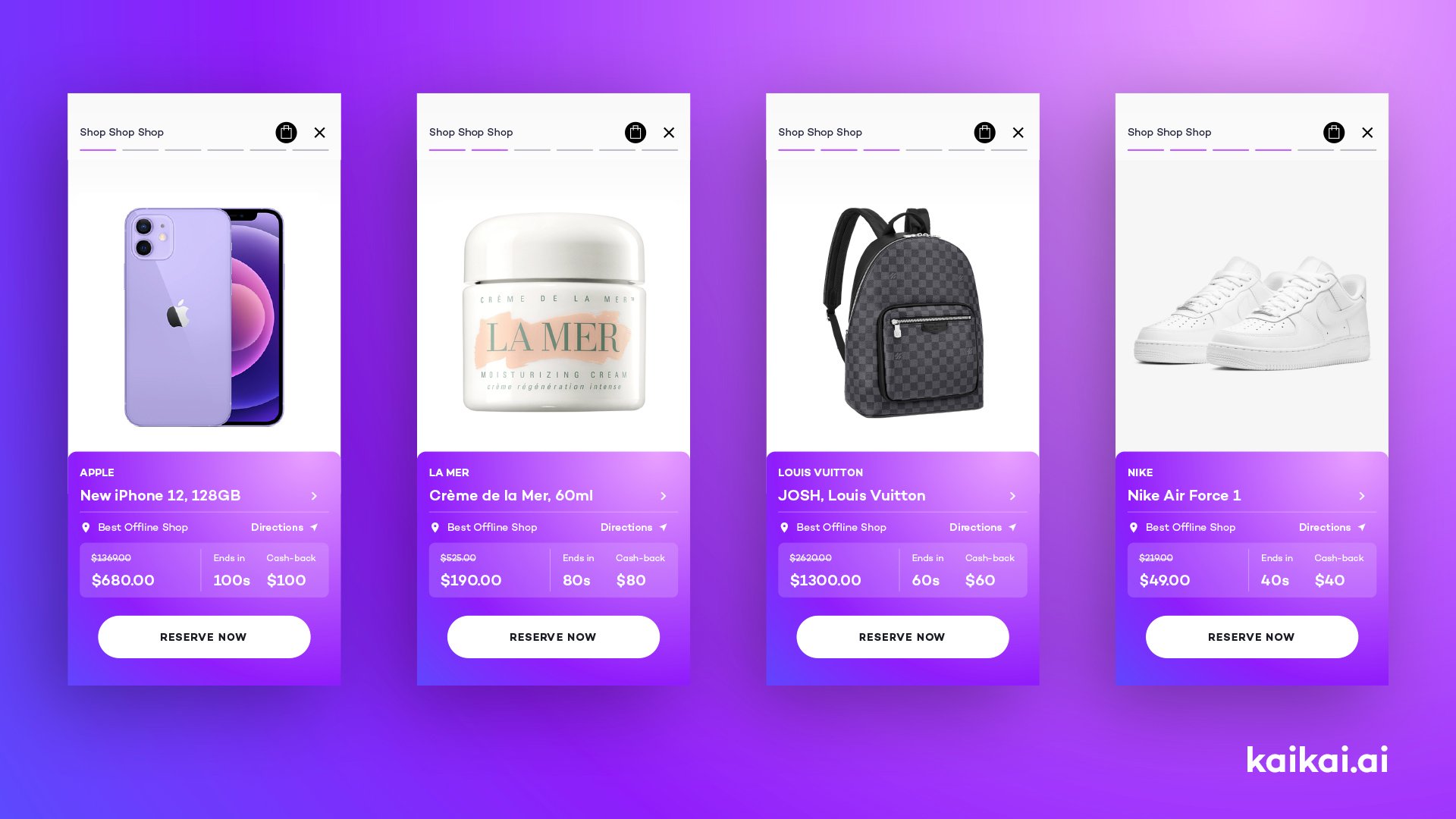
    KaiKai has teamed with retailers to offer discounts on popular products of up to 50 percent, including Apple AirPods Pro, Dyson Supersonic hairdryers, and the Nintendo Switch gaming system. It bridges the online and offline worlds by allowing users to reserve the products within the app then pay for and collect them in-store, boosting footfalls for participating retailers.

    A KaiKai spokesperson says the app plans to add offers on services such as spas and beauty, dining and staycations, as well as luxury fashion retail in the near future. It has signed up popular influencers Sabrina Ng from Pomato YouTube Channel, Ah Gi from Arm Channel TV, and Hailey Chan from ViuTV to promote the app’s Hong Kong expansion.

    Within a week of being added to app stores in Hong Kong this month, KaiKai was ranked number one in the shopping category and third overall for downloads.

    The app works on the basis of an annual membership fee for users of HKD450 (US$58) which is being waived for the first year for the first 100,000 consumers who sign up. New deals are dropped at 12 noon and 8pm daily with users having 100 seconds to decide if they want to buy what they see before it becomes unavailable to them.

    A spokesman for the developer aid the app provides “a unique gamified shopping experience like no other”.

    “The thrill of managing to score something in the app continues in-store. KaiKai users enjoy the unique online-to-offline shopping experience: Reserve online, collect in-store later. After reserving the product with the KaiKai app, users have to redeem and pay in-store within seven days,” the spokesperson said.

    According to the South China Morning Post, the app was developed by mainland Chinese tech company Cosmose AI, known for tracking shopper locations for online advertising, but the company says KaiKai does not share user location data with Cosmose. It has already been launched in Singapore.

  • More Warning Signs at Another Chinese Developer

    More Warning Signs at Another Chinese Developer

    Tianjin-headquartered Sunac is the latest major property developer to reportedly face troubles, with a letter to Chinese authorities asking for policy assistance.

    Sunac China Holdings Ltd. asked authorities in Shaoxing – a city in the eastern coastal province of Zheijiang – to offer policy assistance due to operational difficulties, according to a report citing a letter from a subsidiary.

    The letter did not elaborate on the type of assistance requested but said that it had never experienced such a radical change in the external environment, underlining a 60 percent year-on-year drop in home sales in Sunaac’s Shaoxing office.

    The market is almost frozen, the letter said. The radical change in policy and environment has seriously disrupted our business and made it very difficult to maintain normal operations.

    Year-to-date, Sunac’s Hong Kong-listed share price has more than halved to HK$13.44, as of publishing.

    On Friday, Sunac’s dollar bonds slumped after the letter circulated in the market with its 5.95 percent bond due 2024 dropping 4.6 cents on the dollar to 85 cents – a record-low closing level.

  • Messina moves into Hong Kong selling Gelato

    Messina moves into Hong Kong selling Gelato

    Hong Kong restaurant group Black Sheep is taking Australian gelato brand Messina to the ‘dessert-obsessed’ Hong Kong community.

    Messina’s first Hong Kong store will be located on historic Pottinger Street. The launch also marks Black Sheep Restaurant’s first collaboration in more than five years.

    “We are passionate about gelato and consider ourselves connoisseurs, but knowing good gelato and being able to make it on a large scale are two different things,” said Syed Asim Hussain, co-founder of Black Sheep Restaurant.

    “When we think someone else can do it better than we can, that is when we look for a partner.

    “We were blown away by not only Messina’s gelato but also by their work ethos, which is very much in line with our own. The amount of pride and detail that they achieve at every level is really inspirational.”

    Founded in 2002, Messina is known for its assortment of freshly-churned gelatos available in an array of signature flavours and rotating specials. Currently, Messina operates 22 stores across NSW, VIC and ACT.

  • Crypto Exchange FTX Quits Hong Kong

    Crypto Exchange FTX Quits Hong Kong

    The digital assets derivatives exchange has moved its headquarters to Nassau, the Bahamas, citing friendlier regulation and no mandatory quarantine upon arrival in-country.

    The company’s chief executive officer, 29-year-old billionaire Sam Bankman-Fried told industry publication Blockworks that the proactive stance taken by The Bahamas and its regulatory bodies on cryptocurrencies» is one of the primary reasons FTX is moving to the Caribbean island.

    Ryan Salame, recently appointed CEO of FTX Digital Markets, will be responsible for leading its local initiatives in the Bahamas. In addition, FTX Digital Markets will be expanding its presence in the country to support transferred and local employees.

    Hong Kong authorities have been taking an increasingly hard stance towards cryptocurrencies, barring non-accredited investors from accessing the local crypto market.

    Blockworks experts also cited unclear regulations around custody and inconsistencies with how the city’s different regulatory bodies treat crypto as reasons why firms in this sector are finding it increasingly hard to operate in Hong Kong.

  • Expats Pay Packages Fall in Singapore, Hong Kong

    Expats Pay Packages Fall in Singapore, Hong Kong

    Expat packages have taken a hit as a result of lower cost of benefits and a dip in salaries.

    The average pay package for a mid-level expatriate in Singapore fell by $7,284 a year, and now stands at $225,171 annually – the 17th highest in the world, ECA International said.

    However, cash salaries in the republic stand at the fifth-highest globally, and the city holds the title of the location offering the best quality of living, the global mobility specialist said in its annual MyExpatriate Market Pay report, published this week.

    Expatriate packages comprise three main components: the cash salary, benefits such as accommodation, international schools, utilities, or cars, and tax.

    While expats take home less, the latest rankings are expected to increase the country’s attractiveness to expatriates and companies looking to set up regional hubs in the country, given the cheaper cost of employing expatriate staff, Lee Quane, Regional Director – Asia at ECA International, said.

    Elsewhere, expatriate pay packages in rival regional financial hub Hong Kong dropped by over $5,000 over the last year, to a new average total of $279,399, despite an average salary increase of $265, largely due to falling accommodation costs.

    Globally, Japan was the most expensive location to send workers to, overtaking the United Kingdom, with the average expatriate package there costing $405,685.

  • Hong Kong Anti-Sanctions Law Details Begin Surfacing

    Hong Kong Anti-Sanctions Law Details Begin Surfacing

    China’s top parliament is in the last of its four-day meeting on draft bills with some broad indications unveiled about Hong Kong’s anti-sanctions law, including a rough timeline and government entities to be involved.

    China’s National People’s Congress (NPC) Standing Committee is expected to formally approve the anti-sanctions law today, marking an end to its four-day closed-door talks on various draft bills.

    Although approval of the law is a foregone conclusion – Hong Kong’s sole delegate to the NPC Standing Committee Tam Yiu-chung had already flagged Friday as the day the legislation will be officially introduced – the financial industry is still closely watching for signs on how and when implementation will occur.

    While the NPC Standing Committee is expected to approve the law’s insertion into the Basic Law – Hong Kong’s own constitution – the city will draft its own version locally, according to a report citing unnamed government insiders.

    The government had no choice but to address growing corporate concerns due to the critical importance of upholding’s Hong Kong’s status as a global financial hub, the source explained.

    The mainland’s version is a bit too broad, which has caused great fear among international businesses in the city, the source said. Some suggested the local version should be more specific so as to alleviate worries, while others also think a vague law could give the government flexibility. The government, therefore, has to get a green light from the central government on how much it can do.

    According to the report, entities to be involved with drafting the local legislation include chief executive Carrie Lam, Financial Secretary Paul Chan, the Hong Kong Monetary Authority as well as the bureaus for financial services, security and constitutional and mainland affairs.

    Separately, Chan was scheduled to meet lawmakers over the matter this week but the discussions were abruptly canceled.

    The government has not decided which bureau should take the lead, while the financial secretary has been listening to views in society, one of the sources said.

    And in order to obtain sufficient feedback from key stakeholders, Hong Kong lawmakers will be working on a local draft of the anti-sanctions at least until next year.

    Lam had previously said that she did not have an explicit deadline for implementation but added that completion within the current term, which ends in October before the next session opens in early 2022, would be an extremely tight timetable to rush a piece of legislation with the necessary consultation with stakeholders.

    In addition to the NPC Standing Committee meeting this week, the industry will also look for more clarity from a delegation led by Huang Liuquan, a deputy director of the State Council’s Hong Kong and Macau Affairs Office, when they visit the city next week to brief lawmakers on the nation’s 14th five-year plan.

  • Drone maker DJI to shut Hong Kong flagship within a week

    Drone maker DJI to shut Hong Kong flagship within a week

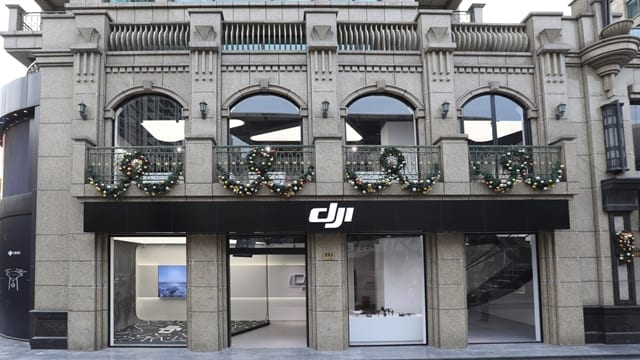
    Shenzhen-headquartered drone maker DJI is to close its Hong Kong flagship store in Causeway Bay – but the company says the move is unrelated to strict new laws restricting drone use in the territory.

    The three-story, 930sqm store, which displays the brand’s range of aerial and handheld devices and includes a space where people can carry out test flights, will close from next Monday.

    A sign affixed to the storefront says DJI remains committed to its customers and partners in Hong Kong and elsewhere in the world and that the company would continue to develop the industry’s most advanced drones and creative camera technology.

    Responding to an inquiry from the South China Morning Post, a DJI spokesperson said the flagship’s closure reflected the company’s evolving needs and had “no connection” with the new regulations requiring drone operators to be trained and licensed to fly the devices. That law takes effect next June.

    After the store’s closure, the company’s drones will remain on sale online and through authorized dealers.

    DJI opened the store in September 2016. At the time it was the brand’s third retail store, following one in Shenzhen and another in Seoul.

    A flight cage on the ground floor showcases drones in action and a SkyPixel Gallery on the first floor features international aerial photography. A technical support center and space for workshops, seminars, and special events are located on the second floor.

    Under the new Hong Kong law, drones weighing between 250gm and 7kg must be registered, and pilots must undertake online training. Insurance will become mandatory.

  • Binance Shuts Futures Accounts in Hong Kong

    Binance Shuts Futures Accounts in Hong Kong

    The world’s largest crypto exchange Binance said it would no longer allow new users to open futures accounts in Hong Kong, following warnings issued by the city’s regulators.

    Existing users will have a 90-day period to close their positions, Binance said, and no new positions thereafter can be opened.

    As the market leader, Binance constantly evaluates its product and service offerings,» the firm said in an announcement, adding that it was the first major firm to proactively restrict access to crypto-linked derivatives. We will be restricting Hong Kong users in respect of derivatives products (including all futures, options, margin products and leveraged tokens) in line with our commitment to compliance.

    The latest move follows a warning issued by the Securities and Futures Commission in July stating that the cryptocurrency exchange was not licensed or registered to offer securities.

  • Singapore and Hong Kong Named as Unicorn Incubators

    Singapore and Hong Kong Named as Unicorn Incubators

    The city-state’s unicorn businesses take an average of 6 years and 11 months to reach the valuation of $1 billion.

    Singapore is the joint fourth best country in the world for unicorn start-ups, according to a recent study by credit broker Money.co.uk, with six businesses currently valued at over $1 billion.

    The top country for unicorns is China, with 155 such companies, which take an average of 5 years 10 months to reach this status. Hong Kong, which has five unicorns, is the second-fastest country for businesses to reach $1 billion, which take an average of 6 years and 1 month, followed by Japan unicorns, which take average of 6 years and 3 months.

    According to the study, which cited data by private equity firm CB Insights, there are only 750 unicorns – defined as independently owned and valued at over $1 billion – globally. The U.S., also in joint fourth position, has the most, at 378.

    Globally, there are 131 fintech unicorns, which took an average of 7 years 1 month to reach $1 billion.