Retail News CRM

Tag: indomaret

  • Indomaret’s Bold Expansion: 1,500 New Outlets Amid Rising Market Complexity In Asia

    Indomaret’s Bold Expansion: 1,500 New Outlets Amid Rising Market Complexity In Asia

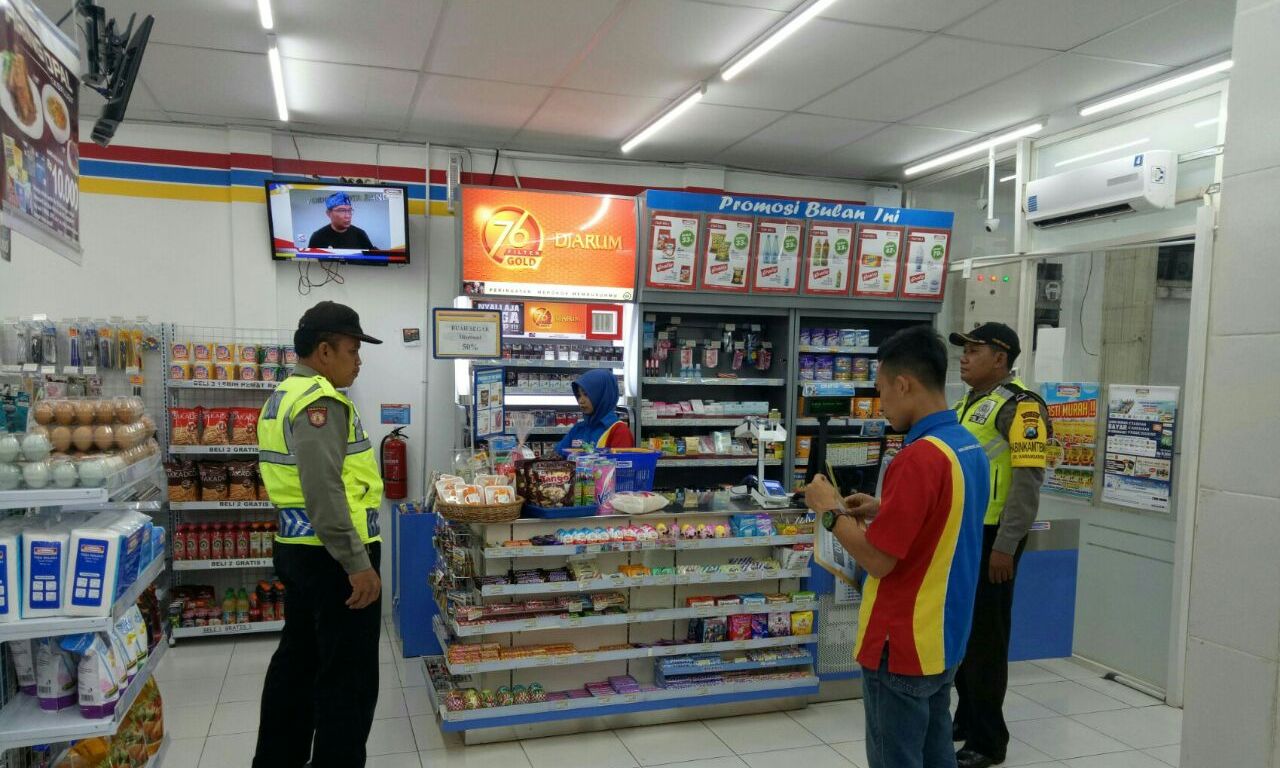
    As retail giants in Asia continue to adapt to an increasingly complex market, strategic store expansions play a pivotal role in their growth. Take, for instance, Indonesia’s leading grocery chain, Indomaret, which recently unveiled plans to launch 1,500 new outlets nationwide. This ambitious move aims to solidify its market presence amid fierce competition from both international players and local entities. The company’s announcement noted that over 800 of these new stores will be concentrated in suburban areas, where demand for convenient shopping options is surging. Indomaret’s rapid pace of expansion is a testament to its commitment to meeting evolving consumer needs.

    Local Trends Shape Retail Strategies

    The expansion strategy is not just about numbers; it is also influenced by changing consumer behavior. Indonesians increasingly prefer shopping at closer, easily accessible outlets, which aligns perfectly with Indomaret’s suburban focus. Furthermore, the brand has been diligently enhancing its service offerings to keep pace with shifting preferences, including the introduction of digital payment solutions, which are rapidly becoming the norm across Asia.

    Challenges Ahead for the Retail Sector

    Yet, the path to growth is not without hurdles. Rising operational costs, challenges in supply chain management, and the constant pressure of adapting to the digital landscape are significant concerns that retailers must navigate. Additionally, as competition heats up with the entry of international brands, local chains must differentiate themselves to retain customer loyalty. With the sector’s dynamics shifting daily, it’s clear that retailers must remain agile and responsive to maintain their edge.

    Indomaret’s Bigger Picture

    Indomaret isn’t just expanding its footprint; it’s focusing on how to enhance the overall consumer experience. By offering localized products that cater to the tastes and preferences of each neighborhood, the retail chain is not merely selling groceries; it’s building community connections. Interestingly, some customers have noted that their local Indomaret has turned into an unofficial town square, where community members frequently meet, thus infusing a social aspect into the shopping experience.

    Looking Ahead: A Complicated Landscape

    As Indomaret forges ahead with its expansion, challenges will undoubtedly arise—especially as digital commerce continues to disrupt traditional retail models. The company’s ability to adapt swiftly to these changes will be crucial as it aims to not only survive but thrive in this competitive environment. In a landscape where innovation and customer-centric strategies reign supreme, Indomaret’s fate will be a fascinating story to follow in the coming months.

    Questions & Answers

    What is Indomaret’s expansion goal for 2023?
    Indomaret plans to launch 1,500 new outlets across Indonesia to strengthen its market presence.

    Why is suburban expansion important for retailers like Indomaret?
    Suburban areas are seeing a surge in demand for convenient shopping options, which aligns with consumer preferences for nearby, easily accessible grocery stores.

    What challenges do retailers mean facing amid digital transformation?
    Retailers face rising operational costs, supply chain management issues, and the need to adapt quickly to the evolving digital landscape and competition from international brands.
  • Here are Indonesia’s top 10 retailers according to Euromonitor

    Here are Indonesia’s top 10 retailers according to Euromonitor

    Indomaret convenience store chain leads the rankings of Indonesia’s top 10 retailers.

    The Indomarco Prismatama-owned convenience store chain achieved sales of US$4.89 billion last year, followed by Alfamart with $3.97 billion, according to Euromonitor.

    Speaking at a conference where Indonesia’s top 10 retailers were revealed, Euromonitor’s Dhea Sutanto said Indomaret’s success was likely attributable to the greater number of physical stores it had compared to its competitors, and its promotion strategy.

    “If it is able to reach more consumers and more outlets, automatically it will generate more revenue, especially if it provides more accessibility to consumers that are harder to reach,” she added.

    Indomaret currently operates 15,633 outlets across Indonesia while Alfamart has 13,991.

    Matahari Department Store took third spot on the list with $1.36 billion in sales, followed by Carrefour and Transmart Carrefour by Trans Retail Indonesia, which earned $1.22 billion.

    In fifth place was Dairy Farm International operation which includes Hero Supermarket Group, Guardian, Star Mart and Giant, among others, with $903 million in sales.

    High-end fashion retailer Mitra Adi Perkasa, which owns Kidz Station, Marks & Spencer and Sports Station, came in sixth with $866 million. It was followed by Matahari Putra Prima group (Hypermart, Boston Health), gadget retailer Erajaya Swasembada (Erafone) and middle-to-low-income fashion retailer Ramayana with $781 million, $688 million and $643 million in sales, respectively.

    Books and stationery stores Gramedia, Grazera and Trimedia from Gramedia Asri Media ranked 10th by earning $430 million in sales.

  • Indomaret tops retailer list with US$4.89b in sales

    Indomaret tops retailer list with US$4.89b in sales

    Convenient store chain Indomaret and Indomaret Point, owned by retail group Indomarco Prismatama, were the top-selling retailers of 2017, racking up a combined US$4.89 billion in sales, according to London-based strategic market research company Euromonitor International

    With the total sales, Indomaret beats its closest competitor Alfamart, owned by Sumber Alfaria Trijaya, which booked US$3.97 billion in sales last year to come in second.

    Euromonitor consultant Dhea Sutanto said Indomaret’s success was likely attributable to the greater number of physical stores it had compared to its competitors. Another factor could be the company’s promotion strategy, she added.

    “If they are able to reach more consumers and more outlets, automatically they will generate more revenue, especially if they provide more accessibility to consumers that are harder to reach,” she said at the sidelines of the Euromonitor International Conference on Tuesday.

    Indomaret currently operates 15,633 outlets across Indonesia while Alfamart has 13,991.

    Number three on the list of Indonesia’s top retailers in 2017 was Matahari Department Store with $1.36 billion in sales, followed by Carrefour and Transmart Carrefour by Trans Retail Indonesia, which earned $1.22 billion. Hero Supermarket Group with Guardian, Star Mart and Giant, among others, was at fifth place with $903 million in sales.

    A retailer group of high-end fashion goods, Mitra Adi Perkasa (MAP), which includes Kidz Station, Marks and Spencer and Sports Station, came in sixth with $866 million. MAP is followed by Matahari Putra Prima group (Hypermart, Boston Health), gadget retailer Erajaya Swasembada (Erafone) and middle-to-low-income fashion retailer Ramayana with $781 million, $688 million and $643 million, respectively.

    Meanwhile, books and stationery stores Gramedia, Grazera and Trimedia from Gramedia Asri Media ranked 10th by garnering $430 million in sales.

  • Indonesia’s Lippo & Korea’s Lotte form e-commerce JV

    Indonesia’s Lippo & Korea’s Lotte form e-commerce JV

    Indonesia’s Salim Group is planning a major foray into e-commerce this year in partnership with South Korea’s Lotte.

    Indo Lotte Makmur, a 50-50 JV by the two conglomerates, will launch the iLotte online shopping platform as soon as July, putting US$88 million into the project initially. The service will be geared primarily toward women in their 20s and 30s, and feature name-brand cosmetics sold in South Korea as well as offerings from Lotte’s online mall.

    A robust infrastructure built up over the course of years will let Salim achieve economies of scale for the e-commerce business, says Indo Lotte CFO Dani Sumarsono, who is overseeing online business at Indonesia’s largest conglomerate.

    “E-commerce is not only about digital technology but about moving physical products,” he says. “We have been investing in infrastructure for a long time.”

    Indo Lotte president, a former executive at Lotte’s e-commerce business in South Korea, says Salim has a lot of infrastructure, while Lotte can bring know-how and technology.

    Indonesia’s e-commerce market is expected to grow to $46 billion in 2025 from just $1.7 billion a decade earlier, according to research by Google and Singapore’s Temasek Holdings. Under this scenario, Indonesia would make up more than half of the total Southeast Asian e-commerce market and would follow China and India as the third-largest national market in Asia, excluding Japan. A doubling of internet users, from 92 million to 215 million, is seen as the driver of this expansion.

    Expensive market

    With chronic congestion of its major cities and a lack of basic infrastructure on its islands, Indonesia is an expensive market to service. Logistics costs are 27 per cent of GDP, compared with 20 per cent in Thailand and 13 per cent in Malaysia, according to the World Bank.

    However, Salim’s 13,000-plus Indomaret convenience stores across Indonesia can be used as places to pay for and pick up goods ordered online. Meanwhile, a shipping unit that delivers instant noodles made by group member Indofood Sukses Makmur to more than 30,000 small towns nationwide can help bolster efficiency.

    Salim has also created a JV with Tokyo-based startup Liquid to explore payments using fingerprint authentication, with credit-card ownership of less than one in every 10 adults in Indonesia. Liquid’s system allowing pre-registered shoppers to pay via fingerprint scanner has been deployed at Japanese convenience stores. The JV will test the system for 500,000 Salim employees initially and targets commercial application within the year.

    Meanwhile, another Indonesian conglomerate, Lippo Group, is developing an electronic payment service for use on MatahariMall.com, which Lippo launched in 2015.

  • Alfamart sales strengthen

    Alfamart sales strengthen

    Indonesia’s Alfamart has reported a healthy first half year’s performance.

    Alfamart sales rose by 21.5 per cent to IDR36,870 billion (US$2 billion) thanks to an aggressive store expansion program.

    The company’s unaudited gross profit increased 20.6 per cent.

    With a network total of 12,971 stores, Alfamart group remains narrowly behind competitor Indomaret, with 13,099, records research house IGD.

    Alfamart added 713 new stores from end of 2015, across the Lawson, Alfa Midi, Alfamart and Dan Dan (health and beauty) banners, compared to 889 reported by Indomaret.

    The new stores are mainly located outside of Greater Jakarta, which still accounts for 35.6 per cent of Alfamart’s stores, IGD reported.

    During the second quarter, the group added a warehouse in Serang, Java to support the Alfamart banner. As of June 2016, the retailer managed 40 warehouses in Indonesia (32 for Alfamart, seven for Alfamidi and one for Dan Dan).

  • Tokopedia deal lets online shoppers pay in store

    Tokopedia deal lets online shoppers pay in store

    Indonesian online platform Tokopedia has signed an agreement with retailer Alfamart allowing online shoppers to pay at their nearest convenience store branch.

    Customers do not need a special account to complete a transaction in an Alfamart store.

    “The payment will be automatically verified and the order will pass directly to the seller,” says Tokopedia VP Melissa Siska Juminto.

    “The partnership will benefit not only customers but also sellers as order processing will be faster and will boost the seller’s reputation.”

    Tokopedia has previously partnered with several other retailers such as 7-Eleven and Indomaret, and also launched the Mitra Toppers program that helps merchants access capital loans.

    Tokopedia raised US$147 million in April, bringing its total disclosed funding to $247 million, the largest so far in Indonesia.

    It now has more than 7.5 million transactions a month, with a 10-20 per cent monthly growth rate. About 69 per cent of users access the company’s site using mobile phones.

  • Indonesia shines for retail investment

    Indonesia shines for retail investment

    Southeast Asia’s largest economy, Indonesia, is ranked the world’s fifth most-attractive market for retail investment in AT Kearney’s 2016 Global Retail Development Index.

    In previous years it has ranked in the top 20.

    It is an exciting time to be investing in Indonesia’s retail sector, the index says. The country scores 64.3 in market size (out of a 0-100 scale) and low in country risk (38.9) – lower than the top three markets, China, India and Malaysia. Urgency to enter the market is rated at 68.9, and the overall score of 55.6 is just one point behind Kazakhstan.

    “Despite its relatively low retail sales per capita and currency volatility, Indonesia’s huge population and cities make it quite attractive to foreign retailers, which see untapped potential in the country and are investing heavily in new development,” says the report, which covers 30 developing countries that represent more than half of total global retail sales.

    This is reflected by burgeoning foreign retail investments in the country, reports the Jakarta Post. It cites Dubai-based Lulu, which opened its first hypermarket in Indonesia this month with an investment plan of US$500 million covering nine hypermarkets and a warehouse. Meanwhile, Singapore’s Courts, South Korea’s Lotte, and Ikea and H&M from Sweden all have a presence and expansion plans in Indonesia. Courts plans to open four stores by next March to add to its existing five, and has seen its sales growth double since opening in 2014.

    Indonesian convenience stores Alfamart and Indomaret have also been expanding. Indomaret plans to add 1600 outlets this year to its 12,210 stores, while Alfamart is aiming for six-fold sales growth this year driven by its upgraded online presence.

    The government has opened up eCommerce to foreign ownership where the business value is more than Rp100 billion (US$7.49 million). According to the Indonesian eCommerce Association (Idea), eCommerce transactions are expected to reach $24.6 billion this year, three times more than in 2013.

    Indonesian retailers Matahari and Mitra Adi Perkasa have launched online shopping, while grocers Alfamart and Happy Fresh are extending their online offering.

  • Tough battle brews in Indonesian eCommerce

    Tough battle brews in Indonesian eCommerce

    Three Indonesian eCommerce platforms are about to be launched – by Astra Graphia, CT Corp and a joint venture formed by the Salim and Lotte Groups.

    This comes after forays into eCommerce in the past 12 months by such Indonesian conglomerates Lippo Group (MatahariMall and Venturra Capital), Sinar Mas Group (SMDV) MNC Group (BrandOutlet) and MAP Group (eMall), reports E27, which says Indonesia’s eCommerce market is predicted to grow to US$130 billion by 2020.

    Salim Group has signed an agreement with South Korea’s retail giant Lotte Group to form a joint venture for eCommerce business. Launching next year, it is the second such collaboration followingElevenia.
    Lotte Group’s portfolio in Indonesia includes a department store, 41 retail stores and 31 fast-food franchise outlets. Salim Group owns businesses in the F&B, infrastructure, logistics, telco, media and real estate sectors. It also has 11,000 Indomaret minimart outlets.
    “We expect ourselves to champion the market as soon as we walk into it, says CT Corp founder Chairul Tanjung, who has yet to reveal a launch date for the group’s online venture.

    CT Corp owns hypermarket chain Carrefour, the department store chain Metro, hotels and theme parks managed by TransStudio, media companies Detik and TransTV, and fashion and F&B outlets.

    Its new eCommerce platform will be a separate business entity from the group’s TransRetail subsidiary, which covers its retail businesses.
    Meanwhile, a subsidiary of Astra International specialising in office equipment and services, Astra Graphia has spent about IDR50 billion (US$3.6 million) on developing its Axiqoe platform.
    “The online shop will display thousands of items, initially for business-to-business,” says Astra Graphia’s chief of finance Panji Nurfirman.

  • Garuda tickets available at Indomaret

    Garuda tickets available at Indomaret

    National flag carrier Garuda Indonesia is teaming up with minimarket chain Indomaret to allow air passengers to buy tickets from the chain’s outlets across the country in a bid to boost the airline’s sales.

    For payments, Garuda works with electronic payment provider Finnet, a subsidiary of state telecommunications company PT Telekomunikasi Indonesia (Telkom).

    Garuda Indonesia commercial director Handayani said the company expected passengers would buy tickets from at least 20 percent of Indomaret’s 11,400 outlets.

    In ticket sales, the company expects the partnership to account for 830,000 transactions a year, or around 1.6 million tickets assuming that each buyer buys two tickets.

    “With their strategic sites, Indomaret outlets will open up consumer access to our services, including in places with little access to the Internet and ATMs,” Handayani said in a statement on Wednesday.

    She added that Indomaret ticketing services would be focused on domestic flights for individual customers.

    “People who go to Indomaret will tend to buy small numbers of tickets for domestic flights. The average ticket price will be between Rp 400,000 and Rp 500,000,” she said.

    Garuda’s low-cost subsidiary carrier Citilink has cooperated with Indomaret since January 2014.

    Indomaret records around 150 million transactions with 37.5 million customers monthly, according to Wiwiek Yusuf, the marketing director of PT Indomarco Prismatama, which runs the chain.

    “Of that figure, 15 million transactions, or 10 percent, are virtual,” he said, adding that Garuda would add to the list of the chain’s virtual payments, which currently includes electricity bills, phone credit and concert tickets.

    Online ticket purchasing makes up 28 percent of Garuda’s total transactions, with the remainder carried out through traditional channels such as travel agents.

    The airline’s partnership with Indomaret adds to its current relationship with Telkom, which runs Garuda’s call center. However, Garuda customers who book tickets through the call center can only pay with credit cards or through the ATMs of 18 banks.

    Telkom enterprise and business service director Muhammad Awa-luddin said the cooperation would mark the first non-bank channel for Garuda.

    “Finnet has hundreds of dealers and is connected to 77 banks, so we envision no problems,” he said.

    The cooperation is part of Garuda’s efforts to meet a target of carrying 25 million passengers this year.

    The airline carried 11.55 million passengers in the first half of the year, up 15.3 percent from last year, of which 9.4 million were domestic passengers.

    “With this cooperation, we should reach more than 20 million,” Handayani said.

    She added that she would rely on the growth of Indomaret outlets for expanding consumer access, with the firm looking to reach 12,000 outlets this year.

    Other than the domestic market, Garuda is also eyeing increased inbound flights after Coordinating Maritime Affairs Minister Rizal Ramli announced on Tuesday the waiving of visas for citizens of 47 more countries, adding to 30 countries granted visa exemptions in June.

    “We will engage with foreign tourist boards and travel agents. We have to be aggressive in introducing Indonesia to those countries, beyond Bali and Jakarta,” Handayani said.

    The company booked US$27.7 million in net income in the January-June period, a sharp increase from its net loss of $203 million in the same period last year, on the back of lower operating expenses and strong passenger growth.